
货币贬值

Search documents
存钱没用?其实你只是不会理财
Sou Hu Cai Jing· 2025-10-29 05:37
Core Insights - The article emphasizes the importance of financial management in the current economic climate, highlighting that merely saving money is insufficient due to inflation and rising living costs [1][4] - It advocates for a structured approach to personal finance, focusing on cash flow management as the first step in financial planning [3][4] - The article outlines a three-bucket investment strategy to balance safety, growth, and opportunity in financial planning [4][7] - It stresses that financial literacy not only impacts financial status but also influences mindset and overall life satisfaction [4][8] Group 1: Financial Management - Relying solely on saving money is inadequate in today's economy, as inflation can erode savings [1] - Financial management is defined as a life planning skill rather than just investment [3] - Understanding cash flow is crucial; individuals should track income, fixed expenses, and savings potential [4] Group 2: Investment Strategy - A recommended allocation model is 50% for living expenses, 30% for savings/investment, 10% for personal growth, and 10% for entertainment [4] - The three-bucket investment strategy includes a safety bucket (30%), a growth bucket (50%), and an opportunity bucket (20%) [4][7] - The focus should be on stable, long-term gains rather than quick profits [4] Group 3: Mindset and Long-term Perspective - Financial management fosters a rational spending approach and a calm demeanor in the face of risks [4] - The journey of financial literacy is a long-term commitment, akin to fitness, requiring consistent effort over time [7] - The ultimate goal of financial management is to achieve personal freedom and control over one's life choices [8]


黄金破4300、比特币再飙!聪明资金或早已撤退,谁在最后接盘?
Sou Hu Cai Jing· 2025-10-26 17:16
Core Viewpoint - The discussion around "currency devaluation" has gained significant traction in global financial markets, prompting investors to flock to traditional safe-haven assets like gold, silver, and Bitcoin as a means to hedge against inflation and currency depreciation [2][5]. Group 1: Market Trends and Investor Behavior - Many investors are currently engaging in "herd behavior," investing in gold, Bitcoin, and other assets that are nearing historical highs, which may lead to them becoming "high-position buyers" [4][7]. - The surge in money supply, particularly M2, has been a focal point in the currency devaluation narrative, but the market is more concerned with the "growth rate" of money supply rather than its absolute total [4][12]. Group 2: Investment Strategy Recommendations - A layered investment strategy is recommended, dividing investments into defensive, offensive, and high-volatility layers to balance risk and return [7][15]. - The defensive layer should consist of 15% to 20% in gold ETFs or physical gold to provide a stable foundation for assets [7][9]. - The offensive layer can include 5% to 15% in silver and commodity ETFs, which are more sensitive to inflation and economic cycles [7][9]. - High-volatility assets like Bitcoin should be limited to 5% for conservative investors and no more than 10% for aggressive investors due to their extreme price fluctuations [9][11]. Group 3: Economic Indicators and Asset Allocation - The current deep inversion of the U.S. yield curve typically signals an impending economic recession, which may prompt the Federal Reserve to lower interest rates [10][11]. - Investors are advised to adjust their asset allocation strategies based on changes in the yield curve and market conditions, emphasizing data-driven decisions over emotional reactions [11][12].

华尔街:黄金是“最硬核”资产 贵金属风头盖过AI
Xin Lang Cai Jing· 2025-10-23 09:57
Core Viewpoint - Gold has emerged as a dominant asset class in 2023, surpassing even the interest in artificial intelligence, with significant price increases driven by global trade concerns, Federal Reserve rate cut expectations, and a weakening dollar [1][2]. Group 1: Market Performance - Gold prices have seen a remarkable increase, surpassing $4,000 per ounce in early October and reaching over $4,300 this week, marking a year-to-date increase of over 50% [1]. - Silver prices have also surged, hovering near record highs with a cumulative increase of over 60% [1]. - The performance of precious metals has outpaced the stock market, where the Nasdaq 100 index has risen over 19% and the S&P 500 index has increased over 14% this year [1]. Group 2: Changing Perception of Gold - The perception of gold as an asset class is shifting; it is no longer viewed merely as a hedge against currency or a simple investment tool [2]. - Investors are increasingly seeing gold as a scarce asset amid rising debt levels and inflation, leading to a preference for hard assets [2]. Group 3: Historical Context and Future Trends - Gold's rise began in earnest in 2022, following the freezing of Russian central bank reserves due to the Ukraine conflict, prompting countries to reassess their dollar reserves [3]. - This trend has continued into 2023 and 2024, with a notable increase in central bank gold purchases [3]. - The proportion of gold in global reserve assets reached 24% in Q2 2023, the highest level since the late 1990s, driven by uncertainties related to the weakening dollar and geopolitical tensions [3].
今夜,跳水!暴跌!
Zhong Guo Ji Jin Bao· 2025-10-22 16:28
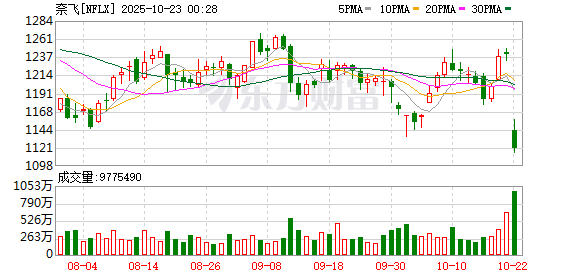
Group 1 - The U.S. stock market experienced a significant decline, with major indices such as the Dow Jones falling by 100 points and the Nasdaq dropping approximately 1% shortly after opening on October 22 [2][3] - Technology stocks weakened, contributing to the market downturn, particularly due to disappointing earnings from Texas Instruments and Netflix, which cited issues related to tax disputes in Brazil [3] - Despite the market's slowdown, the proportion of U.S. companies exceeding earnings expectations this quarter is the highest in over four years, indicating strong overall corporate performance [3] Group 2 - The Consumer Price Index (CPI) for September is a key upcoming event that will provide insights for the Federal Reserve's meeting later in October, especially amid ongoing government shutdowns [4] - Gold prices continued to decline, attributed mainly to technical sell-offs after being in an overbought condition since early September, despite a year-to-date increase of approximately 55% [6] - Analysts from Citigroup have downgraded their recommendation on gold to "hold," citing concerns over excessive market positioning, and expect gold prices to stabilize around $4,000 per ounce in the coming weeks [6]
今夜,跳水!暴跌!
中国基金报· 2025-10-22 16:20
Market Overview - US stock market experienced a significant drop, with the Dow Jones down by 0.31%, Nasdaq down by 0.87%, and S&P 500 down by 0.43% [3] - The decline was primarily driven by weak performance from technology stocks, particularly Texas Instruments and Netflix, which reported disappointing earnings [3][9] Company Performance - Texas Instruments (NASDAQ: TXN) saw its stock price drop by 5.05%, closing at $171.71, after reporting earnings below expectations and providing a disappointing outlook for Q4 [4][5] - Netflix's earnings also fell short of expectations, partly due to a dispute with Brazilian tax authorities, contributing to the overall market decline [3][9] Economic Indicators - Analysts noted that despite the slowdown in stock market growth, the proportion of US companies exceeding earnings expectations this quarter is the highest in over four years [9] - The upcoming Consumer Price Index (CPI) report is anticipated to provide insights for the Federal Reserve's upcoming meeting, with expectations of a 25 basis point rate cut [9] Gold Market - Gold prices continued to decline, attributed to technical selling after being in an overbought condition since early September [11][14] - Despite the recent drop, gold prices have increased approximately 55% year-to-date, driven by concerns over currency devaluation and expectations of significant rate cuts by the Federal Reserve [14] - Citigroup downgraded its recommendation on gold to "hold," citing concerns over excessive market positioning [14]

美国一男子疯狂囤积500万枚5美分硬币
财联社· 2025-10-22 13:56
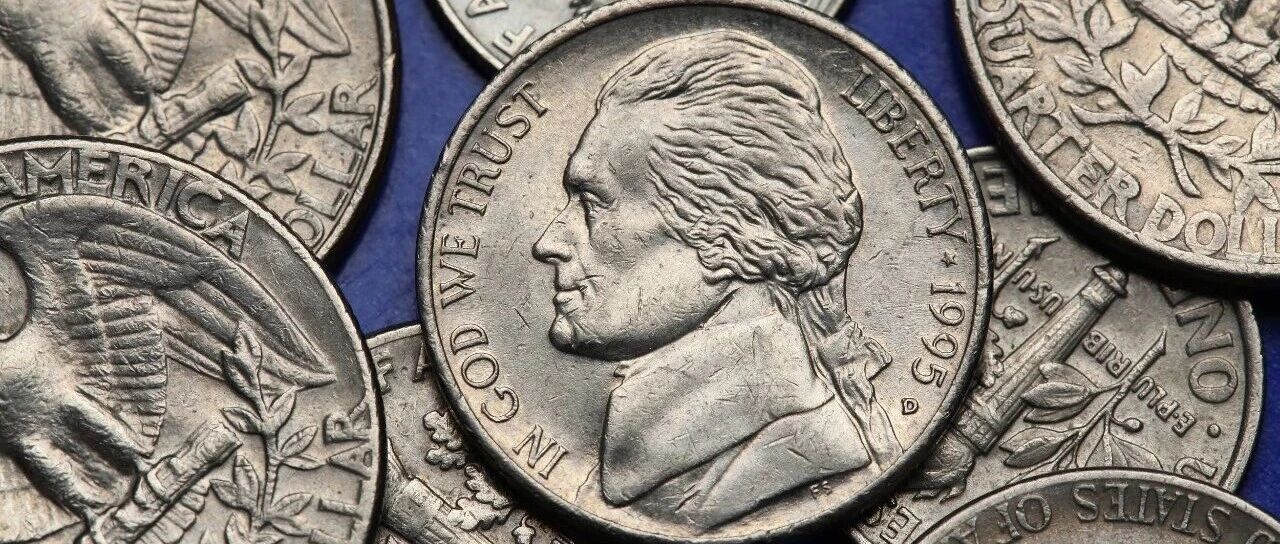
Core Viewpoint - The article discusses Kyle Mitchell's investment strategy of hoarding nickel coins as a hedge against inflation, drawing parallels to Warren Buffett's historical investment in silver coins [2][6]. Group 1: Investment Strategy - Kyle Mitchell has accumulated $250,000 worth of nickel coins, totaling 5 million coins, weighing nearly 30 tons, as a means to hedge against inflation [2][3]. - The current metal value of these coins is approximately $290,000, exceeding their face value due to the rising costs of copper and nickel [5][6]. - Mitchell's approach involves exchanging cash for coins at various banks, a process that took over four months and required significant effort due to bank limitations on coin exchanges [6][7]. Group 2: Market Context - The article highlights the recent surge in gold and silver prices, prompting Mitchell to focus on more industrially relevant metals like nickel and copper [2]. - Copper prices have increased by about 23% this year, while nickel prices have remained stable [5]. Group 3: Legal and Regulatory Considerations - Mitchell's strategy raises legal concerns, as U.S. law prohibits the melting or export of nickel coins, which could result in significant penalties [7]. - Despite the legal risks, Mitchell believes that the intrinsic value of the coins will remain stable, and he anticipates potential future appreciation as metal resources become scarcer [7][8].
推动金价上涨的根本动力是什么?
Sou Hu Cai Jing· 2025-10-22 09:03
Core Viewpoint - The significant rise in gold prices, from over $1,500 per ounce in 2020 to over $4,200 currently, is primarily driven by excessive money supply, leading to currency devaluation and increased demand for gold as a hedge against inflation [1][3][4]. Group 1: Money Supply and Gold Prices - "Excessive money supply" refers to central banks printing large amounts of money, exemplified by the Federal Reserve increasing its balance sheet from $4.2 trillion to $8.96 trillion post-2020, effectively printing money equivalent to decades of previous issuance [1][4]. - The relationship between money supply and gold prices is illustrated by historical data, such as during the 2008 financial crisis when the Fed's quantitative easing led to a tripling of gold prices from $700 to $1,920 per ounce [4]. - A 1% increase in the U.S. M2 money supply correlates with an average monthly increase of 0.0113% in London gold prices, indicating that 78% of gold price fluctuations are related to excessive money supply [4]. Group 2: Inflation and Gold Demand - Increased money supply typically results in inflation, which has been observed with rising prices for essential goods like food and fuel [3]. - Anticipation of inflation drives investors to buy gold as a protective measure, with gold prices rising by 28% in 2023 due to inflation expectations even before the Federal Reserve cut interest rates [3][4]. - Lower interest rates, resulting from increased money supply, reduce the opportunity cost of holding gold, making it a more attractive investment [3]. Group 3: Economic Conditions and Gold Investment - Economic conditions influence gold prices; during strong economic periods, such as in 2017, gold prices rose only 13% as investors favored stocks and real estate [6]. - Conversely, in weaker economic conditions, such as projected low global growth in 2025, gold prices can surge significantly as investors seek safety [6]. - The depreciation of the U.S. dollar due to excessive printing makes gold cheaper for foreign buyers, further increasing demand [6]. Group 4: Investment Strategy for Gold - Investors are advised to monitor the Federal Reserve's actions, particularly interest rate changes, as these can significantly impact gold prices [8]. - A recommended allocation of 10%-15% of an investment portfolio to gold is suggested for hedging against currency devaluation, balancing the need for protection without overly compromising potential returns [8]. - Investors should be cautious of the volatility in gold prices, as they can decline during periods of interest rate hikes, emphasizing the importance of strategic buying during market corrections [9].
机构观点:黄金高位暴跌后险守4000大关,牛市是否已逆转?
Jin Shi Shu Ju· 2025-10-22 06:49
Group 1 - The recent pullback in spot gold is attributed to profit-taking behavior, as algorithmic trading has ceased to chase higher prices [1] - The previous surge in gold prices led to excessive "FOMO" (fear of missing out), with small flash crashes potentially indicating larger volatility ahead [2] - Factors such as the anticipated end of the U.S. government shutdown may drive the gold market to consolidate in the next 2 to 3 weeks [3] - The largest decline in gold prices in a decade may be due to structural issues in holdings and a natural adjustment after nine consecutive weeks of increases [4] - Despite the recent pullback, there is an expectation for gold prices to rise further, as traders view any price drop as a buying opportunity [5] - Extreme daily fluctuations in gold prices suggest a bearish outlook, indicating that the primary bull market may be nearing its peak [6] - It is premature to declare the end of the gold bull market; the recent pullback is natural, and investors who missed the rally may soon enter the market to buy the dip, helping to stabilize sell-offs [7] - The absence of CFTC position data during the U.S. government shutdown has made it easier for speculators to build large positions in one direction, increasing market vulnerability, though underlying buying may limit declines [8] Group 2 - The current market perception of gold as an asset class is shifting, with investors viewing it as a scarce asset amid the rise of "currency devaluation" trades on Wall Street [9]
金价大跳水!创12年来最大单日跌幅
Qi Huo Ri Bao Wang· 2025-10-22 06:27
Core Viewpoint - The recent sharp decline in gold and silver prices has raised concerns among analysts, with expectations of further price consolidation in the near term, despite long-term bullish trends for gold due to structural factors in the global economy [1][2]. Group 1: Price Movements - On October 22, spot gold prices fell sharply, reaching a low of $4005.01 per ounce, marking an 8.01% drop [1]. - The previous trading day saw gold prices hit a record high of $4381 per ounce before plummeting by 6.3%, the largest single-day drop since April 2013, closing at $4124.36 per ounce [1]. - Spot silver also experienced significant declines, dropping to $47.529 per ounce, a 2.1% decrease, and closing at $48.66 per ounce after a 7.11% drop [1]. Group 2: Analyst Insights - Citigroup downgraded its gold rating following the price drop, citing concerns over high positioning and predicting further consolidation around $4000 per ounce in the coming weeks [1]. - Analysts from Guosen Securities believe that long-term factors such as the restructuring of the global monetary credit system, de-dollarization trends, and ongoing central bank gold purchases will support gold prices, maintaining a bullish trend over the next 2-3 years [2]. - HSBC's commodity outlook report suggests that gold's upward momentum could last until 2026, with a target price of $5000 per ounce, driven by concerns over the U.S. fiscal deficit and the perception of gold as a hedge against debt sustainability risks [2].
黄金单日波动极端化 牛市临近顶部?
Jin Tou Wang· 2025-10-22 06:08
Core Viewpoint - The gold market is experiencing significant volatility, with recent price movements indicating a potential downtrend despite a long-term bullish outlook. The market is expected to enter a consolidation phase due to various factors, including the anticipated end of the U.S. government shutdown and changing perceptions of gold as a scarce asset [2][3]. Group 1: Market Trends - Gold prices have recently shown extreme daily fluctuations, with a notable drop of over 5% on a single day, following a peak above $4,380 per ounce, marking a historical high [3]. - The recent surge in gold prices was driven by a "FOMO" (Fear of Missing Out) sentiment, which has now led to a correction phase as the market adjusts to previous gains [2]. - The market is currently characterized by a shift in perception regarding gold's asset properties, with increasing recognition of its value as a hedge against currency devaluation [2]. Group 2: Technical Analysis - Technical indicators suggest that the gold market may be entering a downward adjustment phase, with key resistance levels identified at $4,150, $4,117, and $4,108, while support levels are noted at $4,004, $3,940, and $3,915 [3]. - The trading volume has increased significantly, indicating heightened market activity, which may contribute to the current volatility [3]. - The absence of CFTC positioning data during the U.S. government shutdown has led to an imbalance in speculative positions, further exacerbating market fragility [2].