产业升级

Search documents
涉税名词一起学 | 小型微利企业系列问题(8)哪些行业的企业不能享受小型微利企业优惠?
蓝色柳林财税室· 2025-11-03 05:21
Core Viewpoint - Small and micro enterprises can enjoy tax benefits unless they operate in industries that are restricted or prohibited by the state [3][5][7]. Group 1: Industry Classification - The classification of industries can be referenced from two main documents: the "Industrial Structure Adjustment Guidance Catalog (2024 Edition)" and the "Foreign Investment Industry Guidance Catalog (2017 Revision)" [4][6]. - The "Industrial Structure Adjustment Guidance Catalog" categorizes industries into encouraged, restricted, and eliminated categories, with restricted and eliminated industries being ineligible for tax benefits [5]. Group 2: Reasons for Restrictions - Industries that are restricted often involve outdated technology and do not meet industry entry conditions, such as old chemical production processes and outdated mining techniques [5]. - Eliminated industries are those that violate laws and regulations, waste resources, pollute the environment, and pose serious safety risks [5]. - The state restricts these industries to guide industrial upgrades and optimize economic structure, thus differentiating tax benefits [7].


公募重仓股25年进化史:赛道在变,穿越牛熊“主心骨”未变
Zheng Quan Shi Bao Wang· 2025-11-03 01:13
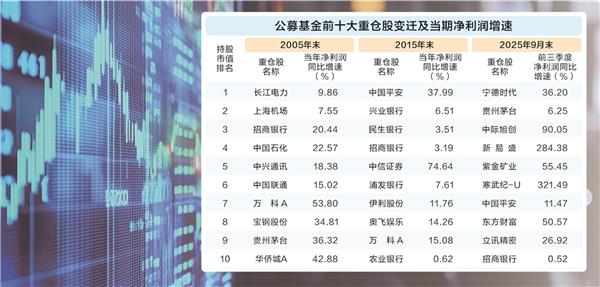
Core Viewpoint - The evolution of public fund heavyweights over 25 years reflects the changing landscape of China's economy, transitioning from industrial to consumer and now to technology-driven sectors [2][9][11] Group 1: Historical Changes in Heavyweight Stocks - From 2000 to 2010, the top heavyweights were dominated by cyclical stocks like steel and finance, mirroring the industrialization and urbanization trends in China [3][10] - Between 2010 and 2020, consumer stocks took the lead, with companies like Kweichow Moutai and Yili showcasing strong and stable profit growth, aligning with rising household incomes and consumption upgrades [4][10] - Since 2020, technology and high-end manufacturing have emerged as the new focus, with companies like CATL leading the charge, reflecting the national strategy of innovation-driven development [5][10] Group 2: Performance Metrics - The net profit growth of heavyweights correlates positively with stock price increases, indicating that strong earnings growth is crucial for long-term investment success [6][10] - For instance, in the first three quarters of 2025, New East's net profit growth reached 284.38%, with its stock price surging by 318.74% [6] Group 3: Valuation Dynamics - The evolution of price-to-earnings ratios and total market capitalization illustrates the market's dynamic re-evaluation of company values, with technology stocks commanding higher valuations due to growth potential [7][10] - For example, Kweichow Moutai's P/E ratio rose from 21.37 in 2005 to 56.3 in 2020, reflecting its brand strength and demand resilience [7] Group 4: Industry Concentration Trends - The concentration of heavyweights has shifted from a focus on a few sectors to a more diversified approach, indicating a strategic move to mitigate risks and seek alpha returns across various industries [8][10] - By 2025, the top heavyweights included a mix of sectors such as electrical equipment, communications, and non-ferrous metals, with CATL leading the technology sector [8] Group 5: Future Outlook - The historical trajectory of public fund holdings reveals a clear alignment with China's economic transformation from industrialization to innovation-driven growth, suggesting that future heavyweight stocks will continue to reflect national strategic directions and industry upgrades [9][11] - The ongoing emphasis on technology and high-end manufacturing indicates that companies aligned with these trends will likely remain favored by public funds [11]




为多家钙钛矿电池头部企业供货!金晶科技以技术硬实力引领TCO玻璃革新
Jin Rong Jie· 2025-11-03 01:12
Group 1 - The core viewpoint of the articles emphasizes the importance of material innovation in driving green transformation, particularly in the photovoltaic industry, with perovskite solar cells being identified as a key development direction [1][3] - The domestic production rate of TCO (Transparent Conductive Oxide) glass, a crucial material for perovskite solar cells, has been increased to over 95% due to breakthroughs by Jinjing Technology, addressing a long-standing bottleneck in the industry [1][2] - Jinjing Technology has established a stable supply of TCO glass to major companies in the perovskite battery sector, capturing a significant market share in China [1][2] Group 2 - Jinjing Technology has initiated a production line renovation project with an investment of 49.5 million yuan, aiming to achieve an annual production capacity of 20 million square meters of TCO conductive film glass [2] - The TCO glass produced by Jinjing Technology has been applied in several landmark projects, showcasing its versatility across various scenarios such as building-integrated photovoltaics and ground-mounted power stations [2] - The market for TCO glass in China is projected to reach 18 billion yuan by 2025, with a compound annual growth rate of approximately 16%, while the global market is expected to exceed 2 billion USD by 2032 [3]

厚植家国情怀打造一流企业 为高质量发展注入澎湃动能
Zheng Zhou Ri Bao· 2025-11-03 00:45
Group 1 - The core message emphasizes the importance of entrepreneurs in driving the development of Zhengzhou, highlighting their role in innovation and economic growth [1][2] - Entrepreneurs are encouraged to focus on technological innovation, industry upgrades, and social responsibility, aiming to create unique technological strengths and integrate digital technology with the real economy [2] - Zhengzhou aims to improve its business environment by aligning with international standards and enhancing market, governance, legal, financial, and foreign trade environments to support enterprise development [2] Group 2 - The meeting included representatives from various companies such as Yutong Group, Hanwei Technology, and others, who shared insights on enterprise growth and contributions to Zhengzhou's economic development [1] - The atmosphere of the meeting was described as warm, sincere, and harmonious, with the mayor actively engaging with the entrepreneurs [1] - The mayor expressed gratitude for the contributions of entrepreneurs to Zhengzhou's development, recognizing their efforts in innovation and progress [1]
“数字菌乡”成长记:东北小城百亿“菇”事
Zhong Guo Xin Wen Wang· 2025-11-02 23:41
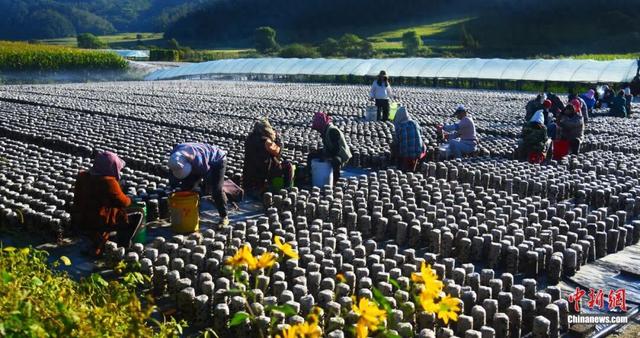
Core Viewpoint - The article highlights the transformation of Huang Song Dian Town into a prominent hub for edible fungi, particularly black fungus, driven by technological innovation and sustainable practices [5][10][20]. Industry Overview - Huang Song Dian Town, located in Jilin Province, has a forest coverage rate of 91% and a unique high-altitude climate that creates ideal conditions for mushroom cultivation [5][7]. - The town has evolved from a poverty-stricken area in the 1980s to a national leader in black fungus production, with over 95% of households engaged in the edible fungi industry [7][9]. Technological Advancements - The introduction of advanced cultivation techniques has significantly increased production efficiency, with black fungus cultivation reaching 950 million bags during the 14th Five-Year Plan period [7][12]. - Modern processing facilities have improved the factory production rate of mushroom bags from less than 20% in 2022 to 39.7% by 2025 [12][13]. Economic Impact - The brand value of "Huang Song Dian Black Fungus" and "Huang Song Dian Ganoderma" has seen substantial growth, increasing from 1.332 billion yuan and 708 million yuan in 2022 to 2.546 billion yuan and 1.212 billion yuan in 2025, respectively [13][14]. - The town has successfully attracted investments totaling 130 million yuan for various projects, including a logistics park and a waste treatment center for discarded mushroom substrates [13][14]. Environmental Sustainability - Huang Song Dian Town has implemented a comprehensive waste management strategy, reducing waste from discarded mushroom bags by 98% and household waste by 84% over five years [17][18]. - A new project for the comprehensive treatment of 10,000 tons of discarded mushroom substrates is set to convert waste into biomass charcoal, promoting a circular economy [17][18]. Future Development Plans - The town aims to establish a modern edible fungi industry system, focusing on expanding the cultivation of rare mushroom varieties and enhancing deep processing capabilities [20][21]. - Plans include integrating tourism with the mushroom industry to create new growth points and enhance brand recognition [20][21].
奋进的河南 决胜“十四五”·南阳篇丨镇平县:乘势扬帆向新程
He Nan Ri Bao· 2025-11-02 23:28
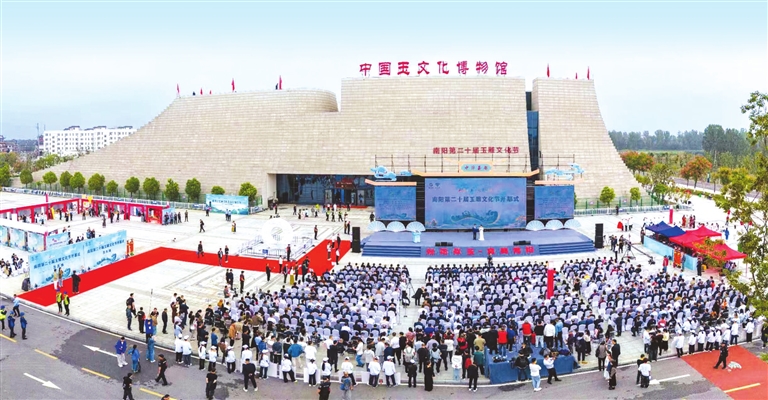
Economic Development - The county has achieved a significant leap in economic strength over the past five years, transitioning from a traditional agricultural county to an industrial powerhouse [6] - Key economic indicators such as GDP, industrial growth, and fixed asset investment have consistently outpaced national, provincial, and city averages, leading to a notable improvement in the county's economic ranking [6] - A total of 285 new industrial projects were introduced during the "14th Five-Year Plan" period, with a signed investment amount of 1,977.95 billion [6] Industry Transformation - The county is focusing on a dual-track approach to upgrade traditional industries like jade carving and green food while nurturing emerging sectors such as electronic components and biomedicine [7] - The jade industry is projected to exceed 50 billion by 2024, aiming to become a global center for jade culture consumption [7] - The green food industry is expected to surpass 2.8 billion by 2024, with significant projects underway [7] Business Environment - The county has implemented innovative measures to optimize the business environment, including a "zero-contact" mechanism for project owners and approval departments [8] - In 2024, the county helped businesses reduce taxes by 620 million and added 18,000 new business entities [8] - E-commerce has emerged as a new growth engine, with transaction volumes expected to exceed 38 billion in 2024 [8] Rural Revitalization - The county has built 584,000 acres of high-standard farmland and implemented significant agricultural infrastructure improvements [9][10] - The "Three Special" initiative has fostered the development of specialized towns and villages, significantly increasing local incomes [10] - The county has established 28 "common prosperity neighborhoods" and 45 "common prosperity workshops," contributing to poverty alleviation efforts [10] Urban Development - Urban planning has been enhanced to improve spatial layout and connectivity, with significant transportation projects underway [17] - The county has increased green space and improved urban infrastructure, resulting in a greener and more livable environment [18] - A focus on refined urban management has led to improved order and cleanliness in the city [18] Social Welfare - The county has allocated 174 billion for social welfare, covering over 80% of the general public budget, and has completed 108 key welfare projects [19][20] - Healthcare services have been significantly improved, with the establishment of a comprehensive healthcare system and increased access to medical services [19][20] - Employment initiatives have successfully created 450,000 new jobs and facilitated the transfer of 260,000 rural laborers [20] Governance - The county has established a digital governance system to enhance community management and service delivery [21][22] - Crime rates have decreased, and the resolution rate for public grievances has reached 97% [22] - The county aims to continue its development under the guidance of Xi Jinping's thought, focusing on project execution and economic structure optimization [22]
为项目建设按下“快进键”
Si Chuan Ri Bao· 2025-11-02 21:50
Group 1 - Fixed asset investment in Neijiang City (excluding rural households) increased by 7.5% year-on-year in the first three quarters, indicating stable overall performance [1][3] - Investment in the secondary industry grew by 25.6%, with industrial investment rising by 25.0% and manufacturing investment increasing by 26.4%, reflecting accelerated industrial upgrading [1][3] - The launch of the second phase of Changchuan Technology's integrated circuit testing equipment manufacturing base marks a strategic decision to seize development opportunities, following the successful operation of the first phase [1][2] Group 2 - Ming Tai Microelectronics' production value surged from 50 million yuan in 2019 to nearly 400 million yuan in the first few months of this year, with expectations to reach 500 million yuan for the entire year [2] - The new 40,000 square meter factory planned by Ming Tai Microelectronics will invest 500 million yuan in high-end equipment, increasing the proportion of high-end products from 20% to over 50% [2] - The construction of the E-commerce Industrial Park's Maker Center in Neijiang is progressing, with 35% of the total project completed, expected to inject new momentum into the high-quality development of the e-commerce industry [2][3] Group 3 - Qingdao Zhengwang New Materials' project for producing 30,000 tons of graphite materials for new energy is nearing completion, with 90% of the overall project progress achieved [3] - The strong momentum in project construction and rapid industrial development reflects the robust investment data, emphasizing the effectiveness of the "project-oriented" development strategy [3]

公募重仓股25年进化史赛道在变,穿越牛熊“主心骨”未变
Zheng Quan Shi Bao· 2025-11-02 18:10
Core Insights - The public fund's top ten heavy stocks have undergone structural changes, reflecting the evolution of China's economic transformation over the past 25 years, transitioning from industrial to consumer and now to technology-driven sectors [1][8] - The shift in heavy stock industries indicates a response to China's economic transition, with each phase representing a different investment focus aligned with national strategies [6][8] Heavy Stock Evolution - From 2000 to 2010, the top heavy stocks were dominated by cyclical stocks like steel and finance, mirroring the characteristics of industrialization and urbanization [1][2] - Notable examples include China Unicom and China Merchants Bank, which consistently ranked among the top heavy stocks, highlighting the strong profitability of the banking sector during this period [1][2] - From 2010 to 2020, consumer stocks took over, with Kweichow Moutai becoming a benchmark for the consumer era, reflecting the trend of rising household income and consumption upgrades [2][3] - Since 2020, technology and high-end manufacturing have emerged as the new focus, with CATL surpassing Kweichow Moutai as the top heavy stock, showcasing the advantages of the new energy sector [3][4] Stock Selection Logic - The correlation between net profit growth and stock price increases underscores the importance of fundamentals in stock selection [4][5] - For instance, New East Wisdom's net profit growth of 284.38% led to a stock price surge of 318.74% in 2025, demonstrating the strong relationship between performance and valuation [4][5] - The evolution of price-to-earnings ratios and total market capitalization reflects the market's dynamic re-evaluation of company values, with technology stocks commanding higher valuations due to growth potential [5][6] Industry Concentration Trends - The concentration of heavy stocks has shifted from a focus on cyclical industries to a more diversified approach, indicating a strategic move towards risk management and alpha generation across various sectors [6][8] - The top heavy stocks now encompass a range of sectors, including electrical equipment, communications, and electronics, with a notable decrease in the dominance of any single industry [6][8] Future Outlook - The industry landscape for heavy stocks is expected to continue evolving in line with national strategic directions and industrial upgrades, with technology-driven sectors remaining at the forefront [8] - Companies that align with the pulse of the times are likely to maintain their appeal to public funds, as evidenced by the sustained interest in both traditional and emerging sectors [8]
A股11月迎关键变盘?最新机构解读来了!
Sou Hu Cai Jing· 2025-11-02 16:30
Market Overview - A-shares showed mixed performance in October, with the Shanghai Composite Index rising by 1.85%, while the Shenzhen Component and ChiNext Index fell by 1.10% and 1.56% respectively [1][3] - The market experienced significant fluctuations, with the Shanghai Composite Index briefly surpassing 4000 points, marking a ten-year high, before undergoing adjustments [1][3] Sector Performance - The cyclical sectors, including coal, steel, and non-ferrous metals, performed strongly with monthly gains of 10.02%, 5.16%, and 5.00% respectively [3] - Conversely, the media, beauty care, and automotive sectors faced notable declines [3] Trading Activity - October saw a robust trading environment with total transaction volume exceeding 36 trillion yuan, and 10 trading days recorded over 2 trillion yuan in turnover [3] - Margin trading showed optimistic sentiment, with the margin balance reaching 24,990.86 billion yuan, an increase of 1,027.90 billion yuan in October [3] Economic Indicators - Manufacturing output in October grew by 5.4% year-on-year, while the service sector production index increased by 6.3%, the highest growth rate this year [9] - Infrastructure investment, manufacturing investment, and retail sales all showed accelerated growth [9] Policy and Market Outlook - The upcoming November is expected to witness a concentration of policy effects and verification of fourth-quarter earnings, with a potential easing of U.S.-China trade tensions [7][11] - The "14th Five-Year Plan" emphasizes high-quality development and technological self-reliance, which is anticipated to guide investment directions in November [7][11] Investment Strategy - Analysts suggest an overweight position in sectors such as machinery, TMT (Technology, Media, Telecommunications), electric power equipment, and non-ferrous metals for November [13] - The focus on innovation and technology is expected to drive growth in the economy, with high-dividend consumer stocks also being highlighted as worthy of attention [13][15]
500亿!又一社保科创基金落地
证券时报· 2025-11-02 15:17
Core Viewpoint - The establishment of the Jiangsu Social Security Science and Technology Innovation Fund represents a significant step in supporting technological innovation and industrial upgrading in China, with a focus on long-term capital investment in strategic emerging industries [1][2][4]. Group 1: Fund Establishment and Structure - The Jiangsu Social Security Science and Technology Innovation Fund has a first-phase scale of 50 billion yuan, established in collaboration with the National Social Security Fund Council, Jiangsu Provincial Government, Suzhou Municipal Government, and ICBC Investment [1][2]. - The fund adopts a "mother fund + direct investment" model, aiming to integrate resources and professional operations, focusing on high-growth potential projects that enhance regional industrial chain resilience [4][3]. Group 2: Investment Focus and Strategy - The fund will primarily invest in strategic emerging industries such as artificial intelligence, integrated circuits, biomanufacturing, new energy, high-end equipment, and new materials, supporting the construction of a modern industrial system [4][5]. - The fund's management is entrusted to Suzhou Innovation Investment Group, which has already established a partnership enterprise with a contribution of 12.794 billion yuan to prepare for the fund's projects [4][6]. Group 3: Regional Development and Policy Support - The establishment of the fund aligns with national strategies to support technological innovation, particularly in the Yangtze River Delta and Greater Bay Area, showcasing the government's commitment to guiding long-term capital into the venture capital sector [2][7]. - Recent policies have allowed social security funds to enter the venture capital field, with the National Social Security Fund Council emphasizing the importance of innovative cooperation models to support high-quality economic development [7][8]. Group 4: Broader Context and Future Prospects - Other regions, such as Zhejiang and Anhui, are also establishing similar funds, indicating a nationwide trend towards leveraging social security funds for technological innovation [2][10]. - The ongoing collaboration between central and local governments aims to create a new pattern of regional investment, with social security funds expected to stabilize market fluctuations and attract more social capital to strategic industries [10][9].