避险资产

Search documents
机构看金市:7月10日
Xin Hua Cai Jing· 2025-07-10 07:00
Group 1 - The precious metals market is expected to maintain a high-level oscillation trend due to strong support from market conditions and geopolitical factors [1][2] - The recent increase in tariffs by the U.S. has led to a resurgence of market risk aversion, providing strong short-term support for gold prices [2][3] - The World Gold Council indicates that gold prices will benefit from rising U.S. deficits and increasing fiscal instability, which are driving global capital reallocation [3] Group 2 - Analysts from Saxo Bank believe that factors driving precious metal prices upward still exist, with expectations of increased demand due to declining U.S. interest rates [4] - The current gold price is oscillating within a relatively narrow range, lacking new bullish catalysts, which increases the risk of further market corrections [4] - Future support factors for precious metals include ongoing central bank demand, inflation risks in the U.S., geopolitical tensions, and a shift of institutional investors towards tangible assets [4]
世界黄金协会:“小型危机”正在路上,黄金才是终极避风港
Jin Shi Shu Ju· 2025-07-10 05:24
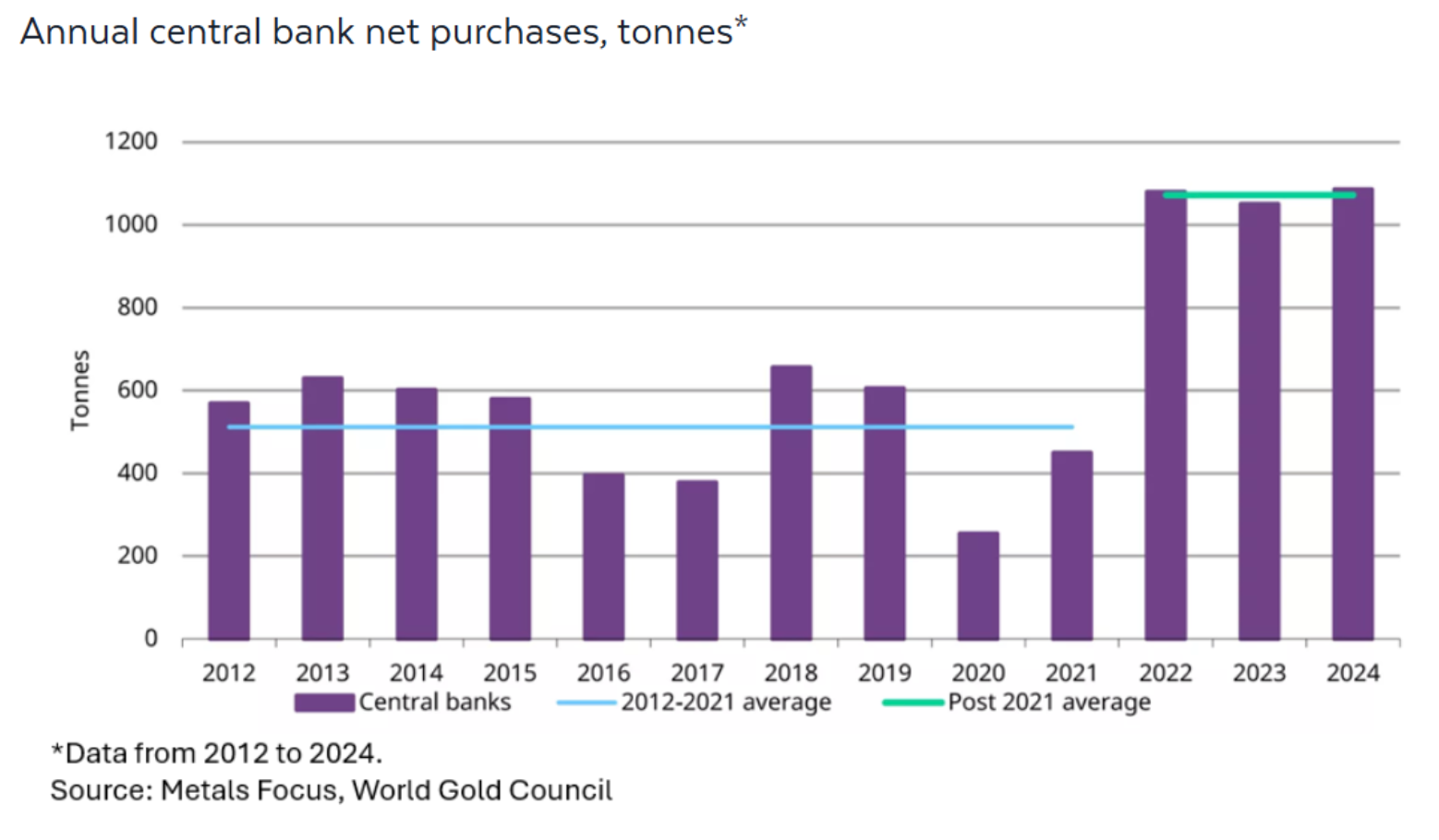
Core Viewpoint - The World Gold Council analysts believe that gold prices will benefit from the soaring U.S. deficit and increasing fiscal instability, even in the absence of short-term crises [2] Group 1: Economic and Fiscal Factors - The passage of the "Big and Beautiful" bill is expected to add $3.4 trillion in debt over the next decade unless the Trump administration meets its growth forecasts, raising the debt ceiling by $5 trillion [2] - Political tensions, particularly Elon Musk's threat to form the "American Party," are contributing to accumulating fiscal and political risks [2] - Global capital is being reallocated due to these uncertainties, with a weakening dollar driving up gold prices and U.S. Treasury yields [2][5] Group 2: Investor Behavior and Market Dynamics - Investors are increasingly turning to gold as a safe haven due to rising fiscal concerns, despite the traditional view that rising interest rates hinder gold prices [2][7] - Since 2022, other factors have rebalanced the inverse correlation between interest rates and gold prices, with gold prices rising even when real interest rates exceed 2% [2] - Central bank purchases, particularly from emerging market central banks, have become a significant factor in the strengthening of gold prices [2] Group 3: Long-term Implications - The long-standing fiscal issues have been a crucial support for the gold market, especially as the gap between U.S. Treasury yields and fixed-rate swaps widens, indicating increased market sensitivity to U.S. fiscal problems [5] - Although the World Gold Council does not foresee a full-blown fiscal crisis in the U.S., a series of smaller crises could arise due to debt ceiling issues or defaults, increasing market instability and demand for gold as a safe haven [5][6] - Analysts warn that if leaders appear to weaken their commitment to long-term fiscal discipline, the bond market's reaction could be swift and severe [6]

富格林:黑幕冻结妥当高效 关税大消息曝光
Sou Hu Cai Jing· 2025-07-09 07:30
Core Viewpoint - The recent decline in gold prices is attributed to optimistic sentiments regarding trade agreements between the U.S. and its partners, alongside a strengthening dollar and rising U.S. Treasury yields, which collectively exerted downward pressure on gold prices [2][4]. Group 1: Gold Market Analysis - On July 8, spot gold prices fell over 1%, briefly dropping below the $3,300 per ounce mark, marking a new low in over a week [1][2]. - The decline in gold prices is influenced by multiple factors, including optimistic trade negotiations, a stronger dollar, and rising U.S. Treasury yields, as well as the complexities introduced by Trump's tariff policies [2][4]. - In June, the People's Bank of China continued to increase its gold reserves for the eighth consecutive month, reflecting China's strategic emphasis on gold amid global monetary uncertainties [4]. Group 2: Future Outlook for Gold Prices - Analysts predict that gold prices will continue to rise in the second half of the year, with expectations for prices to reach $3,700 per ounce in Q3 and potentially $4,000 by year-end [9]. - The first half of 2025 saw gold prices increase by 25%, setting new records and significantly outperforming the previous year's highs, driven by inflation risks and geopolitical tensions [8][9]. - The market consensus remains bullish on gold, with analysts emphasizing the importance of aligning with market trends rather than attempting to counter them [9].
金荣中国:现货黄金小幅延续隔夜跌幅,至3285一线弱势反弹
Sou Hu Cai Jing· 2025-07-09 05:52
Fundamental Analysis - Gold prices have been under pressure, with spot gold trading around $3,292 after a drop of over 1% on Tuesday, reaching a low of $3,287.06 [1] - The decline in gold prices is attributed to optimistic trade negotiations, a stronger dollar, rising U.S. Treasury yields, and the complexities of Trump's tariff policies [1][3] - The market's expectation of easing trade tensions has reduced the demand for gold as a safe-haven asset, contributing to the price drop [1] - Trump's warning of tariffs on 14 countries, followed by a delay in implementation, has created a buffer for negotiations, leading to a more favorable market sentiment [1] - Japan and South Korea are actively negotiating to mitigate the impact of tariffs, which has further fueled risk appetite and pressured gold prices [1] Economic Indicators - The rise in the dollar is closely linked to expectations regarding the U.S. economy and monetary policy, with recent strong employment reports reducing bets on immediate rate cuts by the Federal Reserve [3] - The 10-year U.S. Treasury yield reached a two-week high of 4.435%, while the 30-year yield hit 4.974%, increasing the opportunity cost of holding non-yielding assets like gold [3] - Trump's tariff policies are seen as a core variable in the financial markets, with the actual tariff rate estimated to have risen to 17.6%, the highest since 1934 [3] Market Outlook - In the short term, gold prices are expected to remain volatile due to the ongoing impact of Trump's tariffs and the expansion of the U.S. fiscal deficit [4] - The market is advised to monitor the Federal Reserve's meeting minutes and developments regarding Trump's tariffs for further insights [4] Technical Analysis - The daily chart indicates a struggle for direction in gold prices, with a trading range between $3,290 and $3,350 [6] - Short-term movements have shown volatility, with prices testing lower levels around $3,286 before a slight rebound [6] Trading Strategy - Suggested long positions near $3,290 with a stop loss at $3,284 and a target around $3,320 to $3,345 [7] - Suggested short positions near $3,345 with a stop loss at $3,353 and a target around $3,323 to $3,303 [7]

黄金评论:亚盘金价承压震荡回落,市场承压轻仓空单布局。
Sou Hu Cai Jing· 2025-07-08 06:27
Fundamental Analysis - Gold prices experienced a slight increase, reaching $3345.71 per ounce, reflecting a 0.3% rise, influenced by the interplay between the US dollar and risk aversion sentiment [1] - The announcement of Trump's tariff policy led to a significant drop in US stocks, which in turn spurred a rapid increase in gold prices due to heightened demand for safe-haven assets [1] - The People's Bank of China (PBOC) has increased its gold reserves for eight consecutive months, indicating a strategic emphasis on gold as a key asset amid global economic uncertainties [1] Market Dynamics - As the largest gold consumer globally, China's continuous gold purchases provide crucial support for gold prices, especially in light of potential global trade tensions stemming from Trump's tariff policies [2] - The market is closely monitoring the Federal Reserve's June policy meeting minutes and speeches from various officials for insights into monetary policy, with a high probability of maintaining interest rates in July at 95% and a 60% chance of a rate cut in September [2] Technical Analysis - Current gold market trends indicate an upward price movement, with strategies suggesting support for long positions and resistance for short positions [6] - The MACD indicator shows upward momentum, although market activity appears to be decreasing, suggesting a cautious trading approach [6] Trading Strategies - Suggested trading strategy includes placing a short position around $3339 with a stop loss at $3346 and a take profit target in the $3310-$3300 range [7]
亚盘金价压力位震荡,市场承压轻仓空单布局
Sou Hu Cai Jing· 2025-07-08 06:16
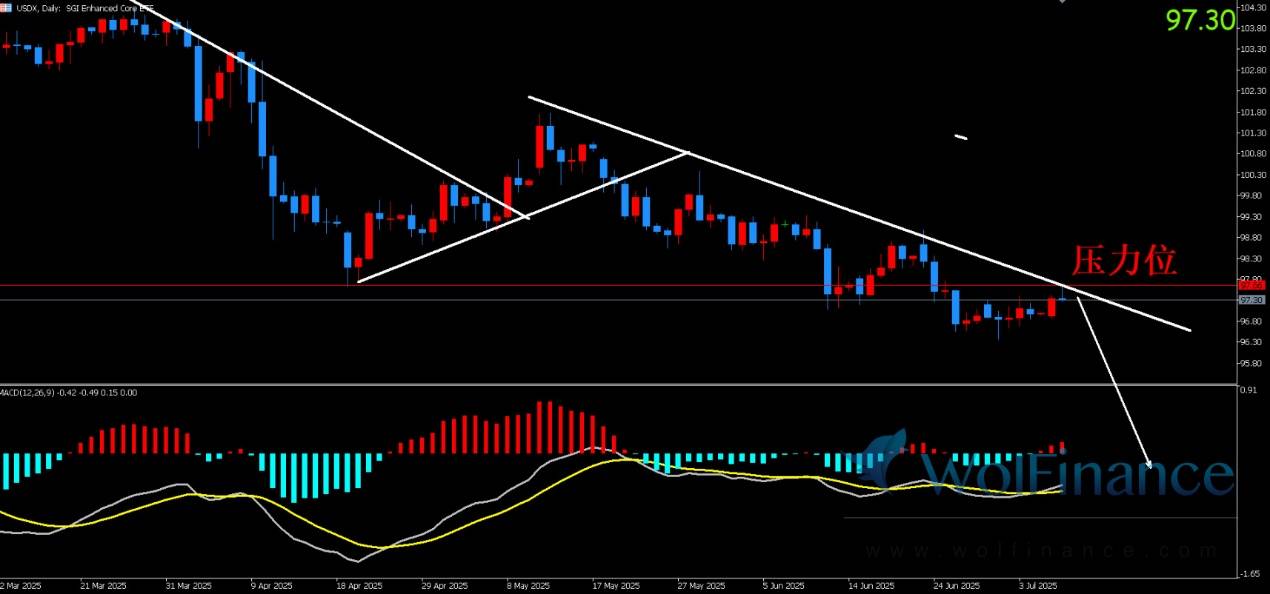
Group 1 - Gold prices experienced a slight increase, reaching $3,345.71 per ounce, reflecting a 0.3% rise, amidst a tug-of-war between the US dollar and risk aversion sentiment [1] - The announcement of Trump's tariff policy led to a significant drop in US stocks, which in turn spurred a rapid increase in gold prices as investors sought safe-haven assets [1] - The sensitivity of the gold market to external shocks was highlighted by its quick rebound from a low of $3,296.37 per ounce [1] Group 2 - The People's Bank of China has been increasing its gold reserves for eight consecutive months, indicating a strategic emphasis on gold as a key asset amid global economic uncertainty [3] - China's status as the largest gold consumer globally means its central bank's purchasing actions provide substantial support for gold prices, especially in light of potential trade tensions from Trump's tariff policies [3] - The market is closely monitoring the Federal Reserve's policy meetings and speeches, as rising inflation expectations complicate the outlook for interest rate cuts, which could impact gold prices negatively in the short term [3]
特朗普关税达摩克利斯之剑再度高悬:亚太股指依旧坚挺,美股美债遭抛售,黄金V型反转
Di Yi Cai Jing· 2025-07-08 04:28
亚太早盘,日本日经225指数上涨0.36%,东证指数上涨0.31%。韩国Kospi综合指数上涨了0.44%,小盘股Kosdaq 指数上涨0.19%。 美国总统特朗普的关税达摩克利斯之剑再度高悬于全球各经济体和市场之上。据新华社报道,美国总统特朗普7日 表示,将从8月1日起分别对来自日本、韩国等14个国家的进口产品征收25%至40%不等的关税。 今日亚太各主要股指对此反应相对平淡,仍整体维持涨势,但汇率纷纷走低。隔夜美股美债再度遭遇抛售,美元 近期反弹但仍被看空,避险情绪重燃促金价V型反转。 富时新加坡海峡指数开盘涨0.18%,报4039.06点。 日本长债收益率延续昨日涨势,30年期日债收益率涨6个基点至3.025%,20年期日债收益率涨5个基点至2.475%。 香港恒生指数开盘涨0.17%报23927.53点,恒生科技指数涨0.28%,恒生中国企业指数涨0.22%。上证指数同样高开 0.04%,创业板指跌0.03%。先进封装、存储器、半导体、电力题材走强;光伏玻璃、CPO、金融科技、中船系、 算力概念股走弱。 对于特朗普加征关税威胁,日本内阁官房长官林芳正表示,日本和美国正在进行关税谈判但尚未达成协议;将竭 ...
理性投资,风险自担
Zheng Xin Qi Huo· 2025-07-07 11:39
理性投资,风险自担 核心观点 基本面:美国关税谈判大限将至,但与多数国家谈判陷入僵局,美国经济政策不确定性指数长期持续处于历史高位,美国 的逆全球化和贸易保护主义行为对全球经济和金融市场带来巨大冲击,制造业、出口型企业股票和大宗商品等资产收益受损 ,在当前全球经济与地缘政治不稳定的环境下,贵金属作为一项战略性资产具备良好的抵御风险能力,贵金属等避险资产需 求上升,全球央行加仓黄金意愿更加强烈。 资金面:上周COMEX黄金和白银库存有所回落;全球黄金储备不断延续走高,近4 3 %的央行计划在未来一年内 增加自身黄金储备;全球主要白银ETF资金加速流入,白银较黄金资金关注度上升;上周对冲基金多头在黄金 上增持力度放缓。 策略:沪金价格长期看多,短期延续高位震荡,中期建议持多;沪银短期维持高位震荡,中期建议持多或急跌 震荡区间下沿做多。 风险提示:地缘政治冲突,美国货币与财政政策,关税贸易风险 目 录 1 行情回顾 2 宏观面:关注美国关税政策扰动 3 持仓分析:对冲基金更关注白银机会 4 其他要素 行情回顾 重点指标涨跌幅 | 品 种 | 重点数据指标 | 最新 | 一 期 | 上 一 | 期 | 周变化 | | ...
打破沉默!中国央行连续8个月增持黄金!背后在下一盘大棋?
Sou Hu Cai Jing· 2025-07-07 09:51
Core Viewpoint - The People's Bank of China (PBOC) has been consistently increasing its gold reserves, reaching 73.9 million ounces by the end of June 2025, marking an increase of 70,000 ounces from the previous month, and this is the eighth consecutive month of gold accumulation [2]. Group 1: Reasons for Increasing Gold Reserves - The global political and economic landscape is complex and uncertain, especially following the policies of the Trump administration, making gold a preferred safe-haven asset [3]. - China's gold reserves as a percentage of total international reserves are relatively low compared to the global average, which is around 15%. As of December 2024, gold accounted for only 5.5% of China's official international reserves [4]. Group 2: Future Outlook - It is likely that China will continue to increase its gold reserves to promote the internationalization of the Renminbi and enhance the credibility of its sovereign currency [6]. - The ongoing global uncertainties provide motivation for the central bank to keep accumulating gold [7]. Group 3: Gold Price Trends - In the first half of this year, the London spot gold price rose by 25.7%, marking the largest half-year increase since the second half of 2007. Long-term factors such as geopolitical conflicts, a weakening dollar, and central bank purchases are expected to support further increases in gold prices [8].
美联储降息倒计时:你的钱袋子该如何应对?
Sou Hu Cai Jing· 2025-07-07 08:31
从"小非农"就业数据爆冷,到华尔街投行集体调整预期,再到香港保险市场突然火爆,这场牵动全球的"利率地震"似乎离普通人越来越 近。 作为普通投资者,我们该如何理解这场风暴?又该如何守护自己的财富? 美联储降息从来不是孤立事件。历史经验表明,当美国进入降息周期,全球资本会像潮水般寻找出口。 2024年美联储降息后,黄金价格一度突破3050美元/盎司,港股科技股单日涨幅超3%,甚至东南亚国家的房产也成了资金新宠。背后的 逻辑很简单:利率下降时,资金会流向收益更高的地方。 美债与黄金的"跷跷板" 降息预期下,短期美债收益率可能快速下跌,资金会涌入黄金等避险资产。但若降息触发经济衰退担忧,黄金的避险属性又会进一步凸 显——2025年一季度,黄金ETF的全球资金流入量同比激增40%。 股市的分化游戏 科技股因融资成本降低可能受益,但传统周期股却可能因经济预期转弱而承压。更微妙的是,如果降息是因经济恶化而非政策主动调 整,市场可能先涨后跌。 新兴市场的"双刃剑" 港股、A股等市场可能因美元走弱吸引外资流入,但这也取决于国内政策能否同步宽松。 例如,2024年美联储降息后,A股消费电子板块因外资加仓上涨12%,但同期人民币汇 ...