
关税政策

Search documents
调查显示美国关税政策导致中小企业成本上升超两成
Yang Shi Xin Wen· 2025-09-14 21:10
Core Insights - Freightos conducted a survey of 336 small and medium-sized enterprises, revealing that nearly half of the respondents reported a cost increase of over 20% due to global tariff threats from the U.S. government [1] - Approximately half of the surveyed companies have reduced their shipping volumes as a result of cost pressures [1] - The previous anxiety over whether to "stock up or wait" has shifted to the burden of paying tariffs, which has become a more significant concern for businesses [1]
海外经济跟踪周报20250914:静候降息,权益普涨-20250914
Tianfeng Securities· 2025-09-14 13:41
Report Industry Investment Rating No relevant content provided. Core View of the Report The report analyzes the overseas market trends from September 8 to 12, 2025, including the performance of stocks, foreign exchange, bonds, and commodities. It also covers overseas central bank dynamics, Trump policy updates, and high - frequency tracking of the overseas economic fundamentals, and reminds of important events in the coming week. Factors such as economic data, geopolitical situations, and central bank policies have significant impacts on market trends [3]. Summary by Directory 1. Overseas Market One - Week Review - **Equities**: Overseas equities generally rose this week. US stocks' three major indices all closed higher, with the Nasdaq rising for 5 consecutive days. European and Asian major indices also increased due to factors like the increased probability of 3 interest rate cuts within the year. For example, the S&P 500, Dow, and Nasdaq rose 1.59%, 0.95%, and 2.03% respectively; the German DAX and London FTSE 100 rose 0.43% and 0.82%; the Nikkei 225 and South Korean Composite Index rose 4.07% and 5.94% [3][12]. - **Foreign Exchange**: The US dollar weakened this week. The dollar index fell 0.12%. The euro and yen against the dollar changed by +0.15% and - 0.17% respectively, and the RMB against the dollar rose slightly by 0.06% [12]. - **Interest Rates**: The 10Y US Treasury yield declined, while the short - end rose. The 2Y US Treasury rose 5bp, and the 10Y US Treasury fell 4bp. The decline was due to factors consolidating the interest rate cut expectation, and the rise was affected by the Middle - East situation and inflation expectations [13]. - **Commodities**: Gold, crude oil, and copper prices all rose. COMEX gold and silver rose 1.26% and 2.81%; WTI crude oil and copper rose 1.02% and 2.54% [13]. 2. Overseas Policy and Key News 2.1 Overseas Central Bank Dynamics - The market's expectation of a 9 - month interest rate cut by the Fed reached 100%. The core CPI inflation in the US in August met expectations. The market's expectation of a 25bp cut in September was 93.4% (up from 89.0% a week ago), and the probability of a 50bp cut was 6.6% (down from 11.0% a week ago). The probability of a total of 75bp cuts throughout 2025 was 74% (up from 65% a week ago) [4][30][31]. - The Fed's FOMC meeting in September may see increased internal differences, and the new dot - plot may adjust the interest rate cut path significantly and become more decentralized [30]. 2.2 Trump Policy Tracking - **Trade and Tariffs**: The Supreme Court will hold an oral debate on the legality of Trump's global tariff policy in the first week of November. China and the US will hold talks from September 14 - 17 in Spain, discussing issues like US unilateral tariffs and TikTok. China's Ministry of Commerce launched anti - dumping and anti - discrimination investigations on US - imported products. Trump proposed that the EU impose a 100% tariff on Russia's energy buyers (India and China) [33]. - **Fed - related**: Milan may participate in the September FOMC vote. There is a new candidate for the Fed chair, Rick Rieder. The case of Fed governor Cook may have a turn, with evidence to refute the mortgage fraud accusation [33][34]. 3. Overseas Economic Fundamental High - Frequency Tracking 3.1 Overall Economic Outlook - The Polymarket website's bet on a US economic recession in 2025 was 11% (up from 9% a week ago). Bloomberg's consensus forecast for US economic growth in 2025 was revised up to 1.65%, and for the eurozone, it was 1.2% [6][40]. - The New York Fed's Nowcast model slightly lowered the Q3 US real GDP growth forecast to 2.08%, while the Atlanta Fed's GDPNow model raised it to 3.09% [42]. 3.2 Employment - The number of unemployment benefit claimants exceeded expectations, mainly due to the impact in Texas. The initial jobless claims rose to 263,000, with Texas contributing 57%. The number of continuous unemployment benefit claimants remained at 1.939 million [47]. 3.3 Demand - US retail sales were stable, but airport security checks and railway transportation decreased significantly. The red - book retail sales growth rate was 6.6%. Airport security checks fell to 15.787 million, and railway transportation was 468,000 vehicles, with a year - on - year growth rate of - 9.44%. The real - estate market activity picked up, with mortgage rates falling and application indices rising [55]. 3.4 Production - US crude steel production rebounded, and the refinery's capacity utilization rate was stable. The crude steel production in the week ending September 5 was 1.795 million short tons, and the refinery's capacity utilization rate was 94.9% [59]. 3.5 Shipping - International freight rates showed mixed trends. The Drewry World Container Freight Index (WCI) fell 2.9%, while the Baltic Dry Index, Capesize Freight Index, and Panamax Freight Index rose 7.4%, 11.3%, and 8.3% respectively. Chinese port export container prices generally fell, with some routes rising [61][63]. 3.6 Prices - US retail gasoline prices fell 0.69% this week. The 1 - year inflation swap rate was 3.335% (up 0.03 percentage points), and the 2 - year inflation swap rate was 2.906% (down 0.02 percentage points) [65]. 3.7 Financial Conditions - US financial pressure declined. The OFR US Financial Stress Index was - 1.136 (down 0.105 from the previous week), and the CCC high - yield bond credit spread was 8.00% (down from 8.06% a week ago) [67]. 4. Next Week's Overseas Important Event Reminder - Multiple overseas central banks, including the Fed, the Bank of Japan, the Bank of England, and the Bank of Canada, will announce interest rate decisions. Attention should also be paid to US retail data and import price indices. Diplomatic events include China - US trade talks from September 14 - 17 and Trump's state visit to the UK from September 17 - 19 [72].
欧盟投降,欧美达成协定,冯德莱恩给美国送1.35万亿,中国危险了
Sou Hu Cai Jing· 2025-09-14 13:00
Core Viewpoint - The article discusses the recent trade agreement between the EU and the US, highlighting the implications for global trade dynamics, particularly concerning China and the potential shift away from the WTO framework [1][3][5]. Group 1: Trade Agreement Details - The EU and the US reached a trade agreement where the US will impose a 15% tariff on EU goods, while the EU commits to investing $600 billion in the US and purchasing $750 billion in energy products [3][5]. - Ursula von der Leyen, the President of the European Commission, indicated that the 15% tariff was the best outcome achievable for Europe [3][5]. Group 2: Implications for Global Trade - The agreement signifies a shift towards a "might makes right" approach in global trade, potentially undermining the WTO's authority and allowing the US to set unilateral trade policies [5][7]. - The alignment of major economies like the EU, Japan, and Southeast Asian countries with US trade policies could lead to a reconfiguration of global supply chains and technology systems, posing risks for China [7][9]. Group 3: Economic Impact and Future Outlook - The article suggests that while the trade agreements may reduce trade deficits and benefit the military-industrial complex and energy sectors in the US, they may not significantly boost high-end manufacturing jobs [9][11]. - The long-term sustainability of these trade agreements is questioned, as they may not effectively address the underlying issues of trade deficits and the dollar's role in global trade [11].

韩国对美出口出现明显下滑,特朗普关税政策促使韩国出口格局生变
Di Yi Cai Jing· 2025-09-14 07:27
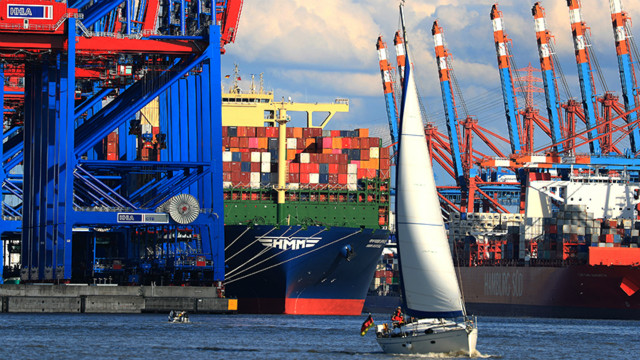
Core Viewpoint - South Korea's export landscape has shifted significantly, with China and ASEAN overtaking the U.S. as the top two export markets in the second half of the year, primarily due to the impact of U.S. tariff policies [1][3]. Export Performance - In the first half of the year, South Korea's total export value reached $334.7 billion, showing a slight year-on-year decline of 0.03%. However, exports in July increased by 5.9% to $60.82 billion, followed by a 1.3% growth in August to $48.4 billion [1]. - In the first half, South Korea's exports to the U.S. amounted to $62.18 billion, a decrease of 3.7% year-on-year, while exports to China and ASEAN were $60.49 billion and $57.61 billion, respectively [3]. - By July, South Korea's exports to China reached $11.05 billion, making it the largest market, while exports to ASEAN were $10.91 billion, and exports to the U.S. dropped to $10.33 billion [3]. Market Diversification - The shift in export dynamics is attributed to South Korea's efforts to diversify its trade relationships in response to the uncertainties created by U.S. tariff policies. This includes a focus on increasing exports to ASEAN [4]. - Following the election of President Lee Jae-myung, there has been a push to reduce reliance on the U.S. market, which has been seen as a source of pressure due to tariff measures [4]. Investment Climate - Recent events, including U.S. inspections of South Korean companies, have raised concerns about the investment climate in the U.S., leading many South Korean firms to reconsider their investment plans in the U.S. market [5]. - A survey indicated that 10 out of 14 South Korean companies are contemplating adjustments to their U.S. project plans, with predictions that the automotive sector may shift investments to more stable regions like Latin America, Europe, or the Middle East [5]. Trade Agreements - In light of the current trade uncertainties, South Korea is also revisiting its interest in joining the Comprehensive and Progressive Agreement for Trans-Pacific Partnership (CPTPP), which aims to enhance economic integration in the Asia-Pacific region [6].
美国服装业“压力山大”
Xin Hua She· 2025-09-12 22:05
Core Viewpoint - The uncertainty of U.S. tariff policies is causing significant stress and anxiety within the global fashion and apparel industry, leading to rising costs, compressed profits, and supply chain uncertainties [1][2][3]. Group 1: Industry Impact - The Las Vegas Apparel Show, a major event in North America, has become a platform for discussing the negative impacts of tariff policies on market confidence and business opportunities [1]. - Companies are facing challenges in managing cost increases without fully passing them onto consumers, creating a delicate balance between market acceptance and survival pressures [1][2]. - The fashion industry is experiencing a collective struggle, with many companies feeling the pressure of rising costs and uncertain tariff policies [3]. Group 2: Company Responses - Companies like Tribal Fashion are adjusting prices, with a reported increase of approximately 7% for their spring 2026 women's collection, in response to rising tariffs [1]. - Bravo Group, a U.S. menswear company, is facing significant pressure due to the price sensitivity of its market, making it difficult to raise prices without risking market share [2]. - Global Footwear, which relies heavily on Chinese manufacturing, has found it challenging to find suitable alternatives in Southeast Asia due to quality issues, thus maintaining its current supply chain [2]. - Orange Fashion, a Canadian company, emphasizes the importance of its long-term relationships with retailers and is cautious about raising prices to avoid damaging these relationships [3].
贸易、经济、开放,尼尔·布什谈中国发展
2 1 Shi Ji Jing Ji Bao Dao· 2025-09-12 14:53
Group 1: US Economic Concerns - The US economy is facing pressures such as slowing domestic demand and job growth, with the International Monetary Fund (IMF) noting that the downward adjustment of employment data is greater than historical averages [2] - The US tariff policy, based on the flawed assumption that trade deficits are harmful, is predicted to have detrimental effects on the economy, leading to a slowdown and potential recession [3][4] - Recent data from the US Department of Labor indicates that from April 2024 to March 2025, the number of new jobs added is 910,000 less than initially reported, suggesting a cooling job market [3] Group 2: China Economic Outlook - Confidence in China's economic growth is bolstered by its rapid development in the green economy, particularly in solar and wind energy technologies, where China is seen as a global leader [5] - In the first half of the year, China's total automobile sales reached 15.653 million units, with new energy vehicles accounting for 44.3% of sales, attributed to the extensive deployment of charging infrastructure [5] - An investment initiative is underway, with collaboration between a US investor and a Chinese auto parts company to establish a factory in Saudi Arabia, with future plans to enter the European market [5] Group 3: Personal Insights on China - The individual has a long-standing connection with China, having visited over 180 times, and notes the significant increase in China's internationalization and openness, enhancing the experience for foreigners living and doing business in China [6]
美国9月密歇根大学消费者信心指数进一步大幅下滑
Sou Hu Cai Jing· 2025-09-12 14:29
Core Viewpoint - The University of Michigan's consumer confidence index for September has significantly declined from 58.2 to 55.4, indicating a worsening consumer sentiment which is a crucial pillar of the U.S. economy [2] Economic Indicators - The drop in the consumer confidence index suggests that consumer spending, a vital component of the economy, is deteriorating further [2] - Recent economic data supports the likelihood of the Federal Reserve restarting interest rate cuts in its upcoming meeting, with some institutions predicting a 50 basis point cut [2] - A more probable scenario is a 25 basis point cut, as the Federal Reserve is expected to maintain a cautious approach towards rate reductions unless there is a clear acceleration in economic decline [2] Policy and Uncertainty - President Trump's tariff policies continue to introduce significant uncertainty into the U.S. economy, contributing negative pressure [2] - The potential for "black swan" events poses additional risks to the economic outlook, making the future of the U.S. economy increasingly uncertain [2]

US Treasury calls on G7, EU to impose tariffs on China, India over Russian oil purchases
Reuters· 2025-09-12 13:28
Group 1 - The U.S. Treasury has urged G7 and EU allies to implement "meaningful tariffs" on goods from China and India to curb their purchases of Russian oil [1] - The call for tariffs is part of a broader strategy to address the ongoing geopolitical tensions and economic implications of Russian oil purchases [1] - The G7 finance ministers are expected to convene to discuss these measures and their potential impact on global markets [1]
数据点评:美国8月核心CPI符合预期,锁定下周25个基点降息
SPDB International· 2025-09-12 12:07
Inflation Data - The core CPI inflation rate in the U.S. for August remained stable at 3.1%, while the overall CPI increased by 0.2 percentage points to 2.9% due to a lower base effect[1] - Month-on-month, the core CPI rose from 0.32% in July to 0.35% in August, slightly above the market expectation of 0.3%[1] - The overall CPI month-on-month growth rebounded from 0.20% in July to 0.38% in August, exceeding market expectations[1] Labor Market Trends - Non-farm payrolls added only 22,000 jobs in August, down from 79,000 in July and significantly below the market expectation of 75,000[1] - The unemployment rate increased from 4.248% in July to 4.324% in August[1] - The average hourly wage growth showed a slight decline both month-on-month and year-on-year[1] Core Components Analysis - Housing CPI showed a significant increase, rising by 0.2 percentage points to 0.44% in August, primarily due to seasonal factors affecting lodging prices[2] - Super core service prices decreased by 0.33 percentage points to 0.22%, with transportation services being the only strong segment driven by rising airfare prices[2] - Core goods prices increased slightly by 0.07 percentage points to 0.28%, with clothing prices rising significantly due to seasonal changes[2] Federal Reserve Outlook - The expectation is for a 25 basis point rate cut in the upcoming Federal Reserve meeting, supported by the recent economic data[4] - The labor market's continued weakness and stable inflation data provide a basis for the anticipated rate cut[4] - Risks remain regarding the impact of tariffs on inflation and the potential for further rate cuts if labor market conditions deteriorate[4]
【环球财经】美研究机构:关税政策或“致贫”百万美国人
Xin Hua She· 2025-09-12 12:05
Core Insights - The new tariff policy implemented by the U.S. government in 2025 is projected to increase the number of Americans living in poverty by 650,000 to 875,000, raising the poverty rate by 0.2% to 0.3% [1] Group 1: Poverty Metrics - The U.S. Census Bureau has two main poverty indicators: the official poverty measure and the supplemental poverty measure [1] - According to the official poverty measure, approximately 875,000 people will fall into poverty due to the new tariffs, including about 375,000 children, raising the poverty rate from 10.4% to 10.7% [1] - Under the supplemental poverty measure, the poverty rate will increase from 12.0% to 12.2%, with an additional 650,000 people affected, including 150,000 children [1] Group 2: Impact of Tariffs - Tariffs are essentially a tax on American households, disproportionately affecting low-income families who spend a larger share of their income on consumption [2] - The average effective tariff rate in the U.S. has risen to 17.4%, the highest level since 1935, due to the tariffs implemented by the Trump administration [2] - A significant portion of the tariffs is currently under legal dispute, with the Supreme Court agreeing to hear a case regarding the legality of these tariffs [2][3]