
促消费政策

Search documents
政策发力逐步显效 我国消费潜力持续释放
Yang Shi Wang· 2025-08-18 00:28
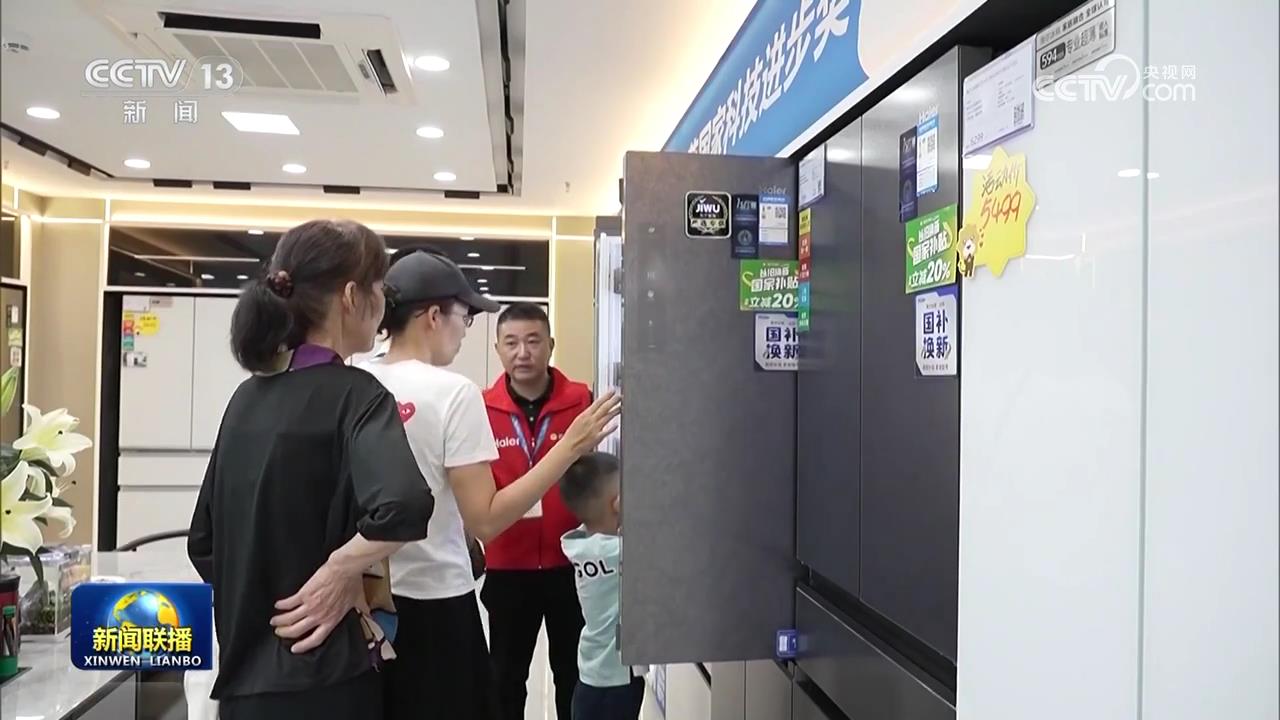
Core Viewpoint - A series of policies aimed at expanding domestic demand and promoting consumption have shown effectiveness this year, leading to stable growth in China's consumption market and highlighting the role of consumption as a key driver of economic growth [1] Group 1: Consumption Policies and Impact - The "trade-in" policy for consumer goods has significantly boosted sales, with related sales exceeding 1.9 trillion yuan (approximately 265 billion USD) and benefiting over 320 million people by August 14, 2023 [1] - The automotive sector saw over 7.3 million vehicles traded in, while home appliances experienced over 110 million units traded in, and digital products like smartphones had over 7.89 million units purchased [1] - High-efficiency appliances are experiencing rapid sales growth, indicating a shift towards higher quality and energy-efficient products [1] Group 2: Service Consumption Trends - There has been a continuous release of demand for service consumption, particularly during the summer travel season, with many people traveling for events [1] - Cultural venues have extended their hours, and new experiences like "Museum Night" have emerged, contributing to a vibrant cultural consumption landscape [1] - In the first seven months of the year, retail sales in tourism, leisure, and related services have shown double-digit growth [1] Group 3: Online Consumption Growth - Online retail has gained momentum, with a year-on-year growth of 9.2% in the first seven months, marking a new high for the year [1]
7月国民经济稳中有进 规上工业增加值增长5.7%
Chang Jiang Shang Bao· 2025-08-18 00:05
Economic Overview - The national economy shows a steady growth trend, with industrial added value above designated size increasing by 5.7% year-on-year in July and 6.3% from January to July [1][3] - The service industry continues to grow rapidly, contributing significantly to economic stability [6] Industrial Production - Industrial production maintains robust growth, with high-quality development progressing steadily, showcasing resilience and potential [1] - High-tech manufacturing added value increased by 9.3% year-on-year in July, with significant growth in integrated circuits and electronic materials [2] - Equipment manufacturing and high-tech manufacturing sectors are key contributors, with respective growth rates of 8.4% and 9.3% [1][2] Investment Trends - Fixed asset investment continues to expand, with a total of 288,229 billion yuan from January to July, marking a 1.6% year-on-year increase [3] - Manufacturing investment grew by 6.2%, with high-tech industries such as aerospace and information services seeing substantial increases [3] Consumer Market - Retail sales showed positive growth, with total retail sales reaching 38,780 billion yuan in July, up 3.7% year-on-year [4] - Online retail sales increased by 9.2%, indicating a strong shift towards e-commerce [4][5] - The consumption upgrade policy, including trade-in programs, has positively impacted sales of upgraded goods [5] Service Sector Growth - The service sector's contribution to economic growth is significant, with a 5.5% year-on-year increase in added value in the first half of 2025 [6] - The service production index rose by 5.8% in July, with information technology services growing at 11.9% [6]
7月经济数据点评:经济有所放缓,生产仍具韧性
Tai Ping Yang Zheng Quan· 2025-08-17 09:45
Economic Performance - In July, China's industrial added value increased by 5.7% year-on-year, down from 6.8% in the previous month and below the expected 5.8%[4] - The retail sales of consumer goods grew by 3.7% year-on-year in July, a decline from 4.8% in June and below the forecast of 4.9%[4] - Fixed asset investment (excluding rural households) rose by 1.6% year-on-year from January to July, lower than the expected 2.7% and the previous value of 2.8%[4] - The urban surveyed unemployment rate in July was 5.2%, up from 5.0% in June[4] Industrial and Investment Trends - The manufacturing sector's investment saw a significant decline, with a monthly year-on-year decrease of -0.3% in July, down 5.4 percentage points from the previous value[23] - Infrastructure investment also turned negative, with a monthly year-on-year decline of -5.1% in July, significantly lower than the previous month's performance[27] - The real estate development investment fell sharply, with a monthly year-on-year decrease exceeding four percentage points compared to the previous month[31] Consumer Behavior and Market Dynamics - The service retail sector showed resilience, with strong growth in categories like home appliances and cultural products, despite overall retail sales weakening[18] - The consumer confidence and spending power remain low, necessitating further policy measures to stimulate consumption[14] - Seasonal factors contributed to a slight increase in the unemployment rate, with the influx of new graduates into the job market exacerbating the supply-demand mismatch[33]
政策发力显效 消费潜力持续释放
Yang Shi Wang· 2025-08-16 12:32
Group 1 - The core viewpoint is that a series of policies aimed at expanding domestic demand and promoting consumption have effectively stimulated China's consumption market, leading to stable growth and a stronger role as the "main engine" of economic growth [1] Group 2 - The policy of replacing old consumer goods has significantly boosted sales, with related sales exceeding 1.9 trillion yuan and benefiting over 320 million people by August 14, 2023 [1] - The automotive sector saw over 7.3 million vehicles replaced, while over 110 million home appliances and 789 million digital products were upgraded [1] - High-efficiency home appliances are experiencing rapid sales growth, indicating a trend towards quality large items [1] Group 3 - Service consumption demand has been consistently released, with an increase in tourism during the summer, leading to a new lifestyle where people travel for events [3] - Cultural venues have extended their opening hours, enhancing the cultural experience for visitors [3] - Related consumption in tourism, leisure, and cultural services has shown rapid growth, with retail sales in these sectors maintaining double-digit growth [3] Group 4 - Online consumption has gained momentum, with online retail sales increasing by 9.2% year-on-year in the first seven months of the year, marking a new high for the year [5]

宏观周报:国内7月经济增速边际放缓-20250815
Nan Hua Qi Huo· 2025-08-15 13:03
Report Industry Investment Rating No relevant content provided. Core View of the Report The economic growth rate in China showed a marginal slowdown in July, but there's no need for excessive concern as a package of stable - economy policies are gradually taking effect, and more consumption - promotion policies are expected. The uncertainty of a September interest rate cut in the US remains, and attention should be paid to US economic data and Powell's speech at the Jackson Hole Annual Meeting [1]. Summary of Each Section 1. Domestic Economic Growth Slowdown in July 1.1 Economic Growth Slowdown in July - In July, economic data indicated a marginal slowdown in economic growth. The total retail sales of consumer goods were 387.8 billion yuan, a year - on - year increase of 3.7%, down 1.1 percentage points from the previous month. The added value of industrial enterprises above the designated size increased by 5.7% year - on - year, 1.1 percentage points lower than the previous month. The year - on - year growth rate of fixed - asset investment was 1.6%, a decline of 1.2 percentage points from the previous month [2]. - The marginal decline in the production side in July was affected by seasonal factors, the "anti - involution" policy, and extreme weather. The decline in consumption growth might be related to the early release of some demand by the trade - in policy, and the consumption confidence index has not significantly recovered. Investment in manufacturing, real estate, and infrastructure all showed a marginal downward trend, with decreases of 1.3, 0.8, and 1.61 percentage points respectively from the previous month, and the growth rates dropped to 6.2%, - 12%, and 9.29% [3]. 1.2 Decision - makers' Consumption - Promotion Policies - On August 12, the Ministry of Finance, the People's Bank of China, and the Financial Regulatory Administration jointly issued the Implementation Plan for the Fiscal Interest Subsidy Policy on Personal Consumption Loans, and the Ministry of Finance and eight other departments issued the Implementation Plan for the Interest Subsidy Policy on Loans to Service - Industry Business Entities [7]. - The personal consumption loan interest subsidy policy has a one - year implementation period, covering various consumer areas. It will promote the total retail sales of consumer goods to some extent, but the specific effect is difficult to measure, and its signaling significance is relatively strong. The service - industry business entity loan interest subsidy policy provides a 1 - percentage - point annual interest subsidy for eligible service - industry business entities, with a maximum subsidy of 10,000 yuan per household, mainly benefiting service - industry consumption [8]. 1.3 Uncertainty of a September Interest Rate Cut - The US CPI in July increased by 2.7% year - on - year, lower than market expectations, while the core CPI reached the highest level since February. The PPI in July showed an unexpected performance, with a month - on - month increase of 0.9% and a year - on - year increase of 3.3%. Whether the US will cut interest rates in September remains uncertain, and attention should be paid to US economic data and Powell's speech [14]. 2. Key Economic Data and Events 2.1 Domestic Key Events - Important policies include the public solicitation of opinions on the Implementation Regulations of the Value - Added Tax Law of the People's Republic of China, the simplification of account - opening materials for overseas central - bank - type institutions, and the issuance of consumption - loan and service - industry business - entity loan interest subsidy policies [17]. - Key economic data: Since the start of the summer travel season, the national railway has sent 599 million passengers, a year - on - year increase of 3.9%. In July, automobile production and sales decreased by 7.3% and 10.7% month - on - month respectively, but increased by 13.3% and 14.7% year - on - year. China's July financial data showed that M2 increased by 8.8% year - on - year, and the new social financing in the first seven months was 23.99 trillion yuan, 5.12 trillion yuan more than the same period last year [20]. 2.2 Overseas Key Events - In the US, Trump's team included several people in the list of candidates for the Fed Chair. The US debt exceeded 37 trillion US dollars for the first time. The US CPI in July was 2.7% year - on - year, and the core CPI reached a five - month high. After the data release, traders increased their bets on a September interest rate cut, but the unexpected PPI data dampened the enthusiasm [21][23]. - In Europe, German government said European leaders and Ukrainian President Zelensky would talk to Trump, and the EU hopes to pass the 19th round of sanctions against Russia next month [25]. - Regarding tariffs, Trump stated that gold would not be taxed, India hopes to continue bilateral trade negotiations, and Brazil has sued the US over tariff measures [26]. - Geopolitically, Iraq and Iran signed a security memorandum, Trump hopes to meet Putin again, and there are discussions about a possible new arms agreement between the US and Russia [27]. 3. Key Events and Data to be Focused on Next Week - Key events and data include the US 6 - month Treasury bill auction rate on August 18, China's central bank's 1 - year LPR on August 20, the eurozone CPI on August 20, the US initial jobless claims on August 21, and the US existing - home sales annualized month - on - month on August 21 [28]. 4. Weekly Performance of Major Asset Classes No specific summary of asset price changes is provided in the text, only charts of domestic stock indexes, bond markets, and various commodity indexes are presented.
以旧换新政策持续显效,7月家用电器和音像器材类消费增长近三成
Xin Lang Cai Jing· 2025-08-15 03:15
Group 1 - In July, the total retail sales of consumer goods increased by 3.7% year-on-year, a decline of 1.1 percentage points compared to the first half of the year [1] - From January to July, the total retail sales of consumer goods grew by 4.8%, a slight decrease of 0.2 percentage points compared to the first six months [1] - In July, the retail sales of goods reached 34,276 billion yuan, with a year-on-year growth of 4.0%, down 1.3 percentage points from June [2] Group 2 - The catering revenue in July was 4,504 billion yuan, growing by 1.1%, with an increase of 0.2 percentage points compared to June [2] - The fastest-growing categories of goods in July were household appliances and audio-visual equipment, and home goods, with growth rates of 28.7% and 20.6% respectively, significantly outpacing the overall retail sales growth [2] - Analysts predict that with the gradual emergence of export downward pressure, domestic consumption policies will likely be further strengthened, including potential increases in the support amount for the old-for-new policy and the possibility of issuing consumption vouchers nationwide [2] Group 3 - The National Development and Reform Commission announced that the third batch of 690 billion yuan in special bonds to support the old-for-new consumption policy has been fully allocated, with plans to issue a fourth batch of 690 billion yuan in October [4] - The total planned allocation for the year is 3,000 billion yuan, indicating a strong commitment to boosting consumption [4] - Some economists suggest that consumption growth may slightly decline in the second half of the year due to high base effects and weakening marginal effects of the old-for-new policy [4]
消费贷贴息将落地 头部消金、民营银行迎融资考验
Di Yi Cai Jing· 2025-08-14 14:26
Core Viewpoint - The Ministry of Finance, the People's Bank of China, and the Financial Regulatory Administration have jointly issued a personal consumption loan interest subsidy policy, marking the first direct subsidy for personal consumption loans from the central government, effective from September 1 for one year [1] Group 1: Policy Implementation - The subsidy will support personal consumption loans issued by six state-owned banks, twelve national joint-stock banks, and five other financial institutions, including four licensed consumer finance companies and one internet-based private bank [1] - The policy aims to stimulate credit demand and enhance funding supply, creating a synergistic effect with previously introduced consumption promotion measures [1][5] Group 2: Financing Trends - Despite the policy not being fully implemented, consumer finance companies and private banks have accelerated their financing activities due to high capital demand [2] - Eight consumer finance institutions have issued a total of 13 financial bonds since 2025, raising approximately 161 million yuan, with Ant Consumer Finance issuing its first financial bond of 2 billion yuan at a rate lower than market expectations [2][3] Group 3: Interest Rates and Financing Tools - The average issuance rate for financial bonds by consumer finance companies has dropped below 2.5% in 2024, with some institutions issuing bonds at rates lower than 1.7% [3] - Private banks primarily use interbank certificates of deposit as a funding tool, with WeBank issuing 53 batches of such certificates, raising 154.5 billion yuan, a year-on-year increase of 340% [3] Group 4: Regulatory Considerations - The selection of leading consumer finance companies and representative private banks for the subsidy is based on their broad customer coverage and mature risk management capabilities [4] - The subsidy policy is seen as an "accelerator" for expanding consumer credit, but it also imposes higher regulatory requirements on institutions to ensure compliance and proper fund allocation [5][6] Group 5: Future Outlook - As the demand for loans increases due to the subsidy policy, institutions may face heightened financing pressures, leading to intensified competition for low-cost funds [6] - Consumer finance companies need to balance asset expansion with risk management, while private banks should explore additional capital-raising tools to meet long-term funding needs [6]
消费贷贴息将落地,头部消金、民营银行迎融资考验
Di Yi Cai Jing· 2025-08-14 12:44
Core Viewpoint - The implementation of the personal consumption loan interest subsidy policy by the Ministry of Finance, the People's Bank of China, and the Financial Regulatory Administration aims to support financial institutions in expanding their consumer loan offerings while facing compliance and financing pressures [1][5]. Group 1: Policy Implementation - The subsidy policy will provide interest support for personal consumption loans issued by selected financial institutions, marking the first direct subsidy from the central government for this purpose [1]. - The policy will officially take effect on September 1 and will last for one year, involving six state-owned banks, twelve national joint-stock banks, and five other financial institutions, including four licensed consumer finance companies and one internet-based private bank [1][2]. Group 2: Financing Trends - Despite the policy not being fully implemented, consumer finance companies and private banks have accelerated their financing activities due to high capital demand [2]. - In 2025, eight consumer finance institutions issued a total of 13 financial bonds, raising approximately 16.1 billion yuan, with Ant Consumer Finance issuing its first financial bond of 2 billion yuan at a lower-than-expected interest rate [2][3]. Group 3: Interest Rates and Debt Instruments - The average issuance interest rate for financial bonds by consumer finance companies has dropped below 2.5% in 2024, with some institutions issuing bonds at rates lower than 1.7% in 2025 [3]. - Private banks primarily use interbank certificates of deposit as a funding tool, with WeBank issuing 53 batches of such certificates, raising a total of 154.5 billion yuan, a year-on-year increase of 340% [3]. Group 4: Regulatory Considerations - The selection of leading consumer finance companies and representative private banks for the subsidy is based on their broad customer coverage and mature risk management capabilities, which can effectively leverage the policy [4]. - The subsidy policy is seen as an "accelerator" for expanding consumer credit, but it also imposes higher regulatory requirements on institutions to ensure compliance and proper fund allocation [5][6]. Group 5: Future Outlook - As the demand for loans increases due to the subsidy policy, the financing pressure on selected institutions may also rise, leading to intensified competition for low-cost funding [6]. - Consumer finance companies need to balance asset expansion with risk management, while private banks should explore additional capital-raising tools to meet long-term funding needs [6].
长三角41城半年考,“成绩单”来了
Sou Hu Cai Jing· 2025-08-14 12:13
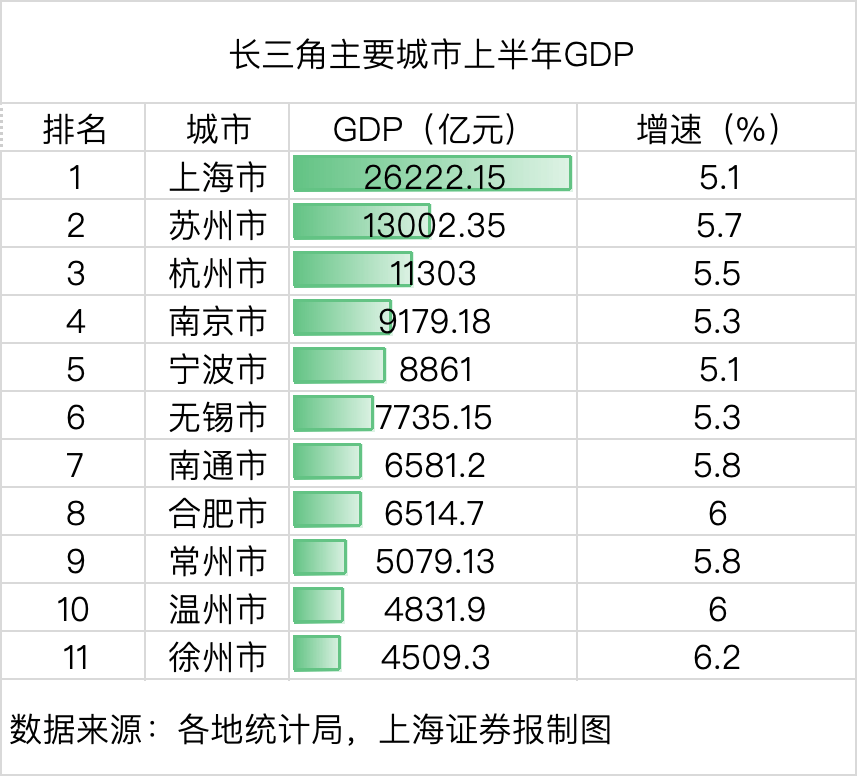
Core Insights - The economic data for 41 cities in the Yangtze River Delta for the first half of 2025 shows a stable GDP ranking, with some cities experiencing notable growth, particularly in the consumption sector, which exhibits internal differentiation [1][2]. GDP Performance - The Yangtze River Delta has nine cities with a GDP exceeding 1 trillion yuan, with Nantong moving up from 8th to 7th place, surpassing Hefei [2]. - Zhoushan leads in GDP growth with a reported GDP of 110.91 billion yuan, reflecting a year-on-year increase of 6.9%, driven primarily by industrial growth [2]. - Major cities' GDP figures for the first half of 2025 include: - Shanghai: 2622.215 billion yuan, growth of 5.1% - Suzhou: 1300.235 billion yuan, growth of 5.7% - Hangzhou: 1130.3 billion yuan, growth of 5.5% - Nanjing: 917.918 billion yuan, growth of 5.3% - Ningbo: 886.1 billion yuan, growth of 5.1% [3]. Consumption Trends - The overall retail sales growth in the Yangtze River Delta outpaced the national average of 5.0%, with Jiangsu province achieving a retail sales total of 2.39 trillion yuan, marking a net increase of 113.72 billion yuan [5]. - Consumption growth is uneven, with first-tier cities like Shanghai showing slower growth (1.7%) compared to third and fourth-tier cities, which are exhibiting stronger consumption dynamics [5][6]. - Notable retail sales figures include: - Shanghai: 826.041 billion yuan, growth of 1.7% - Suzhou: 463.5 billion yuan, growth of 3.8% - Hangzhou: 458.5 billion yuan, growth of 6% - Nanjing: 438.422 billion yuan, growth of 5.3% [8]. Regional Economic Challenges - Some traditional industries are facing slower growth, particularly in cities like Huainan and Huaibei, which reported GDP growth rates of 4.0% and 3.4%, respectively, indicating a need for economic transformation [4]. - Cities like Wenzhou and Xuzhou are approaching the 1 trillion yuan GDP target, with Wenzhou at 483.19 billion yuan and Xuzhou at 450.93 billion yuan, both showing promising growth rates [4].
需求逐步释放 银行下调消费贷利率
Xin Hua Wang· 2025-08-12 06:25
Core Insights - The recent effective control of the pandemic and the implementation of economic stabilization policies have led to a gradual release of consumer demand [1] - Banks are lowering consumer loan interest rates in response to the reduction in the Loan Prime Rate (LPR), with personal consumption loans showing signs of recovery [2][3] - Analysts expect the new scale of consumer loans to continue rebounding due to the recovery in demand and the implementation of various consumption promotion policies [1][3] Group 1: Consumer Loan Trends - Several banks have reduced consumer loan rates, with many loans now offered at around 4%, down from approximately 4.8% a year ago [1] - The China Construction Bank has introduced a "Quick Loan" product with a maximum limit of 200,000 yuan and an annual interest rate as low as 4.05%, with flexible repayment options [1] - Data from Rong360 indicates that the average interest rate for personal consumption loans from state-owned banks was 4.20% in March 2022, a decrease of 17 basis points from the end of the previous year [2] Group 2: Policy and Market Support - The People's Bank of China has adjusted the LPR twice this year, with the latest one-year LPR at 3.7%, which is expected to lower financing costs for short-term loans [3] - Local financial regulatory bodies are emphasizing the need to increase support for consumer finance, with initiatives aimed at boosting consumption in sectors like home appliances and automobiles [3][4] - The emergence of younger consumers, particularly those born after 1995, is driving demand for online shopping and higher quality of life, indicating strong future consumption potential [3]