品牌转型

Search documents
从1.0到3.0:国际消费品牌的中国进化论
3 6 Ke· 2025-07-17 10:53
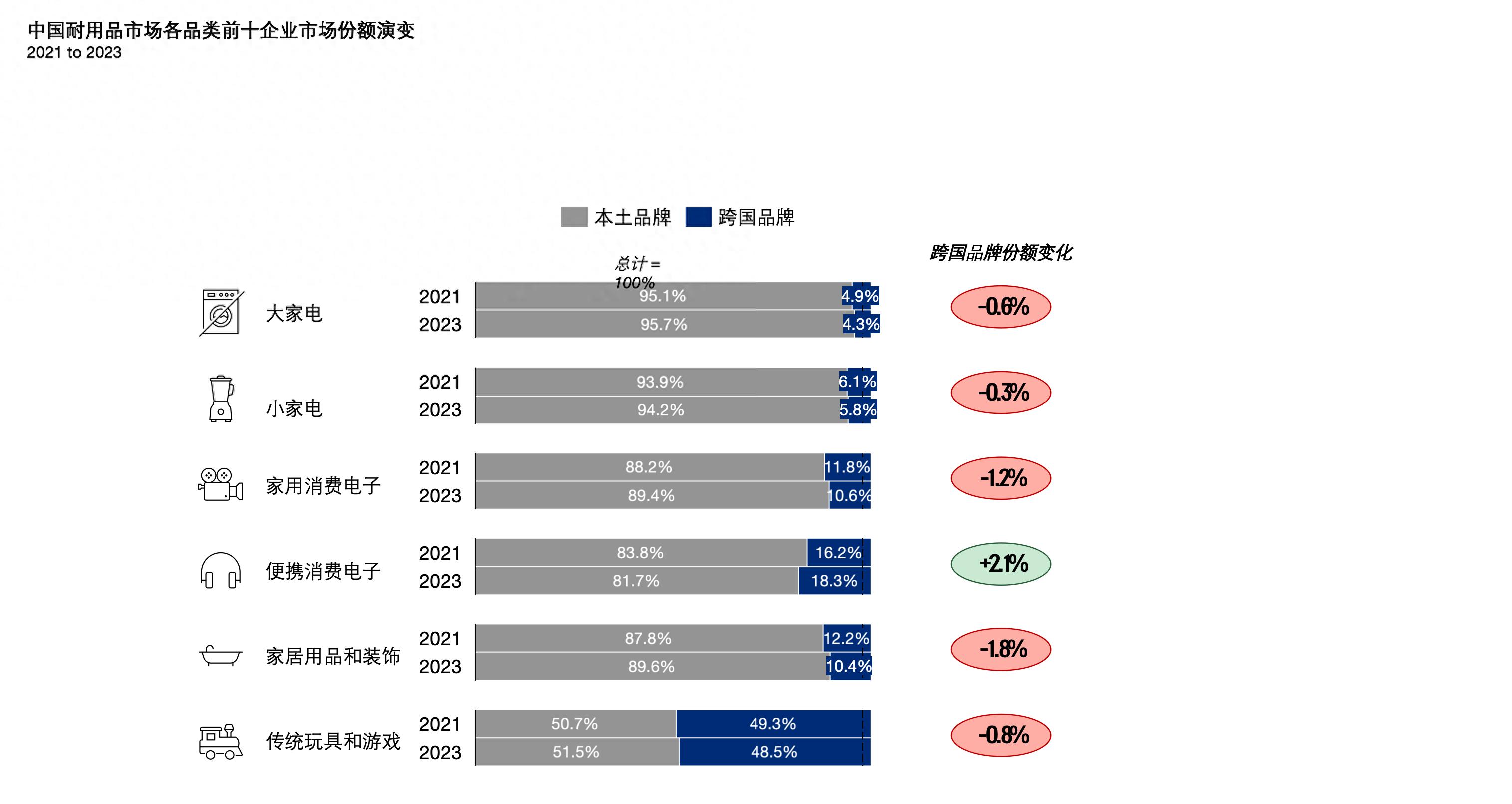
Core Insights - The article discusses the significant shift in the competitive landscape for multinational brands in China, moving from a growth phase to a market share battle against local brands [2][3][25] - It highlights the changing consumer preferences, where local brands are increasingly favored for their value and innovation, leading to a decline in market share for international brands [3][7][23] Group 1: Market Dynamics - Multinational brands are facing unprecedented challenges in China, with local brands capturing 80-95% market share in various categories such as home appliances and consumer electronics [3][4] - The consumer confidence index has dropped from 123 in 2018 to 89 in 2024, indicating a significant decline in consumer sentiment [3] - The shift in consumer purchasing logic has moved from brand loyalty to a focus on product value, with 62% of consumers prioritizing "advanced technology" and 48% valuing "cost performance" [7][8] Group 2: Competitive Challenges - Multinational brands are experiencing a cost disadvantage, with net profit margins around 4%, significantly lower than the approximately 9% margin for local brands [8] - The article notes a "vicious cycle" for international brands, where declining sales hinder necessary investments for transformation, leading to further sales declines [8][22] - The transition from a growth phase (1.0) to a competitive phase (2.0) is marked by a need for structural transformation to maintain competitiveness [3][25] Group 3: Successful Strategies - Some multinational brands are successfully navigating the challenges by leveraging global resources while building local capabilities, creating a competitive moat [9][10] - Successful brands are focusing on local innovation, with leading brands launching new products every month and achieving 5-8% of revenue from new products [13][22] - The article emphasizes the importance of a consumer-driven approach, moving from a "push model" to a "pull model" based on consumer insights [21][22] Group 4: Transformation Initiatives - Five key transformation initiatives are identified for multinational brands to regain market growth: local innovation, optimizing product mix, enhancing internal capabilities, strengthening product communication, and setting realistic financial goals [11][22] - Brands need to establish agile market insight mechanisms to quickly respond to consumer demand changes [14] - The importance of content marketing and social media engagement is highlighted, as brands must create relatable product narratives that resonate with consumers [19][20] Group 5: Future Outlook - The article projects that China will play a crucial role in driving global growth for multinational brands, with a rapidly growing middle class and a unique consumer market [23][24] - By 2030, China's middle class is expected to reach 400 million, providing a significant opportunity for product innovation [23] - The evolving e-commerce landscape in China is redefining global retail, with platforms like Douyin and Xiaohongshu leading the way in consumer engagement [23][24]

真维斯、达芙妮、骆驼们卷土重来
吴晓波频道· 2025-07-13 15:45
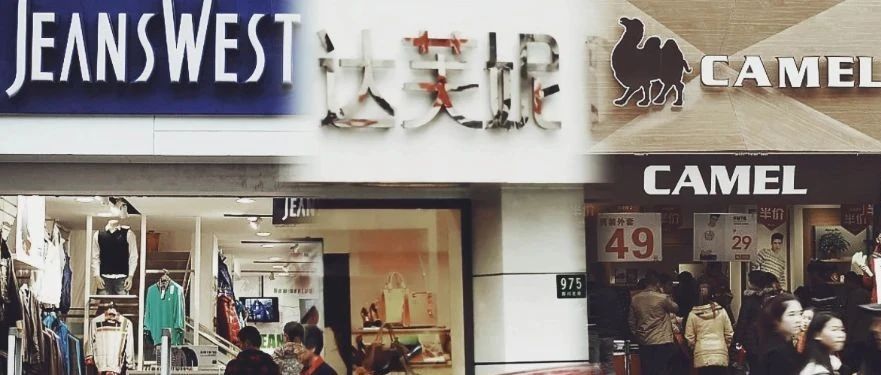
Core Viewpoint - The article discusses the resurgence of once-popular brands in the fashion industry, highlighting their strategies for adaptation and transformation in response to changing consumer preferences and market dynamics [1][2][3]. Group 1: Brand Resurgence - Many once-familiar brands have shown remarkable performance in recent years, with Daphne leading the women's shoe sales on Douyin, and brands like Meisibangwei and True Vivus experiencing significant online sales growth [5][6]. - Brands such as Camel and others are beginning to show signs of recovery despite undergoing painful transformations [6]. Group 2: Transformation Strategies - The article categorizes the transformation strategies of these brands into four types: Dolphin, Belt Fish, Octopus, and Flounder, each representing different approaches to adaptation [8]. - Dolphin-type brands actively explore new fields and shed their old images, exemplified by Camel's shift to outdoor apparel and collaborations with young influencers [8][9]. - Belt Fish-type brands focus on downsizing and outsourcing production, as seen with Daphne and Huili, which have reduced their physical stores significantly while enhancing brand management [9][11]. - Octopus-type brands, like Meisibangwei, aim to expand their reach by reopening stores in lower-tier markets while leveraging online promotions to drive foot traffic [11][12]. - Flounder-type brands, such as Bannilu and True Vivus, maintain a low profile, focusing on existing operations without aggressive expansion or contraction [12]. Group 3: Embracing E-commerce - The brands have recognized the necessity of embracing e-commerce to compete effectively, leveraging their established brand recognition to drive online sales [15]. - True Vivus has amassed 5 million followers on Taobao, with e-commerce sales accounting for over 80% of its revenue, while Daphne has developed a robust live-streaming strategy [16][18]. Group 4: Supply Chain and Product Innovation - Brands are investing in digital technologies and AI tools to enhance their supply chain efficiency, reducing design cycles and improving inventory turnover [18][21]. - Belle has successfully shortened its design cycle from 45 days to 15 days and has implemented a custom shoe service based on user data, increasing the price point of its products [18][20]. Group 5: Market Positioning and Consumer Engagement - The brands are focusing on creating premium experiences in flagship stores, which can generate significantly higher average transaction values compared to regular stores [21][22]. - In lower-tier markets, the strategies differ, with Belt Fish brands outsourcing production, which may dilute brand identity, while Octopus brands face challenges in maintaining consumer engagement [24][25]. Group 6: Future Outlook - The article suggests that the next phase of industry evolution is approaching, driven by improved logistics and changing consumer behaviors, particularly with the rise of instant retail [26][35]. - Brands must address supply chain weaknesses and re-establish connections with consumers to avoid fading into obscurity, emphasizing the importance of adapting to new market realities [37].

获近6亿投资,“法国公鸡”又活了,组豪华班底走高端路线
Nan Fang Du Shi Bao· 2025-07-08 05:15
Core Insights - Le Coq Sportif, a historic French sportswear brand, has been sold to Swiss-French entrepreneur Dan Mamane for approximately €70 million (around 590 million RMB) [2] - The sale aims to ensure the brand's continuity and provide hope for its approximately 300 employees in France [2] Financial Situation - Le Coq Sportif entered bankruptcy management in November 2024 due to ongoing financial difficulties, with its parent company Airesis seeking judicial reorganization to protect jobs [4] - The brand's revenue increased by 30% year-on-year to €82 million in the first half of 2024, but net losses widened from €1.05 million in the previous year to €1.82 million [6] - The company received a total of €15.4 million in loans from the Paris Olympic Committee and the French government [6] Investment and Future Plans - The €70 million investment plan includes €20 million for debt repayment, €30 million to restart operations, and an additional €20 million planned for 2026 [6] - Dan Mamane aims to repay nearly €70 million in debt within ten years and targets sales of €300 million by 2030 [6] - The brand will focus on four key areas: sports fashion, sports heritage, elegant lifestyle, and technical performance, with plans to enhance its product line [6] Management and Strategy - A new team has been assembled for the brand's transformation, including Udi Avshalom as global brand strategy advisor and Alexandre Fauvet as CEO [8] - Dan Mamane emphasizes the need for the brand to regain influence and appeal, leveraging its French heritage and unique textile craftsmanship [8] - The strategy includes balancing distribution channels and increasing international market sales to three times the current level by 2027 [6]

Burberry又要靠奥特莱斯清货了
36氪· 2025-07-08 00:04
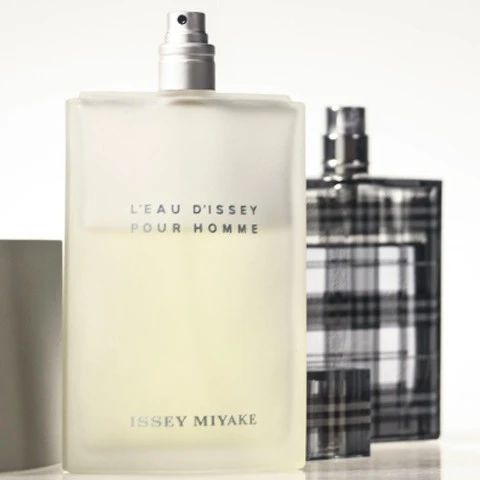
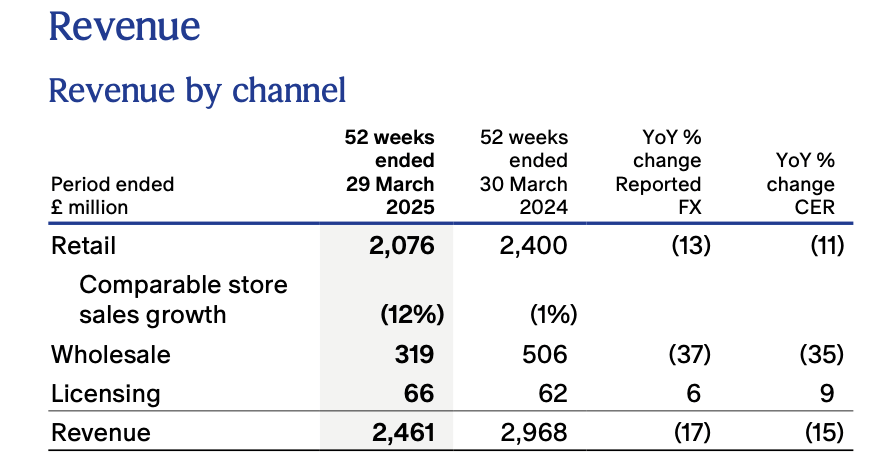
Core Viewpoint - Burberry's proactive price reduction strategy has led to a significant recovery in its stock price, increasing over 70% since mid-April, despite facing severe challenges in the luxury goods sector [3][4]. Financial Performance - For the fiscal year 2025, Burberry reported revenues of £2.461 billion, a 17% decrease year-on-year, with adjusted operating profit dropping 94% to £26 million [4][5]. - Compared to fiscal year 2024, Burberry's performance worsened, with revenues down 4% to £2.968 billion and adjusted operating profit down 34% to £418 million [5]. - Comparable store sales fell by 12% in fiscal year 2025, with the Asia-Pacific market experiencing a 16% decline, particularly in mainland China and South Korea, which saw drops of 15% and 18% respectively [6][8]. Strategic Changes - Under the new CEO Joshua Schulman, Burberry has shifted its strategy to focus on classic products and reduce prices, moving away from previous high-end strategies [10][11]. - The company plans to cut approximately 1,700 jobs, which is nearly 20% of its global workforce, aiming to save £60 million by fiscal year 2027 [10]. - The fourth quarter of fiscal year 2025 showed a narrowing decline in comparable store sales to 6%, better than the market expectation of 7.78% [9]. Market Dynamics - Japan was the only market to show growth for Burberry, with a slight increase of 1%, primarily driven by spending from Chinese tourists [7]. - The luxury market is seeing a shift where consumers are increasingly favoring value-for-money products, leading to a decline in full-price sales channels [19]. - Outlet sales have grown by 1% to 5%, indicating a strong performance in discount channels, which are becoming essential for luxury brands [19]. Inventory and Profitability - Burberry is facing significant inventory challenges, with a reported 7% decrease in total inventory at constant exchange rates [20]. - The company's gross margin for the fiscal year was 62.5%, down 470 basis points at constant exchange rates, primarily due to actions taken to address inventory overhang [20]. - The reliance on outlet sales may dilute Burberry's high-end brand image, potentially affecting its long-term sales and brand perception [21].
从小家电到生活方式:小熊电器的品牌转型启示录
Jin Tou Wang· 2025-07-01 02:36
Core Perspective - The transformation of Bear Electric (002959) from a small appliance manufacturer to a lifestyle brand exemplifies a significant shift in consumer demand from product functionality to experiential living [1][7] Group 1: Brand Transformation - Bear Electric's shift involves a comprehensive redefinition of brand value, focusing on providing complete lifestyle solutions rather than isolated product functionalities [2] - The company emphasizes user-centric solutions, moving from merely selling appliances to offering integrated experiences that fulfill broader lifestyle needs [3][4] Group 2: Product Innovation - The introduction of eight scenario-based solutions at AWE, such as the "Vital Breakfast" and "Exquisite Care," illustrates Bear Electric's commitment to creating convenient and enjoyable user experiences [3] - The company has developed a range of products that address various daily needs, allowing users to manage tasks efficiently and focus on enjoying life [4] Group 3: Research and Development - Bear Electric has established an agile system that connects user insights directly to product development, enhancing innovation and responsiveness to consumer needs [5][6] - The company boasts a robust R&D team of nearly 600 professionals, with significant investments in innovation, including a 36.48% year-on-year increase in R&D expenditure for 2024 [6] Group 4: Competitive Advantage - The transition to a lifestyle brand highlights that true competitive strength lies in understanding and integrating into consumer lifestyles, rather than merely relying on scale or cost advantages [7]

Burberry又要靠奥特莱斯清货了
Sou Hu Cai Jing· 2025-06-27 08:40
Core Viewpoint - Burberry's proactive price reduction strategy has led to a significant recovery in its stock price, increasing over 70% since mid-April 2023, despite facing severe challenges in the luxury goods sector [2][6]. Financial Performance - For the fiscal year 2025, Burberry reported revenues of £2.461 billion, a 17% decrease year-on-year, with adjusted operating profit down 94% to £26 million [2][5]. - Comparable store sales fell by 12% for the fiscal year, with the Asia-Pacific market experiencing a 16% decline [3][5]. - The fourth quarter showed a narrowing decline in comparable store sales to 6%, better than the market expectation of 7.78% [5]. Strategic Changes - New CEO Joshua Schulman has implemented a strategic shift focusing on classic products and reducing prices, moving away from previous high-end strategies [6][7]. - The company plans to cut approximately 1,700 jobs, which is nearly 20% of its global workforce, aiming to save £60 million by fiscal year 2027 [6][8]. Market Dynamics - Japan was the only market to show growth for Burberry, with a slight increase of 1%, primarily driven by spending from Chinese tourists [4]. - The outlet channel has become increasingly important, with Burberry being referred to as the "Outlet Queen," as it has performed well despite challenges in high-end retail locations [8][10]. Inventory and Pricing Strategy - Burberry has faced significant inventory issues, leading to a 7% decrease in total inventory at constant exchange rates [11]. - The company's gross margin fell to 62.5%, down 470 basis points at constant exchange rates, primarily due to discounting actions to manage excess inventory [11].
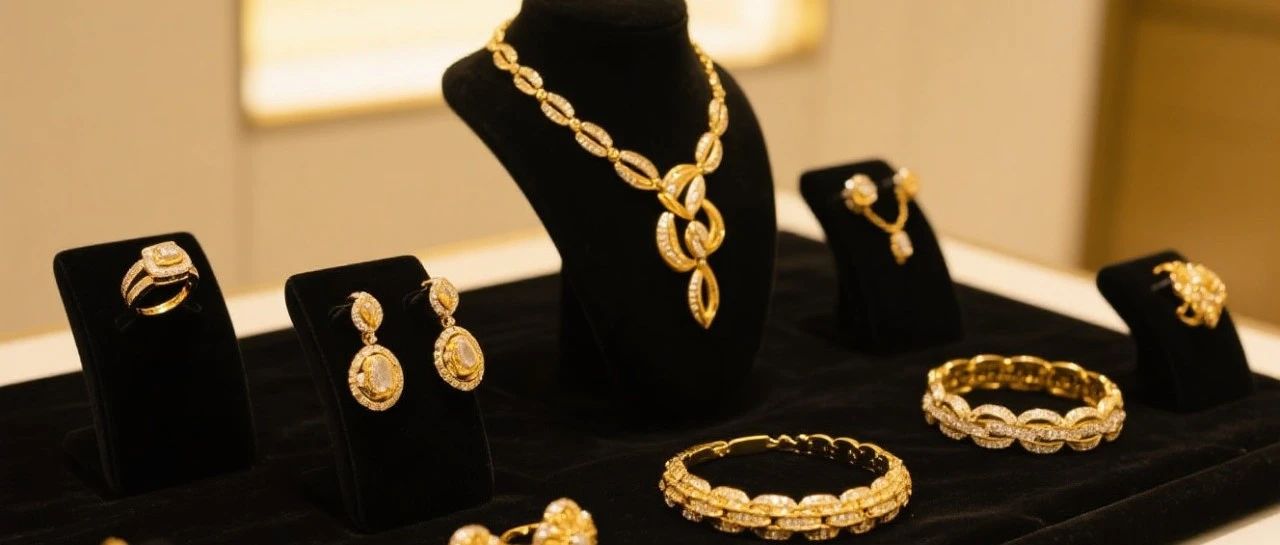
14年来首发可换股债 周大福看见了什么?
BambooWorks· 2025-06-25 09:27
Core Viewpoint - Chow Tai Fook Jewelry Group Limited (1929.HK) has announced its first equity financing since its listing in 2011, raising HKD 88 billion through convertible bonds to support its gold jewelry business, store upgrades, and international expansion [2]. Group 1: Financial Performance and Market Context - The company reported a significant increase in revenue from its priced gold series, which grew over 100% in the past year [1][6]. - Despite the rise in gold prices, which has led to a notable increase in stock prices for jewelry companies, Chow Tai Fook experienced a decline in sales and profits, with a 17.5% drop in revenue and approximately 9% decrease in profit [5][6]. - The overall market for gold jewelry in China saw a nearly 27% year-on-year decline in demand in Q1, impacting several jewelry companies' earnings [5]. Group 2: Strategic Initiatives and Future Outlook - The funds raised will be allocated to the development of the gold jewelry business, store upgrades, and strategic expansion into domestic and international markets, particularly focusing on brand transformation and new store formats [6]. - Chow Tai Fook plans to open approximately 20 new stores in Hong Kong and mainland China, with new stores showing sales performance 30% higher than older ones [6]. - The company is also looking to enter markets such as Dubai, Thailand, and Australia to mitigate geopolitical risks and capture demand in high-end jewelry markets [6]. Group 3: Competitive Landscape and Valuation - Chow Tai Fook's current P/E ratio is around 22 times, which is higher than its peers but lower than emerging brands like Lao Pu Gold, indicating potential for growth [7]. - The company maintains a robust financial position with over HKD 75 billion in cash and a free cash flow of HKD 207.5 billion, marking a five-year high [5][6].

逸仙电商20250622
2025-06-23 02:09
Summary of the Conference Call for Yatsen E-commerce Company Overview - **Company**: Yatsen E-commerce - **Industry**: Beauty and Skincare Key Points and Arguments Strategic Transformation - The company has shifted from a marketing-driven model to one focused on product development and brand building, establishing a global R&D system with three centers, one joint venture factory, and six collaborative laboratories, laying the foundation for growth in the mid-to-high-end skincare sector [2][3] Skincare Segment Growth - The skincare segment is projected to account for 41% of total revenue in 2024, with continued growth into Q1 2025. The brands Kylin, Darfu, and Eve Long have clear positioning targeting high-end, oily skin, and premium makeup removal markets, respectively, driving overall gross margin improvement through self-developed new products [2][5] Perfect Diary Brand Restructuring - Perfect Diary is transitioning from a mass-market color cosmetics brand to a technology-driven makeup and skincare brand, with a price upgrade to around 150 RMB. The focus is on the base makeup product line, aiming for base makeup to represent 50% of sales, enhancing consumer loyalty and profit margins [2][6][13] Gross Margin Improvement - Gross margin improvement is primarily due to an increase in the proportion of high-margin products, particularly high-end skincare and improved margins for Perfect Diary. Despite potential impacts from channel structure changes, overall gross margin is expected to continue rising, driven by significant growth in mid-to-high-end skincare [2][8] Sales Expense Ratio - The high sales expense ratio is attributed to insufficient scale effects and high costs associated with the Douyin channel. Future optimization is anticipated as core brands mature and the proportion of B2B channels increases, potentially enhancing profitability [2][8] Cash Position and Profitability - As of Q1 2025, the company has approximately 1.3 billion RMB in net cash and has restored its cash-generating ability, achieving non-GAAP profitability in Q4 2024 and Q1 2025. The company is actively repurchasing shares and plans further acquisitions once brand stability is achieved [4][24] Brand Performance - Kylin, Darfu, and Eve Long collectively grew by 58% year-on-year in Q1 2025. Kylin targets high-end consumers with an average price of 1,000-1,500 RMB, while Darfu focuses on oily skin with an average price of around 300 RMB, and Eve Long specializes in premium makeup removers priced at approximately 600 RMB [5][12] Sales Channels - Kylin primarily uses a D2C model, with over 90% of sales online, predominantly through Tmall and Douyin, where Douyin's sales are twice that of Tmall. The company plans to open 8-10 offline stores by the end of 2025 to achieve a more balanced channel structure [4][9] Future Plans for Perfect Diary - Perfect Diary will continue to develop as a key brand, focusing on launching new base makeup products to enhance consumer loyalty and profit margins. The brand's price range has been upgraded to around 150 RMB [6][13] Market Expansion and Partnerships - The company is currently not planning significant overseas market expansion, focusing instead on strengthening its domestic market presence before exploring international opportunities. It remains open to partnerships with leading platforms for efficient brand promotion [18][16] Production and Capacity - The company relies on a joint venture factory for core cosmetic products, with skincare production primarily occurring overseas for certain brands. Current production capacity is sufficient to meet demand without immediate concerns of shortages [20][26] Financial Guidance - For Q2 2025, the company provided a revenue growth guidance of 2% to 12%, with expectations based on online sales performance through platforms like Tmall and Douyin [23] Additional Important Information - The company has a stable management structure with minimal recent changes, focusing on optimizing its organizational framework to support brand independence and innovation [21]

周大福(1929.HK):产品结构优化 同店逐季改善
Ge Long Hui· 2025-06-22 18:19
Core Viewpoint - The company reported a revenue of HKD 89.656 billion for the fiscal year 2025, a year-on-year decrease of 17.5%, with a net profit of HKD 5.916 billion, down 8.98%. Excluding gold lending factors, operating profit increased by 9.8% to HKD 14.746 billion [1][4]. Group 1: Market Analysis - The company experienced a gradual improvement in sales performance, with a revenue of HKD 74.6 billion from mainland China, down 17%, and HKD 15.1 billion from Hong Kong and Macau, down 21% [1]. - In mainland China, the company had 6,274 retail points, a net decrease of 896, with same-store sales declining by 19.4%. However, the decline in same-store sales showed a narrowing trend over the quarters [2]. - Franchise stores outperformed direct-operated stores, with same-store sales in franchise stores down 13.9% compared to a 19.4% decline in direct-operated stores [2]. Group 2: E-commerce Performance - E-commerce contributed 5.8% to retail sales and 13.8% to sales volume in mainland China, benefiting from the establishment of self-operated live streaming rooms in Q4 2024 [2]. Group 3: Product Analysis - Sales of priced gold products doubled, while traditional gold products saw a decline of 29.4%. The share of priced gold products increased from 19% in 2024 to 29% in 2025 [3]. - The "Heritage" series, launched in 2017, became a best-selling series, contributing 39% to the retail sales of gold jewelry and products in mainland China [3]. - The company initiated a brand transformation, optimizing products and opening new image stores to cater to high-end customer needs [3]. Group 4: Profit Analysis - The company’s gross profit margin improved by 550 basis points to 29.5%, driven by high-margin products and strict cost control [3]. - Selling and administrative expense ratio increased by 1.7 percentage points to 13.9%, with employee costs rising by 1 percentage point [3]. Group 5: Investment Outlook - The company is expected to benefit from the recovery in the gold jewelry industry starting from Q2 2025, with a projected revenue growth of 3.3%, 5.5%, and 4.2% for fiscal years 2026-2028 [4]. - Net profit growth is forecasted at 19%, 16%, and 7% for the same periods, with EPS estimates of HKD 0.71, 0.82, and 0.88 [4].

冲高端的周大福,不想抄老铺的作业
华尔街见闻· 2025-06-18 10:05
Core Viewpoint - The article discusses the transformation and challenges faced by Chow Tai Fook (周大福), a leading Hong Kong jewelry brand, amid rising gold prices and changing consumer preferences. Group 1: Financial Performance - For the fiscal year ending March 31, 2025, Chow Tai Fook's revenue decreased by 17.5% to HKD 89.656 billion [2] - The sales of gold-priced products fell nearly 30%, while fixed-price products saw a doubling in sales, significantly exceeding market expectations for profit [3] - Operating profit increased by 9.8% to HKD 14.746 billion [4] - Net profit decreased by 9% to HKD 5.916 billion due to losses from gold loan contracts amid rising gold prices [5] Group 2: Market Trends and Consumer Behavior - As of March 31, gold prices had risen over 40% in the past year, leading to a 32% drop in gold jewelry consumption in China [10] - The trend towards lightweight consumption is emerging, with low-priced products gaining popularity in live-streaming e-commerce channels [12] - Chow Tai Fook's sales of gold-inlaid diamond products doubled, while sales of platinum and K-gold products fell by 13.8% [14] Group 3: Strategic Transformation - In April 2024, Chow Tai Fook announced a brand transformation plan, focusing on product iteration and hiring a former Tiffany & Co. design director [20] - The company launched the "Chuanfu" and "Forbidden City" series, achieving cumulative sales of HKD 4 billion [21] - Chow Tai Fook is actively collaborating with popular IPs to attract younger consumers [22] Group 4: Operational Adjustments - Chow Tai Fook's store count expanded to 7,510 by the end of 2023, with over half located in third-tier and lower markets [30] - The company faced declining same-store sales, with a drop of over 30% in the fiscal year 2025 [33] - The company closed 896 stores, focusing on improving store quality and efficiency [35] Group 5: Future Outlook - Chow Tai Fook's inventory decreased by 14% to HKD 55.4 billion as of March 31, indicating a focus on managing stock levels [44] - The company is expected to maintain a cautious approach to channel operations in the 2026 fiscal year, with a conservative sales outlook [43] - The brand aims to enhance its high-end retail experience by opening new flagship stores in prime locations [51]