安倍经济学

Search documents
双节假期国内外重要信息分析:金属股带动,喜迎“开门红”
HUAXI Securities· 2025-10-08 04:47
证券研究报告|宏观专题报告 [Table_Date] 2025 年 10 月 08 日 [Table_Title] 金属股带动,喜迎"开门红" [Table_Title2] ——双节假期国内外重要信息分析 [Table_Summary] 投资要点: ► 复盘:大类资产表现 美股:美股市场在科技板块强劲表现推动下三大指数集体上涨。市场受 对美联储降息预期及企业盈利乐观情绪支撑,政府停摆的影响被淡化。 日股:市场预期日本新首相将重拾安倍经济政策(宽货币+宽财政),日 经股指显著上涨,日元大幅贬值,推升美元指数。 港股:国庆期间,港股整体缩量震荡,恒指、恒科收涨,指数在 10 月 2 日创四年新高。南向资金持续流入科技、创新药、有色板块,推动港股市 场整体估值修复。 商品:黄金方面,受美国政府停摆引发避险需求升温,进一步推升金价, 纽约金价突破 4000 美元/盎司大关;铜价方面,供应端的多重冲击,加剧 了全球铜供应紧张局势,推动铜价持续走高。 ► 假期出行消费平稳增长,美国政府再陷停摆困境 1)"双节"假期,出行人数和商贸零售数据小幅增长,热门城市及景点 人气较旺;观影人次及票房不及预期;商品房销售平淡。 2)美 ...
国庆假期不能错过的事
HUAXI Securities· 2025-10-08 04:44
Global Events Impacting Markets - The U.S. government shutdown began on October 1, leading to a delay in the release of non-farm payroll data originally scheduled for October 3[1] - Japan's new Prime Minister, Sanna Takichi, is expected to continue Abenomics, delaying interest rate hikes and benefiting the Japanese stock market, which rose over 6%[1][2] - French Prime Minister LeCournay resigned after just 27 days, causing political instability and impacting market confidence[1][2] Market Reactions - Gold prices reached new highs, with COMEX gold surpassing $4,000 per ounce, driven by increased uncertainty in the market[2][11] - The Nikkei 225 index saw the largest increase among major indices, rising 6.7%, while the KOSPI and VN30 indices rose 3.6% and 2.5%, respectively[11] - Industrial metals also saw gains, with LME tin and copper rising over 3% during the holiday period[11] Domestic Trends - Domestic travel activity reached a five-year high, with a 17% increase in movement compared to the same period in 2024 and 2023, and daily passenger volume up 5% year-on-year[3][9] - Despite increased travel, per capita spending on tourism lagged behind the growth in passenger numbers, with movie box office revenues down 20% year-on-year during the holiday[3][5] - New home sales in 14 cities fell by 27% year-on-year, with first-tier cities showing resilience at an 18.7% increase, while second and third-tier cities faced significant declines of 47.8% and 40.6%, respectively[5][9]

红十月,备战跨年行情:申万宏源策略一周回顾展望(25/09/29-25/10/07)
Shenwan Hongyuan Securities· 2025-10-08 03:43
Group 1 - The report highlights the impact of the US government shutdown on asset prices, leading to a weaker dollar and stronger precious metals, alongside a slight increase in easing expectations due to weakened economic growth forecasts [2][5][11] - The election of high-profile political figures in Japan is expected to bring back "Abenomics," which may lead to fiscal stimulus and a slowdown in interest rate hikes, resulting in a weaker yen and a steepening of Japanese bond yields [3][11][12] Group 2 - The report maintains a positive outlook for the fourth quarter and the year-end market, with expectations that the technology sector will continue to drive market trends more than cyclical catalysts until spring 2026 [15][16] - It anticipates that the spring of 2026 may present challenges for the A-share market, including a critical verification period for demand and potential delays in the emergence of new market phases [15][16] Group 3 - The focus remains on technology sectors such as AI applications, semiconductor manufacturing, and storage, with a noted upward trend in overseas computing power despite short-term disturbances [16][17] - The report emphasizes the importance of anti-involution as a key structural transition from a structural bull market to a comprehensive bull market, particularly in sectors like photovoltaics and chemicals [17][18] Group 4 - The report suggests that Hong Kong stocks may continue to benefit from global easing and the trends in new economy industries, with strong representation from leading companies in the market [18][19] - It highlights the ongoing strength in precious metals and copper as key investment areas, while also noting the potential for price increases in these commodities due to supply disruptions [16][17]
有望成为日本首位女首相,高市为何被称“女版安倍”? | 国际识局
Zhong Guo Xin Wen Wang· 2025-10-07 22:33
Core Points - The election of Sanae Takaichi as the first female president of the Liberal Democratic Party (LDP) marks a historic moment for Japan, with potential implications for her becoming the first female Prime Minister [1][4] - Takaichi's victory reflects the LDP's desire for stability, as she plans to continue the "Abenomics" policies initiated by former Prime Minister Shinzo Abe [5][6] Group 1 - Takaichi's election signifies a shift in leadership within the LDP, with her commitment to the "Abe route" indicating a return to previous economic and foreign policies [6][8] - The LDP's choice of Takaichi, who has a strong public profile and clear political stance, suggests a strategic move to enhance the party's visibility and electoral appeal [5][6] - Takaichi's administration is expected to focus on active fiscal and monetary policies, constitutional amendments, and revitalizing local economies, while also strengthening Japan's alliances, particularly with the U.S. [6][7] Group 2 - Takaichi's leadership may lead to a return to the dynamics of U.S.-Japan relations seen during the Trump administration, with potential economic pressures from the U.S. [7][8] - The absence of major national elections in the next two years provides Takaichi a "golden period" to implement policies without immediate electoral pressures, but her ability to navigate the LDP's minority status in the Diet will be crucial [8] - The success of Takaichi's administration will depend on her ability to gain support from opposition parties on key issues, as failure to do so could lead to political stagnation and challenges to her leadership [8]


黄金飙升至3920美元,日经225指数首破47000点!
Sou Hu Cai Jing· 2025-10-07 18:42
Group 1: Japanese Stock Market Surge - The Nikkei 225 index has surpassed the 47,000-point mark for the first time, rising nearly 2,000 points with an increase of over 4% [3][6] - The index closed at 47,682 points, marking a significant milestone in Japanese stock market history [3] - Major stocks such as Sumitomo Pharma, Yamaha Motor, Nissan, and Panasonic have seen substantial gains, indicating strong bullish sentiment in the market [4] Group 2: Political Influence on Market - The surge in the Japanese stock market is linked to the recent political event where Sanae Takaichi won the ruling Liberal Democratic Party leadership election, expected to become Japan's first female Prime Minister [6] - Takaichi's support for expansionary fiscal policies and "Abenomics" is viewed positively by the market, as she advocates for cash subsidies and tax rebates to assist families affected by inflation [6] Group 3: Currency and Bond Market Reactions - In contrast to the stock market, the Japanese yen has depreciated significantly, with the USD/JPY exchange rate rising by 1.5% to 149.7, nearing the psychological level of 150 [8] - The yield on Japan's 40-year government bonds increased by 14 basis points to 3.52%, while the 10-year bond yield slightly rose by 0.5 basis points to 1.65% [8] Group 4: Gold Market Dynamics - Concurrently, gold prices have surged, reaching a record high of $3,920.77 per ounce, driven by various factors including the Federal Reserve's interest rate cuts and geopolitical tensions [10][12] - The increase in gold prices is also attributed to significant inflows into gold ETFs, with net inflows reaching $13.6 billion over the past four weeks, and over $60 billion year-to-date, marking a historical high [12] Group 5: Future Market Outlook - Analysts suggest that the market reaction to Takaichi's victory may be more tempered and short-lived than expected, with a decreased likelihood of the Bank of Japan raising interest rates again this year [14] - The market anticipates a nearly 95% probability of the Federal Reserve cutting rates in October, with a 99% chance of further cuts by December [14][16]
3分钟看清国庆全球要闻(申万宏观·赵伟团队)
赵伟宏观探索· 2025-10-07 16:53
Global Macro Assets - Major overseas stock indices rose during the National Day holiday period, with the S&P 500, Nasdaq, and Dow Jones increasing by 1.1%, 1.3%, and 1.1% respectively [3][8] - Gold prices reached new highs, increasing by 4.0%, while oil prices fell significantly, with WTI and Brent crude down by 7.5% and 8.3% respectively [3][20] - The 10-year U.S. Treasury yield fell by 7.0 basis points to 4.13%, and the dollar index decreased by 0.5% [12][14] Overseas Economic Data - The U.S. government shutdown has minimal impact on GDP, estimated at only 0.02% for a month-long closure, but may temporarily raise unemployment rates [4][25] - The ADP employment report for September showed a decrease of 32,000 jobs, significantly below the expected increase of 51,000 [45][46] - The ISM services PMI fell to 50, indicating a slowdown in service sector activity [50][51] Domestic Events and Data - During the National Day holiday, travel intensity decreased compared to the May Day holiday, with an average daily flow of 154 million people, a year-on-year increase of 4.9% [5][55] - Cross-border travel and niche tourism remained popular, with significant increases in bookings for border tourism [6][72] - The new round of growth stabilization plans focuses on quality and efficiency rather than mere scale expansion, emphasizing the need for AI empowerment [6][54]

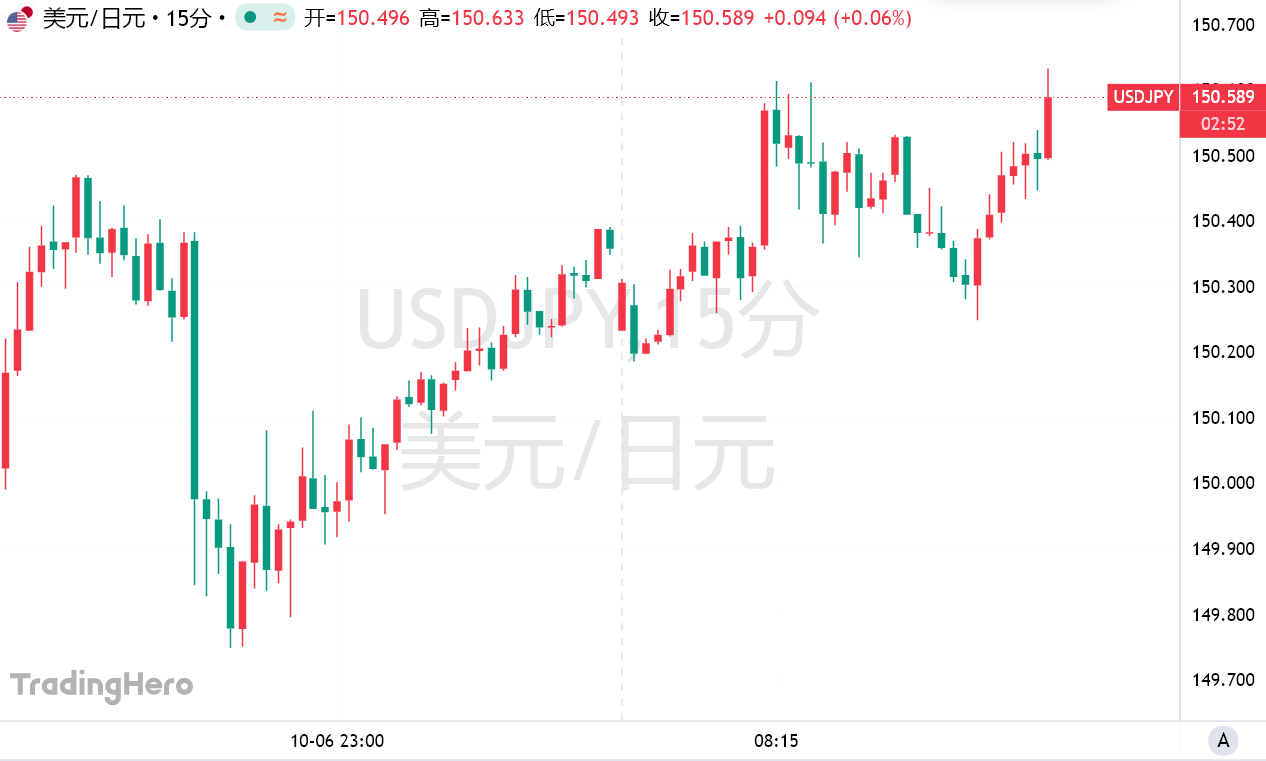
日本央行10月加息悬了?高市顾问给出明确答案: 12月更合适!
Jin Shi Shu Ju· 2025-10-07 06:24
Core Viewpoint - The Bank of Japan's potential interest rate hike in October may be premature, with a suggestion from a key economic advisor to consider December instead [1][2]. Group 1: Economic Policy and Market Reactions - High-profile economic advisor Honda Yoshirou indicates that a 25 basis point hike in December is more feasible than in October, depending on the macroeconomic environment [1]. - Following the election of Sanna Takashi, the market's expectations for an October rate hike have significantly decreased, with the probability dropping from approximately 68% to below 20% [5]. - The Nikkei 225 index surged to record highs, and the USD/JPY exchange rate surpassed the critical 150 mark, reflecting market optimism about potential stimulus measures and a slower pace of rate hikes [2][5]. Group 2: Inflation and Currency Concerns - Honda warns that excessive weakness in the yen could lead to persistent inflation, suggesting that a USD/JPY rate above 150 is excessive [3]. - Despite the recent drop in rate hike expectations, Japan's inflation rate has remained above the Bank of Japan's 2% target for over three years, and the economy has shown consistent growth [5]. Group 3: Political Dynamics and Future Outlook - Takashi's victory was unexpected for some investors, and her stance on maintaining cautious monetary policy aligns with the principles of "Abenomics," which emphasizes flexible fiscal and monetary policies [2][5]. - There is speculation about revising the joint statement from 2013 that underpins the Bank of Japan's aggressive monetary easing, with Takashi considering whether the current agreement is optimal [6][7]. - The relationship between Takashi and U.S. President Trump is anticipated to be positive, potentially influencing Japan's foreign policy and economic strategies [8].
日元暴跌!日本股市暴涨5%突破48000点,巴菲特赢麻了...
Sou Hu Cai Jing· 2025-10-07 04:39
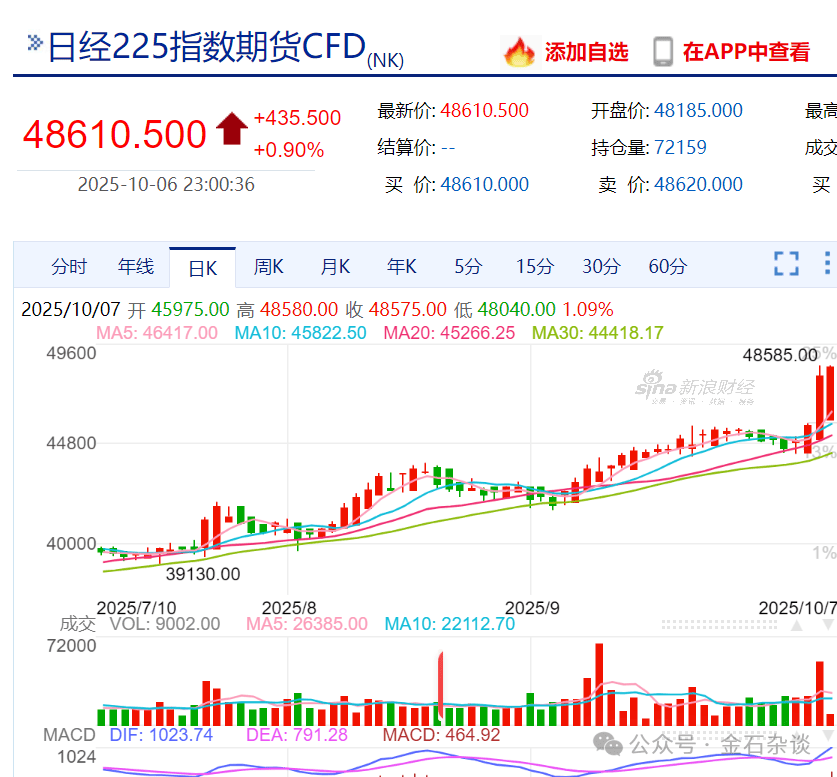
Group 1 - The Japanese stock market experienced a significant surge, with the Nikkei 225 index breaking through 48,000 points and gaining nearly 5% in a single day, resulting in an increase of almost 3,000 points over two days [1][3] - The primary catalyst for this market explosion was the election of former Economic Security Minister Sanae Takaichi as the first female Prime Minister of Japan, whose economic policies are closely aligned with "Abenomics" and emphasize expansionary fiscal policies [3] - Analysts have reduced the probability of a Bank of Japan interest rate hike in December from 68% to 41% following Takaichi's election, indicating a shift in market expectations regarding monetary policy [3] Group 2 - Major Japanese stocks saw substantial gains, with Mitsubishi Heavy Industries and Nippon Steel both rising over 12%, and several other companies like Hitachi and Subaru also experiencing significant increases [5] - Mizuho's chief strategist warned that without a "safety net" accompanying the issuance of new Japanese government bonds, there could be selling pressure on bonds, aligning with predictions of a steeper yield curve for Japanese government bonds [6] - Investors are now focused on how Takaichi will balance her growth stimulus commitments with the long-term challenge of controlling government debt, as well as her potential influence on the future policy direction of the Bank of Japan [7] Group 3 - Notable stock movements included significant increases in companies like Toyota and Sony, reflecting the market's positive response to Takaichi's policies, with stock price increases ranging from 4.1% to 12.9% across various sectors [8] - Warren Buffett's investment in Japan has been highlighted, with his holdings in Japanese companies valued at $23.5 billion by the end of 2024, indicating strong foreign interest in the Japanese market [8][9]
涨涨涨疯了,刚刚又见证历史!专柜店员:假期结束后估计还得涨……
Sou Hu Cai Jing· 2025-10-07 04:36
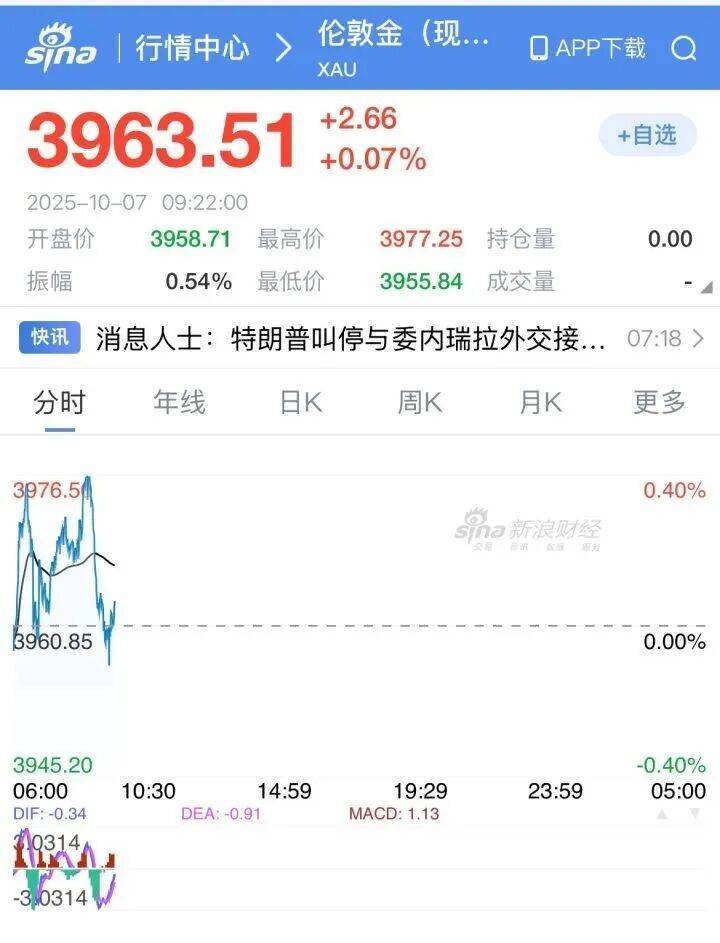
Group 1: Gold Market - During the National Day holiday, gold prices surged significantly, with London spot gold prices breaking the $3960 per ounce mark and reaching a high of $3977.25 per ounce on October 7 [1] - New York futures gold prices also surpassed $4000 per ounce, setting a new historical high [1] - The increase in gold prices is attributed to the U.S. government shutdown and geopolitical issues, which have heightened market risk aversion [12] - The price of gold jewelry has also risen, with many brands' gold jewelry prices exceeding 1000 yuan per gram [9][7] Group 2: Stock Market Performance - Overseas stock markets generally performed well during the holiday, with the Nikkei 225 index rising over 4% on October 6 [3] - The Hang Seng Index increased by 1.61% on October 2, reaching a nearly four-year high of 27187.12 points, although it experienced a decline of 0.67% on October 6 [3][15] - The strong performance of the Japanese stock market is linked to the election of a new leader who is expected to continue expansionary fiscal policies [14] Group 3: A-Share Market Outlook - The A-share market is expected to maintain a strong trend, with the Shanghai Composite Index up 15.84% and the ChiNext Index up 51.2% year-to-date [19] - Investor confidence is high, with significant trading activity observed before the holiday, indicating a positive outlook for post-holiday performance [21] - Historical data suggests that sectors such as computer, communication, electronics, and banking have a high probability of rising in the week following the National Day holiday [22]
今日!日本股市暴涨4.6%突破47000点!国庆节后A股怎么走
Sou Hu Cai Jing· 2025-10-06 20:18
Market Overview - The Nikkei 225 index surged over 1,000 points, closing at 47,873, marking a historical high and a 4.6% increase, breaking the 47,000-point barrier for the first time [1][3] - Major stocks like Mitsubishi Heavy Industries and Nippon Steel saw gains exceeding 12%, with the automotive and electronics sectors also experiencing significant upward movement [1][3] Currency and Bond Market - The Japanese yen weakened significantly against the US dollar, dropping 1.5% and approaching the critical level of 150 [3] - The yield on Japan's 40-year government bonds rose by 14 basis points, indicating volatility in the bond market [3] Political Catalyst - The recent election of Sanae Takaichi as the new president of the ruling Liberal Democratic Party (LDP) is seen as a key driver behind the market movements, with expectations that she will become Japan's first female Prime Minister [3][5] - Takaichi's policies are aligned with "Abenomics," which includes measures to combat inflation and maintain loose monetary policy, influencing market expectations [3][5] Economic Policy Impact - Since the implementation of "Abenomics" in 2013, the Nikkei 225 index has increased by over 270%, outperforming other major stock indices [5] - The Bank of Japan's monetary policy, characterized by negative short-term rates and zero long-term rates, has supported market confidence, with the central bank being the largest buyer of ETFs, holding about 6% of the total market capitalization [5][6] Foreign Investment - In 2023, foreign net inflows into the Japanese stock market reached approximately 6.3 trillion yen (about 434 billion USD), the highest since 2014 [6] - The favorable interest rate differential of 5.5% between Japan and the US has attracted foreign investments, enhancing returns through currency hedging [5][6] Sector Performance - The manufacturing sector, particularly electronics, automotive, and heavy industries, led the market rally, benefiting from the yen's depreciation which enhances export competitiveness [8] - Notable stock performances included Advantest rising nearly 10%, and companies like Fujitsu and Honda seeing gains over 5% [8] Governance and Market Structure - The Tokyo Stock Exchange's governance reforms, aimed at improving corporate valuations, have also contributed to the market's upward trajectory [8][10] - The government is reforming personal savings account plans to attract retail investors, enhancing the market's microstructure [10] Future Outlook - Analysts suggest that Takaichi's focus on economic security may benefit defense, critical resources, and technology stocks, while the nuclear sector could gain from her support for nuclear power initiatives [12] - The market is expected to remain volatile as Takaichi's government outlines specific stimulus policies, with potential for the Nikkei to reach 48,000 points in the short term [12]