资本市场

Search documents
申万宏源刘健谈“十五五”:中国经济动能之变将打开资本市场全新空间
Sou Hu Cai Jing· 2025-11-18 03:05
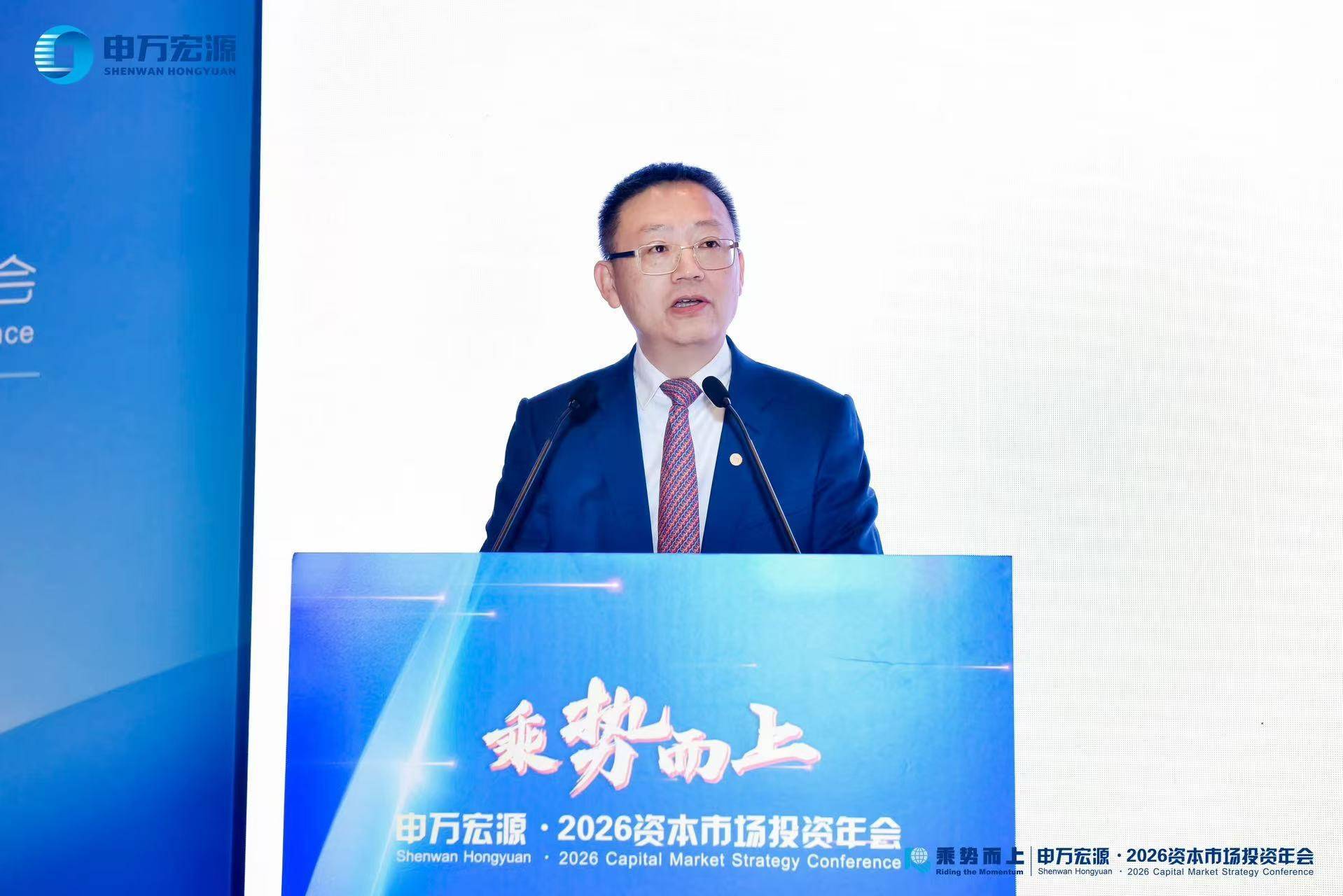
Core Viewpoint - The 2026 Capital Market Investment Annual Conference emphasizes the transition of China's economy and capital markets towards high-quality development, driven by new factors such as knowledge, technology, and data, which will create new investment opportunities in the capital market [1][2][4]. Group 1: New Element System Activating Economic Growth - China's economic growth is shifting from traditional investment and export-driven models to new drivers represented by knowledge, technology, data, computing power, and talent [2]. - The R&D expenditure in China is projected to exceed 3.6 trillion yuan in 2024, with a GDP ratio of approximately 2.69%, surpassing Japan and South Korea in scale [4]. - The digital economy's added value is expected to reach 59.6 trillion yuan in 2024, accounting for over 43% of GDP, reflecting an increase of about 8 percentage points over the past five years [5]. Group 2: Restructuring Capital Market New Pattern - The "15th Five-Year Plan" emphasizes the combination of an effective market and a proactive government, enhancing the role of the capital market in resource allocation [6]. - Direct financing in China has expanded, with its proportion exceeding 30%, and the bond market's scale surpassing 190 trillion yuan, while the stock market's market capitalization has exceeded 100 trillion yuan [6][7]. - The capital market's reform aims to improve inclusivity and adaptability, with significant achievements in supporting innovative enterprises through various financing products [7]. Group 3: New Service System Opening Investment Tool Space - The company is innovating its service system to adapt to changes in the economic landscape, focusing on comprehensive capital services that include risk investment, IPOs, mergers and acquisitions, and ESG consulting [9]. - Investment services are being enhanced to meet diverse asset allocation needs, with a focus on providing a rich array of products for different risk preferences [9]. - The trading service system is being developed to support liquidity through capital intermediary transactions and innovative products like carbon finance [9].


10月税收同比增长8.6%
第一财经· 2025-11-18 02:23
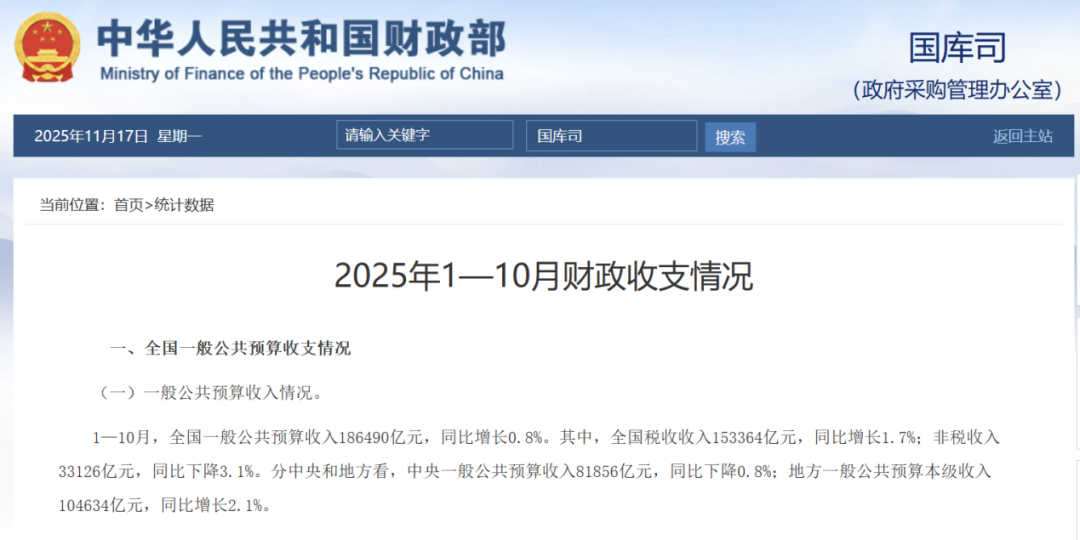
Core Viewpoint - The article highlights the steady growth of fiscal revenue in China, particularly tax revenue, which has shown a positive trend in recent months, indicating an improving economic environment [4][5]. Fiscal Revenue Overview - In the first ten months of the year, China's general public budget revenue reached approximately 18.65 trillion yuan, a year-on-year increase of 0.8%. Tax revenue accounted for about 15.34 trillion yuan, growing by 1.7% [4]. - Tax revenue has shifted from a decline to growth, with significant increases noted in July and August, and a year-on-year growth of 8.7% in September and 8.6% in October [4][6]. Factors Contributing to Tax Revenue Growth - The increase in tax revenue is attributed to several factors, including an improving economy, a narrowing decline in the Producer Price Index (PPI), and a low base from the previous year [6]. - The active capital market has also contributed to tax revenue growth, with the total market capitalization of A-share companies surpassing 100 trillion yuan in August and the Shanghai Composite Index reaching a ten-year high in September. Daily trading volumes in August and September averaged 2.3 trillion yuan and 2.4 trillion yuan, respectively [6]. - Notable increases in personal income tax and securities transaction stamp duty were observed, with the latter reaching 162.9 billion yuan, a year-on-year increase of 88.1%, and personal income tax at 1.3363 trillion yuan, up 11.5% [6]. Sector-Specific Tax Revenue Performance - Certain industries have shown strong tax revenue performance, including: - Computer and communication equipment manufacturing: 12.7% growth - Electrical machinery and equipment manufacturing: 7.9% growth - Scientific research and technical services: 14.8% growth - Cultural, sports, and entertainment industries: 5.7% growth [7]. Non-Tax Revenue and Government Fund Income - Non-tax revenue for the first ten months was approximately 3.31 trillion yuan, reflecting a year-on-year decline of 3.1% [8]. - Government fund revenue, primarily from land sales, also saw a decline, with total revenue of about 3.45 trillion yuan, down 2.8%. Specifically, income from land use rights fell to approximately 2.49 trillion yuan, a decrease of 7.4% [8]. Fiscal Expenditure Trends - Fiscal expenditure has been maintained at a certain intensity to stabilize the economy, with total general public budget expenditure reaching about 22.58 trillion yuan, a year-on-year increase of 2% [9]. - Expenditure related to social security and employment grew by 9.3%, amounting to approximately 3.77 trillion yuan [9]. - The government has allocated 500 billion yuan from local government debt limits to support local fiscal capacity and effective investment [9].

财政部最新发布!前10月证券交易印花税,增长88.1%!
券商中国· 2025-11-17 11:44
Core Insights - The article highlights the steady recovery in public budget revenue in China for the first ten months of 2025, with a notable increase in tax revenue and a slower growth rate in fiscal expenditure, while maintaining high growth in social welfare-related spending [1][2]. Revenue Performance - In the first ten months, the national general public budget revenue reached 18.65 trillion yuan, growing by 0.8%, which is an increase of 0.3 percentage points compared to the first nine months [1]. - Tax revenue accounted for 15.34 trillion yuan, with a growth rate of 1.7%, up by 1 percentage point from the previous nine months [1]. - Non-tax revenue decreased by 3.1% to 3.31 trillion yuan [1]. - Major tax categories showed growth: domestic VAT increased by 4%, domestic consumption tax by 2.4%, corporate income tax by 1.9%, and personal income tax by 11.5%, with respective increases of 0.4, 0.2, 1.1, and 1.8 percentage points compared to the previous nine months [2]. Capital Market Influence - The recovery in the capital market has significantly boosted tax revenue, particularly in the securities transaction stamp duty, which reached 162.9 billion yuan, reflecting an 88.1% year-on-year increase [3]. - The active capital market has positively impacted personal income tax and corporate income tax, with corporate income tax showing positive growth for the first time in eight months, driven by improved industrial profits [3]. Sector Performance - Tax revenue from key industries performed well: computer and communication equipment manufacturing grew by 12.7%, electrical machinery and equipment manufacturing by 7.9%, scientific research and technical services by 14.8%, and cultural, sports, and entertainment sectors by 5.7% [4]. Fiscal Expenditure Trends - General public budget expenditure for the first ten months grew by 2%, a decrease of 1.1 percentage points from the previous nine months, but spending in key areas like social security, education, and health remained strong [5]. - Notably, infrastructure-related spending in agriculture, forestry, and water management saw a decline of 9%, although the rate of decline narrowed by 2.1 percentage points compared to the previous nine months [5]. - Government fund budget revenue was 3.45 trillion yuan, down by 2.8%, while expenditure increased by 15.4% to 8.09 trillion yuan, driven by accelerated use of bond funds [5]. Future Outlook - The introduction of new policy financial tools is expected to support infrastructure investment in the fourth quarter and early next year, with a focus on improving fiscal infrastructure spending [6].

前10个月证券交易印花税增长88.1%!财政收入持续回暖
Zheng Quan Shi Bao· 2025-11-17 11:07
Core Insights - The fiscal revenue in China for the first ten months of 2025 shows a steady recovery, with public budget revenue increasing by 0.8% year-on-year, while expenditure growth has slowed down [1] - Tax revenue has been a significant contributor to the overall revenue increase, with notable growth in various tax categories [3] - Infrastructure-related spending is expected to rebound due to new policy measures and increased project implementation [5][6] Revenue Performance - Total public budget revenue reached 18.65 trillion yuan, with tax revenue at 15.34 trillion yuan, reflecting a growth of 1.7% [1] - Non-tax revenue decreased by 3.1%, amounting to 3.31 trillion yuan [1] - Major tax categories showed growth: VAT increased by 4%, consumption tax by 2.4%, corporate income tax by 1.9%, and personal income tax by 11.5% [3] Sectoral Tax Contributions - The equipment manufacturing and modern service sectors demonstrated strong tax revenue performance [4] - Specific sectors such as computer and communication equipment manufacturing saw a tax revenue increase of 12.7%, while scientific research and technical services grew by 14.8% [4] Expenditure Trends - Total public budget expenditure was 22.58 trillion yuan, with a year-on-year growth of 2% [1] - Key areas such as social security, education, and health saw significant expenditure increases, with social security and employment spending growing by 9.3% [5] - Infrastructure-related spending in agriculture, forestry, and water management decreased by 9%, although the decline rate has narrowed [5] Future Outlook - The introduction of new policy financial tools is expected to support infrastructure investment in the fourth quarter and early next year [6] - The central government has allocated additional funds for project construction, indicating a proactive adjustment in response to slowing infrastructure growth [6]
前10个月证券交易印花税增长88.1%!财政收入持续回暖
证券时报· 2025-11-17 11:02
Core Insights - The article highlights a recovery in fiscal revenue, with a steady increase in public budget income and a slowdown in expenditure growth, while maintaining high growth in social welfare-related spending [2][4]. Fiscal Revenue Recovery - In the first ten months of 2025, the national general public budget revenue reached 18.65 trillion yuan, growing by 0.8%, an increase of 0.3 percentage points compared to the first nine months [2]. - Tax revenue amounted to 15.34 trillion yuan, with a growth rate of 1.7%, up by 1 percentage point from the previous nine months [2]. - Non-tax revenue decreased by 3.1% to 3.31 trillion yuan [2]. Tax Revenue Growth - Major tax categories showed significant growth: domestic VAT increased by 4%, domestic consumption tax by 2.4%, corporate income tax by 1.9%, and personal income tax by 11.5%, with respective increases of 0.4, 0.2, 1.1, and 1.8 percentage points compared to the previous nine months [4]. - The securities transaction stamp duty saw a remarkable increase of 88.1%, totaling 162.9 billion yuan, driven by a recovery in market confidence and A-share trading volume [4]. Sector Performance - The equipment manufacturing and modern service industries demonstrated strong tax revenue performance, with notable increases in specific sectors: computer and communication equipment manufacturing by 12.7%, electrical machinery and equipment manufacturing by 7.9%, scientific research and technical services by 14.8%, and cultural, sports, and entertainment industries by 5.7% [5]. Fiscal Expenditure Trends - Total public budget expenditure for the first ten months was 22.58 trillion yuan, reflecting a year-on-year growth of 2%, although the growth rate decreased by 1.1 percentage points compared to the previous nine months [7]. - Key areas such as social security and employment, education, health, science and technology, energy conservation and environmental protection, and cultural tourism saw substantial increases in spending, with growth rates of 9.3%, 4.7%, 2.4%, 5.7%, 7%, and 2.5% respectively [7]. Infrastructure Spending Outlook - Infrastructure-related spending in agriculture, forestry, and water management declined by 9%, although the rate of decline narrowed by 2.1 percentage points compared to the previous nine months [8]. - Analysts expect a rebound in fiscal infrastructure spending, supported by new policy financial tools and additional allocations for project construction [8].

资本市场赋能普惠金融高质量发展:继往开来,攻坚克难
Shenwan Hongyuan Securities· 2025-11-17 10:44
1. Report Industry Investment Rating No specific industry investment rating is provided in the report. 2. Core Viewpoints of the Report - The importance of the capital market is highlighted in the new stage of the high - quality development of inclusive finance. The implementation opinions emphasize enhancing the efficiency of the capital market in serving inclusive finance [3][26]. - For small and micro - enterprises, a gradient - based cultivation system of "Beijing Stock Exchange - New Third Board - Regional Equity Market" should be constructed, and innovative products should be used to revitalize inclusive finance assets [3]. - In terms of residents' wealth, the buyer - oriented investment advisory model should be deepened, and the market ecosystem of "long - term investment with long - term funds" should be improved [3]. - For rural revitalization, both investment and financing ends should work together, and derivatives should be used to prevent risks [3]. - A high - quality evaluation system for the capital market to serve inclusive finance should be established to improve the incentive and restraint mechanism [3]. 3. Summary According to Relevant Catalogs 3.1 Inclusive Finance Development and the Role of the Capital Market - The inclusive finance 1.0 stage focused on financial infrastructure services. After ten years of development, it has entered a new stage of high - quality development. The implementation opinions in 2023 pointed out the problems and challenges in inclusive finance development and defined the high - quality inclusive finance system, highlighting the importance of the capital market [3][6][26]. 3.2 Solving the Financing Problem of Small and Micro - Enterprises - **Beijing Stock Exchange**: It is a main position for cultivating innovative small and medium - sized enterprises. As of now, there are 282 listed companies, with a high proportion of private enterprises and a certain proportion of specialized and sophisticated "little giants". In the future, it is recommended to optimize listing standards, study the access mechanism for small and medium - sized enterprises in cutting - edge technology fields, and improve systems such as refinancing and mergers and acquisitions [3][32]. - **New Third Board**: As the "axis" of the multi - level capital market, the structure of listed enterprises has been optimized in recent years, with an increasing proportion of innovative - layer enterprises. In the future, it is necessary to enhance its market functions and service capabilities, such as optimizing the hierarchical management standard system and activating the use of financing tools [3]. - **Regional Equity Market**: As the "foundation" of the gradient - based cultivation system, the institutional connection mechanism between the third and fourth boards has been gradually improved. There are 26 "specialized and sophisticated" special boards in 35 regional equity markets, which can provide a source of high - quality enterprises for the capital market [3][41]. - **Innovative Products**: Stock exchanges such as the Shanghai Stock Exchange are actively exploring asset securitization to serve inclusive finance, such as intellectual property ABS, supply - chain ABS, etc. [3] 3.3 Solving the Investment Problem of Residents' Wealth - **Enhancing Investment Returns**: Listed companies should strengthen investment function construction by increasing performance returns and stabilizing dividend expectations. Since 2022, the annual dividend and repurchase total of A - shares has been significantly higher than the equity financing total. For public funds, the "Action Plan for Promoting the High - Quality Development of Public Funds" was issued in 2025, aiming to improve investment returns, reform the evaluation mechanism, and increase the scale of equity investment [70][71][72]. - **Diversifying Investment Products**: The correlation coefficient among existing investment products is high. It is recommended to increase the supply of diversified products such as cross - border ETFs, QDIIs, and derivatives, and also increase the supply of stable - income complex products such as REITs and quantitative strategies [75]. - **Strengthening Investment Advisers**: The buyer - oriented investment advisory model should be deepened. By linking business income with the scale of customers' existing assets, it can maintain consistency with customers' interests. Some securities companies have achieved good results in this regard [78]. 3.4 Solving the Rural Revitalization Problem - **Diversified Debt Financing Tools**: Since 2021, non - financial enterprises have been guided to issue rural revitalization notes in the inter - bank market, and in 2023, the exchange launched rural revitalization special bonds, with funds used for rural revitalization - related fields [80][82]. - **Innovative "Insurance + Futures" Model**: As of the end of 2024, 192 "insurance + futures" projects have been carried out nationwide, with a cumulative support fund of 253 million yuan, protecting a spot scale of 1.7287 million tons and covering about 9.6435 million mu of farmland [85]. - **Supporting Agricultural Technology Enterprises**: The capital market should support the listing of agricultural technology enterprises and enrich the secondary - market indexes reflecting agricultural - related enterprises, and increase the issuance of agricultural - themed public funds [91]. 3.5 Improving the Incentive and Restraint Mechanism - In September 2025, the Securities Association formulated and released the "Interim Measures for the Special Evaluation of Securities Companies in Implementing the Five Major Articles of Finance", with inclusive finance core indicators including bond financing for small and micro - enterprises and private enterprises. In April 2025, the People's Bank of China and other departments jointly issued the "Pilot Overall Statistical System for the Five Major Articles of Finance", with over 200 key statistical indicators [97][99].
张晓晶谈未来增长,科技驱动+消费驱动
2 1 Shi Ji Jing Ji Bao Dao· 2025-11-17 10:20
Core Viewpoint - The future growth of the Chinese economy will be driven by a dual engine of "technology-driven" and "consumption-driven" strategies [2] Group 1: Role of Capital Markets - Capital markets should continue to support the strategy of technological self-reliance and strength, serving as the main battlefield for supporting technological innovation [2] - Capital markets can enhance residents' property income, thereby increasing consumption capacity [2] - There is a need for capital markets to better support the development of service-oriented enterprises to improve supply quality and stimulate consumption potential [2] Group 2: Dual Functions of Capital Markets - The dual functions of capital markets are summarized as "supporting high-level technological self-reliance" and "serving the consumption needs and welfare of ordinary people" [2] - Capital markets play a crucial role in connecting national strategies with public demand [2]
10月税收同比增长8.6%,财政收入持续回暖
Di Yi Cai Jing· 2025-11-17 10:15
Group 1 - Tax revenue in China showed a significant recovery, with total public budget revenue reaching approximately 18.65 trillion yuan, a year-on-year increase of 0.8% [1] - Tax revenue specifically amounted to about 15.34 trillion yuan, reflecting a year-on-year growth of 1.7% [1] - The growth in tax revenue has been driven by a narrowing decline in the Producer Price Index (PPI) and a low base from the previous year, with tax revenue growth rates of 8.7% in September and 8.6% in October [1][2] Group 2 - The securities transaction stamp duty reached 162.9 billion yuan, marking an impressive year-on-year increase of 88.1% [2] - Personal income tax collected was approximately 1.3363 trillion yuan, showing a year-on-year growth of 11.5% [2] - Several industries, including computer and communication equipment manufacturing, saw tax revenue growth rates of 12.7%, 7.9%, and 14.8% respectively [2] Group 3 - Non-tax revenue for the first ten months of the year was about 3.31 trillion yuan, reflecting a year-on-year decline of 3.1% [3] - Government fund revenue, primarily from land sales, decreased by 2.8% year-on-year, with land use rights revenue dropping by 7.4% [3] Group 4 - Total public budget expenditure reached approximately 22.58 trillion yuan, with a year-on-year growth of 2% [4] - Expenditure related to social security and employment was about 3.77 trillion yuan, increasing by 9.3% year-on-year [4] - The government allocated 500 billion yuan from local government debt limits to support local fiscal capacity and effective investment [4]
为实现“十五五”目标任务贡献资本市场力量
Qi Huo Ri Bao Wang· 2025-11-16 21:33
吴清强调,习近平总书记在全会上的重要讲话高屋建瓴、定向领航,明确了推动未来5年乃至更长一段 时期经济社会发展的一系列方向性、根本性重大问题,进一步深化了我们党对经济社会发展的规律性认 识,为推动高质量发展、推进中国式现代化提供了科学指南和重要遵循。"十五五"时期具有承前启后的 重要地位,是夯实基础、全面发力的关键时期。证监会系统要深刻领悟"两个确立"的决定性意义,增 强"四个意识"、坚定"四个自信"、做到"两个维护",全面理解和把握全会关于加快建设金融强国的新部 署新要求,认真落实金融系统学习贯彻全会精神会议提出的工作要求,抓紧研究谋划"十五五"时期资本 市场战略任务和重大举措,着力推动市场更具韧性、更加稳健,制度更加包容、更具吸引力,上市公司 质量更高、价值更优,监管执法更加有效、更具震慑力,开放迈向更深层次、更高水平,证监会系统全 面从严治党更严、更实,为实现党中央确定的"十五五"目标任务积极贡献资本市场力量。 吴清要求,证监会系统要把学习宣传贯彻全会精神这项重大政治任务抓紧抓实,扎实开展多层次、全覆 盖学习培训,大兴调查研究,认真做好规划编制,精心做好宣传解读,以钉钉子精神抓好各项任务落 实,切实把全会 ...
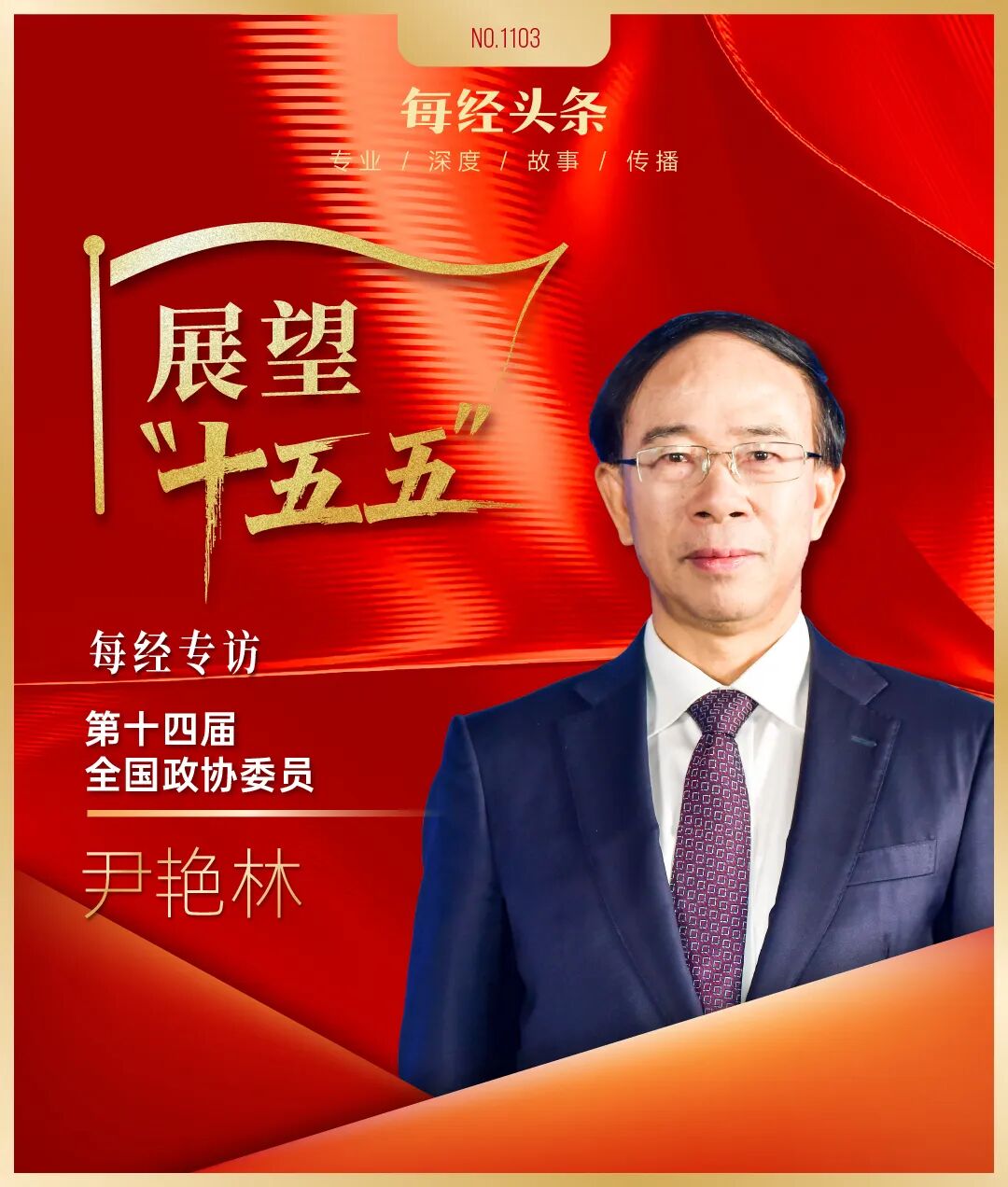
展望“十五五” | 专访尹艳林:让有钱且愿消费的人顺利消费;个税起征点可提高,最高边际税率可下调,让有关群体少缴税、多收入
Mei Ri Jing Ji Xin Wen· 2025-11-16 12:35
每经记者|张蕊 每经编辑|陈星 10月28日,《中共中央关于制定国民经济和社会发展第十五个五年规划的建议》(以下简称《建议》)正式发布。 记者注意到,此次《建议》在投资、消费等领域出现多个新提法。这些新提法背后有怎样的深意?在我国经济迈向"十五五"的关键节点,如何破解消费率 偏低、内需动力不足的深层矛盾?面对复杂严峻的国内外环境,深化改革的突破口究竟在哪里? 带着这些关乎经济发展全局的核心问题,近日,《每日经济新闻》记者(以下简称NBD)专访了第十四届全国政协委员尹艳林。 尹艳林深耕宏观经济领域多年,曾长期任职于国家发改委和原中央财经领导小组办公室,曾对中国经济体制改革、供需结构调整等议题有着深刻洞察和独 到见解。 他直言不讳当前面临的一些问题背后是深层次的体制问题,坦言当前改革进入深水区的特征更加明显。他对扩大内需、全国统一大市场等领域的问题,都 提出了具体的改革方向和建议。 新型城镇化仍然是经济增长的重要引擎 NBD:《建议》在"十五五"时期经济社会发展的主要目标中提出,全要素生产率稳步提升,居民消费率明显提高,内需拉动经济增长主动力作用持续增 强。这对今后几年的经济发展会产生哪些影响? 尹艳林:全要素生 ...