
贸易战

Search documents
特朗普对华服软晚了一步,一架专机降落北京,来截胡美国订单?
Sou Hu Cai Jing· 2025-05-13 11:48
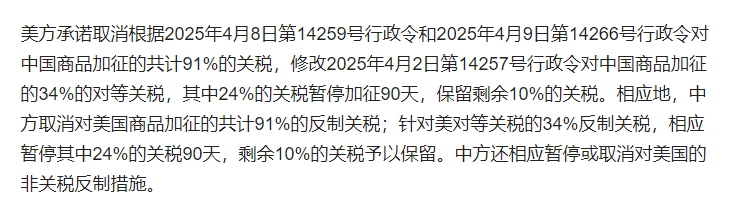
Group 1 - The core point of the article highlights the significant adjustments made by the U.S. in the trade negotiations with China, including the cancellation of most tariffs, indicating a desire to ease trade tensions and restore trade flows [1][2][5] - The U.S. has removed 91% of the additional tariffs, while China has reciprocated by withdrawing its countermeasures, with an additional 24% of tariffs paused for 90 days [2][5] - The negotiations are seen as a response to both internal and external pressures on the U.S. government, with various stakeholders urging for a resolution to avoid economic downturns [7][9] Group 2 - Brazil's recent visit to China by President Lula, accompanied by a large business delegation, signifies Brazil's intent to secure more trade agreements, potentially capitalizing on the U.S.-China trade tensions [11][13] - Brazil aims to increase exports of traditional agricultural products and minerals to China, including soybeans, beef, and iron ore, while also seeking long-term supply contracts [13][15] - The collaboration extends to renewable energy and technology sectors, with Brazil looking to attract Chinese investment in semiconductor manufacturing and 5G network development [17][20] Group 3 - The evolving trade dynamics between China and Brazil may challenge the U.S.'s influence in Latin America, as Brazil emphasizes a non-aligned stance and seeks to reduce reliance on the U.S. dollar [19][22] - The U.S. technology blockade against China may face obstacles as Brazil expresses interest in collaborating on advanced technologies, potentially undermining U.S. efforts [20][22] - The article suggests that the global economic landscape is shifting towards a more diversified cooperation model, indicating that unilateral pressure from the U.S. may lead to lost opportunities [25][27]

金晟富:5.13黄金反弹修正还会跌吗?晚间黄金行情分析参考
Sou Hu Cai Jing· 2025-05-13 11:33
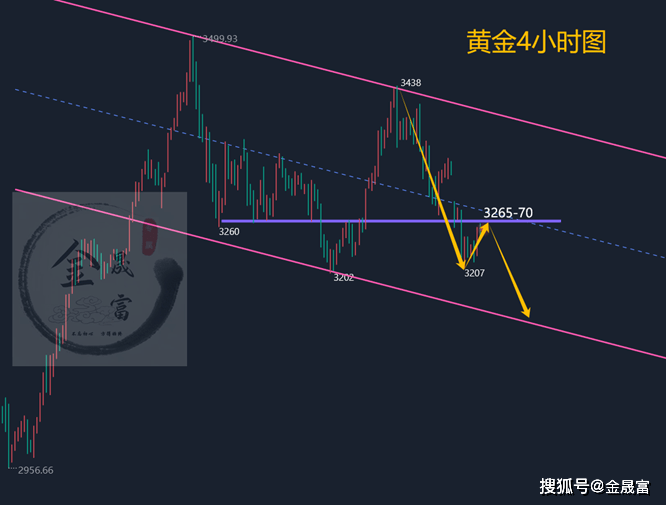
Group 1 - The core viewpoint of the articles revolves around the recent fluctuations in gold prices influenced by geopolitical events and economic data, particularly the U.S. Consumer Price Index (CPI) [2][3][4] - Gold prices rebounded by 0.6% to approximately $3,254 after hitting a low, following a significant drop of 2.7% the previous day due to improved market risk appetite after a U.S.-China tariff agreement [2][3] - The U.S. and China agreed to reduce tariffs significantly, with U.S. tariffs on Chinese goods dropping from 145% to 30%, and Chinese tariffs on U.S. goods from 125% to 10%, which boosted global stock markets and reduced concerns about a U.S. economic recession [2][3] Group 2 - The upcoming U.S. CPI report is critical, with expectations of a 2.4% year-over-year increase, which could influence Federal Reserve policy and subsequently impact gold prices [3][4] - If the CPI data exceeds expectations, it may strengthen the hawkish sentiment around the Federal Reserve, leading to a stronger dollar and further declines in gold prices [3][4] - Conversely, if the CPI growth slows, it could reignite expectations for multiple rate cuts by the Federal Reserve, providing support for gold prices [3][4] Group 3 - Technical analysis indicates that gold is currently in a bearish trend, with significant downward movement observed, and a potential target of $2,909 if it breaks below the previous low of $3,200 [4][6] - Short-term trading strategies suggest focusing on selling during rebounds, with key resistance levels identified around $3,265 to $3,270, and support levels at $3,200 to $3,160 [6][7] - The market sentiment remains cautious, with traders advised to manage positions carefully and consider real-time strategies based on market movements [6][7]
关税回去了,但美国回不去了
Sou Hu Cai Jing· 2025-05-13 11:30
Core Viewpoint - The recent negotiations between China and the U.S. have led to a significant reduction in tariffs, with both sides canceling 91% of tariffs and reducing additional tariffs to 10%, marking a return to the pre-April 2 status, but the underlying dynamics of trade and pricing have fundamentally changed [1][4]. Group 1: Trade Dynamics - Following the tariff negotiations, U.S. clients have begun to place orders with Chinese manufacturers, creating an illusion of normalcy, yet the market dynamics have shifted [2]. - China's export to the U.S. saw a 21% decline in April, but overall exports increased by 9.3%, indicating a global shift towards sourcing from China to capture the U.S. market [7]. - The high tariffs imposed by the U.S. have not crippled China; instead, they have contributed to rising inflation in the U.S., with national debt surpassing $36 trillion and major retailers expressing concerns over empty shelves [7]. Group 2: Pricing Power and Market Perception - Chinese exporters have adapted to the trade tensions by forming a consensus to raise prices, moving away from the previous strategy of undercutting prices to secure orders [8][17]. - The prices of rare earth metals have surged dramatically, with dysprosium doubling to $850 per kilogram and terbium increasing over 210% to $3,000, reflecting the new pricing power of Chinese manufacturers [9]. - The perception of Chinese manufacturing is changing, with more American consumers recognizing the quality of products made in China, leading to a shift in branding strategies [19][23]. Group 3: Long-term Implications - The trade conflict has inadvertently highlighted China's advancements in manufacturing and its critical role in global supply chains, particularly in high-tech and military sectors where the U.S. heavily relies on Chinese rare earth materials [11][14]. - The ongoing tariff situation may lead to lasting changes in pricing structures, making it difficult for prices to revert to previous levels even if the trade war ends [24]. - The current trade tensions serve as a public acknowledgment of China's decade-long efforts to upgrade its manufacturing capabilities and redefine its market position [21][25].
一场关税战,打出了一个“后美国时代”,中国式破局让美吃了大亏
Sou Hu Cai Jing· 2025-05-13 11:30
Core Viewpoint - The trade war initiated by the Trump administration under the guise of "reciprocal tariffs" has not achieved its intended goals, instead accelerating a profound transformation in the global economic landscape, leading to a clearer outline of a "post-American era" [1][3]. Economic Impact - The core logic behind the tariff war was to increase government revenue to alleviate fiscal deficits and to force manufacturing back to the U.S. However, while tariffs may provide short-term revenue, they ultimately suppress international trade, shrinking the tax base and weakening the fiscal foundation of the U.S. [3]. - The manufacturing repatriation goal is unrealistic due to significant cost differences in global labor, with U.S.-China manufacturing cost disparities reaching 5 to 10 times, making tariffs insufficient to offset these differences [3]. - The volatility of U.S. tariff policies has led to global economic instability, with predictions of a 0.2% decline in global trade volume by 2025 and a potential increase in the U.S. core PCE index by 0.85% to 1.2% [3]. China's Response - China has demonstrated strong strategic resolve and precise countermeasures, such as imposing tariffs on U.S. agricultural products and restricting rare earth exports, which directly impact U.S. industries [5][8]. - Despite U.S. tariffs, bilateral trade between China and the U.S. is projected to grow over 8% from 2023 to 2024, highlighting the complexity of trade relations in the era of globalization [5]. - Approximately 30% of China's exports to the U.S. consist of products manufactured by U.S. companies in China, meaning that the tariff costs are largely borne by American firms [5]. Global Supply Chain Dynamics - The tariff war has accelerated the restructuring of global supply chains, with countries seeking new cooperation paths, leading to a more decentralized and regionalized global supply chain [6]. - China is leveraging its robust infrastructure, efficient government services, and vast industrial support systems to maintain its irreplaceable position in the global supply chain [6]. Technological Development - China is focusing on domestic technological advancements through initiatives like the "domestic substitution list" to overcome key technology gaps, significantly increasing R&D investments in semiconductor companies [8]. - China is also deepening technological cooperation with non-U.S. countries, participating in ASEAN digital economy initiatives and collaborating with the EU on 6G development, thereby diluting the impact of U.S. sanctions [8]. Conclusion on U.S. Trade Policy - The U.S. trade war reflects unilateralism and hegemonic thinking, contradicting the trends of economic globalization, and undermines the mutually beneficial nature of U.S.-China economic cooperation [8].
冠通每日交易策略-20250513
Guan Tong Qi Huo· 2025-05-13 11:20
Report Industry Investment Ratings No information provided in the content regarding industry investment ratings. Core Views - The plastics market is affected by factors such as increased supply from new capacity and reduced downstream demand, but the sentiment is boosted by Sino - US trade negotiations, suggesting that short positions should gradually stop profit and exit [3] - For lithium carbonate, the supply - demand surplus pattern continues, with futures prices hitting new lows and limited room for spot price decline, suggesting a wait - and - see approach [5] - The short - term copper price is expected to be mainly oscillating upwards, affected by Sino - US negotiations and supply - demand fundamentals, and attention should be paid to the US CPI data [10] - Crude oil supply is under pressure, demand growth is expected to slow down, and it is recommended to stop profit on previous short positions [11][13] - For asphalt, under the situation of weak supply and demand, a wait - and - see approach is recommended [14] - PP is expected to oscillate, with downstream demand recovery slow and new orders limited, but market sentiment is boosted by trade negotiations [15][16] - PVC is still under pressure, but it is recommended to gradually stop profit on short positions due to improved macro - sentiment [17] - Urea prices are expected to oscillate upwards, but the upward space is restricted by policies [18][19] Summary by Variety Plastics - Supply: Yulong Petrochemical's overhauled devices restarted, and new capacity was put into production, but some devices were also under maintenance [3] - Demand: PE downstream开工率 decreased, with agricultural film entering the off - season and other demand being average [3] - Inventory: Petrochemical inventory is at a relatively low level in recent years [3] - Recommendation: Gradually stop profit on short positions [3] Carbonate Lithium - Price: The futures price hit a new low, and the spot price is close to the bottom [4][5] - Supply: Production in Jiangxi is stable, while the northern region's开工率 has decreased significantly [5] - Demand: Positive electrode production is expected to increase in May and then enter the off - season, and the impact of US tariffs on global demand may be limited [5] - Inventory: There is a slight reduction in inventory [5] - Recommendation: Wait and see [5] Copper - Price: Affected by Sino - US negotiations and the US dollar, it is expected to oscillate upwards in the short term [9][10] - Supply: The supply of copper ore is tight, and there are many smelter maintenance plans in May and July - September [10] - Demand: Downstream demand shows resilience, with cable enterprise开工率 and orders increasing [10] - Recommendation: Pay attention to the US CPI data [10] Crude Oil - Supply: OPEC + is gradually increasing production, and US production is at a high level, with large supply pressure [11] - Demand: The growth rate of global demand is expected to slow down [11] - Recommendation: Stop profit on previous short positions [13] Asphalt - Supply:开工率 has rebounded, and production is expected to increase in May [14] - Demand: Downstream开工率 is uneven, and actual demand needs to be restored [14] - Inventory: The inventory - to - sales ratio has slightly increased, still at a low level in recent years [14] - Recommendation: Wait and see [14] PP - Supply: New production capacity is put into production, and there are more maintenance devices, with enterprise开工率 at a relatively low level [15] - Demand: Downstream开工率 continues to decline, and new orders are limited [15][16] - Inventory: Petrochemical inventory is at a relatively low level in recent years [15] - Recommendation: Expected to oscillate [16] PVC - Supply:开工率 has increased, and spring maintenance scale is less than last year [17] - Demand: Downstream开工率 is still low, and exports are affected by policies [17] - Inventory: Social inventory is still high [17] - Recommendation: Gradually stop profit on short positions [17] Urea - Supply:开工率 is stable, and some enterprises are resuming production [18] - Demand: Agricultural fertilization is cautious, and compound fertilizer factory开工率 may decline [18][19] - Inventory: Inventory is being reduced [18] - Recommendation: Prices are expected to oscillate upwards, but be cautious of risks [19]
巴西总统卢拉:贸易战没有赢家,导致经济低迷。
news flash· 2025-05-13 10:58
Core Viewpoint - Brazilian President Lula stated that trade wars have no winners and lead to economic downturns [1] Group 1 - Trade wars negatively impact economies, resulting in a slowdown [1] - The statement emphasizes the importance of cooperation over conflict in international trade [1]
特朗普发起新一轮关税战?美国想要的中国没给,日本选择硬刚到底
Sou Hu Cai Jing· 2025-05-13 10:38
文/珠玑说 无论是特朗普在国内推动药价改革却绑定国际汽车贸易的施压,还是盟友日本突然对美国展现出的贸易强硬姿态,都说明,这场博弈还未结束,此次会谈 中,美方最想要的中方没有给,日本会做出怎样的强硬举动呢? (本文所有内容皆有官方可靠信源,具体资料赘述文章结尾) 中美贸易战关税刚迎来缓和,日内瓦谈判桌上达成了部分关税回调共识,然而,新的风向和对抗已悄然展开。 日内瓦的"休战符" 中美贸易战,刚透出一丝暖意就又寒风乍起?日内瓦谈判桌上的"实质性进展",听着像那么回事,双方说好了,从5月14号起,关税大棒暂时收一收,退回 到4月2号以前的水平。 可就在大家以为能喘口气的时候,新的火药味儿已经悄然弥漫开来,这次握手,更像是一场复杂棋局中的暂停,而非终局的哨声。 表面上看,这次谈判成果显著,美国取消了清单里高达91%的加征关税,中国也投桃报李,撤了对等比例的反制关税。 具体数字更扎眼:美国对中国商品的关税税率,从先前吓人的145%,"大刀阔斧"砍到了30%,这里头还包含了那笔备受争议的20%"芬太尼税",中国对美国 货的关税也降到了10%,双方似乎都拿出了不小的诚意。 但猫腻往往藏在细节里,美国那边有一项关键的24%对 ...
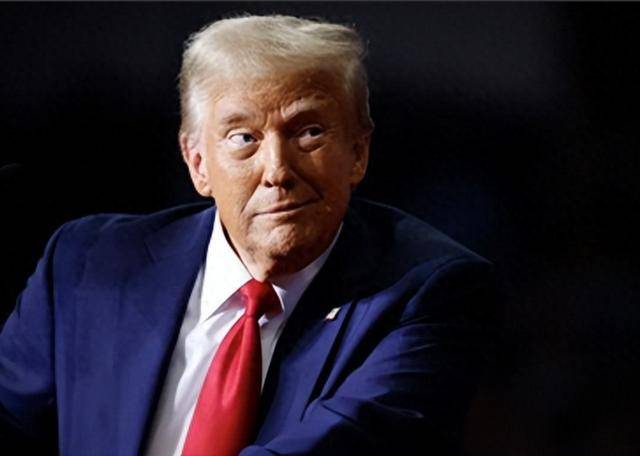
达成协议后,中国货万帆竞发驰向美国
阿尔法工场研究院· 2025-05-13 10:25
Core Viewpoint - The recent announcement of a temporary reduction in tariffs from 145% to 30% on Chinese goods has sparked optimism among U.S. companies reliant on imports from China, although challenges remain due to ongoing higher costs and uncertainties in trade policy [2][5][8]. Group 1: Impact on Companies - SharkNinja's CEO Mark Barrocas quickly instructed factories in China to release goods for shipment to the U.S. following the tariff announcement, indicating readiness with hundreds of containers prepared for departure [2][4]. - Many companies, including Hightail Hair, expressed relief and are moving swiftly to ship existing inventory, with Hightail having nearly 4,000 units ready for export [4]. - Despite the tariff reduction, companies are still facing challenges from higher costs and potential price increases during back-to-school and holiday shopping seasons [5][8]. Group 2: Supply Chain Adjustments - Companies have been adjusting their supply chains in response to the trade war, with some, like Musgrave Pencil, shifting production to countries like Vietnam to avoid high tariffs [12][15]. - SharkNinja has significantly reduced its reliance on Chinese manufacturing, with plans for nearly 90% of its U.S. products to be produced outside of China by July [16]. - The uncertainty surrounding future tariff policies continues to complicate strategic planning for many businesses, as highlighted by concerns over the long-term implications of the temporary agreement [6][17].

日本财长:将寻求在G7会议期间与贝森特继续商讨外汇问题
Jin Shi Shu Ju· 2025-05-13 09:04
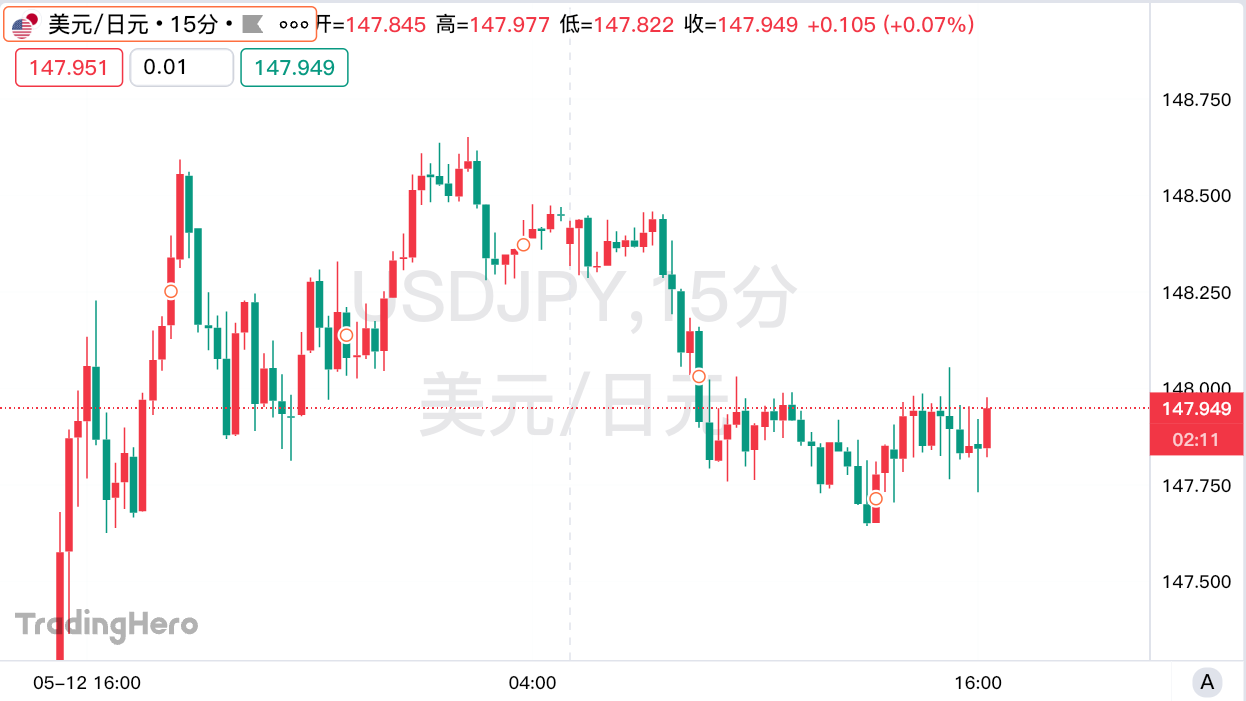
Group 1 - Japan's Finance Minister Katsunobu Kato plans to meet with U.S. Treasury Secretary Scott Bessent during the G7 meeting in Canada to discuss foreign exchange issues [1] - The meeting is scheduled for May 20-22, focusing on the separation of currency issues from direct trade negotiations between Japan and the U.S. [1] - Kato and Bessent last met on April 24, agreeing to continue constructive dialogue on monetary policy without setting exchange rate targets [1] Group 2 - The U.S. dollar surged due to a temporary tariff reduction agreement between the U.S. and China, alleviating concerns about a potential global economic recession [2] - Risk sentiment improved, leading to a decline in safe-haven currencies like the yen, with the dollar reaching 148.66 yen, the highest level since April 3 [2] - Kato stated that the Japanese government will closely monitor the developments related to the U.S.-China agreement and assess its impact, although he refrained from commenting on exchange rate trends [4]
欧洲央行管委Makhlouf:敏捷性和灵活性对政策制定者很重要。即使是短暂的贸易战也会引发不确定性。
news flash· 2025-05-13 08:13
Group 1 - The core viewpoint emphasizes the importance of agility and flexibility for policymakers in the context of economic uncertainty [1] - Short-term trade wars can lead to increased uncertainty in the economic environment [1]