
绿色转型

Search documents
研判2025!中国氯化苯行业产量、价格及开工率分析:产能释放叠加需求回暖,中国氯化苯2025年上半年产量同比激增71.43%[图]
Chan Ye Xin Xi Wang· 2025-08-04 06:49
Industry Overview - Chlorobenzene is a key organic chemical intermediate with irreplaceable strategic importance in agriculture, pharmaceuticals, dyes, and polymer materials [1][5] - In the first half of 2025, China's chlorobenzene industry is expected to experience a concentrated release of production capacity, leading to a significant increase in output, which is projected to reach 211,300 tons, a year-on-year growth of 71.43% [1][5] Industry Chain - The upstream of the chlorobenzene industry includes raw materials such as benzene, chlorine gas, and catalysts, as well as production equipment like chlorination reactors and distillation towers [3] - The midstream involves the production and manufacturing of chlorobenzene, while the downstream applications span agriculture, pharmaceuticals, dyes, pigments, fine chemicals, and synthetic materials [3] Current Industry Status - As of June 2025, the price of chlorobenzene is 4,964 yuan per ton, a year-on-year decrease of 33.25% due to increased market supply and reduced upstream raw material costs [7] - The industry operating rate in June 2025 is 55.69%, a decrease of 8.00 percentage points month-on-month but an increase of 21.21 percentage points year-on-year, driven by new production capacity and improved downstream demand [9] - The inventory level in the last week of June 2025 is 8,630 tons, a year-on-year increase of 643.97%, indicating a supply-demand imbalance [11] Key Enterprises - The chlorobenzene industry in China is highly concentrated, with a few large enterprises dominating the market. Anhui Bayi Chemical Co., Ltd. is the largest producer with an annual capacity of 320,000 tons [13] - Sinopec Nanjing Chemical Industry Co., Ltd. has an annual capacity of 150,000 tons and is a significant player in production technology and product quality [13] Industry Development Trends 1. The industry is transitioning from "scale expansion" to "quality upgrade," with technological advancements such as catalytic chlorination expected to reduce energy consumption and emissions [19] 2. The demand for chlorobenzene is expanding into high-value-added fields, particularly in pharmaceuticals and electronic chemicals, driven by the expiration of patents for key drugs [20] 3. Stricter environmental policies are pushing for a green transformation, leading to increased industry concentration as smaller firms face elimination due to rising compliance costs [21]


机械工业上半年运行稳中向好,创新发展活力增强
Zhong Guo Qi Che Bao Wang· 2025-08-04 02:56
Core Viewpoint - The mechanical industry in China has shown resilience and steady growth in the first half of 2025, despite facing various challenges and uncertainties in the external environment [2][11]. Economic Performance - The mechanical industry maintained a positive economic trend, with major economic indicators showing rapid growth, laying a solid foundation for achieving annual targets [3][4]. - By the end of June, the number of large-scale enterprises in the mechanical industry reached 136,000, an increase of 6,000 year-on-year, accounting for 26.2% of the national industrial total [3]. - The total assets of the mechanical industry reached 40.4 trillion yuan, a year-on-year increase of 6.6% [3]. Value Added and Production - The value added of large-scale enterprises in the mechanical industry grew by 9.0% year-on-year, outperforming the national industrial and manufacturing growth rates by 2.6 and 2 percentage points, respectively [3][4]. - Key sectors such as automotive and electrical machinery experienced double-digit growth rates of 11.3% and 12.2%, respectively [4]. Product Sales and Market Demand - In the first half of the year, 84 out of 122 monitored products saw year-on-year production growth, representing 68.9% of the total [4]. - Automotive production and sales reached 15.62 million and 15.65 million units, respectively, with year-on-year growth of 12.5% and 11.4% [5]. Investment Trends - Fixed asset investment in the mechanical industry grew by 3.8% year-on-year, higher than the national investment growth rate of 2.8% but lower than the industrial average of 10.3% [6]. - Investment in general equipment and automotive sectors grew significantly by 16.6% and 22.2%, respectively [6]. Economic Efficiency - The mechanical industry achieved operating revenue of 15.3 trillion yuan, a year-on-year increase of 7.8%, and total profits of 791.21 billion yuan, up 9.4% [6]. - The profit margin was 5.2%, slightly higher than the previous year [6]. Industry Sentiment - The mechanical industry’s prosperity index remained stable and improved, with a reading of 106.9 in June, indicating overall positive economic performance [7]. Innovation and Development - The industry focused on technological innovation and green development, with strategic emerging industries showing significant growth [8]. - The production of new energy vehicles reached 6.968 million units, with a market penetration rate of 44.3% [8]. Foreign Trade - The mechanical industry’s total import and export value reached 597.6 billion USD, with exports growing by 12.4% year-on-year [9]. - Trade surplus increased by 23.3% year-on-year, accounting for 57.1% of the national trade surplus [9]. Challenges and Outlook - The mechanical industry faces increasing uncertainties due to external geopolitical tensions and trade protectionism, which may impact future growth [11][14]. - Despite challenges, the industry is expected to maintain a growth rate of around 5.5% for the year, supported by favorable macro and industrial policies [14][15].

8月策略观点:波动放大如何应对?-20250803
Guoxin Securities· 2025-08-03 13:58
Core Insights - The market experienced its smoothest main upward phase since the beginning of the year in July, with a 3.74% increase and a maximum drawdown of 1.18% [3][6] - The "anti-involution" policies and the emphasis on stabilizing growth in key industries contributed to market acceleration and improved profit-making effects [3][6] - Small-cap, growth, and loss-making stocks outperformed in July, with sectors like steel, pharmaceuticals, building materials, and communications leading the gains [3][10] Market Performance Summary - In July, the market saw a significant increase, with the main index rising 3.74% and achieving the highest monthly Sharpe and Calmar ratios of the year [6][8] - The average number of stocks hitting the daily limit dropped from over 70 to around 50 by the end of July, indicating a slight easing in profit-making effects [3][43] - The small-cap index outperformed the large-cap index, with small-cap stocks rising 5.54% compared to 3.48% for large-cap stocks [10] Industry Analysis - The report highlights the importance of identifying companies that only incur losses in profits but maintain positive cash flow, particularly in the cement and chemical sectors [3][98] - The "anti-involution" theme is expected to drive excess returns, with a projected initial pulse of around 20 percentage points, particularly benefiting small-cap stocks [3][91] - Industries experiencing supply contraction and rising demand include upstream coking coal, midstream engineering machinery, and downstream white goods and pharmaceuticals [3][115] Thematic Investment Focus - The report emphasizes the significance of the "14th Five-Year Plan" and the industries benefiting from childbirth subsidies, including maternal and infant products, children's healthcare, and early education services [3][118] - Key areas of focus include digital transformation in industries and consumption services, particularly in regions like the Beijing-Tianjin-Hebei area and the Yangtze River Delta [3][120]
智改数转 产业增绿丨绩效分级激活绿色生产力
He Nan Ri Bao· 2025-08-02 23:56
Group 1 - The core viewpoint of the articles highlights the importance of environmental performance ratings for companies, which directly impacts their production capabilities during periods of heavy pollution [1][2][3] - The city of Hebi has successfully implemented a performance grading system, resulting in the addition of 117 new A and B level enterprises in 2024, leading the province in both application numbers and approval rates [1][2] - Companies achieving higher environmental performance ratings, such as A and B levels, gain greater autonomy in production during heavy pollution periods, thus ensuring production continuity and enhancing customer trust [2][3] Group 2 - The performance grading system evaluates companies based on various environmental indicators, categorizing them into four levels: A, B, C, and D, with higher ratings allowing for more flexible production options during pollution events [2] - Companies that have improved their environmental ratings, like Nuoxin Electronics, have experienced significant benefits, including a 20% increase in production capacity and an additional revenue of over 20 million yuan in the first quarter compared to the same period in 2024 [3] - The shift in perception of environmental protection from a cost to a competitive advantage is encouraging more companies to pursue higher performance ratings, with a target of adding at least 50 new A and B level enterprises by the end of 2025 [3]
第31周:粤陇调高容量电价增强盈利稳定,1H25新能源装机规模持续新突破
Huafu Securities· 2025-08-02 13:46
Investment Rating - The report maintains a "stronger than market" rating for the public utility sector [8]. Core Views - The adjustment of capacity electricity prices in Guangdong and Gansu provinces is expected to enhance the profitability stability of thermal power and promote its transition to flexible adjustment power sources, reinforcing its role in the new power system [3][20]. - The energy supply and demand are relatively relaxed in the first half of 2025, with a rapid acceleration in green transformation, as renewable energy continues to dominate new installations [4][25]. Summary by Sections 1. Investment Recommendations - The report recommends Jiangsu Guoxin in the thermal power sector, cautiously recommends Sheneng Co. and Zhejiang Energy Power, and suggests attention to Funiu Co. and Huadian International. In the nuclear power sector, it cautiously recommends China Nuclear Power and China General Nuclear Power. For the green energy sector, it suggests attention to Three Gorges Energy and Jiangsu New Energy, with cautious recommendations for Longyuan Power, Zhejiang New Energy, and Zhonglv Electric. In the hydropower sector, it recommends Changjiang Power and cautiously recommends Huaneng Hydropower and Qianyuan Power, while suggesting attention to Guotou Power, Chuan Investment Energy, and Zhejiang Fu Holdings [4]. 2. Industry Dynamics - On July 29, the Guangdong Provincial Development and Reform Commission announced an increase in capacity electricity prices for coal and gas power units, with coal power capacity price adjusted to 165 yuan per kilowatt per year (including tax) starting January 1, 2026. The gas power price will be adjusted based on unit type starting August 1, 2025 [3][39]. - In Gansu, the initial standard for coal power capacity price is set at 330 yuan per kilowatt per year for two years, with a coverage ratio increase from 30% to 100% [20][21]. 3. Renewable Energy Developments - In the first half of 2025, renewable energy accounted for nearly 60% of the total installed capacity in China, with new installations reaching 268 million kilowatts, a year-on-year increase of 99.3% [4][25]. - Renewable energy generation reached 1,799.3 billion kilowatt-hours, accounting for 39.7% of total generation, with wind and solar power generation increasing by 27.4% year-on-year [26][31].
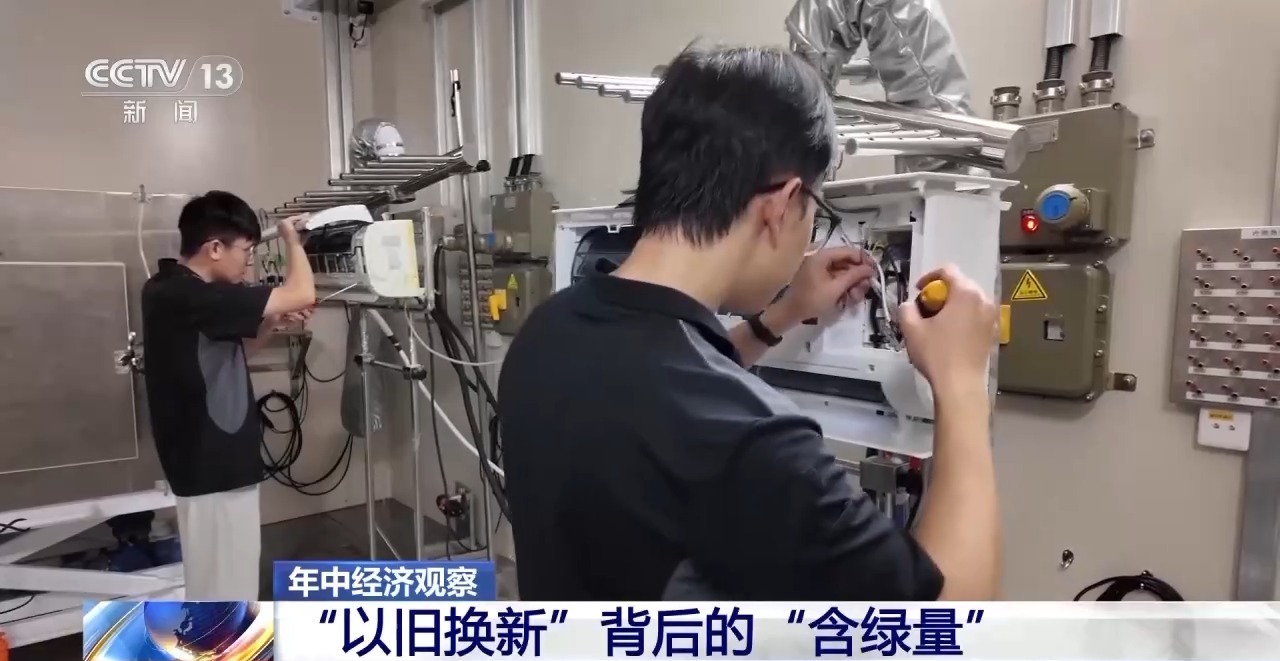
年中经济观察|感受“以旧换新”背后的“含绿量”
Yang Shi Xin Wen Ke Hu Duan· 2025-08-02 07:54
Group 1 - The core viewpoint of the article highlights the acceleration of China's green transformation in the economy, with a focus on the "old-for-new" policy that promotes low-carbon initiatives and encourages the adoption of energy-efficient appliances [1][12][19] - The "old-for-new" policy has led to significant energy savings for consumers, with new air conditioning units demonstrating a drastic reduction in energy consumption compared to older models, saving consumers approximately $943 million annually [7][9][19] - The shift towards energy-efficient products is evident as manufacturers are increasingly focusing on producing first-level energy efficiency appliances, with a reported 70% of television products shipped being of this category [16][18] Group 2 - The article discusses the impact of government subsidies on the adoption of energy-efficient appliances, with first-level energy efficiency products receiving a 20% subsidy and second-level products a 15% subsidy, driving both consumer and manufacturer engagement [14][19] - Equipment upgrades in traditional industries such as steel and cement are being supported by a special long-term national bond fund of 200 billion yuan, facilitating energy-saving transformations and enhancing green productivity [19][25] - The implementation of smart mining projects and energy-efficient upgrades in mining operations has resulted in significant reductions in energy consumption and increased production efficiency, showcasing the benefits of technological advancements in traditional sectors [25][27]
年中经济观察 | 以发展“含绿量”降低“含碳量” 提升增长“含金量”
Yang Shi Wang· 2025-08-02 02:32
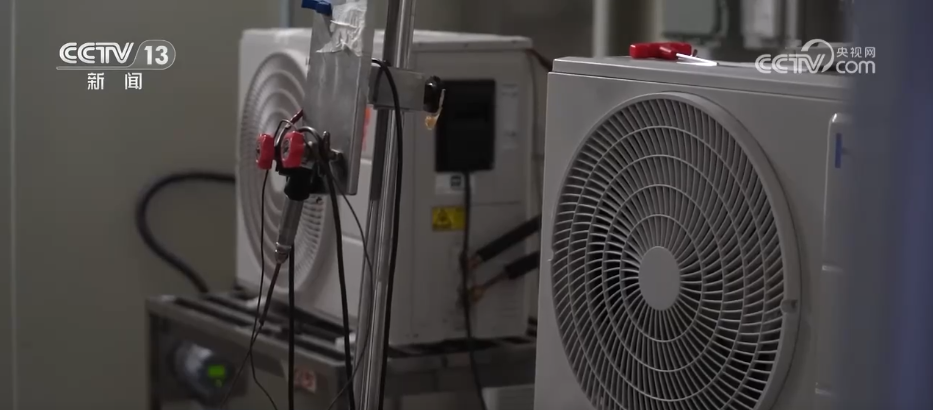
Group 1: Economic Transition and Policy Impact - China's economic and social green transition has accelerated in the first half of the year, with green becoming a significant aspect of economic development [1] - The "old-for-new" policy has a clear low-carbon orientation, promoting energy-efficient home appliances through differentiated national subsidy policies [1][11] - The energy-saving potential of new appliances is highlighted, with significant savings in electricity costs for consumers [5][7] Group 2: Energy Efficiency and Consumer Behavior - A comparative experiment showed that new energy-efficient air conditioners consume significantly less electricity than older models, with new models using 1 kWh compared to 5 kWh for old ones [5] - Consumers are increasingly favoring energy-efficient appliances, prompting manufacturers to shift their production focus towards first-level energy efficiency products [9][11] Group 3: Manufacturing and Equipment Upgrades - Major appliance manufacturers are investing in green production lines, with companies like Changhong and Haier ramping up production of energy-efficient products [13][15] - The government has allocated 200 billion yuan for long-term special bonds to support equipment upgrades in traditional industries, facilitating energy-saving transformations [16] - Specific projects, such as the upgrade of equipment in steel and mining industries, are expected to yield significant energy savings and carbon emission reductions [18][20][22]
中铁十八局推进“六化转型”—— 让绿色业务成为增长极
Jing Ji Ri Bao· 2025-08-01 22:01
Core Viewpoint - China Railway Eighteenth Bureau Group aims to transform into a modern industrial group with strong capabilities and industry leadership by focusing on quality, specialization, high-end, precision, digitalization, and green transformation in 2024 [1] Group 1: Technological Innovation - The "Key Technologies and Applications for the Super Long Deep-Buried Qinling Tunnel" project by China Railway Eighteenth Bureau was recognized as one of the top ten technological innovations in the construction industry [2] - The project effectively addressed over 4,000 rock bursts and 600 water inflows, achieving international leading standards in underground engineering [2] - In 2024, the company obtained 230 authorized patents, including 52 invention patents, and 19 software copyrights [3] Group 2: Green Transformation - The company has increased its focus on strategic emerging industries and enhanced intelligent production levels, making green and environmentally friendly operations a new growth driver [4] - The remanufacturing process of shield machines at the South China Qingyuan Shield Base saves nearly 60% in energy and 70% in materials compared to purchasing new machines, significantly reducing costs [4] - The zero-energy passive building in Tianjin utilizes insulation technology and photovoltaic systems to achieve a 100% energy-saving rate and over 148% renewable energy utilization [6] Group 3: Social Responsibility and Infrastructure Development - China Railway Eighteenth Bureau is actively involved in public welfare projects, such as the construction of a new traditional Chinese medicine hospital in Tianjin, aimed at improving local healthcare facilities [7] - The company is also enhancing transportation infrastructure, with the Tianjin Coastal Avenue project significantly improving traffic efficiency in the Binhai New Area [7] - The company has undertaken over 20 ecological restoration projects in Xiong'an New Area, contributing to the development of an integrated ecological city system [8]
关于召开2025年中国硅业大会的通知
中国有色金属工业协会硅业分会· 2025-08-01 12:14
Core Viewpoint - The article highlights China's competitive edge in the global green industry, particularly in photovoltaic products, new energy vehicles, and lithium batteries, while also addressing the emerging "involution" competition within the industry chain [1] Group 1: Conference Overview - The conference titled "2025 China Silicon Industry Conference" will focus on "Technological Innovation and Green Transformation, Industry Self-discipline for Harmonious Development" [2] - The event is scheduled for September 10-12, 2025, in Baotou, Inner Mongolia [2] - The conference is organized by the China Nonferrous Metals Industry Association, with several co-organizers from the silicon material sector [2][3] Group 2: Agenda Highlights - The agenda includes a high-level dialogue session featuring industry leaders discussing development trends and self-discipline [4] - Keynote speeches will cover topics such as the current state and outlook of China's silicon industry, opportunities and challenges in the renewable energy market, and future trends in the crystalline silicon photovoltaic industry [4] - A market and technology report session will focus on industrial silicon and polysilicon futures [4][8] Group 3: Participation and Costs - Registration for the conference is free, with specific benefits for member units, including complimentary materials and meal vouchers [5] - Non-member units and excess personnel from member units will incur a fee of 2000 yuan per set for materials and meal vouchers [5] - A registration link is provided for participants to sign up [6]

上半年全国海洋生产总值5.1万亿元,海洋经济稳中向好
Xin Jing Bao· 2025-08-01 10:03
Core Insights - The marine economy in China showed resilience and positive growth in the first half of the year, with a national marine GDP reaching 5.1 trillion yuan, a year-on-year increase of 5.8% [1] - Traditional marine industries, particularly shipbuilding, demonstrated improved production efficiency, with the completion of sea vessels increasing by 4.7% year-on-year [1] - Emerging marine industries maintained a leading position globally, with new orders, delivered orders, and hand-held orders in the marine engineering equipment sector accounting for 64.6%, 43.3%, and 62.6% of the international market share, respectively [1] - The overall business performance of marine-related enterprises remained stable, with a higher proportion of companies reporting year-on-year growth in revenue, profit, and R&D expenditure compared to the first quarter [1] - Despite complex international conditions, marine foreign trade continued to grow, with total import and export volume increasing by 1.1% year-on-year, surpassing the first quarter's growth of 1.0 percentage points [1] - High-end, intelligent, and green marine products showed competitive advantages, contributing significantly to export growth, with ship and wind turbine exports increasing by 20.0% and 13.7% year-on-year, respectively [1] Industry Support and Future Outlook - The growth of the marine economy was supported by macro policies, the deepening application of digital technology, and accelerated green transformation, creating a strong synergy for continued growth [2] - The Ministry of Natural Resources plans to further enhance technological innovation, optimize industrial layout, and stimulate market vitality to achieve qualitative and quantitative improvements in the marine economy, supporting the goal of building a strong marine nation [2]