价格战

Search documents
李宁们双十一猛打折去库存
21世纪经济报道· 2025-11-02 04:14
Core Viewpoint - The article discusses the intense discounting strategies employed by major sports brands during the "Double Eleven" shopping festival, highlighting the competitive landscape and the challenges faced by these companies in terms of sales growth and market share [1][7][9]. Discount Strategies - Nike leads the discounting efforts with a slogan "Not just 50% off," offering shoes at prices as low as 200+ yuan, creating a comprehensive discount matrix across channels [1] - Adidas focuses on popular items with a "starting from 50% off" strategy on Tmall, along with additional coupons [1] - Anta promotes discounts of up to 60% off on Tmall, while Li Ning offers similar discounts across multiple platforms, with JD.com providing additional member discounts [1] - Li Ning appears to have the largest overall discounting strategy among the brands [1][5]. Price Comparisons - Nike's flagship Vaporfly 4 is priced at 1409 yuan after discounts, with a discount rate of approximately 8.3% [3] - On JD.com, the same shoe can be purchased for 1369 yuan, reflecting a discount rate as low as 80% [4] - Adidas's Adios Pro4 shows weaker discounting, with rates around 9.1% to 9.3% across platforms [4]. - Anta's C202 6Pro has varying prices across platforms, with JD.com offering it at 1359 yuan after discounts [4]. - Li Ning's Feidian 5 Elite shows significant discounting, with rates as low as 6.9% [5]. Sales Performance - Li Ning reported a decline in retail sales, with a mid-single-digit percentage drop in the third quarter [7]. - Nike's revenue in Greater China fell by 10% to 15.12 billion yuan for the latest fiscal quarter [7]. - Anta showed slight positive growth, but overall growth is under pressure [7]. - Adidas experienced a 10% revenue increase in Greater China, but still faces growth challenges [8]. Market Share Dynamics - Adidas's market share in China has decreased from 15% in 2021 to 8.7% in 2024, while Nike's share has slightly declined from 18.1% to 16.2% [8]. - Anta's market share increased from 9.8% to 10.5%, and Li Ning's share rose from 9.3% to 9.4% [8]. - The competitive dynamics among these brands correlate with their discounting strategies during the "Double Eleven" event [8]. Industry Challenges - The article highlights that the intense discounting reflects broader challenges in the industry, with sales contraction becoming a prevailing theme [7][9]. - Frequent discounting has impacted the financial performance of these companies, with Anta's gross margin declining by 0.7 percentage points [9]. - The rise of domestic brands has eroded the pricing power of established players like Nike [9].




伤敌一千自损八百?价格战后Q3遇冷:白电三巨头业绩继续分化
Hua Xia Shi Bao· 2025-10-31 21:37
Core Insights - The financial performance of China's major white goods manufacturers, Midea Group, Haier Smart Home, and Gree Electric Appliances, has shown significant divergence in Q3 2023, with Gree experiencing declines in both revenue and net profit, while Midea and Haier reported growth in these metrics [2][3][4]. Financial Performance - Midea Group reported revenue of approximately 363.1 billion yuan, a year-on-year increase of 13.82%, and a net profit of about 37.9 billion yuan, up nearly 20% [2]. - Haier Smart Home's revenue was close to two-thirds of Midea's, with a year-on-year growth of nearly 10%, and a net profit of 17.4 billion yuan, reflecting a 14.68% increase [2]. - Gree Electric Appliances saw revenue of about 137.2 billion yuan, a decline of 6.5%, and a net profit of approximately 21.5 billion yuan, down 2.27% [3]. Market Conditions - Q3 2023 was characterized by a challenging environment for the white goods market, with significant differentiation in performance among the major players [4][5]. - The overall market for large home appliances showed a mixed performance, with air conditioning sales growing by about 3%, while washing machines and refrigerators saw declines of approximately 16% and 30%, respectively [4][5]. - The decline in Gree's financial metrics is attributed to its heavy reliance on air conditioning sales, which faced intense price competition [5][6]. Pricing Strategies - Major brands, including Gree, Midea, and Haier, have reduced their air conditioning prices in response to market pressures, with average prices dropping by 7% to 11% year-on-year [6]. - The entry of new competitors, such as Xiaomi, has intensified competition in the air conditioning market, impacting the sales of established brands [6][7]. Export Challenges - The export market for white goods, particularly air conditioning units, has also faced challenges, with a reported 12.9% decline in export volumes in Q3 [7]. - High inventory levels in certain overseas markets have contributed to this downturn, alongside increased competition from new entrants [7]. Future Outlook - The upcoming Q4, which includes the Double Eleven shopping festival, may not yield significant improvements for the white goods sector due to high comparative bases from the previous year and ongoing price wars [8]. - Analysts express skepticism about the effectiveness of promotional strategies in stimulating demand, given the current market conditions [8].




“血战”双十一:李宁们加速去库存
2 1 Shi Ji Jing Ji Bao Dao· 2025-10-31 12:20
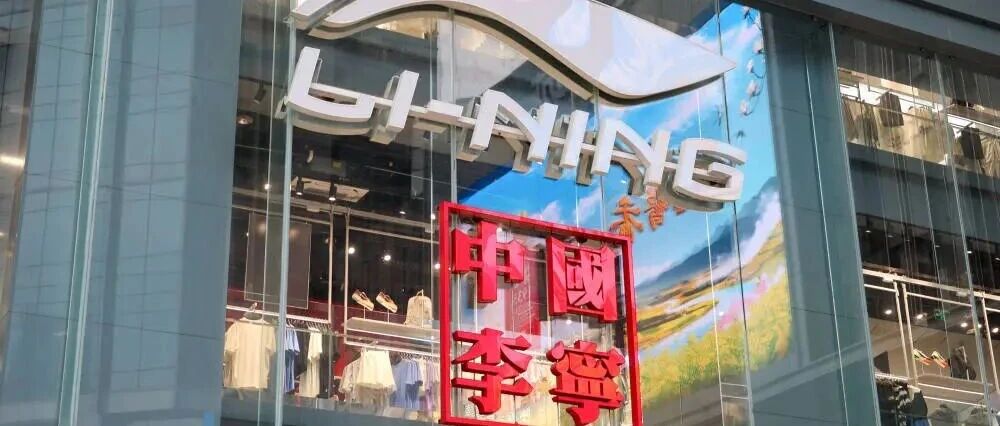
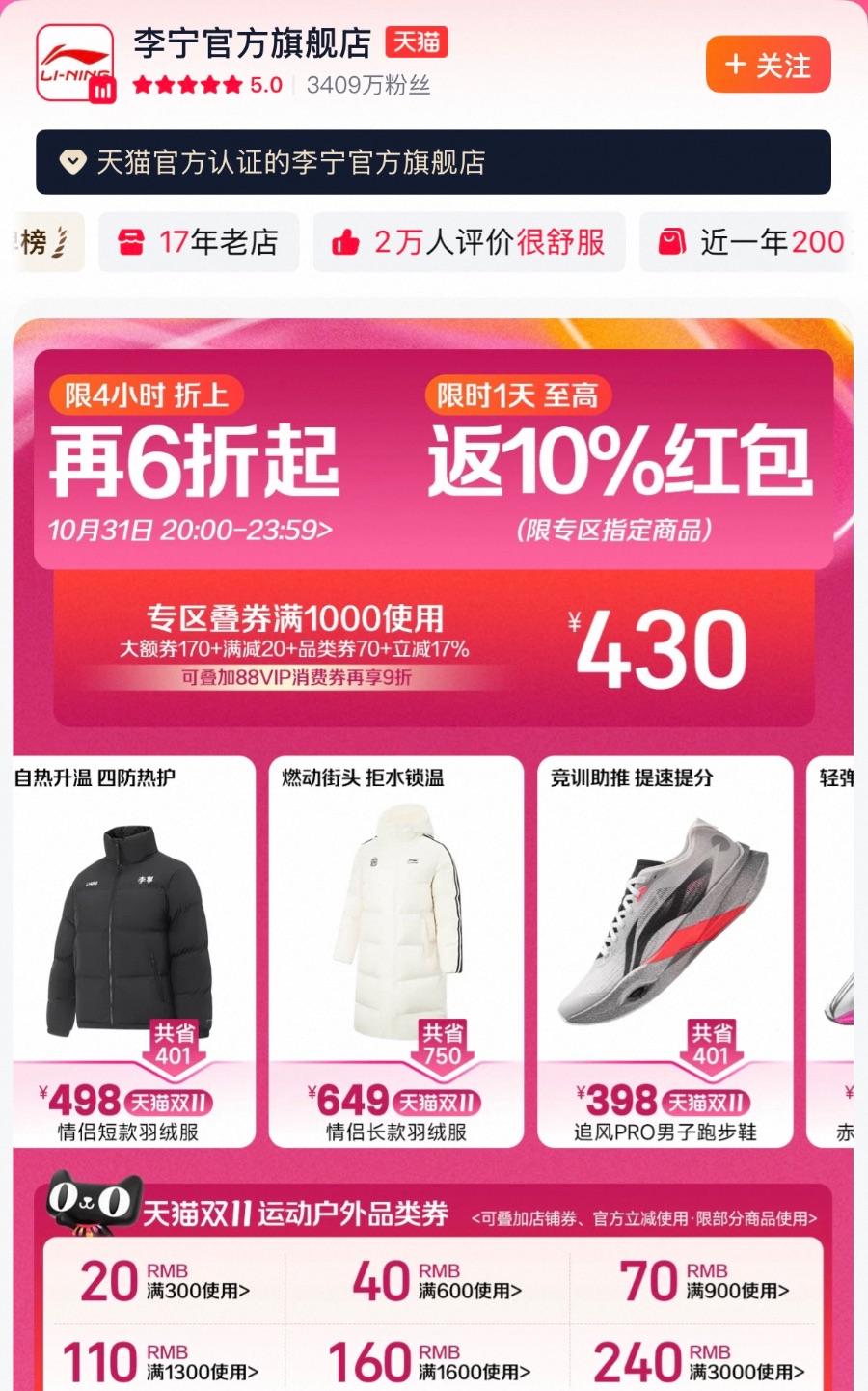
Core Insights - The competitive landscape of the sports market during the Double Eleven shopping festival is intensifying, with major brands like Nike, Adidas, Anta, and Li Ning offering significant discounts to attract consumers [1][5][7] Discount Strategies - Nike is promoting its products with a slogan "Not just 50% off," offering shoes at prices as low as 200+ yuan, creating a comprehensive discount matrix across all channels [1] - Adidas focuses on popular items with a "starting from 50% off" strategy on Tmall, along with additional coupons for larger purchases [1] - Anta is offering discounts of up to 60% on top of existing prices, while Li Ning has similar offers on both Tmall and JD [1] - Li Ning appears to have the largest overall discount, with flagship products like the Feidian 5 Elite seeing discounts of 260 yuan, resulting in a discount rate as low as 69% [2][4] Sales Performance - Despite the aggressive discounting, major brands are facing sales challenges. Li Ning reported a decline in retail sales, particularly in offline channels, while Nike's revenue in Greater China fell by 10% [7][8] - Anta's performance is slightly better, showing low single-digit growth, while Adidas experienced a 10% revenue increase in the third quarter, but still faces growth pressures [8][11] - The market share dynamics show that Nike remains the leader, but its share has decreased from 18.1% to 16.2%, while Anta and Li Ning have seen slight increases in their market shares [8] Price War Implications - The ongoing price war among major brands is impacting their profitability, with Anta's gross margin declining by 0.7 percentage points to 63.4% [11] - Frequent discounts are affecting overall performance, as seen in the declining net profits for both Li Ning and Nike [11][12] - The rise of domestic brands is eroding the pricing power of established players like Nike, leading to intensified competition and further price reductions [12][13]
“血战”双十一:李宁们加速去库存丨消费一线
2 1 Shi Ji Jing Ji Bao Dao· 2025-10-31 12:19
Core Insights - The competitive landscape of the sports market during the Double Eleven shopping festival is intensifying, with major brands offering significant discounts to attract consumers [1][5][14] Discount Strategies - Nike leads with a slogan "Not just 50% off," offering shoes at prices as low as 200+ yuan, creating a comprehensive discount strategy across all channels [1] - Adidas focuses on popular items with a "starting from 50% off" strategy, along with additional coupons for larger purchases [1] - Anta and Li Ning both offer discounts of up to 60% on top of existing prices, with Li Ning also providing additional coupons on platforms like JD [1] - Overall, Li Ning appears to have the largest discount offerings among the brands [4][5] Price Comparisons - Nike's flagship Vaporfly 4 shoes are priced at approximately 1409 yuan after discounts, with a discount rate of about 8.3% on Taobao [3] - Adidas Adios Pro4 shows weaker discount rates, with Taobao at about 9.1% and JD at 9.3% [3] - Anta's C202 6Pro has varying prices across platforms, with JD offering the best discount at 1359 yuan [4] - Li Ning's Feidian 5 Elite shows a significant discount, with a final price of 999 yuan on Taobao and JD, resulting in a discount rate of about 6.9% [4] Sales Performance - The leading sports brands are facing challenges in growth, with Li Ning reporting a decline in retail sales and Nike's revenue in Greater China dropping by 10% [7][9] - Anta shows slight positive growth, but overall, the market is under pressure [7][9] - Adidas reported a 10% increase in revenue for the third quarter, but still faces growth challenges compared to previous periods [9] Market Dynamics - Frequent discounts are impacting the profitability of these brands, with Anta's gross margin declining by 0.7 percentage points [12] - The rise of domestic brands is eroding the pricing power of established players like Nike [13] - The ongoing price war among these brands may extend beyond the Double Eleven period, indicating a shift in market dynamics [14]
影石董事长朋友圈“阴阳”大疆“垄断”,消费电子暗战变明战
凤凰网财经· 2025-10-31 09:50
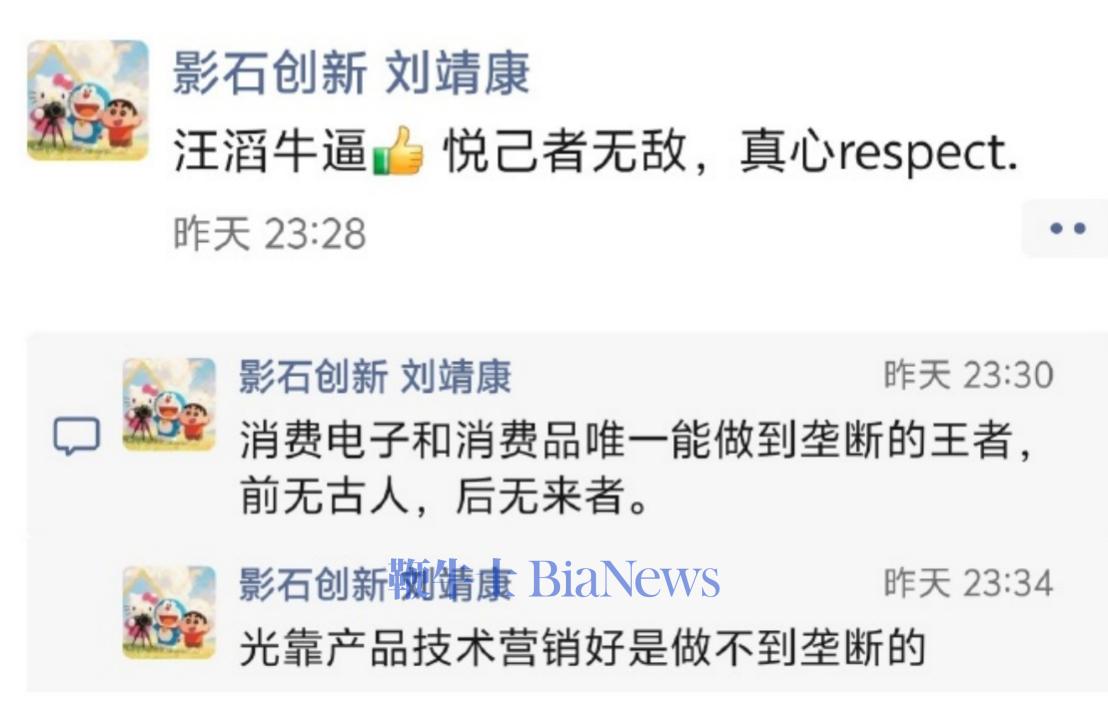
Core Viewpoint - A business war ignited by social media comments is unfolding between two tech giants in Shenzhen,影石创新 and 大疆, highlighting the competitive landscape in the consumer electronics sector [1][5]. Group 1: Market Dynamics - 大疆 captured 43% of the global market share in the panoramic camera sector within three months of launching its first product, indicating aggressive market penetration [3][9]. - The competition has intensified as both companies have shifted from a non-competing stance to a full-scale market battle, with影石 being the leader in panoramic cameras and 大疆 dominating the drone market [5][12]. - 大疆's price cuts on popular products have been interpreted as a strategy to eliminate competition, with significant price reductions on models like Osmo Pocket 3 and Action 4 [6][7]. Group 2: Financial Performance -影石 reported a revenue of 29.40 billion yuan in Q3 2025, a year-on-year increase of 92.64%, but its net profit declined by 15.90%, indicating a struggle with profitability despite revenue growth [10][11]. - For the first three quarters of 2025,影石's cumulative revenue reached 66.11 billion yuan, up 67.18% year-on-year, while net profit fell by 5.95% [10]. Group 3: Strategic Responses - 刘靖康's comments about 大疆's "monopoly" may serve to divert attention from影石's financial challenges and create a narrative for strategic expansion [11]. - Both companies are expanding into new markets, with 大疆 launching a robot vacuum and影石 increasing R&D investment, reflecting their need to grow beyond their current market positions [20][21]. - The competition is not just about products and pricing but has evolved into a battle for market influence and narrative control within the industry [21].


影石董事长朋友圈「阴阳」大疆「垄断」,消费电子暗战变明战
Feng Huang Wang Cai Jing· 2025-10-31 02:08
Core Viewpoint - A business war ignited by social media comments is unfolding between two tech giants in Shenzhen, with Liu Jingkang of YingShi Innovation and Wang Tao of DJI at the forefront of this confrontation [1][5]. Group 1: Market Dynamics - DJI has captured 43% of the global panoramic camera market within three months of launching its first product, posing a significant threat to YingShi [3][10]. - DJI's market share in the action camera sector has reached 66%, surpassing GoPro to become the global leader [9][10]. - The competition has intensified as both companies have shifted from a non-aggression stance to a full-scale market battle, with price wars and public disputes becoming common [5][15]. Group 2: Financial Performance - YingShi reported a revenue of 29.40 billion yuan for Q3 2025, a year-on-year increase of 92.64%, but its net profit fell by 15.90%, indicating a "growth without profit" situation [13]. - For the first three quarters of 2025, YingShi's cumulative revenue reached 66.11 billion yuan, up 67.18% year-on-year, while net profit declined by 5.95% [13]. - In contrast, DJI's revenue is projected to be around 800 billion yuan in 2024, significantly larger than YingShi's expected revenue of 55.74 billion yuan, highlighting the scale disparity between the two companies [20]. Group 3: Strategic Responses - Liu Jingkang's comments about DJI's "monopoly" may be a strategic move to shift focus from YingShi's financial struggles and create a favorable narrative for its expansion plans [14]. - DJI's aggressive pricing strategy aims to deter competitors by making the market less profitable, while YingShi seeks to leverage marketing tactics to gain traction in the public discourse [7][19]. - Both companies are expanding into new markets, with DJI launching a vacuum robot and YingShi increasing its R&D investment, indicating a mutual recognition of the need for growth beyond their current segments [22]. Group 4: Industry Implications - The ongoing rivalry reflects a broader trend in the tech industry, where intense competition may lead to either collaborative growth or a zero-sum game scenario [23]. - The rapid technological advancements and high product substitutability in the consumer electronics sector make it challenging for any single company to achieve true monopoly status [9][19].
新势力车企死亡报告
3 6 Ke· 2025-10-30 08:07
Core Insights - The article discusses the rise and fall of several new energy vehicle companies in China, particularly focusing on Neta, WM Motor, and HiPhi, highlighting their initial successes and subsequent failures due to strategic missteps and market competition. Group 1: Neta's Rise and Fall - Neta achieved remarkable success in 2022, selling 152,000 vehicles and becoming the top-selling new energy vehicle brand, leveraging its "high value for money" strategy with models like Neta V and Neta U [1][40]. - The Neta V, priced between 70,000 to 90,000 yuan, offered significant space and features compared to competitors, which were mostly microcars [4][10]. - However, Neta's reliance on low pricing and high volume led to low profit margins, and its sales strategy heavily depended on dealers, resulting in inflated sales figures that did not reflect actual consumer demand [41][40]. Group 2: Strategic Errors - Neta faced critical strategic errors in 2023, particularly during a price war initiated by Tesla, which led to a significant drop in sales, with a year-on-year decline of over 30% starting in June 2023 [42][46]. - Instead of adjusting prices to remain competitive, Neta launched a new model, the Neta S, at a higher price point, which failed to attract consumers in a highly competitive market [47][48]. - The company continued to pursue a "brand upgrade" strategy with the introduction of the Neta GT, which diverted resources from more viable projects and ultimately led to a decline in overall sales [50][55]. Group 3: WM Motor's Challenges - WM Motor, founded by industry veteran Shen Hui, initially gained traction with its EX5 model, but failed to establish a strong brand identity compared to competitors like NIO and Xpeng [14][60]. - The company struggled with quality issues, including multiple recalls and incidents of vehicle fires, which undermined its reputation for reliability [80][87]. - WM Motor's lack of a distinctive market position and reliance on traditional automotive strategies contributed to its decline, as it could not compete effectively against brands with clearer identities [88][62]. Group 4: HiPhi's Strategy and Market Position - HiPhi attempted to replicate Tesla's high-end strategy with its HiPhi X and HiPhi Z models, but faced challenges due to overlapping market segments and increased competition [28][32]. - The company invested heavily in marketing and infrastructure but failed to achieve significant sales, leading to financial difficulties and a lack of market presence [38][39]. - HiPhi's inability to adapt to the rapidly changing market dynamics and its reliance on a narrow product strategy ultimately led to its downfall [36][55]. Group 5: Market Dynamics and Conclusion - The article emphasizes that the new energy vehicle market in China is highly competitive, with companies needing to adapt quickly to changing consumer preferences and pricing pressures [44][45]. - The ability to secure funding and successfully navigate the IPO process has proven crucial for survival, as seen with companies like NIO and Xpeng, which managed to leverage market conditions to their advantage [92][93]. - In contrast, Neta, WM Motor, and HiPhi's failures highlight the importance of strategic flexibility and the risks of adhering to outdated business models in a fast-evolving industry [55][94].


第一创业晨会纪要-20251029
First Capital Securities· 2025-10-29 05:11
Advanced Manufacturing Sector - The narrow passenger car retail market in October is expected to reach 2.2 million units, reflecting a month-on-month decline of 2.0% and a year-on-year decline of 2.6%. The retail sales of new energy vehicles are projected to be 1.32 million units, with a penetration rate potentially rising to around 60%, marking a historical high [3] - The average price of new energy vehicles in September was 158,000 yuan, down 8% year-on-year, indicating price pressure at the market level. The ongoing price war negatively impacts the improvement of profitability quality in October, posing significant resistance to the recovery of market conditions [3] Consumer Sector - Zhongxing Junye reported a revenue of 1.475 billion yuan for the first three quarters of 2025, a year-on-year increase of 4.16%, with a net profit attributable to shareholders of 204 million yuan, up 130.51%. The third quarter revenue was 568 million yuan, growing 13.10% year-on-year, and net profit reached 135 million yuan, increasing by 128.70% [7] - The growth in performance is primarily attributed to stable price increases for Agaricus bisporus products, reduced costs for enoki mushrooms, and improved prices in the third quarter, along with increased investment income and reduced financial expenses. The ongoing price rise in vegetable products has contributed to the recovery of industry conditions [7] - The company is actively advancing its artificial cultivation project for Cordyceps sinensis, which is seen as a second growth curve. The project has moved from planning to trial production, generating revenue of 4.8451 million yuan in the first half of 2025 [7] - Zhongshun Jierou reported a revenue of 6.478 billion yuan for the first three quarters, an increase of 8.78%, with net profit and net profit excluding non-recurring items both experiencing over threefold growth. The third quarter revenue was 2.149 billion yuan, up 11.09%, and net profit reached 80 million yuan, growing 335.38% [8] - The company has seen a recovery in operations, driven by the continuous release of cost benefits from raw materials like pulp, along with internal cost reduction and efficiency improvement measures. It is expected that the gross margin and net margin will continue to improve in the short term [8] - The company is focusing on high-end, high-margin non-traditional dry towels and personal care products as strategic categories for future development, aiming to enhance overall profitability [8]
电商生态需要更强的“质量信号”
Jing Ji Guan Cha Wang· 2025-10-28 09:12
Core Insights - The "Double 11" shopping festival in 2025 has become a part of daily life, but concerns about product quality have emerged amidst the low-price competition and rapid market changes [2][3] - The prevalence of price wars in the online market is leading to a decline in product quality, with genuine quality-focused manufacturers being forced out of the market [3][4] Product Quality Concerns - Excessive price competition results in "bad money driving out good," pushing quality-conscious manufacturers out of the market [3][4] - The rise of low-priced products, such as socks sold at "4.99 yuan for ten pairs," exemplifies the trend of sacrificing quality for cost [3][4] - The existence of "three-no products" (no production date, no quality certification, no manufacturer) is a significant issue, with many such products being sold online despite their dangers [4][5] Consumer Trust and Complaints - The increasing complaint rates reflect a growing trust crisis in the market, with issues like false advertising and difficulty in returns becoming prevalent [5][6] - While price wars may seem beneficial in the short term, they undermine the industry's foundation and lead to a lack of innovation and quality [5][6] Underlying Causes - A shift in consumer mentality towards lower quality due to economic pressures and the nature of low-margin industries contributes to the decline in product quality [7][8] - The transparency of data and algorithms in e-commerce has led to a lack of innovation, as businesses are unable to establish differentiation [9][10] Market Dynamics - The overwhelming focus on price over quality creates a market failure, where high-quality products struggle to gain visibility [11][12] - The rise of white-label products, which lack branding and quality assurance, further complicates the competitive landscape [14][15] Solutions to Break the Cycle - To improve product quality, platforms must support the supply of new and high-quality products by enhancing supply chain efficiency and providing visibility [18][19] - Regulating platforms to avoid excessive low-price competition and encouraging a balanced approach to quality and price is essential [20][21] - Strengthening quality signals and consumer protection measures can help restore trust and ensure that high-quality products are recognized and valued [21]

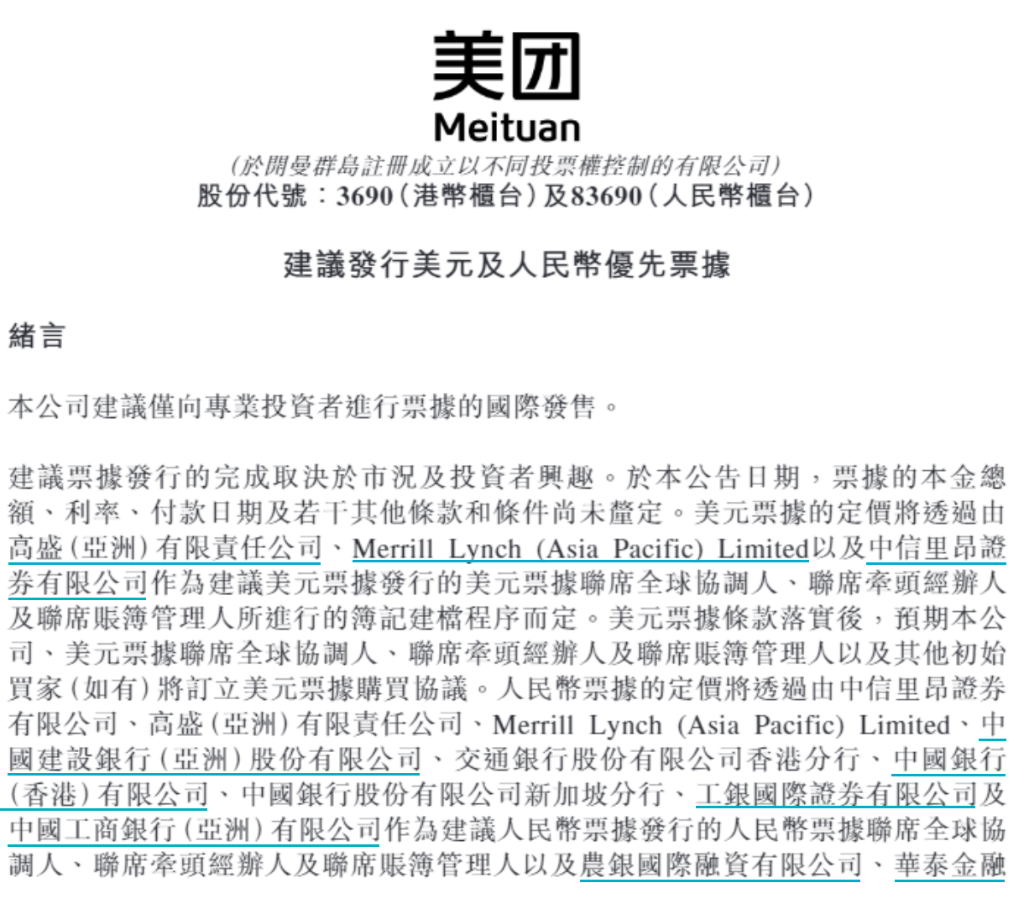
30亿美元!美团史上最大规模发债,为“外卖大战”补充弹药
Hua Er Jie Jian Wen· 2025-10-27 06:01
Group 1 - Meituan plans to launch its largest-ever regular bond issuance, seeking to raise approximately $3 billion to bolster its financial position amid intense price competition in China's food delivery and local retail markets [1][7] - The company aims to issue around $2 billion in US dollar-denominated notes and an equivalent of $1 billion in offshore renminbi notes, with the issuance potentially hitting the market as early as this week [1][7] - The funds raised will primarily be used for refinancing existing offshore debt and meeting general corporate operational needs, with a $750 million bond maturing this week [1][7] Group 2 - Major industry players, including Alibaba and JD.com, have intensified market competition by offering significant discounts and incentives, which has put pressure on Meituan's stock performance [4] - Fitch Ratings has assigned a "BBB+" rating to Meituan's proposed US dollar bonds, consistent with its existing senior unsecured bond rating, but has adjusted the outlook from "positive" to "stable" due to expected revenue growth slowdown [8] - Despite short-term pressures, Fitch remains optimistic about Meituan's long-term prospects, anticipating a moderation in the intensity of the price war over the next 6 to 12 months, and expects the company to return to positive free cash flow by 2026 [8]