结构性牛市

Search documents
沪指突破3600点,全市场超2000只个股上涨
第一财经· 2025-07-23 04:43
Core Viewpoint - The market is experiencing a trend of oscillating upward movement, with significant support levels identified and potential for sector rotation, particularly in technology and cyclical stocks [5]. Market Performance - As of the latest trading session, the Shanghai Composite Index is at 3608.58 points, up by 0.75%, the Shenzhen Component Index is at 11134.07 points, up by 0.31%, and the ChiNext Index is at 2327.48 points, up by 0.72% [1][2]. - The total trading volume in the Shanghai and Shenzhen markets reached 1.14 trillion yuan, an increase of 8.7 billion yuan compared to the previous trading day, with over 2000 stocks rising [3]. Sector Analysis - The financial sector is showing strength, while healthcare services and steel sectors are also performing actively. Conversely, sectors such as military equipment restructuring, Hainan Free Trade Zone, and China Shipbuilding are underperforming [2]. Institutional Insights - According to the investment director of Qianhai Bourbon Fund, the market is expected to maintain its upward trend despite potential pullbacks after breaking the 3600 resistance level. Support is seen around the 10 and 20-day moving averages, suggesting a possible one-step adjustment [5]. - Analysts from Dongfang Securities believe that after a period of low-weighted stocks catching up, the market may return to a structural bull market focused on individual stocks rather than indices. They anticipate significant potential for technology stocks to catch up, maintaining market momentum through cyclical and technology sector rotation [5].


[7月21日]指数估值数据(A股港股算进入牛市么;月薪宝发薪日;黄金星级更新)
银行螺丝钉· 2025-07-21 13:58
Market Overview - The market continues to rise, returning to a rating of 4.7 stars [1] - Large-cap stocks show slight gains, while small and mid-cap stocks experience more significant increases [2] - The banking index slightly declines, but value style indices continue to rise, driven by news of large infrastructure projects [2] - The A-share market has seen a strong performance, with a continuous rise for five weeks, returning to levels seen around last year's National Day [3] Bull Market Analysis - A question arises whether the current rise in A-shares and Hong Kong stocks indicates a bull market; definitions of a bull market vary [6] - Internationally, a technical bull market is defined as a rebound of over 20% from a bear market low; A-shares and Hong Kong stocks have rebounded over 20% since the low in May [7] - Investor sentiment often reflects a bull market when most participants are in profit, which typically occurs in the later stages of a bull market [8] - Historical bull markets show that small bull markets usually reach around 3 stars, while larger bull markets can reach 1-star bubble valuations [9] Market Structure - Bull markets are often structural rather than uniform; historical examples include small-cap bull markets in 2014-2015 and large-cap value bull markets in 2016-2017 [14] - The 2007 bull market was unique in that it saw broad increases across all categories, while most others are characterized by specific styles or themes outperforming [15] - Low-valued stocks will eventually see upward movement, as seen with value indices that underperformed from 2019-2021 but are expected to rise from 2022-2024 [17] Market Dynamics - Bull markets are not characterized by continuous rises; significant corrections of 10-20% can occur even in strong bull markets [18] - Recent performance of the Hong Kong technology index, which rose over 60%, exemplifies a bull market, but it was not a straight rise [20] - The relationship between stock performance and earnings growth is crucial, as rising profits combined with valuation increases create a double effect during bull markets [23] Investment Strategies - The "Monthly Salary Treasure" investment strategy has lowered its minimum investment to 200 yuan and introduced a regular investment feature [25][29] - This strategy aims to meet regular cash flow needs, employing a balanced 40:60 stock-bond strategy to achieve excess returns [28] - The current market rating of 4.7 stars is considered suitable for investment in the "Monthly Salary Treasure" strategy [30]

外资狂买54亿!沪指四连阳创新高,中国资产香饽饽!
Sou Hu Cai Jing· 2025-07-21 13:47
Group 1 - The A-share index has reached a three-and-a-half-year high at 3534 points, but retail investors are struggling to make profits, with 82% of short-term traders reporting losses this month [1][2][4] - The market is characterized by rapid sector rotation, where different sectors take turns leading the market, making it difficult for retail investors to keep up [1][2] - Institutional investors and quantitative funds are dominating the market, focusing on large-cap stocks, while retail investors often chase smaller, less liquid stocks [2][5] Group 2 - Foreign investment in Chinese assets has surged, with South Korean investors buying $5.4 billion worth of A-shares and Hong Kong stocks this year, making China their second-largest overseas investment market [2][5] - Bridgewater Associates reported a 13.6% return on its China onshore fund in the first half of the year and plans to continue increasing its positions [4][5] - The attractiveness of Chinese assets is attributed to their lower valuations compared to U.S. stocks, with A-shares averaging a price-to-earnings ratio of 12, significantly lower than the S&P 500's 25 [5][6] Group 3 - The rare earth sector has seen a surge, with a 3% increase in prices and multiple stocks hitting the daily limit, driven by factors such as increased enforcement against smuggling and strong mid-year earnings forecasts [6][7] - The upcoming IPO of Yushutech, a company specializing in humanoid robots, is expected to attract significant market attention, with potential for high valuations [6][7] - Retail investors are advised to focus on leading stocks and avoid chasing smaller, less established companies, as institutional investors are primarily targeting large-cap stocks for their liquidity and stability [8][9]
A股重磅利好!“国家队”大买超2000亿!
天天基金网· 2025-07-21 11:33
Core Viewpoint - The A-share market is experiencing a structural bull market, with significant gains in infrastructure and cement sectors, driven by favorable policies and large-scale investments [6][7][8]. Group 1: Market Performance - A-share indices collectively rose, with the Shanghai Composite and ChiNext Index reaching new highs for the year, and over 4,000 stocks increased in value [1][3]. - The total trading volume in the two markets reached 1.7 trillion yuan, with infrastructure and cement sectors leading the gains [5]. Group 2: Institutional Investment - The "national team" increased its holdings by over 200 billion yuan in the second quarter, focusing on various ETFs, which helped stabilize the market [2][13]. - Central Huijin Asset Management significantly purchased multiple ETFs, including the CSI 300 ETF and the SSE 50 ETF, with total purchases estimated at 210 billion yuan [14]. Group 3: Sector Highlights - The launch of the Yarlung Zangbo River downstream hydropower project, with a total investment of approximately 1.2 trillion yuan, has led to a surge in related stocks [8][9]. - Analysts predict that the ongoing construction of the Yarlung Zangbo River project will benefit suppliers of hydropower equipment and core components for power grid projects [10]. Group 4: Fund Manager Strategies - Star fund manager Zhang Kun adjusted his portfolio in the second quarter, reducing holdings in Tencent and increasing positions in liquor stocks, indicating a shift towards valuation recovery [15][17]. - Overall, active management funds increased their positions, particularly in telecommunications, banking, and defense sectors, while reducing exposure to food and beverage, automotive, and power equipment sectors [18].
3500点之上破净股仍超300只,全面牛市难现,A股散户如何破局?
Mei Ri Jing Ji Xin Wen· 2025-07-18 08:21
Core Viewpoint - The article discusses the historical context of the A-share market, highlighting that every time the index breaks through the 3500-3600 point range, it is often followed by a strong bull market. The current situation suggests a potential new bull market, but the presence of over 300 stocks trading below their book value indicates challenges ahead for a comprehensive bull market [1][2]. Group 1: Historical Bull Markets - In 2007 and 2015, the A-share market experienced comprehensive bull markets, characterized by a significant reduction in the number of stocks trading below their book value, known as "破净股" [1]. - The ultimate goal of a comprehensive bull market is to eliminate these "破净股," which serve as an important reference indicator for market health [1]. - During the 2007 bull market, the number of "破净股" dropped significantly, with reports indicating that by March 2007, there were virtually no such stocks left in the market [1]. Group 2: Current Market Conditions - As of now, despite the Shanghai Composite Index surpassing 3500 points, there are still over 300 stocks with a price-to-book ratio below 1, indicating a lack of upward momentum for these stocks [2]. - The sectors most affected by "破净股" include real estate, steel, and construction, with banks also showing significant numbers of such stocks, including Minsheng Bank and Huaxia Bank, which have price-to-book ratios below 0.5 [2]. Group 3: Market Dynamics and Challenges - The difficulty of making profits in the current market environment is increasing, with over 1400 stocks in decline despite a median increase of approximately 11.6% among A-shares this year [3]. - The market ecosystem has changed significantly compared to over a decade ago, with the introduction of the registration system and a substantial increase in the number of listed companies, now exceeding 5400 [3]. - The rise of quantitative trading, high-frequency trading, and algorithmic trading has created challenges for retail investors, who are at a disadvantage in terms of information and speed [3]. Group 4: Investment Strategies - In this context, ETFs have emerged as a viable option for retail investors, with total ETF assets reaching 4.3 trillion yuan, and individual investors increasingly participating in ETF trading [4]. - ETFs offer the advantage of diversifying individual stock risks and avoiding the pitfalls of high-frequency trading, thereby enhancing the probability of successful investments through passive and low-frequency strategies [4].
洗盘!系好安全带,周五,A股迎来补涨了
Sou Hu Cai Jing· 2025-07-17 11:22
Group 1 - The Shanghai Composite Index showed limited performance, while the ChiNext Index performed well, particularly in the innovative pharmaceutical sector [1] - The market is experiencing a rotation, with large funds remaining active but focusing on structural bull markets, which may lead to some investors missing out on profits [1][3] - The current market sentiment is cautious, with expectations for the next two months influenced by potential positive news [3][5] Group 2 - There is a high probability of a rebound in the A-share market, with expectations to return above 3550 points, indicating a potential independent market trend [5] - The banking sector has seen recent corrections without a corresponding decline in the Shanghai Composite Index, suggesting that short-selling momentum has been absorbed [5] - The overall market sentiment is pessimistic, but there is a belief that positive outcomes will occur, emphasizing the importance of having a trading plan [7]

如果牛市来到,红利类资产是否会有收益大幅跑输的风险?
雪球· 2025-07-15 08:30
Core Viewpoint - The article discusses the performance of dividend assets compared to growth assets in different market phases, highlighting the potential risks of dividend assets under certain market conditions, particularly during bull markets [4][26]. Market Phases Analysis - From 2014 to present, dividend assets have shown low volatility and steady growth, while growth assets like the ChiNext have experienced more dramatic fluctuations [6]. - In the early bull market phase (2014-2015), the dividend index rose by 177%, but growth stocks outperformed with a 194% increase in the ChiNext index [8]. - During the 2015 stock market crash, the dividend index fell by 44%, similar to the declines in the CSI 300 and ChiNext indices [11]. - In the structural bull market phase (2016-2017), the dividend index increased by 44%, matching the CSI 300, while the ChiNext index only rose by 6% [14]. - In the bear market of 2018, the dividend index decreased by 25%, but it had the smallest decline compared to other indices [17]. - From 2019 to 2021, the dividend index only increased by 24%, significantly lagging behind the ChiNext's 170% rise [19]. - During the adjustment period (2021-2022), the dividend index fell by 4%, outperforming the CSI 300 and ChiNext indices [21]. - In the current oscillation phase (2022-2024), the dividend index has risen by 4%, while other indices have declined [23]. - Looking ahead to the potential explosive phase starting in Q4 2024, the dividend index is expected to lag behind growth styles due to a lack of valuation elasticity [25]. Investment Strategy Insights - The article concludes that while dividend assets may underperform in bull markets driven by risk appetite, they can perform well in structural bull markets where both valuation and earnings recover [26]. - Historical market trends indicate that a balanced asset allocation is essential for navigating different market environments and achieving sustainable returns [27].

A股下半年有望维持结构性牛市,关注A股机遇,把握中证A500ETF(159338)投资机会
Mei Ri Jing Ji Xin Wen· 2025-07-01 07:08
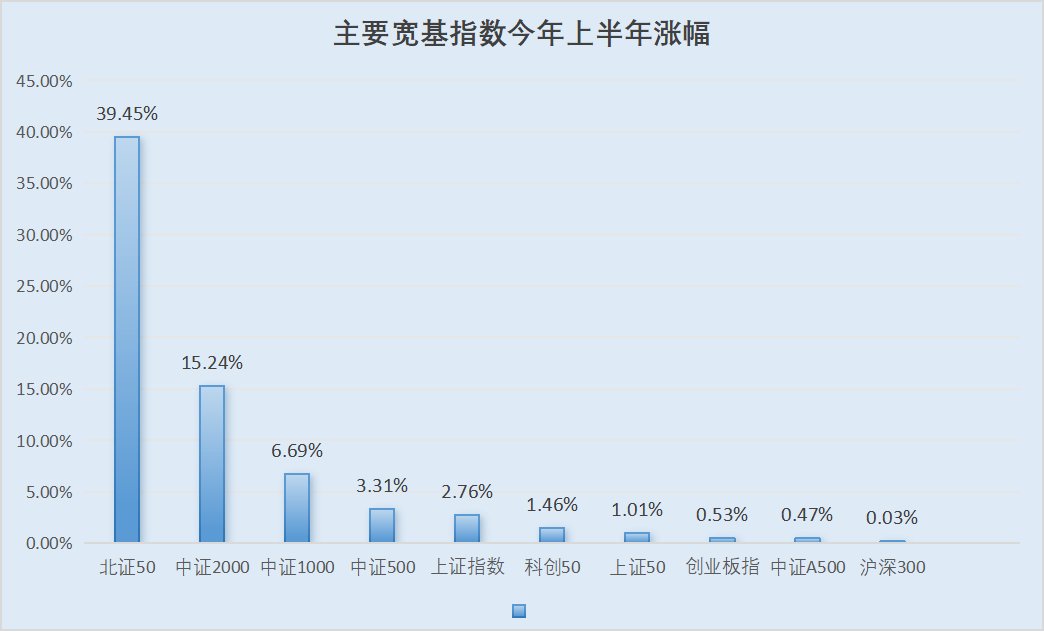
Core Insights - The Shanghai Composite Index experienced a slight increase of 2.76% in the first half of 2025, driven by improved liquidity and a recovery in risk appetite, suggesting a potential structural bull market for A-shares in the second half of the year [1] - The US dollar index remains relatively weak, and expectations of a Federal Reserve rate cut around September may lead to further declines in the dollar index and US Treasury yields, which could enhance market risk appetite and favor growth styles [1] - While the export boost effect is expected to weaken in the second half, there remains fiscal space for support, indicating a potential V-shaped recovery in A-share earnings [1] Index and Fund Insights - The CSI A500 Innovation Index is compiled using an internationally recognized "industry balance" method, selecting 500 securities with large market capitalization and good liquidity across all secondary and 97% of tertiary industries in China [1] - The index includes leading companies from almost all tertiary industries, achieving a "gathering of leaders" effect, and incorporates mechanisms like mutual connectivity and ESG screening to align with the preferences of domestic and international institutional investors [1] - Investors interested in core Chinese assets can consider the CSI A500 ETF (159338) or its feeder fund (022449) for investment opportunities in A-shares [1]
A股半年收官:总市值突破100万亿元创新高 下半年投资机会在哪儿?
Xin Hua Cai Jing· 2025-07-01 02:20
Market Overview - In the first half of 2025, the A-share market saw most major indices rise, with total market capitalization exceeding 100 trillion yuan for the first time [1] - The average daily trading volume in the Shanghai and Shenzhen markets was 13,608.36 billion yuan, an increase of nearly 30% compared to 10,521.82 billion yuan in 2024 [1] - Small-cap and micro-cap stocks outperformed larger indices, with the North Securities 50 Index and the CSI 2000 Index showing significant gains [1] Sector Performance - The A-share market exhibited a "barbell strategy," with dividend stocks like banks reaching new highs and various concept stocks experiencing significant rallies [2] - The DeepSeek concept sector led the market with a 55.30% increase, followed by the precious metals sector with a 44.46% rise [3][2] - Other notable sectors included controllable nuclear fusion (41.78%), rare earths (40.15%), humanoid robots (37.23%), and digital currency (32.95%) [3] Market Capitalization - By the end of the first half, the number of stocks with a market capitalization exceeding 1 trillion yuan rose to 13, while those exceeding 100 billion yuan reached 138 [3] - The top three companies by market capitalization were Industrial and Commercial Bank of China (2.71 trillion yuan), China Construction Bank (2.47 trillion yuan), and China Mobile (2.43 trillion yuan) [4] IPO Activity - There were signs of recovery in A-share IPOs, with 45 new non-North Exchange stocks listed in the first half, and many showing significant first-day gains [7] - Notable IPOs included China Ruilin and Yingshi Innovation, with some stocks seeing first-day gains exceeding 50,000 yuan [9] Fund Performance - Public funds focusing on pharmaceuticals and North Exchange themes performed exceptionally well, with some achieving returns close to 90% [10] - The top-performing funds included Hui Tian Fu Hong Kong Advantage Select A and CITIC Construction Investment North Exchange Select, with returns of 89.15% and 81.59% respectively [12] Investment Outlook - Institutions suggest that the A-share market may exhibit structural bull market characteristics in the second half of 2025, driven by medium to long-term capital inflows [12] - Key investment directions to watch include banks, new consumption, innovative pharmaceuticals, technology, and smart driving [13]





ETF日报:有色金属行业正处于供需错配、盈利修复与流动性宽松预期共振的阶段,可关注有色60ETF
Xin Lang Ji Jin· 2025-06-30 14:21
Market Overview - A-shares experienced a rebound today, with the Shanghai Composite Index closing at 3444.43 points, up 0.59%, and a trading volume of 567.1 billion yuan. The Shenzhen Component Index closed at 10465.12 points, up 0.83%, with a trading volume of 919.7 billion yuan [1] - The official manufacturing PMI for June rose to 49.7, indicating a recovery in new orders, although it has remained below the expansion threshold for three consecutive months, highlighting ongoing structural risks in the economy [1] Monetary Policy - The central bank's second-quarter monetary policy committee meeting emphasized the need for new monetary policies to stimulate domestic demand due to ongoing economic pressures. The language shifted from potential rate cuts to a more flexible approach in policy implementation [2] - Following the meeting, bond yields across various maturities increased, indicating market reactions to the changed monetary policy stance [2] Bond Market - The bond market is currently experiencing high demand, with a potential for short-term fluctuations due to profit-taking pressures. However, the overall trend remains bullish due to a combination of weak domestic and external demand and a loose monetary environment [3] - The current low policy interest rates and high market funding rates favor a continuation of the bullish bond market trend, with expectations of further declines in short-term rates potentially leading to breakthroughs in long-term rates [3][4] Defense Industry - The military industry ETF saw a significant increase of 4.37%, driven by heightened global security concerns and the necessity for national defense. The international conflicts have bolstered demand for China's military exports, particularly following the recent performance of domestic military equipment [5] - The upcoming 80th anniversary of the victory in the Anti-Japanese War is expected to serve as a catalyst for the military sector, potentially enhancing both supply and demand dynamics [6] Commodity Market - The non-ferrous metals sector, particularly copper, is experiencing upward pressure due to tight supply conditions and rising prices. The overall low inventory levels and expectations of a loosening monetary policy are likely to support copper prices in the medium to long term [7] - The current phase of the non-ferrous metals industry is characterized by a mismatch in supply and demand, alongside expectations of profitability recovery and liquidity easing [7]