
美国例外论

Search documents
本轮美国抛售缘何迅速逆转?德银:政策软化,经济未衰退是主因
Hua Er Jie Jian Wen· 2025-05-07 11:32
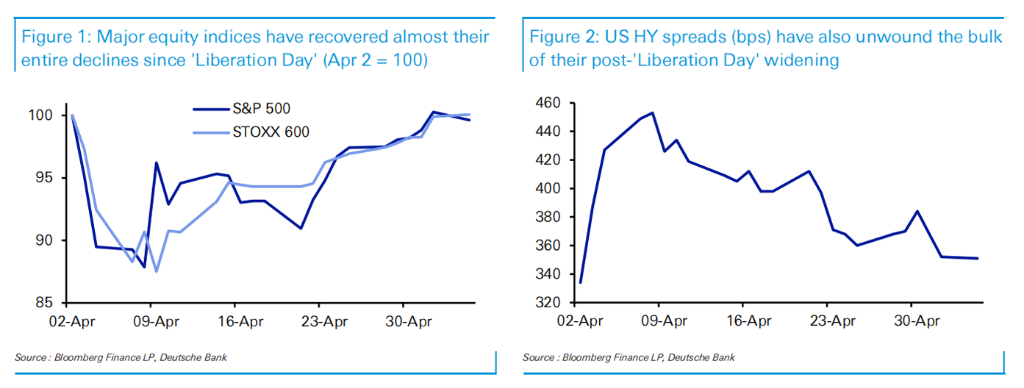
近期美国金融市场经历了一场剧烈波动,但抛售潮迅速逆转,市场恢复稳定。难道市场只是"虚惊一场"? 本周,标普500指数和欧洲的STOXX 600指数几乎完全收复了4月2日以来的跌幅 。美国信用利差也大幅收窄,回吐了此前的大部分涨幅 。长期国债收益 率波动不大。 据追风交易台消息,德意志银行在6日的研报中指出,此轮市场逆转主要归因于三点,首先,宏观经济数据显示美国经济并未陷入衰退;其次,油价下跌 缓解了通胀压力,为可能的降息提供了空间。 最后,是美国政府的政策出现软化,贸易保护主义倾向减弱。4月7日,央视报道称特朗普正考虑对部分国家暂停征收90天关税。这些因素共同作用,推动 了市场的快速反弹。 经济数据坚挺:衰退担忧"虚惊一场" 其次,经济调查数据虽然有所下降,但仍处于扩张区间。4月份的ISM服务业指数为51.6,美国综合PMI为50.6,均高于50的扩张与收缩分界线。这表明经 济活动仍在继续,尽管增速有所放缓。此外,全球数据也未显示经济衰退迹象,尽管经济增长有所放缓,但并未出现广泛的经济收缩。 油价下跌"意外助攻":通胀压力缓解与降息预期升温 油价下跌是支撑风险资产的另一重要因素。德银报告指出,自4月2日以来, ...

2.5万亿美元大逃亡:亚洲资本倒戈恐引发美元雪崩?
财联社· 2025-05-07 07:25
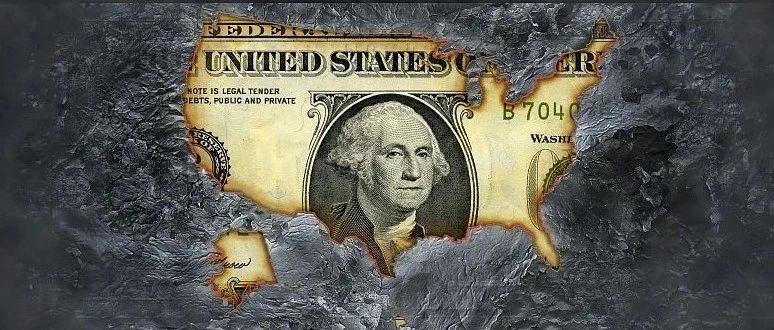
Core Viewpoint - The potential for a massive sell-off of up to $2.5 trillion in U.S. dollars is looming as Asian countries gradually reduce their dollar reserves, driven by an expanding trade surplus with the U.S. and escalating trade tensions [1][6]. Group 1: Dollar Sell-off Risks - Stephen Jen and Joana Freire highlight that the accumulation of dollar reserves by Asian exporters and investors could lead to significant downward pressure on the dollar against Asian currencies [1]. - The report suggests that the scale of dollar reserves held by Asian exporters and institutional investors may be extremely large, estimated at around $2.5 trillion, posing a major risk to the dollar's value [1][5]. - The recent unusual appreciation of the New Taiwan Dollar has drawn attention, with the Bloomberg Dollar Index having declined approximately 8% from its February peak [1]. Group 2: Capital Flows and Trade Dynamics - Jen previously predicted that a Federal Reserve rate cut could lead to about $1 trillion in dollar-denominated assets being sold off by Chinese companies, resulting in capital returning to China [4]. - The existence of "naked long" dollar positions in Asian countries, which lack hedging against dollar fluctuations, could accelerate capital flows amounting to trillions of dollars [5]. - Market analysts, including those from JPMorgan, have noted that the return of accumulated dollar assets from years of trade surpluses is a significant factor behind the strengthening of Asian currencies [6]. Group 3: U.S. Trade Deficits and Financial Accounts - The U.S. has experienced a current account deficit exceeding $1 trillion over the past 12 months, correlating with foreign investors' net purchases of U.S. assets [7]. - The relationship between trade and capital is emphasized, suggesting that tariffs could reduce the U.S. trade and current account deficits while also impacting other countries' surpluses [8]. - The imbalance in financial accounts may lead to capital outflows and risks of asset price declines and currency depreciation for the U.S., while countries with trade surpluses may experience capital inflows and currency appreciation [9][10]. Group 4: Future Implications - Analysts predict that the U.S. is likely to face net capital outflows, with significant amounts of capital potentially leaving the U.S. stock market in the future [11]. - Tariffs are expected to suppress global exports, leading to a decline in foreign demand for dollar assets, which are heavily utilized in international trade [12].
4月全球投资十大主线
一瑜中的· 2025-05-06 14:56
Core Viewpoint - The article discusses the performance of global asset classes in April, highlighting the impact of U.S. tariff policies and market sentiment on various financial instruments [2][4]. Summary by Sections Global Asset Performance - In April, global bonds outperformed other asset classes with a return of 2.94%, followed by global stocks at 0.98%, while commodities saw a decline of 8.79% [2]. Market Sentiment and Economic Indicators - The ratio of discretionary to staple consumption in the S&P 500 has rebounded, indicating a recovery in market sentiment, influenced by Trump's tariff announcements and subsequent negotiations [4]. - Following the announcement of "reciprocal tariffs" on April 2, the U.S. dollar index fell to its lowest level since March 2022, dropping over 10% from its peak earlier in the year [4][11]. Dollar Liquidity and Credit Concerns - Dollar liquidity concerns in April 2025 were noted, but the situation was significantly better than during the Silicon Valley Bank crisis in March 2023, with specific credit spreads remaining lower [5][14]. Investment Preferences - A survey indicated that 42% of global fund managers expect gold to be the best-performing asset in 2025, followed by cash and government bonds [6][16]. - The Bloomberg Federal Reserve sentiment index has declined, suggesting a potential easing of upward pressure on U.S. Treasury yields [6][20]. Economic Activity Indicators - The copper-to-oil ratio has been rising, which may positively impact the CSI 300 index, reflecting stronger industrial activity in China [7][26]. - Speculative positions in Japanese yen futures reached a 20-year high, indicating strong bullish sentiment towards the yen [8][28]. Currency Fluctuations - The Chinese yuan experienced significant volatility in April, initially depreciating due to tariff fears but later recovering as market expectations for U.S.-China tariff negotiations improved [9][31]. - Concerns over U.S. dollar credit led to a spike in gold prices, which reached a critical level of $3,500 per ounce [10][35]. Economic Activity Index - The weekly economic activity index from Huachuang Securities showed a rebound, indicating a positive correlation with asset prices and economic fundamentals [39]. Market Sentiment and Valuation - The article notes that the copper-gold ratio serves as a leading indicator for U.S. Treasury yields, reflecting market preferences for risk assets [41]. - The sentiment index, which combines various market indicators, has shown a decline, suggesting a shift in market mood [53]. Asset Class Performance Overview - A detailed table outlines the performance of various asset classes, with notable declines in the S&P 500 (-0.76%) and the CSI 300 (-3.00%) for the month [67].

4月全球投资十大主线
Huachuang Securities· 2025-05-06 07:53
Group 1: Market Trends - In April, global asset performance ranked as follows: global bonds (2.94%) > global stocks (0.98%) > RMB (-0.20%) > USD (-4.55%) > commodities (-8.79%) [2] - The S&P 500 consumer discretionary to staples ratio rebounded, indicating a recovery in market sentiment following Trump's tariff announcements [3] - The dollar index hit a new low since March 2022, dropping over 10% from its peak earlier in the year after the announcement of "reciprocal tariffs" [3] Group 2: Investment Insights - 42% of global fund managers expect gold to be the best-performing asset in 2025, followed by cash (18%) and government bonds (18%) [4] - The Bloomberg Federal Reserve sentiment index fell to 2.08 by the end of April, down from 5.17 at the end of March, indicating a shift towards a more dovish Fed stance [5] - The copper-to-oil ratio has been rising, which may positively impact the CSI 300 index, reflecting stronger industrial activity in China [6] Group 3: Currency and Credit Concerns - The CFTC reported that speculative net positions in the yen reached a 20-year high, with net long positions climbing to 179,212 contracts [7] - Following expectations of US-China tariff negotiations, concerns over RMB depreciation eased after a sharp drop to 7.42 against the dollar [8] - Dollar credit concerns pushed gold prices to a critical level of $3,500 per ounce, driven by fears regarding the dollar's creditworthiness [10]
巴菲特最后一次股东大会,宣布接班人、清仓苹果、警告美国风险
Sou Hu Cai Jing· 2025-05-04 09:57
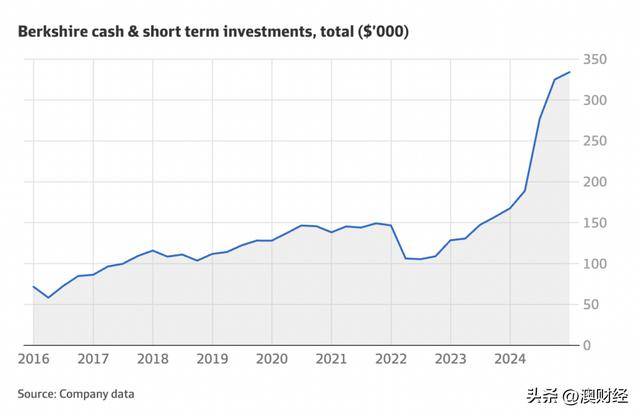
Core Insights - Warren Buffett announced that Greg Abel will succeed him as CEO of Berkshire Hathaway in 2026, marking a significant transition for the company [1] - The investment community is questioning Buffett's faith in the U.S. amid declining confidence in American investments globally [1][3] - Buffett's long-standing belief in the U.S. economy remains, but he acknowledges imperfections in the system and the challenges posed by opportunists [3][14] Investment Strategy - Buffett has reduced his stake in Apple and U.S. Bank, accumulating a cash reserve of $345 billion, indicating a strategic shift towards liquidity [7][10] - The decision to hold cash is not seen as conservative but as a strategy to wait for better investment opportunities [10] - Berkshire Hathaway's investment philosophy emphasizes patience and timing, with Buffett stating that they have profited by not rushing to invest [10] Market Outlook - Buffett's future investments may still favor the U.S., but he is open to international opportunities, as evidenced by past investments in Japanese trading companies [13] - Concerns about the U.S. fiscal deficit and trade policies are prevalent, with Buffett criticizing zero-sum trade perspectives [14] - The current market dynamics suggest that while U.S. companies remain strong, their valuations may be excessively high compared to international counterparts [17] Company Evolution - Buffett's investment portfolio reflects traditional American industries, primarily in finance, consumer goods, and energy, but lacks exposure to leading tech companies [16] - The rise of tech giants like Apple, Meta, and Amazon has driven market performance, raising questions about the relevance of Buffett's investment strategy for future growth [16] - Buffett emphasizes the need for Berkshire Hathaway to adapt to ongoing revolutionary changes in the market [18]

全程回顾伯克希尔股东会:关税、现金储备、海外投资、宣布交班
Feng Huang Wang· 2025-05-03 23:57
当地时间5月3日,一年一度的投资界"春晚"——伯克希尔・哈撒韦股东大会在美国奥马哈市举行。 在今年的股东大会上,巴菲特屡次就特朗普政府的政策与财政问题表达担忧,明确强调贸易不应作为武器。此外,他还针对伯克希尔的巨额现金储备,以及 近期美股市场波动、海外投资、人生哲学、AI、自动驾驶、保险业务等一系列话题发表见解。 令全球投资者感到意外的是,巴菲特在股东大会最后宣布,他已经决定将在周日的董事会上,提议在年底前正式将伯克希尔CEO职务交给接班人格雷格·阿 贝尔。 以下为全程回顾: 北京时间20:00 【伯克希尔·哈撒韦公司发布第一季度财报】 财报显示,公司第一季度营运收益为96.4亿美元,去年同期112亿美元,同比下跌14%。 伯克希尔在第一季度末的现金储备升至3477亿美元,再创历史新高,显示公司正持续出售股票,但在寻找可投资机会方面面临困难。 综合投资亏损后,第一季度净利润46.03亿美元,上年同期盈利127.02亿美元。 20:50 今年即将95岁高龄的巴菲特已经准备好登台。 21:00 【伯克希尔股东大会问答环节正式开始】 巴菲特与其接班人阿贝尔,以及保险业务主管阿吉特·贾恩登台,准备回答投资者们的一系列 ...
巴菲特称美国例外论尚未结束。
news flash· 2025-05-03 15:35
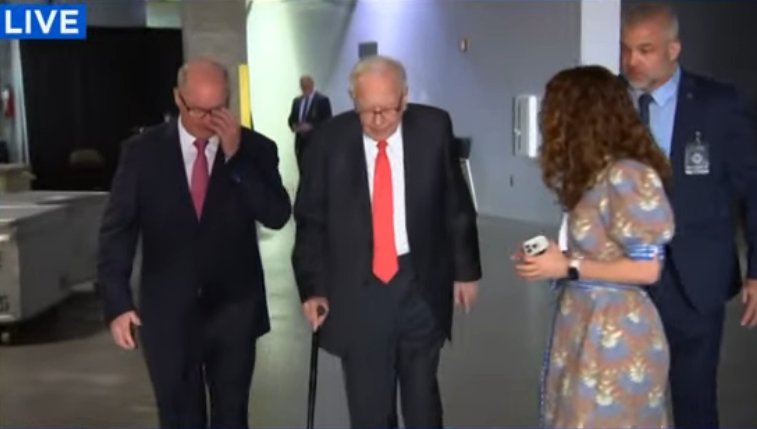
Core Viewpoint - Warren Buffett stated that the narrative of American exceptionalism is not over yet [1] Group 1 - The discussion around American exceptionalism continues to be relevant in the current economic landscape [1]
安联首席经济学家:非农报告证实了“残存的美国例外论”
news flash· 2025-05-02 13:05
安联首席经济学家:非农报告证实了"残存的美国例外论" 金十数据5月2日讯,安联首席经济学家埃尔埃利安(El-Erian)表示,4月非农报告证实了"残存的美国 例外论"。这表明我们在进入困难时期时还有一定的动能。问题就是,这种势头是否足够强大,足以让 我们度过难关? ...
全球资金最新趋势揭晓:卖美股抛黄金 转向日本与欧洲股市
智通财经网· 2025-05-02 10:27
智通财经APP获悉,华尔街金融巨头美国银行(Bank of America)的全球研究部周五发布的研报显示,截 至周三的一周内,全球投资者们继续抛售美国股票,转而大举买入日本和欧洲股票。美国银行的资金流 向周报(数据来源于EPFR)显示出,美国股市当周流出大约89亿美元,但此前一周美国市场曾出现短暂 大额流入。此外,黄金市场的资金方面,随着黄金现货与期货价格持续回调,则录得今年1月以来首次 周度级别的资金流出。 美国银行的研究团队指出,自2024年美国总统大选以来,流入美股市场的每100美元价值中,过去三周 就已有5美元被撤出。 相反,日本股市录得自去年4月以来最大规模的单周级别资金净流入,大约44亿美元;欧洲股市也在当周 吸引逾30亿美元,显示投资者们持续将资产配置从美国市场转向其他地区。 尽管如此,美国银行的研究报告显示出,美国国债市场的资金当周仍然流出大约45亿美元,创下2023年 末以来最大规模的单周流出;黄金则录得今年1月以来首次周度级别的资金流出。黄金价格方面,随着资 金获利了结趋势愈发明显,今年以来屡创新高的国际黄金现货价格已经暴跌至两周低点,即将创下两个 多月以来价格跌幅最糟糕的一周。 消息面 ...

特朗普怂了,美股又能 “KTV” 了?
美股研究社· 2025-04-29 11:11
以下文章来源于海豚投研 ,作者海豚君 海豚投研 . 有灵魂的思考、有态度的研究。 来源 | 海豚投研 舞完了大棒的特朗普,先是来一个90天的休止符,接着这两天突然跟"换魂"了一样,开始对包括中国在内的国家频频示好,市场原本预期平均 税率都要到20%上下,现在似乎川普温和之后,觉得最终关税税率可能也就是5-10%之间。 这种情况下,市场从Risk-off模式又重新进入了Risk-on模式,但这一波特朗普政府的神操作之后,美股市场会一笑泯恩仇,接着4月2日解放日 之前的节奏继续"蹦迪"吗? 4 月 2 日 之 前 v s 之 后 , 到 底 什 么 变 了 ? 在特朗普这波难得一见的"抽象"操作中,从叙事角度,最大的变化恐怕就是"美国例外论"信仰了。在全球资金超配美国资产的过程中,除了美 国作为成熟市场,稳定的股东回报和理性的资本配置之外,一个很大的原因,相信美元资产持续向上。 但这次特朗普的极限操作,让市场意识到了,疫情以来美国的繁荣主要是联邦政府的加杠杆,现在这个杠杆在美国国债收益率高企的情况下, 继续加杠杆已经很困难了。 从美国的宏观杠杆率变化可以看出: a. 美国经济总体的杠杆率目前仍然有258%,比疫情 ...