A股牛市

Search documents
复盘A股历史三轮大行情!牛市时基金投资要注意什么?
天天基金网· 2025-08-12 08:15
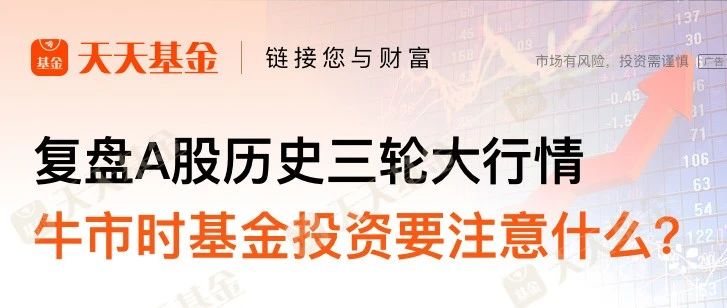
天天基金 | 链接您与财富 复盘A股历史三轮大行情 牛市时基金投资要注意什么 | 21世纪以来的三次牛市 2013.6-2015.6 2019.1-2021.2 2005.6-2007.10 大盘涨幅501% 大盘涨幅163% 大盘涨幅49% 涨幅前五的板块: 涨幅前五的板块: 涨幅前五的板块: 1.计算机 > 1.食品饮料 1.有色金属 2.非银金融 2.社会服务 2.传媒 3.电力设备 3.国防军工 3.通信 4.房地产 4.美容护理 4.纺织服饰 5.电子 7,000 5.电力设备 5.国防军工 6,000 5.000 4.000 3.000 2.000 1.000 2008-01-04 2009-01-04 2007-01-04 2012-01-04 2019-01-04 2011-01-04 2013-01-04 2015-01-04 2016-01-04 024-01-04 2020-01-04 2010-01-04 2014-01-04 2017-01-04 2018-01-04 2021-01-04 023-01-04 006-01-0 022-01-0 025-01-0 005-01-0 | ...

宋雪涛:谁是市场的增量资金?
雪涛宏观笔记· 2025-08-12 05:14
Core Viewpoint - The current market rally is driven by the rising sentiment among retail investors and the return of foreign capital, with insurance funds providing long-term support. The sustainability of this trend depends on the progress of household financial management migration and the global liquidity environment under a weak dollar [2][4]. Group 1: Market Overview - In July, the A-share market experienced a "bottom-up" bull market atmosphere, with the ChiNext Index rising over 8% for the month and daily trading volumes in the Shanghai and Shenzhen markets frequently exceeding 1.5 trillion [4]. - The improvement in market sentiment is attributed to the easing of Sino-U.S. relations and tariff issues, along with the maturation of TACO trading and expectations of interest rate cuts by the Federal Reserve, which have provided support for dollar liquidity [4]. Group 2: Types of Market Participants National Team - The central government’s capital, represented by Central Huijin Investment, has been absent from the market, with net outflows from broad-based ETFs since May, while industry-specific ETFs saw sustained inflows in July [5]. Institutions - Institutional "super large orders" have seen continuous net outflows since July, indicating limited motivation for public funds to increase positions. The average daily trading volume in key sectors like technology, finance, and consumption has been rising [5][6]. - As of the second quarter of 2025, the equity position of actively managed public funds in A-shares is at 71.4%, a decrease of 3.8 percentage points over the past year, with total net assets at 3.4 trillion, the lowest in 20 quarters [5]. Retail Investors - Retail investors have emerged as the main source of incremental funds during the July bull market, with new account openings on the Shanghai Stock Exchange reaching 1.96 million, above the 60th percentile level over the past three years [7]. - The net inflow of small orders (below 40,000 yuan) increased by 39% month-on-month in July, and the total trading volume on the A-share "Dragon and Tiger List" rose by 7.5% compared to June [7][8]. Foreign Capital - Foreign capital has shown signs of recovery, with average daily trading volume of northbound funds increasing by 36.3% in July compared to June, marking the first time since the "924 market" that both daily trading volume and market share have risen simultaneously [8][9]. - The net inflow of ETFs focused on investing in China reached $199 million in the past month, surpassing the total for the previous three months and accounting for 47% of last year's total net inflow [9]. Group 3: Future Outlook - The continuation of the A-share and H-share market rally will depend on the progress of household financial management migration and the global liquidity released by a weak dollar [9].
A股低价股数量锐减,当前牛市进入第几阶段?
Sou Hu Cai Jing· 2025-08-11 23:29
Core Viewpoint - The A-share market has shown signs of a bull market, having risen nearly 1,000 points since the low of 2,689 points in September last year, indicating a technical bull market as it has surpassed a 20% increase from the low point [2][4]. Market Performance - On August 11, the Shanghai Composite Index reached a new high of 3,656.85 points, just 20 points shy of the 2024 peak of 3,674 points, despite daily trading volumes remaining below 2 trillion yuan [3]. - The current A-share market has not yet established a true bull market, as it has not effectively broken through the resistance levels of 3,674 points and 3,731 points from 2021 [4][6]. Stock Trends - The number of low-priced stocks (below 2 yuan) and stocks with a price-to-book ratio below 1 has significantly decreased, a typical phenomenon in a bull market. There are currently fewer than 37 low-priced stocks, down from over 150 a year ago [4][5]. - Historically, banks and brokerages lead the initial phase of a bull market, followed by cyclical industries such as coal, non-ferrous metals, and real estate in the mid-phase, with low-priced stocks experiencing significant price increases [5]. Market Resistance and Future Outlook - The A-share market is approaching critical resistance levels between 3,674 and 3,731 points, and a breakthrough could signify the official entry into a true bull market [6]. - The total market capitalization of the A-share market has exceeded 100 trillion yuan, making it unlikely to experience a uniform rise and fall like in 2007 and 2015 [6]. - The potential for upward movement in the A-share market may depend on the Federal Reserve's actions regarding interest rate cuts, with expectations of three rate cuts this year, which could positively impact emerging markets [7].
开盘:三大指数小幅高开 能源金属板块涨幅居前
Xin Lang Cai Jing· 2025-08-11 02:10
Group 1 - The three major indices opened slightly higher, with the energy and metal sectors leading the gains. As of the opening, the Shanghai Composite Index was at 3637.05 points, up 0.05%; the Shenzhen Component Index was at 11159.03 points, up 0.27%; and the ChiNext Index was at 2336.93 points, up 0.13% [1] Group 2 - CITIC Securities believes that the A-share market continues to face certain resistance for short-term upward movement due to weaker-than-expected PPI, the expiration of tariff easing agreements, and completed valuation repairs leading to reduced trading volume. However, it is still considered to be in a bull market continuation phase, with pullbacks providing good allocation opportunities [2] - The firm notes that recent improvements in overseas conditions, potential changes in Federal Reserve personnel may raise market expectations for interest rate cuts, and a weakening dollar trend is favorable for emerging market stocks, particularly benefiting Hong Kong stocks [2] - Huaxi Securities highlights that the current market rally has multiple sources of incremental capital, including insurance, pension funds, public funds, private equity, and retail investors. Since the "924" market rally began, the negative scissors difference between M1 and M2 year-on-year growth has been narrowing, indicating increased capital activation and a marginal recovery in consumer and investment willingness [2] - The recent margin financing balance has reached a ten-year high, reflecting a continuous increase in risk appetite among individual investors. In the context of asset allocation scarcity, the bull market mentality is driving residents' asset allocation towards equity assets, which will be a significant driver for the current "slow bull" market [2] - The focus on the "15th Five-Year Plan" is expected to be a key point for future market attention, with technology growth remaining a policy mainline for a considerable period [2]


专项债发行创年内新高,A股7月新开户增长70.5% | 财经日日评
吴晓波频道· 2025-08-06 00:30
Group 1: Special Bonds and Infrastructure Investment - In July, the issuance of new special bonds reached a record high of 616.936 billion yuan, increasing by 89.842 billion yuan from the previous month [2] - The cumulative issuance progress of new special bonds as of the end of June was 49%, significantly lower than the average level of 63.2% for the same period from 2022 to 2024 [2] - The main direction of special bond funding is expected to shift towards infrastructure and real estate, with a notable project being the 1.2 trillion yuan Yarlung Tsangpo River downstream hydropower project [2] Group 2: Real Estate Market Trends - Shenzhen's second-hand housing market showed signs of recovery, with a 5.2% increase in recorded transactions and a 17% rise in store signing volume [3] - The average listing price for second-hand homes in Shenzhen rose by 0.2% to 62,706 yuan per square meter in July [3] - The overall real estate market remains in a state of fluctuation, with a need for more policy stimulus to stabilize prices [4] Group 3: Hema's Business Adjustments - Hema X membership stores will cease operations, with the last store closing on August 31, indicating a strategic shift to focus on Hema Fresh and Hema NB [5][6] - Hema's overall GMV is projected to exceed 75 billion yuan in the 2025 fiscal year, with plans to open nearly 100 new stores [5] - The membership store model faced challenges due to lack of differentiation and competition with established brands like Sam's Club [6] Group 4: Mergers and Acquisitions in the Shipbuilding Industry - China Shipbuilding intends to absorb and merge with China Shipbuilding Heavy Industry, marking the largest merger in A-share history [7] - Post-merger, China Shipbuilding's total assets are expected to exceed 400 billion yuan, with revenues surpassing 130 billion yuan [7] - The merger is part of a broader trend of state-owned enterprise consolidation in sectors with overlapping businesses [8] Group 5: Nio's Restructuring Efforts - Nio is seeking restructuring investors, with 56 potential investors showing interest after filing for bankruptcy [9] - The company has reported significant losses over the past few years, highlighting its reliance on low-price competition [9] - Despite challenges, Nio's production base and core personnel remain valuable assets for potential investors [10] Group 6: A-share Market Developments - In July, A-share new accounts increased by 70.5% year-on-year, with a total of 1.9636 million new accounts opened [13] - The A-share market experienced significant gains, with major indices showing upward trends, including a 3.74% increase in the Shanghai Composite Index [13] - The current market environment is characterized by a lack of substantial participation from external funds, leading to a different dynamic compared to previous bull markets [14]



A股大逆转!重磅信号来了!
天天基金网· 2025-08-04 11:17
Group 1 - A-shares experienced a significant reversal in the afternoon, with all three major indices turning positive, supported by strong performances in the military, precious metals, and robotics sectors [1][5][4] - The total trading volume in the two markets decreased to 1.49 trillion yuan, indicating a potential need for market consolidation after continuous gains [4] - Analysts suggest that the fundamental logic supporting the current rally remains unchanged, and a moderate "cooling" could benefit long-term market stability [4] Group 2 - The reversal in A-shares was influenced by several positive factors, including an increase in the RMB exchange rate and a rise in foreign investment risk appetite following weaker-than-expected U.S. employment data [6][7] - The new tax policy on government bonds has led to increased demand for high-dividend assets, boosting market sentiment [7] - The military sector surged due to significant media coverage of advancements in unmanned combat technology, contributing to its leading position in the market [7] Group 3 - Recent data shows that domestic public and private fund managers have increased their average positions, indicating a positive outlook for the market [8] - Over 62% of large private equity funds are maintaining heavy or fully invested positions, reflecting confidence in future market performance [8] - Historical patterns suggest that the current market phase may align with the transition between five-year plans, potentially signaling the beginning of a bull market [10][13] Group 4 - The market is expected to experience fluctuations in early to mid-August due to earnings disclosures and tariff implementations, but a policy-driven rally could lead to new highs later in the month [16] - Investment strategies should focus on balanced allocation, considering both defensive and offensive positions to navigate increased volatility [29] - Key sectors for investment include technology growth, mechanical and electrical equipment, and high-dividend defensive stocks, which are anticipated to perform well amid market fluctuations [29]

中信证券谈A股此次调整:换挡调速很正常,牛市所有人都会起舞
Xin Lang Cai Jing· 2025-08-01 04:47
Group 1 - The recent adjustment in A-shares is seen as a natural occurrence in the current bull market, which may alleviate some investors' anxiety [1] - Historical analysis shows that bull markets often experience adjustments, with significant declines observed in previous bull runs, such as over 5%, 15%, and 20% in 2007 and multiple declines exceeding 10% in 2015 [1] - After surpassing 3600 points, market volatility tends to increase, with average daily fluctuations rising by over 48% in 2007 and 45% in 2015, particularly notable in indices like the Wind All A and ChiNext [1] Group 2 - The current market environment is characterized by high capital enthusiasm, with A-shares exceeding 1 trillion in trading volume for 70 consecutive days and margin financing reaching 1.97 trillion yuan, a 10-year high [1] - Valuation levels remain relatively low, with 20 out of 30 major industries having dynamic price-to-earnings ratios in the lower 50% historical range, indicating that most sectors are not considered expensive at the 3600-point level [1]

A股牛市韧性尽显,明天这波大变盘会“颠覆”行情?
Sou Hu Cai Jing· 2025-07-29 21:31
Group 1 - The A-share market is experiencing a significant influx of liquidity, with a 1.4 trillion yuan reverse repurchase operation indicating a strong monetary stimulus [1] - The current low interest rate environment is seen as a precursor to potential market surges, similar to the rapid growth observed in September 2019 [1] - The market is showing signs of volatility, with major indices experiencing slight declines despite a strong weekly and monthly performance, suggesting a period of consolidation before potential upward movement [3] Group 2 - The policy direction and influx of new capital are forming a solid defense for the market, with any potential pullbacks viewed as opportunities for future gains [5] - A new phase in the A-share market is emerging, characterized by moderate index gains but vigorous individual stock performances, indicating a healthy market environment [5] - The market is not merely experiencing superficial growth; rather, it is undergoing a substantial and quiet accumulation of wealth [5] Group 3 - There is a growing sentiment that the A-share market is on a steady upward trajectory, challenging the belief that it is still struggling around the 3400-point level [7]
下半年A股牛市“引爆点”在哪里?广发证券首席策略分析师刘晨明洞察市场风向
Hua Er Jie Jian Wen· 2025-07-29 08:24
7月28日,A股诞生了今年之内的第一只十倍股:上纬新材。上证指数近期突破3600点创下年底新高,沪深300指数也达到年内高点,MSCI中国指 数更是创下四年新高。 在当前市场情绪升温的背景下,大家最关心的问题是:下半年市场还能持续走强吗? 针对大家关心的核心问题,我们邀请广发证券首席策略分析师刘晨明,在本周日(8月3日)上午来主讲一次Alpha线上闭门私享会,跟大家研讨交 流:2025下半年A股牛市"引爆点"在哪里?哪些资产最值得关注? 刘晨明在2023、2024年连获新财富最佳策略分析师第一名,是当前市场上最有影响力的A股策略分析师。他在2024年联手华尔街见闻打造的大师 课《A股策略方法论》也广受用户好评。 对本周日刘晨明老师闭门分享活动感兴趣的朋友,可以点击下方活动海报报名加入Alpha线上闭门私享会会员,一起来听听他对市场的最新洞察。 Alpha线上闭门私享会是华尔街见闻针对高净值用户提供的服务,2025年全年将举行至少20场Alpha线上闭门私享会,平均每季度举行5场。我们会 针对大家关心的市场热点及核心问题,邀请全球一线大咖来进行线上闭门分享,并为用户答疑解惑,帮大家看清资产变动风向,助力个人关键 ...



A股牛市,一场“基本面”与“流动性”的赛跑
雪球· 2025-07-28 07:46
Core Viewpoint - The article discusses the recent performance of the A-share market, particularly the Shanghai Composite Index, and highlights the impact of bank stocks on the index's movements, suggesting that the market is currently in a "slow bull" phase with potential for further growth if certain conditions are met [3][4][12]. Market Performance - The Shanghai Composite Index reached a high of 3613.02 points recently, with 3700 points being the next target [3]. - The banking sector has been a significant drag on the index, with the China Securities Banking Index falling by 6.25% from July 11 to July 25, while the Shanghai Composite Index only saw a 2.39% increase during the same period [5][8]. Impact of Dividends - The decline in bank stocks is partially attributed to the dividend distribution season, which causes a "virtual decline" in price indices due to ex-dividend adjustments [6][8]. - The Shanghai Composite Index's performance was negatively impacted by bank stock adjustments, with a loss of 28.81 points attributed to banks during the observed period [8]. Sector Contributions - The article provides a breakdown of sector contributions to the Shanghai Composite Index, indicating that while banks detracted from performance, sectors like electronics and pharmaceuticals contributed positively [10]. - The electronics sector, particularly semiconductors, has been a key driver of the index's recent gains, alongside pharmaceuticals [10]. Market Sentiment - Despite the structural bull market, there is a lack of consensus among retail investors, particularly those heavily invested in previously popular sectors like food and beverage, solar energy, and automotive [11]. - The overall A-share market, represented by the Wind All A Index, has only increased by 11.93% this year, which does not raise significant concerns among regulators about a rapid market surge [11]. Technical Indicators - The 14-day RSI for the China Securities Banking Index has adjusted to 40, suggesting a potential bottoming out and a possible rebound if other strong sectors experience corrections [12]. - The article emphasizes the importance of maintaining market stability and avoiding excessive volatility, which could lead to a rapid rise followed by a sharp decline [17][20]. Liquidity and Investor Behavior - The article notes that retail investor margin balances have exceeded previous highs, indicating a steady inflow of retail funds into the market, albeit at a measured pace [18][19]. - The current market environment is characterized by a race between fundamental recovery and liquidity, with the potential for rapid changes in sentiment among investors [19][20].