碳中和

Search documents
国庆假期高速公路新能源汽车充电量创历史新高
2 1 Shi Ji Jing Ji Bao Dao· 2025-10-13 10:36
Carbon Neutrality Policy - During the National Day holiday, the charging volume for new energy vehicles on highways reached a historical high of 17.4858 million kilowatt-hours, a year-on-year increase of 41.95% [2] - The National Development and Reform Commission and the National Energy Administration issued the "Energy Planning Management Measures," which standardize the energy planning system and emphasize strict management of planning lists [3][4] - A memorandum of understanding was signed between China and Guyana to promote low-carbon transportation, with China providing new energy vehicles and charging facilities to support Guyana's low-carbon transition [5][6] Corporate Practices - The Guangdong Lianjiang Nuclear Power Project, with a total installed capacity of 8.5 million kilowatts and an investment of approximately 130 billion yuan, aims to reduce carbon emissions significantly [6][7] - The Bai Long Nuclear Power Project in Guangxi is set to utilize CAP1000 technology, promoting local economic development and community engagement while achieving carbon neutrality goals [7] Local Developments - The 2025 Fortune Sustainable Development Summit was held in Fuzhou, focusing on the integration of digitalization and low-carbon transformation, with discussions on creating an "AI Power Grid+" model to address the challenges of renewable energy intermittency [8] - Blue Don Xu Mei Food Co., Ltd. is implementing a full-chain ESG strategy in the potato industry, aiming for sustainable development through waste utilization and circular economy practices [9]
公用事业行业周报(2025.10.06-2025.10.12):预期触底,风格回暖-20251013
Orient Securities· 2025-10-13 09:47
Investment Rating - The report maintains a "Positive" investment rating for the utility sector in China [5] Core Views - The utility sector is expected to see a recovery in style as it approaches a bottoming out phase [2] - The report highlights that the demand for electricity is likely to remain high due to seasonal inventory replenishment and government policies aimed at stabilizing coal and electricity prices [7] - The report emphasizes the importance of long-term investment in utility assets, particularly in the context of low interest rates and policy encouragement for long-term capital [7] Summary by Sections Investment Recommendations and Targets - The report suggests a focus on utility stocks, particularly in the context of a favorable long-term investment environment for dividend assets [7] - Specific recommendations include: - Thermal Power: Expected profit growth in Q3 2025, with improved commercial models [7] - Hydropower: Suggests investing in high-quality large hydropower projects due to low cost per kilowatt hour [7] - Nuclear Power: Strong long-term growth potential with risks from market pricing already released [7] - Wind and Solar: Anticipated growth in electricity generation under carbon neutrality expectations [7] Industry Dynamics - The report notes a slight increase in coal prices at ports, with inventory levels rising [10][21] - The Three Gorges Reservoir has seen significant increases in both inflow and outflow, indicating improved hydropower generation conditions [29] - The utility sector index outperformed major indices, indicating strong market performance [35][37]
公用环保202510第2期:多省发布“136号文”承接文件,绿色甲醇生产路线梳理-20251013
Guoxin Securities· 2025-10-13 08:58
Investment Rating - The report maintains an "Outperform" rating for the public utility and environmental sectors [1][5][29]. Core Views - The report highlights the significant growth in the public utility and environmental sectors, with the public utility index rising by 3.45% and the environmental index by 1.49% during the week [1][31]. - The report emphasizes the importance of green methanol production, which significantly reduces carbon emissions throughout its lifecycle, and outlines the two main production routes: biological methanol and electro-methanol [2][15]. - The report suggests that coal and electricity prices are expected to decline simultaneously, allowing thermal power profitability to remain reasonable, and recommends major thermal power companies such as Huadian International and Shanghai Electric [3][29]. Summary by Sections Market Review - The Shanghai Composite Index fell by 0.51%, while the public utility index rose by 3.45% and the environmental index by 1.49%, with respective relative returns of 3.97% and 2.00% [1][31]. - Within the power sector, thermal power increased by 7.83%, hydropower by 2.30%, and renewable energy generation by 3.72% [1][31]. Important Events - As of October 12, 2025, multiple provinces have released documents related to the "136 Document" and initiated or completed competitive pricing for new energy incremental projects [1][23]. Investment Strategy - The report recommends several companies across different sectors: - For thermal power: Huadian International and Shanghai Electric [3][29]. - For renewable energy: Longyuan Power, Three Gorges Energy, and regional offshore wind companies [3][29]. - For nuclear power: China Nuclear Power and China General Nuclear Power [3][29]. - For hydropower: Yangtze Power [3][29]. - For gas: Jiufeng Energy [3][29]. - For environmental services: China Everbright Environment and Zhongshan Public Utilities [3][30]. Key Company Earnings Forecasts - The report provides earnings forecasts and investment ratings for several companies, all rated as "Outperform" [5][8]: - Huadian International (Code: 600027.SH) - Longyuan Power (Code: 001289.SZ) - China Nuclear Power (Code: 601985.SH) - Yangtze Power (Code: 600900.SH) - Jiufeng Energy (Code: 605090.SH) Special Research - The report discusses the production routes for green methanol, emphasizing the need for renewable hydrogen and carbon sources [2][15]. - It also details the competitive pricing results for new energy projects across various provinces, highlighting specific prices and execution periods [23][26].



将食品包装变为潮流时装 康师傅于上海时装周上演碳中和大秀
Zhong Guo Jin Rong Xin Xi Wang· 2025-10-13 08:36
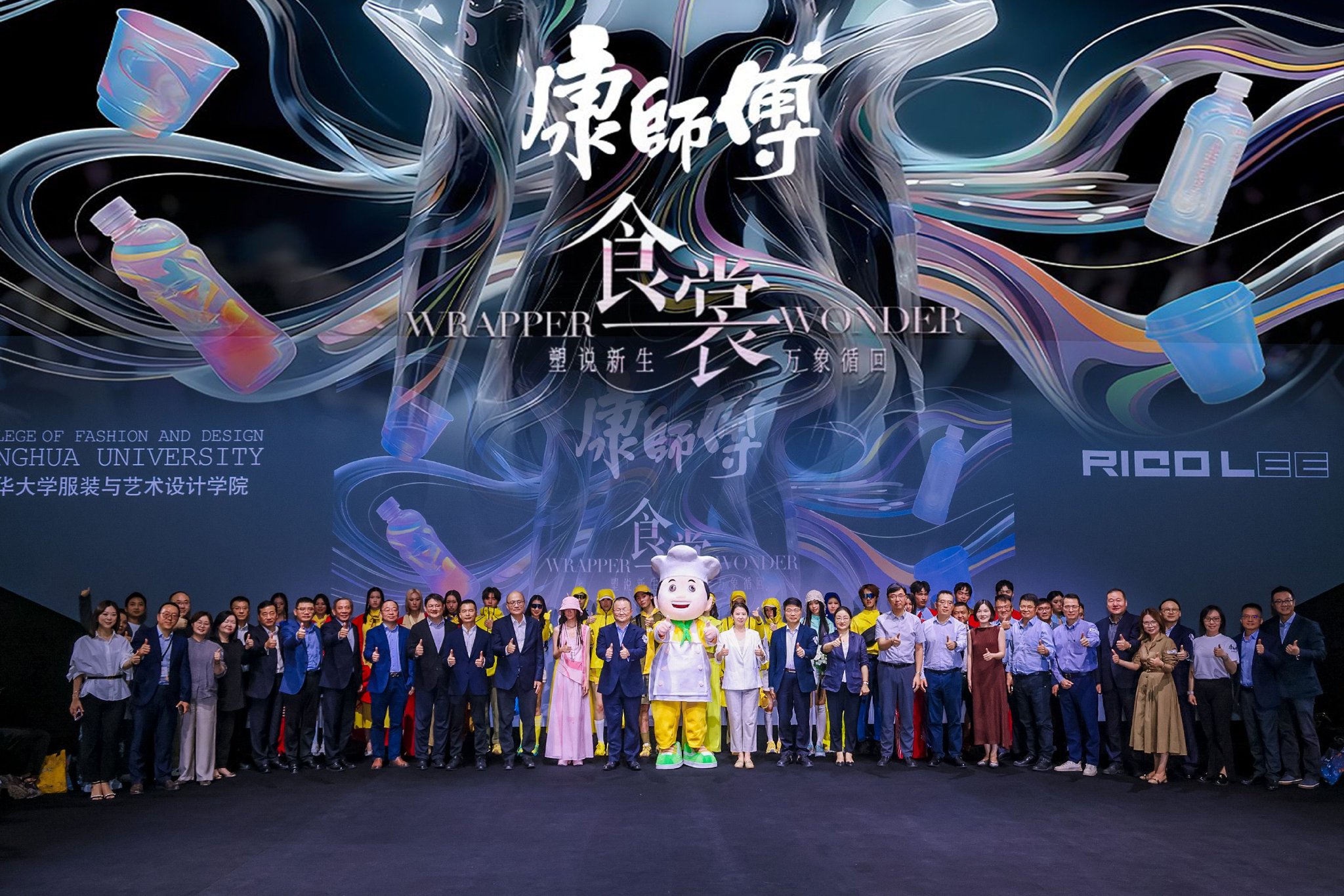
Core Viewpoint - The event showcased a groundbreaking collaboration between Master Kong and the fashion industry, transforming food packaging waste into fashionable items, emphasizing sustainability and circular economy principles [1][19][20]. Group 1: Event Overview - The 2026 Spring/Summer Shanghai Fashion Week featured a unique ESG-themed fashion show titled "Food·Fashion - Plastic Rebirth, Infinite Circulation" by Master Kong, highlighting the intersection of food and fashion [1][18]. - The show included four major products from Master Kong: Braised Beef Noodles, Fresh Q Noodles, Ice Black Tea, and Jasmine Tea, designed in collaboration with top fashion design talents from Donghua University and renowned designer Rico Lee [1][10]. Group 2: Sustainability and ESG Commitment - Master Kong's CEO, Chen Yingrang, emphasized the company's commitment to sustainable development, focusing on lightweight packaging, reuse, and recycling to contribute to a green, low-carbon lifestyle [4][19]. - The event was recognized as the first carbon-neutral collaboration at Shanghai Fashion Week, demonstrating a practical application of carbon neutrality in the fashion industry [16][18]. Group 3: Design and Innovation - The fashion show featured nearly sixty exclusive outfits designed around Master Kong's core products, showcasing innovative use of recycled materials, such as rPET and PP, to create functional fabrics and accessories [10][19]. - The designs included four thematic series: "Essence of Quality," "Deconstruction Thought," "Energy Supply Station," and "Fresh Breath," each reflecting the brand's heritage and commitment to sustainability [10][19]. Group 4: Industry Impact and Future Directions - The collaboration serves as a model for high-value resource utilization, transforming waste into fashion, and providing a tangible example of the economic viability of sustainable practices [5][19]. - Master Kong's "eESG" concept integrates economic benefits into traditional ESG frameworks, aiming to drive broader adoption of sustainable practices across the industry [19][20][23].


山东港口获超2.4万张“绿证”,预计可核减约12477吨碳排
Qi Lu Wan Bao Wang· 2025-10-13 07:33
Core Insights - Shandong Port has achieved a significant milestone in the green energy sector by obtaining 24,954 renewable energy green power certificates (green certificates) from the National Energy Administration, which is expected to reduce carbon emissions by approximately 12,477 tons [1][2] - Each green certificate corresponds to 1,000 kilowatt-hours of green electricity, enabling the consumption of 24.954 million kilowatt-hours of green electricity, equivalent to replacing the transport capacity of 5 million tons of trucks [1][2] Group 1 - The acquisition of green certificates marks the first such honor for Beijing Lugang Company, contributing to the construction of a green port and the implementation of the "carbon peak and carbon neutrality" strategy [1][3] - Green certificates serve as the official proof of renewable energy consumption, empowering enterprises to fulfill their environmental responsibilities and enhance their green brand image, thus creating a competitive advantage in the market [2] - The green certificates facilitate international trade by meeting the increasing green procurement demands of global supply chains, acting as a "hard pass" for enterprises to integrate into the global green industry chain [2] Group 2 - The successful certification reflects the internal collaboration and resource integration within Beijing Lugang Company and its partnership with Shandong Port Bohai Bay Port Group, demonstrating a unified effort towards green transformation [3] - Looking ahead, Beijing Lugang Company aims to further invest in renewable energy sectors such as wind and solar power, optimizing the energy consumption structure of the port and contributing to the national "dual carbon" goals [3] - The company intends to explore replicable and scalable green development pathways, striving to provide a "Shanport model" for the clean energy transition in the national port sector [3]

产业经济周报:A股节后先扬后抑,预制菜方兴正艾、AI景气延续-20251013
Tebon Securities· 2025-10-13 06:38
Market Review - The A-share market experienced fluctuations, initially rising and then significantly declining, with the Shanghai Composite Index breaking through the 3900-point mark before a sharp correction [6][7] - The average daily trading volume for the week was 2.60 trillion yuan, up from 2.19 trillion yuan the previous week [6] Hard Technology - High Bandwidth Memory (HBM) has become a core growth driver for storage manufacturers, with significant investments from original manufacturers [17] - HBM offers advantages over traditional GDDR memory, including higher bandwidth, lower power consumption, and smaller size, making it suitable for AI applications [18][20] - Micron reported Q3 2025 revenue of $11.32 billion, a 46% year-on-year increase, with HBM revenue reaching $2 billion [25][26] Advanced Manufacturing - The rare earth industry chain includes mining, smelting, material preparation, terminal applications, and recycling, with China holding a significant advantage in the smelting and separation stages [27][30] - China's rare earth production capacity has increased significantly, with the country becoming the largest producer of rare earth oxides and metals globally [33][34] - The strategic importance of rare earths is growing, particularly in high-tech applications such as electric vehicles and renewable energy [36] Consumer Insights - The pre-prepared food market in China is projected to reach 546.6 billion yuan in 2024, with expectations to exceed 1.072 trillion yuan by 2026 [37] - The penetration rate of pre-prepared foods in China is only 10%-15%, compared to over 60% in mature markets like the US and Japan, indicating significant growth potential [37] - Consumer acceptance of pre-prepared foods varies by context, with over 50% acceptance in fast-food chains but only 8.8% in high-end restaurants, highlighting concerns over food safety and consumer rights [39]

行业聚焦:全球三轴等离子清洗机市场头部企业份额调研(附Top 5 厂商名单)
QYResearch· 2025-10-13 05:31
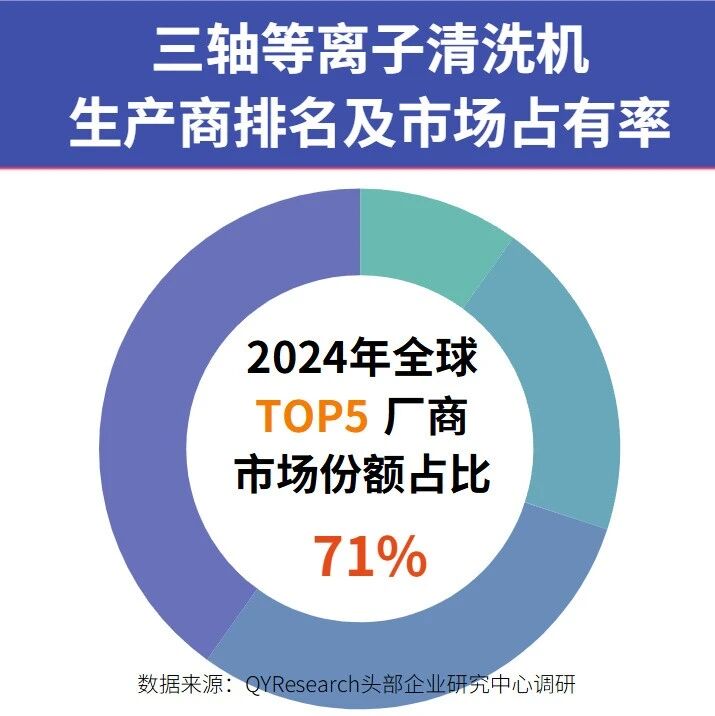
Core Viewpoint - The 3-Axis Plasma Cleaner is an automated surface treatment device that integrates XYZ three-axis motion systems and plasma generators, primarily used for cleaning, activation, and modification of material surfaces, driven by the increasing demand from high-end manufacturing sectors such as electric vehicles, semiconductors, and micro-medical devices [1][2]. Global Trends and Drivers - The global market for 3-Axis Plasma Cleaners is primarily driven by the surging demand for precision cleaning and surface activation in high-end manufacturing, particularly in the electric vehicle, advanced semiconductor packaging, and micro-medical device sectors [1]. - The technological trend is moving towards smart and integrated solutions, requiring devices to connect with MES systems and incorporate AI vision and process monitoring for real-time closed-loop control and traceability [1]. Competitive Landscape - The market exhibits a highly concentrated competitive landscape dominated by technology leaders from Germany and the United States, such as Plasmatreat, Nordson, and Diener, which have established significant technical barriers and brand moats [2]. - These leading companies provide customized solutions and continuous technological iterations, forming strong binding relationships with top clients across various industries, making it challenging for new entrants to compete [2]. Opportunities and Challenges from Policies and Regulations - Opportunities arise from global "carbon neutrality" policies that promote the expansion of emerging industries like electric vehicles, photovoltaics, and hydrogen energy, which heavily rely on reliable plasma cleaning processes [2]. - Challenges include increasingly stringent environmental and energy efficiency regulations that require manufacturers to reduce harmful chemicals and energy consumption, raising R&D costs and technical complexity while pushing the industry towards greener and more sustainable technologies [2]. Market Size and Growth - According to QYResearch, the global market size for 3-Axis Plasma Cleaners is expected to reach USD 321 million by 2031, with a compound annual growth rate (CAGR) of 5.5% over the next few years [3]. Market Segmentation - Currently, offline systems dominate the market, accounting for approximately 70% of the share, while online systems hold about 30%. The share of online systems is expected to steadily increase, but offline systems will continue to play a significant role due to their unmatched flexibility [10]. Key Drivers and Barriers - The core driver for the 3-Axis Plasma Cleaner market is the high-end manufacturing industry's pursuit of surface treatment quality and process consistency, with smart manufacturing and Industry 4.0 pushing for fully automated production line integration [11]. - The primary barrier is cost, as online systems are expensive and complex to integrate, deterring many small and medium-sized enterprises. Additionally, insufficient standardization of processes limits technology adoption, and while offline systems are flexible, they face efficiency limitations [12]. Future Opportunities - Future opportunities are concentrated in emerging fields requiring large-scale production, such as electric vehicle battery cells, electronic control, and sensor manufacturing, which depend on online cleaning to ensure quality and efficiency [13]. - The demand for ultra-precision cleaning processes in advanced semiconductor packaging and Micro-LED applications will further drive the market, alongside the modular and intelligent upgrades of equipment that will open broader mid-market opportunities [13].
全球与中国半导体设备用电源市场现状及未来发展趋势2025版
QYResearch· 2025-10-13 05:31
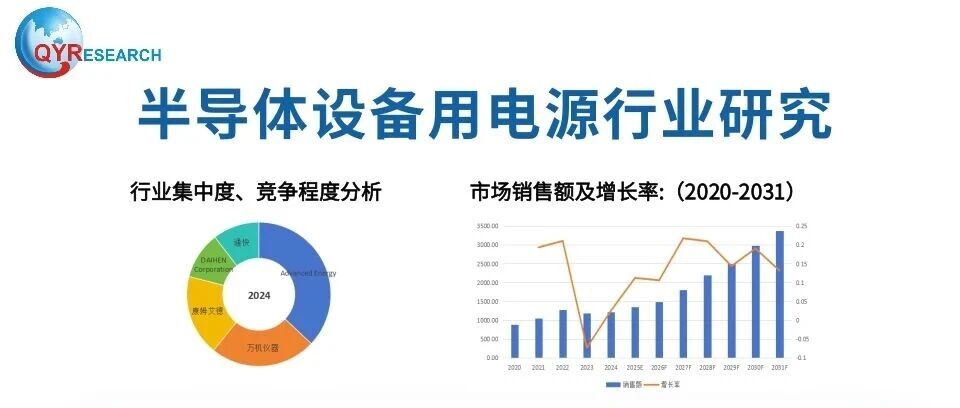
Core Viewpoint - The semiconductor equipment power supply industry is experiencing rapid growth driven by policy support and downstream demand, with domestic companies making breakthroughs in key areas like RF power supplies, although high-end products still rely on imports [3][4]. Product Definition and Statistical Scope - The article focuses on RF power supplies and DC power supplies used in the semiconductor industry, defining RF power supplies as capable of generating fixed frequency sine wave voltages within the RF range (approximately 3KHz to 300GHz) with power ratings from 0.3 to 15kW [2]. Current Industry Status - The Chinese semiconductor equipment power supply industry is growing rapidly due to policy support and demand, with domestic firms achieving breakthroughs in RF and high-voltage DC power supplies. However, high-end products still depend on imports, and the self-sufficiency rate of core components remains low [3]. - The global market is dominated by companies from the US, Europe, and Japan, with American firms like MKS and AE holding significant market shares in RF power supplies. Japanese and German companies monopolize the high-end sector, leveraging advanced technologies for superior efficiency and power density [3][4]. Technological Evolution - The industry is evolving towards higher frequency, integration, and intelligence, with increased penetration of SiC/GaN devices enhancing energy efficiency. Domestic companies face three main challenges: reliance on imported high-end RF amplifiers, discrepancies in impedance matching precision, and insufficient stability in microsecond-level response for wafer manufacturing power supplies [4]. Development Trends - SiC and GaN wide bandgap semiconductor materials are rapidly replacing traditional silicon-based devices, significantly enhancing power supply performance. These materials offer higher breakdown voltages, lower on-resistance, and ultra-high frequency switching characteristics, achieving power density levels 1.5 times higher than domestic products [6]. - Power management systems are integrating AI algorithms and IoT technologies for dynamic energy efficiency optimization and remote intelligent control, including real-time voltage/frequency adjustments and embedded sensors for predictive maintenance [6]. - Global carbon neutrality goals are driving upgrades in power supply efficiency standards, with China's "dual carbon" policy mandating a conversion efficiency of ≥ 95%, pushing companies to focus on zero standby loss and renewable energy compatibility [6]. Market Scale Analysis - The global semiconductor equipment power supply market is projected to reach $1,208.9 million in 2024, with expectations to grow to $3,364.3 million by 2031, reflecting a compound annual growth rate (CAGR) of 16.52% [7]. - The Chinese market is rapidly evolving, with a projected size of $343.8 million in 2024, accounting for approximately 28.4% of the global market, and expected to reach $1,036.1 million by 2031, increasing its share to 30.8% [8]. Competitive Landscape - Major global manufacturers include Advanced Energy, 万机仪器, 康姆艾德, DAIHEN Corporation, and 通快, with the top five companies expected to hold over 44.38% of the market share in 2024. Competition is anticipated to intensify, particularly in the Chinese market [8]. Policy Analysis - Internationally, the US has imposed restrictions on the export of power supplies for devices below 14nm to China, impacting the supply of high-end power equipment. In contrast, Japan and South Korea are implementing national strategies to bolster their semiconductor industries, enhancing local demand for power supply equipment [12][13]. - Domestically, China is prioritizing semiconductor equipment power supplies in its "Made in China 2025" and "14th Five-Year Plan," aiming to increase the localization rate of SiC/GaN power modules by 2025 to break the monopoly of US and Japanese firms [14].
2025电力设备及新能源行业报告:核聚变太阳能量的地球复刻,产业化进程有
Sou Hu Cai Jing· 2025-10-13 04:08
Core Insights - The report discusses the acceleration of nuclear fusion technology, which is seen as a potential ultimate solution to the global energy crisis, with significant advancements expected by 2025 [1][2]. Group 1: Nuclear Fusion Overview - Controlled nuclear fusion aims to replicate the sun's energy production on Earth by fusing isotopes of hydrogen, deuterium, and tritium, releasing substantial energy [1][2]. - The process requires three critical conditions: temperatures exceeding 100 million degrees Celsius, sufficient plasma density, and a stable energy confinement time, collectively known as the "fusion triple product" [1][20]. Group 2: Advantages of Nuclear Fusion - Nuclear fusion offers significant advantages over traditional energy sources, including zero greenhouse gas emissions and minimal long-lived radioactive waste, making it an environmentally friendly option [2][29]. - The energy density of nuclear fusion is extremely high; for instance, one liter of seawater contains enough deuterium to produce energy equivalent to 300 liters of gasoline, indicating that fusion could provide energy for over 10 billion years [2][29]. Group 3: Technological Developments - The global nuclear fusion research landscape is divided into two main technological routes: magnetic confinement and inertial confinement, with notable advancements in both areas [2][3]. - The ITER project, a collaborative international effort, aims to achieve a fusion energy gain greater than 10 by 2034, while the SPARC project in the U.S. plans to produce plasma by 2026 and achieve net energy gain by 2027 [3][4]. Group 4: China's Nuclear Fusion Initiatives - China has established a diverse development framework in nuclear fusion, involving state research institutes, universities, and private enterprises, with significant projects like the BEST project and the "Spark" project underway [4][5]. - The BEST project, set to begin assembly in May 2025, aims to achieve net energy gain by 2027, while the "Spark" project targets 100 megawatts of power by 2030 [4][5]. Group 5: Future Prospects - The transition from experimental to demonstration and commercial fusion reactors is underway, with clear plans from major players like China, the U.S., and the EU [5]. - If technological breakthroughs continue, nuclear fusion could become a primary energy source in the latter half of the 21st century, supporting global carbon neutrality goals [5].

李知睿:欧盟关键矿产百亿计划曝光,剑指中国?
Sou Hu Cai Jing· 2025-10-13 04:08
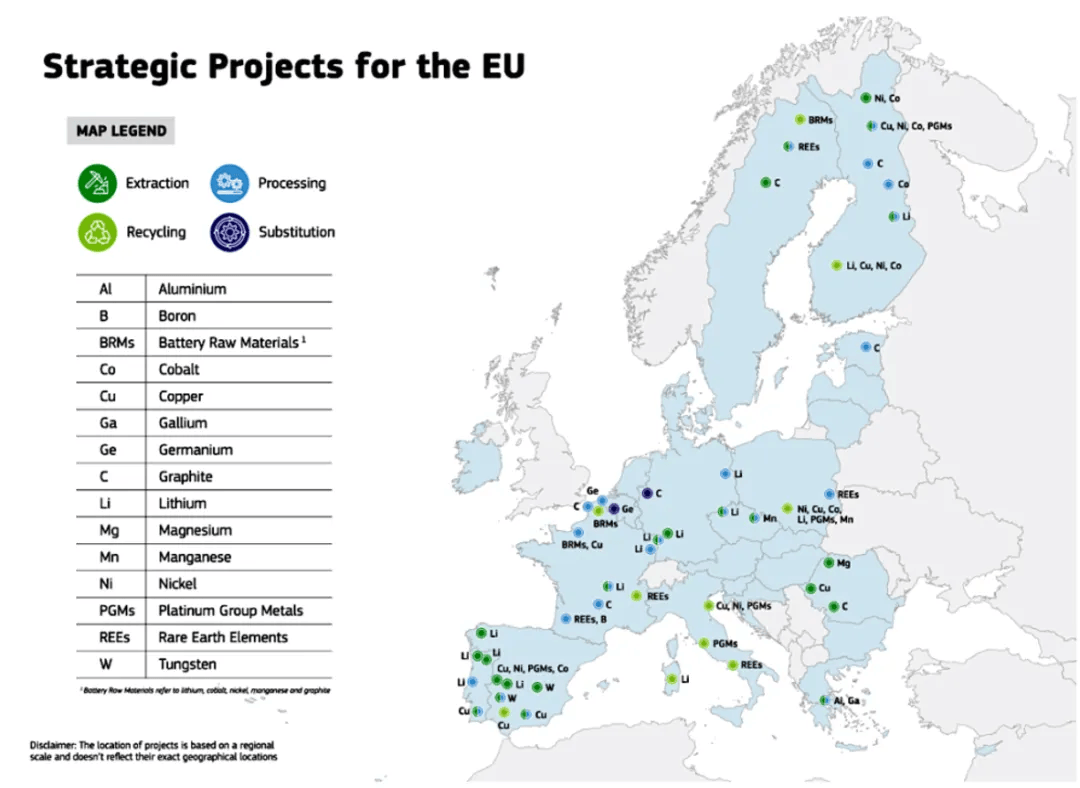
Core Insights - The strategic value of critical minerals such as lithium, cobalt, nickel, graphite, and rare earths is increasingly highlighted as essential for achieving carbon neutrality and supporting industries like electric vehicles and renewable energy [1][5]. Group 1: EU's Challenges in Critical Minerals - The EU faces a "triple dilemma" in the critical minerals sector, including high external dependency, weak processing capabilities, and an inadequate recycling system [2][3][4]. - Over 80% of lithium is sourced from Chile and Argentina, while more than 60% of cobalt comes from the Democratic Republic of Congo, and over 90% of rare earth processing relies on China [2]. Group 2: Legislative and Strategic Initiatives - The EU's Critical Raw Materials Act (CRMA), effective from May 2024, aims to enhance domestic mining and processing of critical minerals, marking a significant legislative shift [5][10]. - The first batch of 47 strategic projects, with an investment of approximately €22.5 billion, spans 13 member states and focuses on key minerals for electric vehicles and clean energy [5][20]. Group 3: International Cooperation and Supply Chain Diversification - The EU is expanding its strategic partnerships outside its borders to mitigate reliance on China, with 13 additional projects announced in June 2025 [6][21]. - The EU's strategic projects are designed to enhance supply chain security and reduce dependency on single sources, particularly from China [8][14]. Group 4: Policy Framework and Goals - The CRMA outlines a framework with specific targets for domestic mining, processing, and recycling by 2030, aiming for at least 10% of mining, 40% of processing, and 25% of recycling to be sourced locally [10][11]. - The EU aims to shift from being a passive buyer of raw materials to actively constructing its supply chain, thereby increasing its control over strategic resources [10][11]. Group 5: Geopolitical Implications and Competitive Landscape - The EU's initiatives reflect a broader geopolitical strategy to counterbalance China's dominance in the critical minerals market, particularly in the context of the U.S.-led "de-risking" agenda [14][30]. - The competition for critical minerals is intensifying, with the EU and U.S. collaborating to limit China's influence in resource-rich countries [30][39]. Group 6: Future Trends and Industry Dynamics - The EU's strategic projects are expected to reshape the global governance of critical minerals, promoting a multi-polar supply chain system that includes the EU, U.S., and Japan [28][29]. - The evolving landscape may lead to increased bargaining power for resource-rich developing countries, altering traditional supply chain dynamics [32][33].