即时零售

Search documents
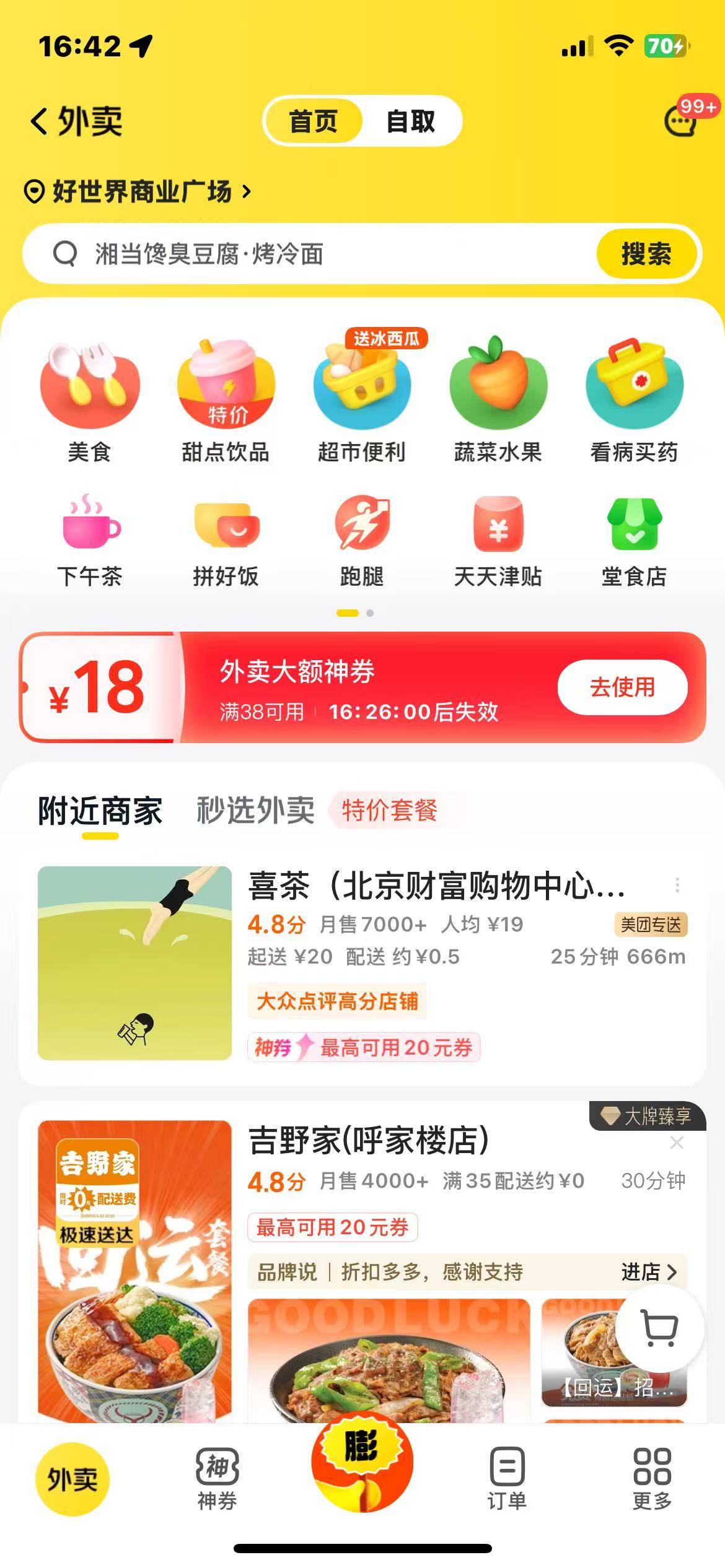
爆了!周末外卖战又开打! 大额券“满18.8减18.8”,小龙虾一口价16.18元,0元喝奶茶点到爆单,有茶饮店忙到闭店
凤凰网财经· 2025-07-12 11:16
Core Viewpoint - The article discusses the resurgence of a "takeout war" in China, highlighting significant promotional activities by major platforms like Meituan and Taobao Flash, which are offering substantial discounts and coupons to attract consumers and increase order volumes [1][29]. Group 1: Promotional Activities - On July 12, Meituan and Taobao Flash launched new promotional campaigns, including large discount coupons, leading to a surge in consumer engagement and orders [1][15]. - Consumers reported receiving various discount coupons, such as "0 yuan takeout" offers from popular beverage brands, allowing them to enjoy products at little to no cost [5][7][13]. - Taobao Flash announced a "Super Saturday" campaign, promising consumers significant savings on takeout orders every Saturday for the next 100 days [17][24]. Group 2: Market Response - The promotional activities resulted in a dramatic increase in order volumes, with reports of some stores experiencing overwhelming demand and operational challenges due to the influx of orders [21][22]. - Meituan's order volume reportedly exceeded 1.2 billion on July 5, with over 1 billion being food orders, indicating a strong market response to the promotional strategies [29]. - The competition has led to a notable increase in earnings for delivery riders, with some reporting daily earnings exceeding 1,000 yuan due to the high volume of orders [29]. Group 3: Strategic Implications - Analysts suggest that while the current subsidy war may attract users in the short term, platforms must find a balance between subsidy costs and profitability in the long run [30]. - The ongoing competition is characterized by a shift towards a more strategic approach, focusing on long-term market share rather than immediate profits [30][31]. - Major players like Meituan, Taobao, and JD are adopting distinct strategies: Meituan focuses on defending its market position, Taobao aims for aggressive market capture, and JD emphasizes quality dining experiences [31].


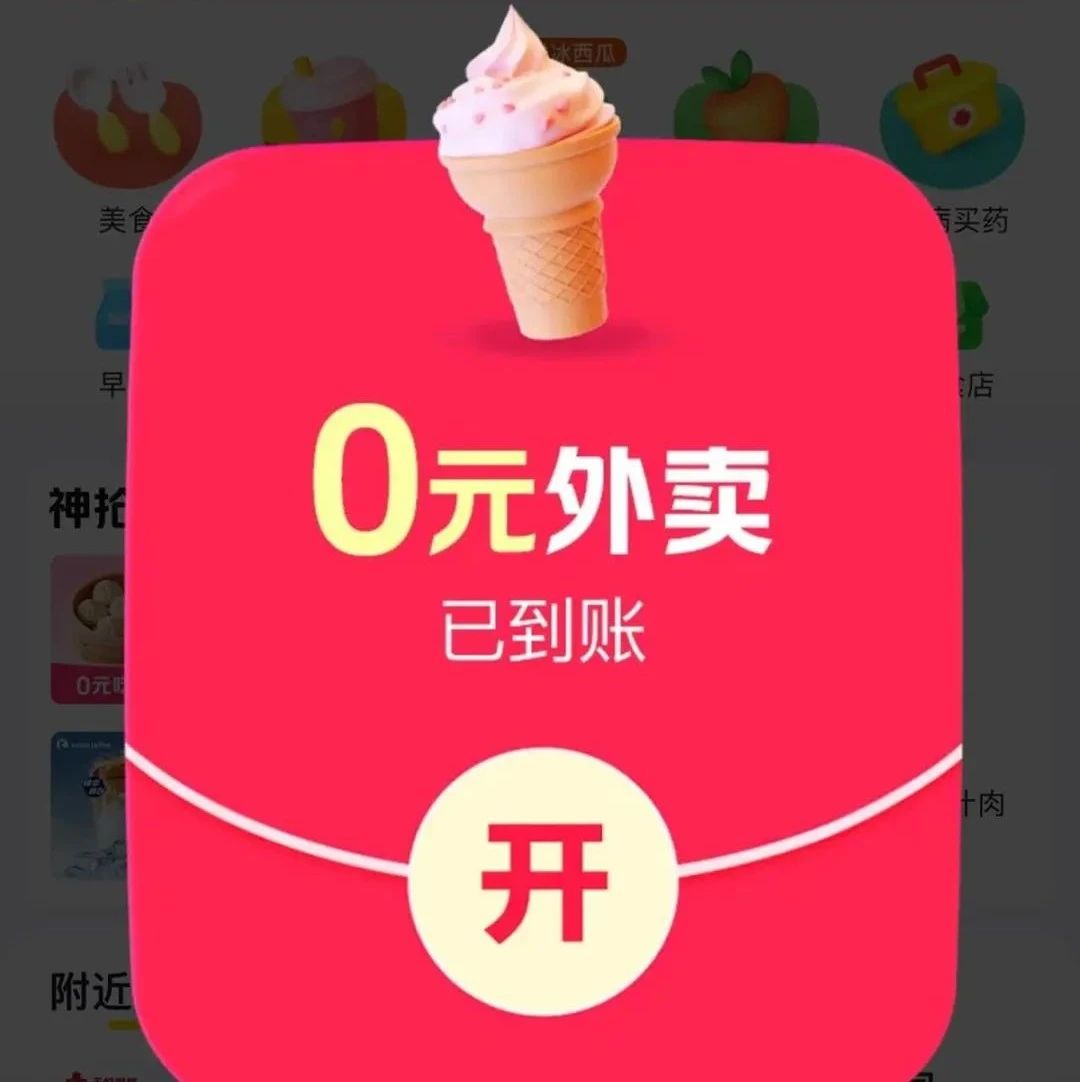
疯狂星期六,“免费奶茶”爆了!外卖战升级,摩根大通提问:值得吗?
华尔街见闻· 2025-07-12 09:03
Core Viewpoint - The article discusses the intense competition in the food delivery and instant retail market, primarily driven by Alibaba's Taobao Flash Sale, which has prompted major players like Meituan and JD to engage in aggressive subsidy wars [1][10]. Group 1: Competitive Landscape - Alibaba announced a substantial investment of 50 billion RMB for subsidies in the instant retail sector over the next 12 months, significantly escalating competition [10]. - Meituan responded with its own subsidy plans shortly after Alibaba's announcement, while JD also committed over 10 billion RMB for the same period [10]. - As of early July, Meituan's daily order volume reached a record high of 120 million, while Alibaba's daily orders surged to 80 million within two months [10]. Group 2: Financial Implications - Morgan Stanley highlighted that Alibaba's financial strength, with nearly 100 billion RMB in free cash flow and around 600 billion RMB in cash equivalents by March 2025, positions it favorably in this competitive landscape [11]. - The report suggests that the ongoing subsidy war will negatively impact the short-term profitability of all involved companies, including Alibaba, Meituan, and JD [14][18]. Group 3: Market Potential and Valuation - Morgan Stanley predicts that the Chinese instant retail market could reach a gross merchandise volume (GMV) of 4 trillion RMB by 2030, with industry profits estimated at 81 billion RMB [13]. - The report outlines two scenarios: an optimistic one where the market grows as expected, making current investments justifiable, and a pessimistic one where the market only reaches half the expected size, rendering the investments overly aggressive [15]. Group 4: Market Share Dynamics - Prior to the intensified competition, Meituan held approximately 45% of the market share, with Alibaba's Ele.me at 21% and JD at 5% [16]. - Despite the competitive pressures, Meituan is expected to maintain its market leadership, although its market share may decline due to the growth of instant retail, which is a new revenue stream for Meituan but could cannibalize traditional e-commerce for Alibaba and JD [16]. Group 5: Investment Strategy Adjustments - In light of the competitive uncertainties, Morgan Stanley has lowered its earnings forecasts for Alibaba and Meituan, adjusting their target prices accordingly [20]. - The report indicates a preference order for investment in the instant retail sector: Alibaba > Meituan > JD, reflecting the competitive advantages and financial resources of each company [14].



周末,“外卖大战”再起!
证券时报· 2025-07-12 04:50
周末,"外卖大战"再次开启。 记者在多个外卖平台看到,淘宝闪购、美团再次发放外卖大额券,有网友甚至晒出了"0元购"的咖啡订单。 在淘宝闪购平台上,记者看到,该平台派发了多张优惠券,包括"满15元减12元""满25元减14元""满38元减18.8 元"等。在使用优惠券后,多数奶茶、咖啡等饮品的价格在10元以内。 京东外卖自2025年2月上线以来,采取了一系列补贴措施,包括"0佣金"政策吸引商家入驻,以及"百亿补贴"计 划,计划一年内投入超100亿元,面向全体用户发放最高20元的补贴。此外,京东还通过与星巴克等品牌合 作,进一步提升品质外卖的吸引力。根据京东公布的数据,截至2025年6月27日,京东外卖日订单量已突破 2500万单,业务覆盖全国350个城市,超150万家品质餐饮门店入驻。 外卖大战曾引起监管等注意。今年5月,市场监管总局会同中央社会工作部、中央网信办、人力资源社会保障 部、商务部,针对当前外卖行业竞争中存在的突出问题,约谈京东、美团、饿了么等平台企业。 此次多部门联合约谈的背景之一,是京东宣布正式进军外卖市场,激化行业竞争,引发社会广泛关注。 监管部门指出,要求相关平台企业严格遵守《中华人民共和国 ...

十年过去了,为什么外卖还在大战?
Hu Xiu· 2025-07-12 01:44
Core Insights - The article discusses the resurgence of intense competition in the food delivery market in China, reminiscent of the fierce battles from a decade ago, driven by changing strategic goals among major players [4][30][54] - The focus has shifted from merely competing for market share in food delivery to controlling the broader infrastructure of instant delivery services, which encompasses a wider range of products beyond just food [25][28][56] Group 1: Historical Context - The food delivery market in China has evolved significantly over the past decade, with major players like Meituan, Ele.me, and Baidu competing aggressively for user acquisition through subsidies and promotions [2][10][19] - Initial competition was characterized by heavy spending on subsidies to attract users, with Meituan and Ele.me burning billions to establish their market presence [2][3][8] - The market saw a temporary peace as companies shifted focus towards profitability and sustainable growth, moving away from the "burn money" model [3][21] Group 2: Recent Developments - On July 5, 2025, a significant escalation occurred with Taobao Flash Sale launching a major offensive against Meituan, leading to record-high order volumes in the food delivery sector [4][6][7] - The total daily orders in the food delivery market reached a record 200 million, with Meituan reporting 120 million and Taobao Flash Sale exceeding 80 million orders on the same day [6][7] - The intense competition resulted in estimated combined losses exceeding 1 billion yuan for both companies on that day [7] Group 3: Strategic Shifts - The competition has evolved from a focus on food delivery to a broader battle for control over the instant delivery infrastructure, which includes various consumer goods [25][28][29] - Companies are now vying to establish themselves as the default delivery network for all types of products, not just food, indicating a strategic shift in the market landscape [26][28] - The change in strategic focus has led to a renewed willingness to incur losses in pursuit of long-term market dominance [30][41] Group 4: Consumer Perspective - From a consumer standpoint, the increase in subsidies and promotions has become a normalized expectation, with little awareness of the underlying competitive dynamics [43][46] - The perception of the food delivery service has shifted from a novel convenience to an expected norm, with consumers now viewing the ongoing subsidy wars as a means to benefit from lower prices [47][48] - The relationship between platforms and consumers has transformed into a transactional one, where consumers are more focused on immediate benefits rather than the broader implications of the competition [48][49]
水饮柜为何总在店铺C位
Jing Ji Ri Bao· 2025-07-11 22:24
Core Insights - The concept of "instant gratification" is a key driver for convenience stores, allowing them to maintain a competitive edge over e-commerce platforms, as consumers are willing to pay a premium for immediate access to products like bottled water [1][2] - Convenience stores benefit from high turnover rates, with products like bottled water having a turnover cycle of just 2 to 3 days, which enhances cash flow efficiency [1][3] - The psychological aspect of spending on urgent needs, as explained by the mental accounting theory, indicates that consumers categorize these expenses differently, prioritizing certainty over other considerations [1][2] Industry Dynamics - Leading beverage companies invest heavily in convenience stores by providing dedicated coolers, recognizing the unique value of the "instant gratification" experience that cannot be replicated by online platforms [2] - The rise of instant retail is prompting major e-commerce platforms to enter this space, but the unpredictability of urgent needs means that the immediate availability of convenience stores remains unmatched [2][3] - Convenience stores and vending machines have evolved into essential emergency stations for immediate needs, with water products being particularly well-suited for this market due to their high-frequency demand and strong cash turnover capabilities [3]
美股三大指数集体低开,中概股多数走低
Feng Huang Wang Cai Jing· 2025-07-11 13:43
Group 1: Company News - Kingsoft Cloud (KC.US) officially launched the Kingsoft Government AI Integrated Machine, marking a significant breakthrough in the "AI + government office" application field, providing clients in the government sector with "out-of-the-box" intelligent document writing model applications [5] - Mercedes-Benz India reported a 10% year-on-year increase in retail sales for April to June, reaching a record high of 4,238 vehicles, driven by a 20% increase in high-end vehicle sales and a 157% increase in electric vehicle sales, which now account for 8% of total sales [6] - XPeng Motors (09868/XPEV) announced the grant of 910,000 restricted stock units to 44 employees under the 2025 stock incentive plan, with no need for shareholder approval, and the granted units must comply with the terms of the incentive plan and agreements with the recipients [8] Group 2: Industry News - Alibaba has launched instant retail services such as "hourly delivery" in Australia, Brazil, the Middle East, and the UK, primarily through its cross-border e-commerce platform AliExpress, collaborating with local platforms [7]
阿里已在澳大利亚、巴西、中东、英国开展外卖等即时零售业务
news flash· 2025-07-11 11:39
Group 1 - The company has launched "hourly delivery" instant retail services in Australia, Brazil, the Middle East, and the UK, primarily through its cross-border e-commerce platform AliExpress [1] - In Australia, the company collaborates with two major Asian supermarkets, Ebest and Umall; in Brazil, it partners with local retail giant Magalu; in the Middle East, it works with local supermarket Othaim; and in the UK, it has chosen the Hungry Panda platform for cooperation [1]
锅圈(2517.HK):万店规模奠定龙头地位 爆品×会员×新渠道构建三维护城河
Ge Long Hui· 2025-07-11 11:36
Group 1 - The core viewpoint of the report is that Guoquan (02517) is positioned for sustainable growth in the "home dining" market, leveraging its extensive store network, supply chain optimization, and innovative channels to create competitive advantages [1][2] - As of the end of 2024, the company operates 10,150 stores, including 10,135 franchise stores and 15 self-operated stores, covering all 31 provinces in China, and holds a 3.0% market share in the home dining food product sector as of 2022 [1] - The market for home dining food in China is projected to grow at a CAGR of 20.7% from 2022 to 2027, reaching an estimated market size of 940 billion yuan by 2027, with significant growth opportunities in lower-tier cities where penetration rates are below 25% [1] Group 2 - The company employs a three-pronged strategy to build its competitive moat: a focus on popular products, a robust membership ecosystem, and innovative distribution channels [2] - The popular product strategy includes a 99 yuan beef tripe package expected to generate over 500 million yuan in sales in 2024, with significant exposure on Douyin reaching 6.21 billion views [2] - By the end of 2024, the company has registered 41.3 million members, a year-on-year increase of 48.2%, with prepaid card deposits amounting to 990 million yuan, reflecting a 36.6% increase [2] Group 3 - The company anticipates revenue growth from 71.83 billion yuan in 2025 to 90.80 billion yuan in 2027, with net profits projected to rise from 3.40 billion yuan to 4.63 billion yuan during the same period, corresponding to PE ratios of 25, 21, and 18 times [2]
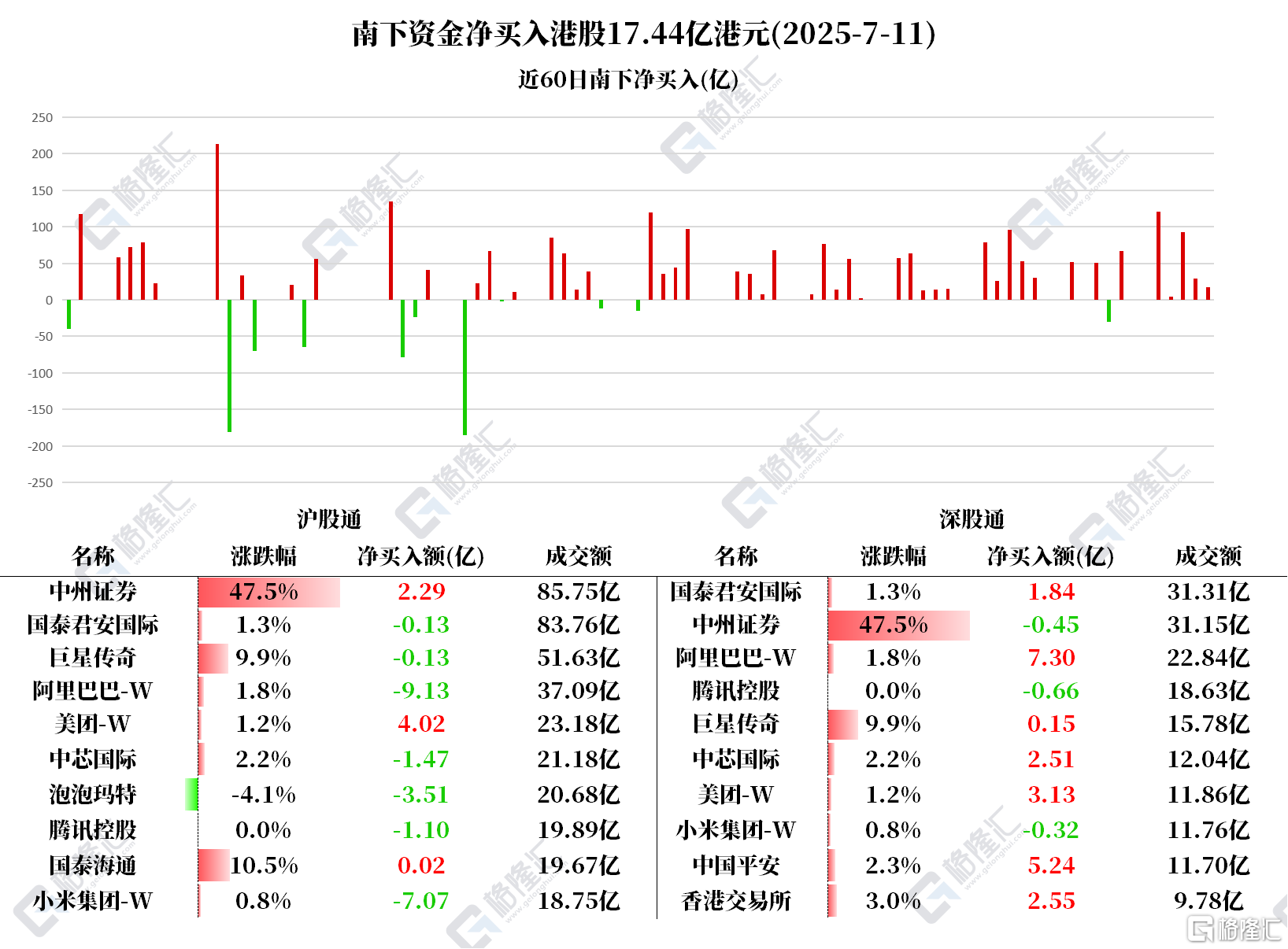
资金动向 | 北水狂买美团超7亿港元,连续16日加仓中芯国际
Ge Long Hui A P P· 2025-07-11 11:10
Group 1 - The net buying of Meituan reached HKD 715 million, while net selling of Xiaomi Group was HKD 738 million [1] - Southbound funds have continuously net bought SMIC for 16 days, totaling HKD 9.52904 billion [1] - The insurance sector, led by China Ping An, has seen a significant upward trend, with a maximum cumulative increase of 35% in H-shares since early April [5] Group 2 - Meituan has formed a strategic partnership with Sinopec Easy Joy to enhance instant retail services, aiming for a "30-minute delivery" model [5] - Guotai Junan International expects a net profit of HKD 515 million to HKD 595 million for the six months ending June 30, 2025, representing a growth of 161%-202% compared to the previous year [5] - NVIDIA plans to launch a new AI chip designed for the Chinese market, which may alleviate short-term computing power concerns but could also strengthen the logic of domestic substitution in the long term [6]

三大平台把外卖卷成红海,消费者躺赢背后藏着更大战局
Sou Hu Cai Jing· 2025-07-11 10:13
Group 1 - The core strategy for food delivery platforms remains low-price competition, with Meituan recently launching "0 Yuan Purchase" coupons, leading to a record daily order volume of over 120 million [1] - Meituan's CEO Wang Xing emphasized the commitment to winning the competition, indicating that the company is willing to invest heavily, with estimates suggesting a monthly burn rate of nearly 20 billion yuan [1] - JD.com has also made strides in the food delivery sector, achieving over 25 million daily orders within four months of launching its delivery service, supported by a "Double Hundred Plan" that allocates over 10 billion yuan to boost brand sales [6][7] Group 2 - JD.com aims to integrate its food delivery service within its overall ecosystem, enhancing synergies with existing retail operations and expanding instant delivery services for various product categories [7] - Alibaba's "Taobao Flash Purchase" initiative is designed to drive traffic to its broader instant retail business, with significant subsidies leading to substantial growth in sales for participating brands [12][13] - The competition among food delivery platforms has led to increased consumer expectations regarding price, quality, and service, resulting in lower brand loyalty as consumers switch between platforms for better deals [17]