国产替代

Search documents
“十四五”创新药上市交出惠民答卷
Xin Lang Cai Jing· 2025-12-25 01:02
Core Insights - Since the beginning of the 14th Five-Year Plan, China has approved 220 innovative drugs, which is 6.2 times the number approved during the 13th Five-Year Plan, indicating a significant increase in the vitality of the pharmaceutical industry's innovation [1] - The approval of these products has greatly met clinical treatment needs, filling gaps in various therapeutic areas and providing new hope for patients [1] - The rapid approval of numerous innovative drugs marks China's entry into a "fast lane" for innovative drug development, with an increasing number of domestic drugs successfully entering international markets [1] Innovative Drug Approval Trends - The approved innovative drugs during the 14th Five-Year Plan have shown a clear clustering effect, particularly in three main therapeutic areas: anti-tumor drugs and immune modulators, systemic anti-infectives, and gastrointestinal and metabolic drugs [2] - Over 80 anti-tumor innovative drugs have been approved, covering various solid tumors and hematological malignancies, with significant advancements in treatment options for small cell lung cancer and non-small cell lung cancer [3][4] Breakthroughs in Specific Therapeutic Areas - In breast cancer treatment, new drugs have expanded options for hormone receptor-positive and HER2-negative breast cancer, while also introducing targeted therapies for PIK3CA-mutated breast cancer and triple-negative breast cancer [4] - The rapid development of CAR-T therapies has provided more treatment options for hematological malignancies, with several CAR-T cell therapies approved in the past five years [4] - In the field of immune modulators, innovative drugs have significantly advanced treatment options for systemic lupus erythematosus, graft-versus-host disease, and alopecia areata, while also making previously expensive therapies more accessible [5] Systemic Anti-Infectives - More than 40 systemic anti-infective drugs have been approved, including vaccines, allergens, antibiotics, antifungals, and antiviral drugs [6] - The approval of new antibiotics addresses the challenge of highly resistant bacteria, while multiple new drugs for HIV, hepatitis B, and influenza have also been introduced [7] Gastrointestinal and Metabolic Drugs - The newly approved gastrointestinal and metabolic drugs primarily include antidiabetic medications, with a focus on DPP-4 inhibitors, SGLT-2 inhibitors, and GLP-1 receptor agonists [8] - The approval of innovative drugs with new mechanisms, such as glucose kinase activators, marks a significant advancement in diabetes treatment [8] Progress in Traditional Chinese Medicine - During the 14th Five-Year Plan, 28 innovative traditional Chinese medicine products were approved, demonstrating significant progress in the modernization of traditional medicine [9] - These products have undergone large-scale clinical trials, confirming their safety and efficacy across various therapeutic areas [9] Systemic Changes in Pharmaceutical Innovation - The pharmaceutical innovation ecosystem in China has undergone systemic changes, transitioning from a focus on generics to innovation-driven development, supported by reforms in review and approval systems, dynamic negotiations for medical insurance, and centralized procurement policies [10] - China's share of global innovative drug R&D has increased from 4% in 2014 to 30% in 2024, positioning it as the second-largest new drug development country after the United States [10][11] - The industry is expected to continue evolving, with a focus on original innovation and advancements in cutting-edge fields such as cell and gene therapy, bispecific antibodies, and AI drug development [10][11]
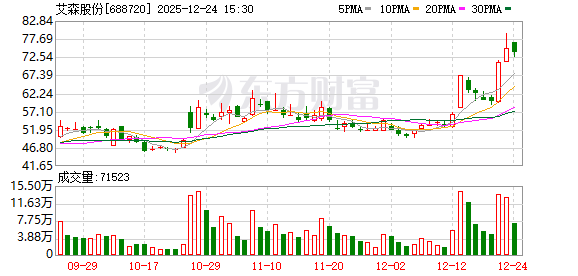
艾森股份:做半导体材料“长跑者” 立十年十倍增长雄心
Shang Hai Zheng Quan Bao· 2025-12-24 20:10
Core Insights - The company emphasizes a long-term development strategy, focusing on steady progress rather than short-term market fluctuations [2][9] - The semiconductor materials industry requires strategic determination and deep technical accumulation over decades, rather than being driven by temporary market trends [2][9] Company Strategy - The company has set an ambitious growth target of "ten times in ten years," driven by the vast growth potential within the domestic semiconductor industry [4] - The company believes that the push for self-sufficiency in the supply chain will lead to a rapid growth phase in the next five to ten years, supported by ongoing breakthroughs in key technologies [4] - The company has maintained a stable median growth rate of around 20% despite fluctuations in recent years [4] Location and Talent - The company has strategically chosen to establish its operations in Kunshan due to its proximity to a dense semiconductor customer base and manageable operational costs [4] - Kunshan's appeal lies in its ability to attract and retain talent, providing a balance between operational costs and quality of life for employees [4] Business Segments - The company has evolved from a follower to a leader in the semiconductor electroplating sector, achieving international standards in product performance [6] - The company has expanded into the photoresist market, becoming a key player in advanced packaging, with a goal to lead the industry [6][8] - Currently, electroplating accounts for 70% of total revenue, while photoresist contributes approximately 25%, with expectations for balanced growth in the future [6] Competitive Position - The company is one of the few in China capable of providing a complete material solution for advanced packaging, integrating both electroplating and photoresist [7] - The company has achieved significant differentiation in the market, particularly in the photoresist sector, where it competes effectively with international giants [8] Research and Development - The company invests heavily in R&D, with nearly 40% of its workforce dedicated to this area, which is typical for semiconductor material firms [8] - The company has filled domestic technological gaps, such as in the PSPI (photo-sensitive polyimide) sector, establishing a first-mover advantage [9]

大摩报告点燃半导体热情,半导体设备ETF(561980)盘中拉升,中信证券:看好设备投资机遇
Jin Rong Jie· 2025-12-24 17:33
Group 1 - The semiconductor industry is experiencing a resurgence, particularly in the upstream equipment sector, with notable increases in stock prices of key companies [1] - Morgan Stanley's recent report highlights the sustained "long-term bull market logic" for semiconductor stocks, driven by unprecedented AI infrastructure demand and a recovery in traditional chip demand [1] - The consensus in the industry emphasizes that despite the competitive landscape in AI chip design, the focus will ultimately return to manufacturing capabilities, which are reliant on advanced semiconductor equipment [1] Group 2 - CITIC Securities indicates that since September 2025, the stock prices of leading semiconductor equipment companies have surged due to investments from downstream clients and price increases from storage manufacturers [2] - The global semiconductor wafer fabrication equipment (WFE) market is expected to maintain high single-digit percentage growth year-on-year in 2025 and 2026, with an anticipated increase in the share of storage [2] - The semiconductor equipment ETF (561980) has a high concentration of leading companies in the sector, with over 90% of its index comprising semiconductor equipment, materials, and design segments, indicating strong industry representation and resilience [2]



ETF盘中资讯|豆包大模型1.8正式发布+字节大会召开!字节产业链含量33%的科创人工智能ETF(589520)盘中摸高0.7%
Jin Rong Jie· 2025-12-24 17:33
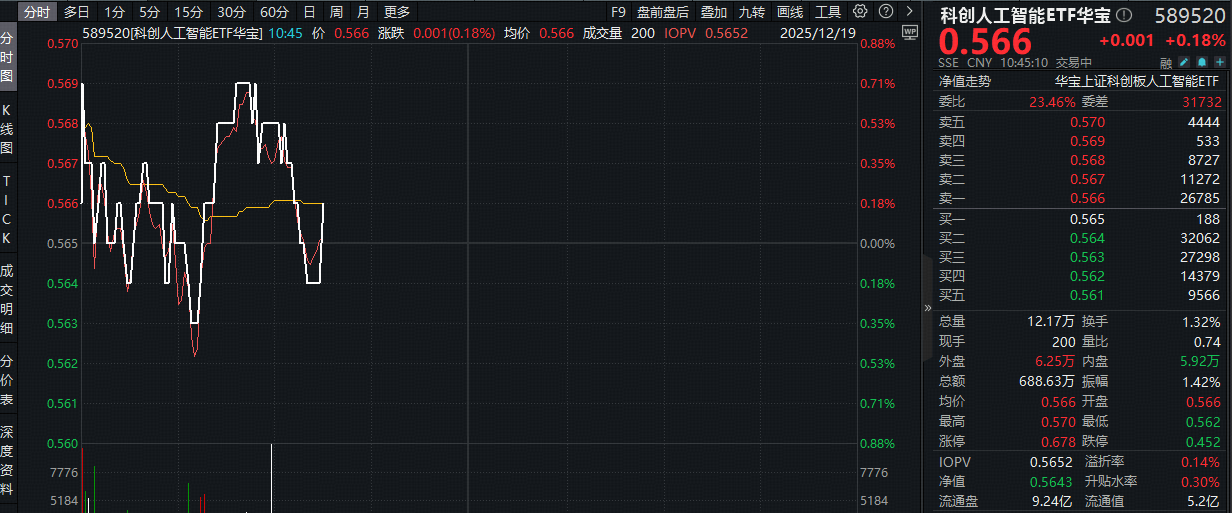
Core Insights - The article discusses the performance and developments related to the AI sector, particularly focusing on the ByteDance industry chain and its associated ETF, which has shown positive market movements and significant growth in AI model usage [1][3]. Group 1: Market Performance - The AI-focused ETF (589520) experienced fluctuations, with a peak increase of 0.71% and a current rise of 0.18% [1]. - Key stocks within the ETF, such as AsiaInfo Security and Yuke Technology, saw gains exceeding 2%, while several others, including Amlogic and Stone Technology, rose over 1% [1]. Group 2: AI Model Developments - The release of the Doubao model 1.8 on December 18 introduced enhanced agent capabilities, upgraded multimodal understanding, and improved context management [3]. - The daily usage of the Doubao model has surpassed 50 trillion calls as of December, marking a tenfold increase compared to the previous year and a 417-fold increase since its initial launch [3]. Group 3: Strategic Importance of AI - The current period is described as a "golden window" for the AI sector, driven by policy support and a focus on technological self-reliance as outlined in the new five-year plan [5]. - As of Q3 2025, 20 out of 30 companies in the AI ETF reported profitability, with 22 showing year-on-year net profit growth, indicating strong industry performance [5]. - The geopolitical landscape emphasizes the need for domestic AI solutions, reinforcing the long-term viability of AI and domestic alternatives [5]. Group 4: Investment Opportunities - There is a significant demand for domestic AI applications to catch up with international counterparts, suggesting a potential for price corrections and increased investment attractiveness [5]. - The ETF and its associated funds are heavily invested in the domestic AI industry, with over 70% of the top ten holdings focused on this sector, particularly in semiconductors [6].
年内私募机构豪掷59.8亿元参与A股定增
Zheng Quan Ri Bao· 2025-12-24 16:09
Core Insights - Private equity firms have shown increasing enthusiasm for participating in A-share market private placements, achieving substantial investment returns in 2023 [1] - The total amount allocated by private equity products to private placements reached 5.98 billion yuan, a 23.48% increase from 4.843 billion yuan in the same period last year [1] - The average floating profit from these investments is approximately 2.724 billion yuan, indicating strong investment yield capabilities [1] Group 1: Market Dynamics - The attractiveness of private placements for private equity firms has been enhanced by the stabilization of the A-share market and supportive policies [1] - Factors contributing to this interest include discounted issuance prices, improved refinancing policies, and diversified exit channels [1] - Professional stock-picking abilities and bargaining advantages allow private equity firms to capture excess returns in structural market conditions [1] Group 2: Sector Performance - The electronic industry is the most favored sector, with private equity firms participating in 10 electronic stocks, totaling 2.032 billion yuan, which accounts for 33.98% of the total allocation [2] - Other sectors like power equipment and light industry manufacturing also saw significant participation [2] - The light industry and non-ferrous metals sectors exhibited overall floating profit ratios exceeding 100% [2] Group 3: Individual Stock Highlights - Over 90% of the private placements participated in by private equity firms are currently in a floating profit state [1] - Demingli (001309) stands out with a floating profit ratio of 274.19%, contributing approximately 441 million yuan in profits, making it the top performer for the year [1] - Other notable stocks include Zhongtung High-tech (000657) and Jinghua New Materials (603683), both showing floating profit ratios above 190% [1]
1300+份新材料报告下载:做新材料领域的「攻坚者」
材料汇· 2025-12-24 16:01
点击 最 下方 关注《材料汇》 , 点击"❤"和" "并分享 添加 小编微信 ,寻 志同道合 的你 正文 材料汇文章标签汇总 如何下载(加入知识星球-材料汇) 材料汇部分文章 未来40年材料强国革命:这13大领域将重塑人类文明! 国产替代爆发!14种卡脖子的先进封装材料,百亿赛道谁将突围? | 先进封装材料 | 全球市场规模 | 中国市场规模 | 国外企业 | 国内企业 | | --- | --- | --- | --- | --- | | PSPI | | | 微系统、AZ电子材料 | 鼎龙股份、国风新材、三月科 | | | | 5.28亿美元(23年 7.12亿元(21 | Fujifilm, Toray, HD | 技、八亿时空、强力新材、瑞 | | | 全球) . 预计 | 年中国)、预 | | 华泰、诚志殷竹、艾森股份、 | | | 2028年将达到 | 汁到2025年增 | | 奥采德:波米科技、明士新材 | | | 20.32亿美元 | 长至9.67亿元 | 、旭化成 | 、东阳华芯、上海玟昕、理硕 | | | | | | 科技等 | | 光敏绝缘 | 2020年:0.1亿 | | | | | ...
【公告臻选】航空航天+军工国防+隐身材料龙头!公司签订2.5亿元航空器机身用特种功能材料产品合同
第一财经· 2025-12-24 14:57
Core Insights - The article emphasizes the importance of efficiently navigating through a large volume of announcements to identify key investment opportunities and risks in the market [1] Group 1: Selected Highlights - On December 23, the article highlighted a significant overseas order worth 2.5 billion yuan for Baoshan Iron & Steel, which led to a 3.53% increase in its stock price on December 24 [2] - The article also noted that Jiufeng Energy signed an agreement with China Long March Rocket Co., which initially resulted in a less than 2% increase in stock price but later surged to a limit-up by the end of the trading day [2] Group 2: Today's Overview - A company in the aerospace and defense sector signed a contract for special functional materials for aircraft bodies worth 250 million yuan [3] - A company involved in power semiconductors and IGBT technology has undergone a change in actual control to the Hubei State-owned Assets Supervision and Administration Commission [3] - A company specializing in autonomous driving and automotive electronics has achieved regular L4-level autonomous driving operations within a closed park [3]
壁仞科技港股IPO,与摩尔线程、沐曦股份齐名的国产GPU四小龙
Sou Hu Cai Jing· 2025-12-24 14:39
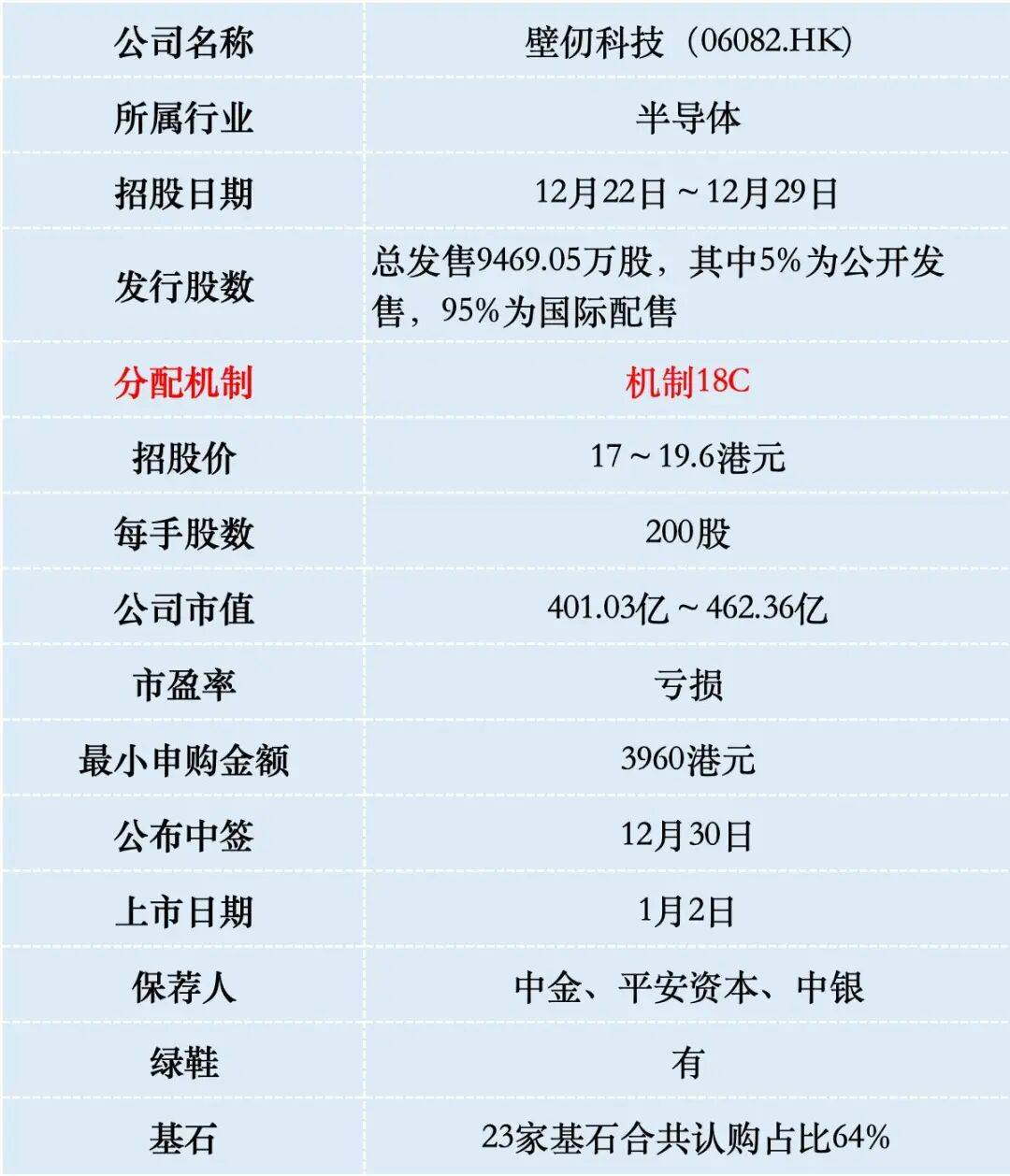
Core Viewpoint - The Hong Kong Stock Exchange (HKEX) has seen a significant increase in IPO activity, with 25 companies successfully listing in December alone, bringing the total for the year to 114, the highest in five years. Wallran Technology is set to be the first stock listed in 2026, with its IPO scheduled for January 2, 2024 [1]. IPO Information - Wallran Technology (06082.HK) is set to issue 94.69 million shares, with a price range of HKD 17 to 19.6. The company aims to raise approximately HKD 48.6 billion, with cornerstone investors committing around HKD 29 billion, representing 64% of the total offering [1][9]. - The IPO will have a public offering of 5% and an international placement of 95%, with a minimum subscription amount of HKD 3,960 [1]. Company Overview - Founded in 2019, Wallran Technology focuses on the design and development of GPU chips and intelligent computing solutions for AI applications [1]. - The company operates on a fabless model, outsourcing manufacturing and assembly to third-party contractors [2]. Financial Performance - Wallran Technology's revenue has shown significant growth, from HKD 499,000 in 2022 to HKD 62.03 million in 2023, and projected to reach HKD 336.8 million in 2024. However, the company has incurred substantial losses, totaling over HKD 6.3 billion from 2022 to mid-2025 [4][5]. - The company’s gross margin stands at 31.9%, which is lower than its competitors, indicating challenges in profitability despite revenue growth [5]. Market Position and Potential - In the Chinese smart computing chip market, Wallran Technology holds a mere 0.16% market share, with significant growth potential as the market is expected to grow from USD 30.1 billion in 2024 to USD 201.2 billion by 2029, at a CAGR of 46.3% [7][8]. - The company has established strategic partnerships in high-demand sectors such as AI data centers, telecommunications, and fintech, with contracts valued at approximately HKD 1.241 billion signed by December 2025 [3][8]. Competitive Landscape - Wallran Technology faces intense competition, particularly from Nvidia and Huawei, which dominate the market with a combined share of 94.4%. In the GPGPU segment, Nvidia holds a staggering 97.6% market share [7]. - Despite its small market share, Wallran Technology's unique GPGPU architecture and comprehensive software capabilities provide it with a competitive edge [6]. Investment Sentiment - The strong participation of cornerstone investors in Wallran Technology's IPO reflects confidence in its future growth prospects, which may stabilize its stock price post-listing [9].
2026年度策略:先抑后扬启动周期配置,优选成长拥抱新赛道
GOLDEN SUN SECURITIES· 2025-12-24 14:18
Group 1: Livestock Industry - The pig industry is currently in a phase of deep losses, with supply contraction expected to continue into the first half of 2026, leading to a significant reduction in production capacity. The average pig price for 2025 is projected to be below the cost line, with quarterly estimates of 15.5 CNY/kg, 13.5 CNY/kg, 16.4 CNY/kg, and 17.7 CNY/kg, resulting in an annual average of approximately 13.4 CNY/kg [11][25][26] - The white chicken market is experiencing a cautious outlook, with a projected supply growth of less than 5% for 2026. The decline in the sales of commodity broiler chicks indicates a more conservative price expectation within the industry [30][35] - The yellow chicken sector remains stable, with production capacity not significantly affected. The prices are expected to follow trends in other protein sources, with a focus on seasonal price increases [39] - The beef market is anticipated to see a price increase due to a clear reduction in both domestic and international supply. The wholesale price of beef has been rising, reaching 66.21 CNY/kg in December, reflecting a year-on-year increase of 9.1% [42][70] Group 2: Agricultural Inputs and Other Sectors - The feed industry is showing signs of recovery, with a 6.6% year-on-year increase in feed production for the first three quarters of 2025, indicating improved demand from the livestock sector [71][76] - The edible mushroom sector is witnessing a rebound, particularly with the reversal of the predicament faced by enoki mushrooms and the potential growth of new products like Cordyceps [3][80] - The pet industry continues to thrive, with a notable trend towards high-end domestic products, as evidenced by the performance of brands like Guibao Pet and Zhongchong Co. [4][63] - The natural sweetener market is expected to grow as consumer awareness of sugar reduction increases, with companies like Bailong Chuangyuan and Baolingbao positioned to benefit from this trend [4][71]


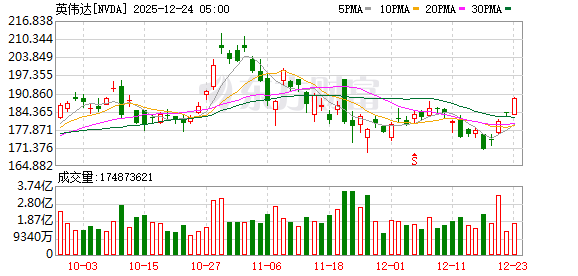
英伟达H200重返中国:精心计算的“次优解”博弈
Zhong Guo Jing Ying Bao· 2025-12-24 13:25
Core Insights - Nvidia plans to deliver AI chip H200 to Chinese customers by mid-February 2026, marking its first official permission to supply high-performance AI products to approved clients in China since the U.S. tightened export controls in October 2023 [2][3] - The H200 chip, which offers a performance increase of 6.7 times compared to the previous H20 model, is seen as a strategic compromise in the ongoing U.S.-China tech rivalry, providing a temporary boost to Nvidia's performance while also serving as a catalyst for China's domestic chip innovation [3][5] Nvidia's Market Strategy Evolution - Over the past three years, Nvidia's supply strategy for the Chinese market has gradually retreated, starting with the ban on A100/H100 exports in September 2022, followed by the introduction of lower-performance models like A800/H800 and H20, which faced criticism for their limited capabilities [4] - The introduction of the H200 chip is viewed as a nuanced move to fill a market gap while adhering to U.S. government restrictions on more advanced chips like Blackwell and Rubin [5][6] Implications for the Industry - The limited return of the H200 chip is expected to have significant short-term impacts on Chinese GPU and chip manufacturers, pushing them towards innovation and domestic alternatives [6][7] - Companies like Baidu and Zhipu AI are already adopting a mixed training model using both Nvidia and domestic chips, indicating a shift in strategy to mitigate reliance on foreign technology [6][7] Nvidia's Balancing Act - Nvidia's actions reflect a balancing act between maintaining revenue from the Chinese market, which accounted for $5.4 billion in Q3 2025, and navigating geopolitical risks [7] - The H200's return is seen as a strategic signal that highlights the need for China to develop its own technology solutions rather than relying on external sources [6][7] Recommendations for Chinese Enterprises - Chinese companies are advised to adhere strictly to national security reviews when procuring H200 chips and to diversify their technology sources to avoid over-reliance on a single supplier [8] - There is a call for increased investment in software ecosystems and the formation of domestic alliances to enhance bargaining power and share technological advancements [8]