
数字化转型

Search documents
年内近120家券商营业部被裁撤
21世纪经济报道· 2025-11-12 13:40
Core Viewpoint - The article highlights the significant growth in the brokerage business of Chinese securities firms in the third quarter, driven by a transformation towards wealth management, despite a simultaneous reduction in physical branch networks [1][2]. Group 1: Financial Performance - In the first three quarters, 42 A-share listed securities firms achieved a total revenue of 419.56 billion yuan and a net profit of 169.05 billion yuan, with a net profit growth rate exceeding 60% [1]. - Brokerage business net income reached 111.78 billion yuan, accounting for over 25% of total revenue, marking a year-on-year increase of 74.64% [1]. Group 2: Branch Network Changes - Over 25 securities firms have closed nearly 120 branches in the first three quarters, indicating a trend of significant downsizing in physical outlets [2][7]. - Major firms like Guosen Securities have closed 12 branches in a single move, reflecting a shift in strategy towards optimizing branch layouts and enhancing wealth management capabilities [7]. Group 3: Brokerage Business Dynamics - Leading firms such as CITIC Securities and Guotai Junan both surpassed 10 billion yuan in brokerage income, while several smaller firms reported substantial growth rates exceeding 80% [3]. - The integration of merged firms has led to remarkable growth rates, with Guolian Minsheng Securities seeing a 293.05% increase in brokerage income [3]. Group 4: Revenue Structure - Smaller firms rely more heavily on brokerage income, with some firms like Huayin Securities and Huaxi Securities having over 40% of their revenue from brokerage fees, compared to less than 20% for top firms [4]. Group 5: Digital Transformation - The shift towards digital channels and AI integration is becoming a focal point for many securities firms, with terms like "digital transformation" and "intelligent empowerment" frequently mentioned in earnings calls [10][11]. - Firms are moving from traditional customer acquisition strategies to a more integrated online-offline approach, enhancing customer engagement through digital platforms [12]. Group 6: AI Integration in Wealth Management - Nearly 10 firms have introduced AI features in their apps, aiming to enhance user experience and service delivery [14]. - The role of AI is evolving from standard tools to personalized advisory services, with firms like Guotai Junan launching AI-driven applications to support investment decisions [15][16].







【百强透视】配售筹资5865万港元!江苏宏信股价大涨逾62%
Sou Hu Cai Jing· 2025-11-12 13:11
Core Viewpoint - Jiangsu Hongxin (02625.HK) announced a discounted placement plan, raising approximately HKD 58.65 million despite the typical short-term negative perception of such announcements, leading to a significant stock price increase of 62.91% on November 12, 2025 [2][8]. Group 1: Placement Details - The company plans to issue 21.42 million new H-shares at a price of HKD 2.90 per share, representing a 13.95% discount to the closing price of HKD 3.37 on the placement date [5]. - The total expected fundraising is approximately HKD 62.13 million, with net proceeds estimated at HKD 58.65 million [5]. Group 2: Fund Utilization - The funds raised will be directed towards investment in Haike Hongxin Digital Technology (Jiangsu) Co., Ltd., focusing on digital technology services including AI, smart robotics, software and blockchain solutions, data processing, and e-commerce [6]. Group 3: Financial Performance - For the first half of 2025, Jiangsu Hongxin reported revenue of CNY 771 million, a year-on-year increase of 16.22%, while profit decreased by 26.6% to CNY 13.5 million due to listing expenses [7]. - The wholesale revenue grew by 24.1% to CNY 441 million, retail general sales remained stable at CNY 262 million, retail bulk sales surged by 104% to CNY 33.9 million, and meal supply revenue increased by 409.8% to CNY 13.9 million [7]. Group 4: Strategic Outlook - The investment in digital technology aims to optimize supply chain management and enhance store operational efficiency, aligning with the retail industry's trend towards digital transformation [7]. - If successful, Jiangsu Hongxin could achieve a significant upgrade in its traditional retail operations, potentially breaking regional limitations and enhancing growth prospects [7]. Group 5: Market Recognition - Jiangsu Hongxin is currently a candidate for the 12th Hong Kong Stock 100 Strong selection, which aims to identify quality companies in line with industry changes [9]. - The company’s solid performance and clear transformation strategy may position it favorably in this prestigious evaluation [10].

南驰集团曾祥佳:重塑未来城市的“价值创造者”
财富FORTUNE· 2025-11-12 13:04
Core Viewpoint - The article discusses the transformation of the Chinese real estate market, highlighting the shift from a booming "golden era" to a period of deep adjustment characterized by "total contraction, structural differentiation, and value reconstruction" [1] Group 1: Strategic Evolution of Nanch Group - Nanch Group has undergone three clear strategic transitions since its establishment in 1995, evolving from "building houses" to "building communities" around 2015, focusing on quality, environment, and lifestyle [4] - In 2017, Nanch transitioned to a "dual-driven" model combining residential and commercial operations, establishing self-operated commercial properties to create stable cash flow [5] - The latest transformation involves a shift towards "new operations" and "new models," emphasizing digital transformation and industrial diversification [5] Group 2: Integration of "Internet+" in Business - Nanch Group has successfully implemented "Internet+" by creating a new media industrial internet platform that digitizes the entire transaction process, enhancing operational efficiency [7] - The live-streaming sales at Huayin International generated a total GMV of 240 million yuan, with a peak hourly GMV of 26.18 million yuan, showcasing the effectiveness of this strategy [7] - The data generated from transactions has led to the creation of "explosive product trend reports," which empower merchants and enhance the overall value of the commercial ecosystem [7] Group 3: Corporate Social Responsibility - Nanch Group redefines corporate social responsibility as a core component of its strategy, focusing on creating economic, environmental, and social value [10] - The company positions itself as an "environmental co-builder," integrating green low-carbon concepts throughout the project lifecycle, and as a "community empowerer" to enhance social capital [10] - Nanch emphasizes that true corporate value lies not only in economic returns but also in contributions to society and the quality of life for residents [10] Group 4: Leadership Philosophy and Organizational Culture - The leadership philosophy of CEO Zeng Xiangjia emphasizes long-termism, encouraging teams to focus on the value created for cities over time [15] - Nanch Group fosters a culture of innovation and risk-taking, viewing failures as valuable learning experiences [15] - The company has adopted an agile organizational structure and diversified incentive mechanisms to empower frontline business units and transform employees into partners [16] Group 5: Vision for Future Urban Living - Nanch Group aims to become a "shaper of future urban living," focusing on enhancing product quality and operational resilience through smart and green technologies [18] - The company plans to deepen organizational transformation and digitalization to create a more agile platform organization [20] - Nanch Group's commitment to innovation in green buildings, smart communities, and urban renewal reflects its proactive approach to addressing societal needs while generating new business value [20]

年内已有近120家券商营业部被裁撤
2 1 Shi Ji Jing Ji Bao Dao· 2025-11-12 12:56
Core Insights - The recent quarterly reports indicate a significant growth in the brokerage business revenue of Chinese securities firms, with a total revenue of 4,195.61 billion yuan and a net profit of 1,690.49 billion yuan for the first three quarters, marking a net profit increase of over 60% [1] - A transformation towards wealth management is accelerating, characterized by a reduction in physical branch offices and an increase in online channel development and AI integration [2] Financial Performance - In the first three quarters, 42 listed securities firms reported a combined brokerage fee income of 1,117.77 billion yuan, accounting for over 25% of total revenue, with a year-on-year increase of 74.64% [1] - Leading firms such as CITIC Securities and Guotai Junan both surpassed 10 billion yuan in brokerage fee income, while 17 firms reported less than 1 billion yuan [3] Business Transformation - The wealth management transformation is marked by a significant reduction in physical branch offices, with over 25 firms closing nearly 120 branches in the first three quarters [5] - The shift from traditional physical branches to digital channels is driven by the need for cost efficiency and improved customer acquisition [6] Digital Transformation - The industry is moving towards a digital transformation, with keywords like "digital transformation" and "intelligent empowerment" frequently mentioned in quarterly performance meetings [7] - Firms are focusing on building integrated online and offline customer acquisition systems, with significant growth in active users of securities apps [8] AI Integration - Nearly 10 firms have announced the deployment or update of AI-related features in their apps, enhancing service models and enabling a shift towards personalized investment advisory [9] - The introduction of AI functionalities aims to transform service roles from standardized tools to personalized advisors, covering the entire wealth management process [10][11] Service Model Evolution - The service chain is evolving from transaction execution to comprehensive asset allocation, with firms integrating AI to create a complete wealth management solution [11] - The focus is on enhancing the efficiency of investment advisors through AI tools, creating a dual-driven service system of "professional + intelligent" [12]
36氪冯大刚对话博彦科技创始人王斌:全球化、「田忌赛马」与AI破局
3 6 Ke· 2025-11-12 12:40
Core Insights - The article discusses the strategic dilemma faced by IT service companies in China, particularly focusing on 博彦科技 (Boyan Technology), which is transitioning from a scale-driven approach to a strength-driven model in response to the evolving market dynamics influenced by generative AI and geopolitical factors [1][5]. Company Background - 博彦科技 was founded in 1995 and quickly gained prominence by securing significant contracts, such as localizing Microsoft Windows 95, leveraging scarce technical skills [2]. - The company has grown to over 30,000 employees, but its founder, 王斌 (Wang Bin), acknowledges the challenges of maintaining profitability in a highly competitive and fragmented industry [2][3]. Industry Challenges - The IT service industry in China is characterized by low profit margins, with companies often forced to compete on price, leading to a "low-end" service model [3]. - Wang Bin categorizes IT service players into product companies, which tend to consolidate, and service companies, which remain more fragmented and client-focused [2]. Strategic Shift - 博彦科技 is redefining its positioning as a global provider of consulting, industry solutions, and digital technology services, moving from a reactive to a proactive approach in client engagement [5][6]. - The company aims to transition from providing manpower to delivering value-added consulting services, reflecting a significant shift in its operational model [6]. Globalization Strategy - Wang Bin prefers the term "globalization" over "going abroad," emphasizing the company's historical role in helping multinational corporations enter the Chinese market [7]. - 博彦科技 plans to target Southeast Asia and "Belt and Road" markets, where demand for localized consulting and risk management services is growing, while competing against larger Indian IT firms [7][8]. AI and Talent Evolution - The company recognizes the importance of AI as a foundational technology for achieving its strategic goals, with a focus on evolving its workforce to include more innovative talent [9][10]. - Wang Bin highlights the need for a balance between traditional execution-focused employees and innovative thinkers to adapt to the AI-driven landscape [9]. Long-term Vision - The founder expresses a pragmatic belief in the long-term potential of the company, emphasizing the importance of sustainability and adaptability in the face of industry changes [11].


重提 信贷,北京农商行寻求资产结构“再平衡”
Hua Er Jie Jian Wen· 2025-11-12 11:08
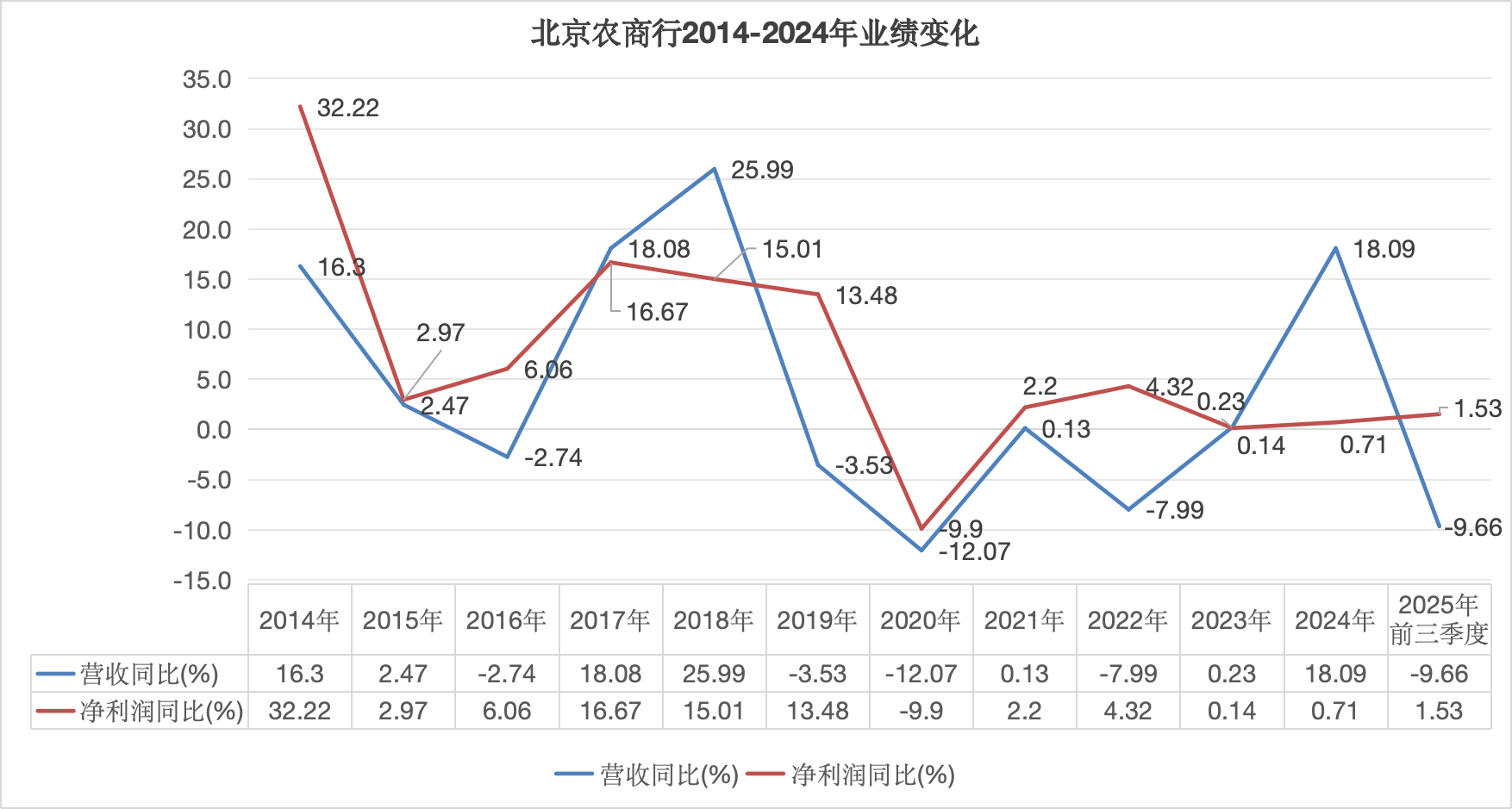
从更长时间回溯,该行近5年的利润增速始终呈现出低位波动,有小幅上升趋势; 但营收增速波动幅度极大,2022年至2025年前三季度增幅分别为-7.99%、0.23%、18.09%、-9.66%。 多数商业银行在信贷"主战场"拼杀时,北京农商行曾选择过一条另类路径——用金融投资与同业资产,撑起万亿资产规模的半壁江山。 今年前三季度,北京农商行实现营收、净利119.26亿元、59.66亿元,同比增幅为-9.66%、1.53%。 "过山车"式的大起大落源于北京农商行独特的资产结构: 截至2024年末,该行金融投资、贷款和垫款净额分别为4912.67亿元、4802.59亿元,投资业务规模已超越作为商业银行传统主业的信贷。 这一选择曾帮助该行在2024年债牛中实现18%的营收猛增,也使得其在今年的债市震荡中深跌9.66%。 信风注意到,随着如今债市调整、区域竞争加剧,这位曾经的农信改制"领头羊"似乎又希望重拾信贷作为业绩支点。 投资、同业"撑起"资产端 不同于其他以放贷为核心的农商行,北京农商行的信贷业务并不强势: 2024年该行贷款、金融投资、同业资产(存放同业、拆出资金、买入返售金融资产)占总资产比重分别为39.08 ...
广州港业绩会:当前处于码头能力提升阶段
Zheng Quan Shi Bao Wang· 2025-11-12 10:57
Core Insights - Guangzhou Port reported a revenue of approximately 11.163 billion yuan for the first three quarters of 2025, representing a year-on-year increase of 11.06% [1] - The net profit attributable to shareholders for the same period was approximately 748 million yuan, showing a year-on-year decline of 9.20% [1] - In Q3 2025, the company achieved a revenue of about 4.253 billion yuan, with a year-on-year growth of 31.44%, while the net profit attributable to shareholders was approximately 196 million yuan, down 9.41% year-on-year [1] Financial Performance - The company’s gross margin has decreased year-on-year, attributed to the launch of new terminal projects, increased asset depreciation, and financial costs [2] - The gross margin for handling and related businesses is higher than that of logistics and port auxiliary services, leading to a strategic focus on enhancing intermodal transport and comprehensive logistics services [2] - Operating cash flow for the first three quarters was 2.149 billion yuan, a year-on-year decrease of 20.73%, primarily due to the expansion of operational activities and changes in the collection cycle [2] Strategic Initiatives - The company is committed to a digital transformation strategy, focusing on innovation-driven development to enhance operational efficiency and management levels [3] - The South Sand Phase IV fully automated terminal is highlighted as a representative of the new generation of intelligent ports, with container throughput steadily increasing year by year [3] - The company emphasizes the importance of product and service quality, strengthening supply chain security management to ensure efficient material circulation [3]

2025民营制造业企业高质量发展交流活动在德州举办
Sou Hu Cai Jing· 2025-11-12 10:46
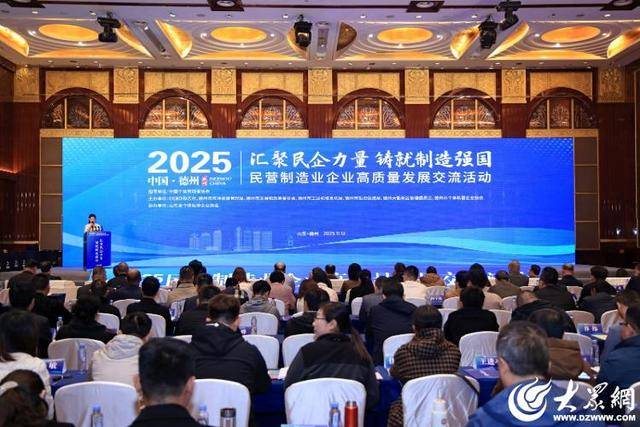
Core Viewpoint - The event aims to promote high-quality development in the private manufacturing sector, emphasizing its crucial role in the economy and the importance of innovation and quality in building a strong manufacturing nation [3][11]. Group 1: Event Overview - The high-quality development exchange event for private manufacturing enterprises was held in Dezhou, attended by over 120 representatives from key private manufacturing companies across 17 provinces [1]. - The event was guided by the China Individual Laborers Association and co-hosted by various local government departments, focusing on the theme "Gathering Private Enterprise Strength to Forge a Manufacturing Power" [11]. Group 2: Key Messages from Officials - Wang Haidong acknowledged the achievements of Shandong Province and Dezhou in private manufacturing, highlighting its role as a pillar of the real economy and a main force in building a strong manufacturing nation [3]. - Chen Xiaoqiang, representing the Dezhou government, expressed a commitment to providing optimal services and a conducive environment for national enterprises to deepen cooperation [4]. - Zhou Hailiang emphasized the need for a high-level platform for idea exchange and cooperation, aiming to address the challenges faced by private enterprises and ensure that policy benefits reach the grassroots level [6]. Group 3: Industry Insights and Innovations - Representatives from leading companies shared their experiences in smart manufacturing upgrades, digital transformation, and the establishment of green manufacturing systems, providing replicable development paths for attendees [7]. - The event included a practical examination of key enterprises in Dezhou's high-end equipment, sports, and healthcare industries, showcasing innovative models and practical outcomes in promoting high-quality manufacturing [7]. Group 4: Networking and Collaboration - A large screen displayed contact information for numerous private manufacturing leaders, facilitating efficient connections among participating entrepreneurs [9].
从下调利率到直接“退场” 有银行取消五年期定存产品
2 1 Shi Ji Jing Ji Bao Dao· 2025-11-12 09:09
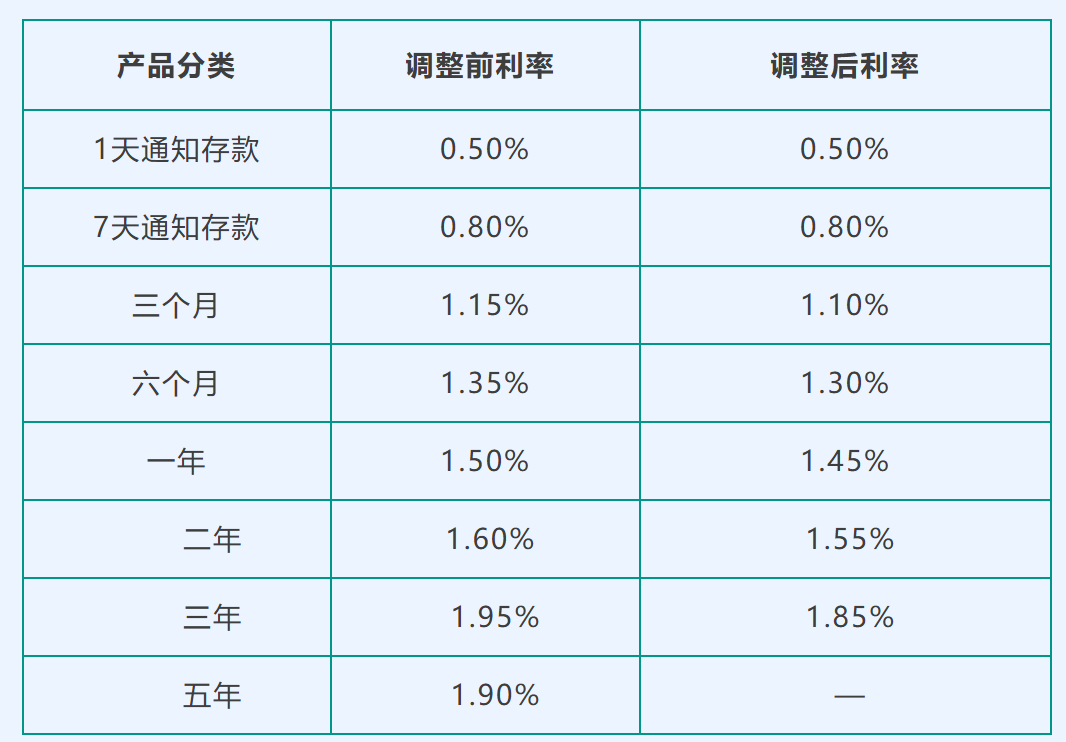
Core Viewpoint - Recent adjustments in fixed deposit products by banks, particularly the cancellation of five-year fixed deposits by certain banks, highlight a broader trend of declining deposit rates among small and medium-sized banks in response to net interest margin pressures [1][5]. Summary by Category Deposit Rate Adjustments - The announcement from Tuyaqi Mengyin Village Bank and Kundu Lun Mengyin Village Bank indicates the cancellation of five-year fixed deposit options, marking them as the first commercial banks to do so [1]. - The adjusted deposit rates for various terms at Kundu Lun Mengyin Village Bank show a decrease in rates for three-month, six-month, one-year, two-year, and three-year deposits, with the five-year option being removed entirely [2][3]. Industry Trends - The trend of lowering deposit rates is not isolated, as numerous small and medium-sized banks, including Dalian Bank and Hubei Jingmen Rural Commercial Bank, have also reduced their deposit rates, with some products seeing declines exceeding 60 basis points [2]. - The phenomenon of "term inversion" in deposit rates is evident, where long-term deposit rates are lower than short-term rates, as seen with Xinjiang Manas Rural Commercial Bank's recent adjustments [5][6]. Strategic Responses - Banks are actively working to reduce liability costs to address the ongoing pressure on net interest margins, which have reached historical lows [5][7]. - The shift away from high-cost long-term liabilities has been observed, with major banks like China Construction Bank and others no longer offering five-year large denomination certificates of deposit [8][10]. Future Outlook - Analysts suggest that while commercial banks will continue to face pressure on interest income, the downward trend may ease due to factors such as improved capital market performance and the digital transformation of banks [11]. - The changing landscape of deposit rates necessitates a shift in investment strategies for ordinary depositors, encouraging diversification into lower-risk investment products [11].
裕元集团(00551) - 2025 Q3 - 电话会议演示
2025-11-12 09:00
Group Overview - 9M25 total revenue was US$6,017.4 million[11], with athletic/outdoor shoes accounting for 55% and Pou Sheng contributing 29.7%[10] - 2024 revenue reached US$8,182 million, profit attributable to owners was US$393 million, and dividend per share was HK$1.30[13] - Shoe volume increased by 17% to 255 million pairs in 2024, while ASP decreased by 5.1% to US$20.25[13] - The company is committed to reducing emissions by 46.2% by 2030 compared to 2019[23] Financial Performance (9M25 vs 9M24) - Group revenue decreased by 1% to US$6,017.4 million[42, 53] - Manufacturing revenue increased by 2.3% to US$4,231.7 million[42, 65] - Retail revenue (Pou Sheng) decreased by 7.7% to RMB 12,903 million[42] - Profit attributable to owners decreased by 16% to US$278.7 million[42, 53] - Manufacturing profit attributable to owners decreased by 12.6% to US$263.9 million[42, 65] - Retail profit attributable to owners decreased by 50.1% to RMB 171 million[42] Manufacturing Business - Shoe volume increased by 1.3% YoY to 189.4 million pairs[40, 49] - ASP increased by 3.2% YoY to US$20.88 per pair[40] - Manufacturing gross profit margin was 18.3%, a decrease of 1.3 percentage points[40, 65] - Manufacturing operating profit margin was 6.6%, a decrease of 1.3 percentage points[40, 65] Retail Business (Pou Sheng) - Online contribution reached a historical high, accounting for 33% of total sales[98] - Number of direct operated stores decreased by 3.5% YoY[109]