智能化

Search documents
国潮与智能:佛山家居的新供给革命
2 1 Shi Ji Jing Ji Bao Dao· 2025-09-28 06:17
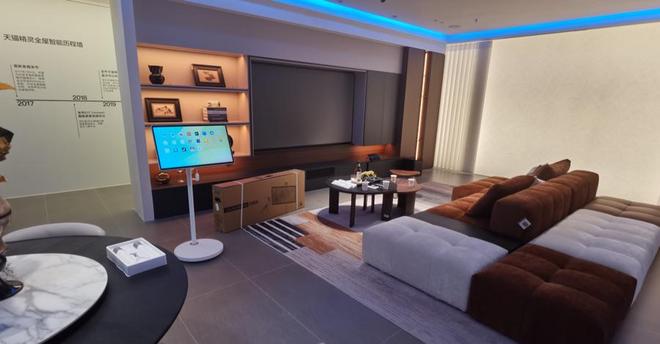
Core Insights - The furniture industry in Guangdong, particularly in Foshan, is undergoing a significant transformation, with a focus on enhancing manufacturing capabilities and integrating cultural and smart elements into products [1][4][8] - The market for smart home products is expected to grow, with projections indicating a penetration rate exceeding 65% by 2025, and the overall furniture market in China anticipated to surpass 4.8 trillion yuan, reflecting a 12% year-on-year growth [1][8] Industry Trends - The furniture manufacturing output in Foshan is projected to reach approximately 180 billion yuan in 2024, with an export value of 9.8 billion USD, although growth rates are showing signs of slowing [1] - Companies are increasingly adopting strategies that incorporate "culture+" and "smart+" to meet new consumer demands and expand market reach [1][8] Company Initiatives - Federated Furniture has launched a flagship smart home store in Guangzhou in collaboration with Tmall Genie, marking a significant step in redefining industry standards for smart home integration [2][3] - The company has a history of embracing internet and smart technologies, having partnered with Tmall since 2017 to explore new retail models [4] Consumer Engagement - The rise of live streaming and short video marketing has become a crucial strategy for furniture companies in Foshan, with significant engagement observed during live broadcasts [6][7] - The integration of smart features in furniture, such as voice control and remote settings, is enhancing customer experiences and driving sales [3][6] Cultural Integration - There is a growing emphasis on cultural elements in furniture design, with companies like Lin's Furniture incorporating traditional Chinese aesthetics into their products, which has led to increased sales and recognition [9][10] - The trend of "Guochao" (national trend) is gaining traction, with brands leveraging Chinese cultural symbols to differentiate themselves in the market [9][10] Market Dynamics - The furniture industry is experiencing a brand-building boom, with companies focusing on creating unique identities and leveraging digital platforms to enhance visibility [5][6] - The government's support for home improvement and consumption upgrades is expected to stimulate market growth, with retail sales of furniture products showing a notable increase [7][8]

行业聚焦:全球平板式砂磨机市场头部企业份额调研(附Top10 厂商名单)
QYResearch· 2025-09-28 04:23
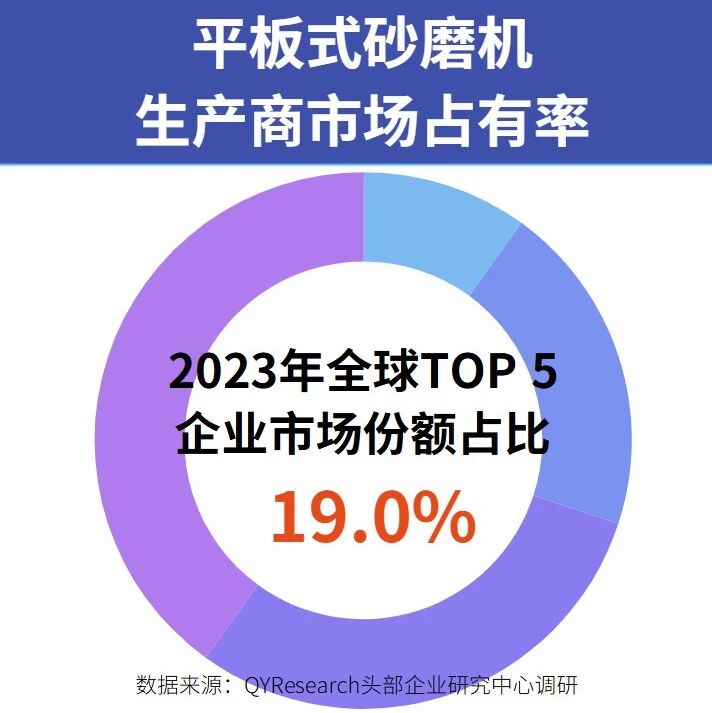
Core Insights - The global market for flat sanders is projected to reach $530 million by 2030, with a compound annual growth rate (CAGR) of 7.8% in the coming years [1]. Market Overview - The flat sander market is primarily driven by electric sanders, which hold approximately 60.6% of the market share [6]. - Online sales dominate the sales channels, accounting for 74.4% of the market [6]. Key Players - Major manufacturers in the global flat sander market include Bosch, Stanley, Makita, Dewalt, and Mirka, with the top five companies holding about 19.0% of the market share in 2023 [6][12][14]. Industry Trends - The flat sander industry benefits from national policies promoting high-quality manufacturing and industrial upgrades, including tax incentives and special funding [9]. - The industry is moving towards smart technology (integrating IoT and remote monitoring), automation (reducing labor costs), and green initiatives (energy-saving designs and pollution reduction) [9]. Challenges - The industry faces challenges such as intense homogenization competition, ongoing pressure for technological innovation, and technical bottlenecks related to grinding media optimization and cooling system efficiency [9]. - Barriers to entry include the need for technological research and development, significant capital investment for high-end equipment manufacturing, brand reputation, and compliance with stringent environmental and technical standards [9].
迈瑞医疗海外业务成绩喜人,甬兴证券首次买入评级
Jiang Nan Shi Bao· 2025-09-28 04:08
Group 1 - The core achievement of Mindray Medical in the first half of 2025 is a 5.39% year-on-year growth in international business, with international revenue accounting for approximately 50% of total revenue, indicating a new stage in the company's internationalization process [1] - In the in vitro diagnostics (IVD) sector, Mindray Medical reported revenue of 6.424 billion yuan, with international IVD business showing double-digit growth, highlighting the company's strong competitiveness in international markets [1] - The company successfully expanded its high-end customer base by acquiring over 160 new high-end clients and achieving horizontal penetration with over 50 existing high-end clients in the in vitro diagnostics field [1] Group 2 - The life information and support business also performed well, with international revenue share rising to 67%, indicating the company's accelerated penetration into high-end medical institutions globally [1] - In the medical imaging sector, the ultra-high-end ultrasound series achieved nearly 400 million yuan in sales, nearing the total sales level of 2024, reflecting the company's ongoing breakthroughs in overseas high-end customer segments [2] - Mindray Medical's steady growth in overseas business provides strong performance support, with expectations for stable growth in net profit from 2025 to 2027, highlighting the long-term investment value of the company [2]

从起了大早到赶上大集,奇瑞汽车新能源战略全面加速
Di Yi Cai Jing· 2025-09-28 02:51
Core Insights - Chery is undergoing a comprehensive acceleration in its new energy strategy, significantly altering its competitive positioning in the automotive industry [1] - The company has launched ten new models in 2024, with nine being new energy vehicles, indicating a continuous increase in the proportion of new energy vehicles in its product matrix [1] - Chery's stock debuted on the Hong Kong Stock Exchange on September 25, 2025, with an opening increase of 11.22%, bringing its market capitalization close to HKD 200 billion [1] New Energy Business as a Growth Engine - Chery's journey in new energy development reflects a long-term commitment, having established a clean energy vehicle task force as early as 1999 [2] - In 2024, Chery is the only company among the top twenty global passenger car manufacturers to achieve over 25% growth in new energy vehicle sales, fuel vehicle sales, and both domestic and overseas market sales compared to 2023 [2] - New energy vehicle sales are projected to grow over 265% year-on-year in 2024, making it a crucial growth driver for the company [2] Revenue Growth - Chery's revenue surged from CNY 92.618 billion in 2022 to CNY 269.897 billion in 2024, with a compound annual growth rate (CAGR) of 70.7% [3] - Net profit increased from CNY 5.806 billion to CNY 14.334 billion during the same period, with a CAGR of 57.1% [3] - In Q1 2025, revenue rose by 24% year-on-year to CNY 68.2 billion, with new energy vehicle sales revenue contributing significantly to this growth [3] Hybrid Strategy and Technology Sharing - Chery has leveraged its deep expertise in internal combustion engine technology to achieve breakthroughs in hybrid power systems [4] - The company launched a hybrid technology open-source initiative, promoting collaborative innovation and enhancing industry standards [4] Multi-Brand Differentiation Strategy - Chery employs a multi-brand strategy to cater to diverse markets and consumer needs, with nine out of ten new models in 2024 being new energy vehicles [6] - The iCAR brand has emerged as a leader in the new energy box car segment, while the Zhijie brand, developed in partnership with Huawei, aims to create high-end new energy vehicles [7] Intelligent and New Energy Advancement - Chery plans to allocate 25% of its IPO funds for the development of next-generation vehicles and advanced technologies, with 10% specifically for electrification [8] - The company aims to achieve full brand coverage of intelligent driving systems by the end of 2025, enhancing its competitive edge in smart mobility [9] Globalization Strategy - Chery has established R&D centers and production bases in various countries, including Germany, Spain, Brazil, and Malaysia, to support its globalization strategy [11] - The company is positioned to leverage capital market support to accelerate its transition to new energy, aiming for significant breakthroughs in the sector [11]
2025年中国轨道交通通信系统行业相关政策、产业链、市场规模、重点企业及未来趋势研判:居民出行需求不断提升,推动轨道交通通信系统规模达66.03亿元[图]
Chan Ye Xin Xi Wang· 2025-09-28 01:26
Core Insights - The rail transit communication system is a crucial segment of the communication equipment manufacturing industry, providing specialized communication devices and software systems for rail transit operators, essential for train operation control, dispatching, passenger services, and information transmission [1][8] - The market size of China's rail transit communication system industry is projected to grow from 2.23 billion to 6.603 billion from 2016 to 2024, with a compound annual growth rate (CAGR) of 14.53% [1][9] - The industry is expected to evolve towards intelligent and integrated cloud-network solutions, driven by the "Transportation Power" strategy and advancements in new-generation information technologies [1][9] Industry Overview - The rail transit communication system integrates audio, video, and data into a comprehensive digital communication network, vital for ensuring safe, fast, and efficient train operations [4][8] - The system comprises various components, including communication power systems, transmission systems, clock systems, wireless dispatch systems, video monitoring systems, broadcasting systems, passenger information systems, and public telephone systems [5][8] Industry Policies - The rail transit industry is a foundational sector of the national economy, receiving significant attention and support from government policies [5] - Recent policies aim to enhance technical standards and promote the integration of different rail transit systems, improving service efficiency and connectivity [5][6] Industry Chain - The upstream of the rail transit communication system industry includes base station construction, communication equipment, and various component suppliers [6] - The midstream involves the design, development, operation, and maintenance of communication systems, while the downstream serves the railway and urban rail transit sectors [6] Market Dynamics - The rapid development of urban rail transit in China has led to an increase in operational mileage and the number of lines, creating substantial market opportunities for the rail transit communication system industry [7][8] - As of August 2025, there are 331 operational urban rail transit lines with a total operational mileage of 11,210.7 kilometers, reflecting an 8.17% increase from the previous year [7] Key Players - Major participants in the rail transit communication system industry include China Railway Communication Signal Co., Ltd., Tianjin 712 Communication Broadcasting Co., Ltd., and Beijing Jinhongxi Electric Information Technology Co., Ltd. [9][10] - China Railway Communication Signal Co., Ltd. reported a revenue of 13.185 billion in the first half of 2025, showing a 0.56% year-on-year growth [11] - Shanghai Tieda Electric Technology Co., Ltd. achieved a revenue of 121 million in the same period, with a growth rate of 16.25% [12] Development Trends - The industry is moving towards intelligent systems that integrate AI, big data, and cloud computing for autonomous train operation and predictive maintenance [13] - A focus on green and low-carbon technologies is expected, with the adoption of low-power chips and energy-efficient devices to reduce overall energy consumption [14] - Integration and collaboration among various subsystems will enhance operational efficiency and safety in rail transit communication systems [15]


领克新能源销量占比预计将达80%左右
Di Yi Cai Jing· 2025-09-27 16:26
Core Insights - Traditional automakers are transitioning from fuel vehicles to new energy vehicles (NEVs) and are now focusing on smart technology integration [1][2] - Lynk & Co has launched two new plug-in hybrid models, the Lynk & Co 07 EM-P and Lynk & Co 08 EM-P, increasing its NEV offerings to 8 out of 13 models, representing over 60% of its lineup [1] - The sales of Lynk & Co's NEVs accounted for 70% of total sales in August 2023, with expectations to rise to at least 75% and potentially 80% following the new launches [1][2] NEV Sales Performance - Lynk & Co's NEV sales are projected to exceed 58% of total sales in 2024, up from 55.3% in 2023 [1] - The Lynk & Co 900 and Lynk & Co 10 EM-P contributed over 10,000 units in sales in August 2023 [1] Smart Technology Focus - Lynk & Co aims to improve its smart driving capabilities, particularly in driver assistance systems, which have received customer complaints [2] - The newly launched models will feature higher-tier smart driving systems (H5 and H7) instead of lower-tier options, with plans for further upgrades by the end of the year [2] - The company acknowledges that investing in smart technology may reduce profitability in the short term but is crucial for long-term brand positioning in a competitive market [2]

中力股份(603194):深度研究报告:电动叉车龙头,全面布局智慧搬运
Huachuang Securities· 2025-09-27 15:21
Investment Rating - The report gives a "Buy" rating for the company with a target price of 52.1 CNY, indicating a potential upside of 16.6% from the current price of 44.72 CNY [2][7][10]. Core Insights - The company is a leader in the electric forklift industry, focusing on product innovation and smart logistics solutions, which are expected to drive future growth [7][8][9]. - The demand for forklifts is expected to remain strong due to the ongoing electrification and automation trends in the industry, with lithium battery technology playing a crucial role [7][8][9]. - The company has established a solid presence in overseas markets through localized operations and strategic partnerships, enhancing its competitive advantage [7][8][9]. Financial Performance - The company’s total revenue is projected to grow from 6,552 million CNY in 2024 to 9,472 million CNY in 2027, with a compound annual growth rate (CAGR) of 14.5% [3][10]. - Net profit attributable to shareholders is expected to increase from 840 million CNY in 2024 to 1,248 million CNY in 2027, reflecting a CAGR of 19.4% [3][10]. - Earnings per share (EPS) are forecasted to rise from 2.09 CNY in 2024 to 3.11 CNY in 2027 [3][10]. Market Position and Strategy - The company has maintained its position as the top seller of electric forklifts in China for over a decade, with a market share exceeding 35% in 2021 [14][15]. - The introduction of innovative products like the "Little King Kong" series has significantly contributed to the company's growth and market recognition [7][15]. - The company is actively expanding its smart logistics product offerings, which are expected to become a significant growth driver alongside traditional forklift sales [7][9][10]. Industry Trends - The global forklift market is experiencing a steady increase in demand, with electric forklifts gaining a larger market share due to their environmental benefits and operational efficiency [38][39]. - The transition to electric forklifts is being accelerated by advancements in lithium battery technology, which enhances performance and reduces operational costs [51][54]. - The company is well-positioned to benefit from the growing trend of automation and smart logistics in various industries, including e-commerce and manufacturing [7][8][9].
从“汗滴一砖一瓦”到“搭积木式组装” 为什么鼓励推行“装配式农房”?
Yang Guang Wang· 2025-09-27 10:01
Core Insights - The article discusses the increasing prevalence of "prefabricated buildings," which are constructed using factory-made components assembled on-site, highlighting the shift towards industrialized, intelligent, modular, and information-driven construction methods [1] Group 1: Promotion and Application of Prefabricated Buildings - The promotion of "prefabricated buildings" is being accelerated in urban areas, with a focus on "good housing" construction, while also exploring "prefabricated rural housing" trials to enhance safety and comfort in rural homes [1][2] - The construction of "prefabricated rural housing" is characterized by the use of prefabricated components, which allows for quicker assembly compared to traditional building methods, significantly reducing construction time from about a year to a much shorter period [2][3] Group 2: Benefits and Features of Prefabricated Rural Housing - Prefabricated rural housing offers improved thermal performance, energy efficiency, and quality control due to factory production standards, making it more resilient to seismic activity and enhancing sound insulation [3][5] - The Ministry of Housing and Urban-Rural Development is actively promoting smart and green construction practices, including prefabricated buildings, while establishing a comprehensive service chain for planning, approval, quality supervision, and financial support [3][5] Group 3: Challenges and Solutions for Implementation - The successful promotion of prefabricated housing requires large-scale customization and standardization to reduce costs, with suggestions for local production and transportation subsidies to minimize expenses [4][5] - Collaboration among villagers, enterprises, and government entities is essential to share construction costs, with some regions implementing strategies to further lower total building expenses [5]
南网数字过会:今年IPO过关第56家 招商证券过4单
Zhong Guo Jing Ji Wang· 2025-09-27 07:23
Group 1 - The Shenzhen Stock Exchange's listing review committee approved the initial public offering (IPO) of Southern Power Grid Digital Grid Research Institute Co., Ltd. (referred to as "Southern Grid Digital"), marking it as the 56th company approved for listing this year [1] - Southern Grid Digital aims to provide comprehensive digital construction solutions for clients in the power energy sector, focusing on building a world-class digital and intelligent innovation platform for power grids [1][2] - The company plans to raise approximately 255.45 million yuan for various projects, including the construction of a spatial intelligent digital twin platform and an advanced power artificial intelligence platform [2] Group 2 - Southern Grid Digital is controlled by Southern Power Grid Digital Group Co., Ltd., which holds 74% of the shares, while the actual controller is the State-owned Assets Supervision and Administration Commission of the State Council [2] - The company has a strong focus on expanding its products and services beyond the power energy sector into areas such as transportation, water supply, gas, public security, and urban construction [1][2] - The underwriting institution for the IPO is China Merchants Securities, which has successfully sponsored four IPO projects this year [1]

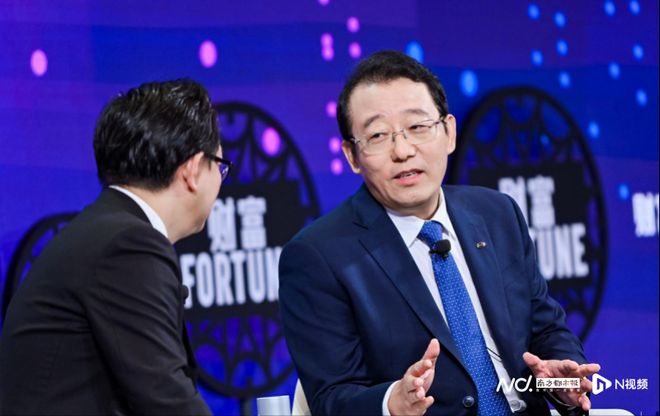
冯兴亚:十年后,至少有三家中国企业进入全球前十
Nan Fang Du Shi Bao· 2025-09-27 07:09
Core Viewpoint - The automotive industry is undergoing a profound transformation, with predictions that at least three of the top ten global automotive companies will be Chinese by 2033 [1][5]. Group 1: Industry Transformation - The global automotive industry is in a critical phase characterized by deep transformation, rapid technological iteration, restructuring of management processes, and adjustments in competitive landscape [2]. - Future competition will focus on three core dimensions leading to an "ecological confrontation": product value reconstruction, elevation of competitive entities, and transformation of value sources [4]. Group 2: Product and Market Dynamics - The focus of competition will shift from hardware specifications to "scenario-based intelligent experiences," with future vehicles envisioned as intelligent mobile spaces [4]. - The competitive landscape will evolve from individual car manufacturers to an ecosystem competition involving deep integration with top technology and energy companies [4]. Group 3: Economic Viability and Localization - The "Electricity Charm Index" introduced by GAC measures the cost-effectiveness of electricity compared to fuel, with Guangzhou's index at 17, indicating electricity costs only 1/17 of fuel costs, making electric vehicles economically attractive [5]. - The current opportunity in globalization is shifting from "complete vehicle exports" to "localized production," with GAC establishing five KD factories globally and planning to expand to ten [6]. Group 4: Technological and Competitive Challenges - Although the technical barriers to entering the automotive industry have lowered, it does not imply that manufacturing vehicles has become easier; unique advantages in user insight, product definition, and integration capabilities are still essential [7]. - GAC emphasizes core technology self-research, focusing on key capabilities such as the "three electric" systems, electronic architecture, and vehicle platform development to maintain competitive advantages [7]. Group 5: Consumer Behavior and Decision-Making - There is a noticeable differentiation in automotive consumer groups, with experienced users prioritizing functional value while emerging users seek emotional value, such as acceleration and technological appeal [8]. - Balancing functional value, safety, and emotional appeal presents a significant challenge for automotive companies in decision-making [8].