
就业

Search documents
非农大幅下修后,如何关注美国就业与通胀?
NORTHEAST SECURITIES· 2025-08-28 07:58
1. Report Industry Investment Rating No relevant content provided. 2. Core Views of the Report - This year, with Trump's return to the White House, U.S. policies have shifted significantly, increasing market attention to U.S. economic and financial trends. The report aims to build an analysis framework for tracking the U.S. economy, focusing on the core economic indicators of the U.S. household sector [2][11]. - In Q2, the contribution rate of net exports to U.S. GDP reached a record - high of 4.99%, mainly driven by a sharp decrease in imports. However, after excluding the contribution of net exports, the real GDP growth rate was - 2.0%, indicating a severe decline in domestic demand [28]. - The significant downward revision of non - farm data may be due to large - scale layoffs in government departments in the first half of the year, which affected data collection efficiency and increased the risk of statistical errors. There may also be other systematic factors [3][125]. - The current tariff level has an impact on the year - on - year growth rate of U.S. PCE. In the optimistic, benchmark, and pessimistic scenarios, it may increase by 0.37, 0.92, and 1.46 percentage points respectively. Once the tariff effect fully appears in prices, the year - on - year growth rate of U.S. PCE may rise above 3% [4]. - In the "stagflation - like" situation, the Fed is in a dilemma. Powell signaled a 25bp interest rate cut in September, but the evolution of non - farm employment and inflation data in August needs to be verified. The report maintains the benchmark assumption of two 25bp interest rate cuts in September and December [5]. 3. Summary by Relevant Catalogs 3.1 Five - Sector Perspective on the U.S. Economy Observation Starting Point - The report divides the U.S. economy into five core sectors: government, enterprise, household, finance, and overseas sectors. The household and enterprise sectors form the core "employment - consumption" cycle, and the government participates in resource reallocation [12]. 3.2 U.S. Q2 GDP: The "Apparent Prosperity" Driven by Net Exports - The U.S. GDP is calculated and released by the BEA. There are three estimates for each quarter, and annual overhauls are conducted in July. The GDP data is also seasonally adjusted [16]. - From 2020 - 2023, the U.S. GDP revision was large due to the impact of the pandemic. Since H2 2024, the revision has gradually converged, but the "reciprocal tariff" policy may cause the revision to increase again [17]. - Personal consumption expenditure is the most important component of U.S. GDP, with a long - term upward - trending share and a significant driving effect on economic growth. Net exports have a continuous negative contribution to GDP growth [24]. - In Q2, the contribution rate of net exports to GDP reached a record high, mainly due to a 15.1% month - on - month decrease in imports and a 1.7% increase in exports, narrowing the trade deficit by 50.8%. However, domestic demand declined seriously after excluding the contribution of net exports [28]. 3.3 Consumption Research Framework Based on Household Income and Expenditure - The U.S. consumption research can start from the income and expenditure of residents. Income is divided into five parts, with laborer compensation accounting for 57% and transfer payment income accounting for 18% in June 2025 [32]. - Personal disposable income is obtained by subtracting government social security contributions and personal current taxes from total income. From August 2023 to June 2025, the year - on - year growth rate of personal disposable income decreased significantly, weakening residents' consumption ability and confidence [33]. - U.S. personal consumption expenditure is divided into goods and services consumption. Since 2022, service consumption has made a greater contribution to GDP. In June 2025, the actual personal consumption expenditure increased by 2.1% year - on - year, with goods consumption increasing by 2.9% and service consumption increasing by 1.7% [38][40]. - Retail sales data shows that in June 2025, the year - on - year and month - on - month retail sales increased, with miscellaneous goods retailers being the main driving force [45]. - The U.S. personal savings rate has fallen to 4.5%, lower than the pre - pandemic average. In the future, the savings rate may continue to rise, suppressing short - term consumption growth [51]. - Third - party data such as the Michigan Consumer Sentiment Index (CSI) and the Redbook Retail Sales Index can be used to verify U.S. consumption conditions. The overall consumption growth in the U.S. is slowing down [53][61]. 3.4 How to Track U.S. Employment after the "Non - Farm" Data Distortion 3.4.1 Employment Research Framework Based on Supply and Demand Sides - There are many employment - related data in the U.S., including JOLTS, CES, ADP, CPS, and UI. These data have different sample scopes, core indicators, advantages, and frequencies [63]. - JOLTS provides supplementary information on the demand side of the labor market. The job vacancy rate reflects the shortage of labor. Since 2022, the gap between job vacancies and hiring has narrowed, and the resignation rate has continued to decline [67][73][76]. - CES (non - farm data) has a wide coverage. In July, the number of new non - farm jobs was lower than expected, and the data for May and June was significantly revised downward. The hourly wage of the private sector increased, increasing inflation pressure [78][86]. - ADP data is based on real payroll records of private - sector employees, covering more than 25 million employees. It is released two days earlier than CES and can be used to perceive private - sector employment trends [91]. - CPS is a household - based survey that provides information on labor force participation rate, unemployment rate, and other indicators. In July, the labor force participation rate declined for four consecutive months, and the unemployment rate rose to 4.2% [93][104]. - The Unemployment Insurance Weekly Claims Report provides high - frequency data on initial and continued claims for unemployment benefits, which can be used to predict economic inflection points [108]. 3.4.2 How Credible is the Non - Farm Data? - In May - June this year, the non - farm employment data was significantly revised downward, and the deviation of the revision reached a new high since 2010. The reasons given by the BLS are insufficient to fully explain the large - scale revision [116]. - It is more likely that large - scale layoffs in government departments in the first half of the year affected data collection efficiency, and there may be other systematic factors. The credibility of non - farm employment data has declined, and multiple independent data should be used for cross - verification [125]. 3.5 U.S. Inflation Monitoring and Tariff Impact Assessment 3.5.1 Inflation Status Monitoring and Expectation Analysis Framework - The report analyzes U.S. inflation from two aspects: status monitoring (focusing on CPI and PCE) and expectation analysis (introducing BEI and 5Y - 5Y BEI) [126]. - CPI and PCE are two core consumer inflation indicators. PCE is generally lower than CPI because of its chain - type update and wider coverage. The Fed prefers PCE [126][127]. - Core services are the main driver of U.S. inflation. In July 2025, the year - on - year growth rate of service CPI was 2.18%, and the month - on - month growth rate was 0.18% [130]. 3.5.2 Import Structure Split and Tariff Calculation: U.S. PCE May Face Phased Upward Pressure - The current tariff level has an impact on the year - on - year growth rate of U.S. PCE. In different scenarios, it may increase by 0.37, 0.92, and 1.46 percentage points respectively. Once the tariff effect fully appears in prices, the year - on - year growth rate of U.S. PCE may rise above 3% [4].
夜经济里搭平台 广州北京路商圈招聘会点亮就业新希望
Zhong Guo Xin Wen Wang· 2025-08-27 14:11
Core Points - The "2025 Beijing Road Urban Job Fair" in Guangzhou aims to provide over 900 quality job opportunities across various sectors, addressing diverse job seeker needs [1][2] - The event features four functional areas: a financial zone for securities and insurance companies, a key employment area for high-demand positions, a new economy recruitment area for flexible jobs, and a policy consultation area for various employment services [1][2] Innovation Highlights - The introduction of the "Employment Bus" as a mobile interview space enhances communication between employers and job seekers, improving recruitment efficiency [2] - The event also includes a policy consultation area where staff provide one-on-one explanations of employment support policies, such as subsidies for graduates and social insurance benefits for flexible employment [2] Employment Trends - The increasing number of college graduates and changing employment expectations among young people present challenges for job matching, with a focus on high-quality employment [4] - Recommendations for job seekers include identifying career goals, enhancing skills, and adapting to new employment environments [4][5] Future Directions - The district plans to explore diversified recruitment service models and expand job opportunities, particularly in the biomedicine and life sciences sectors [5]



美国经济遭遇关税和移民政策冲击,鲍威尔思路转向了宽松
Sou Hu Cai Jing· 2025-08-26 10:57
Group 1 - The July non-farm employment report has shifted Powell's monetary policy perspective towards easing, indicating that a rate cut in September is highly anticipated [2][6] - The July employment data showed a significant drop in non-farm payrolls, with only 73,000 jobs added, far below the expected 104,000, marking the lowest increase in nine months [2][3] - The unemployment rate rose to 4.2%, aligning with expectations, while previous months' employment figures were substantially revised downwards, indicating a total reduction of 258,000 jobs for May and June [2][4] Group 2 - Powell noted that the labor market remains balanced, with many employment indicators similar to a year ago, despite the recent slowdown in job growth [3][4] - The slowdown in job growth is attributed to both decreased employer demand and a decline in labor supply due to stricter immigration policies [4][5] - The GDP growth rate for the first half of the year slowed to 1.2%, reflecting a significant reduction in consumer spending, which is also linked to labor market conditions [4][5] Group 3 - Powell's view on inflation has evolved, acknowledging that tariffs have not significantly impacted prices as previously thought, although some goods have seen price increases [5][6] - The core PCE price index rose by 2.9% over the past year, indicating persistent inflationary pressures, particularly in goods prices [5][6] - The Federal Reserve is expected to face a dilemma between cutting rates to support employment and managing inflation expectations, with a rate cut of at least 25 basis points likely in September [6]

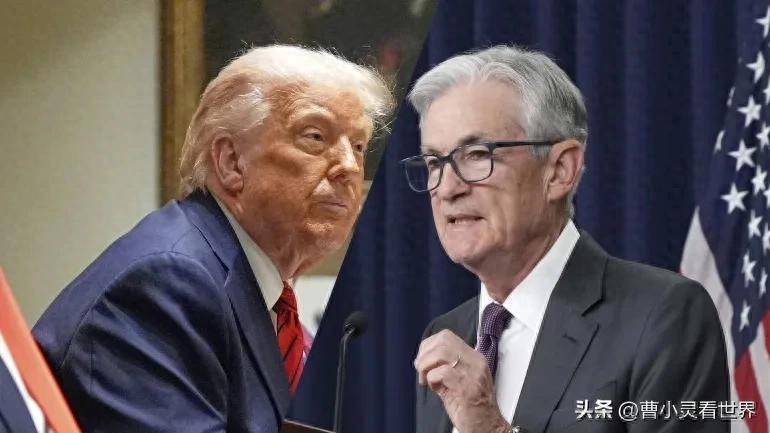
一文讲清楚,特朗普强势降息意味什么,为什么是中国难得的机遇
Sou Hu Cai Jing· 2025-08-26 05:47
Core Viewpoint - The article discusses the implications of U.S. interest rates and the potential benefits and risks of interest rate cuts, particularly in the context of Trump's criticism of the Federal Reserve and its chairman Powell [1][3][11]. Group 1: U.S. Interest Rates and Economic Impact - Trump has been vocal about the need for lower interest rates, arguing that current rates are too high and impose significant economic costs, estimating a $360 billion annual cost for each percentage point of high interest rates [5][7]. - High interest rates lead to reduced borrowing and spending, which can result in job losses and lower economic growth, as evidenced by the disappointing non-farm payroll data [8][10]. - Lowering interest rates could stimulate economic activity by making borrowing cheaper, which is crucial for consumer spending and business expansion [7][11]. Group 2: Global Trade and Currency Dynamics - A reduction in interest rates could weaken the dollar, making U.S. exports more competitive while also mitigating the impact of tariffs on consumers [10][11]. - However, a weaker dollar could also lead to a stronger yuan, potentially harming China's export competitiveness and accelerating the shift of low-end manufacturing to Southeast Asia [21][23]. Group 3: Opportunities and Risks for Emerging Markets - Historically, U.S. rate cuts have led to increased capital inflows into emerging markets, which could benefit markets like China's A-shares [19]. - The influx of capital could also create asset bubbles and financial volatility, particularly in sectors like technology [21][24]. - To mitigate risks, China could enhance its import reserves and support high-tech industries while upgrading its manufacturing capabilities to counteract the effects of a weaker dollar [23][24].
研二多发几篇论文,也不至于到现在这个地步……
具身智能之心· 2025-08-26 04:45
Core Viewpoint - The article emphasizes the importance of high-quality research papers for graduate students, especially those facing challenges in job hunting or pursuing doctoral studies. It suggests that students should seek professional assistance to enhance their research capabilities and output [1]. Group 1: Research Challenges and Solutions - Many graduate students struggle with producing satisfactory research papers due to lack of guidance from their advisors, leading to confusion in topic selection and paper structure [1]. - The article introduces a professional tutoring service aimed at helping students navigate the research process and improve their paper writing skills [1][8]. Group 2: Tutoring Service Overview - The tutoring service is backed by a team of over 300 experts in fields like autonomous driving and embodied intelligence, with a high acceptance rate of 96% for students they have guided [5]. - The structured 12-week program includes defining research topics, literature review, experimental design, drafting, and submission processes [4]. Group 3: Target Audience and Benefits - The service is designed for students who are facing challenges such as lack of guidance, unclear research frameworks, or those looking to enhance their academic profiles for job applications or further studies [9][10]. - Successful participants may receive recommendations from prestigious institutions and opportunities for internships in leading tech companies [15].

五矿期货贵金属日报-20250826
Wu Kuang Qi Huo· 2025-08-26 01:04
Group 1: Report Industry Investment Rating - Not provided in the given content Group 2: Core Viewpoints of the Report - Powell's speech at the Jackson Hole central bank annual meeting indicates the start of a new round of interest - rate cut cycles by the Fed, setting the tone for a rate cut in the September interest - rate meeting [2] - Given the current weak employment data in the US and the limited increase in the consumer price index, there is a possibility of an unexpected 75 - basis - point interest - rate cut by the Fed this year [3] - In the context of the Fed's loose monetary policy expectations, the increase in silver prices will be significantly greater than that of gold, and the gold - silver ratio will be further downwardly adjusted. It is recommended to go long on silver on dips, with the reference operating range for the Shanghai Gold main contract being 770 - 794 yuan/gram and that for the Shanghai Silver main contract being 9135 - 10000 yuan/kilogram [3] Group 3: Summary According to Related Catalogs 1. Market Price and Index Data - Shanghai gold rose 0.13% to 779.92 yuan/gram, Shanghai silver rose 0.04% to 9348.00 yuan/kilogram; COMEX gold fell 0.25% to 3409.00 dollars/ounce, COMEX silver fell 0.41% to 38.55 dollars/ounce; the US 10 - year Treasury yield was 4.28%, and the US dollar index was 98.44 [2] - Various precious - metal related prices, yields, and index data, such as the prices of Au(T + D), London gold, etc., and changes in bond yields, stock indices, and currency exchange rates are presented in detail in the table [4] 2. Key Data of Gold and Silver - A detailed summary of key gold and silver data, including closing prices, trading volumes, open interests, inventories, and their daily changes and historical quantiles for COMEX, LBMA, SHFE, and other markets, is provided [7] 3. Charts and Their Analysis - Multiple charts show the relationships between precious - metal prices and other factors, such as the relationship between COMEX gold prices and the US dollar index, real interest rates, trading volumes, and open interests, as well as the near - far - month structure and internal - external price differences of gold and silver [9][12][17][23][42][54]
美国消费行业7月跟踪报告:非农前值大幅下修,整体继续谨慎
Haitong Securities International· 2025-08-25 14:42
Investment Rating - The report maintains a cautious investment stance on the consumer sector, particularly highlighting concerns over low-income consumer behavior and the impact of tariffs on essential goods [4]. Core Insights - The consumer confidence index has declined, with the Michigan Consumer Sentiment Index dropping to 58.6 in August from 61.7 in July, marking a 5% decrease and falling below market expectations [7]. - Retail sales data remains resilient, with July retail sales reaching $726.28 billion, a year-on-year increase of 3.9% [7]. - Inflation remains moderate, with the Consumer Price Index (CPI) rising 0.2% month-on-month and 2.7% year-on-year in July, slightly below expectations [9]. - Employment data shows a significant downward revision, with only 73,000 non-farm jobs added in July, far below the expected 110,000 [14]. Macroeconomic Overview - Consumer confidence has weakened, with inflation concerns rising. The short-term inflation expectation increased from 4.5% to 4.9% [7]. - Retail sales growth is dependent on policy incentives and promotional activities, while consumer concerns about prices and unemployment persist [7]. - The CPI is influenced by declining energy prices and initial tariff effects, with core CPI reaching 3.1%, the highest this year [9]. Essential Consumption Insights - Beverage sales show marginal weakness, while tobacco data has rebounded. Alcohol and dairy sectors continue to exhibit weakness [27]. - Alcohol retail sales in June were $5.95 billion, down 3.3% year-on-year, indicating limited resilience in sales [27]. - Dairy product shipments totaled $13.61 billion in June, with a year-on-year increase of 1.6%, reflecting a relatively flat performance [31]. - Tobacco shipments reached $6.05 billion in June, up 7.3% year-on-year, with a CPI increase of 6.5% [33]. Discretionary Consumption Insights - Restaurant and department store sales show marginal weakness, while clothing sales have improved [35]. - Restaurant retail sales in July were $98.3 billion, a year-on-year increase of 5.6%, but a month-on-month decline of 0.4% [35]. - Department store sales reached $77.39 billion in July, up 2.3% year-on-year, but still below overall retail sales growth [38]. - Clothing retail sales in July were $26.63 billion, up 5.0% year-on-year, with expectations of price increases due to tariffs [40]. Market Performance and Valuation - The discretionary consumption sector performed well, with an 8.2% increase, while the essential consumption sector declined by 1.7% [4]. - The essential consumption ETF saw a net inflow of $120 million, while the non-essential consumption ETF experienced a net outflow of $650 million [4]. - The median valuation for leading food and beverage companies in the U.S. stock market was 24x at the end of July, indicating a relatively high valuation level [4].
沪银多头趋势明显 鲍威尔发表鸽派言论
Jin Tou Wang· 2025-08-25 03:30
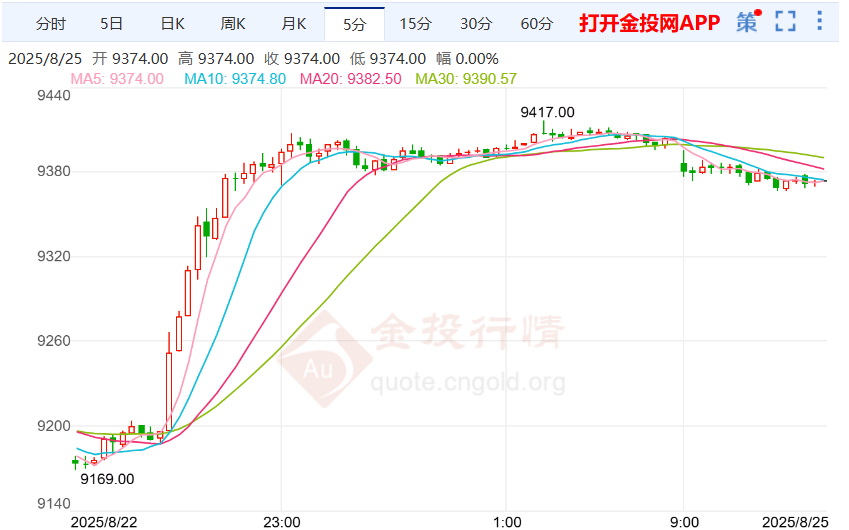
Group 1: Silver Futures Market - Silver futures are currently trading above 9367, with an opening price of 9168 per kilogram, and a current price of 9374, reflecting a 1.67% increase [1] - The highest price reached today was 9418 per kilogram, while the lowest was 9152 per kilogram, indicating a bullish short-term trend in the silver futures market [1] - The Shanghai silver market shows a strong upward trend, opening around 9410, with potential to rise to 9550 if the momentum continues [6] Group 2: Federal Reserve Policy Insights - Jerome Powell, the Chairman of the Federal Reserve, opened the door for a potential rate cut in September, citing the need to adjust policy in response to changing economic risks [3] - Powell highlighted that inflation risks are skewed to the upside, with tariff-related inflation pressures becoming more evident [3] - The recent non-farm payroll report indicated that the U.S. economy added 73,000 jobs last month, with downward revisions of approximately 250,000 jobs for May and June, suggesting a slowdown in job growth [4]
PCE与英伟达财报来袭,美股反弹行情迎考验|美股一线
2 1 Shi Ji Jing Ji Bao Dao· 2025-08-24 23:58
Core Viewpoint - The U.S. stock market experienced a "first decline then rise" pattern in the week of August 18-22, driven by concerns over high inflation and slowing consumer spending, but rebounded strongly after Fed Chair Jerome Powell's dovish signals at the Jackson Hole Economic Symposium, raising expectations for a rate cut in September [1][2]. Market Performance - The S&P 500 index rose approximately 0.3% over the week, while the Dow Jones Industrial Average increased about 1.5% for the second consecutive week. The Nasdaq index saw a slight decline of about 0.6%. The Russell 2000 index, sensitive to interest rates, performed the best with a weekly gain of approximately 3.3% [1]. - Following Powell's hints of a potential rate cut, the yield on the 10-year U.S. Treasury bond fell to 4.256%, and the U.S. dollar index decreased to around 97.7 [1]. Federal Reserve's Stance - Powell's speech at the Jackson Hole meeting unexpectedly leaned dovish, emphasizing the fragility of the labor market over inflation concerns. He noted the weak employment report released earlier in the month and indicated that the labor market is in a "new balance" state, which could quickly deteriorate if disrupted [2][3]. - The market interpreted Powell's comments as opening the door for a rate cut in September, with the CME FedWatch tool showing an 83% probability of a cut, up from 75% [2]. Economic Data - Recent economic data has shown conflicting trends, with persistent inflation pressures alongside signs of slowing consumer and employment growth. The July Consumer Price Index (CPI) rose 2.7% year-over-year, while the Producer Price Index (PPI) increased by 0.4% month-over-month, indicating ongoing inflation concerns [4]. - Initial jobless claims rose to 235,000, exceeding the previous week's 228,000, and consumer confidence, as measured by the University of Michigan, fell from 68.5 in July to 67.1 in early August, reflecting increased consumer caution [4]. Upcoming Events and Data - The upcoming week will feature several important economic data releases and corporate earnings reports, including Nvidia's earnings, which are expected to be pivotal for market direction. Other key data includes the PCE price index and initial jobless claims [6][7].

鲍威尔的杰克逊霍尔“大撤退”:鲍威尔的杰克逊霍尔“大撤退”
SINOLINK SECURITIES· 2025-08-24 07:31
Group 1: Economic Outlook - Powell's shift to a dovish stance at the Jackson Hole meeting was unexpected, indicating a significant change in his view on the labor market and rising employment risks[5] - The Fed maintains a forecast of two rate cuts (50 basis points) by 2025, with a strong possibility of a 25 basis point cut in September and potentially more cuts within the year[3] - Powell emphasized a "strange balance" in the labor market, highlighting rising downside risks to employment, which could lead to increased layoffs and unemployment[6] Group 2: Monetary Policy Framework - The Fed's monetary policy framework has reverted to a more dovish stance, emphasizing a balanced approach to inflation and employment, moving away from the zero lower bound concept[20] - The new framework suggests a tolerance for employment levels exceeding real-time assessments of maximum employment without necessarily posing risks to price stability[21] - This shift may lead to increased volatility in monetary policy, with shorter intervals between rate cuts and hikes, driven by economic data rather than forward guidance[22] Group 3: Inflation and Economic Risks - Powell's comments indicate a belief that inflation risks are currently more manageable, with a focus on one-time shocks rather than persistent wage-price spirals[15] - The report warns of potential challenges in controlling inflation dynamics in a more accommodative monetary policy environment, suggesting a higher inflation baseline in the future[34] - Risks include increased market volatility due to Trump's policy uncertainties and potential global economic impacts from tariff adjustments[4]