智驾平权

Search documents
ETF基金日报丨汽车零部件相关ETF涨幅居前,机构认为新车密集上市,或有望催化行业景气度向上抬升
2 1 Shi Ji Jing Ji Bao Dao· 2025-04-30 03:53
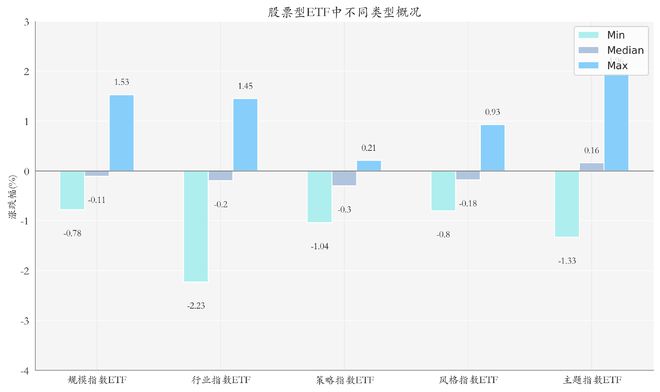
Market Overview - The Shanghai Composite Index fell by 0.05% to 3286.65 points, with a high of 3294.98 points during the day [1] - The Shenzhen Component Index also decreased by 0.05%, closing at 9849.8 points, peaking at 9882.54 points [1] - The ChiNext Index dropped by 0.13%, ending at 1931.94 points, with a maximum of 1941.17 points [1] ETF Market Performance - The median return of stock ETFs was -0.1% [2] - The highest performing scale index ETF was the Hai Fu Tong CSI 2000 Enhanced Strategy ETF, with a return of 1.53% [2] - The highest performing industry index ETF was the China Tai CSI All-Share Integrated Circuit ETF, returning 1.45% [2] - The top three ETFs by return were: - Huaxia CSI Automotive Parts Theme ETF (1.96%) - Hai Fu Tong CSI Automotive Parts Theme ETF (1.69%) - Penghua CSI Media ETF (1.65%) [4][5] ETF Fund Flow - The top three ETFs by fund inflow were: - E Fund SSE STAR 50 ETF (inflow of 363 million yuan) - E Fund ChiNext ETF (inflow of 244 million yuan) - Guotai CSI Steel ETF (inflow of 183 million yuan) [6][7] - The top three ETFs by fund outflow were: - Huatai-PB CSI A500 ETF (outflow of 251 million yuan) - Guotai CSI A500 ETF (outflow of 201 million yuan) - E Fund CSI 300 ETF Initiated (outflow of 197 million yuan) [6][7] Financing and Margin Trading - The highest financing buy amounts were for: - Huaxia SSE STAR 50 ETF (323 million yuan) - E Fund ChiNext ETF (199 million yuan) - Guolian An CSI All-Share Semiconductor Products and Equipment ETF (186 million yuan) [8][9] - The highest margin sell amounts were for: - Southern CSI 1000 ETF (24.54 million yuan) - Southern CSI 500 ETF (19.86 million yuan) - Huatai-PB CSI 300 ETF (7.71 million yuan) [8][9] Industry Insights - Everbright Securities noted that the launch of new vehicles could catalyze an upward trend in industry prosperity, with a focus on smart technology by 2025 [10] - Minsheng Securities highlighted that the passenger vehicle market is showing positive fundamentals, driven by new vehicle launches and increasing demand for smart driving technology [11]




【公司简报/德赛西威】外延内生并驱,走向AI时代
东吴汽车黄细里团队· 2025-04-29 11:46
25Q1业绩超预期兑现: | 投资要点 | | --- | 2030战略启新程,科技生态人文协同: 公司于2025年4月发布2030战略,以"智新境,向远大"为主题,围绕"科技×生态×人文"三维协 同新范式展开,科技是底层引擎,生态是价值放大器,人文是终极目标,让技术回归「为人服 务」的本质。智能化领域,构建了"量产一代、研发一代、储备一代"的矩阵策略,在辅助驾驶 领域,已经具备"硬件平台+软件算法+系统集成"的全栈能力;全球化布局方面采用「走进去、 属地化」战略,利用技术基因+本土化适配模式,更好地服务全球客户,也能够规避地缘风 险。 用户分类以需定品,需求导向引领技术演进: 公司于2025年4月发布《德赛西威AI出行趋势研究报告》,将用户群体分为三大类, AI辅助一 族年龄相对较大持保守渐进态度, AI协同一族对AI技术接受度高, AI共生一族对技术依赖程 度高,对未来发展持乐观态度;技术演进与设计革新方面,通过AR-HUD案例,展现从需求出 发进行技术融合的全新设计力体系,为后续研发提供「需求洞察-技术验证-商业落地」范式; 报告推演出需求驱动下AI-Space六大趋势,全息守护:AI感知。自然调律:捕 ...
德赛西威(002920):外延内生并驱,走向AI时代
Soochow Securities· 2025-04-29 04:33
Investment Rating - The report maintains a "Buy" rating for the company [1] Core Views - The company is positioned to benefit significantly from the intelligent driving industry, with a projected revenue growth of 34% in 2025, 25% in 2026, and 22% in 2027 [1][47] - The company has launched its 2030 strategy focusing on a three-dimensional collaboration of technology, ecology, and humanity, aiming to enhance user experience and service [7][12] - The first quarter of 2025 showed strong performance with a total revenue of 6.792 billion yuan, a year-on-year increase of 20.26%, and a net profit of 582 million yuan, up 51.32% [39][40] Summary by Sections 1. 2030 Development Strategy - The company released its 2030 strategy themed "Smart New Realm, Towards Greatness," emphasizing a collaborative approach in technology, ecology, and humanity [12] - It aims for significant revenue growth through increased R&D investment and a global presence with localized strategies [13][17] 2. Intelligent Cockpit and Driving Assistance - The company introduced the industry's first integrated cockpit solution based on Qualcomm's SA8775P, optimizing costs and enhancing performance [31] - The fifth-generation intelligent cockpit platform G10PH was successfully launched, showcasing advanced AI capabilities and high-performance computing [34] 3. Financial Performance - The company reported a strong Q1 2025 performance with a gross margin of 20.52%, reflecting improvements in profitability [39][40] - The projected revenue for 2025-2027 is set at 36.9 billion, 46.2 billion, and 56.5 billion yuan, respectively, with corresponding net profits of 2.76 billion, 3.67 billion, and 4.71 billion yuan [1][47] 4. Investment Forecast - The report forecasts a PE ratio of 21 for 2025, 16 for 2026, and 12 for 2027, indicating a favorable valuation outlook [1][47] - The company is expected to maintain its leading position in the intelligent driving sector, benefiting from its strategic initiatives and market positioning [1][47]
思特威(688213):Q1利润创单季度新高 手机、汽车双引擎驱动高增长
Xin Lang Cai Jing· 2025-04-29 02:40
Core Viewpoint - The company experienced a significant increase in the shipment volume of mobile and automotive CIS products in Q1 2025, leading to a revenue growth of 108.94% year-on-year, with net profit reaching a historical high of 191 million yuan [1][2][3] - The ongoing stimulus policies and the rise of intelligent driving are expected to sustain demand, while the acceleration of domestic substitution due to uncertainties in US-China trade relations will further benefit the company [1][3] Financial Performance - In Q1 2025, the company reported revenue of 1.75 billion yuan, a year-on-year increase of 108.94% and a slight quarter-on-quarter decrease of 0.62% [2] - The net profit attributable to the parent company was 191 million yuan, marking a year-on-year increase of 1264.97% and a quarter-on-quarter growth of 60.21% [2] - The gross profit margin improved to 22.79%, up 1.53 percentage points year-on-year and 3.78 percentage points quarter-on-quarter [2] Product and Market Dynamics - The increase in the shipment of 50MP products, particularly in high-end flagship smartphones and automotive cameras, significantly contributed to revenue growth [3][4] - The company is positioned to benefit from the growing demand for automotive CIS products as intelligent driving technology advances, with the market for automotive CIS expected to grow from 2.3 billion USD in 2023 to 3.155 billion USD by 2029, at a CAGR of 5.4% [5][6] Industry Outlook - The global CIS market is projected to grow from 21.8 billion USD in 2023 to 28.6 billion USD by 2029, with smartphones being the largest application area [4] - The company is expected to maintain a strong market position in the smartphone CIS sector, with a projected revenue of 3.291 billion yuan in 2024, representing a year-on-year growth of 269.05% [4] Growth Projections - Revenue forecasts for the company from 2025 to 2027 are 8.176 billion yuan, 10.302 billion yuan, and 12.672 billion yuan, with year-on-year growth rates of 37%, 26%, and 23% respectively [7] - Net profit projections for the same period are 816 million yuan, 1.178 billion yuan, and 1.511 billion yuan, with growth rates of 107.71%, 44.39%, and 28.27% respectively [7]

永新光学(603297):2024及1Q25业绩符合预期 显微镜需求底部复苏
Xin Lang Cai Jing· 2025-04-29 02:40
Core Viewpoint - The company reported a revenue of 892 million yuan for 2024, a year-on-year increase of 4.4%, with optical components and microscope revenues at 513 million and 356 million yuan respectively, showing a year-on-year increase of 23% and a decrease of 14% [1] Group 1: Financial Performance - The net profit attributable to shareholders for 2024 was 209 million yuan, a year-on-year decrease of 11.4%, primarily due to the absence of one-time gains from land acquisition and increased R&D expenses; however, the non-recurring net profit attributable to shareholders grew by 14.3% to 185 million yuan [1] - In Q4 2024, revenue was 241 million yuan, with a year-on-year and quarter-on-quarter change of -0.9% and +8.5% respectively; net profit attributable to shareholders was 68 million yuan, with a year-on-year and quarter-on-quarter change of +10.9% and +68.0% respectively, meeting market expectations [1] - For Q1 2025, revenue was 220 million yuan, with a year-on-year and quarter-on-quarter change of +1.8% and -8.9% respectively; net profit attributable to shareholders was 56 million yuan, with a year-on-year and quarter-on-quarter change of +22.2% and -18.5% respectively, also meeting market expectations [1] Group 2: Industry Trends - The demand for microscopes is showing signs of recovery from a low point, with a strategic opportunity for domestic substitution; despite a 14% year-on-year decline in microscope revenue to 356 million yuan in 2024, sales increased by 8.5% quarter-on-quarter in Q4 2024, indicating a potential recovery in 2025 [2] - The company is making significant investments in high-end microscopes and has achieved technological breakthroughs, such as leading a national major instrument project for "multi-modal nano-resolution microscopy," indicating a broad space for domestic substitution in the long term [2] Group 3: Optical Components and Growth Areas - The company is diversifying its optical components business, with significant growth in barcode scanning due to customer inventory adjustments and recovering overseas demand; collaborations with clients like Zebra and Honeywell are expected to contribute substantial incremental revenue [3] - In the field of LiDAR, the company has established close partnerships with leading clients such as Hesai and Valeo, with revenue surpassing 100 million yuan in 2024; the penetration rate of LiDAR is expected to increase rapidly, driving continued high revenue growth for the company [3] - In the medical optics sector, the company has seen rapid growth in endoscope optical components and achieved technological breakthroughs in surgical microscope optical components, indicating a positive outlook for new growth engines [3] Group 4: Profit Forecast and Valuation - The company maintains a forecast of 332 million yuan for net profit attributable to shareholders in 2025 and introduces a revenue forecast of 1.459 billion yuan and net profit of 428 million yuan for 2026; the current stock price corresponds to P/E ratios of 29x and 22x for 2025 and 2026 respectively [4] - The target price has been raised by 19% to 104.66 yuan, corresponding to P/E ratios of 35x and 27x for 2025 and 2026, indicating an upside potential of 22% [4]

【2025年一季报点评/比亚迪】Q1业绩表现亮眼,三电核心技术再突破(东吴电新&汽车联合覆盖)
东吴汽车黄细里团队· 2025-04-28 10:12
25Q1销量100万辆且出口占比提升,全年我们预计25-30%增长: 公司25年Q1销100万辆,同环比+60%/-34%,国内市占率35%,基本维持稳定,出口21万辆, 同环比+110%/+72%,高端车5.3万辆,同环比+37%/-16%,其中腾势/仰望/方程豹销3.3/0.05/1.9 万辆,同比+37%/-85%/+74%,环比-8%/-42%/-26%,出海+高端化合计占比26%,同环比 +4/+14pct。公司25年推出超级e平台,打造10C兆瓦级闪充,叠加智驾平权+dmi出海,我们预 计全年销量550万辆,同增25-30%,出口翻倍至80万辆+。 Q1结构优化单车盈利亮眼,25年预计维持9k+: 我 们 预 计 25Q1 单 车 价 格 15.1 万 元 ( 含 税 ) , 同 环 比 -6%/-7% , 单 车 毛 利 3.2 万 元 , 同 环 比-20%/+12%,单车净利0.87万元,同环比+31%/-6%,合计贡献利润87亿元,同环比 +110%/-39%。25年公司全面普及智驾车型,我们预计单车成本增加4千元左右,但出口+高端 化占比有望升至25%+,叠加规模效应带动单车折旧下降,我 ...
比亚迪 | 2025Q1:出口驱动盈利 智驾平权加速【民生汽车 崔琰团队】
汽车琰究· 2025-04-27 14:41
0 1 事 件 概 述 2025Q1公司营业收入1,703.6亿元,同比+36.3%,环比-38.0%;归母净利为91.5亿元,同比+100.3%,环比-39.1%;扣非净利润为81.7亿元,同比+117.8%, 环比-40.7%。 0 2 分 析 判 断 ► 营收同比高增 单车ASP小幅下滑 营收端: 2025Q1销量100.1万辆,同比+59.8%,环比-34.3%,其中高端车型占比5.3%,同比-0.9pct,环比+1.2pct,出口占比20.6%,同比+5.0pct,环比 +12.8pct。受益整体销量同比提升,2025Q1公司营业收入1,703.6亿元,同比+36.3%,环比-38.0%; ASP: 2025Q1单车ASP 13.34万元,同比-0.79万元,环 比-1.08万元(主要原因是国内市场王朝海洋车型小幅降价及产品结构变化所致)。 ► 单车毛利、净利小幅下降 研发费用率提升 毛利端 :2025Q1整体毛利率20.1%,汽车+电池毛利率23.9%,比亚迪电子毛利率6.3%,考虑2024Q4会计政策调整(销售费用中的保证类质量保证改为列示于营业 成本,多计提营业成本124亿),2025Q1整体 ...
比亚迪:系列点评二十七:出口驱动盈利 智驾平权加速-20250427
Minsheng Securities· 2025-04-27 05:23
Investment Rating - The report maintains a "Recommended" rating for the company, with a target price of 370.83 CNY per share [5]. Core Views - The company achieved a revenue of 170.36 billion CNY in Q1 2025, representing a year-on-year increase of 36.3% but a quarter-on-quarter decrease of 38.0%. The net profit attributable to shareholders was 9.15 billion CNY, up 100.3% year-on-year but down 39.1% quarter-on-quarter [1]. - The company is expected to benefit from increased export sales and improved economies of scale, with projected revenues for 2025-2027 at 1,014.12 billion CNY, 1,237.23 billion CNY, and 1,477.25 billion CNY respectively [3][4]. Revenue and Profitability - In Q1 2025, the company sold 1.001 million vehicles, a year-on-year increase of 59.8% but a quarter-on-quarter decrease of 34.3%. The average selling price (ASP) per vehicle was 133,400 CNY, down 7900 CNY year-on-year [1]. - The overall gross margin for Q1 2025 was 20.1%, a decrease of 1.8 percentage points year-on-year, while the automotive and battery gross margin was 23.9%, down 4.2 percentage points year-on-year [2]. International Expansion and Technological Advancements - The company is accelerating its overseas factory construction and aims to enhance its presence in markets such as Brazil, Uzbekistan, Hungary, Turkey, and Indonesia. In Q1 2025, export sales reached 206,000 vehicles, a year-on-year increase of 110.5% [3]. - The company is leveraging its data advantages to promote "intelligent driving equality," which is expected to drive industry-wide collaboration and development [3]. Financial Forecasts - The report forecasts the company's net profit attributable to shareholders for 2025, 2026, and 2027 to be 58.12 billion CNY, 67.09 billion CNY, and 74.17 billion CNY respectively, with corresponding earnings per share (EPS) of 19.12 CNY, 22.08 CNY, and 24.41 CNY [4][8].
比亚迪(002594):系列点评二十七:出口驱动盈利,智驾平权加速
Minsheng Securities· 2025-04-27 04:57
Investment Rating - The report maintains a "Recommended" rating for the company, with a target price of 370.83 CNY per share [5]. Core Views - The company achieved a revenue of 170.36 billion CNY in Q1 2025, representing a year-on-year increase of 36.3% but a quarter-on-quarter decrease of 38.0%. The net profit attributable to shareholders was 9.15 billion CNY, up 100.3% year-on-year but down 39.1% quarter-on-quarter [1]. - The company is focusing on expanding its overseas market presence, with plans to establish factories in Brazil, Uzbekistan, Hungary, Turkey, and Indonesia, which is expected to boost profitability [3]. - The report forecasts revenue growth for 2025-2027, estimating revenues of 1,014.12 billion CNY, 1,237.23 billion CNY, and 1,477.25 billion CNY respectively, with net profits of 58.12 billion CNY, 67.09 billion CNY, and 74.17 billion CNY [4]. Revenue and Profitability - In Q1 2025, the company sold 1.001 million vehicles, a year-on-year increase of 59.8%, with an average selling price (ASP) of 133,400 CNY, which is a slight decrease compared to the previous year [1][2]. - The overall gross margin for Q1 2025 was 20.1%, with the automotive and battery gross margin at 23.9%, reflecting a year-on-year decline of 1.8 percentage points [2]. - The report indicates that the increase in net profit is primarily due to the higher proportion of export sales and enhanced economies of scale [2]. Future Outlook - The company is expected to accelerate its intelligent driving initiatives, leveraging its data advantages to promote widespread adoption of smart driving technologies [3]. - The report projects earnings per share (EPS) to be 19.12 CNY, 22.08 CNY, and 24.41 CNY for the years 2025, 2026, and 2027 respectively, with corresponding price-to-earnings (PE) ratios of 19, 17, and 15 [4].
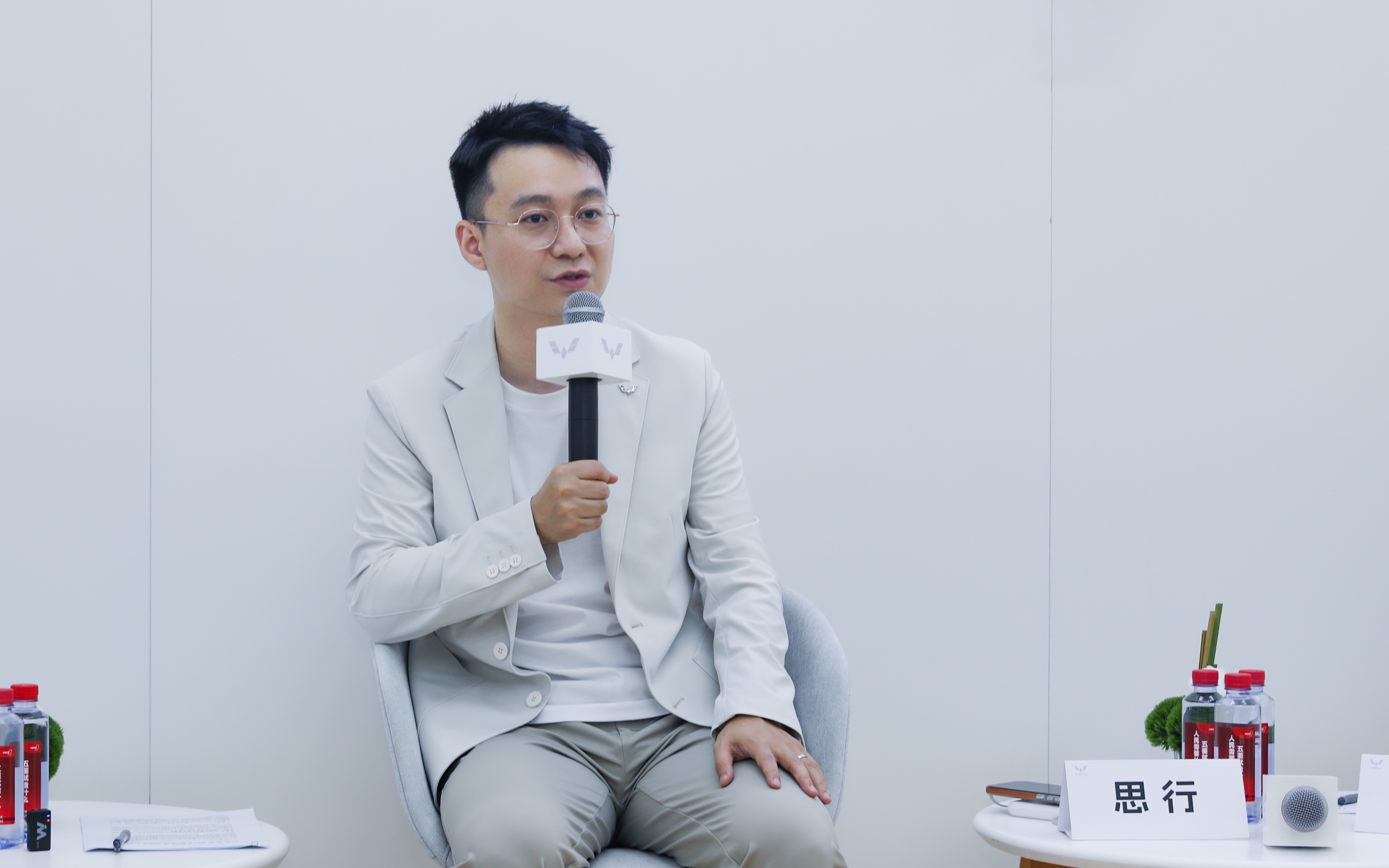
车展对话|五菱思行:在配置功能介绍上做“减法”
Bei Ke Cai Jing· 2025-04-27 03:43
Core Viewpoint - SAIC-GM-Wuling is shifting its strategy to capture the mid-size car market with the launch of the Wuling Xingguang, which features L2-level assisted driving technology and starts at a pre-sale price of 109,800 yuan [1][9]. Group 1: Product Strategy - The company aims to target a younger demographic with a more youthful design and practical technology configurations in its products [2][5]. - Wuling's product line is focused on moving "upward" in the market, with plans to introduce the Xingguang S SUV and potentially other models like MPVs [4][9]. - The company intends to simplify the introduction of product features, focusing on essential functionalities to meet real user needs [6][9]. Group 2: Market Positioning - The mid-size car market is highly competitive, with prices for joint venture models like Passat and Camry dropping below 150,000 yuan [5]. - Wuling plans to leverage the spaciousness of its vehicles and refresh the interior design to compete effectively in this segment [5]. Group 3: Technology and Cost Management - The Xingguang is Wuling's first model equipped with advanced assisted driving capabilities, including highway navigation and full-scene parking functions [9]. - The company aims to reduce costs through scale and pragmatic technology, ensuring that users receive a good experience at a lower price point [9]. Group 4: Channel Strategy - Wuling is undergoing a channel transformation by separating commercial and passenger vehicle sales, allowing dealerships to focus on specific market segments [10].