
红利资产

Search documents
红利资产重现吸引力!市场风格切换?
券商中国· 2025-11-13 23:24
Core Viewpoint - The article discusses the recent performance of dividend stocks, particularly bank stocks, which have regained investor interest after a period of adjustment, highlighting a potential shift in market style towards dividend assets while maintaining a balance with technology stocks [1][2][4]. Group 1: Market Performance - Since October, the dividend low volatility index has increased by 8.69%, while the Sci-Tech 50 index has decreased by 7.75%, indicating a possible market style switch towards dividend stocks [1]. - In the past month, despite net redemptions in broad-based indices like CSI 300 and CSI A500, dividend and growth sectors have seen net inflows, with the dividend low volatility index attracting a net inflow of 3.898 billion yuan [1][2]. - The banking sector, a key component of dividend assets, experienced a significant pullback of 15% in Q3, but has since rebounded, with bank stock prices reaching new highs [2][3]. Group 2: Dividend Attractiveness - The appeal of dividend assets lies in their consistent cash flow and ability to provide stable returns through cash dividends, with many bank stocks now offering dividend yields around 5% after recent adjustments [2][4]. - As of November 13, the banking index has rebounded over 10% in Q4, with cumulative gains of 9%, while the Sci-Tech 50 index has declined [2]. - The insurance sector has also shown significant interest in bank stocks, with increased holdings and stock price appreciation [3]. Group 3: Fundamental Support - The fundamental support for bank stocks includes a stabilization in net interest margins and strong performance from the insurance sector, which has seen stable premium income and improved investment returns [5]. - Public funds have reduced their holdings in bank stocks, creating room for potential increases in Q4, as the market seeks to rebalance styles [5]. Group 4: Future Outlook - The article suggests that while dividend assets are currently favored, the technology sector remains relevant, and investors should be cautious of potential short-term corrections [9]. - The overall market sentiment indicates a preference for low-valuation sectors, including consumer, chemical, and pharmaceutical industries, which may also attract investor interest [9].




豪取“12连阳”!标普红利ETF(562060)连续5日吸金6617万元,基金经理火线解读
Xin Lang Ji Jin· 2025-11-13 09:59
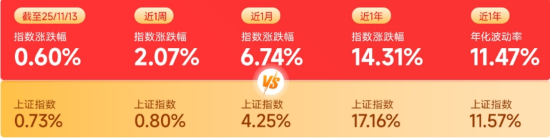
Core Viewpoint - The A-share market has shown strong performance, with the core index returning above 4000 points and the S&P A-share Dividend Index continuing its upward trend, indicating significant excess returns compared to the broader market [1][2]. Market Performance - As of November 13, the S&P A-share Dividend Index has increased by 0.60% in the past week, 6.74% in the past month, and 14.31% over the past year, with an annualized volatility of 11.47% [2]. - The Shanghai Composite Index has also performed well, with a 0.73% increase in the past week and a 4.25% increase in the past month [2]. ETF Performance - The S&P Dividend ETF (562060) has outperformed other popular dividend ETFs, achieving a premium increase of 0.48% and marking a "12 consecutive days of gains" with a closing price of 0.628 yuan [2][4]. - The ETF has seen a significant inflow of funds, with a total net inflow of 66.17 million yuan over the past five trading days, indicating strong investor interest [4]. Stock Performance - High-dividend stocks within the index have shown notable performance, with companies like Furui Co. achieving six consecutive daily price limits, and Zhongyuan Marine Energy rising by 7.11% [6][7]. Index Composition and Strategy - The S&P A-share Dividend Index is characterized by a more balanced industry distribution, with the top five industries (banking, machinery, light industry, home appliances, and basic chemicals) accounting for less than 50% of the index [12]. - The index features a median market capitalization of 21 billion yuan, which is significantly lower than that of the CSI 500 index, aligning with the current market preference for small-cap stocks [12]. Dividend Yield and Strategy - The S&P A-share Dividend Index maintains a competitive dividend yield of 18%, benefiting from a high-frequency rebalancing mechanism that enhances dividend stability and profitability [9][12]. - The index has outperformed its peers in terms of returns, with a year-to-date increase of 14.95% and a Sharpe ratio of 1.91, indicating strong risk-adjusted performance [9].
2026年A股策略展望:“小登”时代,牛途仍在
Guoxin Securities· 2025-11-13 09:23
Group 1 - The current bull market is in its second phase, transitioning from emotional drivers to fundamental ones, with a focus on technology as the main theme [1][11][19] - The bull market is characterized by a significant structural differentiation between "small-cap" and "large-cap" assets, with "small-cap" stocks outperforming [30][21] - The technology sector is expected to lead the market, with specific attention on AI applications, robotics, smart driving, and AI in life sciences [2][57][68] Group 2 - The report highlights that the bull market's main line is technology, with significant contributions from major tech companies, particularly in AI and semiconductor sectors [2][63] - Historical bull markets have shown that the main line often correlates with industry cycles, where sectors with high revenue growth tend to outperform [58][60] - The report emphasizes the importance of understanding the differentiation between "old economy" and "new economy" stocks, with a recommendation to maintain exposure to dividend-paying assets amidst a backdrop of financial asset scarcity [2][30][10] Group 3 - The report discusses the impact of macroeconomic policies, including fiscal and monetary measures, on market performance, particularly in relation to the "14th Five-Year Plan" and its focus on high-quality development and technological self-reliance [17][18] - The analysis indicates that the market's valuation structure is healthier compared to previous bull markets, with a lower percentage of stocks trading at high price-to-book ratios [21][25] - The report notes that the trend of "deposit migration" is ongoing, with a shift in funds towards higher-yielding assets as traditional deposit rates decline [35][39]
银行板块“逆袭”大戏能否延续?
Di Yi Cai Jing· 2025-11-13 05:56
Core Viewpoint - The banking sector in the A-share market has experienced a dramatic reversal in the fourth quarter, with the Shenwan Bank Index rising nearly 9% since the beginning of the quarter, significantly outperforming the broader market [2][3]. Market Performance - The banking sector's strong performance is not a one-day event but shows a trend of upward movement, with the Shenwan Bank Index increasing by 8.86% in the fourth quarter, compared to a 3.02% rise in the Shanghai Composite Index [3][4]. - Individual stocks have shown even greater gains, with Agricultural Bank of China and Chongqing Bank rising over 27%, and Shanghai Bank and Xiamen Bank increasing by more than 17% [3]. Fund Flow and Investor Sentiment - In the third quarter, the banking sector was the only one to decline, with a cumulative drop of 10.19%, and public funds significantly reduced their holdings, selling 535.9 million shares [4]. - In contrast, over 6 billion yuan has flowed into bank-related ETFs in the fourth quarter, indicating a shift in investor sentiment towards the banking sector [4][6]. Institutional Interest - There has been an increase in institutional interest in the banking sector, with 11 banks receiving attention from 62 institutions since the beginning of the fourth quarter [4][5]. - Some banks that were previously heavily sold off in the third quarter are now being researched by institutions, indicating a potential turnaround in investor perception [5]. Valuation and Dividend Appeal - Analysts attribute the renewed interest in bank stocks to their low valuation and high dividend yield, making them attractive in a risk-averse environment as the year ends [6][7]. - The banking sector's valuation remains at historical lows, and the high dividend characteristics are expected to attract long-term capital, including insurance funds and public funds [6][7]. Divergent Views on Investment Value - There is a divergence in institutional views regarding the investment value of the banking sector, with some analysts believing that the sector's valuation does not fully reflect its true value, particularly for quality regional banks [8][9]. - Other analysts express caution, suggesting that the recent gains in bank stocks may be driven by short-term factors and that the sector's appeal may be more tactical than fundamental [9].

银行板块“逆袭”大戏能否延续?
第一财经· 2025-11-13 05:49
Core Viewpoint - The banking sector in the A-share market has experienced a dramatic reversal in the fourth quarter, with the Shenwan Banking Index rising nearly 9% since the beginning of the quarter, significantly outperforming the broader market [3][5]. Group 1: Market Performance - The banking sector, which was the only declining sector in the third quarter with a drop of 10.19%, has seen a strong recovery, with Agricultural Bank and Industrial and Commercial Bank reaching historical highs [5][6]. - As of November 12, the Shenwan Banking Index has increased by 8.86% in the fourth quarter, compared to a 3.02% rise in the Shanghai Composite Index during the same period [5][6]. - Individual stocks have shown even greater gains, with Agricultural Bank and Chongqing Bank rising over 27%, and Shanghai Bank and Xiamen Bank increasing by more than 17% [5][6]. Group 2: Fund Flows and Investor Sentiment - In the third quarter, public funds reduced their holdings in the banking sector by 53.59 billion shares, with 42 out of 55 bank stocks experiencing reductions [6][7]. - In contrast, over 60 billion yuan has flowed into bank-related ETFs in the fourth quarter, indicating a shift in market sentiment towards banking stocks [6][7]. - Institutional interest in the banking sector has increased, with 11 banks receiving attention from 62 different institutions for research since the beginning of the fourth quarter [6][7]. Group 3: Investment Drivers - The recovery in banking stocks is attributed to multiple factors, including stable cash flows, high dividends, and low valuations, which have made them attractive in a risk-averse environment [7][8]. - The low allocation of active funds to the banking sector has reached a five-year low, suggesting potential for increased investment as market conditions evolve [7][8]. - Policy changes are also seen as a driving force for increased allocation to banking stocks, as public funds look to rebalance their portfolios [8][9]. Group 4: Divergent Views on Investment Value - There is a division among institutional investors regarding the investment value of banking stocks, with some believing that the sector still holds significant potential for growth, especially among regional banks [9]. - Others express caution, suggesting that the recent gains may be driven by short-term factors and that the sustainability of these trends remains uncertain [9].

越涨越买!两日吸金超14亿
Zhong Guo Zheng Quan Bao· 2025-11-12 12:44
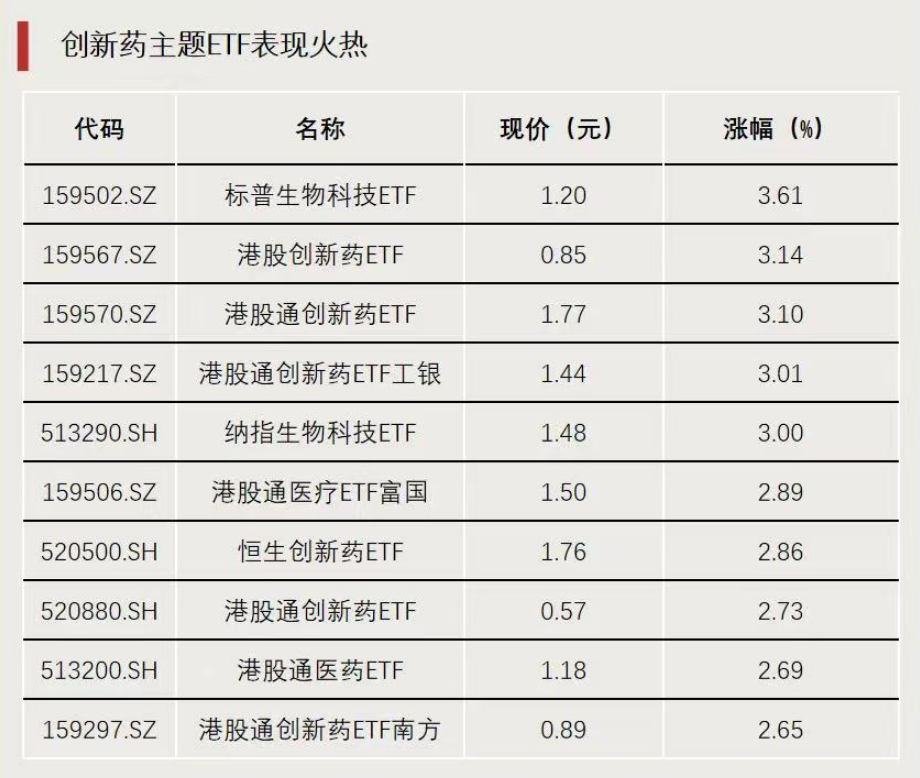
Group 1: Performance of ETFs - The innovative drug sector showed strong performance on November 12, with multiple related ETFs rising over 2.5% [1][4] - Defensive ETFs, including financial, consumer, large-cap value, and dividend ETFs, also exhibited significant gains [1][7] - The S&P Biotechnology ETF (159502) and NASDAQ Biotechnology ETF (513290) had notable increases, reflecting the positive trend in the overseas pharmaceutical market [4] Group 2: Fund Flows - The Huaan Gold ETF attracted over 1.4 billion yuan in net inflows over two trading days, driven by rising gold prices [3][9] - Consumer and AI-themed ETFs also saw substantial capital inflows, with several products like the Invesco Hang Seng Consumer ETF and Huatai-PineBridge CSI Major Consumer ETF leading in net inflows [9][10] - The financial sector ETFs, including the non-bank financial ETF, also reported significant net inflows, indicating a shift in investor interest [10] Group 3: Industry Insights - The innovative drug sector is expected to continue its growth trajectory, with a reported revenue increase of 1.98% and a net profit growth of 7.25% year-on-year for the third quarter [11] - The CXO sector showed even stronger performance, with revenue growth of 11.18% and net profit growth of 46.46% [11] - The overall outlook for the innovative drug industry remains positive, supported by domestic policy and a favorable global environment for drug development [11]
红利资产延续涨势,恒生红利低波ETF(159545)、红利低波动ETF(563020)连续“吸金”
Sou Hu Cai Jing· 2025-11-12 11:02
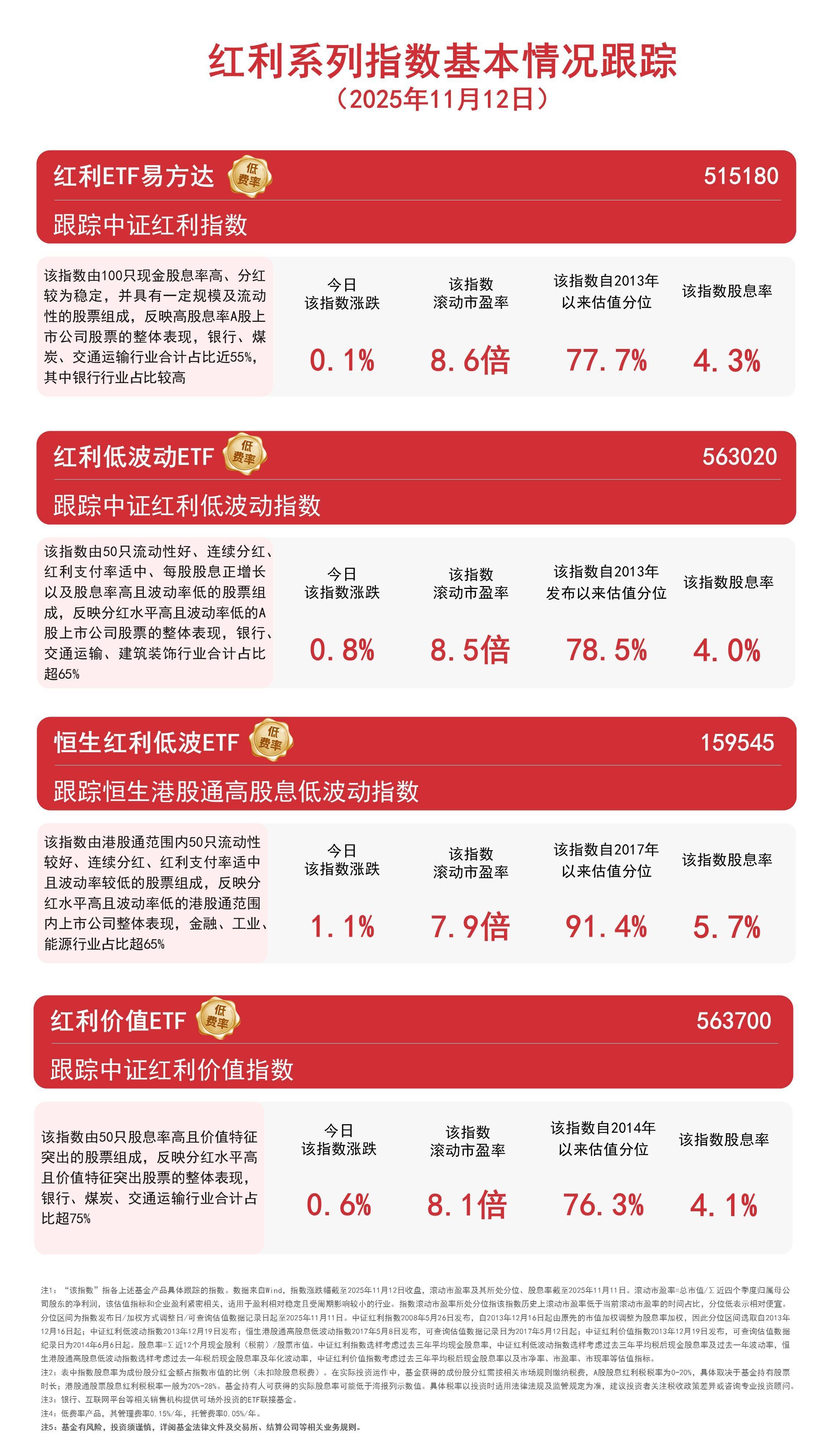
Group 1 - The Hang Seng High Dividend Low Volatility Index increased by 1.1%, while the CSI Dividend Low Volatility Index rose by 0.8%, and the CSI Dividend Value Index grew by 0.6% [1][9] - The Hang Seng Dividend Low Volatility ETF (159545) saw a net subscription of over 150 million units throughout the day, with a total net inflow of 270 million yuan and 580 million yuan for the past week in the Hang Seng Dividend Low Volatility ETF (159545) and the Dividend Low Volatility ETF (563020) respectively [1][2] - The Hang Seng Dividend Low Volatility ETF (159545) announced its fourth dividend distribution of the year, with a dividend of 0.1 yuan per 10 fund shares, with the record date on November 11 and the cash distribution date on November 14 [1] Group 2 - The index consists of 50 stocks with good liquidity, continuous dividends, moderate dividend payout ratios, positive growth in earnings per share, and low volatility, reflecting the overall performance of A-share listed companies with high dividend levels and low volatility, with banking, transportation, and construction industries accounting for over 65% [3] - The index tracks stocks within the Hong Kong Stock Connect that have good liquidity, continuous dividends, moderate dividend payout ratios, and low volatility, reflecting the overall performance of listed companies in the Hong Kong Stock Connect, with finance, industry, and energy sectors making up over 65% [7]
AI走进指数投资,大模型青睐银行股、“易中天”
第一财经· 2025-11-12 10:43
2025.11. 12 本文字数:1793,阅读时长大约3分钟 作者 | 第一财经 周楠 AI技术浪潮席卷,证券业也在加紧布局,将业务与大模型结合起来。对投资者而言,如何利用大数据进行投资决策,靠AI炒股靠谱吗?种种问题成为重要 关切。 "把大语言模型应用到指数化投资场景,模拟投资经理的投资逻辑,定期由AI完成调仓,并建立应对市场风险的预警机制,是当前券商金融科技转型的重 要探索。"高华证券副总经理蔡洪玮对第一财经说。 11月12日,高华证券的指数产品"大模型稳健50"迎来发布一周年,该指数是国内首个基于大语言模型的股票指数。今年8月,该机构又联合发布了大模 型新质生产力指数。 Wind数据显示,截至11月11日,大模型稳健50全收益指数累计收益率达到23.2%,超过同期中证红利全收益指数、中证红利低波动全收益指数。 在大模型投资中,当下哪些个股最受AI青睐?记者在华证官网看到,目前,大模型稳健50指数披露的十只主要成份股中,上市银行占据8席,涉及农业银 行、招商银行等。大模型新质生产力指数主要成份股中,出现了"易中天"的身影。披露显示,该指数采用自由流通市值加权,新易盛为该指数第一大权 重股,占比10%。 ...

AI走进指数投资,大模型青睐银行股、“易中天”
Di Yi Cai Jing Zi Xun· 2025-11-12 07:49
Core Insights - The integration of AI technology into the securities industry is accelerating, with a focus on utilizing large language models for investment decision-making and risk management [1][4] - The "Large Model Stable 50" index, launched by GaoHua Securities, has achieved a cumulative return of 23.2% since its inception, outperforming other indices [1][2] - The index primarily includes banking stocks, indicating a preference for stable, dividend-paying companies [2][6] Index Performance - The "Large Model Stable 50" index reached a point of 2007.24, with a monthly increase of 3.75% and a year-to-date increase of 16.8%, reflecting a historical annualized return of 20.5% [2] - The "Large Model New Quality Productivity" index, focusing on sectors like semiconductors and AI, has a year-to-date increase of 41.28% and a historical annualized return of 17.61% [2] - The top ten constituents of the "Large Model Stable 50" index are predominantly banks, with over 40% of the index's weight in the financial sector [2][3] Sector Focus - The "Large Model New Quality Productivity" index has a high concentration of technology stocks, with the top three constituents being New Yi Sheng, Hikvision, and Tianfu Communication [2][3] - The information technology sector comprises over half of the companies in the index, followed by communication services and industrial sectors [3] Investment Themes - The themes of dividends and growth are highlighted as significant for A-share investments, with a noted increase in the popularity of dividend-focused strategies over the past few years [6][7] - The integration of AI in investment strategies is expected to strengthen as the trend of index-based investing continues to grow [4][5] - The use of AI models for portfolio adjustments is based on comprehensive assessments of market data, fundamentals, and sentiment, ensuring a systematic approach to risk management [7]





“红利三杰”齐头并进!港股红利低波ETF(520550)、中证红利ETF(515080)及中证红利质量ETF(159209)联袂上涨
Ge Long Hui· 2025-11-11 13:14
Core Viewpoint - The dividend assets continue to show strong performance, with three major ETFs experiencing consecutive gains, indicating a positive market sentiment towards dividend-focused investments [1] Group 1: ETF Performance - As of November 10, the Hong Kong Dividend Low Volatility ETF (520550), the CSI Dividend ETF (515080), and the CSI Dividend Quality ETF (159209) have increased by 1.19%, 0.61%, and 0.60% respectively, marking six consecutive days of gains for the first two and four days for the latter [1] - The current prices for the ETFs are as follows: 520550 at 1.275, 159209 at 1.176, and 515080 at 1.646, with respective changes of 0.016 (1.27%), 0.006 (0.51%), and 0.011 (0.67%) [2] Group 2: Market Analysis - The three ETFs have distinct characteristics: the CSI Dividend ETF focuses on undervalued high-dividend sectors like banking and coal, showcasing a nearly 5% dividend yield that highlights its defensive value; the CSI Dividend Quality ETF selects high-quality consumer and pharmaceutical companies based on ROE and other quality factors, balancing dividends with growth; the Hong Kong Dividend Low Volatility ETF attracts funds with a 6% high dividend yield, with over 60% weight in financial and real estate sectors, demonstrating significant low volatility [2] - Experts recommend a "core + satellite" investment strategy, using the CSI Dividend ETF as a base and combining it with the other two products to diversify risk and enhance returns [2] Group 3: Investment Considerations - All three products feature low fees and a regular dividend assessment mechanism, facilitating long-term holding [2] - Investors should be aware of the currency risk associated with Hong Kong products and the inherent limitations of dividend strategies regarding growth potential [2]
