
TACO交易

Search documents
金十整理:特朗普恐吓市场上瘾?盘一盘4月“解放日”以来,共出现过几次“TACO交易”
news flash· 2025-07-17 03:26
Core Viewpoint - The article discusses the volatility in the market due to Trump's tariff threats and the subsequent delays in their implementation, highlighting the phenomenon of "TACO trades" since April's "Liberation Day" [1][2]. Major TACO Trades - On April 9, tariffs on multiple countries were set to a maximum rate of 50%, but Trump announced a 90-day suspension a week later, reducing the rates [1]. - On May 26, Trump threatened to impose 50% tariffs on the EU, but postponed the effective date to July 9 to allow for negotiations [1]. - In early July, the suspension of tariffs was extended to August 1, following the original July 9 deadline [1]. - On July 14, Trump threatened 100% tariffs on Russia if hostilities continued, but provided a 50-day buffer period [1]. - On July 16, reports emerged of Trump considering firing Powell, leading to significant market fluctuations, which he later denied [1]. Market Perspectives - Barclays believes rationality will prevail, as Trump's tolerance for market volatility appears limited [3]. - HSBC suggests that the Trump administration could easily delay tariffs again without any obstacles [3]. - Mitsubishi UFJ notes that the market does not expect a repeat of the turmoil caused by the April tariffs [3]. - Deutsche Bank warns that if Trump does not back down this time, significant market volatility could ensue [3]. - Nordea highlights the unprecedented scale of tariff increases, yet the market remains unusually calm, which is concerning [3]. - Analyst Jamie McGeever points out that the line between complacency and "TACO trades" may have blurred, potentially encouraging Trump to intensify tariff actions [3]. - SPI Asset Management indicates that the market currently views Trump's new tariffs on the EU and Mexico as mere noise, but risks are increasing as deadlines approach [3].
市场正押注特朗普会对关税让步,并寄望于美联储救市
财富FORTUNE· 2025-07-16 13:01
Group 1 - The core viewpoint of the article is that investors are currently underestimating the potential impact of Trump's tariffs on Mexico and the EU, believing that these tariffs will eventually be negotiated away or postponed [1][3]. - Deutsche Bank warns that the "TACO trade" (the belief that Trump will ultimately back down) is accumulating significant risks, suggesting that the market has not fully absorbed the implications of the high tariffs [2][3]. - Analysts from Deutsche Bank and Goldman Sachs express concerns that the market's expectation of these tariffs not being implemented may lead to severe market reactions if they do come into effect [3][4]. Group 2 - Morgan Stanley predicts that the economic impact of tariffs will lead to "stagflation tendencies" in the second half of the year, highlighting a disconnect between market pricing and economic forecasts [4]. - The article discusses the prevailing market sentiment that if the "TACO trade" fails, the Federal Reserve will intervene to support the market, but rising tariffs could complicate this scenario by increasing inflation [3][4].


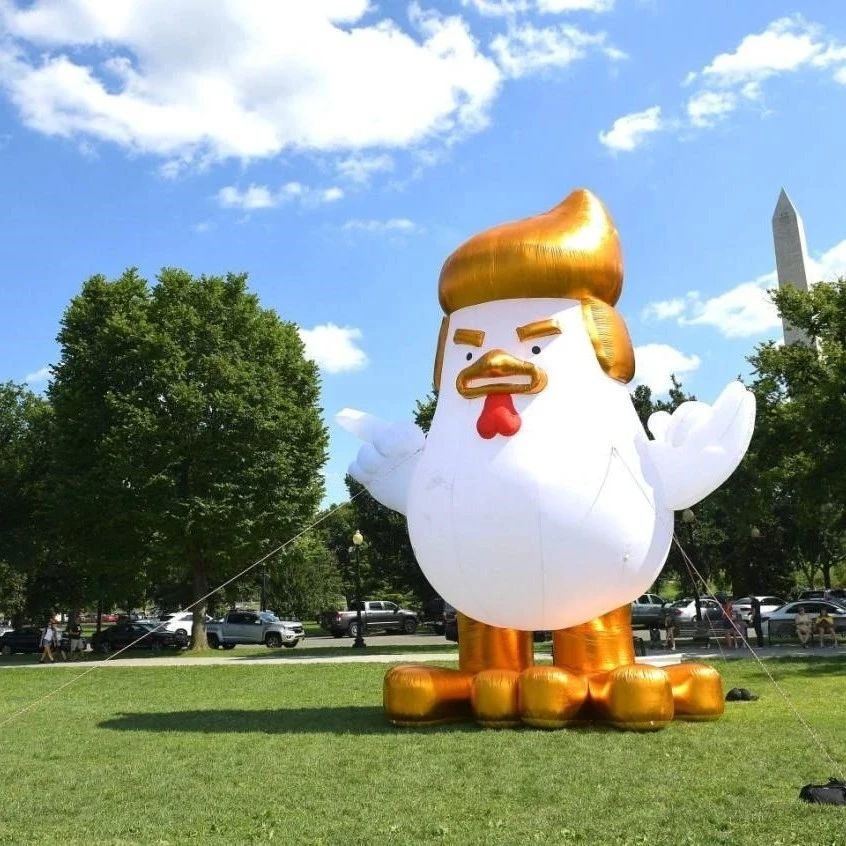
TACO热度居高不下,“厄运循环”或悄然来临!
Jin Shi Shu Ju· 2025-07-16 05:52
Group 1 - The stock market's remarkable rebound since early April reflects investors' bets that President Trump will not follow through on his tariff threats [1] - Market resilience may paradoxically encourage Trump to push forward with tariffs, which could be negative for the stock market [1] - Investors believe that the "reciprocal tariffs" strategy is largely forcing countries back to the negotiating table, with actual tariffs likely to be lower than initially stated [1] Group 2 - The S&P 500 index has rebounded significantly, reaching a historical high in less than three months, marking the second-fastest recovery from a bear market in 75 years [5] - The technology sector has driven this rebound, with valuations at rare highs over the past 25 years [5] - If the final tariff rates are around 10% like the UK, the stock market pricing may be reasonable, but higher rates could necessitate a significant downward adjustment in growth expectations [6] Group 3 - Concerns exist about a potential "doom loop" where market resilience encourages Trump to escalate tariffs, leading to increased trade uncertainty [7] - Analysts from Barclays suggest that Trump's tolerance for stock and bond market volatility appears limited, indicating a potential for rational decision-making [7] - The U.S. imported $605.7 billion worth of goods from the EU last year, highlighting the significance of EU trade relations, which could impact market dynamics if tariffs are escalated [7]
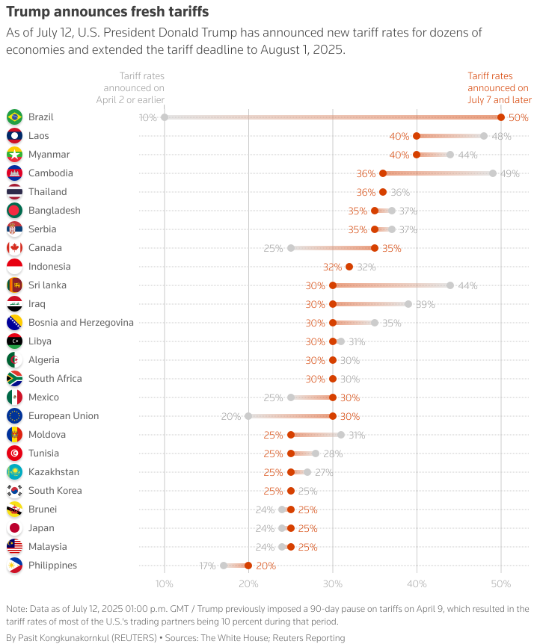
事件驱动再次抬头与应对
HTSC· 2025-07-16 05:31
Report Investment Rating No investment rating for the industry is provided in the report. Core Views - Market event-driven characteristics are rising, increasing potential asset volatility. Key macro events include Trump's tariff remarks, potential early departure of Powell, escalating uncertainty in the Russia-Ukraine conflict, and domestic policy expectations [1][2]. - In response, it's advisable to rely on high - odds opportunities from macro events for left - hand reversal trading, seek high - probability opportunities based on fundamental trends, and diversify asset allocation from a macro - risk perspective [1][2]. Summary by Directory Current Market Influencing Events - **Trump's Tariff Remarks**: Trump proposed additional reciprocal tariffs, planning 30% tariffs on Mexico and the EU, and 25% - 40% on Japan and South Korea. The market's reaction is relatively calm under the TACO expectation, but the probability of final tariff implementation is not low [9][10]. - **Fed Independence Challenge**: Powell's early departure is a potential black swan event. If it occurs, it may lead to a rapid steepening of US Treasury yields and a significant decline in the US dollar. Trump may appoint more dovish candidates, increasing inflation and long - term interest rate risks [13]. - **Russia - Ukraine Conflict**: The uncertainty of the Russia - Ukraine conflict is rising, but the market's sensitivity to geopolitical disturbances has decreased significantly. However, if oil prices remain high for a long time, it may bring a "stagflation" shock to the global economy [17]. - **Domestic Policy Expectations**: The market focuses on the implementation of policies such as "anti - involution" and "urban renewal", and upcoming events include the July domestic important meeting and the China - EU Summit [20]. Market Condition Assessment - **Domestic**: The summer travel boom remains resilient, real - estate transactions are differentiated, "anti - involution" supports black - commodity prices, and external demand has declined. Monetary policy focuses on short - term liquidity management, and fiscal policy involves special treasury bond issuance, employment stability, and pension adjustment. Real - estate policies continue to boost demand [3][45]. - **US**: The labor market remains resilient, consumption is marginally improving, tariff disturbances are increasing, and the expectation of Fed rate cuts is decreasing [3][46]. Allocation Recommendations - **Domestic Bonds**: Support factors for the domestic bond market remain. The market is more sensitive to monetary policy and capital flows. Interest - rate bonds can be traded in bands, and 7 - and 10 - year bonds can be bought on significant adjustments [41]. - **Domestic Stocks**: The next policy focus is the July important meeting, and the earnings disclosure period is approaching. Investors are advised to strengthen trading thinking to prevent fluctuations [42]. - **US Treasury Bonds**: There are many short - term disturbances. It is recommended to start buying 10 - year US Treasury bonds around a 4.5% yield [42]. - **US Stocks**: As the earnings period approaches, the focus shifts to corporate earnings. The short - term trend may be volatile and differentiated [43]. - **Commodities**: Gold is still in an upward trend, with short - term volatile and strong performance. The price of black - commodity is affected by "anti - involution" policies, and the short - term uncertainty of oil prices is high [44]. Follow - up Concerns - **Domestic**: LPR quotes [5][60]. - **Overseas**: US June PPI monthly rate, industrial production monthly rate, retail monthly rate, Fed's economic situation Beige Book, Eurozone June CPI monthly rate, May trade balance and current account, and UK June employment data [5][61].
全球铜价将如何演绎?
Qi Huo Ri Bao Wang· 2025-07-16 01:04
Group 1 - The U.S. will impose a 50% tariff on copper imports starting August 1, 2025, following a national security assessment [1][2] - This tariff is expected to significantly impact global copper trade flows and may lead to increased costs for U.S. industries reliant on copper, such as automotive and electrical sectors [6][11] - The COMEX copper futures price surged by 10% to a record high of $5.89 per pound after the announcement, while LME copper prices fell over 2% [2][10] Group 2 - The COMEX-LME copper futures price spread has reached a historical high of $2,677 per ton, indicating a significant divergence in market pricing [2][4] - U.S. copper imports have surged, with 685,000 tons imported in the first half of the year, nearly matching the total expected for 2024 [10] - The anticipated tariff could lead to a 5% to 8% reduction in U.S. copper demand, as higher costs may deter consumption [15] Group 3 - The tariff is part of a broader strategy to reshape U.S. copper industry dynamics and reduce reliance on imports from 45% to 30% by 2035 [11] - The U.S. is leveraging the tariff to gain political capital ahead of the Republican National Convention, showcasing a decisive stance on trade [9] - The potential for increased copper prices and volatility in the market is heightened, with expectations of a significant impact on global supply chains [11][15] Group 4 - China's copper imports are heavily reliant on the U.S., with over 80% of copper concentrate imports coming from abroad, raising concerns about supply chain disruptions [13] - The copper market is experiencing a seasonal slowdown in China, which could exacerbate inventory pressures if U.S. tariffs redirect copper flows to Asia [13] - The long-term outlook for copper remains positive, driven by increasing demand in renewable energy and electric vehicle sectors [16][17]
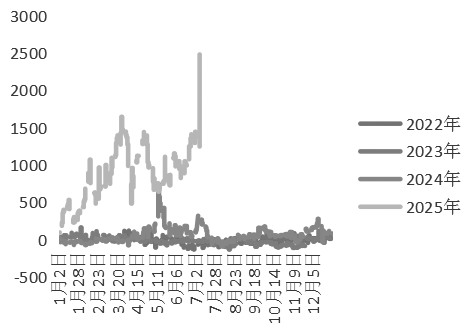
关税落地冲击TACO交易
Tebon Securities· 2025-07-14 08:22
Market Performance - Global stock markets showed mixed performance last week, with US indices experiencing declines: Nasdaq down -0.1%, S&P 500 down -0.3%, and Dow Jones down -1.0%[3] - European markets saw gains, with Germany's DAX up +2.0%, France's CAC40 up +1.7%, and UK's FTSE 100 up +1.3%[3] - In the Asia-Pacific region, Vietnam's VN30 index led gains, while Japan's Nikkei 225 and India's SENSEX30 indices experienced pullbacks[3] Tariff Impact - The reintroduction of tariffs has created significant uncertainty for TACO transactions, with US tariffs on the EU exceeding expectations, ranging from 25% to 50% effective August 1[3] - Trump's announcement of a 30% tariff on the EU and Mexico, alongside a 35% tariff on Canada, indicates a strategy of "maximum pressure" on allies, potentially disrupting market perceptions of TACO transactions[3] - According to TAX FOUNDATION, the weighted average tariff rate is projected to rise to 16.1%, leading to an estimated annual tariff revenue of $665.91 billion based on a $4.1 trillion import scale for 2024[3] Federal Reserve Outlook - Divergence in interest rate cut expectations has increased, influenced by tariff uncertainties; some Fed officials express caution regarding inflation impacts from tariffs[3] - The latest FOMC minutes indicate a preference for observing tariff impacts before deciding on rate cuts, with market expectations leaning towards a potential rate cut starting in September[3] - Trump's pressure on the Fed, including social media calls for rate cuts, adds complexity to the interest rate outlook, with market volatility expected until September[3] Investment Strategy - The unexpected tariffs may impact TACO transactions and short-term market sentiment, leading to increased volatility in US stocks and gold[3] - Long-term investment recommendations include positioning in US Treasuries and XBI, which may benefit from strengthened rate cut expectations[3] Risk Factors - Risks include potential unexpected rebounds in overseas inflation, weaker-than-expected global economic conditions, and escalated geopolitical tensions that could lead to increased market volatility[3]
“从ICU到KTV”后,美股多头已“无所畏惧”?
Hua Er Jie Jian Wen· 2025-07-12 01:26
Core Viewpoint - Wall Street investors have shown remarkable resilience to various shocks, including inflation concerns, tariff threats, and geopolitical conflicts, maintaining high levels of confidence in the market [1][2]. Group 1: Market Sentiment - Despite escalating trade threats from Trump, including a proposed 35% tariff on Canadian goods and a 50% tariff on copper, speculative sentiment remains high, with Bitcoin surpassing $118,000 and stock markets near record highs [1]. - The S&P 500 index closed slightly below its record high, indicating that traders are less fearful even as indicators of market pressure rise [2]. - Columbia Threadneedle Investments' Josh Kutin noted that the market has remained indifferent to issues like tariffs and geopolitical tensions, suggesting a lack of negative reaction from investors [3]. Group 2: Investment Strategies - The "TACO" trade, which stands for "Trump Always Chickens Out," reflects a growing belief among investors that the government will retract tariff threats, allowing for increased stock exposure [3]. - Strong momentum and relatively low volatility have led to bullish signals in multiple investment portfolios, encouraging traders to seek tactical opportunities [3]. Group 3: Concerns and Warnings - JPMorgan's Jamie Dimon expressed concerns about complacency in the market, suggesting that the current environment may be a pressure test for investors [5]. - Man Group's Kristina Hooper warned that the market rally may have gone too far, and the unresolved tariff situation poses challenges for investors trying to model potential outcomes [5].
KVB plus:美联储加息概率达50%!市场对关税过于松懈
Sou Hu Cai Jing· 2025-07-11 01:32
KVB官网发现周四,特朗普一系列新的关税警告如石沉大海,并未如 4 月宣布 "对等关税" 时那般在市场中掀起惊 涛骇浪。当日,标普 500 和纳斯达克指数收盘时仍强势上扬,双双创下新高。科技巨头英伟达表现格外亮眼,收盘 市值首次突破 4 万亿美元大关,展现出强大的市场影响力。与此同时,比特币价格也一路飙升,创下历史新高,似 乎全然不受关税政策的阴霾笼罩。 汇丰策略师马克斯・凯特纳(Max Kettner)带领的团队表示,风险资产有望持续获得支撑,二季度财报季和市场 对关税敏感度的降低将成为关键催化剂。"除投资者仓位仍具支撑外,我们认为市场对二季度财报季的悲观预期被 夸大。美元走弱、公司盈利指引改善及低预期足以带来正面意外。在本周再度宣布关税措施后,任何降息举措也可 能被市场解读为利好。" 投资者正紧锣密鼓地为即将到来的第二季度财报季做准备,密切关注特朗普 4 月 2 日启动的关税战对企业盈利的潜 在影响。Granite Wealth Management 董事总经理布鲁斯・扎罗(Bruce Zaro)表示:"分析师对标普 500 公司普遍持 怀疑态度,纷纷下调预期,主要基于关税及其带来的不确定性。但我们认为, ...

“华尔街一哥”:美联储加息概率达50%!市场对关税过于松懈
Jin Shi Shu Ju· 2025-07-10 22:58
Core Viewpoint - The financial markets are showing resilience despite ongoing tariff threats from Trump, with the S&P 500 and Nasdaq reaching new highs, and Nvidia's market cap surpassing $4 trillion. Bitcoin also hit an all-time high [2]. Group 1: Market Sentiment and Economic Outlook - Jamie Dimon, CEO of JPMorgan, warns that the market has become complacent regarding Trump's tariff threats, suggesting that investors believe he will back down as he has in the past [3]. - Dimon emphasizes the importance of a trade agreement between the U.S. and the EU, which could stabilize tariffs and provide a framework for future negotiations [3]. - The market is currently preparing for the upcoming second-quarter earnings season, with concerns about the impact of tariffs on corporate profits [7]. Group 2: Federal Reserve and Interest Rates - Dimon indicates that the probability of the Federal Reserve raising interest rates is higher than market expectations, suggesting a 40% to 50% chance compared to the market's 20% [5]. - He attributes this higher probability to inflationary pressures stemming from tariffs, immigration policies, and budget deficits, alongside global trade restructuring [5]. - The upcoming Federal Reserve meeting on July 29-30 is critical, as market participants are divided on the likelihood of rate cuts later in the year [4][5]. Group 3: Corporate Earnings Expectations - Analysts are skeptical about the earnings outlook for S&P 500 companies, with expectations for only a 2% growth in profits, the weakest in two years, primarily due to tariff uncertainties [8]. - Despite the low expectations, some analysts believe that growth-oriented companies, particularly in the tech sector, will still deliver strong results [8]. - There is a belief that the market's pessimism regarding the earnings season may be overstated, with potential positive surprises from improving corporate guidance and a weaker dollar [8].
摩根大通CEO戴蒙:我不喜欢使用TACO交易这个词,因为我认为特朗普在解放日之后“退缩”是正确的选择。
news flash· 2025-07-10 14:58
Core Viewpoint - JPMorgan CEO Jamie Dimon expressed his disapproval of the term "TACO trading," stating that he believes Trump's retreat after Liberation Day was the correct choice [1] Group 1 - Jamie Dimon emphasizes the importance of terminology in trading practices, indicating a preference for clarity over colloquial terms [1] - The statement reflects a broader sentiment within the financial industry regarding the implications of political decisions on market strategies [1]