去美元化

Search documents
多家机构预期2026年美元资产吸引力减弱金价继续上涨
Sou Hu Cai Jing· 2025-12-25 06:33
Group 1 - Multiple international financial institutions predict a continued trend of using gold to hedge against risks associated with dollar-denominated assets, with gold prices expected to rise further by 2026 [1] - Schroders analyst Patrick Brenner highlights that the U.S. is facing "policy uncertainty, fiscal fragility, and increasing investor doubts about the long-term role of U.S. Treasuries and the dollar," making gold a preferred choice for asset diversification due to its safe-haven properties and low correlation with traditional assets [1] - Goldman Sachs forecasts that gold prices will reach approximately $4,900 per ounce by the end of 2026, driven by strong structural demand from central bank purchases and cyclical support from potential Federal Reserve rate cuts [1] - JPMorgan anticipates that gold prices could rise to $5,055 per ounce by Q4 2026, with the possibility of further increases to $6,000 per ounce, indicating a clear long-term trend of gold accumulation by official reserves and investors [1] - Forbes notes that global trade tensions initiated by the U.S., the rise of "de-dollarization" transactions to avoid dollar depreciation, increased demand for gold from private investors and cryptocurrency funds, and ongoing central bank purchases are significant drivers for the upward movement of gold prices [1] Group 2 - The U.S. dollar index has declined by 9% since the beginning of 2025, potentially marking its worst annual performance in eight years [2] - The market widely expects that the new Federal Reserve chairman may lean towards a dovish monetary policy stance, which could further weaken the dollar and reduce the attractiveness of dollar-denominated assets for investors [2]
【百强透视】景气度暴增!股价、业绩齐飞,有色概念还能涨?
Sou Hu Cai Jing· 2025-12-25 06:30
Market Performance - As of December 24, 2025, A-shares showed strong performance with the Shanghai Composite Index up 17.58%, the Shenzhen Component Index up 29.50%, and the ChiNext Index soaring 50.80%. The Hong Kong market also performed well, with the Hang Seng Index rising over 28.71% and the Hang Seng Tech Index gaining 23.08% [2][3]. Sector Performance - The metals sector emerged as the top performer in both A-shares and Hong Kong markets, with precious metals like gold and silver significantly increasing in value. Industrial metals such as copper and aluminum, along with energy metals like cobalt and lithium, also experienced substantial gains, marking a strong bullish trend [2][3]. Specific Metal Performance - In A-shares, the precious metals sector surged over 104.45%, leading the market. Other sectors such as small metals, zinc, lead, energy metals, industrial metals, and rare earths also saw significant increases [3]. - In Hong Kong, the copper sector led with a remarkable increase of over 243.33%. Other categories, including gold and precious metals, other metals and minerals, and aluminum, all rose over 130% [3]. Company Highlights - Notable companies in the sector include Zijin Mining (02899.HK), which saw a nearly 159% increase in stock price, and Luoyang Molybdenum (03993.HK), which surged nearly 285%. Other companies like Zhenfeng Gold (01815.HK) and Lingbao Gold (03330.HK) also achieved significant gains, with Zhenfeng Gold increasing by 1252.27% [4][5]. Financial Performance - Many companies in the metals sector reported substantial increases in net profits. For instance, Zijin Mining reported a mid-year net profit growth of 232.92%, while Luoyang Molybdenum's net profit increased by 60.07% [6][5]. - Five Mining Resources reported a staggering increase of over 15 times in net profit, showcasing the strong financial performance across the sector [5]. Factors Driving Metal Prices - The rise in metal prices is attributed to several factors, including global economic shifts, supply-demand imbalances, and geopolitical tensions. The demand for industrial metals is driven by sectors such as AI and renewable energy, while precious metals are being supported by central bank purchases and a weakening dollar [7][10][12]. Future Outlook - Analysts predict that the metals sector may enter a prolonged bullish cycle, with expectations of continued price increases for copper, aluminum, and precious metals due to supply constraints and strong demand [12][13]. - The outlook for gold remains positive, with expectations of continued central bank purchases and a favorable environment for price appreciation [12][14]. Conclusion - The metals sector, particularly companies like Zijin Mining and Luoyang Molybdenum, has shown exceptional performance in 2025, driven by strong market demand and favorable economic conditions. The upcoming Hong Kong Wealth Management Summit will highlight these trends and the potential for continued growth in the sector [15][16].


强势升值!离岸人民币收复“7.0”,人民银行再提防范汇率超调风险
Bei Jing Shang Bao· 2025-12-25 06:17
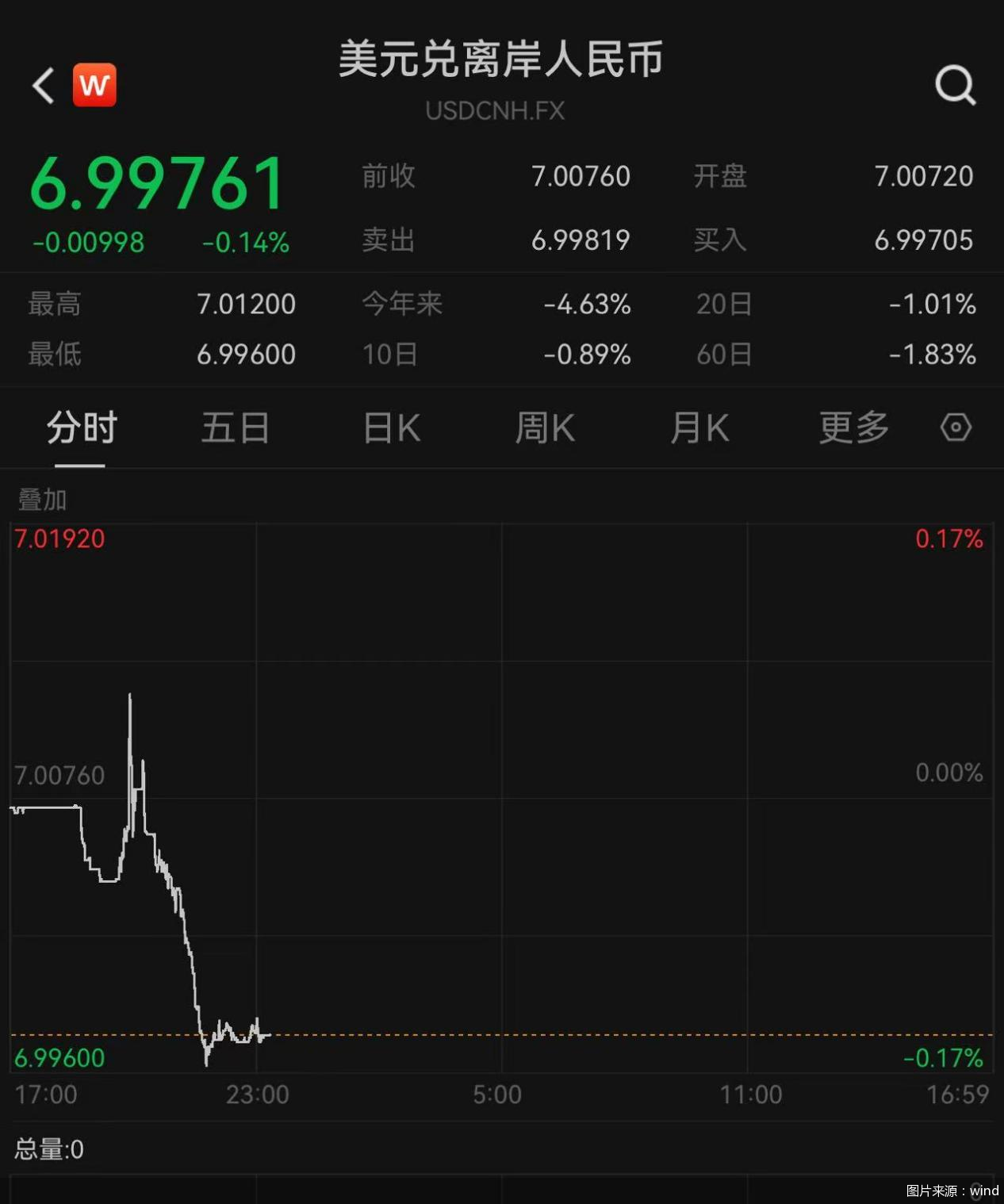
回顾年内人民币汇率走势,2025年初,在强美元的压制下,人民币汇率面临较大贬值压力,其中离岸人民币对美元汇率在2025年4月一度贬破7.40。在4月触 及年内贬值低点后,人民币对美元启动新一轮渐进升值走势,并在进入2025年下半年后尤为明显。11月下旬以来人民币对美元汇率升值幅度加大,并与美元 指数同步走强,极大推高了市场对于人民币汇率破"7"的预期。 广开首席产研院资深研究员刘涛从两方面分析了原因。刘涛指出,从人民币自身角度看,当前经济增长"中快美慢"格局持续提升人民币内在价值;居民收入 增长预期有望进一步推高人民币实际汇率升值;经常账户长期保持顺差成为人民币升值的重要支撑;人民币汇率在前期超调后有待逐步修正。 北京商报讯(记者 廖蒙)时隔15个月,人民币汇率再度"破7"。12月25日,在连日升值后,离岸人民币对美元汇率升破7.0整数关口,盘中最高升值至 6.9960,这也是2024年9月以来,离岸人民币首次升值至7.0上方。同时,在岸人民币对美元汇率同样延续升值走势,逼近7.0关口,盘中最高升值至7.0052。 Wind数据显示,截至12月25日12时20分,在岸人民币对美元汇率报7.0063,日内升值幅 ...
安联投资:预期黄金的策略性价值将持续至2026年及以后 短期市场调整或可带来入市良机
Zhi Tong Cai Jing· 2025-12-25 06:04
Core Viewpoint - Gold is experiencing a strong resurgence in investment portfolios due to structural changes in the market, including central bank demand, fiscal concerns, and de-dollarization, which are expected to continue influencing its strategic value through 2026 and beyond [1][10]. Group 1: Structural Changes Driving Gold Prices - The announcement of new import tariffs by Trump in April 2025 accelerated the rise in gold prices, marking a significant phase in the gold market's development [2]. - Central banks are diversifying their currency holdings in response to geopolitical tensions, contributing to the increase in gold prices [2]. - By mid-October 2025, gold prices had surged over 50%, with only a recent short-term technical adjustment observed [3]. Group 2: Traditional Factors Supporting Gold - Traditional factors such as a weakening dollar, declining real yields, and retail investor purchases have re-emerged to support gold's upward momentum [4]. - These factors, combined with structural changes, reinforce gold's position as a strategic reserve asset in a fragmented monetary system [4]. Group 3: Strategic Role of Gold in Investment Portfolios - Gold's role in investment portfolios is evolving from a safe-haven asset to a strategic asset, providing a solid foundation amid rising fiscal and geopolitical risks [6]. - Gold's low correlation with stocks and U.S. Treasury bonds makes it an effective risk diversification tool in multi-asset portfolios [6][7]. - The intrinsic value of gold remains stable despite inflation or rising debt levels, distinguishing it from nominal yield-dependent assets like Treasury bonds [6]. Group 4: Recommendations for Gold Allocation - There is a necessity to increase gold allocation in multi-asset portfolios, as some fund managers currently hold only single-digit percentages of gold [8]. - The firm has raised the proportion of gold in certain fund strategies, viewing it as a more effective hedge against extreme uncertainty compared to traditional safe-haven assets [8]. Group 5: Investment Potential in Gold and Silver Mining Stocks - The firm sees short-term strategic investment potential in gold and silver mining stocks, which are more closely correlated with metal prices and currently have attractive valuations [9]. - Silver has also benefited from strong industrial and investment demand, rising over 60% in the first three quarters of 2025 [9]. Group 6: Future Outlook for Gold - The strategic importance of gold is expected to continue rising through 2026 and beyond, driven by persistent fiscal imbalances, de-dollarization, and geopolitical fragmentation [10]. - Recent strong demand from investors and central banks indicates that any short-term technical adjustments in gold prices should be viewed as opportunities rather than market reversals [10].
美委战争一触即发,俄罗斯大批黄金运往中方,金价疯涨,美国很慌
Sou Hu Cai Jing· 2025-12-25 04:08
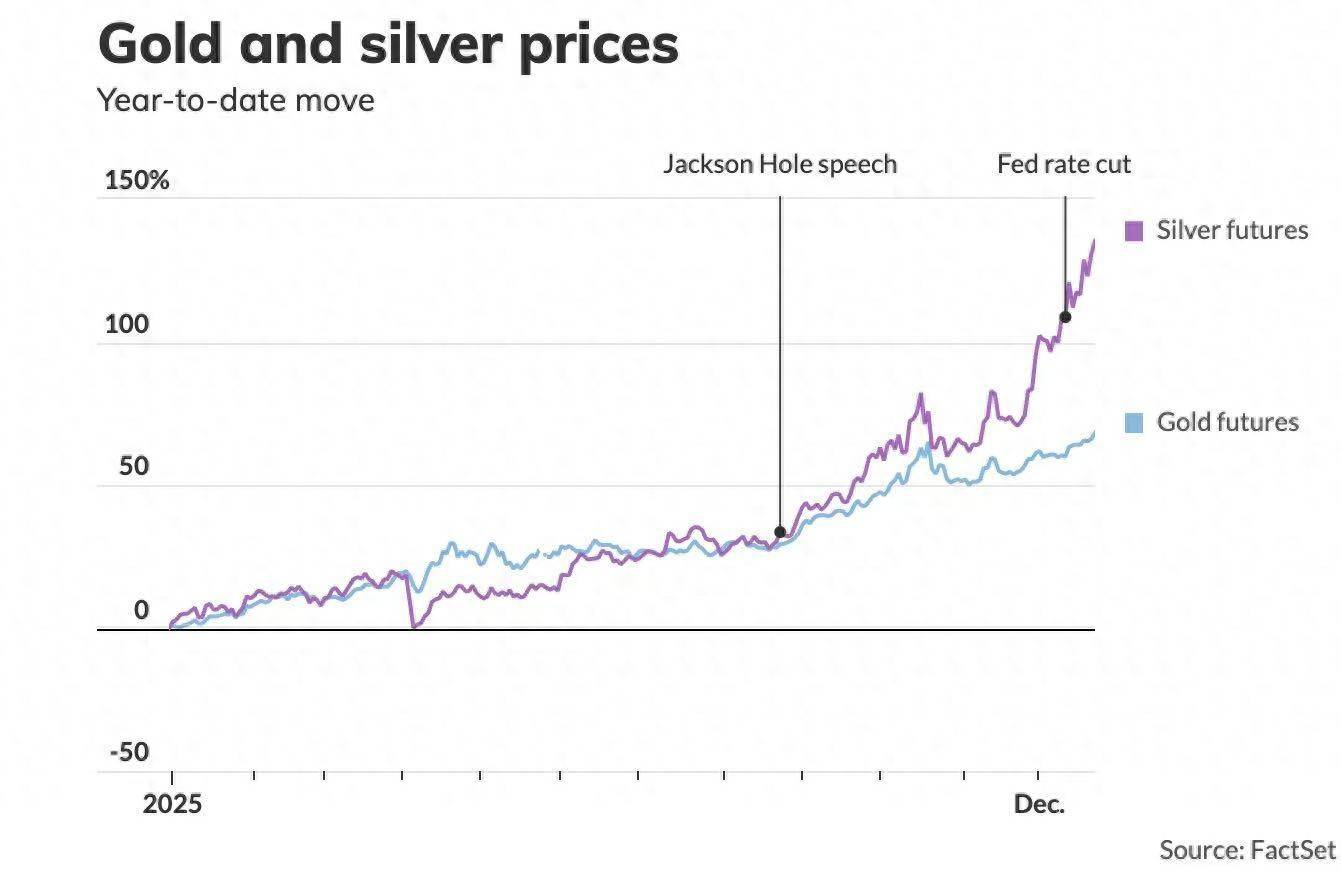
同时,乌克兰对俄罗斯港口和航运的新一轮袭击,进一步强化了黄金作为避险资产的吸引力。面对局势,中国迅速采取行动,从战略层面判断并运作。12月 20日,中国海关公布数据显示,今年前11个月,中国已从俄罗斯购买约19亿美元黄金,仅11月就采购了9.6亿美元,创下中俄黄金交易的新纪录。 欧洲刚刚加大对乌克兰的支持力度,紧接着特朗普政府就对委内瑞拉施加了极大压力,使其几乎陷入封锁状态。同时,俄罗斯也开始撤离驻委内瑞拉外交官 的家属,局势明显在升级,战争的阴影似乎一触即发。消息一出,国际黄金价格迅速飙升,突破4500美元的重要关口,今年累计涨幅已高达68%。普京也迅 速做出决定,大批俄罗斯黄金被运往中国。 有人认为,在乱世中囤积黄金是一种古老的思维方式,但实际上,黄金真正的对手是纸币。只要纸币持续超发,黄金就会不断上涨,其价值会稳步攀升。 此次黄金价格的飙升,很大程度上源于美联储近期的降息举措,以及市场对债务货币化的担忧。所谓债务货币化,是指央行通过购买政府发行的债券,即印 钞票的方式,来推动通胀,从而偿还国家债务。前高盛首席货币策略师罗宾布鲁克斯指出,美联储主席鲍威尔在8月杰克逊霍尔年会上发表的鸽派言论,以 及12月1 ...
印度不买俄油了,油轮堵在中国门口,低价甩卖真赔钱?
Sou Hu Cai Jing· 2025-12-25 03:28
Core Insights - The U.S. has imposed severe sanctions on Russian oil giants Rosneft and Lukoil, warning that any country continuing trade with them will face secondary sanctions [1] - India, heavily reliant on the U.S. market, has swiftly cut ties with Russian oil, leading to a significant reduction in its imports [1][16] - China emerges as the primary alternative for Russian oil, with a substantial increase in imports and a shift in the energy trade dynamics [3][19] Group 1: Sanctions and Trade Dynamics - The U.S. sanctions are described as a "nuclear-level" economic blockade, directly targeting Russian oil exports [1] - India has a trade deficit of $46 billion with the U.S. and cannot afford to be blacklisted, leading to a rapid withdrawal from contracts with Russian oil companies [1][16] - The sanctions have caused a dramatic drop in Russian oil exports, with India halving its procurement and reducing imports by three-quarters [1] Group 2: Shift to China - China has become the only viable option for Russian oil, with over 15 tankers carrying more than 27 million barrels of ESPO crude oil heading to Chinese waters [4][8] - The ESPO crude oil is favored by Chinese refineries due to its low sulfur content and logistical advantages, allowing for efficient processing [6][7] - The shift in trade has led to a significant increase in the volume of oil transported through the China-Russia pipeline, which surged by 35% during this period [14] Group 3: Pricing and Economic Impact - Russian oil is being sold at prices below production costs, leading to unprecedented financial pressure on Russia, which relies on energy exports for nearly 30% of its budget [12] - The financial strain is exacerbated by high costs associated with maintaining oil production in harsh conditions, necessitating continued output despite losses [12][34] - The transition to using the yuan for oil trade has effectively bypassed U.S. financial systems, diminishing the impact of sanctions [15][27] Group 4: Geopolitical Implications - The sanctions have inadvertently strengthened the energy cooperation between Russia and China, transforming their relationship from complementary to symbiotic [19][31] - India's pivot to more expensive Middle Eastern oil has resulted in an estimated additional expenditure of $9 billion, highlighting the costs of geopolitical maneuvering [16][25] - The evolving energy landscape indicates a shift from a U.S.-dominated system to a multi-polar energy market, with China gaining significant leverage [31][38]

美指年度跌幅逼近八年之最 降息预期政策分歧成推手
Jin Tou Wang· 2025-12-25 02:34
Core Viewpoint - The US dollar index (DXY) has reached a two-month low, with a year-to-date decline exceeding 9%, potentially marking the largest annual drop since 2017, driven by Federal Reserve policy divergence, rising rate cut expectations, and concerns over the US economy [1][2] Group 1: Dollar Performance - As of December 25, the dollar index was at 97.95, having fallen below the 98.50 support level for three consecutive days, confirming its weak trend [1] - The dollar's weakness is attributed to a combination of factors including the Federal Reserve's recent rate cut to 3.5%-3.75% and internal divisions among officials regarding future policy direction [1][2] - The market anticipates only a 21% probability of a rate cut in January 2026, indicating significant policy uncertainty that is suppressing the dollar's potential for recovery [1] Group 2: Economic Indicators - The US GDP annualized growth rate for Q3 was 4.3%, which did not bolster the dollar, as investors are more focused on cooling inflation and slowing employment, with the unemployment rate rising to 4.6% in November [1] - Concerns over US debt and deficits are shaking investor confidence in the dollar, with expectations of two additional rate cuts in 2026 [1] Group 3: Non-USD Currencies - Non-US currencies have collectively strengthened, with the euro appreciating approximately 14% this year, supported by European Central Bank rate hike expectations [2] - The Swiss franc and Swedish krona have risen by 14.5% and 19% respectively, while the Japanese yen and offshore Chinese yuan have also gained strength, further diminishing the dollar's attractiveness [2] Group 4: Technical Analysis and Future Outlook - Technical indicators suggest a bearish outlook for the dollar, with a daily chart showing a downward trend and the RSI near 40, indicating it has not yet reached oversold conditions [2] - Analysts predict that if the dollar cannot regain the 98.50 level, it may test the 97.00 mark [2] - The ongoing policy uncertainty is expected to continue to suppress the dollar, with potential for a rebound if economic conditions or inflation improve [2]
2025年12月25日:期货市场交易指引-20251225
Chang Jiang Qi Huo· 2025-12-25 01:18
期货市场交易指引 2025 年 12 月 25 日 | 指标 | 最新价 | 涨跌幅 | | --- | --- | --- | | 上证综指 | 3,940.95 | 0.53% | | 深圳成指 | 13,486.42 | 0.88% | | 沪深 300 | 4,634.06 | 0.29% | | 上证 50 | 3,025.18 | -0.08% | | 中证 500 | 7,352.04 | 1.31% | | 中证 1000 | 5,903.58 | 0.25% | | 日经指数 | 50,344.10 | -0.14% | | 道琼指数 | 48,731.16 | 0.60% | | 标普 500 | 6,932.05 | 0.32% | | 纳斯达克 | 23,613.31 | 0.22% | | 美元指数 | 97.9542 | 0.05% | | 人民币 | 7.0161 | -0.18% | | 纽约黄金 | 4,505.40 | -0.21% | | WTI 原油 | 58.35 | -0.05% | | LME 铜 | 12,133.00 | 0.65% | | LME 铝 | 2 ...
来者不善,美国宣布对我们加新关税,中国大抛美债,美债接盘侠现身
Sou Hu Cai Jing· 2025-12-24 19:38
中国减持118亿美债,2008年以来最大规模抛售!美国关税大棒砸向自己的脚 2025年12月,美国财政部最新数据显示,中国单月减持118亿美元美债,持仓规模降至6887亿美元,创下2008年金融危机以来最低点。这笔抛售看似只是全 球经济棋盘上的一步小棋,却让华尔街感到了寒意,毕竟,中国曾是手握超1.2万亿美元美债的"大债主",如今规模缩水近半。这一切,恰好发生在美国宣 布对台军售100亿美元后的48小时内。 中国抛售的美债去了哪里?答案写在日本和英国的账本上。2025年7月,日本增持38亿美元美债,持仓规模达1.15万亿美元;英国更是狂购413亿美元,以 8993亿美元的持仓额取代中国,成为美国第二大海外债主。这种"东方减持、西方接盘"的局面,表面是市场行为,背后却是政治与经济的双重博弈。 日本增持美债更像是一场无奈的选择。其外汇储备中91.9%配置于美债,且长期依赖美国的安全庇护,增持被视为缴纳"保护费"。而英国脱欧后亟需巩固英 美金融纽带,通过接盘美债换取美国在科技与金融监管上的支持。但两国自身经济问题缠身:日本政府债务率超过260%,日元年内贬值超5%;英国通胀高 企、英镑疲软,硬扛美债反而可能拖慢经济 ...
国际现货黄金年内涨超70%
Sou Hu Cai Jing· 2025-12-24 16:57
Group 1 - The core viewpoint of the articles is that gold prices have surged significantly, reaching historical highs, with predictions for further increases in the coming years [2][3][10] - As of December 24, spot gold prices exceeded $4500 per ounce, marking a year-to-date increase of over $1870, with 50 instances of new historical highs in 2023 [2][3] - Morgan Stanley and JPMorgan have optimistic forecasts for gold prices, predicting $4800 and $5055 per ounce by the end of 2026, respectively, driven by strong demand and macroeconomic factors [10][9] Group 2 - The rise in gold prices has led to an increase in domestic gold jewelry prices, with brands like Chow Tai Fook and Lao Piao Gold raising prices multiple times throughout the year [4][3] - The international gold market has seen a 70% increase in prices this year, with COMEX gold reaching $4524.9 per ounce by December 23 [3][4] - Factors contributing to the gold price surge include a high U.S. unemployment rate, lower-than-expected core CPI data, and a weakening dollar, which have bolstered market expectations for looser monetary policy [5][6] Group 3 - The precious metals market is experiencing a strong upward trend, with silver and copper prices also reaching historical highs, and palladium and platinum futures showing significant gains [6][7] - The supply shortage due to global mine shutdowns and the potential impact of U.S. tariffs are driving prices higher in the metals market [8] - Analysts predict that the favorable macroeconomic environment and supply constraints will continue to support the upward trend in precious metals, including silver and platinum [8][6] Group 4 - There are concerns regarding central banks selling gold reserves, with Russia and Uzbekistan reported to have sold significant amounts of gold recently, which could impact long-term gold prices [11][12] - The historical context of central bank gold sales suggests that such actions can lead to prolonged bear markets for gold, highlighting the importance of monitoring central bank activities [11][12] - The geopolitical landscape, including U.S.-China trade tensions and the ongoing Russia-Ukraine conflict, has been a significant driver of gold's price increase this year [13][12]