
地缘政治风险

Search documents
高晓峰:11.11地缘冲突未平+降息预期又起,黄金避险买盘激增
Sou Hu Cai Jing· 2025-11-11 03:40
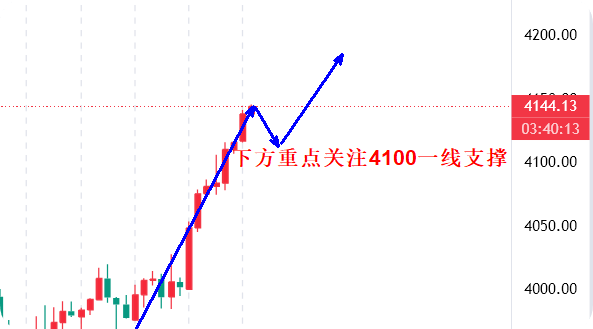
Group 1 - The core driving force behind the recent increase in gold prices is the rising expectation of an early interest rate cut by the Federal Reserve, fueled by weak U.S. employment and consumer confidence data [1] - Geopolitical risks, including the ongoing Russia-Ukraine conflict and the Israel-Palestine conflict, provide solid support for gold as a safe-haven asset [1] - The combination of favorable factors has led to strong buying interest in gold, resulting in a continuous price increase [1] Group 2 - Technically, gold is showing a strong upward trend, with daily charts indicating a bullish candlestick pattern and a bullish MACD crossover, suggesting that bulls are in control [3] - The recent end of a 40-day U.S. government shutdown has led to the upcoming release of key economic data, which may cause significant market volatility and provide new guidance for Federal Reserve policy [3] - Discussions around potential U.S. fiscal stimulus may heighten inflation concerns, further emphasizing gold's hedging value [3] Group 3 - A trading strategy is suggested to buy on dips within the price range of 4126-4120, with a stop loss of 10 USD and a target of 4160-4180 [4]

日媒:基建腐败重创菲律宾经济
Huan Qiu Shi Bao· 2025-11-10 22:51
Group 1 - The Philippines' economy has been significantly impacted by a widespread infrastructure corruption scandal, leading to a growth rate of only 4.0% in Q3, the slowest since the COVID-19 pandemic began [1][3] - The corruption scandal has severely undermined consumer and investor confidence, with public construction growth contracting by 26.1%, the lowest level since 2011 [3] - Estimated economic losses from corruption in flood control projects alone amount to approximately 118.5 billion pesos, with total losses in public infrastructure from 2022 to 2025 projected at around 623.5 billion pesos [1][3] Group 2 - The Philippine peso has experienced a sharp decline, reflecting market concerns over economic stability and potential growth slowdown due to infrastructure spending controversies [3] - The government is facing challenges in achieving its annual growth target of 5.5%, with current growth rates falling short of expectations [3] - Geopolitical risks have deterred foreign investment, particularly from Chinese and Western multinational companies, leading to a shift of potential investments to neighboring countries like Vietnam, Malaysia, and Thailand [4]

@江门车主:今晚油价要变!
Sou Hu Cai Jing· 2025-11-10 11:59
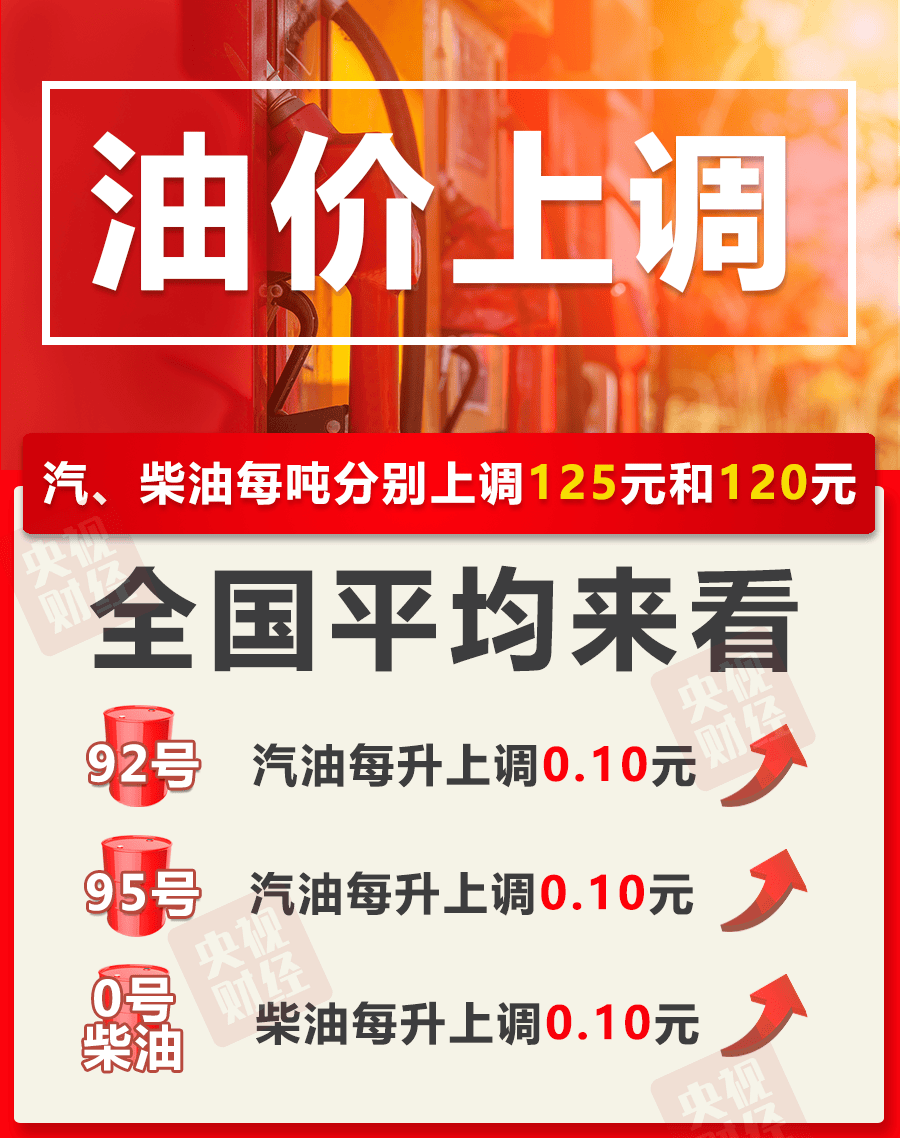
Core Viewpoint - The National Development and Reform Commission (NDRC) announced a new round of fuel price adjustments due to fluctuations in international oil prices, resulting in a slight increase in domestic gasoline and diesel prices starting from November 10 at 24:00 [1][3]. Group 1: Price Adjustments - From November 10 at 24:00, the retail price of gasoline and diesel will increase by 125 and 120 yuan per ton, respectively, leading to an average increase of 0.10 yuan per liter for 92-octane gasoline, 95-octane gasoline, and 0-octane diesel [1]. - Filling a 50-liter tank with 92-octane gasoline will cost an additional 5 yuan [1]. Group 2: Global Oil Market Conditions - The global crude oil market is currently characterized by an overall supply surplus, with international oil prices showing narrow fluctuations during the adjustment period, averaging higher than the previous adjustment cycle [3]. - Brent crude oil futures are currently oscillating in the range of 63 to 65 dollars per barrel [3]. Group 3: Future Considerations - There are significant uncertainties regarding geopolitical risks, particularly the potential escalation of tensions between the U.S. and Venezuela, which could impact oil supply [5]. - Seasonal demand for heating oil is expected to rise as winter approaches in the Northern Hemisphere, which may provide support for oil prices [5].
今晚油价调整!加满一箱油多花→
Sou Hu Cai Jing· 2025-11-10 11:47
Core Viewpoint - The National Development and Reform Commission announced an increase in domestic gasoline and diesel prices effective from November 10, 2025, due to recent fluctuations in international oil prices, marking the 22nd adjustment of the year and the 7th increase, with a pattern of "seven increases, nine decreases, and six stabilities" for the year [1] Group 1: Price Adjustments - Gasoline and diesel prices will rise by 125 yuan and 120 yuan per ton, respectively, translating to an increase of 0.10 yuan per liter for both 92 gasoline and 0 diesel [1] - For an average private car with a 50L fuel tank, filling up will cost an additional 5 yuan [1] Group 2: Market Conditions - The recent adjustment period (October 25 - November 7) saw narrow fluctuations in international oil prices, with Brent crude oil futures averaging between 63 to 65 USD per barrel [1] - Factors affecting oil prices include concerns over economic outlook and oversupply due to the longest U.S. government shutdown, increased U.S. crude oil inventories, and geopolitical tensions, particularly between the U.S. and Venezuela, as well as ongoing sanctions against Russia [2] - Seasonal demand for heating oil is expected to rise with the onset of winter in the Northern Hemisphere, potentially providing support for oil prices [2]
贵金属策略报告-20251110
Shan Jin Qi Huo· 2025-11-10 10:32
1. Report Industry Investment Rating No information provided in the given documents. 2. Core Views of the Report - Gold is expected to be volatile and strong in the short - term, oscillate at a high level in the medium - term, and rise step - by - step in the long - term. The core logics include short - term hedging due to geopolitical risks after the Sino - US talks, the weakening US employment and moderate inflation leading to potential Fed rate cuts, the impact of the US government shutdown and consumer confidence on the currency attribute, and the influence of the CRB commodity index and RMB appreciation on the commodity attribute [1]. - The price trend of gold is the anchor for the price of silver. In terms of the capital side, CFTC silver net long positions and iShare silver ETF have slightly increased positions, and the visible inventory of silver has slightly decreased recently [5]. 3. Summary by Related Catalogs Gold - **Strategy**: Conservative investors should wait and see, while aggressive investors can buy low and sell high. It is recommended to manage positions well and set strict stop - loss and take - profit levels [2]. - **Data Summary**: - **Prices**: Comex gold closed at $4007.80 per ounce, up 0.58% from the previous day and down 0.14% from last week; London gold closed at $3994.10 per ounce, up 0.19% from the previous day and down 0.43% from last week; Shanghai gold futures closed at 935.98 yuan per gram, up 1.60% from the previous day and 1.45% from last week; Gold T + D closed at 933.02 yuan per gram, up 1.68% from the previous day and 1.39% from last week [2]. - **Positions and Inventories**: Comex gold positions were 528,789 lots, unchanged from last week; Shanghai gold futures positions decreased by 9.72% from last week; Gold T + D positions decreased by 2.23% from last week. LBMA gold inventory was 8,598 tons, unchanged; Comex gold inventory decreased by 1.08% from last week; Shanghai gold futures inventory increased by 1.32% from last week [2]. Silver - **Strategy**: Similar to gold, conservative investors should wait and see, and aggressive investors can buy low and sell high with good position management and strict stop - loss and take - profit [6]. - **Data Summary**: - **Prices**: Comex silver closed at $48.23 per ounce, up 0.79% from the previous day and down 0.05% from last week; London silver closed at $48.70 per ounce, up 0.02% from the previous day and down 0.54% from last week; Shanghai silver futures closed at 11,719 yuan per kilogram, up 2.05% from the previous day and 2.30% from last week; Silver T + D closed at 11,726 yuan per kilogram, up 2.14% from the previous day and 2.48% from last week [6]. - **Positions and Inventories**: Comex silver positions were 165,805 lots, unchanged from last week; Shanghai silver futures positions decreased by 2.91% from last week; Silver T + D positions decreased by 2.65% from last week. LBMA silver inventory increased by 6.53% from last week; Comex silver inventory decreased by 0.48% from last week; Shanghai silver futures inventory decreased by 7.42% from last week [6]. Fundamental Key Data - **Federal Reserve and Monetary Indicators**: The upper limit of the federal funds target rate is 4.00%, down 0.25 from the previous value; the discount rate is 4.00%, down 0.25; the reserve balance interest rate (IORB) is 3.90%, down 0.25; the Fed's total assets are $6623.643 billion, down 0.00% from last week; M2 year - on - year growth is 4.49%, up 0.01 [8]. - **US Economic Indicators**: The 10 - year US Treasury real yield is 2.40%, down 1.23% from the previous day and up 1.69% from last week; the US dollar index is 99.55, down 0.16% from the previous day and 0.18% from last week; the US Treasury yield spread (3 - month to 10 - year) is 0.37, up 2.78% from the previous day and 16.13% from last week [8]. - **Inflation Indicators**: CPI year - on - year and month - on - month are 3.00% and 0.30% respectively, with no change; core CPI year - on - year and month - on - month are 3.00% and 0.30% respectively, with no change; PCE price index year - on - year is 2.74%, up 0.14; core PCE price index year - on - year is 2.91%, up 0.05 [10]. - **Economic Growth and Other Indicators**: GDP annualized year - on - year is 2.00%, down 0.30; GDP annualized quarter - on - quarter is 3.80%, up 4.40; the unemployment rate is 4.30%, up 0.10; non - farm payrolls monthly change is 2.20 million, down 0.57 million [10].
黄金,直线拉升!
新浪财经· 2025-11-10 10:19
11月10日,记者从中国黄金协会获悉,2025年前三季度我国黄金产量271.782吨,同比上 升1.39%;黄金消费量682.730吨,同比下降7.95%。 国际、国内金价双双拉升,伦敦现货黄金报4073.05美元/盎司,COMEX黄金报4076美 元/盎司,上海黄金交易所现货黄金(Au99.99)价报933.30元/克。 2025年前三季度我国黄金产量 消费量数据发布 黄金生产方面,据中国黄金协会最新统计数据,2025年前三季度,国内原料产金271.782 吨,比2024年同期增加3.714吨,同比增长1.39%;另有进口原料产金121.149吨,同比 增长8.94%;国内原料和进口原料共计生产黄金392.931吨,同比增长3.60%。 据介绍,2025年前三季度,黄金行业紧盯高质量发展目标,一批具备战略意义的重点勘 查、开发项目稳步推进,为行业可持续发展注入强劲动力。辽宁省大东沟金矿初步评审金资 源量近1500吨,有望成为继山东胶东金矿之后我国又一个世界级金矿。我国超深矿井建设 技术实现里程碑式突破,三山岛金矿副井井筒工程安全顺利落底,最终深度锁定2005米。 黄金消费方面,2025年前三季度,我国黄金消 ...

@全体车主,油价将上调!加满1箱多花5元
Zheng Quan Ri Bao Zhi Sheng· 2025-11-10 09:44
Core Viewpoint - The domestic fuel prices in China will increase for the seventh time this year, with gasoline and diesel prices rising by 125 yuan and 120 yuan per ton respectively, effective from November 10, 2023 [1] Group 1: International Oil Market Dynamics - International oil prices have shown a downward trend overall, despite some support from geopolitical factors and OPEC's decision to halt production increases in the first quarter of next year [2] - The average Brent crude oil price is currently fluctuating between 63 to 65 USD per barrel, indicating a slight increase compared to the previous pricing cycle [1][2] - The global oil market is characterized by an oversupply, but potential changes in geopolitical risks and seasonal demand could influence future price movements [2] Group 2: Domestic Market Analysis - The domestic fuel market is experiencing a divergence in demand, with gasoline prices declining due to weak terminal demand, while diesel prices are supported by stable weather and ongoing industrial activities [2] - Analysts predict that the new pricing cycle may start with a negative change rate based on current oil prices, suggesting continued volatility in the market [3]
重要通知!今晚,油价上调
Sou Hu Cai Jing· 2025-11-10 09:07
Core Viewpoint - A new round of domestic fuel price adjustments will take effect on November 10, with gasoline and diesel prices increasing slightly due to fluctuations in international oil prices [1][4]. Group 1: Price Adjustments - From November 10, the retail price of gasoline and diesel will be raised by 125 and 120 yuan per ton, respectively, leading to an increase of 0.10 yuan per liter for 92-octane gasoline, 95-octane gasoline, and 0-octane diesel on average nationwide [1]. - Filling a 50-liter tank with 92-octane gasoline will cost an additional 5 yuan [3]. Group 2: Market Conditions - The global crude oil market is currently characterized by an overall supply surplus [4]. - Geopolitical risks, particularly tensions between the U.S. and Venezuela, could escalate, potentially impacting Venezuelan oil supply [4]. - Seasonal demand for heating oil is expected to rise as winter approaches in the Northern Hemisphere, which may provide support for oil prices [4].
贵金属日评-20251110
Jian Xin Qi Huo· 2025-11-10 09:06
Report Summary 1. Report Industry Investment Rating No information provided on the industry investment rating. 2. Core Viewpoints - In the short - term, precious metals need to consolidate to digest the previous sharp rise, but in the medium - term, factors such as global central bank easing, geopolitical risks, and the accelerated restructuring of the international trade and monetary system continue to provide liquidity premiums, safe - haven demand, and reserve diversification demand for precious metals. Investors are advised to maintain a long - biased trading approach and observe the support level of London gold at $3800 - 3850 per ounce. The medium - level bull market for precious metals since March 2024 has not ended, and it is expected that in the next six months and one year, London gold may rise to $4500 and $4800 per ounce respectively, and London silver may rise to $58 and $63 per ounce respectively [4][5]. 3. Summary by Directory 3.1 Precious Metals Market Conditions and Outlook - **Intraday Market**: From October 28th to the present, London gold has been trading sideways in the range of $3880 - $4050 per ounce. The narrowing trading range indicates an imminent short - term price breakthrough. In the short - term, precious metals need to adjust, while in the medium - term, they are supported by multiple factors. Investors are advised to hold a long - biased view and watch the support at $3800 - $3850 per ounce [4]. - **Domestic Precious Metals Market**: The Shanghai Gold Index closed at 923.97, up 0.39%; the Shanghai Silver Index closed at 11,505, up 0.49%; Gold T + D closed at 917.27, down 0.03%; Silver T + D closed at 11,480, up 0.52% [5]. - **Medium - term Market**: Since March 2024, the medium - level bull market for precious metals has not ended. It is expected that in the next six months and one year, London gold may reach $4500 and $4800 per ounce respectively, and London silver may reach $58 and $63 per ounce respectively. After the significant decline in precious metal prices since late October, some of the adjustment risks have been released. Investors should pay attention to the technical and fundamental signals for re - entering long positions [5]. 3.2 Precious Metals Market - Related Charts The report presents multiple charts including Shanghai gold and silver futures indices, London gold and silver spot prices, the basis of Shanghai futures indices against Shanghai Gold T + D, gold and silver ETF holdings, the gold - silver ratio, and the correlation between London gold and other assets, with data sourced from Wind and the research and development department of Jianxin Futures [7][9][11]. 3.3 Main Macroeconomic Events/Data - Cleveland Fed President Harker believes that high inflation levels are not conducive to the Fed's further rate cuts, and she is concerned that current monetary policy may not be effective in dealing with inflation. - US President Trump admitted that US consumers are paying higher prices due to his tariff policies, although he still claims that the policy benefits Americans overall. - The Bank of England kept its interest rate at 4.0%, but the close vote and signs that Governor Bailey may soon support rate cuts increase the possibility of a rate cut in December after the government's budget announcement. - After the US imposed new sanctions on major Russian oil producers, Indian and Chinese refiners reduced their purchases, leading to the largest discount of Russian oil prices in Asia compared to Brent crude in a year [17].
南华期货原油产业周报:格局未改,原油市场延续弱势震荡-20251110
Nan Hua Qi Huo· 2025-11-10 06:06
1. Report Industry Investment Rating - The report gives an overall rating of "Weakly Bearish" for the crude oil market [7] 2. Core Views of the Report - The core contradiction in the crude oil market lies in the game between short - term geopolitical risk support and medium - to long - term supply - demand and macro - level bearish factors. The short - term geopolitical situation in Venezuela and Nigeria has not been resolved, but the market has become fatigued with relevant news, and the support is weakening. In the medium - to long - term, the double - bearish pattern of supply and demand remains unchanged, and the market shows a characteristic of "falling with the trend but not rising", with the macro and fundamental factors jointly suppressing the market [1] - The near - term trading logic is dominated by the decline in geopolitical sentiment, the approaching spring maintenance of refineries, and the increase in US commercial crude oil inventories. The short - term trend is weakly bearish. The long - term trend is a downward oscillation due to the rigid supply pressure and limited demand growth [3][4][5] 3. Summary by Relevant Catalogs 3.1 Core Contradiction and Strategy Suggestion 3.1.1 Core Contradiction - The short - term geopolitical situation in Venezuela and Nigeria has not been resolved, but the market's reaction to relevant news is weakening. In the medium - to long - term, the double - bearish pattern of supply and demand remains unchanged, and combined with economic concerns caused by the US government shutdown, the market shows a "falling with the trend but not rising" characteristic [1] 3.1.2 Speculative Strategy Suggestion - The market is in a weakly bearish oscillation. The strategy suggests to short the market when Brent rebounds to $66 - 68 per barrel, with a stop - loss at $70. It is recommended to wait and see for arbitrage and options [7] 3.2 This Week's Important Information and Next Week's Concerns 3.2.1 This Week's Important Information - **Bullish Information**: Two US B - 52 bombers approached the Venezuelan coast, and the US and Venezuela have tense relations recently [8] - **Bearish Information**: Saudi Aramco lowered the official selling prices for Asian markets in December. The production of Kazakhstan's Karachaganak oilfield has increased by about 15% [9][10] 3.2.2 Next Week's Concerns - On November 10, 2025, at 24:00, a new round of refined oil price adjustment window will open. As of the ninth working day on November 7, this may provide short - term support for crude oil futures prices [12] 3.3 Disk Interpretation 3.3.1 Volume, Price, and Capital Interpretation - This week, international crude oil prices oscillated slightly downward, falling below the short - term moving average. The previous week, the settlement price of the WTI main contract decreased by 2.02%, and that of the Brent main contract decreased by 2.21%. The INE crude oil futures position increased by 1,689 lots week - on - week, while the Brent crude oil futures position decreased by 65,844 lots week - on - week [14][17] 3.3.2 Internal - External Spread Tracking - As of November 7, the SC - Brent spread was $0.49 per barrel, and the SC - WTI spread was $4.37 per barrel. The SC - Brent spread was weakening, and the internal - market crude oil was relatively weaker under the background of OPEC+ production increase [22][23] 3.4 Valuation and Profit Analysis 3.4.1 Crude Oil Market Monthly Spread Tracking - As of November 7, the monthly spreads of Brent, WTI, and SC all weakened. The recent spreads have given back most of the risk premiums due to fundamental suppression [25] 3.4.2 Crude Oil Regional Spread Tracking - As of November 7, the SC - Brent spread was $0.49 per barrel, and the Brent - WTI spread was $3.88 per barrel. The spread between SC and Brent has weakened again because the external - market crude oil is more strongly supported by geopolitical risk premiums [30] 3.4.3 Crude Oil Downstream Valuation Tracking - As of November 7, the crude oil crack spreads in the European market strengthened comprehensively, while in North America and the Asia - Pacific region, diesel crack spreads were stronger than gasoline. In the Chinese market, the crack spreads weakened, and refinery profits continued to decline [42] 3.5 Supply - Demand and Inventory Deduction 3.5.1 Supply - Side Tracking - From October 25 - 31, US crude oil production was 13.651 million barrels per day, up 0.7 million barrels per day week - on - week. From November 1 - 7, the number of active oil rigs in the US was 414, unchanged week - on - week [64] 3.5.2 Demand - Side Tracking - From October 25 - 31, US refinery crude oil input was 15.256 million barrels per day, up 3.7 million barrels per day week - on - week, and the refinery capacity utilization rate was 86.0%, down 0.6 percentage points week - on - week. From October 31 - November 6, the capacity utilization rate of Chinese independent refineries was 62.49%, up 0.11 percentage points week - on - week, and that of Chinese major refineries was 78.64%, down 1.86 percentage points week - on - week [66] 3.5.3 Inventory - Side Tracking - As of October 31, US commercial crude oil inventories totaled 421,168 thousand barrels, up 5,202 thousand barrels week - on - week. As of November 5, the Chinese port commercial crude oil inventory index was 106.77, down 1.52% week - on - week [68] 3.5.4 Import - Export Tracking - From October 25 - 31, US crude oil exports were 4.367 million barrels per day, up 0.6 million barrels per day week - on - week. The Middle - East seaborne crude oil exports from October 21 - 27 were 16.7283 million barrels per day, up 1.90% week - on - week, while Russian seaborne crude oil exports this week were 3.3723 million barrels per day, down 12.98% week - on - week [70] 3.5.5 Balance Sheet Tracking - The EIA has continued to raise its forecast for global crude oil and related liquid production in 2025 and 2026. OPEC has maintained its forecast for global crude oil and related liquid demand in 2025 and 2026. The IEA has slightly lowered its forecast for the growth rate of global crude oil and related liquid demand in 2025 and 2026 [74][75]