稳定币

Search documents
计算机稳定币研究专题:稳定币产业加速,数字金融进入新阶段
Guohai Securities· 2025-07-06 11:34
证券研究报告 2025年07月06日 计算机 稳定币产业加速,数字金融进入新阶段 ——计算机稳定币研究专题 评级:推荐(维持) 刘熹(证券分析师) 郭义俊(联系人) S0350523040001 S0350124070015 liux10@ghzq.com.cn guoyj@ghzq.com.cn 最近一年走势 相关报告 -16% 4% 25% 45% 66% 86% 2024/07/04 2024/10/02 2024/12/31 2025/03/31 2025/06/29 计算机 沪深300 《模型性能不断提升,AI应用进入兑现期——计算机AI应用月度跟踪(2025- 05)(推荐)*计算机*刘熹》——2025-05-26 《计算机行业深度:大模型研究框架(2025)——"大模型"系列(5)(推 《域控制器研究框架——计算机"智能驾驶"系列专题二(推荐)*计算机*刘 熹》——2025-06-24 《计算机行业点评报告:特斯拉Robotaxi商业化时刻将至(推荐)*计算机*刘 熹》——2025-06-15 《计算机行业动态研究:稳定币头部企业Circle IPO,数字货币发展加速(推 荐)*计算机*刘熹》— ...
沈建光:世界第一大稳定币公司是如何炼成的
Di Yi Cai Jing· 2025-07-06 11:08
Tether凭借其盈利能力、庞大的规模以及相对简单的核心业务模式,成为行业中的佼佼者。 Tether最初以Realcoin的名义于2014年由Brock Pierce、Reeve Collins和Craig Sellars在中国香港创立,旨 在为去中心化的比特币交易创建一种与美元挂钩的稳定币。不久后,该项目更名为Tether,并在Omni层 (比特币"第二层"协议)推出,解决了比特币交易中的高交易费用等问题。随后,其原始创始人退出了 业务,将公司出售给了Bitfinex所有者。他们认为Tether是连接全球比特币平台的关键桥梁,使比特币能 够像其他金融产品一样交易,而无需传统金融体系的参与。 当时,Bitfinex还是一家新兴的比特币交易所,人员规模较小,但从一开始便是一个去中心化的企业。 Bitfinex的首席财务官,即Devasini曾是一名意大利整形外科医生,后来转向开发基于Linux的业务,包 括卫星电视接收器和机顶盒。在接触到Linux的开源理念后,Devasini和新一届Tether管理层自然对去中 心化技术和加密技术持开放态度。 在中本聪2009年发布比特币白皮书后,最早的比特币用户主要是那些极 ...
非银金融行业周报:6月新开户同比高增,头部券商受益于港股高景气-20250706
KAIYUAN SECURITIES· 2025-07-06 10:58
非银金融 2025 年 07 月 06 日 投资评级:看好(维持) 行业走势图 数据来源:聚源 -19% 0% 19% 38% 58% 77% 2024-07 2024-11 2025-03 非银金融 沪深300 相关研究报告 《稳定币主题催化券商板块上涨,中 报 有 望 延 续 高 景 气 — 行 业 周 报 》 -2025.6.29 《券商中报向好叠加公募欠配,看好 板块机会—行业点评报告》-2025.6.25 《规范分红险分红水平,券商分类评 价 新 规 突 出 功 能 性 — 行 业 周 报 》 -2025.6.22 6 月新开户同比高增,头部券商受益于港股高景气 ——行业周报 高超(分析师) 卢崑(分析师) gaochao1@kysec.cn 证书编号:S0790520050001 lukun@kysec.cn 证书编号:S0790524040002 周观点:6 月新开户同比高增,头部券商受益于港股高景气 6月上交所新开户人数同比高增,交易量高增、债市和股市向好、海外业务充分 受益于港股市场高景气,预计上市券商中报业绩延续一季度以来的同比高增,关 注后续业绩预告、稳定币等主题催化,继续看好券商板块机 ...
新能源、有色组行业贵金属半年报:万物皆变而黄金永存
Hua Tai Qi Huo· 2025-07-06 10:36
Report Industry Investment Rating - No information provided Core Views - Market analysis: In the second half of 2025, precious metal prices are expected to show a pattern of rising after consolidation. From July to August, gold prices will mostly consolidate due to the Fed's internal differences on future interest rate paths and Powell's cautious attitude towards rate cuts. After September, with the increase in rate cut expectations and the impact of tariffs on inflation, gold prices are expected to strengthen. Silver prices may attract some investment demand due to the relatively high gold-silver ratio. The Fed's attitude towards rate cuts is cautious and there are internal differences. The passage of the Genius Act and SLR adjustment in mid-late June will reduce the possibility of a sharp rise in US Treasury yields in the short term, but the continuous expansion of the US debt scale may accumulate more hidden risks. Although the Israel-Iran conflict once intensified, the impact on inflation expectations was not significant. The recent CPI and PCE data are stable, and the impact of tariffs on inflation has not yet appeared. The market expects at least one rate cut this year. In the long run, Trump's radical fiscal policy may require monetary easing. If Powell is replaced, rate cuts may accelerate. The eurozone economy is performing better than the US, and the US dollar may show a volatile and weak pattern in the future. In the first half of 2025, geopolitical factors did not cause a significant increase in inflation expectations, but Trump's tariff policies affected the US dollar's credit and pushed up gold prices. Gold remains an effective investment to deal with uncertainty [6]. - Strategy: In the second half of 2025, precious metal prices will first consolidate and then rise. From July to August, gold prices will consolidate, and after September, they are expected to strengthen. For gold, buy in batches at 750 - 760 yuan/gram and take profit at around 870 yuan/gram, with a stop-loss at 710 yuan/gram. For silver, buy in batches at 8,750 - 8,800 yuan/kg with a stop-loss at 8,550 yuan/kg. The option strategy for gold is to go long on the calendar spread [10]. Summary by Directory I. Summary of Central Bank Dynamics and Bond Market Conditions - **Global central banks slow down rate cuts but are generally worried about economic prospects**: The Fed's Powell is cautious about rate cuts, while the eurozone is more positive. Recently, the eurozone, the Reserve Bank of Australia, and the Reserve Bank of New Zealand have cut rates, but central banks are cautious about future rate adjustments. Major central banks are worried about future economic prospects due to complex geopolitical factors and Trump's changing tariff policies [17]. - **The global bond market fluctuated greatly in the first half of the year. Pay attention to the liquidity risk of US Treasuries around X-day**: In May, the US sovereign credit rating was downgraded, and the auctions of US and Japanese long-term government bonds had weak demand, leading to a surge in yields. The rise in eurozone government bond yields was not as obvious as that in the US because the eurozone's debt structure is healthier. Japan's long-term government bond yields rose due to structural improvements in its economic fundamentals. The US is facing relatively large debt risks. Although the current market liquidity is relatively loose, the liquidity risk needs to be continuously monitored. The speculative positions of US Treasuries are starting to decline, which may challenge the auction and liquidity of US Treasuries in the future [22][31]. - **The advancement of the Genius Act: Using stablecoins to maintain the US dollar's hegemony in the digital economy?**: On June 18, the US Senate approved the GENIUS Stablecoin Regulatory Act, which aims to strengthen the US dollar's global dominance in the digital economy. After the passage of the act, the market value of compliant stablecoins such as USDC and USDT soared. Stablecoins may attract some funds that were originally invested in gold, especially in emerging markets. However, if the reserve assets of stablecoins face high uncertainty, the credibility of stablecoins may be affected [36]. - **The Fed passes the SLR reform plan to seek more buyers for US Treasuries**: On June 25, the Fed passed the SLR reform proposal, which adjusts the capital requirements for global systemically important banks (G-SIBs). The reform aims to balance financial stability and bank operational flexibility and provide clearer regulatory expectations. The adjustment of SLR will enable large banks to increase their allocation of US Treasuries. The US is taking various measures to increase the liquidity of US Treasuries, but the continuous expansion of the US fiscal and debt scale may accumulate greater hidden risks [42]. II. The US Dollar May Still Struggle to Maintain a Strong Long-Term Trend - **The probability of the Fed cutting rates in the future is still high**: Although Powell is cautious about rate cuts, Trump is pressuring the Fed to cut rates. The US manufacturing PMI has been below 50 for four consecutive months, and the economic leading indicators are declining. The market expects at least one rate cut this year. In the long run, Trump's radical fiscal policy may require monetary easing, and if Powell is replaced, rate cuts may proceed more smoothly [48]. - **The improving economic outlook in non-US regions also puts pressure on the US dollar**: The eurozone's economic performance has been gradually strengthening compared to the US since 2025. The eurozone's PMI data has been approaching or exceeding that of the US, and the US is showing a weaker pattern in the Citigroup Economic Surprise Index compared to non-US regions, which will make it difficult for the US dollar to maintain a continuous strong trend [56]. III. The So-Called Safe-Haven Demand Is Just a表象 of Inflation Expectations and Concerns about the US Dollar's Credit - **Why was the gold price stable during the intensification of the Israel-Iran conflict?**: During the 2022 Russia-Ukraine conflict, gold prices soared due to war-induced safe-haven demand and rising inflation. In contrast, during the 2025 Israel-Iran conflict, the impact on inflation was limited, and there was no unified expectation of real interest rate changes, so the gold price remained stable. In the future, the possibility of a sharp rise in inflation in the short term is relatively low [59]. - **Global central banks' enthusiasm for allocating gold remains high, but US dollar assets are difficult to replace in the short term**: In June 2025, a survey by the World Gold Council showed that 76% of central banks expect their gold reserves to increase in the next five years, and 73% expect to reduce their US dollar asset allocation. Although US Treasuries are still the main choice for central bank asset allocation, central banks are increasing their gold allocation to hedge against the risks of the continuous expansion of US debt [62]. IV. Summary of Precious Metal Fundamentals - **The net long non-commercial positions of precious metals in the CFTC decreased significantly in the first half of the year**: In the first half of 2025, the net long speculative positions in gold in the CFTC decreased by 52,275 contracts (21.14%) to 195,004 contracts, while the net long speculative positions in silver increased by 25,058 contracts (66.14%) to 62,947 contracts. The global gold futures market open interest continues to reach new highs. The possibility of a significant decline in the gold market due to profit-taking by long speculators is relatively low [64]. - **The holdings of precious metal ETFs generally increased in the first half of the year**: In the first half of 2025, the holdings of the SPDR Gold ETF increased by 80.01 tons to 952.53 tons, and the holdings of the SLV Silver ETF increased by 450.64 tons to 14,826.61 tons. As of May 2025, the increase in global gold ETF holdings reached 322.4 tons, a new high in the past five years. In May, there was an outflow of 19.1 tons from gold ETFs, which corresponded to the consolidation of the gold price in May [69]. V. The Marginal Growth Rate of the Photovoltaic Industry May Slow Down, but the Long-Term Tight Supply Pattern of Silver Is Difficult to Change - The demand for silver in the photovoltaic industry is expected to peak between 2025 and 2026, and the growth trend will continue to be positive before that. The increase in silver production from mines will be relatively limited in the next few years, which may lead to a supply-demand contradiction in silver. In the next three years, the gold-silver ratio may decline towards a central level of around 65 - 70 times [77].
宇信科技(300674) - 宇信科技:2025年7月2日-3日投资者关系活动记录表
2025-07-06 09:36
Group 1: Company Strategy and International Expansion - The stablecoin business is a significant opportunity for financial technology companies, aligning with the company's overseas strategy initiated in 2019, which has seen successful project implementations in Europe by mid-2025 [2][3] - The company's overseas strategy is comprehensive, involving not only product solutions but also capital strategies, including preparations for issuing H-shares [2] - Future development strategies will focus on new technology and product R&D, expanding overseas markets, and raising funds for cross-border settlement and payment ecosystem solutions [2] Group 2: Innovations in Banking and Stablecoin Integration - Stablecoins require deep integration with traditional financial institutions, which can play multiple roles in the stablecoin ecosystem, from fund custodians to digital asset service providers [3] - The company aims to leverage its existing technology and operational capabilities to connect various financial institutions with the digital asset ecosystem, enhancing the use cases for digital currencies [3] Group 3: Collaborations and Technological Advancements - Since its international expansion in 2019, the company has established successful cases with foreign banks and is actively exploring more product and business implementations [4] - The company is supporting foreign banks in digital upgrades and system construction while discussing new collaboration opportunities with state-owned banks in Hong Kong [4] Group 4: Asset Tokenization Experience - The company has experience in asset tokenization, particularly in bond tokenization, with stablecoins being used for tokenized asset payments [5] - The company has established a long-term partnership with a financial infrastructure institution in the domestic market, accumulating rich experience in bond-related services [5] Group 5: Risk Awareness - The content discussed in the investor relations activity, including future development plans and performance expectations, does not constitute a substantive commitment from the company, and investors should remain aware of related risks [6]

大漂亮法案的三个重要问题
CMS· 2025-07-06 04:31
Group 1: OBBBA Overview - The OBBBA increases the baseline deficit by $3.4 trillion over the next 10 years, with total deficits reaching $4.1 trillion including $0.7 trillion in interest expenses[8] - The bill was passed by the House with a vote of 218 to 214 and signed by President Trump on July 4[4] - The overall debt ceiling is raised by $5 trillion, exceeding the House version by $1 trillion[8] Group 2: Economic Impact - OBBBA is expected to boost U.S. economic growth by 1.2% in 2026 and peak at 1.5% in 2028, but the long-term impact may be weaker than the 2017 tax cuts[22] - The projected deficit rate for the next three years is around 7%, significantly higher than the previous two years[14] - Short-term benefits from tax cuts favor middle-income earners, while long-term benefits are skewed towards high-income groups[28] Group 3: Tax and Spending Changes - The tax cuts include permanent provisions for individual income tax and corporate tax credits, with a total tax reduction of $4.5 trillion[18] - Significant spending cuts are planned, including $1.074 trillion from medical subsidies and $543 billion from clean energy subsidies over the next 10 years[22] - The bill also abolishes certain tax benefits from the Biden administration, including parts of the "Green New Deal" and some social welfare programs[19]

为什么说香港是中国“稳定币”发行的最佳场所
阿尔法工场研究院· 2025-07-06 03:38
Core Viewpoint - The article discusses the rise of stablecoins and their significance in the global financial landscape, particularly highlighting Hong Kong's unique advantages in this development [2][28]. Group 1: Definition and Characteristics of Stablecoins - Stablecoins aim to achieve value stability by pegging to low-volatility assets such as the US dollar or gold [5]. - Unlike traditional cryptocurrencies, stablecoins are more suitable for daily payments, savings, and cross-border settlements due to their reduced volatility [6]. - Stablecoins serve as intermediaries that combine the stability of fiat currencies with the efficiency of blockchain technology, making them key elements of future digital financial infrastructure [8][9]. Group 2: Global Context and Strategic Implications - The development of US dollar stablecoins is part of a broader strategy to attract global users into a dollar-based digital asset system, thereby reshaping the global financial order [12][16]. - The US national debt exceeds $35 trillion, and promoting dollar stablecoins allows for the distribution of this debt risk to global users without directly increasing domestic inflation [14][16]. - Stablecoins have become strategic tools in international relations, with the potential to influence global financial dynamics [17]. Group 3: China's Position and Opportunities - As the world's largest goods trading nation, China has a strategic need to optimize cross-border settlement efficiency and costs, which stablecoins can facilitate [19][20]. - Stablecoins can enhance trade settlement flexibility and efficiency without altering national monetary policies, which is crucial for an export-oriented economy like China [23]. Group 4: Hong Kong's Unique Role - Hong Kong is positioned as a key player in the global trend of stablecoin development, benefiting from its status as an international financial center and its existing monetary framework [28][29]. - The issuance of the Hong Kong dollar, which is backed by US dollar reserves, provides a foundational framework akin to a stablecoin, allowing for a seamless transition to digital formats [30][32][33]. - The upcoming enactment of the Stablecoin Regulation in Hong Kong is expected to place it at the forefront of financial regulatory compliance globally, potentially making it a core hub for stablecoin development in Asia [34][35].


专家访谈汇总:稳定币也成“新基建”了
阿尔法工场研究院· 2025-07-06 03:38
Group 1: Web3 Companies and Market Trends - Antalpha and Circle successfully listed on Nasdaq and NYSE, with first-day stock price increases of 70% and 168%, indicating high investor confidence in Web3 infrastructure and stablecoin businesses [1] - Coinbase's upcoming inclusion in the S&P 500 index marks a significant step in integrating Web3 into mainstream financial asset allocation, likely driving capital inflow and enhancing valuation stability [1] - The trend suggests that leading Web3 companies are increasingly meeting the transparency, profitability, and regulatory compliance required for public companies, potentially attracting traditional financial institutions and institutional investors [1] - Guotai Junan International became the first to receive approval from the Hong Kong Securities and Futures Commission, significantly expanding its business scope and achieving a nearly 200% stock price surge [1] - Investors should focus on the future product deployment and customer expansion capabilities of brokerage firms involved in virtual asset businesses [1] - Companies like Coinbase and Ripple are exploring banking licenses to standardize their stablecoin, custody, and payment capabilities into traditional financial services [1] - Web3 companies are evolving from mere technology providers to new financial infrastructure operators in the digital economy, opening up greater commercial model and valuation opportunities [1] - The U.S. has incorporated digital assets into its national financial development plan, with regulatory bodies restructuring rules to balance innovation encouragement and risk control [1] - This trend indicates a reduction in policy risks for Web3 companies, with mid-to-long-term valuations likely receiving institutional support, especially for compliant leading firms [1] Group 2: Stablecoin Market Dynamics - Stablecoins have evolved from tools for hedging and on-chain payments in the crypto ecosystem to a new infrastructure for global cross-border payments, settlements, and digital finance [2] - The total market capitalization of stablecoins surged from $650 million to over $250 billion in six years, a growth of over 380 times, with projected transaction volumes reaching $27 trillion in 2024, surpassing Visa and Mastercard [2] - The stablecoin industry is undergoing a structural shift from being "Web3 native" to being dominated by "Web2 giants," reshaping the entire payment market landscape [2] - Mastercard is actively participating in building infrastructure rather than just collaborating with crypto companies, co-developing compliant on-chain card purchase processes with Chainlink, Zerohash, and Swapper [2] - By integrating stablecoins like FIUSD into its global payment network, Mastercard is addressing the conversion pain points between fiat and on-chain assets, enhancing user experience and capital efficiency [2] - Mastercard's support for merchants to choose stablecoins as settlement currencies breaks the long-standing fiat payment monopoly, significantly optimizing cross-border settlement experiences [2] - Companies like JD.com, Ant Group, and Fiserv are not just using existing stablecoins but are applying for regulatory licenses to create their own stablecoins for core business services [2] - Fiserv's FIUSD is designed for financial institutions and merchants, aligning with the current demand for "programmable dollars," while JD.com aims to reduce cross-border logistics payment costs by 90% [2] - Monitoring whether these companies can shift their revenue structure from "platform fees" to "settlement fees" and "clearing service fees" is crucial, as this may represent new profit growth points [2] Group 3: Regulatory Developments and Market Implications - The U.S. GENIUS Act, the EU's MiCA, and regulatory sandboxes in Singapore and Hong Kong have opened compliance pathways for stablecoin issuance, making "licenses" a scarce financial resource for the next phase [3] - Meta plans to integrate stablecoins into WhatsApp and Instagram, enabling "chat-to-transfer" functionalities, while eight major banks in South Korea have formed a stablecoin alliance to provide lower-threshold international financial services for SMEs [3] - These cases indicate a trend where stablecoins are becoming the preferred pathway for Web2 products to enter the Web3 space, serving as the most compliant and lowest user-threshold "on-chain entry" [3] Group 4: Investment Opportunities in Traditional Financial Institutions - Guotai Junan Securities (Hong Kong) partnered with HashKey to issue tokenized securities "GF Token," creating a fusion path between digital assets and traditional securities [4] - The Hong Kong stock market has formed a closed-loop cooperation between "compliant brokerages" and "on-chain issuance platforms," indicating that the traditional financial system is opening interfaces to the virtual asset system [4] - Chinese brokerages with first-mover advantages are expected to receive structural valuation reassessment opportunities, with virtual asset-related revenues (custody, trading, issuance) likely becoming new profit sources [4] - The combination of fundamental turning points and increased policy support is expected to drive Chinese brokerages from "cyclical valuation recovery" to "structural profit improvement," leading to a more sustained performance-driven market [4]


陆家嘴财经早餐2025年7月6日星期日
Wind万得· 2025-07-05 22:21
Group 1 - The U.S. government is set to implement new unilateral tariff rates starting August 1, with rates potentially ranging from 10% to 70% [2] - The EU's final ruling on anti-dumping measures for imported brandy allows 34 companies to avoid anti-dumping duties if they meet price commitments [2] Group 2 - The Chinese government emphasizes accelerating technological innovation in agriculture and healthcare to enhance industry quality and economic development [3] - France expresses willingness to deepen mutually beneficial cooperation with China, particularly in investment and addressing trade differences [3] Group 3 - The expansion of China's visa-free travel policy to 47 countries has boosted inbound tourism and shopping, with new tax refund policies implemented in Dalian and Hubei [4] - The CEO of a major asset management firm anticipates further development of the QDLP policy, highlighting the attractiveness of Chinese companies for long-term investment [4] Group 4 - The Shanghai Stock Exchange is enhancing communication with private equity firms to support technology innovation and market opportunities [5] - A biopharmaceutical company has submitted an application to list on the STAR Market under a new standard that accommodates unprofitable companies [5] - The withdrawal of IPO applications by small banks indicates a slowdown in their listing processes, with only five banks remaining in the queue [5] Group 5 - Hong Kong's stock market has outperformed major indices, with funds shifting towards less crowded sectors as valuations remain low [6] - New insurance investment reforms have seen over 200 billion yuan allocated to long-term investments [6] - A total of 44 brokerage firms have recommended 279 A-shares as "golden stocks" for July, with a significant focus on the electronics and machinery sectors [6] Group 6 - The second half of the year sees a notable increase in the trading volume of used cars in China, with a slight year-on-year growth [8] - The civil aviation market is experiencing a surge in ticket bookings as the summer travel season begins [9] Group 7 - The establishment of the Yangtze River M&A Alliance aims to support the transformation of traditional industries and the development of emerging sectors in Hubei [11] - A new investment fund focused on humanoid robots and AI has been set up in Hubei, with a total scale of 10 billion yuan [11] Group 8 - The Bank of England's governor emphasizes the need for public trust in currencies as stablecoins emerge as a new payment method [12] - Concerns arise over the potential impact of U.S. stablecoin legislation on global payment systems [12] Group 9 - Huawei's latest model, the Pangu Pro MoE, is developed on its Ascend hardware platform, adhering to open-source licensing [13] - Foxconn reports record revenue for June, indicating strong performance in the second quarter [13] Group 10 - The establishment of a new political party by Elon Musk reflects ongoing debates over U.S. tax and energy policies [14] - Japan is actively negotiating with the U.S. regarding tariff issues as new tariffs approach [14] Group 11 - The London Stock Exchange sees a significant drop in IPO fundraising, raising concerns about its attractiveness as a global capital center [15] - Japan experiences a surge in individual shareholders, driven by tax incentives and investment trends [15] Group 12 - The OPEC+ agreement to increase oil production in August indicates a response to market expectations [18] - The recent rise in metal prices, particularly copper, is attributed to supply chain adjustments ahead of tariff deadlines [18]

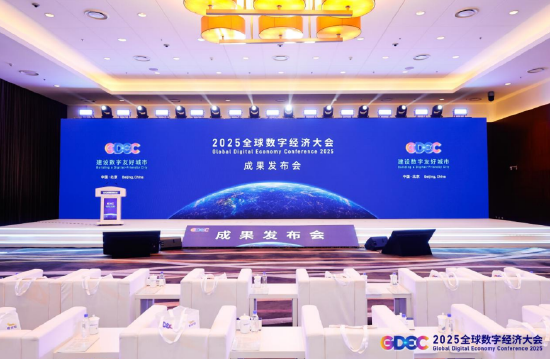
上市公司数字化价值投资(DVI)研究成果 在2025全球数字经济大会发布
Xin Lang Zheng Quan· 2025-07-05 08:40
Group 1 - The 2025 Digital Value Investment (DVI) report indicates that the digitalization process of Chinese listed companies has reached 83.52% [5][6] - The DVI report categorizes research into three dimensions: artificial intelligence, new energy vehicles, and digital finance, ranking the top 50 companies in each category [5] - The report highlights the significant impact of digital finance, particularly in the context of stablecoins and Real World Assets (RWA), on enhancing the value of listed companies [6] Group 2 - The Global Digital Economy Conference has evolved over four sessions, focusing on annual hotspots and key developments in the digital economy [3] - The 2025 conference marks its fifth anniversary, emphasizing global leadership in digital development and fostering international collaboration [3] - The DVI report's findings are expected to facilitate a revaluation of the Chinese capital market and reflect the substantial achievements in China's digital economy [6]