
反内卷

Search documents
光伏产业能否开启盈利修复周期
Qi Huo Ri Bao· 2025-11-27 02:24
Core Insights - The core viewpoint of the articles is that the photovoltaic (PV) industry in China is experiencing a recovery due to the "anti-involution" initiative, which has led to improved financial performance for many companies, although challenges remain for sustainable high-quality development [1][5][6]. Industry Performance - The PV industry has shown signs of recovery in Q3 2025, with a significant reduction in net losses, and some companies have turned profitable [1][2]. - In Q3 2025, the SW photovoltaic equipment sector generated revenue of 403.1 billion yuan, a year-on-year decrease of 11%, with a net profit of -11 billion yuan, indicating a notable recovery compared to previous quarters [1][2]. - Among 21 listed companies in the PV main industry chain, 14 reported positive growth in net profit quarter-on-quarter, with notable recovery in the silicon material segment [2]. Price Trends and Market Dynamics - The prices of key materials in the PV industry have stabilized after a period of decline, with monocrystalline silicon wafer prices rising approximately 40% from earlier in the quarter [3]. - The average price of polysilicon increased by 8.6% quarter-on-quarter, indicating a recovery in material costs [3]. Challenges and Risks - Despite improvements, the industry still faces challenges such as low demand, price increases not fully covering cost rises, and ongoing losses in the battery and module segments [6][7]. - The overall revenue of 21 manufacturers in the PV main industry chain decreased by 784.73 million yuan year-on-year, primarily due to a decline in installation demand following a "rush installation" period [6]. Strategic Initiatives - The "anti-involution" initiative is seen as a critical strategy for the industry, focusing on technological innovation and collaborative development to enhance quality and sustainability [7][8]. - Industry leaders emphasize the need for self-discipline in pricing and capacity management to avoid unsustainable practices that could harm the sector [4][7]. Future Outlook - The long-term growth logic of the PV industry remains intact, with expectations for gradual recovery driven by ongoing reforms, technological advancements, and market expansion [9][14]. - The integration of futures markets is viewed as essential for stabilizing the industry and supporting the "anti-involution" efforts, providing tools for risk management and price stabilization [10][12].
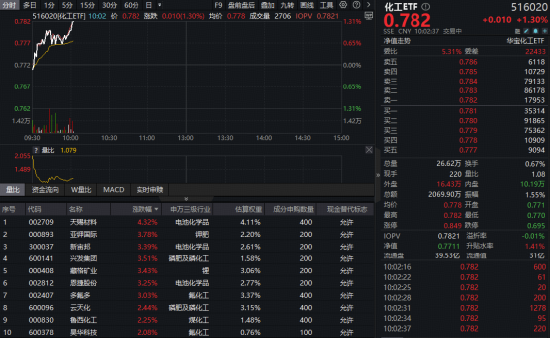
锂电、磷化工齐头并进,化工ETF(516020)盘中涨超1%!超50亿主力资金狂买
Xin Lang Ji Jin· 2025-11-27 02:18
炒股就看金麒麟分析师研报,权威,专业,及时,全面,助您挖掘潜力主题机会! | 序号 | 代码 | 名称 | 主力净流入额 ▼ 60日主力净流入额 | | | --- | --- | --- | --- | --- | | 11 | CI005025 电子(中信) | | 130.73亿 | 2145.12亿 | | 2 | CI005006 | 基础化工(中信) | 54.711Z | 1929.16亿 | | 3 | CI005026 通信(中信) | | 53.46亿 | 702.02亿 | | 4 | CI005011 | 电力设备及新能源(中信) | 41.42亿 | 1851.72亿 | | ન્ | CI005003 | 有色金属(中信) | 24.00亿 | 1077.06亿 | 值得注意的是,今年以来,或受益于"反内卷"行情,化工板块表现显著占优。数据显示,截至今日收 盘,化工ETF(516020)标的指数细分化工指数年内累计涨幅已达到24.47%,显著优于同期上证指数 (15.29%)、沪深300指数(14.81%)等A股主要指数。 | 应号 让莽代码 | 证券简称 | 区间涨跌幅 | | ...

中国及香港股票策略-2026 年展望:主题、风险、政策灵活性及 2026 年一季度首选标的-China & HK Equity Strategy_ 2026 Outlook_ Themes, risks, policy optionality and preferred picks for 1Q26
2025-11-27 02:17
Summary of Key Points from the Conference Call Industry Overview - The report focuses on the **China & Hong Kong equity market** with a specific outlook for **2026** and investment strategies for **1Q26** [2][5][10]. Core Insights and Arguments - **Constructive Stance**: The report maintains a positive outlook on MXCN/CSI300, predicting a further rally in 2026 with targets set at **100** for MXCN, **5,200** for CSI300, and **16,000** for MXHK, reflecting growth rates of **15%**, **15%**, and **9%** year-on-year respectively [2][7][8][9]. - **Investment Themes**: Four key investment themes for 2026 are highlighted: 1. **Anti-involution**: Expected to accelerate post-March NPC, improving margins and return on equity (ROE) [5][6]. 2. **AI Infrastructure Growth**: Anticipated growth in global AI infrastructure capex will benefit localization plays in China [5][6]. 3. **Global Macro Support**: Positive macroeconomic conditions, including easing fiscal and monetary policies in developed markets, are expected to boost overseas sales [5][6]. 4. **K-shaped Recovery**: Consumption recovery is expected to favor food & beverage and premium luxury sectors, while mid-tier consumption may suffer [5][6]. Risks Identified - **Geopolitical Tensions**: Ongoing tensions between the US and China, particularly ahead of the US mid-term elections, pose risks to market stability [5][6]. - **Earnings Consensus Risks**: The report notes a potential decline in consensus EPS growth for MXCN from approximately **15%** to **9%** due to intense competition in quick commerce platforms [5][6]. - **Property Market Concerns**: Reports of softening luxury sales and price declines in mainland China may trigger policy changes, including relaxation of home purchase restrictions in prime districts [5][6]. Sector Recommendations - **Overweight (OW)**: Communication Services, IT, Materials, and Staples sectors are recommended for investment [6][11][12]. - **Underweight (UW)**: Energy and Utilities sectors are advised against [6][11][12]. - **Top Picks for 1Q26**: Notable stocks include Baidu, NetEase, Midea, MIXUE, PDD, Pop Mart, Trip.com, Tingyi, Futu, Innovent, CATL, and COLI [6][13][15]. Valuation and Earnings Insights - **Valuation Normalization**: Since September 2024, MXCN/CSI300 has shown a return of **29%/30%** in USD terms, indicating a recovery from previous valuation discounts [20][22]. - **Earnings Growth**: The report highlights a broadening recovery in earnings across various sectors, despite weak headline EPS growth at the index level [42][44]. Additional Important Points - **EPS Revision Trends**: The breadth of EPS revisions has improved significantly, indicating a potential for recovery in earnings [58][59]. - **Market Under-Ownership**: The report emphasizes that China equity remains under-owned both domestically and internationally, suggesting potential for increased allocation [5][6]. This summary encapsulates the key insights and recommendations from the conference call, providing a comprehensive overview of the current state and future outlook of the China & Hong Kong equity markets.
工业利润累计增速连续三个月保持增长,装备制造业表现抢眼
Xin Lang Cai Jing· 2025-11-27 02:10
Group 1 - The core viewpoint of the articles highlights the overall growth in industrial profits in China, with a 1.9% year-on-year increase from January to October, despite a 5.5% decline in October due to high base effects and rising financial costs [1] - In the mining sector, profits decreased by 27.8% year-on-year, although the decline was 1.5 percentage points less than the previous period; manufacturing profits increased by 7.7%, and the electricity, heat, gas, and water production and supply sector saw a 9.5% increase [1] - Notable profit growth was observed in various industries, including non-ferrous metal smelting and rolling (14.0%), electricity and heat production (13.1%), and computer and electronic equipment manufacturing (12.8%) [1] Group 2 - The high-tech manufacturing sector also showed strong performance, with profits increasing by 8.0% year-on-year, surpassing the average growth rate of all industrial sectors by 6.1 percentage points [2] - Specific high-tech industries such as smart drone manufacturing and smart vehicle equipment manufacturing experienced remarkable profit growth of 116.1% and 114.9%, respectively [2] - Analysts suggest that while there is optimism in inventory cycles and production adjustments, external demand fluctuations and cost pressures remain potential uncertainties for industrial profit recovery [2][3] Group 3 - Future observations will focus on the pace of domestic demand expansion policies, which are expected to be continuously introduced to enhance economic growth [3] - The impact of external demand and geopolitical risks is also crucial, with ongoing US-China negotiations potentially providing support for external demand, which could positively influence industrial profits and production [3]
不要恐慌!牛市还没结束!
Sou Hu Cai Jing· 2025-11-27 00:28
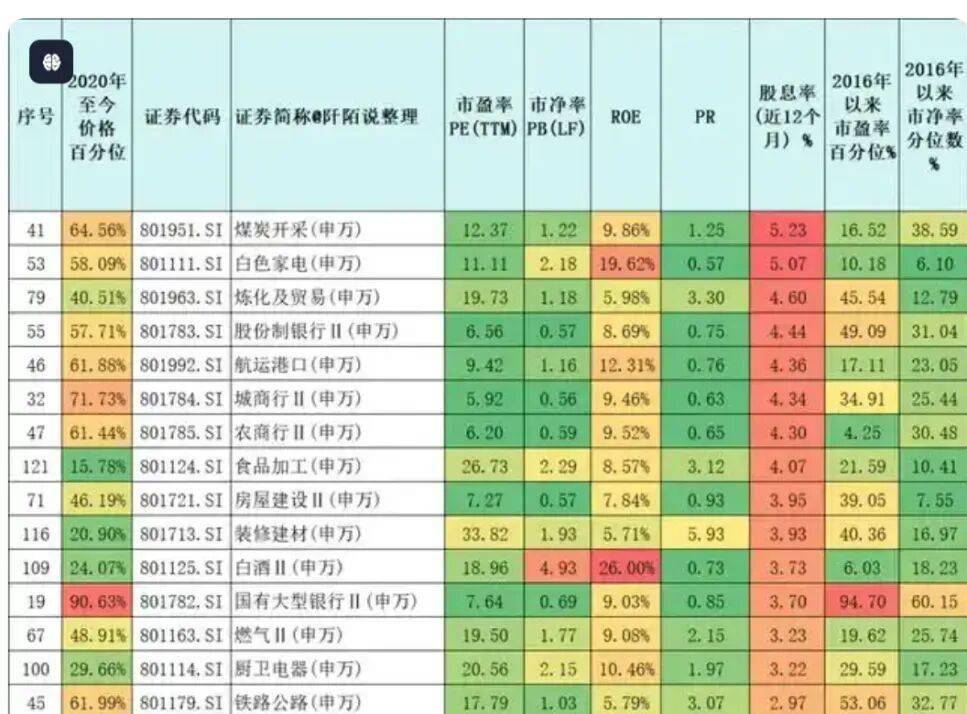
Core Viewpoint - The A-share market experienced significant adjustments, with major indices like the Shanghai Composite Index and Shenzhen Component Index seeing declines of nearly 4% and over 5% respectively, marking the largest weekly drop since April 7 [1][2] Market Performance - The adjustment period from November 17 to 21 saw the ChiNext Index drop by 6.15%, indicating a broad market downturn [1] - On November 24, Industrial Fulian, a major player, faced a sharp decline, hitting the daily limit down, while the lithium battery sector also continued to fall [1] Market Sentiment - There is a notable increase in market anxiety, with various factors being cited for the downturn, including Japanese market influences and U.S. interest rate discussions [2][3] - The article emphasizes that while these factors are relevant, they do not fully explain the market's behavior [4] Investment vs. Speculation - The distinction between investment and speculation is highlighted, with investment being characterized by earning from company profits and dividends, while speculation is described as a zero-sum game driven by market emotions [11][18] - The article suggests that many investors lack patience, leading to confusion between investment and speculation [12][16] Market Valuation - Current market valuations are deemed reasonable, with specific sectors like white goods and livestock showing strong earnings growth that supports their price levels [26] - For instance, the white goods sector has a price-to-earnings (P/E) ratio of 11.11 and a dividend yield of 5.07%, indicating solid fundamentals [26] Fund Flows - Recent data shows a net inflow of 701.21 billion yuan into stock ETFs, with broad index ETFs being the primary beneficiaries, suggesting a strategic repositioning by investors rather than panic selling [29] - The article notes that many sectors are experiencing price recoveries, indicating a lack of panic among investors [32]
东吴证券晨会纪要-20251127
Soochow Securities· 2025-11-26 23:30
Group 1: Macro Strategy Insights - The macroeconomic environment is facing increasing downward pressure, with commodity consumption and exports continuing to be under pressure due to base effects [1][11] - The Federal Reserve's hawkish signals and the delay in the release of November non-farm payroll data have led to a significant reduction in market expectations for a rate cut in December [12][13] - The overall economic growth is expected to be stable, with a projected GDP growth rate of around 4.9% for 2026, driven by investment recovery and consumption subsidies [4][15] Group 2: Industry and Company Analysis - The company has signed a supply contract with Skyborn Renewables for the Gennaker offshore wind project, with a total contract value of 1.339 billion yuan, indicating a significant shift towards providing comprehensive solutions rather than just equipment supply [6] - Yitang Co., Ltd. is recognized as a hidden champion in front-end equipment, with a projected net profit of 650 million yuan in 2025, reflecting strong growth potential in the semiconductor equipment sector [7] - Lexin Technology is expanding its AIoT ecosystem, with a revenue forecast of 2.007 billion yuan in 2024, driven by growth in smart home and AI edge applications [8] - Aotewei has secured a 700 million yuan order for its string welding machines, indicating strong demand in the photovoltaic equipment sector and a robust order pipeline for 2025 [10]
波动中寻找确定收益 “固收+”投资与时俱进
Zhong Guo Zheng Quan Bao· 2025-11-26 20:20
Group 1 - The core viewpoint of the articles highlights the increasing focus of fund companies on "fixed income +" products in response to market volatility, aiming to enhance investor experience through flexible asset allocation and the use of quantitative methods [1][2][3] - Fund companies are shifting their marketing strategies from ETFs to "fixed income +" products, with many large and medium-sized firms recognizing this as a key area for growth [1][2] - The demand for "fixed income +" products is significant, particularly in a low-interest-rate environment where traditional pure bond products offer limited returns, making these products attractive for investors seeking stable and enhanced returns [2][3] Group 2 - The investment framework for "fixed income +" products is evolving, with fund managers emphasizing the need for continuous adaptation to market conditions, including adjustments in asset allocation and risk management [3] - Fund managers are increasingly incorporating diverse asset classes, including U.S. stocks, gold, and U.S. Treasuries, into their "fixed income +" strategies to mitigate risks and enhance returns [3] - The long-term upward trend of the market remains intact, with expectations of stable performance driven by factors such as low interest rates and ongoing support for the capital market [4][5]
“中国市场一定值得投”!外资聚焦中国资产
Zhong Guo Zheng Quan Bao· 2025-11-26 15:26
"中国资产已经当仁不让地回到全球投资者布局的舞台。"摩根士丹利中国首席经济学家邢自强11月25日 表示,"对于全球的企业家和投资人来说,中国已经不存在'能不能投'的问题,中国市场一定值得投, 现在大家更关心的是,应该采取什么样的态度和方法去聪明地投。" 中国证券报记者近日从多家外资资产管理机构了解到,2026年可能成为国际资本重新审视并布局中国的 重要时间窗口。在利率下行、美元走弱、人工智能(AI)技术革命等多重因素共同推动下,全球资产 配置正步入新阶段,越来越多的外资机构看好中国市场在2026年的投资机会。 "中国企业正在向价值链上游移动,但仍被全球市场低估。""中国市场更大范围的上涨信号已经出 现。"多位外资机构人士表示,科技创新、出海产业链、估值修复三条主线,是外资看好的重点方向。 AI科技创新凝聚共识 富达国际全球多元资产主管Matthew Quaife在2025富达中国投资论坛上表示:"中国在AI领域的突破, 推动离岸和在岸科技股今年以来表现亮眼。中国自主的AI生态系统、庞大的国内市场、政策利好以及 技术消费群体的扩大,将加速AI更广泛地应用,为中国科技股在2026年及未来的表现提供支撑。" 富达国 ...
快递价格修复外的预期差:龙头优势回归,份额重回分化
2025-11-26 14:15
快递价格修复外的预期差:龙头优势回归,份额重回分化 20251125 摘要 2025 年下半年,电商平台税收合规加强、监管部门严查刷单以及快递 涨价(广东省最低价涨至 1.4 元以上,物流成本同比增约 40%)等多重 因素叠加,导致快递行业需求增速显著放缓,高基数效应亦有影响。 展望 2026 年,快递行业预计维持高个位数增长,告别过去十多年的高 速增长。头部公司市场份额有望提升,业务量增速或超 10%,价格保持 平稳,推动单票盈利提升,头部公司 EPS 增速预计达 15%左右,估值 修复潜力大。 反内卷背景下,低价电商萎缩,中通、圆通等龙头公司服务优势显现, 10 月业务量明显跑赢大盘,而申通、极兔、韵达等二梯队公司面临增长 压力。挤出低价电商后,龙头公司不再依赖价格战,估值溢价有望修复。 顺丰通过优化包裹价格结构,实现盈利改善。9 月和 10 月单票价格跌幅 加速收窄,表明收入质量提高,降本增效措施见效。预计四季度将继续 通过建量结构优化,实现盈利能力持续提升。 东南亚和南美洲人均包裹量分别相当于中国十年前及十五年前水平,未 来或将经历类似中国的高速增长阶段。以东南亚与南美洲为代表的新兴 市场具备超预期发 ...
新华保险20251126
2025-11-26 14:15
Summary of Xinhua Insurance Conference Call Company Overview - **Company**: Xinhua Insurance - **Industry**: Insurance Key Points and Arguments Business Performance - In Q1 2025, individual insurance and bank loan insurance achieved a doubling growth, leading to high baseline pressure for the 2026 opening performance, yet the company still expects steady premium growth across various metrics, including regular premium and value scale premiums [2][4] - As of November, most branches have met their annual targets and are preparing for customer reserves, recruitment, and agent training for the upcoming year [3] Channel Development - The bank insurance channel saw a negative growth in new single premiums in Q3 due to differences in payment strategies and overall business rhythm, but favorable trends such as the migration of household savings and concentration of market share among large companies are expected to continue, indicating potential growth in 2026 [2][6] - The individual insurance channel maintained a high growth rate in the first three quarters, with all indicators performing better than the scheduled progress, providing ample preparation time for next year's business [6] Dividend Insurance Competition - The spread of dividend insurance has narrowed to 25 basis points due to intensified competition, but the focus on dividend insurance by multiple entities aids market education [2][7] - Xinhua Insurance is enhancing the competitiveness of dividend insurance through agent training, investment management, and multi-channel promotion [7] Investment Strategy - Fixed-income assets remain the core of Xinhua Insurance's allocation, accounting for 70-80%, with plans to actively allocate interest rate bonds and diversify investments into REITs and convertible bonds [2][8] - The equity allocation is approximately 20%, with future adjustments based on market conditions to reduce the proportion of risk assets [9] Private Fund Investments - Xinhua Insurance's participation in private fund investments with China Life has yielded expected returns, and the company will continue to focus on long-term and value investments in the equity market [10] Human Resource Development - The company has implemented measures to enhance the quality of its marketing channels, including a new basic law and a next-generation team-building project, focusing on effective recruitment and high-performing personnel [11][12] Regulatory Impact - New guidelines on expense allocation for life insurance products align with Xinhua Insurance's current practices, with limited overall impact expected [13] - The push for high-quality development in health insurance, particularly dividend-type health insurance, is seen as a significant opportunity for product development [14] Social Responsibility and Financial Inclusion - Xinhua Insurance is actively involved in inclusive finance projects, with significant coverage in various insurance projects, although these contribute a small percentage to total premiums [15][16] Industry Trends - The insurance industry is shifting focus towards dividend insurance products to mitigate interest spread risks, with expectations for increased diversification in business structure and product offerings [21][22] Market Management - While there are no specific share buyback plans, Xinhua Insurance emphasizes market value management and is exploring various tools to enhance shareholder returns [18] Financial Performance - The company's net asset value increased in Q3, primarily due to favorable market performance, with ongoing adjustments in asset allocation to optimize investment portfolios [20] This summary encapsulates the essential insights from the conference call, highlighting Xinhua Insurance's strategic direction, market positioning, and operational performance within the insurance industry.
