资产配置

Search documents
金融素养越高,被骗风险越大?中国老人养老钱困局
Hu Xiu· 2025-07-29 01:58
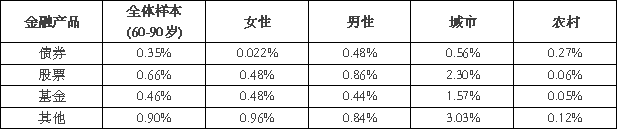
Group 1: Importance of Financial Behavior of the Elderly - The aging population in China is increasing, with 21.1% of the population aged 60 and above by 2024, and life expectancy nearing 80 years. However, the pension replacement rate is below 50%, necessitating reliance on personal savings and asset appreciation to cover 20-30 years of retirement [1][2] - The current asset structure dominated by precautionary savings and over 70% in real estate is inadequate to cope with medical inflation (approximately 8% annual growth) and long-term care costs, leading to a risk of "longevity poverty" [1][2] - The shift in traditional support systems for the elderly, influenced by urbanization and declining birth rates, is creating a more complex network of social capital for elder care [2] Group 2: Financial and Psychological Health - Financial and financial health are closely linked to the psychological well-being of the elderly in China. The life cycle theory suggests that rational decision-making regarding savings and consumption is influenced by expected lifetime income [3][6] - Studies indicate that a higher expenditure-to-income ratio increases the risk of depression among the elderly, while a higher ratio of financial assets provides protective benefits [3][4] - Economic conditions significantly affect the self-worth of older adults, with better financial status correlating with lower feelings of uselessness [3][4] Group 3: Financial Resilience and Emergency Funds - The financial resilience of the elderly needs improvement, as the probability of facing major health issues or loss of independence increases with age. Approximately 32.8% of seniors in China struggle to raise emergency funds within 30 days [6] - This figure, while better than many developing countries, still lags behind developed nations like Norway and Sweden [6] Group 4: Financial Status and Asset Allocation - The financial status of the elderly in China is characterized by a focus on precautionary savings and reliance on pensions and intergenerational transfers. However, participation in financial markets is notably low, with ownership of various financial products below 1% among those aged 60-90 [7][8] - Urban elderly have significantly higher participation rates in risk assets compared to their rural counterparts, highlighting a stark urban-rural divide [7][8] - The asset allocation is heavily concentrated in bank deposits and real estate, which, while providing psychological comfort, poses risks such as low inflation resistance and poor liquidity [9][10] Group 5: Financial Literacy and Fraud Vulnerability - Financial literacy among the elderly in China is significantly lower than in developed countries, with an average score of 0.97 out of 3 for those aged 50-70, compared to 2.16 in the U.S. [12][13] - High financial literacy may paradoxically increase the risk of fraud victimization, as those with basic financial knowledge may become targets without adequate fraud prevention education [14][15] - The phenomenon of overconfidence in financial literacy can lead to susceptibility to scams, emphasizing the need for targeted anti-fraud education alongside financial literacy training [15][16]

历经一纪的金色信仰:坚持为投资者提供好的投资工具——华安黄金ETF上市十二周年纪事
Sou Hu Cai Jing· 2025-07-28 23:44
Core Viewpoint - The establishment of the first domestic gold ETF by Huaan Fund represents a significant historical mission to promote gold investment among the public, highlighting gold's role as a medium of exchange, value measurement, payment method, and value storage [1][9]. Group 1: Historical Development - The Huaan Gold ETF was launched on July 18, 2013, during a period when gold prices were at a four-year low of $1,200 per ounce, marking a pivotal moment in making gold investment accessible like stock trading [6][8]. - The development of gold ETFs in China began in 2009, with regulatory approval achieved in 2013, allowing for the public sale of gold ETFs [7][9]. - The product has evolved through various phases, including initial challenges, market fluctuations, and significant growth, ultimately becoming a leading gold ETF in China [2][10][12]. Group 2: Market Position and Performance - Over the past twelve years, the Huaan Gold ETF has become a crucial component of asset allocation for investors, particularly during periods of market volatility [2][13]. - The fund's assets surpassed 10 billion yuan, making it the largest gold ETF in Asia by August 2020, driven by increased demand for gold as a safe-haven asset during the pandemic [14][15]. - The fund has successfully navigated various market conditions, including the impact of U.S. interest rate hikes and geopolitical tensions, maintaining a strong position in the market [16][18]. Group 3: Future Outlook and Strategy - The global trend of central banks purchasing gold has shifted market dynamics, with significant purchases recorded in 2022 and 2023, indicating a growing concern over dollar-denominated assets [17][18]. - Huaan Fund anticipates that gold will continue to play a vital role in asset allocation, especially as geopolitical tensions rise and economic conditions evolve [18][22]. - The company emphasizes the importance of investor education and risk management, aiming to enhance investor awareness and reduce the impact of short-term market fluctuations on the gold market [21][22].
历经一纪的金色信仰:坚持为投资者提供好的投资工具——华安黄金ETF上市十二周年纪事
中国基金报· 2025-07-28 23:36
Core Viewpoint - The article highlights the significance of the Huazhong Gold ETF as a pioneering investment product in China's capital market, emphasizing its role in asset allocation and its evolution over the past twelve years [1][20]. Group 1: Historical Development - The Huazhong Gold ETF was launched in July 2013, marking a significant innovation in the domestic market by connecting the securities market with the physical gold market [5][6]. - The product faced initial skepticism due to low gold prices but quickly established itself as a convenient investment tool for gold [5][9]. - Over the years, the ETF has adapted to market conditions, including periods of significant price volatility and changes in investor sentiment [9][11]. Group 2: Product Innovation and Market Impact - The Huazhong Gold ETF introduced a unique model combining physical gold and cash alternatives, facilitating easier access for investors [5][6]. - It has become a classic example of cross-market product innovation, allowing investors to trade gold efficiently through their securities accounts [7]. - The ETF has played a crucial role in enhancing the quality of asset allocation and wealth management for investors in China [7][20]. Group 3: Performance and Investor Engagement - The ETF's assets under management surpassed 10 billion yuan, becoming the largest gold ETF in Asia by August 2020 [12][13]. - The company has consistently engaged with investors through educational initiatives and market analysis, enhancing investor understanding and confidence [19][20]. - The ETF has been recognized in academic settings as a case study for its effectiveness as a hedging asset [11]. Group 4: Future Outlook - The company anticipates continued growth in gold demand, particularly from central banks, as geopolitical tensions rise and concerns about dollar assets increase [16][20]. - The Huazhong Gold ETF is positioned to remain a strategic asset in investors' portfolios, providing stability and diversification [18][20]. - The company aims to enhance investor education and risk awareness, ensuring sustainable growth and stability in the gold market [20].
痛失33%的大肉!但是这个方法治愈了我的精神内耗
雪球· 2025-07-28 09:51
Group 1 - The article emphasizes that ETFs will become the ultimate destination for most retail investors, allowing them to act as their own fund managers [1][4][5] - As of July 25, there are 458 indices tracked by ETFs, with 77 indices showing over 20% returns this year, indicating a bullish market [7][8] - The average return for non-money market ETFs this year is 9.02%, with a median return of 12.52% [9] Group 2 - The article highlights that the Hong Kong stock market has been a significant performer, with 38 out of the 77 bullish indices being Hong Kong indices [10][11] - Key themes in the market include the recovery of Hong Kong stocks, particularly in innovative pharmaceuticals and technology sectors, as well as resource stocks benefiting from demand expectations [11] - The article provides a detailed table of top-performing ETFs, with the Hang Seng Innovation Drug Index showing a return of 90.79% and a net inflow of 6.17 billion [12][13] Group 3 - The article discusses the importance of asset allocation, stating that no asset will always rise, but there will always be assets that are rising [20][21] - It mentions the concept of time diversification, where investors can buy in phases rather than trying to time the market perfectly [36] - The article concludes that the "three-part method" of investment emphasizes long-termism and risk diversification through asset, market, and timing allocation [56]

转债创10年新高,长城积极增利近一年收益率达12%
Xin Lang Ji Jin· 2025-07-28 09:39
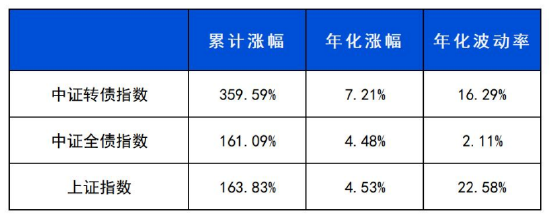
Core Viewpoint - The A-share market has shown signs of recovery, stabilizing above 3500 points, which has positively impacted convertible bonds, with the China Convertible Bond Index reaching a nearly 10-year high and increasing by nearly 12% since its low on April 8 [1] Group 1: Convertible Bonds Characteristics - Convertible bonds, which can be converted into stocks, possess dual investment value: they have the characteristics of bonds with fixed interest payments and principal, and they also offer the potential for equity value through conversion during the conversion period [1] - This unique nature of convertible bonds provides a favorable risk-return profile, effectively filling the gap for medium-risk, moderate-return assets in investment portfolios [2] Group 2: Performance Metrics - Since 2003, the China Convertible Bond Index has increased by 359.59%, with an annualized return of 7.21% and an annualized volatility of 16.29%, outperforming both the China All Bond Index and the Shanghai Composite Index during the same period [3] Group 3: Fund Management and Strategy - The Changcheng Active Growth Fund, managed by experienced fixed-income fund managers, focuses on convertible bonds and employs an elastic strategy to capture opportunities in this asset class [4] - The proportion of convertible bonds in the Changcheng Active Growth Fund's net asset value increased significantly from 68.97% at the end of Q3 last year to 99.82% by the end of Q4, maintaining above 93% in the following three quarters, coinciding with a 12.95% rise in the China Convertible Bond Index [4] Group 4: Recent Performance and Outlook - The Changcheng Active Growth Fund has shown steady net value growth, with returns of 7.24% over the past six months and 12.00% over the past year, significantly outperforming its benchmark [5] - The current economic recovery in China, with a GDP growth of 5.3% in the first half of the year, along with a relatively loose monetary policy, is expected to support the convertible bond market, although some bonds may be overvalued after recent increases [5]
资产配置趣谈集|养老FOF的中国方案,鹏华基金多资产配置策略的创新探索
Zhong Guo Jing Ji Wang· 2025-07-28 06:30
Core Insights - The aging population in China has made pension security a critical issue for families, leading to the accelerated development of a multi-tiered pension system, with pension FOFs showing strong growth momentum [1][4] - As one of the first fund managers to obtain the qualification for issuing pension target date funds, Penghua Fund has actively participated in the construction of the pension FOF product system since 2019, launching multiple target date funds to meet varying retirement needs [1][2] Group 1: Market Development - By the end of March 2025, the total number of pension FOF products in the market is expected to reach 204, with a total scale exceeding 10 billion yuan, and the average scale continuing to grow [1] - The development of pension FOFs in China requires localized innovation rather than simple replication of overseas experiences, taking into account residents' savings habits, risk preferences, and demographic trends [2] Group 2: Product Strategy - Penghua Fund employs a "downward curve" mechanism in its pension FOF products, gradually reducing the proportion of high-risk assets like stocks while increasing low-volatility assets like bonds, aligning with the needs of ordinary investors for a "one-stop" pension solution [2][3] - The core of pension FOFs lies in asset allocation capabilities and risk management, with Penghua Fund establishing a professional FOF management system that includes a "selection—allocation—monitoring—optimization" process [3] Group 3: Investor Education and Services - Penghua Fund enhances investor education through a combination of online and offline initiatives, including expert lectures and research projects that present real stories and attitudes towards pension planning [3] - The company is committed to providing customized and sustainable pension investment solutions, enhancing investor trust and experience through refined management and comprehensive customer service [4]
美股屡创新高背后暗藏风险!Verdence首席投资官:市场定价“过于完美” 回调风险加剧
贝塔投资智库· 2025-07-28 04:09
Core Viewpoint - Investors are overly complacent regarding the upcoming U.S. trade tariff deadline on August 1, with the market currently pricing in a perfect scenario [1] Group 1: Market Concerns - Megan Horneman highlights potential risks including uncertainty around Federal Reserve policies and overbought conditions in the market [1] - There is a concern that if expectations for interest rate cuts are removed and trade issues remain uncertain, the market may experience a valuation correction [1] - Technical indicators suggest that growth stocks, particularly large tech stocks, are in an overbought state, which could disrupt the current market rebound [1] Group 2: Long-term Outlook - Despite a cautious short-term outlook, Horneman remains bullish in the long term, viewing market pullbacks as investment opportunities [2] - International stocks are identified as a preferred choice during market weakness, as they are relatively undervalued compared to the U.S. market [2] - The S&P 500 index has seen a 16% increase over the past three months, while the Nasdaq index has risen by 21% in the same period [2]

向顶级对冲基金取经!比肩桥水的AQR,如何在不确定的市场里赚到确定性的钱?
雪球· 2025-07-27 13:33
Group 1 - The article discusses the investment strategies of hedge funds, particularly AQR, which has successfully navigated various market crises and currently manages over $200 billion in assets [2][4][5] - AQR's investment philosophy emphasizes risk management and the use of scientific methods to create verifiable and back-testable strategies [5][6] - The article highlights the importance of understanding the underlying logic of investments, including the potential pitfalls of relying on past performance [8][10] Group 2 - AQR's approach includes diversifying across asset classes, strategies, and geographies to mitigate risks [14][15][17] - The article suggests that a balanced asset allocation, such as the classic "60-40" stock-bond mix, can be optimized based on economic conditions [19][20][22] - Practical investment advice is provided, emphasizing the importance of patience and long-term holding of quality assets rather than attempting to time the market [26][28]

国泰海通|策略:势如破竹:风险偏好改善主导资产定价
国泰海通证券研究· 2025-07-27 13:21
Group 1 - The core viewpoint of the article is an adjustment in tactical asset allocation, recommending an overweight position in Chinese equities, Hong Kong stocks, and US stocks, a market weight in Japanese stocks, and an underweight position in government bonds [1][2][3] - The improvement in market risk appetite is driving the pricing of major asset classes, with equities outperforming safe-haven assets, indicating a preference for risk assets over bonds [1][2] - Factors supporting the performance of Chinese assets include stable total policy expectations, increased enthusiasm for technology breakthroughs and emerging industries, and a focus on capital market development by the government [2][3] Group 2 - The tactical allocation view for A-shares has been upgraded to overweight due to the high risk-return ratio and tactical allocation value of Chinese equity assets [2] - The tactical allocation view for US stocks has also been upgraded to overweight, driven by improved market risk appetite and a more favorable outlook on US trade policies following the US-Japan tariff agreement [2][3] - The tactical allocation view for Japanese stocks has been adjusted to market weight, as concerns over Japan's export trade have decreased, although inflationary pressures remain a consideration [3] Group 3 - The tactical allocation view for government bonds has been downgraded to underweight due to multiple factors including improved market risk appetite and ongoing redemption pressures, which are expected to negatively impact bond prices [3]

手里有500w,现在应该怎么投?
表舅是养基大户· 2025-07-26 13:47
Core Viewpoint - The article discusses asset allocation strategies for individual investors, particularly focusing on a case where an investor has 5 million yuan to invest with a preference for safety and moderate returns [6][9]. Group 1: Weekly Highlights - The article mentions a weekly selection of posts from a community, highlighting key topics such as bond market adjustments and investment strategies [4][5]. Group 2: Investment Strategy Discussion - An investor inquired about how to invest 5 million yuan with a focus on capital safety and a target annual return of 5-6%, while accepting a volatility of 10-15% [8][12]. - The article emphasizes the importance of understanding potential risks and the reality of achieving desired returns, noting that a conservative approach may yield around 3% annually without market risk [12][13]. - It is suggested that the investor should avoid certain products like insurance and short-term debt due to their unsuitability for the investment horizon and return expectations [17][18]. Group 3: Recommended Investment Products - Recommended investment options include bank wealth management products, especially those with multi-asset strategies, and broker asset management products that offer higher yield potential [18][19]. - Public funds with fixed income and index products are also suggested, with a focus on broad-based indices and ETFs to minimize risk [19][20]. Group 4: Portfolio Allocation Advice - A proposed allocation strategy for the investor includes a mix of global, quantitative, and fixed-income products, with a suggested risk tolerance level of moderate [21][22]. - The article highlights the benefits of diversified investment through professional management, while also cautioning about the risks of relying on a single manager's strategy [24][25]. Group 5: Practical Investment Steps - The article advises the investor to initially invest 30-50% of the total amount and to gradually deploy the remaining funds over a period of 6 months to 1 year, allowing for better market timing and emotional management [25][26]. - It emphasizes the importance of learning from the investment process and developing a solid understanding of market dynamics through engagement with professional advisors [26][27].