全球流动性宽松

Search documents
PPI同比增速下半年有望转正
Western Securities· 2026-01-25 05:39
PPI Trends - PPI is expected to turn positive year-on-year in the second half of 2026 after a decline of 2.6% in 2025, marking three consecutive years of decrease[1] - Recent months have shown stabilization and recovery in PPI, with a 5-month streak of no month-on-month declines as of December 2025[10] - In December 2025, 39 industrial sectors reported PPI changes, with 13 sectors experiencing month-on-month increases, 9 remaining stable, and 17 declining[10] Industrial Insights - The largest month-on-month increases in PPI for Q4 2025 were seen in the non-ferrous metal mining and smelting industries, with increases of 12% and 7.5% respectively[15] - Despite a weak domestic demand in 2025, external demand is projected to grow rapidly, with a trade surplus increase of approximately 20%, raising its GDP share to 6.1%, the highest since 2009[22] Macroeconomic Policies - The macroeconomic policy for 2026 will remain accommodative, with a focus on supporting domestic demand through active fiscal policies and moderate monetary easing[29] - The Ministry of Finance announced that fiscal deficits and total debt levels will be maintained at necessary levels, ensuring that overall spending will not decrease[41] Market Performance - As of January 23, 2026, global risk assets showed mixed performance, with European and American markets weakening while emerging markets remained strong[41] - The recent appreciation of the Renminbi against the US dollar and Japanese yen, alongside depreciation against the euro and Canadian dollar, reflects currency market dynamics[41] Risk Factors - Potential risks include macroeconomic policies falling short of expectations, a downturn in the real estate market, and escalating geopolitical tensions[3]
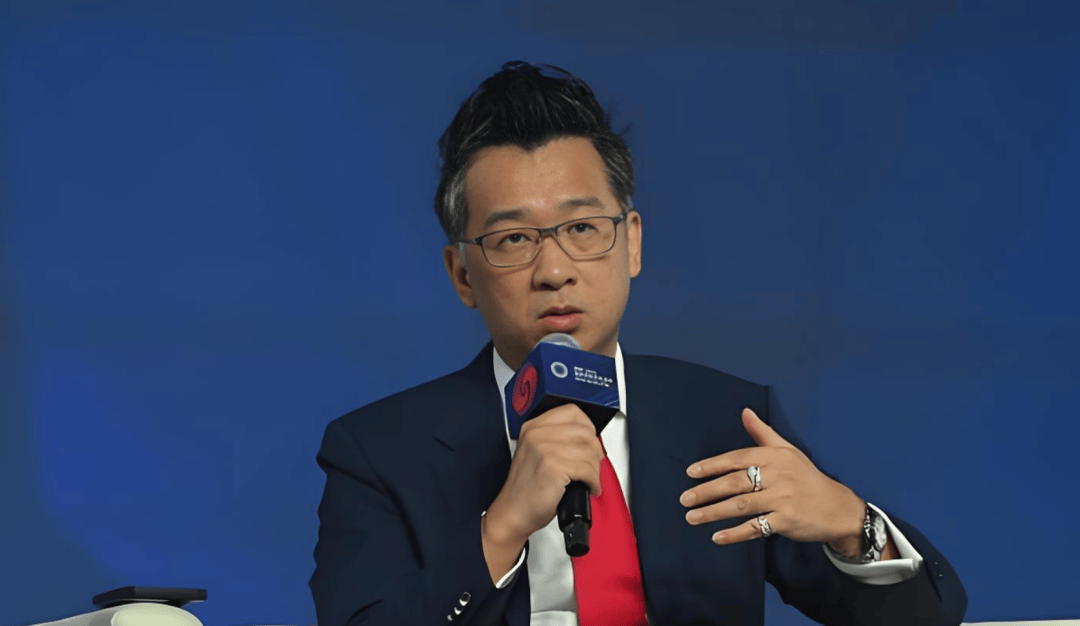
洪灝最新观点:2026大概率会诞生一个伟大的泡沫
Sou Hu Cai Jing· 2026-01-23 19:47
Group 1 - The core viewpoint of the article is that the Federal Reserve is likely to continue lowering interest rates in January 2026, which is expected to impact liquidity and asset prices significantly [3][19]. - The current tightening of short-term liquidity in the U.S. is evident, with repo rates exceeding the benchmark rate, prompting the Fed to expand its balance sheet and lower rates [4][18]. - Forward inflation expectations in the U.S. are unlikely to decline, and if the Fed persists in lowering rates amidst high inflation expectations, it could weaken the dollar's credibility and drive up precious metal prices [5][27]. Group 2 - Gold is currently viewed as fairly valued at around $4,500 per ounce, serving as an anchor for all valuations in a new credit system [6][25][26]. - The price of silver is expected to continue rising, with the potential for significant upward movement as it has not yet reached its peak [8][31]. - Global liquidity conditions are on the rise, which is anticipated to benefit asset classes anchored by gold [10][11][38]. Group 3 - The year 2026 is predicted to be at the peak of a long-term cycle for stock market returns, likely leading to the creation of a significant bubble, presenting investment opportunities [12][46][53]. - The current environment is favorable for risk investments, with a recovery in market sentiment and strong performance in technology and industrial metal sectors [54][56]. - The Chinese yuan is expected to appreciate significantly, with its long-term undervaluation providing a solid foundation for this trend [63][70].

超千亿!股票型ETF持续遭遇资金净流出
Zhong Guo Zheng Quan Bao· 2026-01-22 23:15
Group 1: Market Performance - The A-share general aviation sector strengthened again on January 22, with multiple aviation-themed ETFs rising nearly 4%, while military and satellite-related ETFs also saw gains of over 3% [1][3] - Conversely, previously hot sectors such as semiconductor equipment, power grid, and gold stocks collectively cooled down, with several semiconductor equipment-themed ETFs dropping over 2% [1][5] Group 2: ETF Fund Flows - On January 21, stock-type ETFs experienced a record net outflow exceeding 100 billion yuan in a single day, marking a historical high [1][9] - Major broad-based ETFs, including those tracking the CSI 300, CSI 1000, and SSE 50 indices, were the primary contributors to this net outflow, with the CSI 1000 ETFs alone seeing a collective outflow of over 28.5 billion yuan [9][10] Group 3: ETF Trading Activity - As of January 22, the Huatai-PineBridge CSI 300 ETF recorded over 20 billion yuan in trading volume for two consecutive trading days, while the E Fund CSI 300 ETF achieved a trading volume of over 16 billion yuan, setting a new single-day historical high since its listing [7][8] - The trading volume for the CSI 1000 ETF significantly decreased, dropping by over 11 billion yuan compared to the previous day [7] Group 4: Central Huijin Holdings - As of January 21, the latest share quantities of several broad-based products, including Huatai-PineBridge CSI 300 ETF and E Fund CSI 300 ETF, have fallen below the holdings reported by Central Huijin for the end of 2025 [2][12]
净流出,超千亿!
Zhong Guo Zheng Quan Bao· 2026-01-22 14:45
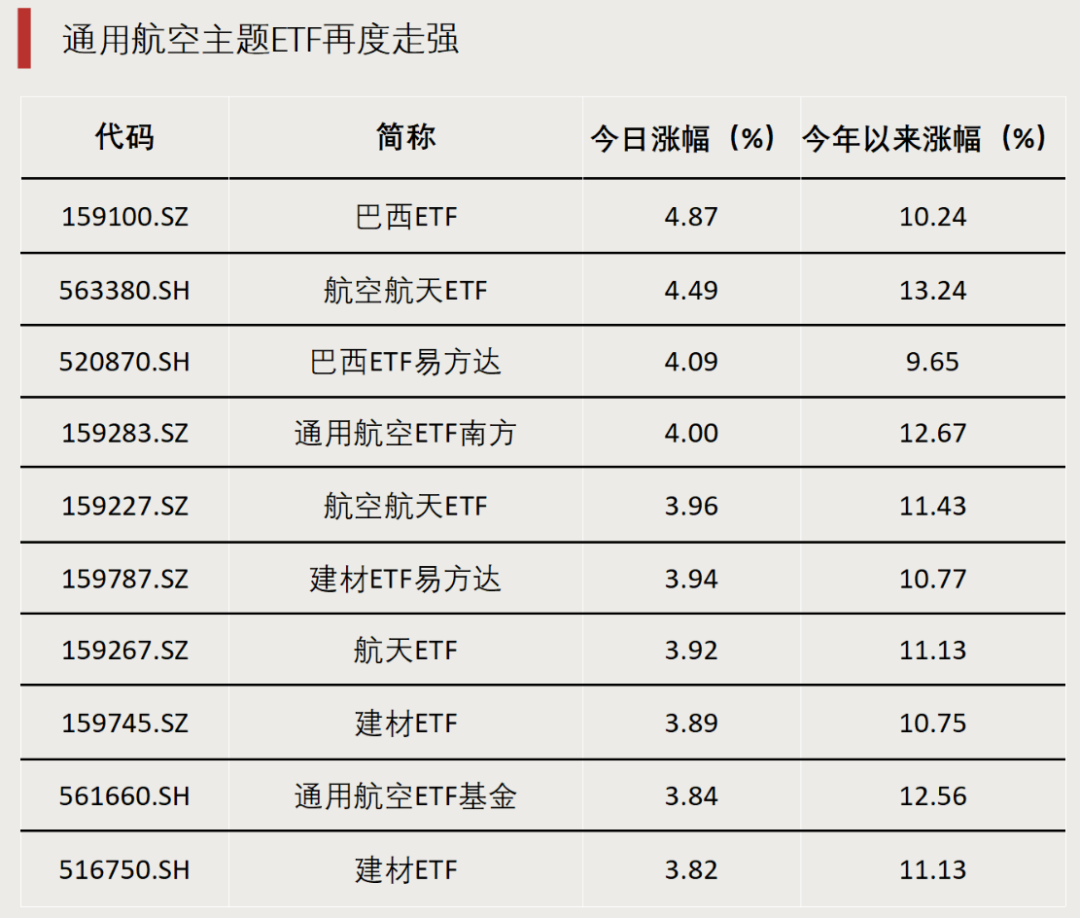
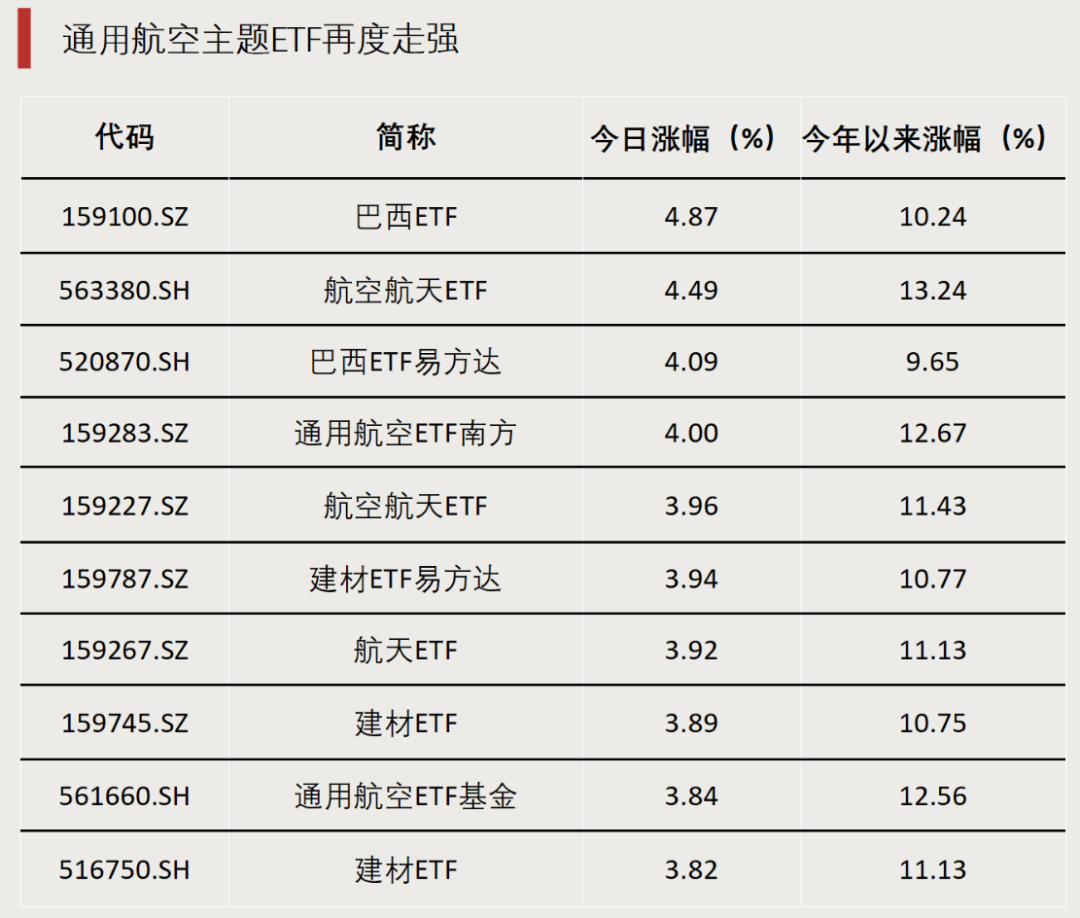
01 1月22日,A股通用航空板块再度走强,多只航空主题ETF大涨近4%,军工、卫星等相关主题ETF普遍涨超3%;此前热度较高的半导体设备、电网、黄金 股等板块集体降温,多只半导体设备主题ETF跌超2%。 02 近期,股票型ETF持续遭遇资金净流出。1月21日,股票型ETF首度出现单日净流出超千亿元的情况,创历史纪录。部分中证1000、上证50、沪深300主题 ETF净流出额集体创下单日历史新高。 03 截至1月21日,华泰柏瑞沪深300ETF、华夏沪深300ETF、嘉实沪深300ETF、华夏上证50ETF、南方中证1000ETF、华夏中证1000ETF、广发中证 1000ETF、富国中证1000ETF等宽基产品的最新份额数量,均已少于中央汇金2025年末的持仓数量。 通用航空主题ETF再度走强 1月22日,全市场仅有的两只巴西主题ETF集体涨超4%,今年以来已累计涨10%左右。 经过此前调整,A股通用航空板块今日再度走强,多只航空主题ETF涨幅接近4%,卫星、军工等相关主题ETF也普遍涨超3%;建材、油气、可控核聚变等 板块今日表现同样较为活跃,多只建材、油气、创业板人工智能等主题ETF涨超3%。 | 代码 ...
[1月21日]指数估值数据(A股港股继续上涨,海外市场波动;《红利指数基金投资指南》荣登榜首)
银行螺丝钉· 2026-01-21 13:47
Core Viewpoint - The article discusses the current state of the A-share and Hong Kong stock markets, highlighting their resilience amidst global market fluctuations and the potential impact of tariff increases on inflation and interest rates [2][3][4][7]. Market Performance - The A-share and Hong Kong markets showed strength, with the Shanghai Composite Index and the Hang Seng Index experiencing slight increases [2]. - The growth style of stocks outperformed value stocks, which saw a minor decline [2]. - The article notes that the A-share and Hong Kong markets have risen by 50-60% since the Federal Reserve's first interest rate cut in September 2024, significantly outperforming global stock indices [8][10]. Tariff Implications - Recent announcements by former President Trump regarding tariff increases on European countries have caused short-term concerns in the market, leading to declines in major U.S. indices [3][4]. - Historical context is provided, indicating that similar tariff increases in April 2025 led to significant market downturns, but subsequent interest rate cuts by the Federal Reserve resulted in market recoveries [5][6][8]. Economic Recovery - The article emphasizes that the fundamentals of A-share companies have shown recovery, with a year-on-year profit growth of approximately 10% in the third quarter of 2025, marking the best performance in recent years [15][16]. - The recovery in corporate earnings is seen as beneficial for the valuation of RMB assets [17]. Valuation Insights - The current valuation of A-share and Hong Kong stocks has returned to around 3 stars, indicating a less favorable environment for large new investments compared to previous years when valuations were lower [18][20]. - The article suggests that while the market has seen significant gains, the best investment opportunities may have been during the periods of lower valuations [19]. Investment Strategy - The article promotes a cautious approach to investing, suggesting that as the market rises, investors may need to consider rebalancing and taking profits [22]. - It also introduces a new book on dividend index fund investment, aimed at helping investors navigate this investment strategy [23].

一夜暴涨24元/克!金饰突破1450元,现在入手还是坐等回调?避坑指南必看
Sou Hu Cai Jing· 2026-01-19 23:55
Group 1 - The core point of the article is the significant increase in gold prices, with major brands in the industry collectively raising their prices for gold jewelry, reflecting broader market trends and economic factors [1][2][3] - On January 19, 2025, the price of gold jewelry rose sharply, with notable increases across various brands, indicating a collective industry response to market conditions [1] - The underlying logic for the surge in gold prices is attributed to global liquidity expansion and the depreciation of the US dollar, with central banks, particularly in China, increasing their gold reserves [3][4] Group 2 - Geopolitical tensions and supply-demand imbalances are accelerating the gold price rally, with recent conflicts impacting market sentiment and supply constraints [4] - The demand for gold is shifting, with investment demand surpassing decorative demand for the first time in China, indicating a fundamental change in consumer behavior and market dynamics [8] - Analysts predict that gold prices will continue to rise, driven by macroeconomic conditions, supply-demand tightness, and geopolitical factors, making high volatility a new norm in the market [4][7]




策略会密集召开 机构热议2026年投资主线
Zhong Guo Zheng Quan Bao· 2026-01-18 21:40
Core Insights - The investment strategy conference held in Shanghai highlighted optimism for the A-share market in 2026, driven by improved global liquidity and the performance acceleration of industries like artificial intelligence (AI) [1][2] Investment Environment Outlook - The global economic outlook for 2026 remains positive, with expectations of a friendly capital market environment due to loose monetary policies in both the US and China [2] - Key trends to watch include potential preventive interest rate cuts by the Federal Reserve and continued supportive policies for capital markets in both the US and China [2] - The AI investment landscape is expected to shift focus towards application growth, moving beyond initial investments in chips [2] AI and Computing Power - AI is identified as a critical area for investment in 2026, with both computing power and application opportunities being emphasized [3][4] - The demand for computing power is projected to remain strong, with limited suppliers capable of entering the global core customer base, enhancing the competitive edge of leading companies [3] - The domestic chip companies are improving their R&D capabilities, which is expected to accelerate the localization of computing power by 2026 [4] Resource Sector Strength - The cyclical resource sector has shown strength in early 2026, with significant interest in metals like gold, silver, copper, and aluminum [5] - Historical data suggests that global manufacturing PMI is likely to rise with continued interest rate cuts, indicating a recovery in the manufacturing sector [5] - Specific segments such as copper are expected to benefit from AI's demand, while lithium supply may face constraints post-2028 due to reduced capital expenditures [5]
沪指收涨1.2%突破3600点,两市成交额连续五日破万亿
Sou Hu Cai Jing· 2026-01-18 08:09
Core Drivers Analysis - Recent policies from the China Securities Regulatory Commission (CSRC) aim to standardize the capital market, including the implementation of the "Derivatives Trading Supervision Management Measures (Trial)" and "Regulations on the Supervision of Secretaries of Listed Companies" [2] - The Central Huijin Investment Ltd. is playing a stabilizing role in the market, with six departments promoting long-term capital inflow to enhance market confidence [2] - Fiscal and monetary policies are working in tandem, with 1.5 trillion yuan in new special bonds allocated to support manufacturing equipment upgrades and new infrastructure, alongside a 10 basis point expected reduction in LPR rates to support liquidity for the real economy and capital markets [2] - January 2026 macro data shows a 0.8% year-on-year increase in CPI and a narrowing year-on-year decline in PPI to -1.9%, indicating improved industrial demand and marginal profit recovery in upstream sectors like black metals and chemicals [2] - Foreign exchange reserves reached $3.358 trillion, the highest since May 2024, with a resilient trade surplus supporting the stability of the RMB and enhancing foreign investor confidence in Chinese assets [2] Market Sentiment and Capital Flow - The trading volume in both markets has exceeded 1 trillion yuan for five consecutive days, indicating a significant increase in market activity and optimistic investor sentiment [2] - Foreign capital is accelerating its inflow, with international investors, including South Korean capital, increasingly allocating to high-quality A-share assets, while domestic savings are shifting towards capital markets [2] - Sectors such as technology, pharmaceuticals, and cyclical stocks are performing well, with AI computing chains, innovative drugs, and rare earth chemicals driving index growth; low-valuation, high-dividend sectors like banks and liquor are favored by institutions, creating a dual support of "technology growth + stable dividends" [2] Future Outlook and Strategic Recommendations - The Shanghai Composite Index's breakthrough of 3600 points and the trading volume exceeding 1 trillion yuan reflect a collective result of policies, economic conditions, capital flows, and international environments, indicating market confidence in economic recovery and long-term positive expectations [9] - In the short term, the market is expected to maintain a fluctuating upward trend, with potential for the Shanghai Composite Index to surpass 4000 points, necessitating attention to mid-year report expectations in sectors like AI, new manufacturing, and new consumption, as well as the pace of policy implementation [10] - In the medium to long term, the upward trend of A-shares remains intact, with structural opportunities arising from industry trends such as humanoid robots, semiconductors, and innovative drugs; investors are advised to shift from trading strategies to holding strategies, focusing on domestic consumption, technological independence, and dividend stocks while diversifying investments to mitigate concentration risks [10]
【招银研究|权益策论】2026全球股市展望:核心线索与中国机遇(2026年1月)
招商银行研究· 2026-01-16 09:22
Market Overview - In 2025, global stock markets experienced a broad rally, with emerging markets significantly outperforming developed markets. The MSCI Emerging Markets Index rose by 31%, while the MSCI Developed Markets Index increased by 19%. US stocks lagged behind globally [4][10] - The technology sector led the market, driven by the AI wave, followed by cyclical stocks, while energy and consumer sectors underperformed due to weak global demand [4][10] Core Themes - The three key investment themes for 2026 that will impact global and A-share markets are: 1. Continued liquidity easing globally, providing funding support for market investments 2. Sustained AI investment as a core driver for the technology sector 3. A potential recovery in global manufacturing, boosting high-end manufacturing sectors [15][16] A-share Market Analysis - The bull market is expected to continue, with the Shanghai Composite Index surpassing 4000 points. Valuations are not in bubble territory, and as long as earnings materialize and liquidity narratives remain unchanged, the market trend is likely to persist [28] - Focus on three main directions for industry selection: "AI + manufacturing overseas + related raw materials." Traditional industry allocations are shifting from high dividend yields to high free cash flow assets [28][39] Industry Insights - The AI investment trend is expected to continue, supported by industry, funding, and policy factors. Despite a shift from infrastructure competition to application value realization, demand for computational power will persist [21][22] - Global manufacturing is anticipated to maintain a recovery trend, aided by liquidity support from interest rate cuts and a restructuring of supply chains in response to security concerns [23][24] Investment Strategy - The focus is shifting from high dividend assets to high free cash flow assets, as the market environment changes. High free cash flow companies can provide both safety through dividends and growth through capital expenditures in key sectors like AI and manufacturing [48][49] - Growth-oriented stocks, particularly in the ChiNext board, are expected to outperform value stocks like the CSI 300, driven by strong earnings growth and favorable liquidity conditions [56][66] International Market Outlook - The Hong Kong stock market is projected to experience a slow bull run, with the Hang Seng Index potentially rising to 29,000 points, driven by earnings recovery and liquidity easing [71] - The US stock market is expected to see slower growth, with high valuations and strong earnings providing key support, but entering a phase of fragile balance with increased volatility [76]
STARTRADER外汇:5万亿市值白银超英伟达成全球第二资产 还能追?
Sou Hu Cai Jing· 2026-01-15 07:08
Core Viewpoint - The global asset landscape is undergoing a historic transformation as silver prices have surpassed $90 per ounce for the first time, elevating its market capitalization to $5.039 trillion, making it the second-largest asset globally, following gold [1][3]. Market Dynamics - The surge in silver's market value is attributed to a dual resonance of its financial and industrial properties. Financially, expectations of global liquidity easing and heightened risk aversion are driving investment into precious metals. Geopolitical tensions, such as the U.S.-Iran and U.S.-Venezuela situations, further enhance silver's appeal as a safe-haven asset [3]. - On the industrial side, there is a significant demand gap for silver, driven by its essential role in emerging industries like photovoltaics, electric vehicles, and AI data centers. Projections indicate that global photovoltaic installations will exceed 600 GW by 2026, leading to a silver paste demand of 8,900 tons. Additionally, the silver consumption in electric vehicles is expected to surpass 3,600 tons annually, and AI servers will require three times more silver than traditional servers, with a year-on-year growth rate of approximately 26% in the AI sector [3]. Supply Constraints - The supply side is tightening, with global silver shortages persisting for five consecutive years. The anticipated shortfall is expected to widen to 6,300 tons by 2026, while independent silver mines account for only 28% of production. Low capital expenditure and aging mines have led to stagnation in supply growth, with visible inventories at major exchanges dropping to a ten-year low, resulting in a consumption-to-inventory ratio of only 0.68 [3]. Market Sentiment - The market's enthusiasm for silver is reflected in the significant inflows into the largest silver ETF, iShares Silver Trust, which recently increased its holdings by 39.47 tons, reaching a historical high of 16,347.95 tons. This indicates strong institutional confidence in long-term allocations [4]. - In the futures market, speculative sentiment is high, with the main silver futures contract's open interest rising to 344,700 lots. However, measures have been implemented to cool the market, including raising margin requirements and limiting intraday positions [4]. Diverging Views - There is a clear divide in market sentiment regarding whether to chase the rising silver prices. The bullish camp believes in the continuation of the strong trend, supported by the long-term supply-demand gap and macroeconomic benefits. Institutions like BNP Paribas and Morgan Stanley have set price targets of $100 per ounce, citing ongoing geopolitical risks and physical shortages as key support factors [4]. - Conversely, the bearish camp warns of potential high-level corrections. JPMorgan has predicted an average silver price of $40.2 per ounce in 2026, citing factors such as index weight adjustments leading to $7 billion in sell orders and the potential for profit-taking due to cooling measures. Other firms, like TD Securities, have established short positions betting on a drop to $40 [5]. Short-Term Outlook - Despite differing opinions, most institutions agree that silver is likely to experience a short-term correction in Q1 2026. Factors such as index adjustments and a low probability of Fed rate cuts could lead to a rebound in the dollar, suppressing precious metal prices. The expected correction range is between $55 and $60 per ounce, with a potential decline of 20-30% [6]. - Key variables influencing silver's future include inventory changes at major exchanges and monthly data on global photovoltaic installations, which reflect the tightness of the physical market and industrial demand resilience. Additionally, the direction of U.S. monetary policy and tariffs on key minerals will play a crucial role in shaping silver's financial attributes [6].