公募新规

Search documents
金融能否重演14年下半年行情?
Xinda Securities· 2025-05-18 11:02
Group 1 - The core conclusion of the report suggests that recent changes in public fund regulations have increased investor attention on banks and non-bank financial institutions, drawing parallels to the significant market rally in the second half of 2014, which was driven by low allocations and regulatory changes [2][10] - Similarities between the current situation and 2014 include significant underweighting of public funds in financial sectors due to previous bear markets and GDP declines, as well as new regulatory changes, with the 2014 launch of the Shanghai-Hong Kong Stock Connect and the 2025 public fund regulations [10][11] - The report indicates that the banking sector was more undervalued in 2014, with substantial inflows of retail funds expected in the latter half of the year, which is a critical factor for a potential market rally [10][11] Group 2 - The report identifies three main reasons for the financial sector's rally in Q4 2014: (1) public funds were significantly underweight in financials, (2) the launch of the Shanghai-Hong Kong Stock Connect and interest rate cuts by the central bank, and (3) valuation recovery potential based on PB-ROE metrics [3][12][17] - The analysis of PB-ROE metrics shows that in 2014, banks' PB declined faster than ROE due to investor concerns about profitability, leading to a significant valuation recovery in the second half of the year, a pattern that may repeat in 2024 due to current investor fears regarding real estate risks [17][18] - The report notes that the brokerage sector may be experiencing a short-term rotation, with historical patterns indicating that brokerages often perform well at the end of market rallies or during rapid market upswings [19][20] Group 3 - The report anticipates that the A-share market may experience a slight pullback from late May to July, driven by policy expectations and tariff impacts, but expects a return to a bullish market state in Q4 [22][24] - The report emphasizes a preference for value-oriented investments in the current quarter, with a focus on sectors such as banking, real estate, and military industry, while also highlighting the potential of new consumption trends [26][28] - The report suggests that the financial sector remains undervalued, with regulatory encouragement for ETF development and long-term capital inflows likely benefiting banks and related sectors [29]

策略深度报告:论公募新规的短中长期影响-短期交易博弈和中长期生态构筑
Soochow Securities· 2025-05-18 10:45
Investment Rating - The report indicates a shift in the public fund industry from "scale" to "return" focus, suggesting a positive outlook for the industry in the medium to long term [1][11]. Core Insights - The recent regulatory changes are expected to lead to a reallocation of public fund investments towards underweighted sectors, particularly in the financial and consumer goods industries, which may enhance overall market performance [4][44]. - The report highlights that the public fund industry is likely to evolve towards a model that closely tracks benchmark indices, with a significant portion of assets allocated to large-cap stocks [3][17]. - The anticipated increase in passive investment strategies is expected to drive up the valuation of benchmark indices like the CSI 300, with a projected increase of 6.8% [4][43]. Summary by Sections Short-term Market Dynamics - Market volatility is attributed to speculative trading based on expectations of increased public fund allocations, particularly in the financial sector [2][16]. - The report notes that the adjustment of fund portfolios will likely be gradual rather than abrupt, as detailed guidelines on performance benchmarks are still pending [2][16]. Medium to Long-term Changes in Fund Behavior - From a product perspective, actively managed equity funds are expected to transition towards a "quasi-index" model, with 60%-80% of assets closely tracking benchmark indices [3][17]. - Larger funds are more inclined to adopt conservative strategies that align closely with benchmarks to ensure stable returns, reflecting the need to meet investor expectations [3][25]. Impact of Regulatory Changes on Market Ecology - The report draws parallels between the current public fund adjustments and the influx of foreign capital in 2016-2017, noting a similar "signaling effect" but emphasizing the current lack of strong fundamental support for the affected sectors [4][26]. - The anticipated shift towards benchmark alignment is expected to elevate the valuation premiums of major indices, particularly the CSI 300 and the CSI 800, as more funds adopt passive investment strategies [4][32]. - Specific sectors such as financial services and consumer goods are identified as likely beneficiaries of increased public fund allocations due to their current underweight positions in fund portfolios [5][44].
论公募新规的短中长期影响:短期交易博弈和中长期生态构筑
Soochow Securities· 2025-05-18 08:04
Group 1 - The report highlights that the recent regulatory changes by the China Securities Regulatory Commission (CSRC) aim to shift the focus of public funds from "scale" to "returns," indicating a potential restructuring of the capital market ecosystem in the medium to long term [1][11] - Short-term market dynamics are driven by speculative trading based on expectations of increased allocations to public funds, particularly in the financial sector, which has shown significant volatility [2][16] - The report suggests that the active equity funds are likely to evolve into "quasi-index" products, with a significant portion of their portfolios closely tracking benchmark indices while seeking alpha through selective stock picking [3][17] Group 2 - The report indicates that the new regulations will likely lead to a systematic increase in the valuation premium of benchmark indices, such as the CSI 300 and CSI 800, as public funds align their strategies with these indices [4][32] - It is noted that certain sectors, particularly financials and consumer staples, are currently underweighted in public fund portfolios, suggesting that these sectors may see increased allocations in the coming years [5][44] - The report draws parallels between the current public fund adjustments and the influx of foreign capital in 2016-2017, emphasizing that while both scenarios involve a "signaling effect," the current adjustments are primarily driven by liquidity rather than strong fundamental support [4][26]
公募考核基准导致市场调仓?最新回应来了!
天天基金网· 2025-05-16 10:51
Core Viewpoint - The A-share market experienced a collective decline in major indices, while the automotive sector surged, driven by favorable policies and market dynamics [1][5][6]. Market Overview - The three major indices in A-shares showed volatility and adjustment, with over 3,000 individual stocks rising despite the overall downturn [2]. - The total trading volume in the two markets reached 1.09 trillion yuan, with the automotive and traditional Chinese medicine sectors performing well, while insurance, brokerage, and liquor sectors faced significant declines [4]. Policy and Market Environment - Analysts suggest that the domestic and international market environments are improving, with easing of the US-China trade conflict and supportive policies from the central bank and regulatory bodies, which are conducive to further A-share growth [5]. - The recent interest rate cut by the central bank, releasing 1.2 trillion yuan, has been partially priced in by the market, leading to a preference for defensive assets [7]. Sector Performance - The automotive sector saw a notable increase of over 2%, attributed to new regulations mandating the installation of automatic emergency braking systems in passenger vehicles, indicating a significant shift in market standards [11]. - The financial sector, including banks and securities, experienced declines, negatively impacting the overall index performance [8]. Fund Management and Investment Strategy - The new public fund regulations are expected to lead to a rebalancing of stock, bond, and AH stock allocations, with a focus on aligning performance benchmarks with investment strategies [16][18]. - Analysts recommend that investors pay attention to the alignment of fund performance benchmarks with investment strategies, prioritize long-term performance over short-term rankings, and consider balanced allocations across undervalued sectors and growth areas [25][26][27].


宝城期货股指期货早报-20250516
Bao Cheng Qi Huo· 2025-05-16 02:06
Group 1: Report Industry Investment Rating - Not provided in the given content Group 2: Core Viewpoints of the Report - The overall view of the stock index is range - bound, with a short - term and intraday outlook of oscillating strongly and a medium - term outlook of oscillation [1][5] - Policy support is strong, and the internal policy continues to play a supporting role, while external risk factors are alleviated, leading to a cautiously optimistic market sentiment [1][5] - The continuous upward momentum of the stock index is insufficient, and there is a possibility of short - term pull - back after a rise and repeated oscillations [5] - The performance of the Shanghai 50 and CSI 300 is expected to be stronger than that of the CSI 500 and CSI 1000 [5] Group 3: Summary by Relevant Catalogs Variety Viewpoint Reference - Financial Futures Stock Index Sector - For IH2506, the short - term and medium - term views are oscillation, the intraday view is oscillating strongly, and the overall view is range - bound, with policy support as the core logic [1] Main Variety Price Quotation Driving Logic - Financial Futures Stock Index Sector - The intraday view is oscillating strongly, the medium - term view is oscillation, and the reference view is range - bound [5] - Yesterday, each stock index oscillated and pulled back, and the full - market trading volume of the stock market was 1190.4 billion yuan, a decrease of 159.5 billion yuan from the previous day [5] - The April social financing and credit data were mixed, with significant government bond efforts, but the financing demand of the enterprise and household sectors remained weak [5] - In the second quarter, the external tariff war conflict has eased, and the recent "order - grabbing" in Sino - US trade is expected to improve external demand to some extent [5] - The differentiation of corporate profitability among industries is obvious, and the new public fund regulations are accelerating the flow of funds to large - cap weighted stocks [5]
行业会议将召开!此板块处于低配状态且政策持续加码,这家公司是全球最大细分龙头上市公司
摩尔投研精选· 2025-05-15 09:53
一、机构称公募新规力推高质量发展,当前板块处于低配状态 行业会议将召开,机构称公募新规力推高质量发展,当前板块处于低配状态,政策持续推进 有望促进行业估值中枢抬升,这家企业是全球最大细分龙头上市公司,去年派息率超7 0%, 另一企业拥有完整产业链。 财联社资讯获悉,2 0 2 5第八届电力与智能电网国际会议将于2 0 2 5年6月2 3 - 2 5日举办。 ...

午后大金融爆发!但网格开始逢高减仓了
Sou Hu Cai Jing· 2025-05-15 03:27
Core Viewpoint - The market has rebounded to the level of 3400, returning to the position seen in March, following a 10% adjustment over two months, indicating a potential recovery in investor sentiment and market dynamics [1][3]. Group 1: Market Performance - The banking, brokerage, and insurance sectors have surged, contributing to a significant increase in the index, which has now surpassed 3400 [3][9]. - The banking index has reached a historical high, with a total market capitalization exceeding 10 trillion, representing over 10% of the total market capitalization of the CSI All Share Index, which stands at 99 trillion [9]. Group 2: Fund Management Regulations - New regulations for public funds are expected to tie performance assessments to benchmarks and investor profitability, prompting a shift in investment strategies [3][4]. - Most public funds benchmark against the CSI 300 index, leading to a potential increase in buying activity in the index's constituent sectors, particularly in banking and finance [4][5]. Group 3: Investment Strategies - The anticipation of new regulations has led to a tactical shift in fund managers' strategies, with early buying seen as advantageous for cost efficiency [4][6]. - High-profile institutions, including Goldman Sachs, have noted that the financial sector is experiencing a rise due to the new public fund management guidelines, with significant reallocations observed since the announcement on May 7 [7][10]. Group 4: Market Sentiment and Future Outlook - The current market behavior is characterized as a short-term tactical repositioning rather than a fundamental improvement in the market [11][12]. - The expectation is that public funds will increasingly invest in CSI 300 constituents, but fund managers are likely to maintain their research-driven investment approaches to outperform the index over time [12][13].
A股午后发飙!大金融强势冲锋,3400点回来了!
Sou Hu Cai Jing· 2025-05-15 01:54
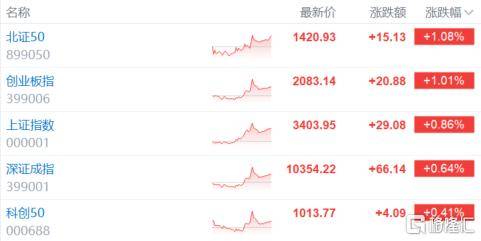
Market Overview - A-shares experienced a sudden surge, with major financial sectors such as insurance, brokerage, and banking showing strong performance, leading to the Shanghai Composite Index reclaiming the 3400-point mark, reaching a nearly two-month high [1][3] - The banking sector's total market capitalization surpassed 10 trillion yuan, with major banks like China Construction Bank and Agricultural Bank of China hitting historical highs [3] Sector Performance - The North China 50 index rose by 1.08%, while the ChiNext index and the Shanghai Composite Index increased by 1.01% and 0.86%, respectively [2] - Insurance stocks led the rally, with China Pacific Insurance rising over 8% and China Life Insurance hitting the daily limit [2] Market Sentiment - The market sentiment improved following the easing of trade tensions between China and the U.S., which positively impacted sectors related to foreign trade, such as shipping and cross-border e-commerce [3][4] - Institutional investors are actively positioning themselves in the financial sector, driven by improved macroeconomic expectations and increased market trading activity [4] Fund Allocation Trends - Public funds currently have a low allocation in the banking sector, approximately 3.49%, which is underweight compared to the weights in the CSI 300 and CSI 800 indices [5] - Recent regulatory changes in insurance fund management are expected to trigger a new wave of asset allocation towards high-dividend sectors, as insurers have a natural demand for such investments [5] Foreign Investment - Following the recent trade negotiations, there has been a noticeable increase in foreign capital inflow into A-shares [6] - Major investment banks, including Morgan Stanley and UBS, have expressed optimism about the Chinese stock market, suggesting tactical increases in growth stocks to enhance portfolio resilience [7][8] Future Outlook - Analysts predict that if corporate earnings continue to improve in the second quarter, the market may enter a new upward cycle, with critical verification points in July and August [9] - The market is expected to maintain a range-bound upward trend before potentially breaking out into a new bull market, contingent on the outcomes of earnings reports and trade negotiations [9]
上证指数昨重返3400点之上
Guang Zhou Ri Bao· 2025-05-14 20:36
Market Performance - A-shares experienced a rise driven by large financial stocks, with the ChiNext index leading the gains, and the Shanghai Composite Index closing above 3400 points [1] - The total market turnover reached 1.35 trillion yuan, an increase of 239 billion yuan compared to the previous trading day [1] - The Shanghai Composite Index closed at 3403.95 points, up 0.86%; the Shenzhen Component Index closed at 10354.22 points, up 0.64%; and the ChiNext Index closed at 2083.14 points, up 1.01% [1] Banking Sector Highlights - The total market capitalization of the banking sector surpassed 10 trillion yuan, setting a historical high [2] - Major banks such as Agricultural Bank of China, Everbright Bank, and Bank of Communications reached historical highs [2] - The banking index has seen a cumulative increase of over 7% year-to-date [2] Financial Sector Dynamics - The insurance and brokerage stocks led the afternoon rally, with China Pacific Insurance rising over 9% and Ping An Insurance's market cap returning to 1 trillion yuan [2] - The logistics and shipping sectors also saw significant gains, with China National Aviation Holding rising by 30% [2] - Net inflows were notable in sectors such as securities, internet services, and insurance [2] Regulatory Impact on Fund Allocation - The recent public fund regulations are believed to influence capital flows towards the brokerage sector, as funds are currently underweight in this area [4] - Public funds have a current allocation of approximately 3.49% in the banking sector, which is underweight by 9.99 percentage points compared to the CSI 300 index [4] - Analysts suggest that fund managers may adjust their portfolios to align with the new regulations, favoring sectors with higher benchmark weights [4] Future Market Outlook - The financial sector's valuation recovery is expected to continue, supported by stable fundamentals and ongoing policy support [5] - The market is anticipated to maintain a volatile upward trend, with structural opportunities and sector rotation being key investment themes [5] - Analysts recommend focusing on growth technology sectors and industries poised for recovery, such as military, offshore wind, and pharmaceuticals [5]
指数突破!可是没赚钱?!
格兰投研· 2025-05-14 14:18
Core Viewpoint - The market is currently in a bullish phase, with expectations for the index to rise above 3600, despite some skepticism from the majority who anticipate a pullback [2][3]. Group 1: Market Performance - The index has successfully surpassed the 3400 mark, indicating a positive trend in the market [1]. - The banking sector has reached a total market capitalization exceeding 10 trillion yuan, marking a historical high [5]. - The Shenwan Banking Index closed at 4227 points, just under 100 points away from its historical peak of 4325 points set in 2007, suggesting a potential for further gains [6][7]. Group 2: Fund Management and Market Dynamics - The recent market rally is attributed to new public fund management guidelines, which have prompted fund managers to adjust their portfolios to avoid performance penalties [8][12]. - The new regulation states that fund managers whose products underperform by more than 10 percentage points compared to benchmarks over three years will face significant salary reductions [13][14]. - This has led to a trend where fund managers are buying index-weighted stocks to align their performance with the market, particularly in underrepresented sectors like banking and insurance [15][16]. Group 3: Investment Strategy - Despite the short-term bullish sentiment, there are concerns about potential bubbles in banking stocks, suggesting a cautious approach to investment [18]. - The recommended strategy for retail investors is to adopt a left-side ambush approach, focusing on long-term value rather than short-term market movements [19]. - The essence of actively managed funds should remain focused on high-risk, high-reward opportunities, rather than merely tracking indices [20]. Group 4: Industry Innovations - Tesla is advancing its Robotaxi initiative, with plans to produce the Cybercab at a cost of under $30,000, aiming for mass production of at least 2 million units annually [23][26]. - The shift towards Robotaxi services is expected to create new business models, transitioning Tesla from a traditional car manufacturer to a software-driven company [26]. - The year 2025 is anticipated to be pivotal for the Robotaxi sector, as technological advancements and cost reductions are expected to enhance profitability for operators [31][32].