
半导体

Search documents
拓竹招人!SHEIN招人!10+好公司一起招人!丨人才留言板第二期
36氪· 2026-03-26 10:14
Group 1 - The article highlights over 50 quality job positions across various fields including AI large models, embodied intelligence, quantum computing, 3D printing, and semiconductors, aiming to help individuals find their next career breakthrough [2] - The featured companies include state-owned AI firms, listed technology leaders, global unicorns, and cutting-edge tech startups, with over 60% of the positions being Series B and above [3] Group 2 - Zhongchengjiao Technology is the first state-owned transportation vertical large model company in Shanghai, possessing a data asset worth hundreds of billions and a dual-engine technology system [6] - Qunhe Technology, a Pre-IPO company, is the largest space design platform globally and the parent company of Cool Home, led directly by its founder and chief scientist [8] - Meiri Interactive, a listed company, is recognized for having the highest "data inclusion rate" in China, empowering various industries with data intelligence [13] - Lipusi Semiconductor, in its B+ round, focuses on high-end SiC modules for new energy and high-power charging, actively recruiting top talent [15] - Tuo Zhu Technology, a B-round unicorn in 3D printing, has redefined personal manufacturing with its extreme hardware and software integration [19] - SHEIN, a leading global fashion retail platform, leverages large-scale data and algorithm applications [13]


每日市场观察-20260326
Caida Securities· 2026-03-26 05:02
Market Performance - On March 25, the Shanghai Composite Index rose over 1%, surpassing 3900 points, while the ChiNext Index increased by over 2%[3] - The total trading volume reached 2.18 trillion yuan, an increase of approximately 970 billion yuan compared to the previous trading day[3] - The main indices, including the Shanghai Composite and Shenzhen Component, recorded gains of 1.3% and 1.95%, respectively[3] Sector Trends - All sectors except coal and oil saw gains, with notable increases in telecommunications, non-ferrous metals, electronics, and construction materials[1] - The ChiNext Index and the Sci-Tech 50 Index led the gains, rising by 2.01% and 1.91%, respectively, indicating a growing preference for growth sectors[1] Capital Flow - On March 25, net inflows into the Shanghai Stock Exchange amounted to 26.891 billion yuan, while the Shenzhen Stock Exchange saw net inflows of 25.904 billion yuan[4] - The top three sectors for capital inflow were power, consumer electronics, and communication equipment, while the sectors with the highest outflows included photovoltaic equipment, industrial metals, and precious metals[4] Future Outlook - The sustainability of the market rebound depends on the continued performance of key sectors, particularly high-tech industries like artificial intelligence and semiconductors[1] - Energy-related sectors, including new energy, energy storage, and lithium battery industries, remain focal points amid geopolitical tensions[1] Industry Developments - As of the end of February, the cumulative installed power generation capacity in China reached 3.95 billion kilowatts, a year-on-year increase of 15.9%[6] - Solar power generation capacity grew by 33.2% year-on-year, reaching 1.23 billion kilowatts, while wind power capacity increased by 22.8% to 650 million kilowatts[6]
新宙邦(300037) - 2026年3月24日投资者关系活动记录表
2026-03-25 10:28
Financial Performance - The company achieved total revenue of 96.39 billion CNY in 2025, representing a year-on-year growth of 22.84% [2] - Net profit attributable to shareholders reached 10.97 billion CNY, with a year-on-year increase of 16.48% [2] - In Q4 2025, revenue was 38.68 billion CNY, showing a year-on-year growth of 30.23% and a quarter-on-quarter increase of 27.64% [2] - Q4 2025 net profit was 3.49 billion CNY, reflecting a year-on-year growth of 35.63% and a quarter-on-quarter increase of 32.20% [2] Business Segment Performance - Battery Chemicals: Revenue of 66.79 billion CNY, up 30.57% year-on-year, driven by increased demand in the energy storage market [3] - Organic Fluorochemicals: Revenue of 14.26 billion CNY, down 6.70% year-on-year, facing structural demand changes and market competition [3] - Electronic Information Chemicals: Revenue of 14.65 billion CNY, up 29.14% year-on-year, benefiting from demand in the AI and semiconductor sectors [3] Strategic Initiatives - The company is focusing on automation and digital transformation to enhance operational efficiency and control costs across manufacturing and supply chain [3] - Overseas investment strategy aims to be close to customers, leverage resources, and manage risks effectively [5] - Key overseas projects include: - Southeast Asia (Malaysia): Electrolyte and core material production base, expected to be operational by the end of 2026 [5] - Europe (Poland): Expansion of electrolyte production capacity [5] - Middle East (Saudi Arabia): Carbonate solvent project leveraging local resources [5] - USA (Ohio): Establishing a base for electrolyte and battery chemicals [5] Future Outlook - The company plans significant capital expenditures focused on overseas projects, domestic capacity expansion, and R&D [7] - Financially, the company maintains a low debt ratio and has sufficient cash reserves to support expansion [7] - The solid-state battery electrolyte development strategy includes focusing on sulfide and halide electrolytes, with several patents filed [8] - The company aims to enhance its market share in semiconductor cooling and cleaning products following the exit of a major competitor [9] Environmental and Regulatory Considerations - The company’s perfluoroisobutylene product is positioned to benefit from global greenhouse gas reduction policies, with a production capacity of 1,000 tons/year [10] - The market for liquid cooling media in data centers is expected to grow rapidly due to the rise of AI and high-performance computing [11]

新宙邦(300037):业绩符合预期,关注氟化液和电解液
Zhongyuan Securities· 2026-03-25 08:10
Investment Rating - The report maintains an "Accumulate" rating for the company, indicating a projected increase in stock price relative to the market index [1]. Core Views - The company's performance in 2025 met expectations, with revenue reaching 9.639 billion yuan, a year-on-year increase of 22.84%, and net profit of 1.097 billion yuan, up 16.48% [8]. - The growth in lithium battery chemicals is expected to continue in 2026, driven by rising prices of lithium hexafluorophosphate and electrolytes, with a projected average price increase of 60.95% compared to 2025 [7]. - The company is actively implementing a global and integrated supply chain strategy, enhancing its production capabilities and customer loyalty through localized production bases [10]. - The demand for electrolytes is anticipated to maintain double-digit growth, supported by the increasing sales of new energy vehicles and energy storage batteries [10]. Summary by Relevant Sections Financial Performance - In 2025, the company achieved a revenue of 9.639 billion yuan, with a gross profit margin of 24.28%, and a net profit margin of 11.38% [14]. - The company’s operating cash flow increased by 42.80% year-on-year, reaching 1.169 billion yuan [8]. - The basic earnings per share for 2025 was 1.46 yuan, with a projected increase to 2.42 yuan in 2026 [14]. Product Segments - The revenue from lithium-ion battery chemicals accounted for 69.29% of total revenue in 2025, reflecting a significant increase from previous years [8]. - The company’s organic fluorine chemicals segment experienced a decline in revenue in 2025, but is expected to recover in 2026 due to growing demand in various industries [10]. - The electronic information chemicals segment also showed strong growth, with a revenue increase of 29.14% in 2025, driven by advancements in AI and semiconductor industries [14]. Market Outlook - The report highlights a positive outlook for the lithium battery materials market, with expectations of continued price increases and demand growth in 2026 [7][10]. - The company is well-positioned to benefit from the ongoing expansion in the new energy vehicle market, with projected sales of 16.49 million units in 2025, a year-on-year increase of 28.24% [10]. - The anticipated policy changes in 2026 regarding subsidies for new energy vehicles are expected to further stimulate market demand [10].
期指:短线超跌反弹
Guo Tai Jun An Qi Huo· 2026-03-24 01:52
1. Report Industry Investment Rating - Not provided in the report 2. Core Viewpoints of the Report - On March 23rd, all four major stock index futures contracts for the current month declined. IF dropped by 3.52%, IH by 3.3%, IC by 4.6%, and IM by 5.28%. The total trading volume of stock index futures rebounded on the trading day, indicating increased trading enthusiasm among investors. Multiple institutions remain optimistic about the long - term trend of A - shares [1][2]. 3. Summary by Relevant Catalogs 3.1 Stock Index Futures Data Tracking - **CSI 300 and Related Futures**: The CSI 300 index closed at 4418, down 3.26%. Among its futures contracts, IF2604 closed at 4398, down 3.52% with a basis of - 20, IF2605 at 4385.2, down 3.80% with a basis of - 32.8, IF2606 at 4344.4, down 3.56% with a basis of - 73.6, and IF2609 at 4258.8, down 3.66% with a basis of - 159.2 [1]. - **SSE 50 and Related Futures**: The SSE 50 index closed at 2792.3, down 3.17%. Among its futures contracts, IH2604 closed at 2793.6, down 3.30% with a basis of 1.27, IH2605 at 2791.6, down 3.36% with a basis of - 0.73, IH2606 at 2776, down 3.43% with a basis of - 16.33, and IH2609 at 2741.2, down 3.50% with a basis of - 51.13 [1]. - **CSI 500 and Related Futures**: The CSI 500 index closed at 7440.8, down 4.11%. Among its futures contracts, IC2604 closed at 7387.6, down 4.60% with a basis of - 53.15, IC2605 at 7337.6, down 5.25% with a basis of - 103.2, IC2606 at 7235, down 4.88% with a basis of - 205.8, and IC2609 at 7049, down 5.13% with a basis of - 391.8 [1]. - **CSI 1000 and Related Futures**: The CSI 1000 index closed at 7409.1, down 4.81%. Among its futures contracts, IM2604 closed at 7364, down 5.28% with a basis of - 45.11, IM2605 at 7298, down 6.13% with a basis of - 111.1, IM2606 at 7190, down 5.55% with a basis of - 219.1, and IM2609 at 6970, down 5.76% with a basis of - 439.1 [1]. 3.2 Trading Volume and Open Interest - **Trading Volume**: The total trading volume of IF increased by 16389 lots, IH by 9616 lots, IC by 17588 lots, and IM by 34579 lots [2]. - **Open Interest**: The total open interest of IF increased by 15821 lots, IH by 15894 lots, IC by 12068 lots, and IM by 22412 lots [2]. 3.3 Top 20 Member Positions Changes - **IF Contracts**: For IF2604, long positions increased by 4217 with a net change of 11416, and short positions increased by 2653 with a net change of 10103; for IF2606, long positions increased by 5627 and short positions by 5993; for IF2609, long positions increased by 1572 and short positions by 1457 [5]. - **IH Contracts**: For IH2604, long positions increased by 5086 with a net change of 13287, and short positions increased by 5132 with a net change of 13530; for IH2606, long positions increased by 6270 and short positions by 6234; for IH2609, long positions increased by 1931 and short positions by 2164 [5]. - **IC Contracts**: For IC2604, long positions increased by 1193 with a net change of 8447, and short positions increased by 67 with a net change of 7894; for IC2606, long positions increased by 6439 and short positions by 6844; for IC2609, long positions increased by 815 and short positions by 983 [5]. - **IM Contracts**: For IM2604, long positions increased by 769 with a net change of 11879, and short positions increased by 365 with a net change of 11391; for IM2606, long positions increased by 11110 and short positions by 11026 [5]. 3.4 Trend Strength - The trend strength of IF and IH is 1, and that of IC and IM is also 1. The trend strength ranges from - 2 to 2, with - 2 being the most bearish and 2 being the most bullish [5]. 3.5 Important Drivers - Key events include China's emphasis on the development of Xiongan New Area, domestic refined oil price control, the deadlock in US - Iran negotiations, a more than 9% drop in international oil prices, sharp fluctuations in precious metal prices, and a significant decline in Asia - Pacific stock markets. A - shares and Hong Kong stocks also experienced significant drops, but multiple institutions are optimistic about the long - term trend of A - shares [6][7].
氦气与钨合金涨价利好哪些标的
2026-03-24 01:27
Summary of Key Points from Conference Call Records Industry Overview - The helium and tungsten alloy industries are experiencing significant price increases due to supply-demand dynamics and geopolitical factors. Tungsten prices have surged nearly 6 times since early 2025, driven by demand from AI, semiconductors, and aerospace sectors, leading to an expanding supply-demand gap [1][2][3]. Key Insights on Tungsten Market - **Supply Constraints**: Government-imposed quotas on tungsten mining have limited supply, while demand is rising across various sectors, including AI, semiconductors, and nuclear power. This has resulted in a persistent supply-demand gap [2]. - **Price Increase**: The price of tungsten carbide powder has increased from approximately 330 RMB/kg in early 2025 to about 2,300 RMB/kg, indicating a nearly 6-fold increase [2]. - **Impact on Tool Industry**: The price increase is expected to reshape the competitive landscape of the tool industry, favoring larger companies with better financial and inventory management capabilities, such as Ouke Yi and Huarui Precision [2][3]. Cost Transmission in Tool Manufacturing - **Cost Pass-Through**: The tool industry has shown a better-than-expected ability to pass on costs to customers due to the inelastic demand for tools. Price increases for complete tools have reached 300%-400%, while CNC blade prices have doubled or more [3][4]. - **Differential Impact**: Different types of tools have varying price transmission capabilities. Complete tools, which rely heavily on tungsten, require a price increase of around 500% to maintain margins, while CNC blades need a 300% increase [4][5]. Helium Market Dynamics - **Supply Sources**: Helium is primarily obtained as a byproduct of natural gas extraction, making its supply closely tied to natural gas resources. China relies heavily on imports, with over 85% of its helium needs met through foreign sources [6][9]. - **Geopolitical Impact**: Recent conflicts have disrupted approximately 17% of global helium production capacity, transitioning from a logistical issue to a fundamental supply chain challenge. Recovery is expected to take 3-5 years [9][10]. - **Market Trends**: The entry of Russian helium into the market is expected to stabilize prices, with the average import price dropping from 150-160 RMB to around 100 RMB per cubic meter due to increased supply [9][10]. Key Companies Benefiting from Market Changes - **Jinhong Gas**: Expected to increase helium sales to 4 million cubic meters by 2026, benefiting from low-cost Russian gas sources and strong performance in the semiconductor sector [11]. - **Guanggang Gas**: As a leading helium supplier in China, it has a robust supply chain and significant helium reserves, positioning it well to benefit from price increases [11]. - **Hangyang Co.**: Achieved a breakthrough in helium tank technology, with an annual production capacity of 30 tanks, which will support its sales and operational needs [11]. - **Jiufeng Energy**: With 150,000 cubic meters of domestic helium production capacity, it is insulated from international price fluctuations and is expected to benefit from both volume growth and price increases [11]. Conclusion - The helium and tungsten markets are undergoing significant transformations due to supply constraints, geopolitical tensions, and changing demand dynamics. Key players in these industries are positioned to capitalize on these trends, with a focus on maintaining supply chain security and enhancing product competitiveness.
SpaceX与特斯拉合建芯片厂!
国芯网· 2026-03-23 14:06
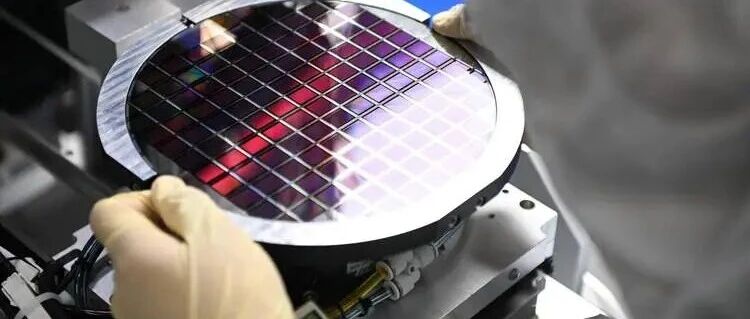
Core Viewpoint - Tesla and SpaceX have launched a $25 billion chip manufacturing plant named Terafab in Austin, Texas, aiming to become the world's largest semiconductor wafer factory with a production capacity of 1 terawatt annually [2][4]. Group 1: Project Overview - The Terafab plant is a joint venture between Tesla, SpaceX, and AI company xAI, designed as a comprehensive semiconductor production facility integrating chip design, lithography, manufacturing, storage chip production, advanced packaging, and testing [2]. - The initial production target is set at 100,000 wafers per month, with a full capacity goal of 1 million wafers per month, which would account for approximately 70% of TSMC's current global capacity [4]. Group 2: Technological Focus - The factory will focus on the 2nm process technology, which is currently entering commercial production, a feat that TSMC has taken decades and hundreds of billions of dollars to develop [2][4]. Group 3: Production Goals - The plant is expected to produce between 100 billion to 200 billion customized AI chips and storage chips annually, supporting Tesla's full self-driving software, Cybercab project, and Optimus humanoid robot product line [4]. Group 4: Rationale for In-House Production - Elon Musk acknowledged existing suppliers like Samsung, TSMC, and Micron but emphasized the limitations in their expansion speed, stating that current global chip manufacturing capacity meets only about 2% of Tesla's total computational needs [5].

全球滞胀恐慌共振,A股防御风格凸显
私募排排网· 2026-03-23 13:00
Market Overview - A-shares experienced a significant adjustment on March 23, with the CSI 300 down 3.26%, the CSI 1000 down 4.81%, and the Northern Stock Exchange 50 down 5.48%, with over 4,800 stocks declining, resulting in a nearly 1:17 up-down ratio [2][3] - Only coal (+0.20%) and oil & petrochemicals (+0.06%) closed in the green, while sectors like social services, beauty care, electronics, and agriculture faced the largest declines [4] Key Downward Drivers 1. **Middle East Conflict Escalation**: The situation in the Middle East deteriorated unexpectedly, with heightened geopolitical risks leading to significant damage to energy facilities and increased oil price expectations [5] 2. **Stagflation Concerns**: Rising oil prices have intensified global inflation expectations, leading to a contraction in risk asset valuations as markets fear a combination of economic slowdown and high inflation [6] 3. **Federal Reserve's Hawkish Stance**: The Fed's recent meeting maintained interest rates but raised inflation outlooks, leading to a significant reduction in expectations for rate cuts this year, which has tightened liquidity for high-valuation growth stocks [7] 4. **Quarter-End Fund Behavior**: Approaching the quarter-end, public funds and insurance capital faced pressure to adjust portfolios and realize profits, leading to concentrated sell-offs in high-growth sectors [8] Sector Performance Insights - **Strong Defensive Sectors**: Coal and oil & petrochemicals benefited from rising oil prices and high dividend yields, becoming safe havens for capital [10] - **Moderate Defensive Sectors**: Utilities and electrical equipment showed stable cash flows and experienced smaller declines compared to the market average [10] - **Severely Affected Sectors**: High-elasticity consumer services, high-valuation tech growth, and cyclical sensitive sectors faced significant valuation reductions [10] Important Observations - The Shanghai Composite Index's 3,800 points serve as a key psychological and technical support level [11] - The total trading volume on the first day was 2.45 trillion, higher than the previous week's average of 2.21 trillion, indicating a need to monitor for stabilization signals [11] Fund Behavior - Recent ETF fund flows showed a clear trend of "risk aversion and reallocation," with significant net inflows into broad-based ETFs like CSI 300 and CSI 500, while sector-specific ETFs saw concentrated outflows, particularly in previously high-performing cyclical and resource sectors [13] Strategic Outlook - In the current market environment, characterized by external geopolitical shocks and internal quarter-end adjustments, a cautious approach is recommended, focusing on risk control and waiting for clear stabilization signals before re-entering the market [16] - High-dividend sectors are expected to provide strong allocation value, while domestic demand-related sectors may offer safety margins due to policy support and relatively low valuations [16] - Quality growth sectors, particularly in high-end manufacturing, technology, and pharmaceuticals, should be monitored for gradual re-entry opportunities following valuation corrections [16]
沪指跌破3900点,恒指跌超700点,科网股集体下挫
21世纪经济报道· 2026-03-23 01:46
Market Overview - A-shares and Hong Kong stocks opened lower due to significant declines in the Japanese and South Korean stock markets, as well as a drop in gold and silver prices [1][4] - The three major A-share indices saw substantial declines, with the Shanghai Composite Index falling below 3900 points, down 1.73% [2][3] A-share Performance - The Shanghai Composite Index was at 3888.60, down 68.45 points or 1.73% - The Shenzhen Component Index was at 13580.57, down 285.63 points or 2.06% - The ChiNext Index was at 1635.42, down 34.57 points or 2.07% - The overall A-share market, represented by the Wind All A Index, was at 6342.89, down 129.03 points or 1.99% [3] Sector Performance - Gold and basic metals sectors experienced significant declines; the computing hardware industry chain also fell, with memory and CPO sectors leading the drop - AI computing, semiconductors, consumer electronics, AI applications, and commercial aerospace concept stocks saw notable declines - Conversely, coal stocks performed well, showing resilience in a declining market [3] Hong Kong Market Performance - The Hang Seng Index dropped over 700 points, with a decline of nearly 3% [4] - The Hang Seng Technology Index fell by 3.15%, while the Hang Seng Biotechnology Index decreased by 4.17% [5] Notable Stock Movements - Major tech stocks in Hong Kong, including Alibaba (-2.34%), Tencent (-2.01%), and JD.com (-1.93%), all saw declines - Gold stocks also fell sharply, with Chifeng Jilong Gold Mining down 18.96% and Lingbao Gold down 7.50% - Innovative drug concept stocks opened lower, with Yuan Da Pharmaceutical dropping over 10% - Chip stocks mostly declined, with Zhaoyi Innovation down over 6% - Oil and gas stocks, however, saw gains, with Baijin Oilfield Services rising over 5% [6]

转债市场周报:偏债型转债估值明显调整-20260322
Guoxin Securities· 2026-03-22 11:13
Report Industry Investment Rating No information about the report industry investment rating is provided in the given content. Core Viewpoints - Last week, the stock market continued to adjust, with major indices oscillating downward and daily trading volume shrinking to the 2 - 2.4 trillion range. Geopolitical conflicts and weakened Fed rate - cut expectations suppressed risk appetite. The bond market showed a weak and oscillating pattern, with the 10 - year Treasury yield rising. The convertible bond market mostly declined, with the CSI Convertible Bond Index down 3.15% for the week [1][6][7]. - Amid the escalating US - Iran conflict and rising oil prices, market risk - aversion persisted. The Shanghai Composite Index fell below 4000 points, and convertible bonds adjusted with the underlying stocks. The valuation of debt - biased convertible bonds was significantly compressed, while the premium rate of convertible bonds with a par value above 120 yuan rebounded. In the short term, convertible bonds present individual - bond opportunities. It is recommended to focus on sectors such as semiconductors, computing power leasing, energy storage, and defensive sectors [2][17]. Summary by Relevant Catalogs Market Trends (2026/3/16 - 2026/3/20) Stock Market - The overall market continued to adjust, with major indices oscillating downward and daily trading volume shrinking to 2 - 2.4 trillion. Geopolitical conflicts and weakened Fed rate - cut expectations suppressed risk appetite. The technology sector fluctuated more, and upstream resource products showed divergent trends. Defensive sectors were relatively resilient [1][6]. - By industry, most Shenwan primary industries declined. Communications (2.10%), banks (0.36%), and food and beverages (-0.48%) performed relatively well, while non - ferrous metals (-11.82%), basic chemicals (-10.53%), and steel (-10.29%) performed poorly [7]. Bond Market - Despite balanced and loose liquidity, bond yields generally rose due to factors such as improved economic data, inflation pushed up by geopolitical conflicts, and liquidity concerns. The bond market showed a weak and oscillating pattern, and the 10 - year Treasury yield closed at 1.83% on Friday, up 1.56bp from the previous week [1][7]. Convertible Bond Market - Most convertible bond issues declined. The CSI Convertible Bond Index fell 3.15% for the week, the median price dropped 3.31%, and the arithmetic average par value fell 5.54%. The overall conversion premium rate increased by 2.71% compared with the previous week. The arithmetic average conversion premium rates of convertible bonds in the par value ranges of [90,100), [100,110), and [110,120) changed by -3.51%, -4.74%, and -2.68% respectively, and were at the 95%, 91%, and 78% quantiles since 2023 [7]. - By industry, convertible bonds in most industries declined. Banks (-0.72%), commerce and retail (-1.21%), and beauty care (-1.71%) performed relatively well, while petroleum and petrochemicals (-10.05%), social services (-9.69%), and non - ferrous metals (-7.23%) performed poorly [10]. - In terms of individual bonds, Yubang (photovoltaic welding tape), Hongbai (organosilicon), Jinhong (helium), Haiyou (photovoltaic film), and Songlin (smart home) convertible bonds led the gains; Zhongchong Zhuan 2 (pet food), Jize (wind power), Baichuan Zhuan 2 (fine chemicals), Hengyi (chemical fiber), and Hongqiang (concrete admixture) convertible bonds led the losses [1][11]. - The total trading volume of the convertible bond market last week was 316.723 billion yuan, with an average daily trading volume of 6.3345 billion yuan, a decrease from the previous week [15]. Valuation - As of March 20, 2026, for equity - biased convertible bonds, the average conversion premium rates of convertible bonds in the par value ranges of 80 - 90 yuan, 90 - 100 yuan, 100 - 110 yuan, 110 - 120 yuan, 120 - 130 yuan, and above 130 yuan were 49.44%, 41.36%, 28.57%, 19.24%, 16.43%, and 14.53% respectively, at the 97%/96%, 97%/97%, 94%/93%, 87%/81%, 92%/93%, and 97%/95% quantiles since 2010/2021 [18]. - For debt - biased convertible bonds, the average YTM of convertible bonds with a par value below 70 yuan was -2.95%, at the 4%/11% quantiles since 2010/2021 [18]. - The average implied volatility of all convertible bonds was 46.08%, at the 92%/96% quantiles since 2010/2021. The difference between the implied volatility of convertible bonds and the long - term actual volatility of the underlying stocks was 4.55%, at the 88%/88% quantiles since 2010/2021 [18]. Primary Market Tracking Newly Announced Issuances and Listings - Last week (2026/3/16 - 2026/3/20), Shang 26 and Boshi convertible bonds announced issuances, and Tonglian convertible bonds were listed [25]. - As of the announcement on March 20, there were no announcements of convertible bond issuances or listings for the next week (2026/3/23 - 2026/3/27) [29]. Issuance Progress - Last week, Shenergy Co., Ltd. was approved for registration by the exchange. Shengde Xintai, Baotai Co., Ltd., Tonghe Technology, and Huaxiang Co., Ltd. passed the review of the listing committee. Runbei Hangke and Xianfeng Jinke passed the general meeting of shareholders. Shentong Express had a board of directors' plan. There were no newly accepted enterprises by the exchange [29]. - As of now, there are 100 convertible bonds to be issued, with a total scale of 167.22 billion yuan. Among them, 4 have been approved for registration, with a total scale of 6.43 billion yuan; 12 have passed the listing committee, with a total scale of 11.89 billion yuan [29].