合成谬误

Search documents
反“内卷”需要增量思维(连线评论员)
Ren Min Ri Bao· 2025-10-09 22:21
Core Insights - The discussion highlights the issue of "involution" competition in various industries, particularly in the photovoltaic sector, emphasizing the need for market reforms and innovation to overcome this challenge [1][2][3] Industry Overview - In the first half of the year, nearly half of China's photovoltaic companies reported a reduction in losses or an increase in net profits, indicating effective collaborative efforts to address "involution" competition [1] - The photovoltaic industry has seen a significant shift from price competition to value competition, driven by technological innovation, as exemplified by Longi Green Energy's record-breaking solar cell efficiency [3] Government Role - The government plays a crucial role in guiding the market towards orderly competition by addressing local protectionism and market fragmentation, as well as implementing policies to prevent below-cost sales [2] - The central government has been actively promoting the establishment of a unified national market and addressing issues related to local investment attraction [2] Company Strategies - Companies are encouraged to move beyond low-cost competition and focus on differentiation and quality improvement to escape the "prisoner's dilemma" of "involution" competition [2][3] - The potential for global expansion in the renewable energy sector remains significant, with a compound annual growth rate of 25.8% in global photovoltaic installations over the past decade, indicating vast opportunities for companies to explore [4] Future Outlook - The emphasis on exploring new markets and opportunities rather than engaging in zero-sum competition is crucial for sustainable growth in various industries [4] - The call for high-level openness and support for companies to expand internationally is seen as a pathway to avoid "involution" and foster high-quality economic development [4]

直击痛点不回避 贴近群众消“温差”——改进经济新闻报道的观察与思考
Sou Hu Cai Jing· 2025-08-26 13:32
Group 1 - The global economy is facing multiple crises and challenges, but China's economy shows resilience and stability, with a focus on maintaining strategic confidence and promoting positive narratives about economic prospects [1][3] - The Central Economic Work Conference in December 2023 emphasized the importance of economic communication and public opinion guidance to counter negative perceptions of China's economy [1][3] - There is a need for economic news reporting to be grounded and relatable to the public, utilizing both traditional and innovative methods to effectively engage audiences [1][3][4] Group 2 - Economic news reporting has expanded in breadth and depth, but there are challenges such as a disconnect between media output and audience engagement, leading to a phenomenon of "flow anxiety" [2][4] - The complexity of China's economic landscape requires nuanced reporting that addresses both macroeconomic achievements and the realities faced by various industries and businesses [3][4] - Media should avoid "composite fallacies" by not generalizing from individual cases, which can mislead investors and create an illusion of unbalanced growth [4][5] Group 3 - The rise of diverse media platforms has created a contrast between traditional media narratives and the more sensationalized content from popular financial influencers, necessitating a shift in reporting styles to capture audience attention [5][6] - Successful economic reporting should combine deep research with innovative storytelling to resonate with audiences, as evidenced by various media initiatives that have achieved significant engagement [6][10] - The importance of building a media think tank to enhance the capacity for economic reporting and policy analysis has been highlighted, with examples of successful initiatives in various regions [11][14] Group 4 - Economic news reporting must focus on addressing pressing issues such as industrial optimization, innovation capacity, and consumer demand, while maintaining a positive narrative [9][10] - Major themes in economic reporting should be explored deeply, combining historical context, logical analysis, and engaging storytelling to enhance audience understanding [10][14] - Journalists are encouraged to develop skills in continuous learning, in-depth research, and creating impactful works that reflect the realities of the economy [14][17]


热点思考 | 反内卷:为何需关注地方政府?(申万宏观·赵伟团队)
赵伟宏观探索· 2025-08-01 16:03
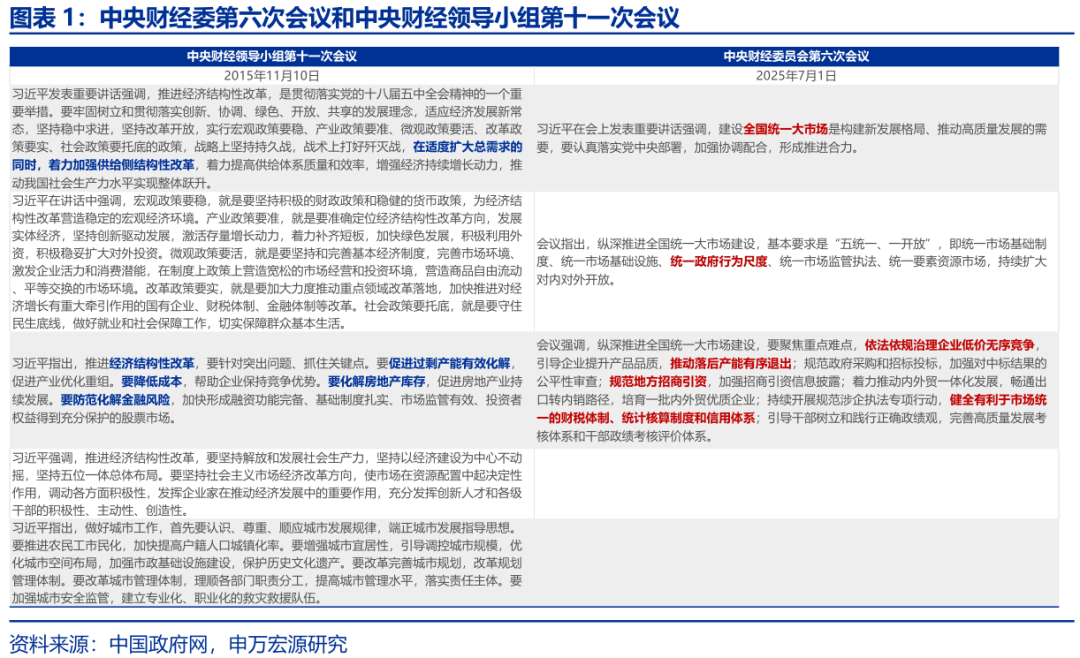
Group 1 - The current "anti-involution" differs from previous instances by focusing more on regulating local government behavior, emphasizing the need for a unified government action standard [2][11][90] - The shift from "Five Unifications and One Abolition" to "Five Unifications and One Opening" highlights the importance of local government behavior regulation and external openness [11][12][90] - The current round of "involution" is driven by local governments' deep involvement, characterized by creating policy gaps, blindly launching projects, and setting market barriers [2][16][90] Group 2 - Local governments are facing pressure to find growth drivers due to the downturn in the real estate cycle, with national commodity housing sales area down 39.7% and real estate investment down 27.3% from 2021 to 2024 [4][29][92] - The reliance on land finance has decreased, leading local governments to seek growth in high-tax industries, with manufacturing and wholesale retail accounting for 32% and 14% of total tax revenue in 2021 [4][37][92] - The principle of "production-based taxation" in the VAT system encourages local governments to promote manufacturing clusters [42][92] Group 3 - The average investment growth rate in manufacturing exceeded 10% in 16 provinces from 2022 to 2023, with the top five provinces averaging over 20% [52][53][92] - There is a significant overlap in industrial planning among local governments, particularly in sectors like pharmaceuticals, new materials, artificial intelligence, and new energy, leading to repeated construction and overcapacity [57][94] - Local governments are competing through tax incentives and subsidies, resulting in significant differences in manufacturing tax burdens across provinces, with a national average of 17.4% in 2023 [70][94] Group 4 - The central government is likely to implement targeted reforms to address local government "involution," including regulating investment attraction behaviors and promoting a healthy investment environment [79][94] - Short-term measures may include cleaning up illegal policy incentives, while long-term strategies could involve changing government functions and promoting efficient resource allocation nationwide [79][94]

反内卷:为何需关注地方政府?
Sou Hu Cai Jing· 2025-07-31 23:40
Group 1 - The current "anti-involution" differs from previous efforts by focusing more on regulating local government behavior, particularly in investment attraction and market openness [2][9][76] - The emphasis on "unifying government behavior standards" reflects a shift from previous policies that addressed nationwide supply-demand imbalances to a more localized approach addressing government actions [9][76] - Local governments are increasingly involved in "involution" competition, characterized by creating policy gaps, blindly launching projects, and setting market barriers [14][76] Group 2 - Local governments are under pressure to find new growth drivers due to declining real estate sales and investment, with cumulative declines of 39.7% and 27.3% respectively from 2021 to 2024 [23][30] - The reliance on land finance has decreased, leading local governments to focus on high-tax industries such as manufacturing and wholesale retail, which accounted for 32% and 14% of total tax revenue in 2021 [33][38] - The central government's transfer payments have become increasingly important for local governments, with significant subsidies for emerging industries like renewable energy exceeding revenues by 357.9 billion yuan [41][76] Group 3 - The overlap in industrial planning among local governments has led to excessive investment and competition, particularly in sectors like pharmaceuticals, new materials, and renewable energy, with 19 industries appearing in over 20 provinces' plans [54][77] - Local governments are competing through tax incentives and subsidies to attract industries, resulting in significant disparities in manufacturing tax burdens across provinces, ranging from 9.7% to 30.1% [63][77] - The lack of coordination in industrial planning has resulted in repeated construction and increased regional competition, leading to lower product prices and reduced industry concentration in sectors like automotive [66][77]
提高宏观经济政策的效率
Sou Hu Cai Jing· 2025-05-25 20:11
Group 1 - The core viewpoint emphasizes the need to enhance the effectiveness of macroeconomic policies while addressing the declining marginal efficiency of these policies [2][3] - The importance of ensuring consistency between economic and non-economic policies to avoid "composite fallacy" is highlighted, as conflicting policies can lead to suboptimal outcomes [2][3] - The necessity of improving the transmission mechanism of macroeconomic policies to achieve intended policy goals is discussed, indicating that a blockage in these mechanisms can hinder effectiveness [3][4] Group 2 - The role of automatic stabilizers and fiscal policy transmission mechanisms is crucial, with income distribution, money supply, and prices being key mediators [4][5] - The need for a robust expectation management mechanism is outlined, emphasizing that market participants' expectations can significantly influence policy effectiveness [6][7] - The importance of matching policy goals with appropriate tools is stressed, referencing Tinbergen's principle that the number of policy instruments should at least equal the number of targets [9] Group 3 - The coordination between short-term and long-term policies is essential for stabilizing economic growth, with short-term counter-cyclical policies needing to align with structural reforms [10][11] - The current economic environment necessitates stronger macroeconomic stimulus policies to break negative cycles and restore confidence among businesses and households [8][11] - The potential negative impacts of short-term policies on long-term structural reforms must be carefully managed to ensure overall policy effectiveness [11]

对话彭文生:应对贸易战,让中国人有钱消费
晚点LatePost· 2025-04-17 15:28
以下文章来源于晚点对话 ,作者龚方毅 黄俊杰 中金公司首席经济学家 彭文生 " 建立消费大市场需要回归常识,让发展成果更公平惠及全体人民" 晚点对话 . 最一手的商业访谈,最真实的企业家思考。 对等关税从 34% 涨到 125%,已经足以说明买方与卖方的简单权力关系。 7 年前,特朗普第一次对中国发起贸易冲突时,中金公司首席经济学家彭文生提出短期可以用货币、 财政政策应对,但长期需要给中国的消费者减负。 这也是他长期以来的政策主张之一。在 2013 年出版的《渐行渐远的红利》一书中,彭文生就建议随 着政府财力和整体经济实力的增长,中国应当扩大和增强社会保障体系,再结合其他制度调整,缩小 贫富差距,提高全民的消费意愿。 现在,中国如何让自己的国民更有能力消费被更多提及。今年初,中央经济工作会议将 "大力提振消 费、提高投资效益,全方位扩大国内需求" 作为经济工作的首要重点任务。在诸多问题上有分歧的国 内学者们普遍呼吁公平分配、促进消费。 既然 3.5 亿人能成为消费的 "甲方",14 亿人的统一大市场应该诞生更多的富足的消费者,而不只是全 世界最高效率的工厂。 4 月 13 日,我们再度拜访彭文生,谈论美国成为 ...
对话彭文生:应对贸易战,让中国人有钱消费
晚点LatePost· 2025-04-17 15:28
以下文章来源于晚点对话 ,作者龚方毅 黄俊杰 晚点对话 . 最一手的商业访谈,最真实的企业家思考。 对等关税从 34% 涨到 125%,已经足以说明买方与卖方的简单权力关系。 7 年前,特朗普第一次对中国发起贸易冲突时,中金公司首席经济学家彭文生提出短期可以用货币、 财政政策应对,但长期需要给中国的消费者减负。 这也是他长期以来的政策主张之一。在 2013 年出版的《渐行渐远的红利》一书中,彭文生就建议随 着政府财力和整体经济实力的增长,中国应当扩大和增强社会保障体系,再结合其他制度调整,缩小 贫富差距,提高全民的消费意愿。 中金公司首席经济学家 彭文生 " 建立消费大市场需要回归常识,让发展成果更公平惠及全体人民" 文 丨 龚方毅 黄俊杰 制图 丨 黄帧昕 编辑 丨 黄俊杰 这一轮贸易战开始的第一周,中文社交网络上流行起来一个容易理解的类比:甲方要逼乙方重签合 同。极其复杂的地缘政治、货币财政、金融历史被简化为交易中的权力关系。 有人觉得美国是甲方,因为 4.2% 的人口每年的消费额占全球的 1/3。白宫似乎也是这么想的,特朗普 的新闻发言人最近断言,每个国家都会寻求和解,因为所有人都想要美国的消费者。 但 ...
量化策略|主动权益基金的负超额是一场合成谬误吗?
中信证券研究· 2025-02-28 00:18
Core Viewpoint - Since 2022, the phenomenon of negative excess returns in actively managed equity funds has become increasingly common and severe, with most products underperforming the Shanghai Composite Index for three consecutive years [2][3] Group 1: Performance Comparison - The excess returns of actively managed equity funds turned negative after 2022, with a significant number of products underperforming the Shanghai Composite Index [2] - In 2024, the proportion of actively managed funds outperforming major indices like the Shanghai Composite, CSI 300, and others is very low, at only 19%, 14%, 18%, and 20% respectively, with average excess returns of -7.4%, -9.7%, -8.9%, and -8.0% [2] - Compared to index funds, actively managed equity funds have consistently shown lower performance, with average excess returns being negative from 2022 to 2024, while index funds maintained stable positive excess returns [2] Group 2: Market Volatility Impact - Significant negative excess returns in actively managed equity funds are concentrated around specific market windows, including periods of tightened COVID-19 control and liquidity crises in small-cap stocks [3] - The inability of actively managed funds to capitalize on key market turning points has left them in a passive position during major fluctuations in the A-share market [3] Group 3: Correlation Among Funds - Actively managed funds with significant negative excess returns exhibit higher correlation, with historical net value trends showing a cosine similarity of 0.72 for frequently underperforming products compared to 0.60 for others [4] - The similarity in holdings among all actively managed equity funds has remained high since 2022, with those showing significant negative excess returns having even higher similarity than other funds [4][5] Group 4: Systemic Issues - The worsening negative excess returns in actively managed equity funds may reflect a phenomenon of synthetic fallacy, where individual rational decisions lead to collective irrational outcomes [6] - Systemic flaws in industry assessment mechanisms and risk management models contribute to this issue, as the cost of deviating from mainstream holdings often outweighs the risks of following erroneous trends [6] - By the end of 2024, the concentration of top ten holdings in actively managed equity funds reached 58%, an increase of 22 percentage points since 2018, indicating a trend of "herding" behavior that exacerbates the decline in excess returns [6]

晨报|渠道红利推动零食板块成长
中信证券研究· 2025-02-28 00:18
Group 1: Snack Industry - The snack industry is undergoing a transformation driven by channel changes, moving from offline to online, and from traditional retail to membership supermarkets and live-streaming e-commerce [1] - Strong listed snack companies have capitalized on the channel opportunities over the past three years, and this trend is expected to continue into 2025, making snacks one of the most certain growth segments in the food and beverage sector [1] - New channels such as WeChat stores, traditional supermarket adjustments, and instant retail are developing steadily, providing new growth points for listed snack companies [1] Group 2: Storage Industry - The mainstream storage market is stabilizing, with NAND Flash prices expected to rise starting Q2 2025 due to production control by manufacturers and increased demand driven by AI [2] - The DRAM prices are anticipated to stabilize and improve in the second half of 2025, with storage module prices likely to increase ahead of wafer prices, presenting investment opportunities in the module segment [2] Group 3: Analog Chip Industry - The analog chip industry is entering a phase of accelerated consolidation, with domestic leading companies expected to enhance their platforms through both organic growth and acquisitions [4] - The report highlights the importance of observing the integration trends in the domestic analog chip market, drawing parallels with historical overseas mergers and acquisitions [4] Group 4: Asset Allocation - The demand for multi-asset ETFs in China is expected to grow, driven by the need for stable returns and a rich supply of underlying tools [5] - The development of multi-asset ETFs will progress through different stages, starting with simple performance-linked indices and evolving towards more complex models catering to specific needs [5] Group 5: Aviation Industry - The recovery of business travel demand post-Lantern Festival is supporting the recent increase in domestic ticket prices, with passenger flow on key routes recovering significantly [15] - The expectation of increased demand for travel due to economic recovery and the potential for improved utilization of wide-body aircraft on North American routes are positive indicators for airline profitability [15]