
技术性回调

Search documents
黄金牛市还在吗?华尔街坚定看多:技术性回调不要怕,中国买家已成黄金市场强劲支柱!
华尔街见闻· 2026-02-03 10:43
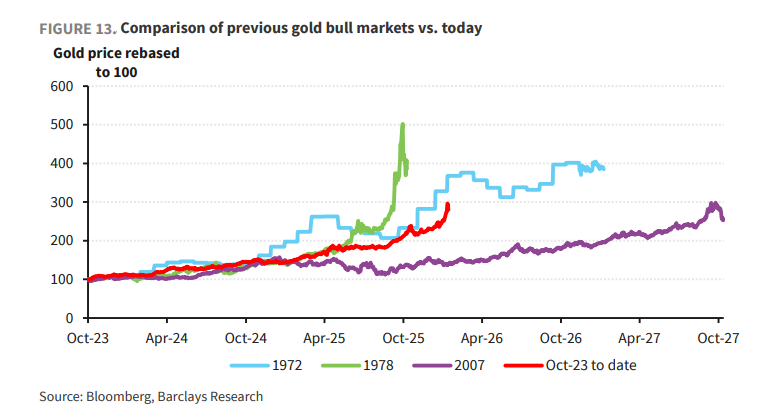
Core Viewpoint - The recent volatility in the gold market, characterized by a rapid price surge to $5,600 followed by a sharp decline below $4,500, is viewed as a healthy correction rather than the end of a bull market, with expectations of a rebound towards $6,000 in the future [2][3][7]. Group 1: Market Dynamics - The gold price experienced a significant drop of approximately 21%, attributed to a "cleaning out" of short-term speculative positions, which had become overly crowded due to previous price surges [8]. - Major banks, including Barclays and UBS, maintain that the underlying fundamentals driving the long-term bull market in gold remain intact despite recent price fluctuations [11][12]. - UBS highlights that demand from retail, institutional, and official sectors is expected to recover, which will ultimately drive gold prices back up [12]. Group 2: Chinese Market Influence - Chinese buyers are significantly increasing their gold purchases, with reports indicating that their buying intensity for gold ETFs is over three times that of the previous year [4][19]. - In January 2026 alone, Chinese gold ETF purchases reached 940,000 ounces, suggesting a potential annualized increase of 11.5 million ounces, compared to a record of 3.24 million ounces in 2025 [18][19]. - UBS notes a structural change in the Chinese market, where high gold prices are now stimulating investment demand rather than deterring it, indicating a shift towards "buying more as prices rise" [25][26]. Group 3: Technical Analysis and Predictions - UBS predicts that the $4,500 level will serve as a strong technical support, with expectations for gold prices to recover and reach new highs in the coming quarters [29]. - Barclays' analysis suggests that the fair value of gold is around $4,000, and while there is still a premium, the recent price drop has brought it back within reasonable standards [9]. - Deutsche Bank maintains a target price of $6,000 per ounce for gold, viewing the current market adjustment as a minor fluctuation within a larger upward trend [33]. Group 4: Broader Economic Context - The ongoing geopolitical tensions and concerns over fiat currency devaluation are driving investors to view gold as a critical hedge against risk [13][14]. - The U.S. fiscal policy environment, characterized by high government debt and expansionary measures, is seen as undermining the safe-haven status of U.S. Treasuries, further enhancing gold's appeal [14][16]. - The demand for gold is also being supported by central banks, with countries like Poland and South Korea planning to increase their gold reserves, reflecting a trend towards de-dollarization [30].

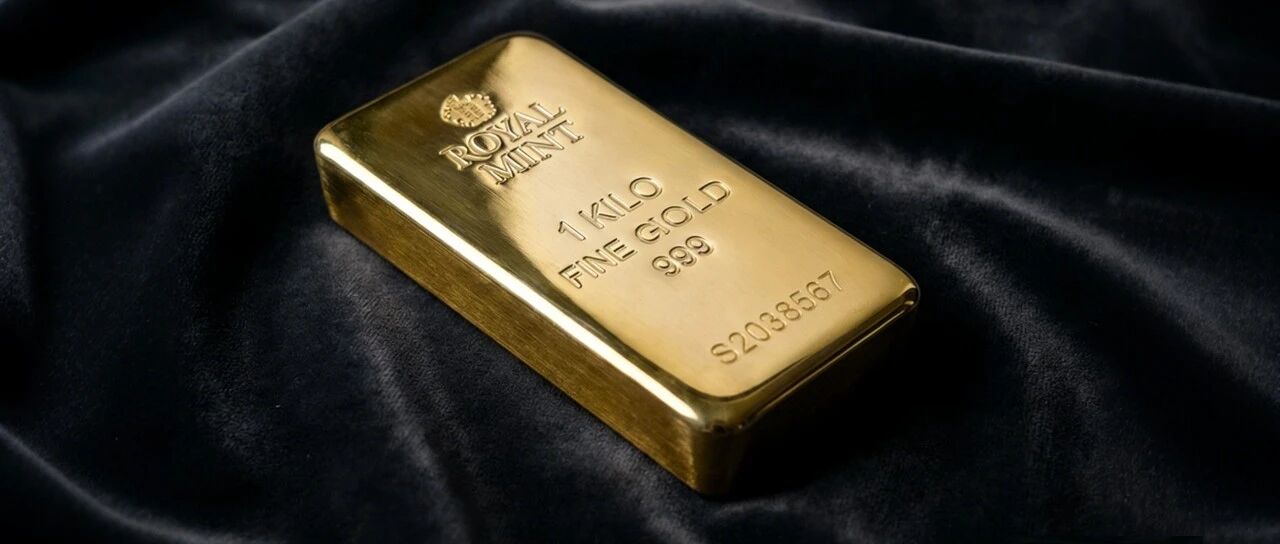
金银大幅反弹!
Sou Hu Cai Jing· 2026-02-03 05:46
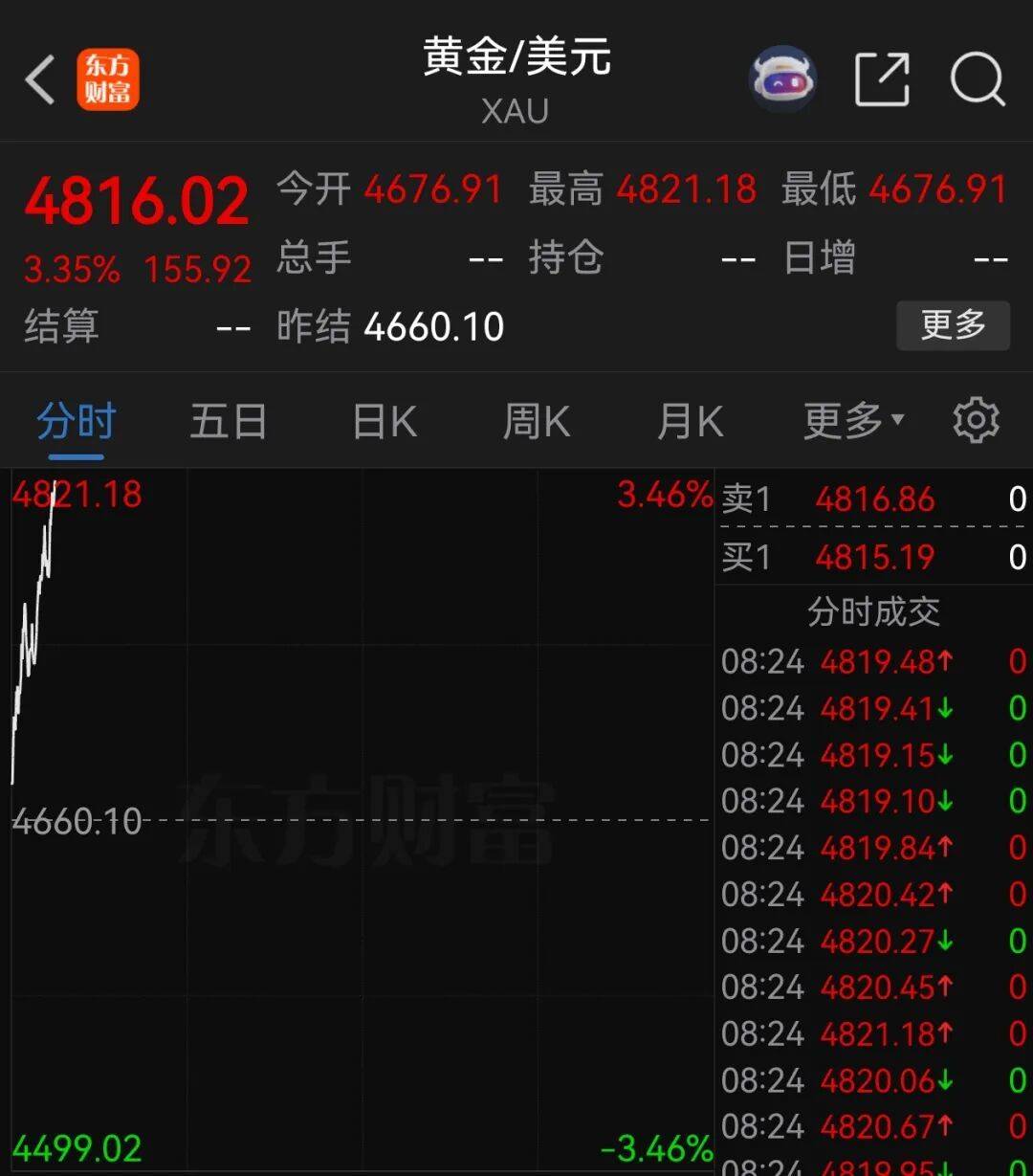
2月3日早盘,黄金、白银双双反弹。现货黄金日内涨幅扩大至3.35%,报4816.02美元/盎司。 | | 黄金/美元 | | | 7 | | | --- | --- | --- | --- | --- | --- | | | XAU | | | | | | | /AQ4 / 4676.91 最高 4821.18 最低 4676.91 | | | | | | 3.35% 155.92 | 总手 -- 持仓 | | 日增 | | | | 结算 | 昨结 4660.10 | | | 南京 | | | 分时 五日 | 居K 日K | 月K | 明多, | | | | 4821.18 | | 3.46% 卖1 | 4816.86 | | | | | | | 21 4815.19 | | 0 | | | | | 分时成交 08:24 4819.481 | | | | | | | 08:24 4819.414 | | | | | | | 08:24 4819.154 | | | | 4660.10- | | | 08:24 4819.104 | | | | | | | 08:24 4819.84↑ | | | | | | ...
黄金牛市还在吗?华尔街坚定看多:技术性回调不要怕,中国买家已成黄金市场强劲支柱!
Hua Er Jie Jian Wen· 2026-02-03 03:05
2026年开年的黄金市场,演绎了一场极致的"惊魂记"。 在短短数周内,现货金价从4300美元一路狂飙至5600美元的历史巅峰,随即又如断线风筝般坠落至4500美元下方。这种单日两位数的跌幅,在黄 金历史上仅出现过两次——分别是1980年和1983年。 面对"闪崩",市场关于黄金泡沫破裂的质疑声此起彼伏。然而,巴克莱、瑞银和德意志银行等华尔街巨头却在巨震中保持了惊人的冷静。 在他们看来,这并非牛市的终结,而是一次极致挤压后的"健康清算"。在宏观叙事未变的背景下,黄金正处于通往6000美元目标的"技术性休 整"。 与此同时,一个关键的支撑是,中国买家正在疯狂扫货。德银报告显示,中国投资者目前的买入黄金ETF强度可能是去年的三倍以上。 大行共识:"极致拥挤"后的技术性回踩 黄金之所以在近期出现剧烈调整,在华尔街眼中更多是"技术性"而非"根本性"的。瑞银在最新的报告中直言: 别慌,基本面没变 黄金涨势结束了吗?简而言之,我们的答案是否定的。 该行认为,金价从高位回落约21%,主要归结为短期投机头寸的"大清洗"。此前的单边暴涨导致市场仓位过度拥挤,当获利盘涌出时,踩踏效应 被成倍放大。瑞银策略师Joni Teves认为 ...
金信期货日刊-20260203
Jin Xin Qi Huo· 2026-02-02 23:39
1. Report Industry Investment Rating - No relevant information provided. 2. Core Viewpoints - The sharp decline in precious metals is due to forced liquidation and margin hikes triggered by the initial spark of the Wash nomination, with Shanghai silver expected to be volatile and bearish in the short - term. A - shares are expected to continue adjusting, and the operation strategy is to sell on rallies. Gold is likely to remain volatile, so caution is advised. Iron ore is in the process of finding a bottom, and a volatile approach is recommended. Glass is expected to turn volatile and bearish in the short - term. Methanol trading will likely focus on overseas situation developments. Pulp futures are in a range - bound trend [3][5][10][12][15][19][21]. 3. Summary by Related Catalogs 3.1 Shanghai Silver - Core decline drivers include regulatory strict control (the Shanghai Futures Exchange raised the margin to 18% and limited opening positions to 800 lots), a hawkish macro - environment (the Fed maintained the interest rate at 3.5% - 3.75% and Powell's hawkish stance), profit - taking due to a previous over 30% increase and a 12% reduction in CFTC non - commercial net long positions, and the substitution effect of copper for silver. In the short - term (1 - 2 weeks), it is volatile and bearish; in the medium - term (1 - 3 months), the price may recover under certain conditions. Operation advice is to avoid blind bottom - fishing and short at resistance levels [3]. 3.2 A - shares - The overall A - share market declined unilaterally with significantly reduced trading volume. Technically, there is a need for further adjustment at the daily - line level, and the operation strategy is to sell on rallies [5]. 3.3 Gold - Gold prices continued to fall sharply, and it is expected that the volatility will continue for some time. Caution is advised when participating [10]. 3.4 Iron Ore - With the commissioning of the Simandou project, the expectation of a loose supply is further fermented. On the demand side, except for exports, the domestic demand support from real estate and infrastructure is weak. Technically, it closed lower today, and a volatile approach is recommended, paying attention to the lower platform support [12][13]. 3.5 Glass - The daily melting volume changed little, and inventory decreased slightly. The main drivers are policy - side stimulus and supply - side clearance. Technically, it rose and then fell today, and a short - term volatile and bearish approach is adopted [15][16]. 3.6 Methanol - Fundamentally, the state of both supply and demand reduction does not support the market. Although the reduction in imports is gradually being realized, the negative impact of coastal olefin plant shutdowns has also occurred as expected. The de - stocking progress is average, and the relatively high port inventory suppresses the market. Overseas geopolitical uncertainties remain, especially the situation in Iran is undetermined, so short - term trading will likely focus on overseas situation developments [19]. 3.7 Pulp - The pulp spot market is operating stably, with some pulp and paper mills undergoing maintenance shutdowns. The domestic port inventory is still under pressure, and the downstream demand for base paper lacks the driving force to increase, mainly maintaining rigid procurement. As the production cost decreases, the paper mills' gross profit has rebounded. The pulp futures have shown a range - bound trend recently [21].
A股收评:盘后,大家愤怒了!大跌102点!周二会迎来救赎了
Sou Hu Cai Jing· 2026-02-02 16:31
这场暴跌的导火索直指贵金属市场的史诗级崩盘。周末,伦敦金银价格突发闪崩,黄金单日跌幅超12%,白银暴跌35%,国内沪银期货主力合约直接封死跌 停板。A股贵金属板块应声崩溃,晓程科技、招金黄金等十余只个股竞价跌停,板块整体跌幅超过8%。此前支撑市场人气的黄金有色板块瞬间瓦解,成为 拖累指数的"元凶"。 暴跌背后,是多重利空因素的共振。美联储主席提名事件成为关键转折点——特朗普提名鹰派人物凯文·沃什执掌美联储,市场预期其可能推行"缩表 降 息"组合拳,导致美元指数快速走强,全球流动性收紧担忧升温。与此同时,上海黄金交易所紧急上调白银合约保证金比例至26%,杠杆资金被迫平仓,引 发连锁踩踏。 春节前的资金避险行为进一步放大了市场波动。随着长假临近,投资者"持币过节"意愿强烈,内资单日流出超700亿元,两市成交额缩量至2.6万亿元以下。 缺乏增量资金支撑的市场犹如"无水之舟",稍有抛压便快速下沉。 板块分化在此次大跌中展现得淋漓尽致。贵金属、油气、有色金属等资源板块成为重灾区,白银有色、中曼石油等个股跌停;而防御性板块则逆势崛起,白 酒股集体飘红,金徽酒、皇台酒业涨停,电网设备概念股三变科技、保变电气等超10只个股涨 ...
和讯投顾葛洪亮:天塌了!黄金下周要割肉吗?
Sou Hu Cai Jing· 2026-01-31 04:12
近期贵金属市场出现剧烈波动,白银价格在单日之内大幅下跌三分之一,从每盎司120美元最低跌破75 美元;黄金同样遭遇重挫,最大跌幅达13%,所幸收盘前出现反弹,最终收于4800点上方。此次暴跌引 发市场广泛关注,投资者普遍关心后续走势及被套仓位能否在下周迎来修复。 尽管当前市场情绪偏向悲观,但技术面存在修复需求。剧烈下跌后通常伴随技术性回调,即使受消息面 影响黄金难以立即创出新高,仍有望出现反弹窗口,为投资者提供优化持仓结构的时机。此外,地缘政 治风险尚未消退,特朗普政府对伊朗的强硬态度可能再度推升避险需求,或为黄金价格带来阶段性支 撑。综上所述,投资者宜保持耐心,密切关注政策动向与地缘局势演变,审慎应对市场波动。 引发本轮金银大幅下跌的核心因素在于美联储人事变动。特朗普提名凯文·沃什担任下一任美联储主 席,而沃什被视为典型的鹰派代表人物,其政策立场倾向于支持美元走强并反对降息。由于贵金属价格 与美元指数长期呈现负相关关系,鹰派人物执掌美联储将强化美元上行预期,从而对黄金白银形成显著 压制。 ...
美银Hartnett预警:全球股市陷入“超买”困境,技术指标触及历史性卖出信号
Hua Er Jie Jian Wen· 2026-01-30 11:50
Group 1 - The core viewpoint is that global stock markets have entered a dangerous "overbought" state, as indicated by a key internal metric reaching a threshold that suggests potential reversal [1] - As of the week ending January 28, 89% of MSCI global stock index constituents were trading above their 50-day and 200-day moving averages, surpassing the historical "sell signal" threshold of 88% [1] - Historical data suggests that when this indicator exceeds the threshold, it typically indicates excessive market breadth, significantly increasing the risk of a technical pullback in the short term [1] Group 2 - There is a growing divergence between technical indicators and fund flows, with global equity funds experiencing a net outflow of $15.4 billion in the week ending January 28, indicating some investors are taking profits at historical highs [2] - Despite the net outflow, the Bull & Bear Indicator remains in the "extremely bullish" range due to broad market gains and stable credit market performance, highlighting a key market divergence [2] - This rare combination of technical, funding, and sentiment indicators suggests that underlying market momentum is quietly changing, potentially masking vulnerabilities despite apparent strength [2] Group 3 - U.S. equity funds attracted $9.2 billion in net inflows last week, indicating relative attractiveness amidst overall global fund outflows [3] - In contrast, European equities saw a reversal in fund flows, experiencing a net outflow of $400 million for the first time in seven weeks, marking a temporary halt to the previous inflow trend [3] - The preferred trading strategy for 2026, as stated by Bank of America strategist Michael Hartnett, is to go long on bonds, international stocks, and gold, continuing the recommendation for a preference for international stocks since late 2024 [3]
投资者需警惕暴涨崩盘 伦敦银进入技术性回调
Jin Tou Wang· 2026-01-30 06:28
今日周五(1月30日)亚盘时段,伦敦银目前交投于109.99一线上方,今日开盘于115.79美元/盎司,截至发 稿,伦敦银暂报111.96美元/盎司,下跌3.34%,最高触及118.45美元/盎司,最低下探108.01美元/盎司, 目前来看,伦敦银盘内短线偏向震荡走势。 【要闻速递】 此次回调被视为试图重新获得正向势头,帮助其恢复上涨,同时试图卸载相对强弱指标上的超买状况, 而指标已进入极度超卖区,为看涨动能的回归打开了道路。 白银市场需持续关注期货与现货市场的挤兑压力,以及基差与内外价差变化,12月下旬以来国内白银市 场持续呈现紧缺现象,TD递延费长期处于空付多,现货较期货升水,国内较伦敦溢价走阔以及国投白 银LOF基金剧烈波动等问题。 【最新伦敦银行情解析】 银价在近期盘内交易中下跌,尽管交易持续在EMA50上方表现为动态支撑,这一调整性走势依然存 在。这一支撑强化了主短期多头趋势的稳定性和主导地位,尤其是在价格波动持续伴随支撑该路径的主 要和次要多头趋势线时。 银价于1月29日一度触及121.66美元的历史新高,随后在高位出现明显获利了结。目前尽管短线回调, 但从时间周期来看,白银本月累计涨幅仍超过60 ...
综述丨国际金价突破5500美元 再创历史新高
Sou Hu Cai Jing· 2026-01-29 07:35
Group 1 - The international spot gold price and April gold futures on the New York Commodity Exchange both surpassed $5,500 per ounce, marking a historical high, with a market capitalization increase of over $3.5 trillion in the gold market [1][3] - Gold prices have risen more than $500 per ounce in the past 72 hours, with an overall increase of approximately 20% since the beginning of 2026 [1][3] - Concerns regarding the independence of the Federal Reserve, geopolitical risks, trade and tariff worries, and rising inflation pressures are driving individual investors to increase their gold holdings [3] Group 2 - Analysts believe that the current rise in gold prices is not driven by technical buying but by structural changes in the market, with central bank demand providing strong support for price increases [3][4] - Global financial broker XS.com indicates that the rise in gold prices is due to increased market anxiety and a cautious attitude towards the global monetary and fiscal order [3] - Most institutions maintain an optimistic outlook for gold prices, with Goldman Sachs predicting stability at $5,400 by the end of the year and Deutsche Bank forecasting a rise to $6,000 as the dollar weakens [4]
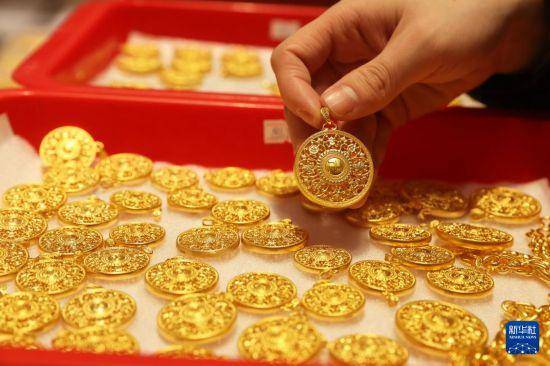
综述|国际金价突破5500美元 再创历史新高
Sou Hu Cai Jing· 2026-01-29 04:56
Group 1 - The international spot gold price and April gold futures on the New York Commodity Exchange have both surpassed $5,500 per ounce, marking a historical high driven by fundamental factors [1] - Gold prices have increased by over $500 per ounce in the past 72 hours, with the market capitalization of the gold market surging by over $3.5 trillion [1] - The overall increase in international gold prices is approximately 20% since the beginning of 2026 [1] Group 2 - Concerns regarding the independence of the Federal Reserve and its monetary policy, along with rising geopolitical risks, trade and tariff worries, and inflationary pressures, are accelerating individual investors' accumulation of gold [1] - Standard Chartered Bank indicates that the demand for precious metals is not only driven by speculative trends but also supported by ongoing central bank demand [1] - Analysts believe that the current rise in international gold prices is driven by structural changes rather than technical buying [1] Group 3 - A report from global financial broker XS.com suggests that the rise in gold prices is influenced by a cautious attitude towards the global monetary and fiscal order, rather than solely by market anxiety [2] - The overall confidence in fiat currencies is weakening, and if the US dollar maintains its status as the world's reserve currency, the global monetary system may face threats [2] - Analysts are optimistic about the future of gold, with Goldman Sachs maintaining a year-end price expectation of $5,400, while Deutsche Bank predicts prices could reach $6,000 as the dollar weakens [2] Group 4 - Market participants warn that the short-term surge in gold prices may lead to a technical correction [3]