
拥挤交易

Search documents
黑色星期一!见证历史!贵金属继续暴跌 电网设备板块逆市走强
Zhong Guo Ji Jin Bao· 2026-02-02 07:35
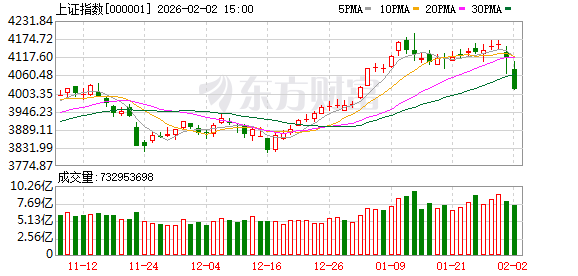
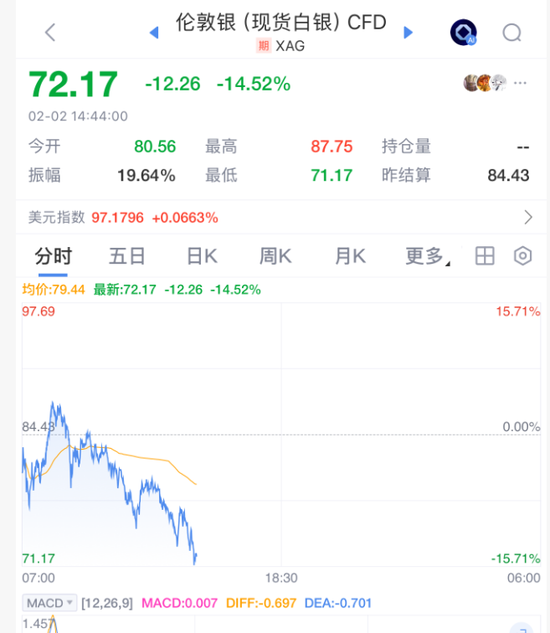
Market Overview - Precious metals experienced a significant crash, with spot silver erasing all gains for the year, plummeting by 14%, while gold fell approximately 10% [2] - International metal prices saw a widespread decline, with notable drops in various commodities [4] Price Movements - New York gold dropped by 9.01% to $1,900.87, platinum fell by 10.40%, copper decreased by 5.75%, and nickel dropped by 8.00% [5] - Domestic futures contracts also hit their limit down [6] Global Market Impact - The crash in gold and silver prices negatively affected global stock markets, with the South Korean stock market falling by 5% and Japan's market initially rising by nearly 2% before closing down over 1% [7] - Major indices in Asia, including the Korean Composite Index and the Nikkei Index, reported declines of over 2% [8][11] Investor Sentiment - Analysts noted that the market's movements reflect a reduction in risk appetite among investors, who are reassessing positions amid high valuations and tightening financial conditions [9] - The selection of Kevin Warsh as the next Federal Reserve Chair is seen as a catalyst for the shift towards a more hawkish monetary policy, contributing to a stronger dollar and impacting commodity markets [9][10] Sector Performance - In the A-share market, all three major indices fell over 2%, with the Shanghai Composite Index down by 2.48% and the Shenzhen Component Index down by 2.69% [11] - The resource sector faced collective adjustments, particularly in precious metals and oil and gas, with several stocks hitting their daily limit down [14] Stock Specifics - In the A-share market, 771 stocks rose while 4652 stocks fell, with notable strength in the electric grid equipment sector and continued gains in liquor stocks [12] - Semiconductor stocks also faced significant declines, with companies like Zhaoyi Innovation and Wentai Technology hitting their daily limit down [16]


黑色星期一!见证历史!
Xin Lang Cai Jing· 2026-02-02 07:28
Market Overview - Precious metals experienced a significant crash, with spot silver erasing all gains for the year, plummeting by 14%, while gold fell approximately 10% [1][17] - International metal prices fell sharply across the board [4][20] - Various domestic futures contracts hit their daily limit down [6][22] Global Market Impact - The crash in gold and silver prices has adversely affected global stock markets, with the South Korean stock market dropping by 5% and the Japanese market initially rising by nearly 2% before closing down over 1% [7][23] - The Asia-Pacific markets reflected this trend, with the Korea Composite Index down 5.26%, the FTSE Indonesia Index down 3.95%, and the Nikkei 225 down 1.25% [24] Investor Behavior - Analysts noted a shift in investor sentiment towards reducing risk in "crowded trades," as investors reassess their positions amid high valuations and tightening financial conditions [8][24] - The market's tolerance for high-beta assets has decreased, leading to a movement of funds from momentum assets to cash and defensive stocks [8][24] Catalyst for Market Movement - The selection of former Federal Reserve Governor Kevin Warsh as the next Fed Chair is seen as a catalyst for the breakdown of high-momentum trades, as he is perceived to be less dovish than other candidates [9][25] - This has led to a strengthening of the dollar, suppressing sentiment in the foreign exchange market and impacting the entire commodities sector [9][25] A-Share Market Performance - In the A-share market, all three major indices fell over 2%, with the Shanghai Composite Index down 2.48%, the Shenzhen Component down 2.69%, and the ChiNext Index down 2.46% [10][26] - A total of 771 stocks rose, while 4652 stocks fell, with 123 stocks hitting their daily limit down [11][27] Sector Performance - The electric equipment sector showed resilience, with stocks like Tongguang Cable and Shuangjie Electric hitting their daily limit up [12][29] - In contrast, resource stocks, particularly in precious metals and oil and gas, faced significant declines, with multiple stocks hitting their daily limit down [12][31] - Semiconductor stocks also suffered, with companies like Zhaoyi Innovation and Wentai Technology hitting their daily limit down, and others dropping over 10% [12][32]
“拥挤交易”崩塌?黄金白银延续跌势,高盛预警期权杠杆加剧波动
Sou Hu Cai Jing· 2026-02-02 02:31
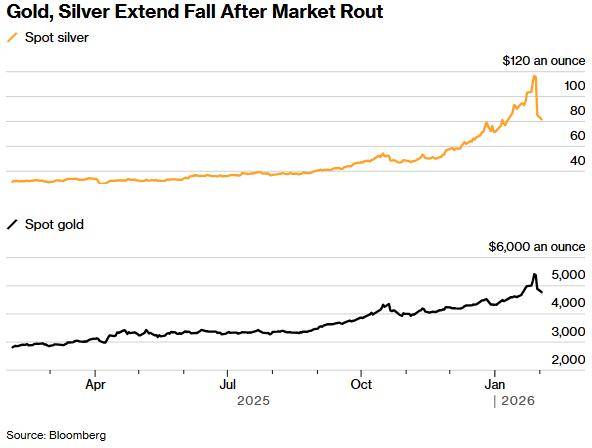
Group 1 - The precious metals market is experiencing a significant downturn, with gold prices facing their largest drop in 40 years and silver hitting a record intraday decline [1][4] - Last week, gold prices fell by 2.57% to $4,740.53 per ounce, while silver dropped by 1.02% to $84.84 per ounce [4] - The recent sell-off was triggered by news of President Trump's potential nomination of Kevin Warsh to lead the Federal Reserve, which strengthened the dollar and negatively impacted precious metals [4] Group 2 - Over the past year, precious metals surged to historical highs due to geopolitical tensions, currency devaluation, and concerns over the independence of the Federal Reserve [4] - The market had been prepared for extreme volatility due to soaring prices and the pressure on traders' risk models and balance sheets [4] - Goldman Sachs noted that a record wave of bullish options buying created a "mechanical reinforcement of price momentum," as option sellers hedged their exposure to rising prices [4]
“拥挤交易”崩塌?黄金白银延续跌势 高盛预警期权杠杆加剧波动
智通财经网· 2026-02-02 02:15
智通财经APP获悉,贵金属狂潮遭遇重挫,金价连续下跌,延续十余年来的最大跌幅。此前创纪录的暴 涨行情因步伐过快、涨幅过大而大幅回调。白银价格也同步下挫。 上周五,黄金遭遇40年来最大下跌,白银创出历史最大盘中跌幅。周一早盘交易中,现货黄金一度下跌 多达4%,白银亦下跌相近百分比,勉强维持在每盎司80美元上方,盘中曾短暂跌至12%的跌幅。 前摩根大通贵金属交易员、现任独立市场评论员罗伯特·戈特利布表示,"这还没结束,""我们得看它能 否找到支撑。关键在于,这个交易实在太拥挤了。" 在过去一年里,贵金属已飙升至历史新高,经验丰富的交易员也感到震惊。今年一月,由于对地缘政治 动荡、货币贬值以及美联储独立性的新担忧,投资者纷纷涌入黄金和白银,涨势急剧加速。 上周五戏剧性抛售的触发因素在于,有消息称美国总统特朗普将提名凯文·沃什执掌美联储。这一消息 推动美元走高,并打击了那些押注特朗普愿意让美元走弱的投资者的情绪。交易员将沃什视为最终候选 人中最强硬的反通胀斗士,这提高了对将支撑美元、削弱以美元计价贵金属的货币政策的预期。 但贵金属此前已为极端波动做好了准备,因为飙升的价格和波动性已经令交易员的风险模型和资产负债 表承 ...
暴涨、火爆、崩盘--金银领衔主演,2026年市场“开年大戏”格外精彩
华尔街见闻· 2026-01-31 06:28
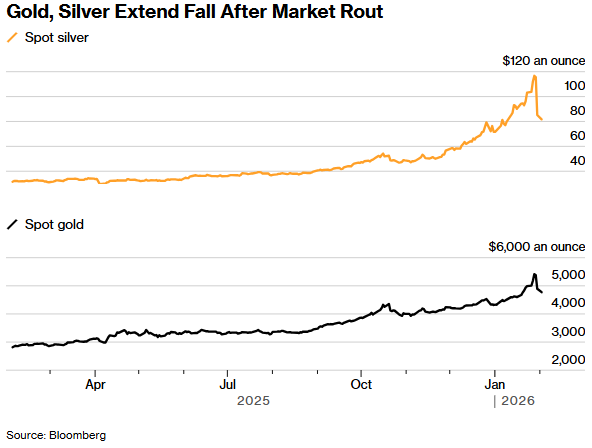
Core Viewpoint - The recent nomination of Walsh as the Federal Reserve Chair by Trump has triggered a significant sell-off in precious metals, leading to a market loss of $5 trillion in just two days, with gold prices plummeting by 10% and silver by 37% [1] Group 1: Market Dynamics - The market for precious metals was already showing signs of being overcrowded, with record levels of bullish positions and extreme leverage, making it susceptible to a "gamma squeeze" [3] - The dollar index experienced its largest single-day increase since May, negatively impacting investors who were shorting the dollar [4] - A significant amount of capital has rapidly flowed through the markets, leaving little room for error in positioning, which could lead to sharp declines [5] Group 2: Overcrowded Trades - A Bank of America survey indicated that being long on gold was the most crowded trade globally, with gold prices exceeding long-term trend lines by 44%, a level not seen since 1980 [8] - The dollar has faced selling pressure for three consecutive months, marking its worst start to the year in eight years, while also reaching its lowest level against other currencies since July 2022 [9] Group 3: Broader Market Implications - The collapse in precious metals serves as a warning for other crowded trades that have remained stable [16] - The MSCI Emerging Markets Index has outperformed the S&P 500 Index to an extent not seen since 2022, while momentum stocks in the U.S. have recently faced corrections [12] - The Russell 2000 Index, after outperforming the S&P 500 for 14 consecutive trading days, has underperformed in the last six days [14] Group 4: Investor Sentiment and Strategy - The recent market volatility has raised questions about the viability of contrarian investors in a momentum-driven market [17] - Some investors, like Rich Weiss, have maintained a contrarian stance despite unfavorable trends, believing that growing profits will allow U.S. companies to outperform their international counterparts [18] - Despite the downturn in gold prices, some investors are hesitant to exit their positions too early, fearing they might miss out on future opportunities if prices rebound [20]

一纸提名引爆史诗级抛售:现货白银一度跌36% 金价失守5000美元大关
Sou Hu Cai Jing· 2026-01-31 02:25
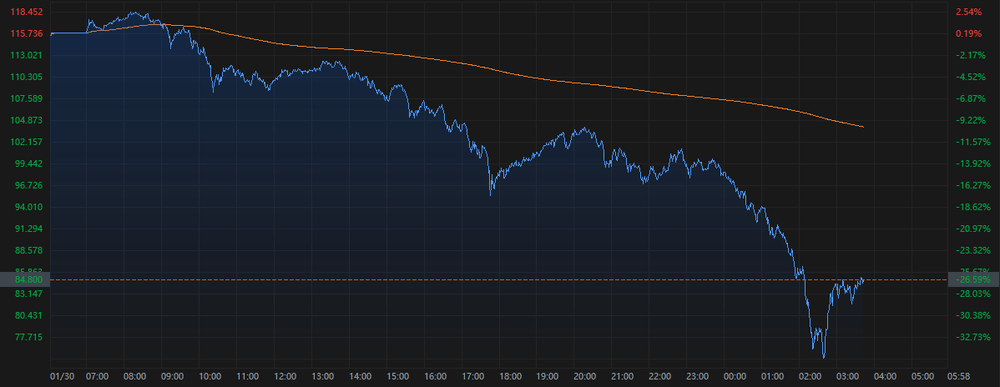
周五(1月30日)纽约时段,国际贵金属价格大幅跳水,其中现货白银一度跌超36%,黄金最高跌超12%。 具体行情显示,现货白银价格自北京时间23:00开始加速下滑,凌晨02:40左右跌至盘中低位每盎司74.31美元,跌幅最大时超过36%。截至发 稿,银价报85.8美元,跌幅收窄至26%附近。 贵金属的这轮剧烈下跌最初由"特朗普宣布提名凯文·沃什为下任美联储主席"的消息触发,有分析认为这一提名缓解了市场对美联储独立性的 担忧,推动美元走高打压金银。 Evercore ISI副董事长Krishna Guha称,市场正在按"鹰派沃什"进行交易,"沃什的提名有助于稳定美元,并降低美元持续走弱的单边风险,从而 挑战'货币贬值交易'的逻辑——这也是金银大幅下跌的原因。" "货币贬值交易"指的是投资者因担忧政府债务持续膨胀而避开国债和货币,转而涌向实物资产,尤其是贵金属。 现货黄金价格也几乎在同一时间跌至每盎司4683.04美元的日内低位,跌幅最高时超过12%。截至发稿,金价报4906美元,跌幅收窄至8.8%左 右。 除此以外,美元的升值也将使美国以外的投资者购买黄金和白银的成本上升。 Guha补充道:"我们不建议在各类资产 ...
华尔街热门交易集体“翻车”!2026市场给投资者上的第一课:太拥挤的交易有多危险?
美股IPO· 2026-01-31 01:39
Core Viewpoint - The article highlights the rapid evaporation of market confidence, particularly in the context of crowded trades and the extreme volatility in precious metals, signaling a potential shift in market dynamics [1][3]. Group 1: Market Dynamics - The precious metals market experienced its most severe decline in decades, with gold dropping over 9% and silver plummeting approximately 27%, reflecting a broader trend of extreme volatility in popular trading strategies [3][5]. - The market consensus, which had previously favored long positions in gold, was tested as the dollar index recorded its largest single-day gain since May, leading to significant sell-offs in various asset classes [5][9]. - The extreme concentration of positions among investors left little room for error, resulting in sharp market reactions to minor changes in sentiment or external factors [3][5]. Group 2: Investor Sentiment - A sentiment index for silver reached its highest level since 1998, indicating a high degree of investor consensus that may have contributed to the recent market turmoil [7]. - The article notes that while the overall bull market remains resilient, the uniformity of investor positions has reached unprecedented levels, raising concerns about the sustainability of such trends [7][9]. - The recent downturn in precious metals has prompted investors to reconsider other crowded trades, including small-cap stocks and strategies betting on lower market volatility [7][9]. Group 3: Implications for Investment Strategies - The article raises questions about the viability of contrarian investment strategies in a momentum-driven market, suggesting that the cost of going against the consensus may be high [9][10]. - Despite the current market trends, some investors remain committed to their strategies, believing that underlying fundamentals will eventually support their positions [10]. - The volatility in precious metals has led some investors to contemplate whether this represents an early warning signal for exiting crowded trades, although concerns about potential missed opportunities persist [10][11].
美银调查显示 更多投资者认为美元被高估
Ge Long Hui A P P· 2025-12-16 12:29
Group 1 - The core viewpoint of the article indicates an increase in the number of investors who believe the US dollar is overvalued, rising from 45% in November to 53% in December [1] - The survey reveals that investors are still underweight on the dollar compared to historical levels [1] - Short positions on the dollar are identified as the third most crowded trade, following long positions on the "Seven Giants" tech stocks and gold [1]
躲股市泡沫的人,正在吹出黄金泡沫?
Hua Er Jie Jian Wen· 2025-10-15 10:16
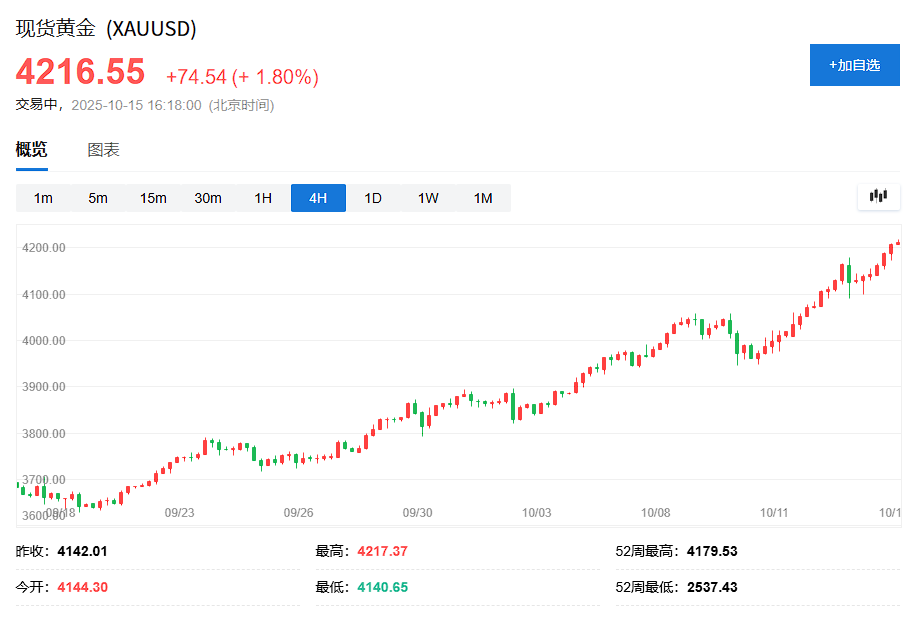
Core Viewpoint - Gold is transitioning from a "safe-haven asset" to a "speculative darling," with prices soaring over 50% this year and reaching a historic high of over $4200 per ounce, raising concerns about a potential bubble forming beneath the shiny surface [1][3]. Group 1: Market Dynamics - The current gold bull market is unusual as gold prices continue to rise while U.S. and global stock markets have rebounded significantly since April, indicating a disconnect between traditional safe-haven behavior and market sentiment [3]. - Major Wall Street investment banks are raising their gold price forecasts, with Goldman Sachs predicting a 20% increase by the end of next year, and Societe Generale suggesting a rise to $5000 is increasingly inevitable, which is often a characteristic of market bubbles [3]. - Gold's price movement is now highly correlated with high-risk assets like U.S. stocks, challenging the traditional view that gold should strengthen during times of market risk and weaken when risk appetite increases [3]. Group 2: Economic Factors - Initial concerns over global trade and geopolitical risks, particularly after Trump's return to the White House, justified the strong demand for physical gold as a hedge or diversification tool [4]. - Global monetary and fiscal policies, including threats to central bank independence, have heightened inflation concerns and lowered real interest rates, making gold more attractive despite its zero yield [4]. - The U.S. government's intention to weaken the dollar has also contributed to gold's appeal, yet the disconnect between gold's price and declining economic uncertainty indicators raises market caution [4]. Group 3: Investment Behavior - Central banks are consistently buying gold for reserve diversification, and gold ETFs are attracting more investors seeking reliable hedging tools, indicating a structural and stable demand for gold [6]. - Despite the strong demand, a significant portion of private investors remains underexposed to gold, with over one-third of surveyed asset managers having no gold allocation, and those who do have an average weight of only 4.2% [6][7]. - The current market presents a paradox where gold is seen as a crowded trade, yet actual allocations remain relatively limited, complicating market assessments [7]. Group 4: Warning Signals - Three warning signs regarding gold's rapid price increase include: the speed of the rise, a disconnect from market uncertainty indicators, and divergence from real interest rates and the U.S. dollar [8]. - JPMorgan suggests that the recent surge in gold prices exceeds what can be explained by declines in one-year real interest rates, indicating potential overvaluation [8]. - If market expectations for the Federal Reserve's terminal interest rate rise again, gold may face challenges, especially as inflation expectations continue to climb [11].
大型科技股:或跑输小盘股,降息周期表现差异大
Sou Hu Cai Jing· 2025-08-06 02:20
Core Viewpoint - Jefferies analysts predict that large-cap tech stocks may underperform small-cap stocks in the coming years due to the impact of Federal Reserve interest rate cuts [1] Group 1: Market Performance - Since 1990, during periods of Federal Reserve rate cuts, the S&P 500 equal-weight index has outperformed the traditional market-cap weighted index [1] - In the past four rate-cut cycles, the S&P 500 equal-weight index outperformed the traditional S&P 500 index by 0.6% in one year, approximately 4% in two years, and averaged 12.5% in four years [1] - The greater the rate cut by the Federal Reserve, the better the performance of the equal-weight index [1] Group 2: Current Market Trends - Following the recent "non-farm payroll shock," there has been an adjustment in rate cut expectations, with the Nasdaq 100 index dropping by 2% and the S&P 500 index by 1.6%, while the S&P 500 equal-weight index only fell by 1% [1] - The next Federal Reserve rate cut is anticipated to occur when the weight of tech giants in the index reaches a record high due to "crowded trades" [1] - Jefferies suggests that it may be time to rotate out of large-cap tech stocks, as value and small-cap stocks tend to perform better over the long term [1] Group 3: Valuation Discrepancies - Jefferies' strategy team highlights a significant valuation gap in the U.S. stock market, with the highest and lowest valuation groups in the S&P 500 index differing by 26, which is at the 87th percentile of observations since 2009 [1] - The crowded nature of tech stocks presents more downside risk, according to Jefferies [1] Group 4: Investor Behavior - This year, tech giants have performed well, leading investors to favor large-cap stocks, with a recent trend of small and mid-cap stocks rotating into large-cap stocks [1] - The Russell 2000 ETF experienced an outflow of $4.9 billion last week [1] - Following the slowdown in non-farm payroll data, market policy expectations have shifted significantly, with a two-thirds probability of three rate cuts by the end of January next year [1]