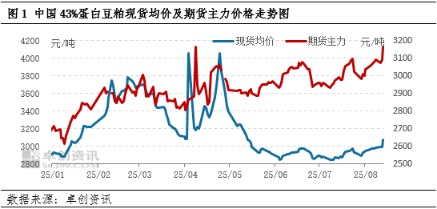
豆粕价格走势

Search documents
11月豆粕价格重心有望环比上移
Xin Hua Cai Jing· 2025-11-06 06:44
Core Viewpoint - The domestic soybean meal spot prices in October experienced a slight decline due to ample supply, but the market pressure is expected to ease in November, leading to a potential increase in price levels [2][4][5]. Supply Side Analysis - In October, the average price of 43% protein soybean meal was 2980 yuan/ton, a decrease of 29 yuan/ton (0.96%) from September and down 42 yuan/ton (1.39%) year-on-year [2]. - The average operating rate of soybean crushing enterprises showed a trend of initially low and then high, with high inventory levels contributing to the price drop [2]. - The total soybean crushing volume in October was 8.7632 million tons, a decrease of 935,100 tons from September [2]. Market Dynamics - The market began to see a recovery in soybean meal prices towards the end of October, driven by expectations of U.S.-China negotiations and the resumption of U.S. soybean purchases by China [2]. - The domestic soybean meal spot basis narrowed to 12 yuan/ton by October 31, down from 39 yuan/ton on October 9, indicating weakening spot basis [2]. Future Outlook - For November, the supply of raw soybeans is expected to tighten gradually, with forecasts of soybean arrivals at 9.49 million tons in November, 7.5 million tons in December, and 5 million tons in January [4]. - Despite some recovery in U.S. soybean purchases, the commercial import margins remain negative, limiting procurement by foreign and private enterprises [4]. - The recent irregular rainfall in Brazil has caused delays in planting, which may have a neutral impact on international soybean meal prices in the short term [4]. Price Expectations - The combination of easing supply pressures and supportive cost factors is expected to lead to an upward shift in soybean meal spot prices in November [5].

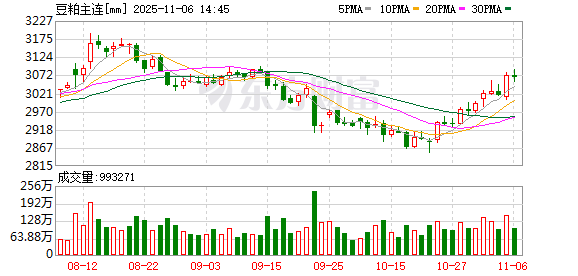
长江期货粕类油脂月报-20251103
Chang Jiang Qi Huo· 2025-11-03 05:43
Report Summary 1. Investment Rating The document does not provide an investment rating for the industry. 2. Core Views - **Soybean Meal**: The opening of US soybean imports drives up costs, leading to an upward trend in domestic soybean meal prices. However, the upside is limited due to factors such as the high cost of US soybeans and the weakening of domestic demand growth [5][7]. - **Oils and Fats**: In the short - term, the market is in a volatile adjustment phase. Attention should be paid to the realization of positive factors from the producing areas. The prices of palm oil and rapeseed oil are under pressure, while soybean oil shows relatively stronger performance [78][80]. 3. Summary by Directory Soybean Meal - **Market Review**: As of October 31, the spot price in East China was 2950 yuan/ton, up 60 yuan/ton monthly. The M2601 contract closed at 3021 yuan/ton, up 93 yuan/ton monthly. The basis price decreased by 30 yuan/ton [7][9]. - **Supply**: The USDA October report was delayed. US soybean exports accelerated, but China's actual purchases were limited. Brazilian old - crop sales pressure increased, and the new - crop planting progress was 50% as of October 31, lower than the same period last year [7]. - **Demand**: In 2025, the domestic aquaculture profit improved, and the high inventory of pigs and poultry supported the feed demand. The demand for soybean meal in the fourth quarter is expected to increase by more than 5% year - on - year [7]. - **Cost**: The planting cost of US soybeans in the 25/26 season is 1135 cents/bushel. The estimated bottom price of US soybeans is around 980 cents/bushel. The domestic soybean meal cost is calculated to be 3080 yuan/ton [7]. - **Market Outlook**: US soybean prices are expected to fluctuate around 1100 cents/bushel. Domestic soybean meal prices will follow the upward trend of import costs, but the performance is not as strong as that of US soybeans [7]. - **Strategy**: Slightly reduce M2601 long positions and re - enter at low prices. Lightly build long positions in M2605 and M2609 at low prices. Spot enterprises should sell the basis at high prices and roll long positions [7]. Oils and Fats - **Market Review**: As of October 31, palm oil, soybean oil, and rapeseed oil futures and spot prices showed different trends. Palm oil and rapeseed oil prices declined, while soybean oil prices were relatively stable [80][82]. - **Palm Oil**: In October, Malaysian palm oil production increased, and exports increased less than production, with an expected inventory build - up. In Indonesia, production is expected to increase by 10% in 2025, and the implementation of the B50 biodiesel policy may face obstacles. In the short - term, palm oil prices are under pressure, but there is support below [80]. - **Soybean Oil**: After the APEC meeting, China agreed to purchase US soybeans, which boosted the market sentiment. The high - level soybean crushing volume in September and the possible downward adjustment of the new - crop yield of US soybeans supported the short - term rebound of US soybean prices. In the long - term, the supply of domestic soybean oil is still sufficient, which limits the de - stocking speed [80]. - **Rapeseed Oil**: The relationship between China and Canada has improved, and the possibility of Canadian rapeseed entering China has increased. The supply of rapeseed in Canada is expected to be abundant, but there is still a supply gap in the domestic market in the fourth quarter [80]. - **Market Outlook**: In the short - term, the upside of oils and fats is limited, but the adjustment range is restricted. In the long - term, attention should be paid to the implementation of biodiesel policies in Indonesia and the United States, the reduction of palm oil production in Southeast Asia, and the start of weather speculation in South America [80]. - **Strategy**: Pay attention to the support levels of soybean, palm, and rapeseed oil 01 contracts. Consider the strategy of narrowing the spread between rapeseed oil and soybean oil 01 contracts and widening the spread between soybean oil and palm oil 01 contracts [80].
中美有望达成协议,对豆粕影响几何:豆粕专题报告
Chuang Yuan Qi Huo· 2025-10-27 09:29
Report Industry Investment Rating - No information provided Core Viewpoints of the Report - Short - term: The current soybean meal price is close to the industry cost, with significant long - short divergence. The market focuses on the Sino - US negotiation results. The negotiation progresses smoothly, and there is a possibility of a US soybean purchase agreement. The soybean meal may weaken again due to the bearish sentiment [2][98] - Medium - term: The market agrees that China's soybean supply is sufficient this year. The 01 contract may be anchored to the lowest cost valuation. The only bullish factors for the 01 contract are the uncertain weather in the South American sowing season and the unpromoted 12 - month ship purchases. If US soybeans arrive in China in the first quarter of next year, the 03 contract will decline following the 01 contract [2][98] - Operation suggestion: Be cautious about bottom - fishing before the South American weather situation is clear. It is recommended to participate in the 1 - 5 reverse spread based on the logic of sufficient soybean supply in China before the end of the year [2][98] Summary Based on the Table of Contents I. Market Review - The fluctuation of the domestic soybean meal contract 01 has increased this week. After breaking through the support level and then strongly rebounding, the long - short game is intense. The market expects the Sino - US negotiation results to provide directional guidance. The CBOT US soybean main contract has strongly rebounded by more than 50 cents per bushel to around 1060 cents due to the optimistic expectation of the Sino - US negotiation and the strong domestic crushing demand in the US [5] II. Sino - US Expected to Reach an Agreement 2.1 Latest Trade Negotiation Progress - Since October, Sino - US game has intensified. After multiple rounds of communications and consultations, from October 25th to 26th, Sino - US economic and trade teams held consultations in Kuala Lumpur, reaching a preliminary consensus on multiple important economic and trade issues and will go through the respective domestic approval procedures [25][26] 2.2 Impact of Negotiation Results on the Domestic Soybean Meal Market - If the negotiation makes no progress or only cancels part of the tariffs, the 03 contract may rise to repair the crushing profit. If all mutual - imposed tariffs are cancelled, the 01 and 03 contracts may weaken further. If China promises to increase the purchase of US soybeans, it will be a major bearish factor for domestic soybean meal [29][30][31] 2.3 Follow - up Concerns - Whether Sino - US will issue a joint statement this week and their interaction. The Sino - US leaders' meeting in South Korea from October 31st to November 1st [33] III. Fundamental Overview 3.1 United States - **Reasons for the rebound and future trend of US soybeans**: The recent rebound of CBOT US soybeans is due to the strong domestic crushing demand in the US and the optimistic expectation of China's purchase of US soybeans. If US soybeans return to the Chinese market, CBOT US soybeans may rise, but the increase should not be over - optimistic. If not, the price may fall below 1000 cents [35][36] - **Harvest approaching the end**: The new - season US soybean harvest started in mid - September and is expected to be over 80% completed [37] - **No new - crop US soybeans sold to China**: Due to the current tariff level, China has not pre - purchased the 2025/26 new - crop US soybeans, and the sales progress of new - crop US soybeans is the slowest in the past decade [38] 3.2 Brazil - **Smooth sowing of new crops and increasing production forecast**: As of October 18th, the soybean sowing rate in Brazil was 21.7%. The predicted export volume of soybeans in the 2025/2026 crop year is expected to reach 1.1211 billion tons, and the production is expected to be 1.7764 billion tons [47] - **Significant year - on - year increase in soybean exports**: In September, Brazil's soybean export volume was 734.1 million tons, significantly higher than the same period last year. ANEC expects the export volume in October to be 734 million tons [49] - **A large amount of unsold old - crop soybeans**: The unsold old - crop soybeans in Brazil are estimated to be about 1500 - 2000 million tons [50] 3.3 Argentina - **New - crop sowing to start in mid - to late October with a reduced planting area**: The 2025/26 soybean planting area in Argentina is expected to decrease by 4.3% to 17.6 million hectares [57] - **The suspension of export tax causing an earthquake in the global soybean market**: After Argentina suspended the export tax on soybeans and related products from September 23rd, the global soybean price fell, and the spot market in Argentina was booming. During the tax - suspension period, the cumulative export sales of soybeans exceeded 5 million tons, further confirming the sufficient soybean supply in China this year [58] 4.1 China - **Abundant soybean supply**: In September 2025, China imported 12.869 million tons of soybeans. The estimated arrival volume of soybeans in domestic oil mills in October is about 9.49 million tons, and the annual cumulative import volume is expected to reach 112.18 million tons, a record high. As of October 18th, the purchase progress for November was 87%, 16.1% for December, and no purchase for January. The soybean inventory of domestic oil mills is still high [63][64] - **Support from rigid demand but hard to offset the short - term high supply**: Since August, the downstream replenishment ability has been limited. From September to October, the monthly feed production increased month - on - month, and the proportion of soybean meal in feed increased [82] IV. Future Outlook - **Futures market**: In the short - term, soybean meal may weaken due to the expected Sino - US soybean purchase agreement. In the medium - term, the 01 contract may be affected by weather and purchase progress, and the 03 contract may decline if US soybeans arrive in China in the first quarter of next year [98] - **Spot market**: In the short - term, the supply is expected to remain loose until the end of the year, and the weak basis may last until November. In the medium - term, the basis may rise slightly but will be restricted by the sufficient soybean supply [100]
豆粕短期调整后,价格或有向上修复的预期
Qi Huo Ri Bao· 2025-10-26 23:19
Core Viewpoint - The recent rebound in soybean meal prices is primarily driven by expectations from the US-China trade talks and strong domestic crushing demand, but the sustainability of this rebound is uncertain due to market sentiment and existing pressures in the domestic market [2][3]. Group 1: Price Movements - Soybean meal futures prices rebounded significantly, closing at 2933 CNY/ton, an increase of approximately 80 CNY/ton from the low point on Wednesday [1]. - As of October 24, the spot price of soybean meal in East China was reported at 2910 CNY/ton, up 40 CNY/ton week-on-week [1]. Group 2: Import and Supply Dynamics - Domestic soybean imports surged to 86.19 million tons in the first three quarters of the year, a 5% increase year-on-year, with a notable 15% increase in imports from May to September [3]. - The total soybean crushing volume in domestic oil mills reached 49.54 million tons from May to September, reflecting a 13% year-on-year increase [3]. - Despite a projected decline in soybean imports in the fourth quarter, the total supply is expected to remain sufficient, with an estimated 32.2 million tons available to meet the average monthly crushing demand of 8.8 million tons [3]. Group 3: Demand Trends - Domestic demand for soybean meal remains robust, driven by high inventory levels in the livestock sector, with average weekly consumption reaching 1.71 million tons, significantly higher than last year's 1.55 million tons [4]. - The current spot price of soybean meal is relatively low compared to previous years, making it an attractive option for feed, which supports continued strong demand [4]. Group 4: Market Challenges - The profitability of crushing Brazilian soybeans has significantly decreased, leading to a slowdown in the pace of domestic purchases, with a notable gap in soybean procurement for future months [5]. - There is a procurement gap of 8 to 9 million tons for imported soybeans from November to January 2026, while the remaining export volume from Brazil is only 5 million tons [5].
长江期货粕类油脂周报-20251013
Chang Jiang Qi Huo· 2025-10-13 06:18
1. Report Industry Investment Rating - Not provided in the content 2. Core Views of the Report - For soybeans, the US soybean stocks-to-use ratio is tightening, and prices are expected to fluctuate around 1000 cents per bushel. China's soybeans from September to October have sufficient arrivals, and the spot price is weak. From November to January, the outlook for Sino-US trade improvement is dim, and the price is expected to rise. The M2601 contract price is expected to increase slightly [6]. - For oils, in the short term, the intensification of Sino-US disputes has increased macro risks, and oil prices are expected to follow the external market to correct. However, after the macro factors subside, there is still a possibility of a rebound [79]. 3. Summary by Relevant Catalogs 3.1 Soybean Section 3.1.1 Price and Basis - As of October 11, the spot price in East China was 2930 yuan/ton, up 40 yuan/ton from before the holiday; the M2601 contract closed at 2922 yuan/ton, down 6 yuan/ton from before the holiday; the basis price increased by 60 yuan/ton [6][8]. 3.1.2 Supply - The USDA October report was postponed due to the US government shutdown, and the yield is expected to be lowered. Brazil's sowing progress is faster than the same period. China's supply is abundant in October, but there is a risk of supply shortage in the first quarter of next year if US soybean imports cannot continue [6]. 3.1.3 Demand - In 2025, China's aquaculture profit improved, and the high inventory of pigs and poultry supported the demand for feed. The demand for soybean meal in the fourth quarter is expected to increase by more than 5% year-on-year [6]. 3.1.4 Cost - The planting cost of US soybeans in the 25/26 season is 1135 cents per bushel, and the bottom price is expected to be around 980 cents per bushel. The calculated cost of domestic soybean meal from the US Gulf is 2990 yuan/ton, and that from Brazil is 3160 yuan/ton [6][49]. 3.1.5 Market Outlook and Strategy - The price of US soybeans is expected to fluctuate around 1000 cents per bushel. The price of the M2601 contract is expected to increase slightly, and the strategy is to operate in the range of [2900, 3030] [6]. 3.2 Oil Section 3.2.1 Price and Basis - As of the week of October 10, the palm oil, soybean oil, and rapeseed oil 01 contracts all increased compared to before the National Day holiday, and the basis also increased [79][80]. 3.2.2 Palm Oil - The MPOB September report was bearish, but the export data in October was strong. Indonesia's B50 biodiesel test provided support. China's palm oil inventory is at a relatively high level, and the supply in October is sufficient [79]. 3.2.3 Soybean Oil - Sino-US trade disputes have dampened the prospects of US soybean exports to China. China's soybean supply is sufficient until October, which suppresses soybean oil prices. The supply gap after November has narrowed [79]. 3.2.4 Rapeseed Oil - Anti-dumping measures have affected imports, and there is a supply gap before November. However, policy uncertainties, high domestic inventories, and alternative imports limit price increases [79]. 3.2.5 Weekly Summary and Strategy - In the short term, oil prices are expected to correct, but there is a possibility of a rebound later. It is recommended to wait for the correction and then go long, and pay attention to the evolution of Sino-US trade relations [79].
供需宽松局面施压 预计10月豆粕价格或以低位震荡为主
Xin Hua Cai Jing· 2025-10-10 06:45
Core Viewpoint - The removal of soybean export tariffs in Argentina has led to a significant increase in soybean imports by China, alleviating concerns about supply shortages in the fourth quarter, which in turn has caused a decline in domestic soybean meal prices in September [1][3]. Group 1: Market Trends - In September, the average price of 43% protein soybean meal was 3008 yuan/ton, a decrease of 20 yuan/ton (0.67%) from August, and down 88 yuan/ton (2.84%) year-on-year [1]. - Domestic soybean and soybean meal inventories remained high, prompting a focus on inventory clearance, while downstream purchasing sentiment was cautious due to lower import costs from Argentina [1][3]. - The total soybean crushing volume in September was 9.6291 million tons, a decrease of 210,300 tons from August [1]. Group 2: Supply and Demand Factors - For October, soybean arrivals are projected to be 9.23 million tons, 9 million tons, and 8.5 million tons for the months of October to December, indicating a tightening supply outlook, although factory inventory levels remain high [3]. - The international market is influenced by ongoing trade discussions between China and the U.S., with China significantly reducing imports of U.S. soybeans [3]. - The price of Brazilian soybeans remains stable, while Argentine soybean import costs have decreased, although the limited share of imports from Argentina means its impact on domestic soybean meal prices is relatively weak [3]. Group 3: Price Outlook - The overall demand for soybean meal is expected to be negatively impacted by declining prices of downstream livestock products and worsening losses in the livestock sector [4]. - The supply side remains elevated, contributing to a loose supply-demand situation that is likely to exert downward pressure on spot prices [4].
长江期货粕类油脂周报-20250922
Chang Jiang Qi Huo· 2025-09-22 06:02
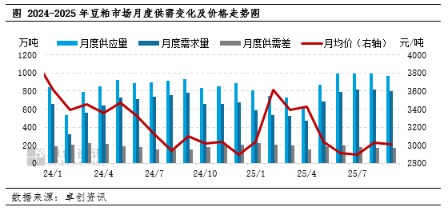
Report Information - Report Name: Yangtze River Futures Weekly Report on Meal and Oil [1] - Report Date: September 22, 2025 [1] - Researcher: Ye Tian [1] Report Industry Investment Rating - Not provided in the content Report's Core Viewpoints - **Soybean Meal**: Supply improvement is expected, and prices are likely to run weakly. Although the cost provides support, prices are unlikely to drop significantly. [5][7] - **Oils and Fats**: Fundamental support remains, and prices are expected to fluctuate at high levels. The decline in palm oil inventory accumulation and the supply gap in rapeseed before November are expected to limit the downward adjustment range of oil prices. [78][79] Summary by Directory Soybean Meal 1. Market Review - As of September 19, the spot price in East China was 2,930 yuan/ton, down 50 yuan/ton week-on-week. The M2601 contract closed at 3,014 yuan/ton, down 65 yuan/ton week-on-week. The basis price increased by 20 yuan/ton to 01 - 90 yuan/ton. [7][9] 2. Fundamental Data Review - **Price**: Spot and futures prices of soybean meal declined, while the basis price increased. The price difference between regions showed different trends. [13] - **Supply**: The USDA September supply and demand report adjusted the US soybean planting area, yield, and ending stocks. Brazil has started sowing, and the domestic supply is abundant. [7] - **Demand**: In 2025, the domestic aquaculture profit improved, and the high inventory of pigs and poultry supported the demand for feed. The demand for soybean meal is expected to increase by more than 5% year-on-year in the fourth quarter. [7] - **Cost**: The planting cost of US soybeans in the 25/26 season is estimated to be 1,135 cents/bushel, and the bottom price of domestic soybean meal cost has risen to 3,030 yuan/ton. [7] 3. Key Data Tracking - **Global Supply and Demand**: Global soybean supply and demand are tightening, with production declining to 426 million tons and the production-consumption gap narrowing to 1.98 million tons. [15] - **US Soybean Inventory-to-Sales Ratio**: The US soybean inventory-to-sales ratio has tightened to 6.89%. [25] - **Pressing and Export Demand**: As of the week of September 4, the cumulative export of US soybeans in the 24/25 season was 50.1059 million tons, a decrease of 2.74% compared to the same period last year. [26] - **Soybean Growth**: As of September 12, the good and excellent rate of US soybeans was 63%, the defoliation rate was 41%, and the harvest progress was 5%. [31] - **Brazilian Export Sales**: As of the latest data, Brazil's MT sales progress reached 91.94%, and the overall sales progress was good. [32] - **Weather Conditions**: In the next two weeks, precipitation in the main US soybean-producing areas will be low, while precipitation in the main Brazilian soybean-producing areas will improve. [39] - **US Soybean Planting Cost**: The planting cost of US soybeans in the 25/26 season is 1,135 cents/bushel. [44] - **Import and Purchase**: The domestic purchase of Brazilian vessels in the near term is progressing steadily and quickly, while the purchase of vessels in the far term is slow. The domestic soybean supply is abundant before November, but the supply may be insufficient after November. [58] - **Livestock Inventory**: The high inventory of pigs and poultry supports the demand for soybean meal, and the bottom demand support for soybean meal is strengthened. [76] Oils and Fats 1. Market Review - As of the week of September 19, the palm oil 01 contract rose 20 yuan/ton to 9,316 yuan/ton, the soybean oil 01 contract rose 6 yuan/ton to 8,328 yuan/ton, and the rapeseed oil 01 contract rose 221 yuan/ton to 10,068 yuan/ton. [79] 2. Fundamental Data Review - **Palm Oil**: The MPOB August report showed that the Malaysian palm oil inventory increased to 2.2 million tons, in line with market expectations. In September, the production is expected to decline, and the export demand remains, so the inventory accumulation rate is expected to slow down. [79][85] - **Soybean Oil**: The USDA September report adjusted the US soybean production and ending stocks, with a neutral to bearish impact. The domestic soybean supply is sufficient in the short term, but the supply may tighten after November. [79] - **Rapeseed Oil**: The anti-dumping measures against Canadian rapeseed have affected imports, and there is a supply gap before November, which supports the price of rapeseed oil. However, policy uncertainties and high inventory levels limit the room for price increases. [79] 3. Key Data Tracking - **Malaysian Palm Oil**: The MPOB August report had a neutral impact. In September, the production is expected to decline, and the export demand remains, so the inventory accumulation rate is expected to slow down. [79][96] - **Indonesian Palm Oil**: As of the end of June, Indonesia's palm oil inventory decreased by 13% month-on-month to 2.53 million tons. The production in June rebounded strongly, but the demand was also strong, resulting in a continued decline in inventory. [105] - **Indian Oil Imports**: In August, India's total vegetable oil imports increased by 4.75% month-on-month to 1.62 million tons. The inventory as of the week of September 1 was 1.865 million tons, an increase of 8.68% month-on-month. [117] - **Malaysian High-Frequency Data**: The export and production data of Malaysian palm oil in September showed different trends, with the export volume increasing and the production volume decreasing. [119]
长江期货粕类油脂月报-20250901
Chang Jiang Qi Huo· 2025-09-01 06:52
Report Industry Investment Rating No information provided in the given content. Core Viewpoints - The soybean meal market lacks bullish drivers and is expected to trade within a range, with the M2601 contract likely to move between 3030 and 3130 yuan/ton [5]. - The oil market is expected to have limited short - term high - level corrections and a bullish long - term outlook [72]. Summary by Directory 1. Soybean Meal 1.1 Supply - demand and Price Movement - As of August 29, the spot price of soybean meal in East China was 2970 yuan/ton, up 100 yuan/ton monthly. The M2601 contract closed at 3060 yuan/ton, up 5 yuan/ton monthly. The basis was 01 - 110 yuan/ton, up 90 yuan/ton monthly. The M2601 contract fluctuated within the range of [3030, 3200] [5]. - In the US, the soybean planting area was unexpectedly reduced to around 81 million acres. The good growth of new crops and insufficient export demand led to a volatile trend. In China, the supply of soybean meal was loose, and the cost increase from Brazilian premiums pushed up the price. After the state - owned reserve auction, the domestic soybean price was weak in November, with strong cost support around 3030 yuan/ton [5]. 1.2 Supply Side - As of August 24, the good - to - excellent rate of US soybeans was around 69%. The ProFarmer survey expected a yield of 53 bushels per acre, but less rainfall in August might affect the high - yield target. In mid - to - early September, there was a risk of a decline in the good - to - excellent rate and yield due to low precipitation and temperature [5]. - The state - owned reserve auction of imported soybeans for November delivery alleviated concerns about supply shortages from November to January. The meeting between China and the US also eased trade concerns. Before November, the arrival of soybeans in China remained high, and the weekly crushing volume was over 2.2 million tons, with a continuous inventory accumulation trend [5]. 1.3 Demand Side - In 2025, the domestic breeding profit improved, and the high inventory of pigs and poultry supported the feed demand, with the feed demand increasing by more than 5% year - on - year. Due to the improved cost - effectiveness of soybean meal, the proportion of soybean meal added in feed increased by 1 percentage point year - on - year. It is expected that the demand for soybean meal in the second half of the year will increase by more than 5% year - on - year, corresponding to a monthly soybean crushing volume of over 9 million tons [5]. - As of August 22, the national soybean inventory of oil mills increased slightly to 6.8253 million tons, up 269,400 tons monthly and down 394,000 tons year - on - year (a decrease of 5.46%). The soybean meal inventory continued to increase slightly to 1.0533 million tons, up 11,700 tons monthly and down 445,300 tons year - on - year (a decrease of 29.71%) [5]. 1.4 Cost Side - In the 25/26 season, the US soybean yield increased, and the planting cost dropped to 1135 cents per bushel. The bottom price of US soybeans was expected to be around 980 cents per bushel. Based on the latest Brazilian premium of 285X, the exchange rate of 7.18, and the oil - meal ratio of 2.8, the bottom price of domestic soybean meal cost rose to 3060 yuan/ton [5]. 1.5 Strategy Suggestion - The M2601 contract should be mainly traded within the range. Long positions can be established at the lower end of the range, and positions can be gradually reduced at high levels. Spot enterprises can increase their positions on a rolling basis [5]. 2. Global Soybean Supply - demand - The global soybean supply tightened as the US soybean planting area decreased, and the global soybean output was reduced to 426 million tons. With high demand, the difference between production and consumption narrowed to 1.29 million tons [6]. 3. US Soybean Inventory - sales Ratio and Demand - The US soybean inventory - sales ratio tightened as the planting area decreased, and the output dropped to 4.292 billion bushels, with the inventory - sales ratio narrowing to 6.66% [18]. - As of the week of August 22, 2025, the US soybean crushing profit was 2.99 dollars per bushel, up 14.12% week - on - week and down 0.33% year - on - year. From 2024/25, the total export inspection volume of US soybeans reached 49.279891 million tons, with 21.4736 million tons exported to China, accounting for 43.57% [18]. 4. US Soybean Growth - As of the week of August 22, the good - to - excellent rate of US soybeans in 18 states was 69%, up 1% week - on - week and higher than 67% in the same period last year [20]. 5. Brazilian Soybean Export - As of the latest data, the sales progress of Brazilian MT soybeans reached 88.72%, lower than 90.38% in the same period last year, but the overall sales progress was good due to the large increase in production this year [28]. 6. US Soybean Main - producing Area Climate - In the next two weeks, the main soybean - producing areas in the US will have less precipitation and lower temperatures, which is unfavorable for the improvement of the good - to - excellent rate. It is difficult for the US soybean yield to reach 53.7 bushels per acre [32]. 7. US Soybean Cost - The planting cost of US soybeans in the 25/26 season was 1135 cents per bushel. With a maximum loss of 150 cents per bushel, the bottom price of US soybeans was expected to be around 980 cents per bushel. Supported by the planting cost and the strong international vegetable oil price, the downside space of US soybeans was limited [40]. 8. Premium and Pressing Profit - The Brazilian soybean premium was stable and strong as the sales pressure weakened at the end of the sales season, and global demand was strong. The US soybean premium was also strong due to the tightened inventory - sales ratio and demand for crushing and export [42]. - The domestic soybean import and pressing profit was in the profit range, but the pressing profit of US soybeans was in continuous loss due to the tariff increase from Sino - US trade. Domestic enterprises actively purchased Brazilian shipments from August to September, but there were no purchases of US soybean shipments after November, increasing the probability of a supply gap from November to January [47]. 9. Theoretical Cost of Soybean Meal - Based on the Olam Brazilian premium of 285X in October, the cost of soybean meal was estimated to be around 3060 yuan/ton. Using the US West Coast premium of 268SX in October, the cost was around 3020 yuan/ton [50]. 10. Soybean Purchase and Arrival - The purchase of near - term shipments was progressing steadily and quickly, with the purchase progress of September shipments reaching 100%. The purchase of long - term shipments was slow due to the loss of pressing profit and the uncertainty of Sino - US trade [56]. - Before September, the arrival of soybeans in China was around 10 million tons, with sufficient supply and a stockpiling trend. After November, insufficient arrivals might lead to a phased price increase [56]. 11. Demand for Soybean Meal - The high inventory of pigs and poultry supported the demand for soybean meal, with the bottom demand support strengthened [70]. 12. Oil Market 12.1 Price Movement - As of August 29, the palm oil 01 contract rose 398 yuan/ton to 9316 yuan/ton, the soybean oil 01 contract rose 200 yuan/ton to 8358 yuan/ton, and the rapeseed oil 01 contract rose 340 yuan/ton to 9789 yuan/ton. The prices of the three major oils first rose sharply and then fell back [74]. 12.2 Palm Oil - In August, the export demand of Malaysian palm oil rebounded strongly, while the production growth was limited, and the inventory accumulation speed might slow down. In Indonesia, the inventory continued to decline in June, and the supply - demand was in a tight balance. However, the high - level adjustment risk of Malaysian palm oil remained, and the 11 - contract bottom was expected to be between 4400 - 4300. In China, the short - term supply was loose, but the inventory might decrease after October [74]. 12.3 Soybean Oil - The estimated yield of US soybeans in the 25/26 season was 53 bushels per acre, and the harvest pressure was increasing. However, the reduction of the sown area in the USDA August report tightened the supply - demand, and the support above the cost line of 1000 cents per bushel was strong. The short - term US soybean 11 - contract was expected to oscillate at a high level, with the bottom between 1040 - 1050. In China, the soybean supply was sufficient before October, but it might tighten after November, which could drive the soybean oil inventory to decrease [74]. 12.4 Rapeseed Oil - China's anti - dumping investigation on Canadian rapeseed tightened the domestic supply before November. However, the improvement of Sino - Australian relations and potential Sino - Canadian negotiations might affect the market. In Canada, the supply might be excessive due to the loss of the Chinese market and expected high - yield [74]. 12.5 Strategy Suggestion - In the short term, the support levels of the 01 contracts of soybean oil, palm oil, and rapeseed oil were 8200 - 8300, 9200 - 9100, and 9700 - 9600 respectively. It is recommended to wait and see during the correction phase and go long after the correction [74].
豆一、大豆&豆粕:价格走势及供需情况分析
Sou Hu Cai Jing· 2025-08-25 13:50
Group 1 - The price of soybean is weak due to increased market supply pressure from policy-driven auction sales and poor demand performance [1] - The price difference between soybean and soybean meal is currently low, indicating a consolidation phase [1] - Import soybeans are performing strongly, supported by U.S. biodiesel policies that boost the soybean and soybean oil markets [1] Group 2 - China's soybean procurement schedule for November is low, with expectations of tighter supply in Q1 next year, necessitating attention to U.S. soybean exports to China [1] - Domestic soybeans need to be monitored for weather, policy changes, and the performance of imported soybeans in the short term [1] - Global oilseed strength driven by biodiesel policies is leading to increased soybean crushing, indicating a shift towards oil extraction [1] Group 3 - In Q4 and Q1 next year, the U.S. tariff policy is affecting Brazilian soybean sales, which are over 80%, despite high premiums [1] - The expected soybean arrival volume from August to October is 10 million tons, indicating sufficient supply for Q4, but potential shortages in Q1 next year [1] - Weather conditions in major U.S. soybean-producing areas are expected to be slightly cooler with less rainfall, posing challenges for new crop growth [1] Group 4 - Uncertainties in China-U.S. trade may lead to a continued divergence between strong external oil prices and weak meal prices, reducing the correlation between domestic soybean meal and U.S. soybeans [1] - If no trade agreement is reached by year-end, the soybean shortfall in Q4 and Q1 next year could strengthen soybean meal prices, leading to a cautious bullish outlook for soybean meal in the medium to long term [1]
三季度后期豆粕现货价格或保持偏强运行态势
Xin Hua Cai Jing· 2025-08-18 05:12
Core Viewpoint - The soybean meal market has shifted to a bullish trend driven by favorable USDA report data and strong performance of rapeseed meal, with soybean meal prices rising over 2% on August 13 [1][2]. Market Dynamics - The USDA's August supply and demand report unexpectedly lowered the new season's soybean harvesting area to 80.1 million acres, leading to a decrease in production and ending stocks, tightening the supply-demand relationship for U.S. soybeans [2]. - The average national soybean meal price reached 3,079 CNY/ton on August 13, an increase of 84 CNY/ton from the previous period, with coastal regions seeing prices near 3,000 CNY/ton [2]. Inventory Trends - National soybean meal inventory has shown a decline for two consecutive weeks, indicating a potential peak in inventory levels for the year, with the inventory at 949,000 tons as of the first week of August, down 53,000 tons from its high [4]. - Upstream companies are actively managing production plans to control inventory levels, which may limit soybean meal prices from exceeding the late July peak [4]. Supply and Demand Outlook - Short-term upstream operating levels are expected to remain high due to raw material support, while market demand shows resilience but lacks significant growth potential [6]. - China's soybean imports in July were 11.666 million tons, a historical high for the period, but are expected to decline seasonally as Brazilian shipments slow down [6]. - The tightening procurement window for soybeans is anticipated to lead to increased import costs, which will likely boost confidence among industry players and support a rise in soybean meal prices [6]. Price Projections - The market sentiment is currently bullish due to strong cost support and the performance of substitute products, although there may be slight downward pressure on prices due to cautious downstream behavior and traders locking in profits [8]. - It is expected that soybean meal prices will maintain an upward trend, potentially reaching around 3,100 CNY/ton in coastal regions by early September [8].