
资产再平衡

Search documents
资产配置周报:美元降息与日元加息预期,资产再平衡下寻找确定性-20251207
Donghai Securities· 2025-12-07 11:34
Group 1: Market Overview and Asset Allocation - Global stock markets mostly rose in the week ending December 5, with A-shares performing relatively well; major commodity futures such as copper, crude oil, and aluminum increased, while gold declined; the US dollar index slightly decreased, and non-US currencies appreciated [2][11] - The report highlights the expectation of US dollar interest rate cuts and Japanese yen interest rate hikes, indicating a rebalancing of assets; the market is expected to seek certainty, with recommendations for sectors such as non-ferrous resources, chip technology, export sectors, and dividend stocks [8][9] Group 2: Domestic Equity Market Review - In the week ending December 5, the domestic equity market showed a preference for cyclical stocks over growth, finance, and consumption, with an average daily trading volume of 1.6843 trillion yuan; 17 out of 31 sectors rose, with non-ferrous metals (+5.35%), communication (+3.69%), and defense industry (+2.82%) leading the gains [19][11] - The report notes that the central bank's bond purchases in November were slightly below market expectations, but regulatory adjustments favoring equity investments are positive for the market [11] Group 3: Interest Rates and Exchange Rates - The report indicates a shift towards cautious sentiment in the bond market, with yields generally rising; this is attributed to increased inflation expectations and commodity price rises, alongside banks adjusting their asset portfolios due to regulatory requirements [9][21] - The report also discusses the narrowing of the China-US interest rate differential, positioning the renminbi favorably; the offshore renminbi appreciated slightly against the US dollar, reflecting strong market expectations for the currency [29][12] Group 4: Commodity Tracking - As of December 5, WTI crude oil prices experienced a slight increase to $60.08 per barrel, with US crude oil production rising to 13.815 million barrels per day, a year-on-year increase of 302,000 barrels per day [30][31] - The report notes that geopolitical factors are expected to have a diminishing impact on oil prices in the short term, with Brent crude projected to fluctuate between $50 and $70 per barrel in the fourth quarter [35][36]
王健林,赎回了一座万达广场
创业家· 2025-12-07 10:06
以下文章来源于首席品牌评论 ,作者首席品牌评论 首席品牌评论 . 热门品牌案例,专业深度评论。在这里,读懂品牌之道! 这里插播一条课程资讯: 报名 「吴世春·西安出行活动」, 1月22日-24日 , 吴世春将亲自带队 100家企业家 , 去陕 西西安线下游学 , 走进科技制造产业,打开万亿赛道蓝海。 你 在 创业路上遇到的问题和想法 , 都可以找吴老师聊聊 。 如果你是 优质的项目,吴老师 也会果断投 你。 下半年 , 吴老师预计要投出去的金额,应该不小于 15个亿。 扫码咨询报名 (翻到底部了解详情) 01 万达赎身 赎回不是终点,而是新周期的起点。 来源: 首席品牌评论 在中国商业地产的寒冬时刻,王健林做了一个令人意外的决定——赎回一座万达广场。 12月2日,烟台芝罘万达广场有限公司的股权结构发生重大调整,万达商管旗下全资子公司上 海万达锐驰企业管理有限公司接盘,新华保险旗下两大投资主体退出股东行列。 这是万达在连续出售超过40座万达广场后,首次启动资产赎回操作。 赎回烟台芝罘万达广场绝非偶然。 这座广场成立于2010年,注册资本7.08亿元,商业面积24万平方米,是万达商管的第103座 万达广场。 更关 ...


近百亿资金,净流出
Zhong Guo Zheng Quan Bao· 2025-12-02 12:19
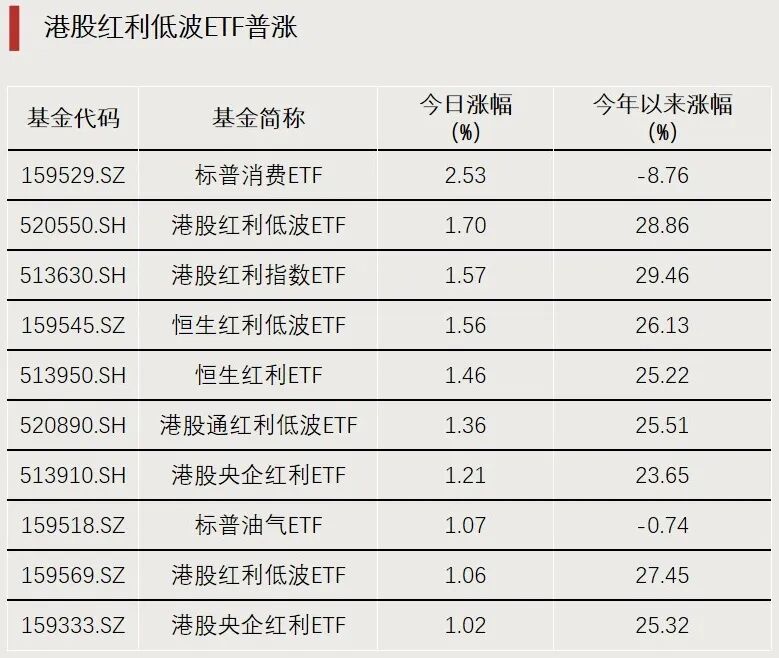
Market Overview - After a week of low-volume rebound in the last trading week of November, the A-share market experienced a pullback on December 2, with ETF trading volumes in the ChiNext and STAR Market falling below the average levels of November [1][4] - On December 1, nearly 10 billion yuan of net outflow was observed in A-share ETFs, with broad-based theme ETFs experiencing the most significant outflows [3][9] Sector Performance - The A-share market saw declines, with the Shanghai Composite Index down 0.42%, the Shenzhen Component down 0.68%, and the ChiNext Index down 0.69%. Total trading volume across both markets was 1.6073 trillion yuan, a decrease from the previous trading day [4] - Defensive attributes of dividend-paying assets became prominent, as cash flow stable and high-dividend sectors attracted investor interest, leading to a general rise in Hong Kong dividend ETFs [2][4] Fund Flows - A total net outflow of approximately 95 billion yuan was recorded in A-share ETFs on December 1, with significant outflows from major index ETFs such as the SSE 50 ETF and CSI 300 ETF [9] - Conversely, certain products like gaming ETFs, consumer electronics ETFs, and communication ETFs attracted net inflows, indicating a shift in investor preferences [10][11] ETF Performance - As of December 2, several Hong Kong dividend-related ETFs have shown strong performance, with many increasing over 25% year-to-date. The Hong Kong dividend ETF (159691) reached a total share of 6.469 billion and a scale of 8.694 billion yuan, reflecting a year-to-date share growth of 42.96% and a scale growth of 75.78% [6] - The performance of various ETFs on December 1 showed that the Hong Kong dividend low-volatility ETFs rose by over 1%, while sectors like media, robotics, and rare metals faced declines [4][5] Investment Strategy - According to research from GF Securities, the current period may represent a critical window for year-end asset rebalancing, with some institutions likely to sell high-valuation growth stocks to invest in high-dividend, safer Hong Kong dividend assets [6][12] - The trend of seeking certainty in investments is expected to continue, with investors gravitating towards stable cash flow and high-dividend sectors as the year-end approaches [12]
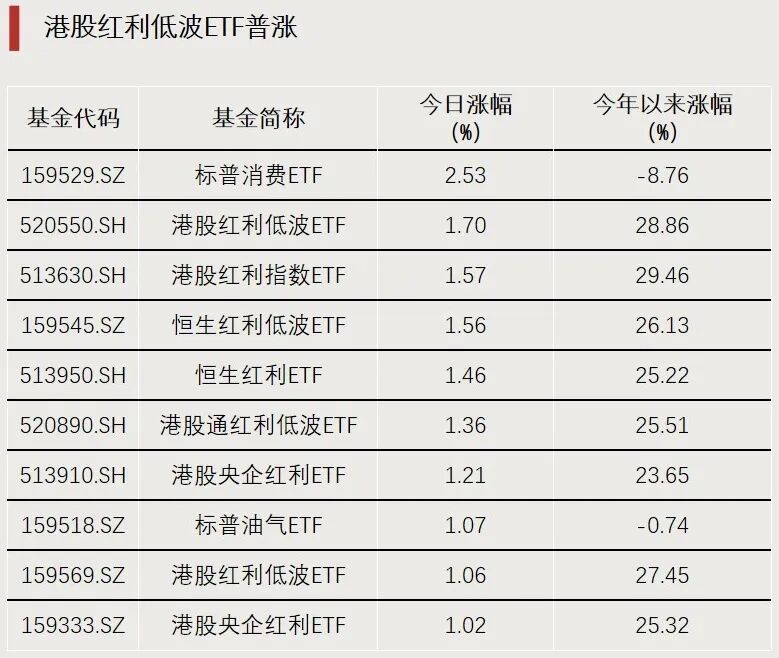
近百亿资金,净流出!
Zhong Guo Zheng Quan Bao· 2025-12-02 12:08
Market Overview - After a week of reduced trading volume and a rebound in late November, the A-share market experienced a pullback on December 2, with trading volumes for related ETFs in the ChiNext and STAR Market falling below the average levels of November [1][4]. Fund Flows - On December 1, nearly 10 billion yuan in net outflows were recorded for A-share ETFs, with broad-based theme ETFs experiencing the most significant outflows [3][9]. - The total trading volume for the A-share market was 1.6073 trillion yuan, a decrease compared to the previous trading day [4]. Performance of ETFs - Several Hong Kong dividend ETFs saw gains, with many increasing by over 1% on the same day [4]. - Year-to-date, multiple Hong Kong dividend-related ETFs have performed well, with some increasing by over 25% [6]. - As of December 1, the latest share count for the Hong Kong dividend ETF reached 6.469 billion shares, with a total scale of 8.694 billion yuan, reflecting a year-to-date share growth of 42.96% and a scale growth of 75.78% [6]. Sector Performance - The energy metals, CRO concepts, and medical services sectors saw the largest declines, while the road and railway transportation, as well as agriculture and forestry sectors, experienced gains [4]. - The trend of investors seeking stable cash flow and high-dividend assets is expected to continue as the year ends, driven by institutional investors locking in profits and a seasonal influx of insurance funds [6][11]. Specific ETF Data - The following ETFs showed notable performance on December 1: - The S&P Consumer ETF rose by 2.53% but is down 8.76% year-to-date - The Hong Kong Dividend Low Volatility ETF increased by 1.70% with a year-to-date gain of 28.86% [5]. - The A500 ETF maintained active trading, while other ETFs like the STAR 50 and ChiNext saw significant reductions in trading volumes compared to November's daily averages [7].
观点全追踪(12月第1期):晨会精选-20251202
GF SECURITIES· 2025-12-02 05:42
Core Insights - The report emphasizes that the high dividend yield strategy in Hong Kong stocks is expected to experience significant calendar effects from December to mid-January, leading to higher absolute and excess returns during this period [3]. Group 1: Market Trends - The report identifies three main reasons for the strong calendar effect on Hong Kong dividends at year-end: 1. Institutional investors, such as public funds, may rebalance their assets to lock in annual returns by shifting from high-valuation growth stocks to high-dividend stocks [3]. 2. December to January is a peak period for insurance premiums, prompting some insurers to quickly build positions in high-dividend assets to match liability costs, creating a rigid buying demand [3]. 3. Year-end policy catalysts may emerge, which could stimulate the Hong Kong dividend market if supportive dividend policies are implemented or if growth stabilization policies fall short of expectations [3]. Group 2: Historical Performance - From 2014 to the present, the report notes that the win rate for absolute returns from December to mid-January has been 91%, with a win rate of 82% compared to the 300 total return index, the CSI dividend total return index, and the Hang Seng index total return [3]. - The current trading volume proportion in this segment is only 6.1%, indicating a relatively low level of crowding and suggesting a potential opportunity for reallocation [3].
年底资产再平衡,聚焦港股通红利低波ETF基金(159118)配置机会
Mei Ri Jing Ji Xin Wen· 2025-12-02 02:50
Core Viewpoint - The A-share market opened slightly lower, with the Shanghai Composite Index down 0.14%, the Shenzhen Component Index down 0.13%, and the ChiNext Index down 0.04%. The Hong Kong dividend low-volatility ETF (159118) experienced fluctuations and rose approximately 0.4%, with leading stocks including China National Pharmaceutical Group, China Pacific Insurance, and Hengan International [1] Group 1: Market Analysis - GF Securities analysis indicates that the strong year-end calendar effect on Hong Kong dividends is primarily due to public funds and other relative return-seeking capital rebalancing their assets during this critical window. To lock in annual returns, some institutions may sell high-valuation, volatile growth stocks in favor of high-dividend, high-safety-margin Hong Kong dividend sectors [1] - The historical long-term performance of the S&P Hong Kong Stock Connect Low Volatility Dividend Index is notable, with a cumulative increase of 94.95% since 2021, achieving an annualized return exceeding 16%, significantly outperforming the Hang Seng Index and other dividend-related indices [1] Group 2: ETF Fund Characteristics - The Hong Kong dividend low-volatility ETF (159118) closely tracks the S&P Hong Kong Stock Connect Low Volatility Dividend Index, with component stocks leaning towards large-cap value styles, providing investors with low fees (management and custody fees only 0.2%) and high efficiency (T+0 trading) for easy access to Hong Kong stocks, dividends, and low volatility [1] - Additionally, the Hong Kong dividend low-volatility ETF fund can conduct quarterly evaluations and profit distributions, with arrangements for profit distribution if the fund meets dividend conditions [1]
红利低波的投资姿势
集思录· 2025-11-26 14:04
Core Insights - The article discusses the advantages of a dividend low-volatility strategy compared to traditional stock picking, highlighting its ability to reduce drawdowns and facilitate buying low and selling high [1][11] - It emphasizes the importance of asset allocation, suggesting a balanced approach between dividend low-volatility stocks and bonds to mitigate risks during market downturns [3][11] Summary by Sections Investment Strategy - A 55:45 allocation between dividend low-volatility stocks and bonds can yield an annualized return of approximately 7%, although a 4% loss may still occur in extreme market conditions like those in 2018 [1] - The strategy of using Bollinger Bands for managing positions is suggested, where selling occurs at the upper band and buying at the lower band, which can enhance returns compared to a static holding approach [1][5] Risk Management - The article notes that a 16% drop in the dividend low-volatility index in 2018 should be viewed as a historical buying opportunity, advocating for a reallocation strategy to enhance returns during recovery phases [3] - It discusses the potential of using put options for additional protection against extreme market downturns, although this may not be deemed necessary for strategies with low maximum drawdowns [11] Portfolio Construction - Recommendations include building a personalized portfolio based on the top holdings of the dividend low-volatility index, allowing for greater flexibility and responsiveness to market conditions [4][8] - The concept of passive rebalancing is introduced, where adjustments are made based on changes in asset ratios, promoting a disciplined approach to high selling and low buying [5][9]

管涛:中国处在新一轮“改革牛”的起点上
和讯· 2025-11-17 09:36
Group 1 - The A-share market has seen significant growth, with the Shanghai Composite Index reaching a ten-year high of 4030 points, marking a rise from 3000 to 4000 points within a year [2][3] - Key sectors driving this growth include innovative pharmaceuticals, artificial intelligence, computing power, energy storage, and high-end manufacturing, indicating a developing market sentiment [3][4] - Economic indicators show slight improvements, with October CPI rising by 0.2% year-on-year and PPI increasing by 0.1% month-on-month, suggesting a gradual recovery in the Chinese economy [4][5] Group 2 - The dialogue with the chief economist of Bank of China highlights the challenges and uncertainties facing the Chinese economy, including insufficient domestic demand and external pressures on international trade [5][6] - The future of the RMB exchange rate against the USD is uncertain, with predictions indicating potential depreciation due to various internal and external factors [9][10][11] - The RMB's recent appreciation is characterized as passive, influenced by a weaker USD and improved market sentiment following reduced trade tensions between China and the US [14][15][16] Group 3 - The article discusses the ongoing transformation of the Chinese economy, emphasizing the importance of reform during the 14th and 15th Five-Year Plans, which are expected to create new opportunities [6][27][41] - The capital market is anticipated to benefit from comprehensive reforms aimed at enhancing market mechanisms and improving investor experiences, which could lead to a sustained bull market [37][39] - The potential for a "reform bull market" is highlighted, with expectations that the market is still in its early stages of growth, providing opportunities for long-term investments [41][48]

【理财锦囊】 个人投资者为何青睐宽基ETF
Zheng Quan Shi Bao· 2025-10-30 19:38
Core Insights - The Chinese capital market is experiencing high-quality development, with major stock indices showing a steady upward trend and increasing market vitality [1] - Broad-based ETFs are becoming a significant choice for individual investors in asset allocation, accounting for nearly half of the ETF market in Shanghai [1] - Broad-based ETFs effectively mitigate common behavioral biases of individual investors and offer diversification, low costs, and high transparency [1][3] Market Performance - In Q3 2025, broad-based ETFs significantly outperformed most actively managed funds, with the ChiNext Index rising by 50.4%, the Sci-Tech 50 Index by 49.02%, and the Shenzhen Component Index by 29.25% [1] - Over the past decade, annualized returns for broad-based indices like CSI 300, CSI 500, and CSI 1000 have stabilized between 5% and 7%, with CSI 2000 exceeding 9% [1] Investment Trends - Continuous inflow of two types of investment funds supports the strong market performance of broad-based ETFs: Central Huijin's net purchases of leading broad-based ETFs reached 207.27 billion yuan in H1 2025, while foreign and insurance funds also increased their allocations [2] - Institutional investors now hold about 60% of the market, enhancing pricing efficiency and reducing the space for individual investors to achieve excess returns through independent trading [2] Investor Advantages - Individual investors face disadvantages in information access and research depth compared to professional institutions, which conduct thousands of company visits and have specialized analysts [3] - Broad-based ETFs simplify market investment by allowing investors to buy the entire market in one transaction, providing a disciplined, diversified, low-cost, and transparent investment option [3] Investment Framework - Individual investors should understand the characteristics of different broad-based indices and their applicable scenarios, such as the SSE 50 for conservative investors seeking stable returns [4] - A "core-satellite" strategy is recommended, where most funds are allocated to low-cost broad-based ETFs, while a smaller portion is used for sector or thematic ETFs to capture additional market opportunities [4] - Risk management is crucial, with a focus on ETFs with over 5 billion yuan in size and daily trading volumes exceeding 100 million yuan, along with regular asset rebalancing [4] Market Growth Potential - The recognition of broad-based ETFs among individual investors is increasing, with personal holdings rising from 44.3% to 49.1% in H1 2025, and the proportion of personal holdings in Sci-Tech board ETFs reaching 72% [5] - Despite rapid development, the market share of broad-based ETFs in China's public fund total is only 8%, significantly lower than the 30% in the U.S., indicating substantial growth potential [6] - With the implementation of regulatory measures to promote index investment, broad-based ETFs are expected to become a key tool for individual investors in financial asset allocation and capitalizing on stock market growth [6]
【理财锦囊】 个人投资者 为何青睐宽基ETF
Zheng Quan Shi Bao· 2025-10-30 19:09
Core Insights - The Chinese capital market is experiencing high-quality development, with major stock indices showing a steady upward trend and increasing market vitality [1] - Broad-based ETFs are becoming a significant choice for individual investors in asset allocation, accounting for nearly half of the ETF market in Shanghai [1] - Broad-based ETFs have outperformed most actively managed funds, with notable index performances in Q3 2025 [1] Investment Trends - In the first half of 2025, central financial institutions net purchased 207.27 billion yuan worth of leading broad-based ETFs, while foreign and insurance funds continued to increase their allocations [2] - The influx of institutional funds provides strong support for the performance of broad-based ETFs, enhancing their resilience during market adjustments [2] Investor Behavior - Individual investors face disadvantages in information access and research depth compared to professional institutions, which conduct thousands of company visits and have specialized analysts [3] - Broad-based ETFs simplify market investment for individual investors, allowing them to invest in entire markets with a single transaction, thus providing a disciplined and low-cost investment option [3] Investment Framework - Individual investors should understand the characteristics of different broad-based indices and their applicable scenarios [4] - A "core-satellite" strategy is recommended, where the majority of funds are allocated to low-cost broad-based ETFs, while a smaller portion is used for sector-specific or thematic ETFs [4] - Risk management is crucial, with a focus on liquidity and regular asset rebalancing to maintain target allocations [4] Market Growth Potential - The net increase in domestic ETF scale reached 580 billion yuan in the first half of 2025, with individual investors' share rising to 49.1%, indicating growing recognition of broad-based ETFs [5] - Despite rapid development, the proportion of broad-based ETFs in China's public fund market is only 8%, suggesting significant growth potential compared to developed markets [5] - With the implementation of regulatory measures to promote index investment, broad-based ETFs are expected to become a key tool for individual investors in asset allocation and capitalizing on market growth [5]