高端制造业

Search documents
【动态】中天公司高速公路智慧能源管理设备生产基地首批智慧配电箱成功出厂
Xin Lang Cai Jing· 2025-12-23 12:08
Core Insights - The successful production of the first batch of smart distribution boxes by Zhongtian Company marks a significant step in the field of intelligent manufacturing for electrical assembly, transitioning from trial production to mass production [1][3] Group 1: Production and Capacity - The first batch consists of 85 smart distribution boxes, which will be sent to 14 stations along the "One Axis, One Corridor" project in Henan Province, contributing to the digital transformation of transportation infrastructure [1][3] - The production base covers an area of 1,030 square meters and is equipped with 15 sets of high-precision processing equipment, with an annual production capacity of 1,500 distribution cabinets and 3,500 distribution boxes [1][3] Group 2: Technological Innovation - The core competitiveness of the base lies not only in hardware products but also in the independently developed smart energy management system, which enables real-time data interconnection between hardware and management systems [2][4] - The smart energy management system has received industry recognition, winning awards such as the Gold Award at the China Highway Society Micro-Innovation Competition and the First Prize at the "Guanghua Cup" National Competition, and has been successfully applied in over 20 practical scenarios [2][4] Group 3: Future Development - Zhongtian Company aims to accelerate the construction of a closed-loop industrial chain of research, production, and application, focusing on a "soft and hard integration" development path to support high-quality development in transportation infrastructure [2][4]
实探丨全面达产!这项关键技术“满血”运作
Zhong Guo Zheng Quan Bao· 2025-12-08 05:14
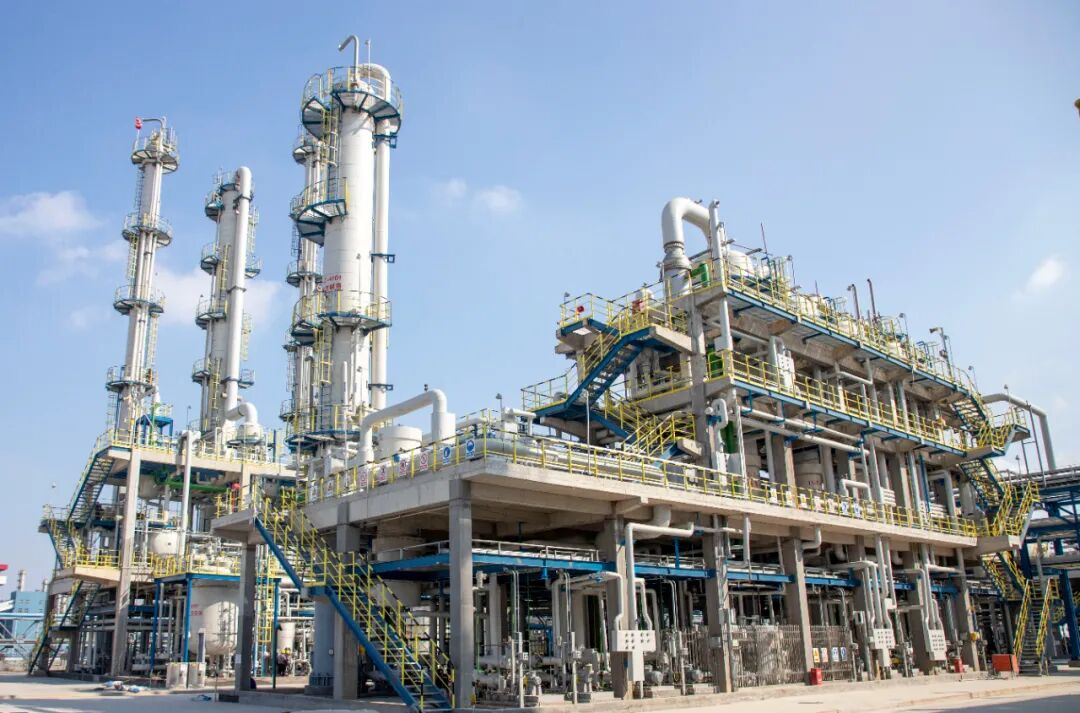
Core Insights - The production facility of Tianchen Qixiang New Materials Co., Ltd. in Zibo, Shandong, has successfully completed a 72-hour full-load performance test for its adiponitrile production, marking the full-scale industrialization of the first domestic butadiene-based adiponitrile project [1][10] - The large-scale production of adiponitrile, known as the "flour" of the nylon industry, will ensure a stable and high-quality supply of raw materials for the nylon industry, significantly benefiting high-end manufacturing sectors such as automotive, rail transportation, aerospace, and electronics [1][6] Industry Impact - Adiponitrile is a critical material for high-end manufacturing, serving as the core raw material for nylon 66, which is essential for various applications including automotive airbags and engine components [3][5] - The successful domestic production of adiponitrile will break the long-standing foreign monopoly on its production technology, thus promoting the development of China's high-end manufacturing industry [5][10] Technological Advancements - The adiponitrile production facility has a capacity of 200,000 tons per year and utilizes proprietary technology developed by China National Chemical Engineering, which has been in research and development since 2008 [10] - The production process has undergone over a hundred technical modifications to enhance reactor efficiency and distillation separation, achieving international competitiveness in quality and cost control [10] Supply Chain and Market Dynamics - The domestic production of adiponitrile will not only fill a technological gap but also reshape the nylon 66 industry chain ecosystem, allowing downstream companies to confidently expand their production capacity [11] - The availability of domestically produced adiponitrile will facilitate the upgrade of the entire industry chain, as companies can rely on a stable supply of raw materials [11] Future Directions - China National Chemical Engineering Group plans to focus on innovation-driven development in new materials, new energy, green ecology, and fine chemicals, emphasizing technological innovation and the integration of industry chains [13]

全面达产!这项关键技术“满血”运作
Zhong Guo Zheng Quan Bao· 2025-12-08 04:40
Core Viewpoint - The successful industrialization of adiponitrile production in China marks a significant advancement in the nylon industry, ensuring a stable supply of high-quality raw materials for various high-end manufacturing sectors [1][2]. Group 1: Production and Technology - The adiponitrile production facility in Shandong Zibo has recently passed a critical 72-hour full-load performance test, indicating that the first domestic industrial-scale production project using the butadiene method has reached full capacity [1][3]. - The production capacity of the facility is 200,000 tons per year, utilizing proprietary technology developed by China Chemical Engineering, which has been in research and development since 2008 [3]. - The technology has undergone over a decade of development, focusing on improving reactor efficiency and distillation separation, resulting in a product that is competitive in quality and cost on an international scale [3]. Group 2: Industry Impact - The mass production of adiponitrile is expected to provide sufficient and high-quality raw materials for the nylon industry, which is crucial for sectors such as automotive, rail transportation, aerospace, and electronics [2][4]. - The domestic production of adiponitrile not only fills a technological gap but also restructures the nylon 66 industry chain ecosystem, allowing downstream companies to confidently expand their production capacity [4]. - The China Chemical Engineering Group plans to continue focusing on innovation in new materials, new energy, green ecology, and fine chemicals, aiming to drive technological innovation and promote the transformation of scientific achievements into productivity [5].
全方位服务 全周期护航 建行广东省分行深度赋能AI机器人发展“链条”
2 1 Shi Ji Jing Ji Bao Dao· 2025-12-04 23:12
Core Insights - The article highlights the role of Guangzhou Zhihui Robot Technology Co., Ltd. as a key player in the robotics industry, supported significantly by China Construction Bank's Guangdong branch, which has provided tailored financial solutions to meet the company's evolving needs [1][5][10] Group 1: Financial Support and Growth - In its early stages, Zhihui Robot faced challenges in securing traditional loans due to its asset-light model, but received a crucial 3.3 million yuan "mortgage quick loan" from China Construction Bank, which helped address immediate funding needs [1][5] - As the company grew, it received additional financial support, including a 760,000 yuan "cloud tax loan" and a 2.36 million yuan "good innovation loan" for its affiliate, demonstrating a tiered financing approach that aligns with the company's development stages [6][8] Group 2: Industry Development and Infrastructure - Guangdong province is rapidly developing into a global hub for artificial intelligence and robotics, with a complete industrial chain from chips to applications, supported by financial institutions like China Construction Bank [2][10] - The bank has tailored financial products to support upstream component manufacturers, such as a 49.5 million yuan stock repurchase loan for TP Technology Co., which is crucial for maintaining technological leadership in machine vision [2][3] Group 3: Long-term Partnerships and Services - China Construction Bank emphasizes long-term partnerships with technology firms, providing continuous financial support that enables companies to focus on research and development while ensuring timely access to funds [7][8] - The bank's comprehensive service model includes a focus on non-financial factors, such as the technical capabilities of teams and the long-term prospects of industries, ensuring that financial support is aligned with the specific needs of technology companies [8][9]


10月金融数据预测:信贷有望超季节性投放
CMS· 2025-11-10 12:02
Credit and Financing Data - New social financing (社融新增) is expected to be around 1 trillion RMB in October, with a growth rate of 8.6%[6] - New credit (信贷新增) is projected to be approximately 370 billion RMB, maintaining a growth rate of 6.6%[1] - M2 growth rate is anticipated to be about 8.2%[9] Loan Breakdown - Residential loans are estimated to increase by around 40 billion RMB, significantly lower than the previous year's 160 billion RMB[4] - Corporate loans are expected to rise by approximately 230 billion RMB, with a notable improvement in the financing environment index[4] - Non-bank financial loans are projected to total around 370 billion RMB, down from 500 billion RMB in the same month last year[4] Market Trends - The real estate market continues to face pressure, with new home sales in 30 major cities down by 5.7% year-on-year[4] - The automotive market shows growth, with retail sales of passenger vehicles reaching 2.387 million units, a year-on-year increase of 6%[4] - Government bond net financing is expected to be about 528.1 billion RMB, down from 925 billion RMB in the same month last year[8]

又开打了?稀土王牌再亮剑!美国关税大棒卷土重来,中国破局关键锁定第三世界
Sou Hu Cai Jing· 2025-11-05 08:22
Group 1 - The U.S. is resuming tariff threats against China despite recent agreements on rare earth trade, indicating a shift in negotiation tactics [1][3] - U.S. Trade Representative Katherine Tai's comments reveal a dual strategy, suggesting that the 301 investigation is merely paused and will be revisited [3][5] - The historical context shows that U.S. negotiations often involve immediate follow-up actions that undermine previous agreements, as seen in past trade disputes [5] Group 2 - The U.S. is heavily investing in its rare earth supply chain, with a $14 billion emergency investment plan to reduce reliance on China [7][8] - China controls 60% of global rare earth mining and 90% of refining capacity, highlighting the strategic importance of these resources in high-tech manufacturing [8] - The U.S. is forming alliances with countries like Australia and Japan to create a "rare earth alliance" and is providing financial support to domestic companies for refining capabilities [8] Group 3 - China is adopting a multi-faceted strategy to counter U.S. pressures, including seeking markets in developing countries and enhancing its ecological control over resources [11][12] - The shift in trade dynamics is evident as China's imports of lithium from Brazil have surged, indicating a diversification of supply sources [12] - China's technological advancements in rare earth recycling and patent holdings are strengthening its position in the global market [12] Group 4 - U.S. Treasury Secretary Janet Yellen's statement about reducing dependence on Chinese rare earths is part of a broader psychological strategy, but the reality is that U.S. refining capacity is limited [14][16] - The timeline for U.S. facilities to become operational extends to 2028, while Japan's reserves are only sufficient for 18 months, indicating vulnerabilities in the U.S. supply chain [14] - The urgency for China lies in leveraging its resource alliances and infrastructure projects to secure a stable supply of critical minerals [18][19]

北京推进平原新城建设 顺义90个项目拟融资158亿元
Xin Jing Bao· 2025-10-31 11:03
Core Insights - Beijing Shunyi District is actively seeking 90 high-quality projects in key industrial areas, with a total investment of 93 billion yuan and financing needs of 15.8 billion yuan [1][2] Group 1: Project Overview - The 90 projects cover various sectors including new energy smart vehicles, third-generation semiconductors, healthcare, intelligent manufacturing, and modern services [1] - In the new energy smart vehicle sector, there are 10 projects with a total investment of 13.6 billion yuan and financing needs of approximately 2.6 billion yuan [1] - The aerospace sector includes 2 projects with a total investment of 2.4 billion yuan and financing needs of about 300 million yuan [1] - The third-generation semiconductor sector has 7 projects with a total investment of 4.1 billion yuan and financing needs of around 400 million yuan [1] - The intelligent equipment sector consists of 16 projects with a total investment of 7 billion yuan and financing needs of 1.8 billion yuan [1] - The healthcare sector features 29 projects with a total investment of 17.9 billion yuan and financing needs of 2.5 billion yuan [1] - The modern services sector includes 21 projects with a total investment of 28.8 billion yuan and financing needs of 8 billion yuan [1] - The intelligent manufacturing sector has 5 projects with a total investment of 19.2 billion yuan and financing needs of 200 million yuan [1] Group 2: Economic Context - Shunyi District has a solid economic foundation, with an average GDP growth of 5.8% since the 14th Five-Year Plan, reaching nearly 240 billion yuan last year [2] - The district is characterized by strong industrial features, particularly in high-end manufacturing, where it produces one out of every three cars in Beijing [2] - In the healthcare sector, Shunyi has established the only "Rare Disease Drug Guarantee Pilot Zone" in the country, showcasing its unique industrial advantages [2] - The modern service industry in the district includes over 200 aviation service companies and accounts for more than 50% of the indoor exhibition area in the city [2] Group 3: Strategic Initiatives - Shunyi is positioned as a significant window for international exchanges, with the Capital International Airport ranking among the top globally in passenger traffic [3] - The district hosts over 950 foreign-funded enterprises, including more than 80 multinational companies, and has nearly 10,000 foreign residents [3] - Shunyi has established a Foreigners' Entry and Exit Service Hall to provide efficient services for permanent residency, visas, and tax payments [3] - The district has hosted six HICOOL Global Entrepreneurs Summits, facilitating collaboration among 34,000 projects and 45,000 entrepreneurs from 167 countries and regions [3] - Current focus areas include new energy smart vehicles, aerospace, third-generation semiconductors, intelligent equipment, healthcare, and four modern service sectors: aviation services, business exhibitions, industrial finance, and technology services [3]
主流经济学产业结构 论调局限在哪
Sou Hu Cai Jing· 2025-10-30 22:21
Core Argument - The mainstream economic view that prioritizes the development of productive services as the leading industry is outdated; instead, a strong manufacturing sector, particularly high-end manufacturing, is essential for a country's economic strength and competitiveness [1][2][3]. Group 1: Historical Context and Economic Theories - Historically, no country has become a global power solely through services; all strong nations have relied on manufacturing [3]. - The "Pietro-Clark Theorem" suggests that as income rises, labor shifts from primary to secondary and then to tertiary industries, but this view has misled global industrial structure adjustments [1][3]. - The U.S. began to refocus on manufacturing as a strategic economic initiative during the Obama administration, indicating a shift back to prioritizing manufacturing [2]. Group 2: Importance of Manufacturing - The rise of the Netherlands in the 17th century was closely tied to its manufacturing strength, particularly in textiles, which was later undermined by an overemphasis on commerce and finance [3]. - The experience of Hong Kong illustrates that a lack of strong manufacturing can limit economic development, despite having competitive service sectors [4]. - A robust manufacturing base is crucial for national security; countries without strong manufacturing capabilities risk vulnerability [4]. Group 3: Current Global Trends - The global competition for economic dominance is increasingly centered on high-end and advanced manufacturing sectors, with major developed countries vying for resources in these areas [2][5]. - The U.S. maintains a competitive edge in high-end manufacturing, particularly in defense and aerospace, as evidenced by the production of advanced military aircraft [4]. - The urgency for China to develop a manufacturing-centric industrial system is emphasized, highlighting a consensus on the importance of this strategy for long-term economic stability [5].
【发展之道】 主流经济学产业结构论调局限在哪
Zheng Quan Shi Bao· 2025-10-30 19:21
Core Argument - The mainstream economic view that prioritizes service industries, particularly productive services, as the leading sector for a country's industrial structure is outdated. Instead, a strong manufacturing sector, especially high-end manufacturing, is essential for national strength and economic leadership [1][2][3]. Group 1: Historical Context - Historically, no country has become a global superpower solely through service industries; all major powers have relied on manufacturing. The rise of the Netherlands in the 17th century was closely tied to its manufacturing and commercial activities [3]. - The decline of the Netherlands in the 18th century was attributed to an overemphasis on commerce and finance at the expense of manufacturing, which allowed Britain to surpass it [3]. - The United States, despite its strong service sector, became a manufacturing powerhouse in the 19th century, with significant milestones such as surpassing the UK in manufacturing output in 1894 [3]. Group 2: Current Trends and Implications - The global economic landscape is shifting, with developed countries like the U.S. focusing on revitalizing their manufacturing sectors as a strategic priority. This includes a competitive focus on high-end and advanced manufacturing [2][5]. - The experience of Hong Kong illustrates that a strong service sector alone is insufficient for sustainable development without a robust manufacturing base [4]. - National security is closely linked to manufacturing capabilities. Countries lacking strong manufacturing sectors risk vulnerability, as seen in historical contexts where nations without industrial strength faced external threats [4]. Group 3: Future Outlook - The emphasis on developing a manufacturing-centric industrial system is not only significant for long-term growth but also urgent for countries like China, as global competition intensifies [5].
对话复旦大学经济学院院长张军:工资增长跟上GDP增长的速度,才能真正把内需支撑起来
Sou Hu Cai Jing· 2025-10-26 16:33
Core Viewpoint - The Fourth Plenary Session of the 20th Central Committee of the Communist Party of China emphasizes the strategic importance of expanding domestic demand, integrating consumer welfare with investment in goods and people, and fostering a virtuous cycle between supply and demand to enhance the internal dynamics of the domestic economy [1][3]. Group 1: Economic Transition and Demand Expansion - The shift towards expanding domestic demand is seen as both an urgent and long-term strategy, reflecting a new stage in economic development where growth relies more on quality improvements and welfare enhancement rather than mere quantity expansion [3][4]. - The focus is on transitioning from low-value traditional industries to high-value sectors, including high-end services, which will create new income opportunities and drive consumption growth [3][6]. - The proportion of labor compensation in GDP has been increasing since 2010, but remains relatively low, necessitating policies that promote further increases to boost household demand [4][5]. Group 2: Investment Dynamics - Domestic demand has historically been driven by production investments, but the current economic phase requires a shift towards consumer spending as the primary driver of internal demand [5][6]. - The government aims to create conditions for increasing the share of household consumption in the economy by enhancing income growth and creating more mid-to-high-end job opportunities [6][10]. - The importance of effective investment is highlighted, with a need to balance investments in infrastructure with those that directly benefit people's livelihoods [12][15]. Group 3: Investment in People - The concept of "investment in people" is crucial for ensuring that economic growth translates into improved living standards, requiring a shift in fiscal spending towards enhancing welfare and income levels [9][10]. - There is a call for reforms in the wage growth mechanism to ensure that nominal GDP growth aligns with wage increases, alongside improvements in social security systems [10][11]. - The need for a comprehensive approach to government investment is emphasized, focusing on both infrastructure and human capital to achieve a balanced and sustainable economic development [12][15].