
高阶自动驾驶

Search documents
马斯克称FSD最快下个月在中国获批,特斯拉中国回应
Sou Hu Cai Jing· 2026-01-23 06:39
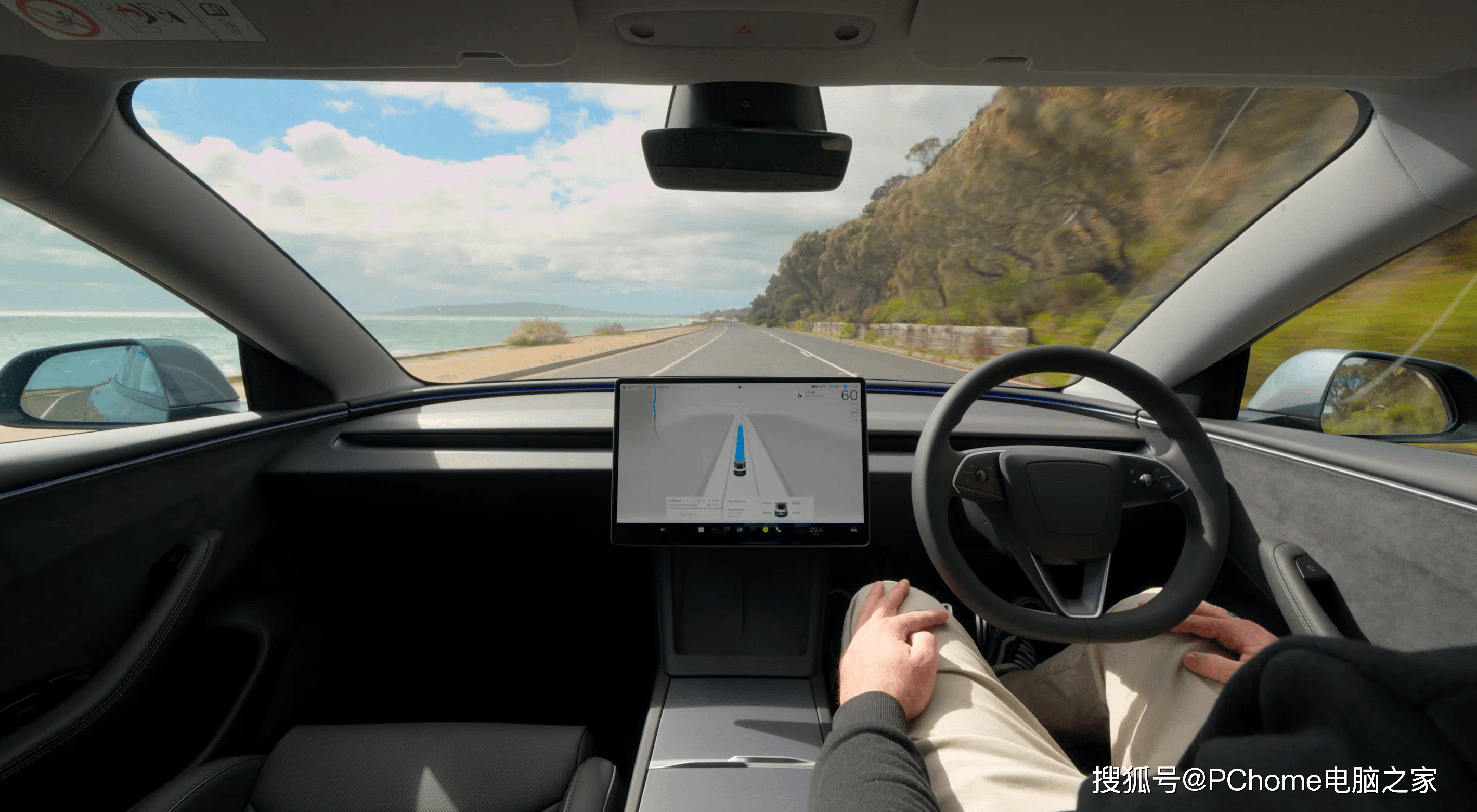
Group 1 - The core viewpoint is that Tesla's CEO Elon Musk announced that the Full Self-Driving (FSD) system is expected to be approved in China as early as next month, potentially aligning with its approval timeline in Europe [1] Group 2 - Tesla's FSD is the company's highest-level intelligent driving assistance system, currently classified as Level 2, requiring driver supervision at all times [4] - The FSD system utilizes a pure vision approach with eight 360° cameras and an end-to-end neural network, trained on vast amounts of real driving data to navigate complex scenarios such as city roads, highways, roundabouts, automated parking, and unprotected left turns [4] - Despite its name suggesting "fully autonomous driving," the system is not truly driverless and is still in testing and iteration phases globally, facing safety regulations and accident controversies [4] - The core objective of the FSD system is to gradually achieve higher levels of automation, enhancing travel efficiency and safety [4]


OptimusGen3定型后首次亮相,高阶自动驾驶产业拐点有望加速到来
Huaxin Securities· 2026-01-18 14:58
Investment Rating - The report maintains a "Recommended" investment rating for the automotive industry, particularly focusing on the humanoid robotics sector [2][8]. Core Insights - The unveiling of Optimus Gen3 marks a significant milestone for Tesla in the humanoid robotics industry, enhancing confidence in its upcoming release in Q1 2026. This event is expected to catalyze a new wave of investment opportunities in the humanoid robotics sector [4][5]. - Shanghai's "Mosu Zhixing" action plan aims to accelerate the implementation of high-level autonomous driving technologies, targeting the large-scale application of L4-level autonomous driving by 2027. This initiative is anticipated to create substantial investment opportunities in the autonomous driving market [6][7]. Summary by Sections Humanoid Robotics Sector - The Huaxin Humanoid Robotics Index increased by 2.38% this week, with a cumulative return of 123.2% since 2025. The trading volume of the humanoid robotics sector accounted for 34.5% of the CSI 2000 index, indicating high market engagement [17][21]. - Within the humanoid robotics sub-sectors, the assembly segment performed well with a 4.8% increase, while other components like actuators and reducers also showed positive growth [21]. Automotive Sector - The CITIC Automotive Index rose by 0.7%, outperforming the broader market by 1.3 percentage points. The automotive sector's PE ratio stands at 33.9, placing it in the 51.7% percentile over the past four years, while the PB ratio is at 3.0, in the 96.3% percentile [34][48]. - Among tracked companies, Aikelan, Jiaoyun Co., and Junda Co. saw significant stock price increases, while companies like Tiangong Co. and Yueling Co. experienced notable declines [41][45]. Key Company Recommendations - The report recommends several companies within the humanoid robotics and automotive sectors, including: - New Spring Co., Shuanglin Co., and Dechang Electric Holdings for their roles in humanoid robotics components [8]. - Companies like Huawei-affiliated automakers and XPeng for their advancements in L3/L4 autonomous vehicle manufacturing [7].
从AI眼镜到高阶智驾:CES释放电子产业链多终端进化信号
Ge Long Hui· 2026-01-13 08:47
Group 1: Wearable Devices and IoT - AI glasses and camera headphones remain the focus of wearable devices, with over 50 companies participating, primarily from mainland China, emphasizing aesthetics, lightweight design, all-day wear, multimodal interaction, and multi-chip solutions [1] - The innovation in headphones has shifted from single audio performance to a comprehensive evolution of sound quality, AI, and multimodal capabilities, with some products integrating cameras and environmental sensing [1] - New IoT categories such as smart imaging devices, 3D printers, and NAS are gaining attention, with many startups entering the market, alongside creative new products in AI home, AI recording cards, and AI displays [1] Group 2: Automotive Industry - AI is driving the intelligent upgrade of the entire automotive chain, with high-level autonomous driving expected to achieve large-scale implementation [2] - Chip manufacturers like NVIDIA are releasing open-source AI models to accelerate technology penetration and commercialization in the autonomous driving sector [2] - Domestic automakers such as Geely and Great Wall are showcasing their AI systems, while international companies like Mercedes and Jaguar Land Rover are partnering with AI giants to enhance their capabilities [2] Group 3: Robotics - Home and service robots are continuously upgrading, with traditional vacuum robots evolving to cover more cleaning scenarios and showcasing new intelligent models [3] - Humanoid robots remain a focal point, with companies demonstrating robots capable of complex movements and interactions [3] - The participation of domestic electronic industry companies in showcasing robotic components and manufacturing products has increased significantly [3] Group 4: PCs and Smartphones - Lenovo has introduced a cross-device super intelligent entity, Lenovo Qira, and partnered with NVIDIA for a new AI cloud super factory initiative, showcasing a range of AI-integrated devices [4] - Chip companies are upgrading edge chips to enhance the PC experience, with major players like Intel, Qualcomm, and AMD leading the advancements [4]



2025年上汽集团自主品牌销量占比首超65%
Zhong Guo Zheng Quan Bao· 2026-01-08 20:50
Core Insights - In 2025, SAIC Motor Corporation achieved a total vehicle sales of 4.507 million units, representing a year-on-year growth of 12.3%, with a healthy market supply-demand structure [1] - The company's revenue for the first three quarters reached 468.99 billion yuan, and net profit attributable to shareholders was 8.101 billion yuan, reflecting year-on-year increases of 9% and 17.3% respectively [1] - The shift towards self-owned brands is evident, with self-owned brand sales reaching 2.928 million units, a 21.6% increase, and their share of total sales rising from 60% in 2024 to 65% in 2025 [1][2] Business Structure and Performance - The growth of self-owned brands is driven by a collaborative effort across the entire brand matrix, with significant increases in sales for the Roewe and MG brands, which saw domestic sales rise by 245.3% [2] - The high-end brand, Zhiji Auto, achieved sales of 81,000 units, a growth of 23.68%, with the LS6 model becoming a representative product in the 200,000 yuan intelligent SUV market [2] - SAIC-GM-Wuling maintained a solid market presence with sales of 1.635 million units, and its new energy vehicles surpassed 1 million units for the first time [2] Overseas Market Expansion - In 2025, SAIC's overseas sales reached 1.071 million units, a year-on-year increase of 3.1%, with self-owned brands accounting for 75% of this figure [3] - The company has established a comprehensive strategy of "local R&D + local production + local operation," with factories in Thailand and Indonesia steadily releasing a combined capacity of 500,000 units per year [3] Technological and Systematic Transformation - The growth in key metrics is attributed to long-term investments in R&D, with over 150 billion yuan invested in electric and intelligent technology, resulting in nearly 26,000 effective patents [3][4] - The MG4 semi-solid state version has achieved over 75,000 orders, while the Zhiji LS9 boasts a record range of 1,508 kilometers [4] - The company has enhanced its core component capabilities through strategic investments exceeding 18 billion yuan, focusing on critical supply chain segments [4] Systemic Changes and Future Outlook - SAIC has restructured its passenger vehicle segment to enhance market responsiveness, leading to successful launches of new models [5][6] - The company aims to strengthen its domestic market base, expand globally, and build core competitive advantages through ongoing technological advancements and local production capacity [6]

吉利汽车获杭州全域L3级自动驾驶测试牌照
Zhong Guo Qi Che Bao Wang· 2026-01-08 05:47
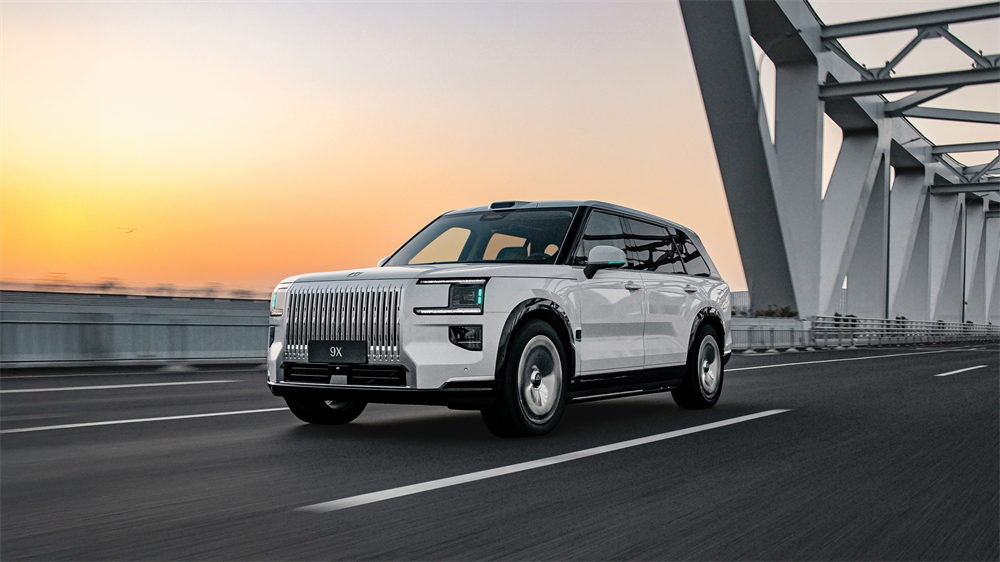
Core Viewpoint - The successful approval of the Zeekr 9X for L3 autonomous driving testing in Hangzhou highlights Geely's technological strength in advanced autonomous driving and showcases Hangzhou's strategic positioning in the intelligent connected vehicle industry [2] Group 1: Approval and Testing Scope - The Zeekr 9X has officially obtained the L3 autonomous driving road testing license covering an area of 9,224 square kilometers in Hangzhou, making it the largest in terms of area and longest in terms of mileage for L3 testing in China [2] - The testing range includes over 1,500 kilometers of dual-direction expressways, allowing for comprehensive scenario capability validation for the Zeekr 9X [2] Group 2: Data Integration and Analysis - During the testing period, the vehicle will connect to traffic data from over 7,000 intersections in Hangzhou, covering various scenarios including urban roads and expressways [2] - The collection and analysis of vast amounts of real-world traffic data will enable a thorough refinement of the Zeekr 9X's autonomous driving system [2] Group 3: Industry Implications - The approval of the Zeekr 9X not only reflects Geely's capabilities in the high-level autonomous driving sector but also serves as an important practical example for the development of the regional autonomous driving industry [2]

趋势研判!2026年中国商用车自动驾驶解决方案行业政策、产业链、市场现状、竞争格局及未来展望:开放道路场景不断增加,自动驾驶应用前景广阔[图]
Chan Ye Xin Xi Wang· 2026-01-02 06:26
Core Insights - The commercial vehicle autonomous driving solutions are essential tools for addressing high operational intensity and low profit margins in the logistics and transportation industry, facilitating cost reduction and efficiency improvement [1][5] - The market for commercial vehicle autonomous driving solutions in China is projected to grow to 6 billion yuan by 2025, with closed-road solutions accounting for 2.1 billion yuan (35%) and open-road solutions for 3.9 billion yuan (65%) [1][5] - By 2026, the market is expected to exceed 10 billion yuan, with closed-road solutions at approximately 3.6 billion yuan (35.29%) and open-road solutions at about 6.6 billion yuan (64.71%) [1][5] Industry Definition - Commercial vehicle autonomous driving solutions are designed for trucks, buses, and specialized vehicles, integrating hardware and software systems for environment perception, decision-making, vehicle control, cloud scheduling, and fleet management [2] Industry Development Status - The industry is transitioning from closed scenarios to large-scale validation in open scenarios, with significant growth expected in the coming years [5] - The market is characterized by a high technical barrier, with commercial vehicle autonomous driving focusing on different priorities compared to passenger vehicles [4] Industry Chain - The upstream of the industry includes core hardware such as perception sensors, LiDAR, cameras, and chips, while the midstream involves system integration, and the downstream applies to various commercial vehicles in logistics, mining, and urban delivery [6] Market Competition Landscape - The global market for commercial vehicle autonomous driving solutions is fragmented, with a CR5 of 38.6% in 2024, while the logistics vehicle market is more concentrated with a CR5 of 56.7% [9] - Key players in the Chinese market include companies like Remote New Energy Commercial Vehicle Group, Xidi Intelligent Driving Technology Co., Ltd., and Shenzhen Ruiming Technology Co., Ltd. [9] Future Outlook - The trend towards high-level autonomous driving in commercial vehicles is accelerating, with expectations for a fully automated transportation network to emerge in the next five to ten years, integrating with smart logistics and smart cities [11]

伯特利(603596):智能电控产品在手订单充足,前瞻布局EMB和机器人
NORTHEAST SECURITIES· 2025-12-30 07:45
Investment Rating - The report initiates coverage with an "Accumulate" rating for the company [4]. Core Views - The company has shown robust growth in the first three quarters, with a year-on-year revenue increase of 27.0% to 8.36 billion yuan and a net profit increase of 14.6% to 890 million yuan [1]. - The gross margin for the first three quarters was 19.3%, down 2.0 percentage points year-on-year, while the net profit margin was 10.7%, down 1.2 percentage points year-on-year [1]. - The company’s smart electronic control products are the main growth driver, with sales of 4.733 million units in the first three quarters, a year-on-year increase of 41.6% [2]. - The company has a strong order backlog and is actively advancing capacity construction, with 536 projects under research, a year-on-year increase of 24.1% [3]. - The company raised 2.802 billion yuan through convertible bonds in July 2025 to invest in various production projects, including the production of 600,000 units of EMB and 1 million units of WCBS annually [3]. Financial Summary - The company’s projected revenues for 2025-2027 are 12.8 billion, 15.8 billion, and 19.2 billion yuan, respectively, with corresponding net profits of 1.42 billion, 1.81 billion, and 2.23 billion yuan [4]. - The projected price-to-earnings (PE) ratios for 2025-2027 are 22, 17, and 14 times, respectively [4]. - The gross margin is expected to improve, with a forecast of 20.5% for Q3 2025, up 1.4 percentage points from the previous quarter [1].

港股异动 智驾概念股早盘走高 国内首批L3级自动驾驶汽车开启规模化上路运行
Jin Rong Jie· 2025-12-29 03:20
Core Viewpoint - The smart driving concept stocks have seen a significant rise, driven by the introduction of L3-level autonomous driving vehicles in Chongqing, marking a milestone in the development of intelligent connected vehicles in China [1]. Group 1: Stock Performance - Youjia Innovation (02431) increased by 8.89%, reaching HKD 13.6 [1] - Zhejiang Shibao (01057) rose by 6.97%, trading at HKD 5.22 [1] - Tudatong (02665) saw a gain of 1.98%, priced at HKD 10.82 [1] Group 2: Industry Developments - On December 26, the first batch of 46 L3-level autonomous driving vehicles, equipped with the L3 autonomous driving system from Changan Deep Blue, was officially launched for road use in Chongqing [1] - The approved routes for these vehicles include major roads such as the inner ring expressway and Yudu Avenue in Chongqing [1] Group 3: Regulatory and Market Insights - According to Xinda Securities, the regulatory framework for intelligent connected vehicles in China is continuously improving, leading to a more standardized industry development environment [1] - Domestic brands are accelerating the research and development of smart driving technologies, with the penetration rate of L2-level and above advanced driving assistance systems increasing rapidly [1] - The market for Robotaxi is projected to reach a scale of RMB 270 billion by 2030 [1]
智驾概念股早盘走高 国内首批L3级自动驾驶汽车开启规模化上路运行
Zhi Tong Cai Jing· 2025-12-29 02:22
Core Viewpoint - The news highlights the positive market response to the launch of L3-level autonomous driving vehicles in China, indicating a growing acceptance and regulatory support for advanced driving technologies in the automotive industry [1] Group 1: Market Performance - Intelligent driving concept stocks saw significant gains, with Youjia Innovation (02431) rising by 8.89% to HKD 13.6, Zhejiang Shibao (002703) increasing by 6.97% to HKD 5.22, and Tudatong (02665) up by 1.98% to HKD 10.82 [1] Group 2: Regulatory Developments - The first batch of L3-level autonomous driving vehicles, totaling 46 units, was officially launched for road use in Chongqing, approved for operation on specific urban expressways [1] Group 3: Industry Trends - According to Xinda Securities (601059), the regulatory framework for intelligent connected vehicles in China is continuously improving, leading to a more standardized industry environment [1] - Domestic brands are accelerating the research and development of intelligent driving technologies, with the penetration rate of L2-level and above driving assistance systems increasing rapidly [1] - The market for Robotaxi is projected to reach a scale of RMB 270 billion by 2030, indicating significant growth potential in the high-level autonomous driving sector [1]

港股异动 | 智驾概念股早盘走高 国内首批L3级自动驾驶汽车开启规模化上路运行
智通财经网· 2025-12-29 02:03
Group 1 - The core viewpoint of the article highlights the positive market response to smart driving concept stocks, with notable increases in share prices for companies such as Youjia Innovation, Zhejiang Shibao, and Tudatong [1] - The first batch of L3-level autonomous driving vehicles, totaling 46 units, has officially commenced large-scale road operation in Chongqing, featuring vehicles equipped with L3 autonomous driving systems from Changan Deep Blue [1] - The vehicles are authorized to operate on specific routes in Chongqing, including the inner ring expressway and other major roads, indicating a significant step in the practical application of autonomous driving technology [1] Group 2 - According to Xinda Securities, the regulatory framework for intelligent connected vehicles in China is continuously improving, leading to a more standardized industry development environment [1] - Domestic brands are accelerating the research and development of smart driving technologies, with a notable increase in the penetration rate of L2-level and above advanced driving assistance systems [1] - The market size for Robotaxi is projected to reach 270 billion yuan by 2030, reflecting the growth potential in the high-level autonomous driving sector [1]