AI投资

Search documents
避险模式!大摩:市场开始买美债了
Hua Er Jie Jian Wen· 2026-02-16 02:41
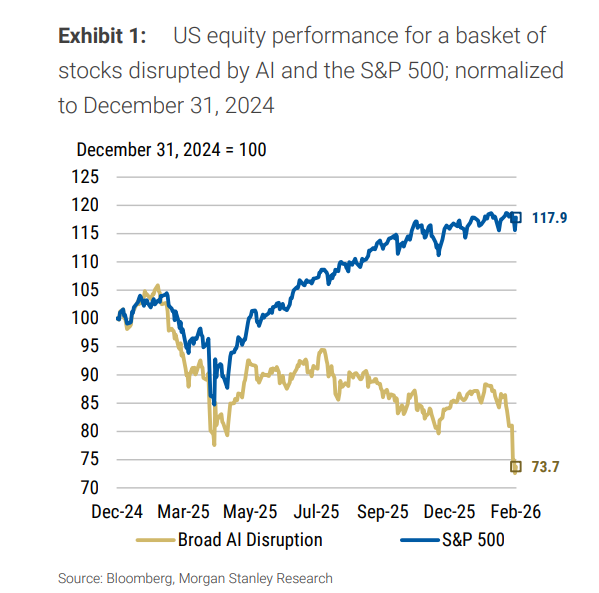
Core Viewpoint - Investors are retreating from risk assets and turning to U.S. Treasury bonds as concerns grow over the sustainability of AI investment returns and high market valuations [1][4] Group 1: Market Trends - Morgan Stanley's report indicates a shift in market sentiment, with investors becoming increasingly sensitive to the negative externalities of the AI investment cycle [1] - The S&P 500 index has reached new highs, but stocks directly impacted by AI disruptions have begun to decline [2][4] - A basket of 108 AI-impacted stocks has shown a significant divergence from the broader market, indicating a potential peak in AI optimism [2][4] Group 2: Economic Indicators - Morgan Stanley has raised its 2026 U.S. GDP growth forecast from 2.4% to 2.6%, driven by capital expenditures from hyperscalers [1] - However, the firm warns that this growth comes with risks, particularly if investment returns do not materialize, leading to potential overinvestment issues [1][4] Group 3: Investor Sentiment - High-income groups (earning over $100,000) have shown a notable shift in their perception of the economy since the beginning of the year, reflecting concerns over asset price volatility [5][6][7] - The decline in confidence among affluent consumers is often a precursor to economic recession, suggesting a cautious outlook for the economy [7][9] Group 4: Inflation and Monetary Policy - Recent inflation data has surprised to the downside, with January CPI growth at 0.17%, below expectations, and core CPI at 0.30% [12][13] - This unexpected decline in inflation is reshaping Federal Reserve policy expectations, with markets pricing in potential interest rate cuts by mid-2026 [13] - The Fed's recent bond purchasing operations have provided liquidity support, further benefiting short-term U.S. Treasuries [13]


“AI交易”的关键变量:服务业敞口越高,AI颠覆风险越大,“AI基建”最有利
Hua Er Jie Jian Wen· 2026-02-14 11:58
Core Insights - Morgan Stanley emphasizes the need for investors to differentiate between "infrastructure providers benefiting from AI development" and "service providers potentially disrupted by AI" [1] Group 1: AI Investment Themes - The report indicates that "service sector exposure" has become a decisive variable in AI-themed investments, showing a significant negative correlation with year-to-date investment performance [2] - The "AI Adopters" theme has a service sector exposure of 53%, making it the worst performer among AI themes [3] - In contrast, the "AI Infrastructure" theme has only 14% service sector exposure and has shown the strongest performance year-to-date [4] Group 2: Market Concerns and Performance - Concerns about AI disruption have spread from the software industry to broader service sectors, including financial consulting and brokerage services [2] - The high service sector exposure in the "AI Adopters" theme leads to significant uncertainty regarding competitive dynamics and pricing sustainability, which is reflected in current market pricing [3] - The "AI Infrastructure" theme benefits from ongoing capital expenditures and structural demand for computing, semiconductors, and supporting hardware, indicating a long-term trend rather than a short-term phenomenon [4] Group 3: Quantitative Assessment - Morgan Stanley employs six quantitative dimensions to evaluate theme attractiveness, including information ratio, breadth of earnings expectation revisions, and valuation levels [4] - The "AI Infrastructure" theme stands out in this scoring system, demonstrating strong risk-adjusted performance in the short to medium term and favorable mutual fund positioning [5]
Microalgo股价近期大幅波动,受科技股抛售潮影响
Jing Ji Guan Cha Wang· 2026-02-13 17:23
Core Viewpoint - Microalgo, Inc. (MLGO.OQ) has experienced significant stock price volatility, with an 8.60% fluctuation range and a 27.69% amplitude over the past week, primarily influenced by a broader tech stock sell-off and concerns regarding AI investment returns [1] Stock Performance Summary - The stock price reached a high of $4.83 on February 10 and a low of $3.80 on February 6, with daily movements including a 4.12% increase to $4.04 on February 13, a 6.05% decrease to $3.88 on February 12, a 10.41% drop to $4.13 on February 11, and a significant 12.17% rise to $4.61 on February 10 [1] - The overall performance of the software services sector remained relatively stable during this period, with minor fluctuations in the Nasdaq index [1] Recent Events Summary - The high volatility of Microalgo's stock has become a market focal point, driven by a sell-off in tech stocks and overall pressure on the software services sector [1] - Concerns regarding the return on investment in AI have exacerbated market fluctuations, although no major announcements have been made by the company [1] - Structural challenges in AI investment, such as high capital expenditures and uncertain return cycles, may be impacting tech stocks through a contagion effect [1]
AI股暴跌且黄金竟成“提款机”! 金银同步崩跌
Jin Tou Wang· 2026-02-13 05:41
Core Viewpoint - The financial market experienced a significant sell-off, leading to a sharp decline in gold and silver prices as traders liquidated metals to cover stock market losses, indicating a "de-risking" trend in the market [1][2]. Market Dynamics - The sell-off in gold and silver was partly due to profit-taking after recent speculative buying drove prices up [1]. - The volatility in the market has been exacerbated by concerns over AI investments, leading to a flight to safety in U.S. Treasury bonds [2]. - Despite recent setbacks, several banks remain bullish on gold, with JPMorgan predicting gold prices could reach $6,000 to $6,300 per ounce by year-end [2]. Technical Analysis - Gold - Gold has broken below the short-term support level of $5,000 to $4,990, indicating a potential downward adjustment [3]. - Key resistance levels for gold are identified at $5,080 to $5,070 and $5,150 to $5,140, while support levels are at $4,880 and $4,850 to $4,840 [3]. Technical Analysis - Silver - Silver is currently in a wide-ranging oscillation phase, with indications of a potential shift from a bullish to a bearish trend [4]. - The recent sharp decline in silver prices, dropping $10 and breaking key support levels, suggests a cautious approach to long positions, with resistance levels at $79 to $80 and $85 to $86 [4].
招商期货-期货研究报告:商品期货早班车-20260213
Zhao Shang Qi Huo· 2026-02-13 03:24
Report Industry Investment Rating - Not provided in the report Core Viewpoints of the Report - The precious metals market is highly volatile. Gold is recommended to hold long - term positions, while silver requires cautious participation [1]. - For base metals, copper and tin suggest waiting for stable buying opportunities. Aluminum is expected to be range - bound, and alumina has upward potential [2][4]. - In the industrial silicon market, the fundamentals show a situation of both weak supply and demand, and the price is expected to fluctuate within a certain range [4]. - In the black industry, it is recommended to close positions in rebar, iron ore, and coking coal [6]. - In the agricultural products market, soybeans and corn futures are expected to show different trends, and corresponding trading strategies are provided for each [7]. - In the energy and chemical market, different products have different supply - demand situations and trading suggestions, such as short - term weak fluctuations and medium - term improvement opportunities [9][10] Summary by Relevant Catalogs Precious Metals - **Market Performance**: Last night, precious metals fell rapidly. The Shanghai Gold 2604 contract barely held the 1100 - yuan mark, and the Shanghai Silver 2604 contract fell below the 20000 - yuan mark [1]. - **Fundamentals**: The U.S. Treasury Secretary's decision and concerns about AI investment led to drops in U.S. technology stocks and precious metals. There were changes in gold and silver inventories in various places [1]. - **Trading Strategy**: Hold long positions in gold and be cautious with silver [1] Base Metals Copper - **Market Performance**: Copper prices weakened significantly yesterday [2]. - **Fundamentals**: U.S. stock market decline, concerns about AI, dollar strengthening, tight copper ore supply, and the Spring Festival off - peak season affecting demand [2]. - **Trading Strategy**: Wait for stable buying opportunities [2] Aluminum - **Market Performance**: The closing price of the electrolytic aluminum main contract decreased by 0.21% compared with the previous trading day, and the 0 - 3 month spread was - 400 yuan/ton [2]. - **Fundamentals**: High - load production in electrolytic aluminum plants and a slight increase in the weekly aluminum product start - up rate [2]. - **Trading Strategy**: The price is expected to be range - bound in the short term [2] Alumina - **Market Performance**: The closing price of the alumina main contract decreased by 1.20% compared with the previous trading day, and the 0 - 3 month spread was - 206 yuan/ton [2]. - **Fundamentals**: Some alumina plants entered the production - reduction and rotation maintenance stage, while electrolytic aluminum plants maintained high - load production [2]. - **Trading Strategy**: Pay attention to subsequent maintenance and shutdown situations as the price has upward potential [2] Industrial Silicon - **Market Performance**: The main 05 contract closed at 8335 yuan/ton, a decrease of 35 yuan/ton from the previous trading day, with a closing price decrease of 0.42% [4]. - **Fundamentals**: Stable furnace - opening quantity and an overall start - up rate of 22.36%. Both the polysilicon and organic silicon industries are promoting anti - involution, with expected production declines [4]. - **Trading Strategy**: The price is expected to fluctuate between 8200 - 8800 yuan. Consider short - selling at high prices if the large - scale production reduction is short - term [4] Carbonate Lithium - **Market Performance**: LC2605 was 149,420 yuan/ton (- 840), a closing price decrease of 0.56% [4]. - **Fundamentals**: Changes in the prices of lithium - related products, production and inventory changes in the lithium salt industry, and expected production declines in downstream materials [4]. - **Trading Strategy**: The price is expected to fluctuate [4] Polysilicon - **Market Performance**: The main 05 contract closed at 49015 yuan/ton, a decrease of 165 yuan/ton from the previous trading day, with a closing price decrease of 0.43% [4]. - **Fundamentals**: Stable weekly production and inventory, changes in the production schedules of downstream products, and positive factors in the demand side [4]. - **Trading Strategy**: The main contract is expected to weakly fluctuate between 45000 - 53000 yuan [4] Tin - **Market Performance**: Tin prices weakened significantly yesterday [4]. - **Fundamentals**: Similar to copper, including U.S. stock market decline, dollar strengthening, and tight tin ore supply, along with a significant increase in domestic warehouse receipts [4]. - **Trading Strategy**: Wait for stable buying opportunities [4] Black Industry Rebar - **Market Performance**: The rebar main 2605 contract closed at 3056 yuan/ton, an increase of 11 yuan/ton from the previous night - session closing price [6]. - **Fundamentals**: Decrease in building material apparent demand and production, weak demand expectations but limited supply, and certain technical support for prices [6]. - **Trading Strategy**: Close positions. The reference range for RB05 is 3040 - 3100 yuan [6] Iron Ore - **Market Performance**: The iron ore main 2605 contract closed at 759.5 yuan/ton, a decrease of 2.5 yuan/ton from the previous night - session closing price [6]. - **Fundamentals**: Changes in iron ore inventory and molten iron production, neutral supply - demand situation, and certain technical support for prices [6]. - **Trading Strategy**: Close positions. The reference range for I05 is 750 - 780 yuan [6] Coking Coal - **Market Performance**: The coking coal main 2605 contract closed at 1121 yuan/ton, an increase of 1 yuan/ton from the previous night - session closing price [6]. - **Fundamentals**: Changes in molten iron production, weak supply - demand situation, and certain technical support for prices [6]. - **Trading Strategy**: Close positions. The reference range for JM05 is 1090 - 1140 yuan [6] Agricultural Products Soybean Meal - **Market Performance**: CBOT soybeans are short - term strong, reflecting the expectation of good U.S. soybean exports [7]. - **Fundamentals**: South American bumper harvest expectation, strong U.S. soybean crushing and increasing export expectations, and an overall improving U.S. soybean supply - demand but a globally loosening supply - demand [7]. - **Trading Strategy**: Pay attention to China's purchase of U.S. soybeans and South American production realization; the domestic market is weaker and range - bound [7] Corn - **Market Performance**: Corn futures prices are strong, and spot prices are stable [7]. - **Fundamentals**: More than 60% of grain sales are completed, with limited sales pressure. However, the selling mentality in the Northeast has changed, and downstream enterprises are replenishing inventory at low prices [7]. - **Trading Strategy**: The futures price is expected to be range - bound and slightly strong due to policy disturbances [7] Oils and Fats - **Market Performance**: The Malaysian market is short - term weak [8]. - **Fundamentals**: A 14% month - on - month decrease in Malaysian palm oil production in January, a 11% month - on - month increase in exports, and a 7.7% month - on - month decrease in inventory at the end of January [8]. - **Trading Strategy**: Oils and fats are weak. Consider an anti - spread strategy and pay attention to future production and biodiesel policies [8] Cotton - **Market Performance**: ICE U.S. cotton futures prices continued to rebound, while international crude oil futures prices fell sharply [8]. - **Fundamentals**: A 3.2% year - on - year decrease in the expected U.S. cotton planting area in the 26/27 season, and changes in U.S. cotton export sales and domestic cotton supply - demand [8]. - **Trading Strategy**: Buy at low prices. The price range is 14600 - 15000 yuan/ton [8] Eggs - **Market Performance**: Egg futures prices rebounded, and spot prices stopped quoting [8]. - **Fundamentals**: A decrease in the number of laying hens in production, active chick replenishment, and expected seasonal decline in egg prices due to weakening demand [8]. - **Trading Strategy**: The futures price is expected to be range - bound and weak [8] Pigs - **Market Performance**: Pig futures prices are weak, and spot prices have a slight increase [8]. - **Fundamentals**: Expected rapid decline in slaughter volume after the minor New Year, large daily slaughter pressure this month, and a situation of strong supply and weak demand [8]. - **Trading Strategy**: The futures price is expected to be range - bound and weak [8] Energy and Chemicals LLDPE - **Market Performance**: The LLDPE main contract continued to fluctuate slightly. The low - price spot in North China was 6530 yuan/ton, and the 05 - contract basis was 200 points lower than the futures price [9]. - **Fundamentals**: Easing domestic supply pressure and weakening downstream demand [9]. - **Trading Strategy**: Short - term weak fluctuations, and consider long - positions at low prices in the medium - term [9] PTA - **Market Performance**: PX CFR China price was 917 dollars/ton, and PTA East China spot price was 5180 yuan/ton, with a spot basis of - 73 yuan/ton [10]. - **Fundamentals**: High - level supply of PX and PTA, and a situation of inventory accumulation [10]. - **Trading Strategy**: Maintain a long - position view on PX in the medium - term, and consider taking profits on PTA [10] PP - **Market Performance**: The PP main contract continued to fluctuate slightly. The PP spot price in East China was 6550 yuan/ton, and the 01 - contract basis was 130 points lower than the futures price [10]. - **Fundamentals**: Increasing supply pressure and weakening downstream demand [10]. - **Trading Strategy**: Short - term weak fluctuations, and consider short - positions at high prices in the medium - term [10] MEG - **Market Performance**: The East China spot price was 3675 yuan/ton, with a spot basis of - 105 yuan/ton [10]. - **Fundamentals**: Increasing supply, inventory accumulation, and weakening downstream demand [10]. - **Trading Strategy**: Consider long - positions at appropriate times as the market may start to destock in March [10] Styrene - **Market Performance**: The styrene main contract fluctuated slightly. The East China spot market price was 7570 yuan/ton [10]. - **Fundamentals**: High - level pure benzene inventory, low - level styrene inventory, and weak supply - demand on both sides [10]. - **Trading Strategy**: Short - term wide - range fluctuations, and consider long - positions on styrene or related spread strategies in the medium - to - long - term [10]
趣图:男子用AI一夜赚够一线房首付
程序员的那些事· 2026-02-12 06:27
Group 1 - The article discusses a recent incident where an individual reportedly used AI tools to monitor social media sentiment and market dynamics, starting with an initial investment of $50, which grew to approximately $245,000, representing a nearly 5000% increase in returns [4]. - The investment strategy involved automated operations based on preset strategies, highlighting the potential of AI in trading and investment [4]. - There is skepticism regarding the authenticity of such claims, with comments suggesting that the profits may come from others' losses and questioning the feasibility of consistently achieving such high returns in the stock market [4][5]. Group 2 - The article has garnered significant attention, with a reading volume of 33.37 million and a discussion volume of 6,567, indicating a high level of public interest in AI-driven investment strategies [4]. - The narrative raises concerns about the promotion of AI tools for stock trading, suggesting that some may be using these stories to market their services rather than providing genuine investment opportunities [5]. - The discussion reflects broader themes in the investment community regarding the risks and realities of using AI in trading, as well as the potential for misinformation [5].

国内观察2026年1月通胀数据:春节错位影响CPI,PPI延续向好趋势
Donghai Securities· 2026-02-11 09:43
Inflation Data Summary - In January 2026, the CPI year-on-year increased by 0.2%, down from 0.8% in the previous month, while the month-on-month change remained at 0.2%[2] - The PPI year-on-year decreased by 1.4%, an improvement from the previous decline of 1.9%, with a month-on-month increase of 0.4%[2] CPI Analysis - The decline in CPI year-on-year was influenced by the misalignment of the Spring Festival, with fresh vegetable prices contributing a 0.27 percentage point decrease to the CPI[2] - Excluding the Spring Festival effect, the CPI month-on-month growth of 0.2% was weaker than the average of 0.6% observed in years when the festival fell in mid to late February[2] - Fresh vegetable prices saw a significant drop, with a month-on-month decrease of 4.8%, leading to a year-on-year decline of 0.7% in food prices[2] PPI Insights - The PPI has shown a continuous month-on-month increase for four consecutive months, with a potential for year-on-year growth by mid-year if the monthly changes remain stable[2] - Key drivers for PPI improvement include rising prices in non-ferrous metals and a positive demand outlook in certain industries, despite some drag from the oil sector[2] Core CPI and Consumer Trends - The core CPI, excluding energy, showed a year-on-year increase of 0.8%, with a month-on-month growth of 0.3%, indicating strong performance in non-energy consumer goods[2] - The average wholesale price of pork increased by 3.73% in January, marking the first monthly rise since July 2025, driven by a decrease in the breeding sow population[2] Risks and Future Outlook - Potential risks include slower-than-expected domestic policy implementation, a sharper decline in real estate investment, and unexpected inflation in the U.S.[3]
把握红利策略内部轮动,全方位布局红利机遇,红利国企ETF国泰(510720)午后涨超1%
Mei Ri Jing Ji Xin Wen· 2026-02-11 07:13
Group 1 - The core strategy for dividend allocation in 2026 should shift from focusing on historical dividend ratios and static dividend yields to seeking companies with fundamental resilience or marginal improvement trends, and potential increases in future dividend ratios [1] - Resource and traditional manufacturing sectors are expected to benefit the most from dividend strategies, with resource dividends gaining from overseas AI investments, manufacturing recovery, resource protectionism in emerging markets, and a rate cut cycle [1] - The traditional manufacturing sector's dividend benefits are broad, impacting all areas except for service consumption [1] Group 2 - The Guotai ETF (510720) tracks the Shangguo Dividend Index (000151), which selects high-dividend-capable and stable dividend-record companies across industries such as banking, coal, and transportation, focusing on traditional high-dividend areas [1] - The index employs strict assessments of constituent stocks' dividend yields and sustainability, utilizing a cross-industry diversification strategy to effectively control investment risks and reflect the overall market performance of high-dividend companies [1] - The Guotai ETF has consistently distributed dividends monthly since its listing, achieving 22 consecutive months of dividends [1]
道指续创历史新高!科技股承压,AI投资忧虑蔓延,存储概念领跌,中概股逆势四连涨
Jin Rong Jie· 2026-02-10 23:57
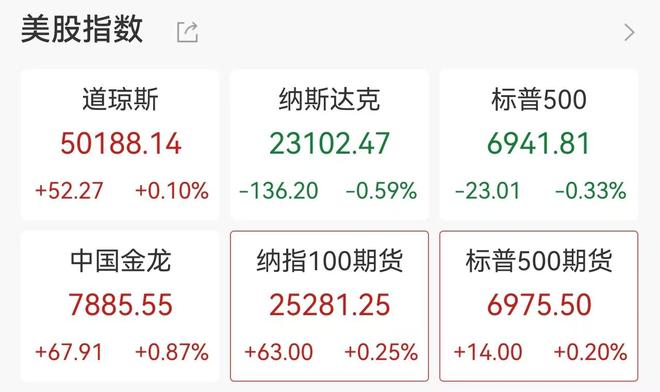
Market Overview - The U.S. stock market showed significant divergence, with the Dow Jones Industrial Average rising 0.1% to a record closing high of 50,188.14 points, while the S&P 500 and Nasdaq Composite fell by 0.33% and 0.59% respectively, primarily due to a sell-off in technology stocks and weak economic data [1][2]. Technology Sector - Major technology stocks faced a sell-off, with the Wande Technology Seven Giants Index declining by 0.59%. Key players like Intel, Nvidia, Apple, and Microsoft saw widespread losses, with Intel dropping 6.19% due to poor earnings expectations. Storage-related stocks such as Micron Technology and Western Digital also fell over 3%, reflecting market concerns about AI investment returns amid high capital expenditures [3][4][6]. - Alphabet, Google's parent company, raised nearly $32 billion in bonds, setting a record for tech companies, but concerns about aggressive investments in AI continue to grow [4]. Economic Data - U.S. retail sales data for December unexpectedly stagnated, showing no growth and falling short of the expected 0.4% increase, indicating a significant slowdown in consumer momentum at year-end. Core retail sales, excluding automobiles and gasoline, also showed zero growth, with declines in discretionary spending categories like clothing and furniture [11]. - The employment cost index's growth rate slowed to 0.7%, leading to increased market expectations for a potential interest rate cut by the Federal Reserve in mid-year, with the probability of a 25 basis point cut rising to 49.3% [11]. Chinese Stocks - In contrast to the tech sector's downturn, Chinese stocks performed well, with the Nasdaq China Golden Dragon Index rising for the fourth consecutive day by 0.87%. Companies like Alibaba, Li Auto, and Tencent Music saw gains exceeding 2%, attributed to improved domestic policy expectations and better-than-expected earnings from some firms [7][8].
149只权益基金净值创新高!押注AI者与稳健派谁更胜一筹?
2 1 Shi Ji Jing Ji Bao Dao· 2026-02-10 14:36
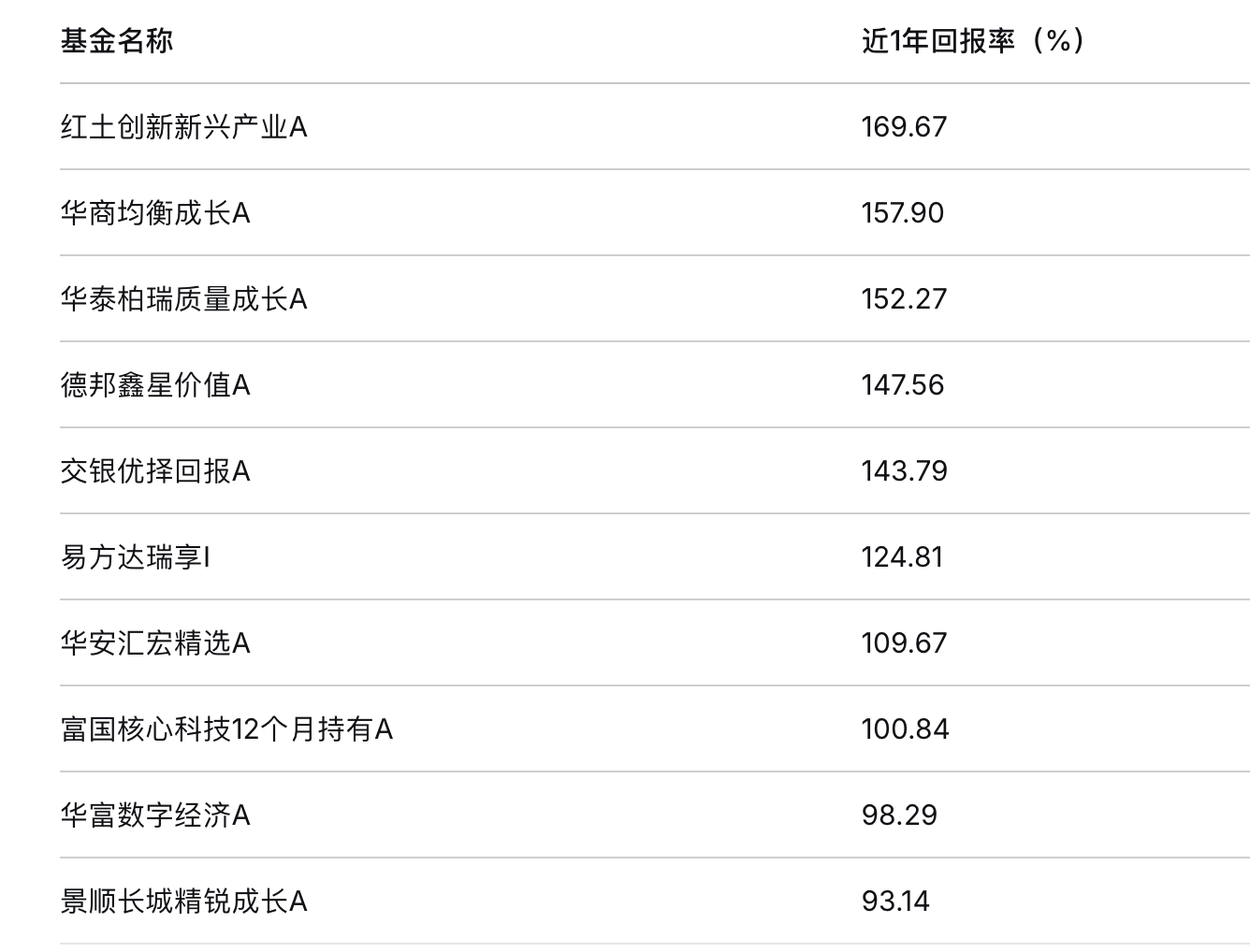
Core Viewpoint - The active equity funds in the A-share market have regained attention as 149 funds reached new net asset value highs, with some achieving over 100% returns in the past year, reflecting a structural market trend [1][3][8]. Fund Performance - As of February 9, 2026, 191 active equity funds recorded new highs in net asset value since inception, including 113 equity mixed funds, 56 flexible allocation funds, 20 active stock funds, and 2 balanced mixed funds [2]. - Excluding funds established for less than one year, 149 active equity funds achieved record highs in net asset value [3]. Investment Styles - The funds that reached new highs exhibit diverse investment styles, with some focusing on concentrated positions in AI-related sectors, leading to high returns but also significant volatility [4][5]. - Conversely, other funds prefer diversified holdings to mitigate risks, with examples showing low concentration in top holdings across various sectors [7]. Sector Preferences - Among the 149 funds, some have concentrated holdings in specific industries, resulting in notable performance when market conditions align. For instance, 7 funds had daily returns exceeding 7%, primarily those heavily invested in AI computing and applications [5][6]. - Funds like Jianxin Flexible Allocation and Huaxia Industry Prosperity have diversified their top holdings across multiple sectors, maintaining lower concentration ratios [7]. Long-term Performance - Several funds have consistently generated excess returns, particularly those heavily invested in the AI sector, with some achieving over 100% returns in the past year [8]. - Notable funds include Red Soil Innovation Emerging Industry A and Huashang Balanced Growth A, which have shown strong long-term performance [9]. Future Outlook - Fund managers express differing investment strategies moving forward. Some focus on the AI industry's expansion, while others emphasize balanced allocations across technology growth and manufacturing recovery [10][11]. - Specific strategies include targeting opportunities in AI applications, undervalued small-cap growth stocks, and the global manufacturing recovery linked to industrial metals [10][11].