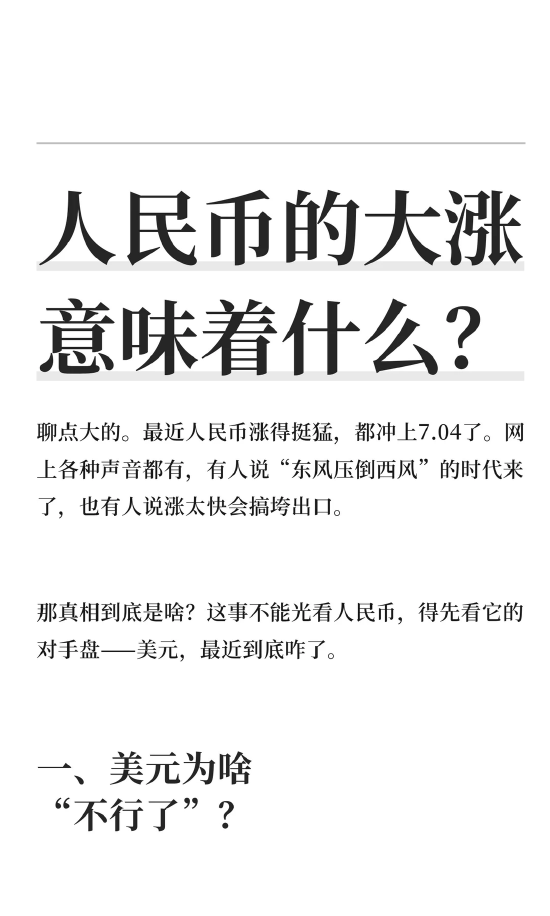
美元贬值

Search documents
破7入6!人民币重返6时代,钱袋子悄悄变厚,你的钱更值钱
Sou Hu Cai Jing· 2025-12-28 00:23
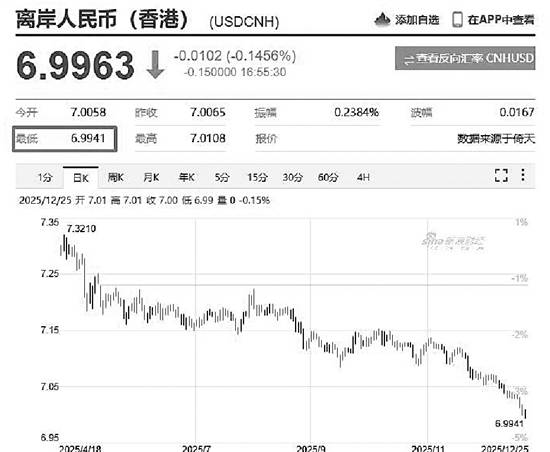
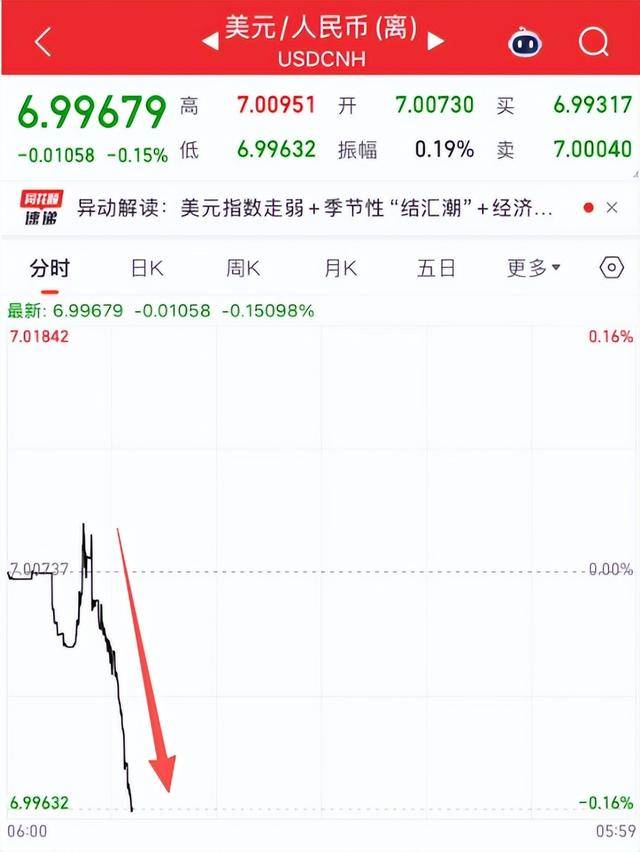
Core Viewpoint - The offshore RMB has broken the 7.0 mark against the USD, reaching a high of 6.9973, marking a significant moment in global finance and indicating a shift in the global currency landscape [2] Group 1: RMB Strength and Economic Context - The RMB's rise to the "6 era" reflects a robust recovery of the Chinese economy after challenges, showcasing its resilience [2] - In 2025, the USD index experienced a nearly 8% decline, the largest annual drop in nine years, driven by structural economic issues in the U.S. [3] - The U.S. Federal Reserve's three interest rate cuts in 2025 diminished the attractiveness of USD-denominated assets [3] Group 2: Global Currency Dynamics - Global central banks are reducing their USD reserves due to concerns over the U.S. debt expansion, leading to a diversification of currency reserves [4] - The perception of the USD as a safe haven is weakening, prompting capital to seek new opportunities, with China emerging as a preferred destination [4] Group 3: Trade Surplus and Economic Foundations - China's trade surplus surpassed $1 trillion in the first 11 months of 2025, a historic achievement indicating strong net earnings from global markets [6] - The composition of the trade surplus has shifted from low-value goods to high-value products like automobiles and advanced machinery, enhancing the credibility of the RMB [8] Group 4: Policy and Market Stability - The People's Bank of China has maintained a stable RMB without resorting to competitive devaluation, demonstrating strategic policy strength [9] - The relative stability of the China-U.S. interest rate differential has kept RMB assets attractive, evidenced by significant foreign capital inflows into Chinese government bonds [9] Group 5: Long-term Outlook for RMB - The RMB's return to the "6 era" suggests a likely long-term appreciation trend, supported by ongoing productivity improvements in China [11] - The current low allocation of global capital to Chinese assets compared to its economic size indicates potential for future inflows [11] Group 6: Opportunities and Challenges - RMB appreciation presents opportunities to lower import costs and combat inflation, while also posing short-term challenges for export-oriented businesses [13] - The recent RMB strength may signify a pivotal moment for the currency's transition from a regional to a global reserve currency [13]

A Diminishing Dollar Could Make Room For Gold Rallies
Etftrends· 2025-12-26 19:42
Core Insights - The price of gold has experienced a significant rally in the latter months of 2025 [1] Industry Summary - The gold market has shown strong performance, indicating a potential shift in investor sentiment towards safe-haven assets [1]
美元大跌10%,人民币破7背后,这是美国谋划的金融迷局?
Sou Hu Cai Jing· 2025-12-26 17:58
Group 1 - The recent appreciation of the Renminbi (RMB) against the US dollar is largely attributed to the weakening of the dollar due to the Federal Reserve's interest rate cuts, rather than a strong performance of the RMB itself [1][4] - The RMB has appreciated approximately 4.5% to 6% since the beginning of the year, while the US dollar index has declined nearly 10%, indicating a relative weakness of the dollar [1][4] - The appreciation of the RMB has mixed implications for different sectors; it benefits importers and students studying abroad by reducing costs, while it poses challenges for export-oriented businesses facing reduced competitiveness [6][9] Group 2 - Export-oriented companies are experiencing pressure as the appreciation of the RMB makes their products more expensive in international markets, potentially leading to a loss of orders and profit margins [6][10] - The end-of-year "settlement tide" drives demand for RMB as export companies convert their dollar earnings into RMB for year-end payments, contributing to the RMB's appreciation [12][10] - Despite the RMB's appreciation against the dollar, it has depreciated against a basket of other currencies, which helps maintain price competitiveness for exports to regions like Europe and Japan [14][10] Group 3 - Market sentiment can amplify the RMB's appreciation, leading to self-reinforcing cycles of investment based on expectations of further appreciation, which could create volatility [15][16] - Financial authorities emphasize the importance of stability in the RMB exchange rate, implementing measures to prevent excessive fluctuations that could disrupt business operations and personal financial plans [15][16] - Experts recommend that businesses and individuals focus on their core operations and manage currency risk through financial instruments, rather than speculating on currency movements [18][19]
【招银研究|资本市场专题】美股告别估值扩张:美元效应减退、AI隐忧渐显
招商银行研究· 2025-12-26 09:17
Core Viewpoint - The coexistence of a weak dollar and strong US stocks this year is attributed to the resonance of macro cycles and industrial transformation, with the AI wave providing substantial support and outlook for the industry [2][11]. Group 1: Macro Drivers - The depreciation of the dollar has a mid-term positive impact on US stocks, as they are negatively correlated; a 10% decline in the dollar index can lead to a 2-3% increase in S&P 500 revenues [24][29]. - The international revenue exposure of S&P 500 companies is rising, with approximately 41% of revenues expected to come from outside the US by 2024, indicating a high degree of internationalization among larger firms [13][19]. - The technology sector has the highest international revenue exposure at 59%, benefiting significantly from a weaker dollar, while other sectors like utilities and finance remain more domestically focused [16][22]. Group 2: AI as a Driving Force - The AI sector has not yet reached a bubble, but concerns are emerging; the current high valuations are supported by strong fundamentals, with significant demand for computing power [39][44]. - The financing model for tech giants is shifting from cash flow-driven to debt-driven, with capital expenditures expected to rise significantly, raising concerns about sustainability and return on investment [57][59]. - The demand for AI capabilities is projected to grow, with McKinsey estimating a need for $6.7 trillion in capital expenditures for global data centers by 2030, indicating a robust growth trajectory for AI-related investments [50]. Group 3: Investment Outlook - The US stock market is expected to transition from a dual driver of earnings and valuation to a single driver focused on earnings, with a predicted earnings growth of 11.8% in 2025 and 14.2% in 2026 [67][75]. - Despite high valuations, the market is not in a bubble; the focus should be on earning growth rather than betting on further valuation expansion [79]. - The technology and materials sectors are recommended for investment, as they offer a favorable balance of growth and valuation, with technology being the primary beneficiary of the AI wave [82].





中金:维持超配黄金但淡化黄金价格点位预测
Xin Hua Cai Jing· 2025-12-26 01:07
Core Viewpoint - The current report from the CICC macro asset team suggests that the Federal Reserve remains in a loose monetary cycle, and the U.S. economy is facing stagflation, indicating that the gold bull market may continue until a turning point in U.S. policy and economy is observed [1] Group 1: Gold Market Outlook - The gold bull market may not have ended as the Federal Reserve's policies and the U.S. economy have not shown signs of a turning point [1] - Market volatility is expected to increase as gold prices have diverged from fundamental indicators, making specific price predictions challenging [1] - A potential turning point is anticipated in early 2026, where rising inflation and marginal economic improvement may lead the Federal Reserve to slow its easing pace, which could temporarily pressure gold prices [1] Group 2: Factors Supporting Gold Prices - Gold prices recently surpassed $4,500 per ounce, reaching a historical high due to three main factors: 1. The Federal Reserve's resumption of the easing cycle, having cut rates three times by 25 basis points each and planning to purchase short-term government bonds starting in December [2] 2. A decline in the credibility of the U.S. dollar, with the fiscal deficit rising to around 6% post-pandemic, leading to increased debt risks and concerns over the independence of the Federal Reserve [2] 3. Escalating global geopolitical risks, including U.S. sanctions on Venezuelan oil exports and ongoing tensions in the Russia-Ukraine conflict, which enhance gold's appeal as a safe-haven asset [3] Group 3: Silver Market Dynamics - Silver prices have seen even greater increases than gold, influenced by industrial supply and demand factors [3] - The demand for silver is expected to rise in sectors such as photovoltaics, new energy vehicles, and electronic equipment, while supply expansion remains limited, leading to tighter supply-demand dynamics [3]
老张的8400美元存一年 算算账反而“亏”了一笔
Sou Hu Cai Jing· 2025-12-25 23:36
Core Viewpoint - The appreciation of the Renminbi (RMB) against the US dollar has led to negative returns on US dollar deposits, impacting individuals' investment decisions and costs for families with students studying abroad [4][5][6]. Exchange Rate Trends - The offshore RMB has appreciated against the US dollar, surpassing the 7 mark for the first time in nearly 15 months, with a maximum rate of 6.9941 [4]. - As of December 31, 2024, the offshore RMB exchange rate was 7.3338, reflecting a year-on-year increase of 4.63% [4]. Impact on Investments - The significant appreciation of the RMB has resulted in negative returns for US dollar deposits. For instance, an individual who deposited 8,400 USD at a 2.8% interest rate earned 254.8 USD, but the RMB equivalent decreased by 1,071 RMB compared to the beginning of the year [5]. - Another individual holding US Treasury bonds with a 5% yield saw their returns diminish when converted to RMB, yielding only 6,710 RMB, which is slightly above the return from a one-year RMB fixed deposit [5]. Cost Implications for Families - The appreciation of the RMB has reduced the cost of studying abroad for families. For example, a family preparing to pay tuition found that the exchange rate had improved, saving them over 17,000 RMB compared to earlier in the year [6]. Economic Factors Influencing Exchange Rates - The continuous appreciation of the RMB is attributed to several factors, including an expanding trade surplus, increased demand for RMB due to export companies needing to settle accounts, and a weakening US dollar index, which has declined by 9.74% this year [7]. - The euro, pound, and Australian dollar have all appreciated against the US dollar, indicating a broader trend of dollar depreciation [7]. Future Outlook - Experts suggest that the current period is a favorable time for currency exchange for families with immediate needs, although the long-term outlook for the RMB will depend on economic fundamentals and monetary policies from central banks, including the Federal Reserve [7].
中金:黄金牛市还能走多远?
中金点睛· 2025-12-25 23:36
Core Viewpoint - The article discusses the significant rise in gold prices, which have recently surpassed $4,500 per ounce, driven by three main factors: the Federal Reserve's resumption of a loose monetary policy, the declining credibility of the US dollar, and escalating global geopolitical risks [2][4][6]. Group 1: Federal Reserve's Monetary Policy - The Federal Reserve has restarted its easing cycle after maintaining interest rates for nine months, having cut rates three times by 25 basis points each since September [2]. - The Fed's forward guidance indicates potential further rate cuts in 2026, contributing to a more accommodative monetary environment that supports gold prices [2]. Group 2: Declining Credibility of the US Dollar - The US fiscal deficit has risen to around 6% post-pandemic, significantly higher than pre-pandemic levels, leading to increased debt risks [4]. - Concerns over the independence of the Federal Reserve have grown due to political interference, particularly with the upcoming nomination of a new Fed chair, which has contributed to a 10% decline in the US dollar index this year [4]. Group 3: Global Geopolitical Risks - Recent US sanctions on Venezuelan oil exports have escalated into maritime interception actions, while the Ukraine conflict remains unresolved, increasing geopolitical tensions [6]. - Gold's safe-haven attributes are benefiting from these geopolitical risks, with silver prices rising even more significantly due to industrial demand factors [6]. Group 4: Gold Market Dynamics - The current gold bull market has lasted for three years, with a 2.7 times increase in price, but the article cautions against assuming perpetual price increases, emphasizing the importance of data models for investment decisions [8]. - Historical analysis shows that gold bull and bear markets have relatively balanced durations, with gold experiencing the longest single bear market among major asset classes [8]. Group 5: Future Price Predictions - The article suggests that while the gold bull market may continue due to the current economic conditions, the price has already exceeded the short-term valuation model, indicating potential for volatility [18]. - The long-term price forecast for gold has been raised to between $3,300 and $5,000 per ounce, reflecting a significant increase from previous estimates [16]. Group 6: Investment Recommendations - The company recommends maintaining an overweight position in gold while being cautious of potential price corrections in early 2026 as the Fed's easing expectations may taper [19]. - There is a suggestion to adjust commodity allocations to standard levels and to remain overweight in Chinese stocks, while being cautious with bond investments due to high valuations [20].

人民币杀回“6时代”!两年半首次破7,你的钱袋子突然鼓了
Sou Hu Cai Jing· 2025-12-25 20:55
Core Viewpoint - The offshore RMB has surged past the 7.0 mark against the USD for the first time since 2024, reaching a high of 6.9968, marking a significant moment for the currency [1][3]. Group 1: Reasons for RMB Appreciation - The appreciation of the RMB is attributed to both external and internal factors. Externally, the weakening of the USD due to soft economic data and the Federal Reserve's shift to a rate-cutting stance has created a favorable environment for the RMB [6]. - Internally, China's trade surplus has exceeded 1 trillion USD for the first time in history, highlighting the strength of the Chinese economy and its critical role in global supply chains [8][10]. Group 2: Impact on Daily Life and Economy - The strengthening of the RMB enhances purchasing power for consumers, particularly benefiting those involved in overseas shopping and travel, as costs for foreign goods and services decrease [11]. - For the broader economy, while Chinese exports may face price pressures due to a stronger RMB, domestic consumers and importers will benefit from lower costs for USD-denominated goods, potentially reducing production and living expenses [12]. Group 3: Policy Implications - The RMB's rise above 7.0 may open up opportunities for monetary policy adjustments, particularly in terms of interest rate cuts, as the pressure to maintain exchange rate stability diminishes [14]. - This shift could allow for more aggressive measures to stimulate domestic demand and lower financing costs for the real economy [14]. Group 4: Overall Economic Resilience - The recent appreciation of the RMB reflects the resilience and substantial scale of the Chinese economy, as evidenced by the record trade surplus achieved through competitive manufacturing [16][17]. - The market's response indicates a renewed confidence in the Chinese economy, suggesting that as long as internal strengths are maintained, external challenges can be navigated effectively [17].
刚刚!标普500创历史新高,牛市还能继续吗?美股慢牛真相扎心了!
Sou Hu Cai Jing· 2025-12-25 13:55
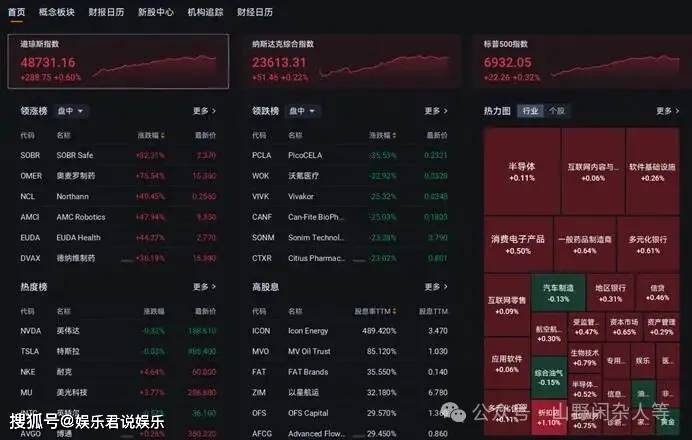
Group 1 - The S&P 500 index reached a historical high, indicating a broad market rally rather than a fear of missing out (FOMO) [3][5] - The VIX index, which measures market volatility, has dropped to a historical low range of 13-14, suggesting a calm market environment and high risk appetite [3][5] - High Beta stocks like NVDA, AMD, and META are favored by investors, leading to a slow but steady upward movement in the market [3][5] Group 2 - The S&P 500 index is projected to target the range of 6930-6950, with potential to reach 6980, as the Nasdaq is expected to follow suit [5][7] - Current market conditions indicate that high valuations are supported by a favorable financial environment, including lower long-term interest rates and a shift in Federal Reserve policy [7][11] - The market is characterized by a wealth concentration where the top 1% of Americans hold nearly 50% of stock assets, indicating a disparity in economic benefits [9][11] Group 3 - The dollar index has decreased by nearly 10% this year, leading to a decline in purchasing power for cash holders, prompting a shift towards hard assets like gold and silver [11][13] - Individual stock movements include Intel's volatility due to reported issues with Nvidia, and Tim Cook's purchase of Nike shares, which is seen more as a sentiment boost rather than a turnaround for the company [13][15] - The current market is described as a "slow bull" phase, where patience is key, and strategies should focus on high selling and low buying [15][17]
人民币大涨:对你我有何影响?
Xin Lang Cai Jing· 2025-12-25 08:16
来源:郑经 简单说,美元最近像是个过气的明星,有点黯淡。 今年美联储降了三次息,美元指数跌破了90,年内 跌了超过8%。大家对他的热情,肉眼可见地降 温。 1. 经济基本盘在好转:咱们前三季度GDP增速稳在 5%以上,出口连续正增长,尤其像新能源汽车、 锂电池这些"新东西"出口很猛。这是支撑汇率的 底气。 2. 年底"结汇潮"汹涌:每年四季度,外贸企业都 要把赚的美元换成人民币(结汇)。今年大家预期 人民币升值,更急着换,形成"越涨越换,越换越 涨"的循环。市场里等着换回人民币的美元,是个 不小的数字。 3. 中美经济周期"错位"了:用个简单比喻,美国 经济在"踩刹车",而我们在艰难"爬坡过 坎"后,开始"轻踩油门"了。一边在挤泡沫,另 一边在攒后劲。货币强弱,说到底就是国力强弱的 镜子。 为啥会这样? 几个原因: 1. 美国经济有点"虚":最直观的是就业,失业率 升到了4.6%,新增就业人数断崖式下跌。这说明企 业收缩,消费乏力,经济在减速。 2. 政治开始"指挥"央行:特朗普放话要找个听话 的美联储主席。一旦央行失去独立性,印钞就变成 了政治工具,大家对美元的信任自然会打折扣。一 个信用基石松动了的货币, ...