物理AI

Search documents
五一视界尾盘涨超8%刷新上市新高 较招股价实现翻倍
Zhi Tong Cai Jing· 2026-01-15 07:43
Core Viewpoint - Five One Vision (06651) shares surged over 8% to a new high of 66.5 HKD, doubling from the IPO price of 30.5 HKD, indicating strong market interest and investor confidence in the company's growth potential [1] Company Overview - Five One Vision is a technology company focused on cloning Earth's 5.1 million square kilometers, investing heavily in three main areas: 3D graphics, simulation, and artificial intelligence [1] - The company has developed three core businesses: 51Aes (digital twin platform), 51Sim (intelligent driving simulation platform), and 51Earth (digital earth platform), which are widely used by over a thousand large and medium-sized enterprises globally [1] Market Presence - The company's operations span 19 countries and regions, showcasing its international reach and the applicability of its technologies [1] - Five One Vision has established a complete physical AI closed-loop ecosystem consisting of "synthetic data - spatial intelligent models - simulation training platforms," positioning itself as one of the few companies globally with all three elements of physical AI [1] Application Areas - The company has implemented benchmark cases of physical AI in various sectors, including intelligent driving, transportation hubs, smart factories, and smart energy [1]
港股异动 | 五一视界(06651)尾盘涨超8%刷新上市新高 较招股价实现翻倍
智通财经网· 2026-01-15 07:40
Core Viewpoint - Five One Vision (06651) shares surged over 8% to a new high of 66.5 HKD, doubling from its IPO price of 30.5 HKD, indicating strong market interest and investor confidence in the company's growth potential [1] Company Overview - Five One Vision is a technology company focused on cloning Earth's 5.1 million square kilometers, investing heavily in three main areas: 3D graphics, simulation, and artificial intelligence [1] - The company has developed three core businesses: 51Aes (digital twin platform), 51Sim (intelligent driving simulation platform), and 51Earth (digital earth platform), which are widely used by over a thousand large and medium-sized enterprises globally [1] Business Model and Ecosystem - Five One Vision has established a complete physical AI closed-loop ecosystem consisting of "synthetic data - spatial intelligent models - simulation training platforms," making it one of the few companies globally with all three elements of physical AI [1] - The company has implemented benchmark cases of physical AI in various sectors, including intelligent driving, transportation hubs, smart factories, and smart energy [1]
英特尔亮出AI PC王牌:酷睿Ultra
Tai Mei Ti A P P· 2026-01-15 07:08
Core Insights - Intel has launched the Core Ultra processors based on the new Panther Lake platform, marking a significant advancement in semiconductor manufacturing with the introduction of the Intel 18A process technology [2][3] - The company anticipates 2026 to be a pivotal year for the industry, with a surge in AI, computing, and process technology [2] - The Core Ultra processors demonstrate enhanced CPU performance, leading GPU integration, and improvements in energy efficiency, gaming performance, connectivity, and AI capabilities [2] Manufacturing Technology - The Core Ultra processors utilize Intel's 18A process technology, featuring backplane power delivery and a mixed architecture of performance cores, efficiency cores, and LPE efficiency cores [3] Performance Metrics - The Panther Lake platform supports up to 27 hours of battery life, with CPU performance improved by 60%, graphics performance by 77%, and overall AI performance doubled compared to the previous generation [4] - The new platform achieves a total computing power of 180 TOPS, capable of running large models with 700 billion parameters, and features a low-power NPU with 50 TOPS, enhancing inference performance by 2 times [4] AI Strategy and Market Position - Intel supports over 350 independent software developers and more than 900 AI models for local deployment, indicating rapid growth in the AI PC ecosystem [6] - The company plans to release the first Core Ultra-equipped PCs globally on January 27, with a total computing power equivalent to 40 data centers [6] - Intel's strategy includes the simultaneous launch of edge processors and corresponding PC versions, aiming to accelerate AI deployment in various sectors [6] Market Outlook - Following the restart of its wafer foundry business, Intel aims to validate its manufacturing technology through product performance and market success, which is crucial for future advancements [8] - The capital market outlook for Intel is optimistic, with a 32% increase in stock price year-to-date as of January 14, 2026, and a notable 10.6% rise over two days [8]



2026年,半导体市场10大关注点
芯世相· 2026-01-15 04:23
Core Viewpoint - The global semiconductor market is expected to be dominated by AI, particularly in the data center sector, while demand for consumer electronics like PCs and smartphones remains stagnant [2][3]. Group 1: NVIDIA and AI - NVIDIA continues to emphasize its leadership in AI, with plans to launch the new product "Rubin" in 2026, potentially priced between $100,000 and $120,000 [4][6]. - The company is focusing on "physical AI" applications, which are essential for real-world implementations such as autonomous driving and robotics [6]. Group 2: TSMC's Market Position - TSMC's market share in the foundry business is projected to exceed 60% in 2024 and possibly 70% in 2025, maintaining its dominance in advanced process technologies [7]. - TSMC has begun mass production of 2nm technology, with Apple expected to be its first major customer [7]. Group 3: Intel's Manufacturing Challenges - Intel's manufacturing division is facing significant financial losses, with a reported $20 billion loss in the manufacturing sector for the fiscal year 2024, raising concerns about its long-term viability [8]. - Discussions about potential funding and management for Intel's manufacturing operations are ongoing, but no concrete plans have emerged [8]. Group 4: Semiconductor Market Growth - The global semiconductor market is forecasted to grow from $772.2 billion in 2025 to $975.5 billion in 2026, translating to approximately 151.2 trillion yen [11]. - Japan's semiconductor industry is at risk of declining market share, potentially falling below 5% due to rapid global market growth driven by AI [11]. Group 5: DRAM Market Dynamics - The DRAM market is experiencing volatility due to increased demand from AI applications, with contract prices rising sharply [16]. - There are concerns that aggressive investments in DRAM production could lead to a market downturn in the latter half of 2026 [16]. Group 6: Emerging Competitors - Chinese power device manufacturers are gaining competitiveness, with a significant portion of the market share in power devices expected to shift towards them [17]. - The potential for oversupply in the power device market is a risk that needs monitoring as demand dynamics evolve [17]. Group 7: Nexperia's Market Position - Nexperia holds a 20% market share in the small signal transistor market, with over 50% of its revenue coming from the automotive sector, indicating potential vulnerabilities [19]. Group 8: TSMC's Expansion in Japan - TSMC's expansion in Japan is becoming increasingly important, with plans to introduce advanced process nodes in its facilities, despite current underutilization of existing capacity [20].



新思官宣:出售ARC业务
半导体行业观察· 2026-01-15 01:38
Core Viewpoint - GlobalFoundries (GF) has signed a definitive agreement to acquire Synopsys' ARC processor IP solutions business, which will enhance GF's capabilities in custom chip solutions and accelerate its roadmap in physical AI applications [1][2]. Group 1: Acquisition Details - The acquisition includes ARC-V, ARC-Classic, ARC VPX-DSP, and ARC NPX NPU product lines, along with ASIP processor tools such as ASIP Designer and ASIP Programmer [1]. - Post-acquisition, these assets and teams will be integrated into MIPS, a subsidiary of GF, to provide a comprehensive suite of processor IP tailored for physical AI applications [1]. Group 2: Strategic Implications - The integration of Synopsys' ARC technology will enable scalable and energy-efficient processing solutions, enhancing GF's ability to serve markets such as wearables, robotics, and advanced AI chips [1]. - Tim Breen, CEO of GF, emphasized that this acquisition lowers the barriers for customers to adopt key technologies, facilitating faster innovation in next-generation computing and AI applications [2]. Group 3: Future Outlook - The acquisition is subject to customary closing conditions, including regulatory approvals, and is expected to be completed in the second half of 2026 [2]. - Synopsys will retain and continue to expand its extensive design IP product portfolio, which includes logic libraries, embedded memory, interface IP, security IP, and subsystems [2].



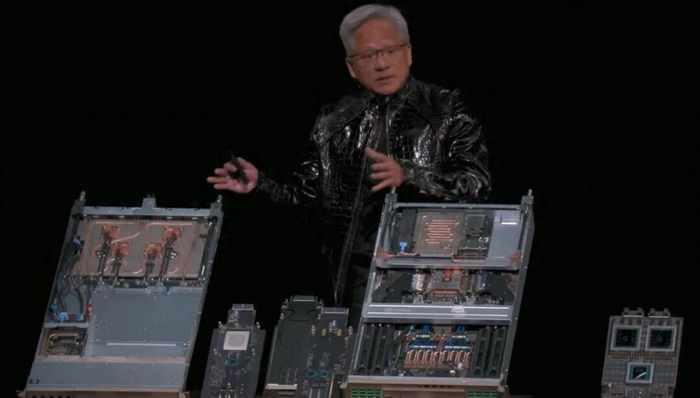
黄仁勋彻底不装了!一口气亮出6颗全新芯片,马斯克都看呆了!
Xin Lang Cai Jing· 2026-01-14 23:37
Core Viewpoint - Nvidia's CEO Jensen Huang unveiled six new AI chips at CES 2026, marking a significant shift in the company's approach to AI technology, which he claims will revolutionize the industry [1][3]. Group 1: Product Innovation - The introduction of the new Vera Rubin platform increases chip performance by five times and significantly reduces inference costs, indicating a leap in efficiency for future AI applications [3]. - This launch represents a departure from Nvidia's historical pattern of releasing one or two core chips, suggesting a complete redesign of their product strategy [3]. Group 2: Competitive Landscape - Despite Nvidia's dominance in the AI chip market, emerging competitors like Huawei's Ascend, Cambricon, and BYD's self-built AI training clusters pose significant challenges [5]. - Major clients such as Google, Microsoft, and Meta are shifting towards in-house chip development, exemplified by Google's TPU chip potentially replacing Nvidia's H100, which led to an 8% drop in Nvidia's market value [5]. Group 3: Strategic Moves - Huang has expressed concerns about being in a state of "technical bankruptcy," as AI model parameters are expanding at a rate of ten times per year, while chip performance improvements are nearing physical limits [7]. - Nvidia's acquisition of Groq for $20 billion is a strategic move to counter the trend of "de-Nvidia-ization" in the industry, positioning Groq as a key asset in this effort [8]. Group 4: Future Vision - Huang is betting on the concept of "physical AI," envisioning AI systems that will operate in the real world, enhancing human interaction and understanding [10]. - The demonstration of a vehicle navigating autonomously in real-world conditions showcases the capabilities of Nvidia's technology, which integrates a 10 billion parameter visual-language-action model [10]. Group 5: Market Positioning - Following the recent product launch, Nvidia's role is shifting from merely selling tools to becoming a key player in the AI market, with ambitions to create an operating system that allows AI to perceive and interact with the physical world [12].
“活着就有机会”,冬天里的造车新势力
汽车商业评论· 2026-01-14 23:07
Core Viewpoint - The article discusses the recent milestones achieved by Chinese electric vehicle manufacturers NIO, Xpeng, and Leap Motor, highlighting their growth and strategic directions in the evolving automotive market, particularly in the context of the 2026 automotive landscape [3][5][8]. Group 1: Milestones and Achievements - NIO reached a significant milestone of producing 1 million vehicles on January 6, 2026, marking a critical point in its growth trajectory [8][12]. - Xpeng and Leap Motor also achieved the 1 million vehicle production mark in late 2025, with Xpeng hitting this milestone on November 21, 2025, and Leap Motor on September 25, 2025 [11][12]. - The time taken for each company to reach 1 million vehicles varied, with NIO taking approximately 7 years and 8 months, while Leap Motor achieved it in about 6 years [12]. Group 2: Strategic Directions - NIO's focus for 2026 includes launching larger, high-margin vehicles, with a goal of achieving profitability [13][27]. - Xpeng is expanding its range of extended-range vehicles, with plans for multiple new models, indicating a shift in strategy to meet market demands [15][30]. - Leap Motor aims for aggressive growth, setting a sales target of 1 million vehicles for 2026 and aspiring to reach an annual sales volume of over 4 million vehicles in the next decade [32]. Group 3: Market Context and Competition - The article notes that the competition among the new energy vehicle manufacturers has intensified, with each company striving to establish a strong market presence [7][19]. - Leap Motor emerged as the top seller among new energy vehicle manufacturers in 2025, delivering 596,555 vehicles, a 103% increase year-on-year [19][21]. - Xpeng and NIO also reported significant growth, with Xpeng delivering 429,445 vehicles (up 126%) and NIO delivering 326,028 vehicles (up 46.9%) [21]. Group 4: Future Outlook - Industry leaders express cautious optimism for 2026, with NIO's management indicating a focus on steady growth rather than ambitious targets [27][28]. - Xpeng's CEO emphasizes the importance of maintaining a balanced approach while capitalizing on global market opportunities [30]. - Leap Motor's CEO envisions a future where multiple Chinese manufacturers achieve significant sales volumes, potentially capturing a large share of the global automotive market [32].



CES上的“物理AI”拐点:Robotaxi走向规模化,人形机器人供应链悄然形成
硬AI· 2026-01-14 15:22
Core Insights - Deutsche Bank predicts that 2026 will mark the year of large-scale deployment for Robotaxis and humanoid robots, transitioning from testing to commercialization [2][3] - The report emphasizes the emergence of a new supply chain for humanoid robots, with suppliers shifting focus to achieve mass production [3][5] Group 1: Humanoid Robot Supply Chain - The supply chain for humanoid robots is taking shape, with actuators becoming the "muscle" entry point [4] - Schaeffler aims to be a key supplier of actuators for humanoid robots, showcasing a compact integrated planetary gear actuator at CES [6] - Hyundai Mobis plans to supply actuators for Boston Dynamics' Atlas, leveraging the automotive supply chain for manufacturing [7] Group 2: Onboard Chip Landscape - Nvidia remains the dominant player in onboard processors for humanoid robots due to performance and ease of use, with various companies utilizing its Jetson Orin or Thor [8][9] - Tesla and Xpeng are developing their own inference chips, indicating a diversification in the chip landscape [9] Group 3: Physical AI Transition - A significant paradigm shift is observed from pre-programmed actions to visual-language-action (VLA), enabling robots to reason and complete tasks [11][12] - The industry debate has shifted from "simulation vs. reality" to how to efficiently close the loop between the two [14] Group 4: Commercial Viability of Humanoid Robots - The report suggests that general-purpose humanoid robots will initially be deployed in specific scenarios to prove commercial viability before entering households [18][19] - Keenon Robotics holds a 40% global market share in service robots, with plans to showcase its humanoid robot XMAN-R1 at CES 2026 [20] Group 5: Cost Reduction and Scalability - Cost reduction in humanoid robots is driven by increased volume and improved supplier negotiations, with some companies reporting costs dropping from $200,000 to $100,000 [22][24] - Mobileye's Mentee project indicates that with an annual production of 50,000 units, manufacturing costs could drop to $20,000 per unit, and potentially to $10,000 with 100,000 units [24] Group 6: Robotaxi Commercialization Momentum - Deutsche Bank believes that 2026 will see stronger commercialization momentum for Robotaxis, with Tesla planning to launch its Robotaxi in 2025 [26][27] - Waymo has provided over 10 million paid rides since its inception, with plans to expand its service to international markets [27][28] Group 7: Nvidia's Alpamayo Platform - Nvidia introduced the Alpamayo platform for autonomous driving, aiming to lower the barrier for automakers to deploy advanced capabilities [30][31] - Despite the potential advantages, concerns remain about whether Nvidia can meet real-world edge cases compared to Tesla's data collection [31][32] Group 8: Industry Innovations - Aptiv showcased an end-to-end AI-driven ADAS platform, emphasizing cross-industry applications and real-time data sharing [33] - Visteon launched a SmartCore HPC domain controller with 700 TOPS, facilitating the integration of multiple sensors into a single system [35]

电话会议纪要(20260111):招商证券总量的视野
CMS· 2026-01-14 12:34
证券研究报告 | 行业联合报告 2026 年 01 月 14 日 招商证券 | 总量的视野 电话会议纪要(20260111) 研究部/总量研究 【宏观】1 月降息预期打消;【策略】2026 开年产业趋势新变化;【固收】开 年债市急跌的原因及后续展望;【银行】存款到期规模与可能的流向;【非银】 16 连阳,看好券商保险;【地产】REITs:25 年回顾及 26 年展望;【资配】 A 股择时轮动模型年度复盘及展望;【基金评价】公开募集证券投资基金销售 费用解读;【ESG】12 月国内 ESG 动态跟踪 【宏观 张岸天】1 月降息预期打消 12 月美国非农数据细节冷热参差,尽管私营部门就业增速放缓,整体上失业率 回落和时薪增速反弹的数据组合基本打消了海外市场对美联储1 月降息的预期。 分行业来看,周期性行业多表现疲弱,同时政府部门就业增速转正,DOGE 减 员的滞后统计影响出现消退。制造业连续三个月减员,录得-0.8 万人(前值-0.2 万人)。建筑业减员 1.1 万人(前值 2.2 万人),移民政策变化致使供需双弱。 零售业减员 2.5 万人(前值-1.7 万人),运输仓储业减员-0.7 万人(前值-2.5 万人 ...

苹果FaceID缔造者为“物理AI”打造端到端的感知系统,融资1.07亿美元
3 6 Ke· 2026-01-14 10:38
Core Insights - "Physical AI" has emerged as the next major development direction in AI, with industry consensus recognizing its potential despite previous challenges such as a lack of embodied intelligence data and immature world models [1][17] - Lyte, a startup founded by key architects behind Microsoft's Kinect and Apple's FaceID, aims to create an end-to-end perception system that integrates advanced 4D sensing, RGB imaging, and motion perception into a single platform [2][12] Company Overview - Lyte was co-founded by Alexander Shpunt (CEO), Arman Hajati, and Yuval Gerson, who have extensive backgrounds in depth sensing and perception technology [2][4] - The company recently secured $107 million in early-stage funding from investors including Avigdor Willenz, Fidelity, and Atreides Management [1] Technology and Innovation - Lyte's core technology, "coherent vision," captures both position and speed simultaneously, eliminating delays associated with traditional perception systems [9][10] - The LyteVision system is designed to provide a unified perception technology stack, integrating sensors, computing units, software, and algorithms into a single module [12][13] - The system is capable of real-time processing and understanding of dynamic environments, making it suitable for various applications including autonomous robots and self-driving vehicles [16][18] Market Potential - The AI robotics market is projected to reach $125 billion by 2030, yet over 60% of industrial companies lack the internal capabilities for autonomous robot automation [7] - As "Physical AI" evolves, the demand for perception capabilities is shifting from static and singular to generalized and real-time, presenting numerous opportunities for innovation [17][19]