猪周期

Search documents
千亿ETF大厂低位入局!业内首只!农牧渔ETF(159275)重磅开售
Xin Lang Ji Jin· 2025-09-08 01:16
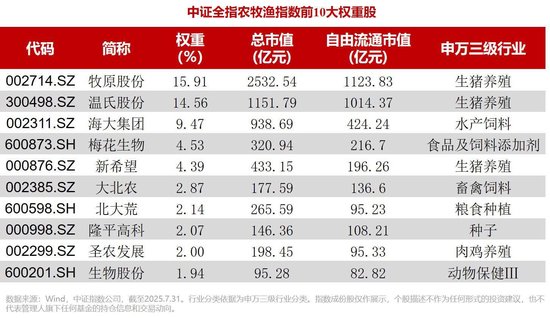
Core Viewpoint - The launch of the Agricultural, Animal Husbandry, and Fishery ETF (159275) by Huabao Fund is expected to capitalize on the recovery of the A-share market and the low valuation of the agricultural sector, particularly benefiting from the upward trend in the pig cycle [1][2][6]. Company Summary - Huabao Fund has served 64.12 million clients and generated a total profit of 83.2 billion yuan for fund holders, with cumulative dividends reaching 59.4 billion yuan as of June 2025 [1][5]. - The Agricultural, Animal Husbandry, and Fishery ETF (159275) is the first ETF in the market to track the CSI Agricultural, Animal Husbandry, and Fishery Index, which covers key sectors such as pig farming, aquatic feed, animal health, and seeds [1][4]. - Huabao Fund has a total asset management scale of 117.4 billion yuan in equity ETFs, solidifying its position as a leading institution in the ETF business [5]. Industry Summary - The agricultural sector has experienced a significant rebound following a prolonged downturn, with the CSI Agricultural, Animal Husbandry, and Fishery Index currently at a price-to-book ratio of 2.65, which is lower than similar indices [2][4]. - The pig farming industry is at a low price point, with limited downside potential, and is expected to see improved profitability for quality enterprises in the next 1-3 years due to a new normal of stable production and price increases [2][3]. - The seed industry is receiving increased attention from national policies, with advancements in biotechnology and the potential for accelerated commercialization of genetically modified crops [3].

需求支撑不足,猪价延续低位
Zhong Xin Qi Huo· 2025-09-05 05:17
1. Report Industry Investment Ratings - **Oils and Fats**: Expected to be volatile in the short term and likely to strengthen in the medium term [5] - **Protein Meal**: Expected to remain range - bound [5] - **Corn and Starch**: Short - term: Consider closing out short positions and look for short - selling opportunities on rebounds; Long - term: Support for low - buying in far - month contracts [6][7] - **Hogs**: Expected to be volatile. Spot and near - month prices are likely to be weak, while far - month contracts are supported by de - capacity expectations [1][7] - **Natural Rubber**: Expected to be volatile and slightly bullish in the short term [10] - **Synthetic Rubber**: Expected to be volatile and slightly bullish in the short term [11] - **Cotton**: Short - term: Range - bound; After new cotton is on the market: May face downward pressure [11][12] - **Sugar**: Expected to be volatile and slightly bearish in the long term; Short - term: Range - bound between 5500 - 5750 [15] - **Pulp**: Expected to be volatile [16] - **Logs**: Expected to be weak in the near term and stronger in the far term [18] 2. Core Views of the Report - The agricultural market shows a complex pattern with different trends for various products. The hog cycle is still in a downward phase in the short - to - medium term but may turn around in 2026 if de - capacity policies are implemented. Oils and fats are affected by factors such as weather, trade, and demand, with short - term volatility and medium - term upward potential. Protein meal is expected to remain range - bound. Other products like natural rubber, cotton, etc., also have their own supply - demand and market factors influencing their price trends [1][5] 3. Summary by Related Catalogs 3.1 Oils and Fats - **Logic**: Due to concerns about US soybean demand, US soybeans declined on Wednesday, and domestic oils continued to consolidate. The macro environment includes a weaker US dollar and falling crude oil prices. The US soybean growing area is affected by drought, and the export outlook is pessimistic. Domestic soybean imports are expected to decrease seasonally, and palm oil inventory accumulation may be limited. Rapeseed oil inventory is slowly falling but still high year - on - year [5] - **Outlook**: Short - term: Volatile adjustment; Medium - term: Likely to strengthen [5] 3.2 Protein Meal - **Logic**: International soybean prices are affected by weather, with a possible reduction in US soybean yields in the September report. Brazilian soybean premiums have adjusted, and US soybean exports are affected by the trade war. Domestically, the market is range - bound, and demand may improve as the temperature drops [5] - **Outlook**: Range - bound. Hold long positions at 2900 - 2910 and add positions on dips. Oil mills are advised to sell on rallies, and downstream enterprises can buy basis contracts or price at low levels [5] 3.3 Corn and Starch - **Logic**: Corn prices are generally stable, with local declines. Supply is affected by the release of old - crop inventory and the upcoming new - crop supply. Demand is weak as feed enterprises have sufficient inventory. The price difference between corn and wheat is increasing, and wheat substitution may decline [6][7] - **Outlook**: Short - term: Close out short positions and look for short - selling opportunities on rebounds; Long - term: Support for low - buying in far - month contracts [6][7] 3.4 Hogs - **Logic**: Supply is abundant in the short term, with an expected increase in the second half of the year. Demand shows a stable ratio of fat to lean pigs. Inventory weight has decreased slightly. In the long term, de - capacity policies may drive price increases in 2026 if implemented [1][7] - **Outlook**: Volatile. Spot and near - month prices are likely to be weak, while far - month contracts are supported by de - capacity expectations [1][7] 3.5 Natural Rubber - **Logic**: The price is range - bound between 157 - 161. There are many speculation themes, and the short - term supply is limited while demand is stable. The price may rise due to seasonality [10] - **Outlook**: Volatile and slightly bullish in the short term [10] 3.6 Synthetic Rubber - **Logic**: The price is range - bound, following natural rubber and supported by the cost of raw material butadiene. Butadiene supply is under no significant pressure, and demand is stable [11] - **Outlook**: Volatile and slightly bullish in the short term [11] 3.7 Cotton - **Logic**: The current low - inventory and improving - demand situation provides support for cotton prices. The expected increase in purchase prices is limited by the expected large increase in new cotton production. After new cotton is on the market, prices may face downward pressure [11][12] - **Outlook**: Short - term: Range - bound; After new cotton is on the market: May face downward pressure [11][12] 3.8 Sugar - **Logic**: International sugar production is expected to increase, and domestic imports are rising, resulting in downward pressure on prices [15] - **Outlook**: Long - term: Volatile and slightly bearish; Short - term: Range - bound between 5500 - 5750 [15] 3.9 Pulp - **Logic**: The decline is mainly due to the low acceptance of BCTMP pulp. After the 09 contract delivery, the pressure may be alleviated. The market shows a differentiated performance among different types of pulp [16] - **Outlook**: Volatile [16] 3.10 Logs - **Logic**: The price decline is due to lower foreign quotes and weaker domestic spot prices. The market is in a game between weak reality and peak - season expectations. Supply pressure will ease in the coming weeks [17][18] - **Outlook**: Weak in the near term and stronger in the far term [18]
九月出栏继续增加,猪价压力持续
Zhong Xin Qi Huo· 2025-09-03 07:01
1. Report Industry Investment Ratings - **Oils and Fats**: Oscillation [6] - **Protein Meal**: Oscillation [6] - **Corn/Starch**: Weak oscillation [7] - **Live Pigs**: Oscillation [8] - **Natural Rubber**: Oscillation [9] - **Synthetic Rubber**: Oscillation [12] - **Cotton**: Oscillation with a slight upward trend [13] - **Sugar**: Weak oscillation [15] - **Pulp**: Oscillation [16] - **Logs**: Weak oscillation [16] 2. Core Views of the Report - The supply of live pigs is expected to increase in the second half of 2025, and the pig price is under pressure. However, the "anti - involution" policy may lead to a turnaround in the pig cycle in 2026 [1][8]. - Oils and fats may continue to oscillate and adjust in the short term, but have a high probability of running strongly in the medium term [6]. - Protein meal is expected to continue to oscillate within a range, and attention should be paid to the support at the lower edge [6]. - The market sentiment for corn should not be overly pessimistic. Traders are pre - arranging to stock up, and there are opportunities for short - term profit - taking and long - term low - buying [7][8]. - The upward driving force of rubber prices is limited, but the downside support is strong, and the short - term trend is expected to be oscillating and slightly stronger [9][11]. - Synthetic rubber follows the oscillation of natural rubber, and the short - term trend is expected to be oscillating and slightly stronger [12]. - Cotton prices are expected to be oscillating and slightly stronger from now to early October, with the key to upward breakthrough being the purchase price. After the large - scale listing of new cotton, prices may be under pressure [13]. - Sugar prices are under increasing supply pressure and are expected to run weakly [15]. - The core driving force of pulp futures is difficult to determine, and the trend is expected to be oscillating [16]. - The log market is in a game between weak reality and peak - season expectations, and the short - term trend is expected to be weakly oscillating [16]. 3. Summary by Related Catalogs 3.1 Live Pigs - **Supply**: In the short term, the planned slaughter volume in September is expected to increase. In the medium term, the supply of commercial pigs in the second half of the year is expected to increase. In the long term, the "anti - involution" policy aims to eliminate excess capacity, but there are resistance to active production cuts [1][8]. - **Demand**: The temperature is getting cooler, the price difference between fat and lean pigs is expanding, and the price ratio of meat to pigs is stable [1][8]. - **Inventory**: The average slaughter weight decreased slightly this week, and the weight inventory is higher than the same period last year, with the main goal of destocking before the National Day [1][8]. - **Outlook**: Before the National Day, the spot and near - month pig prices are expected to remain weak. The far - month contract prices are supported by the expectation of supply - side capacity reduction, presenting a pattern of "weak reality + strong expectation" [2][8]. 3.2 Oils and Fats - **Macro Environment**: The market focuses on the Fed's September monetary policy expectations, and the US dollar is oscillating weakly. Attention should be paid to geopolitical situations and US crude oil supply and demand [6]. - **Industrial End**: The drought - affected area of US soybeans is expanding, and the export demand of US soybeans is affected by Sino - US trade relations. The inventory of domestic soybeans and rapeseed has different trends, and attention should be paid to trade negotiations and policies [6]. - **Outlook**: In the short term, oils and fats may continue to oscillate and adjust. In the medium term, they are more likely to run strongly [6]. 3.3 Protein Meal - **International Situation**: The excellent rate of US soybeans is high, and attention should be paid to weather changes. The discount of Brazilian soybeans has been adjusted, and the export of US soybeans is affected by the trade war [6]. - **Domestic Situation**: The spot price is stable, and the downstream demand is expected to improve. There is no supply gap before December, and attention should be paid to trade relations and national reserve auctions [6]. - **Outlook**: The internal - external price difference may be repaired, and it is expected to oscillate within a range [6]. 3.4 Corn/Starch - **Supply**: The inventory of old - crop corn is decreasing, and new - crop corn is about to be listed. There are doubts about whether there will be a supply gap during the transition period [7][8]. - **Demand**: The downstream inventory is seasonally low, and the procurement intention of large feed enterprises is low, but small enterprises in South China are replenishing stocks [8]. - **Outlook**: In the short term, short - term short positions are recommended to take profits, and opportunities to short on rebounds can be waited for. In the long term, there is a low - buying opportunity [7][8]. 3.5 Natural Rubber - **Market Information**: The prices of various rubber products and raw materials have different changes, and the global natural rubber production and consumption have different trends [9]. - **Logic**: The upward driving force of rubber prices is limited, but the downside support is strong. There are many speculative themes, and the short - term supply may decrease while the demand is rigid [9][11]. - **Outlook**: The short - term trend is expected to be oscillating and slightly stronger [11]. 3.6 Synthetic Rubber - **Market Information**: The prices of butadiene rubber and butadiene have different trends [12]. - **Logic**: The synthetic rubber market follows the natural rubber market, and the short - term tightness of raw material butadiene provides cost support [12]. - **Outlook**: The short - term trend is expected to be oscillating and slightly stronger [12]. 3.7 Cotton - **Supply**: The commercial inventory of cotton is at a low level in the same period, and the supply pattern is tight before the new cotton is listed [13]. - **Demand**: The downstream demand is gradually picking up, and the orders are increasing [13]. - **Purchase**: The expected purchase price of seed cotton by ginners may increase, but the expected large increase in new cotton production will suppress the increase [13]. - **Outlook**: From now to early October, it is expected to be oscillating and slightly stronger, and the key to upward breakthrough is the purchase price. After the large - scale listing of new cotton, prices may be under pressure [13]. 3.8 Sugar - **International Market**: In the new crushing season, the sugar production in Brazil, Thailand, and India is expected to increase [15]. - **Domestic Market**: The domestic sugar is in the pure sales period, and the import volume is increasing [15]. - **Outlook**: The supply pressure is increasing, and the sugar price is expected to run weakly [15]. 3.9 Pulp - **Market Situation**: The pulp futures have been weak, and the main reason for the decline is the low market acceptance of Brilliant Needle pulp [16]. - **Outlook**: The internal contradictions of the pulp market are divided, and the trend is expected to be oscillating [16]. 3.10 Logs - **Market Situation**: The log market is in a game between weak reality and peak - season expectations, with some positive factors such as cost support and reduced supply pressure [16]. - **Outlook**: The short - term trend is expected to be weakly oscillating [16].
农业行业周报:建议关注饲料的回升周期和养殖的边际改善-20250902
Shanxi Securities· 2025-09-02 10:52
Investment Rating - The report maintains an investment rating of "Buy-A" for Hai Da Group and "Buy-B" for Sheng Nong Development, with several other companies rated as "Increase-A" or "Increase-B" [3][4][5]. Core Insights - The agricultural sector has shown a market performance with the CSI 300 index increasing by 2.71% and the agricultural sector rising by 2.02% during the week of August 25 to August 31 [2][20]. - The report highlights a recovery cycle in the feed industry and marginal improvements in livestock farming, suggesting potential growth opportunities [4][5]. - The report indicates that the current market sentiment may be overly pessimistic regarding the impact of rising pig production capacity on profitability, while it overlooks the positive effects of declining raw material costs and potential macro demand recovery in 2025 [5][6]. Summary by Sections Swine Farming - As of August 29, the average prices for external three yuan pigs in Sichuan, Guangdong, and Henan were 13.25, 14.84, and 13.73 yuan/kg, reflecting a week-on-week change of -2.21%, -3.57%, and 0.00% respectively [3][28]. - The average pork price was 19.94 yuan/kg, down 0.80% from the previous week, while the average wholesale price for piglets remained stable at 26.00 yuan/kg [3][28]. - The self-breeding profit was 32.24 yuan/head, while the profit from purchasing piglets was -148.41 yuan/head [3][28]. Poultry Farming - As of August 29, the weekly price for white feather broilers was 7.33 yuan/kg, remaining unchanged from the previous week, while the price for broiler chicks increased by 0.84% to 3.61 yuan/chick [3][43]. - The profit from broiler farming was reported at 1.37 yuan/chick, and the egg price was 7.24 yuan/kg, down 0.82% [3][43]. Feed Processing - In July 2025, the total industrial feed production in China was 28.31 million tons, reflecting a month-on-month increase of 2.3% and a year-on-year increase of 5.5% [50]. - The report notes a significant decline in the factory prices of feed products, with the proportion of corn in compound feed at 33.1% and soybean meal at 14.1% [50]. Aquaculture - As of August 29, the prices for sea cucumbers, shrimp, and bass were stable at 90.00 yuan/kg, 320.00 yuan/kg, and 50.00 yuan/kg respectively [57]. - For freshwater products, the price of grass carp was 16.73 yuan/kg, up 0.54%, while the prices for crucian carp and carp showed slight fluctuations [57]. Crop and Grain Processing - As of August 29, the spot price for soybeans was 4005.79 yuan/ton, with corn and wheat prices at 2364.71 yuan/ton and 2428.89 yuan/ton respectively, showing slight declines [65]. - The report indicates that the prices for various mushroom products remained stable during the same period [65].



巨星农牧(603477):2025年半年报点评:存栏量提升叠加成本优化,业绩向好态势延续
Minsheng Securities· 2025-09-02 06:25
Investment Rating - The report maintains a "Recommended" rating for the company, indicating an expected stock price increase of over 15% relative to the benchmark index [4]. Core Views - The company achieved significant revenue growth in the first half of 2025, with total revenue reaching 3.717 billion yuan, a year-on-year increase of 66.49%, and a net profit attributable to shareholders of 181 million yuan, up 504.12% [1][2]. - The increase in revenue is primarily driven by a substantial rise in pig output, which reached 1.9096 million heads, marking a 74.47% year-on-year increase [2]. - The company is focusing on biological farming as its main track, showcasing strong cost control capabilities and production efficiency [2][3]. - The "Dechang Project" is progressing steadily, expected to enhance the company's breeding capacity significantly once fully operational [3]. Summary by Sections Financial Performance - In Q2 2025, the company reported revenue of 2.072 billion yuan, a year-on-year increase of 61.34% and a quarter-on-quarter increase of 25.92%. However, net profit for Q2 was 52 million yuan, down 44.66% year-on-year and 60.22% quarter-on-quarter [1]. - The leather products segment generated 101 million yuan in revenue, up 176.78% year-on-year, although it has not yet turned profitable due to low market prices [2]. Production and Efficiency - The company has optimized pig production management, achieving a PSY (Pigs Weaned per Sow per Year) of 28.56, which is competitive within the industry range of 25-29 heads [2]. - The feed-to-meat ratio improved to 2.57, and the survival rate for fattening pigs increased, with a target production cost of 6.50 yuan per jin for 2025 [2]. Future Outlook - The company forecasts net profits of 320 million yuan, 531 million yuan, and 655 million yuan for 2025, 2026, and 2027 respectively, with corresponding EPS of 0.63 yuan, 1.04 yuan, and 1.28 yuan [4][7]. - The anticipated increase in pig output and improved production efficiency are expected to drive future performance, with a favorable market outlook as the second half of 2025 approaches [3][4].

巨星农牧:上半年商品猪养殖成本约6.16元/斤 现有猪场产能利用率约85%|直击业绩会
Xin Lang Cai Jing· 2025-09-01 07:01
Core Viewpoint - The company, Juxing Agriculture and Animal Husbandry, has achieved profitability in the first half of 2025, driven by high growth in pig sales and effective cost control measures [1][2] Group 1: Financial Performance - In the first half of 2025, the company reported a sales revenue of 3.432 billion yuan, a year-on-year increase of 66.49% [2] - The net profit attributable to shareholders was 181 million yuan, compared to a loss of 44.84 million yuan in the same period last year [2] - The company’s pig output reached 1.9096 million heads, representing a year-on-year growth of 74.47% [1] Group 2: Cost Management - The cost of pig farming for the first half of 2025 was approximately 6.16 yuan per kilogram [1] - The company has implemented a dual approach of "technology + management" to enhance production management and reduce costs [1] - Key measures include genetic improvement, strict biosecurity management, and optimizing breeding process management [1] Group 3: Capacity and Utilization - The company currently has a breeding capacity of over 180,000 pigs and aims to increase this capacity in an orderly manner [1] - The utilization rate of existing pig farms is approximately 85% [1] - The company plans to integrate quality capacity resources to improve capacity utilization [1] Group 4: Debt Management - As of the end of the first half of 2025, the company's debt-to-asset ratio was 64.57%, having increased for four consecutive quarters [2] - The company plans to keep the debt-to-asset ratio below 60% in the future [2]
生猪养殖专题系列:一个时代的结束,一个新时代的到来
2025-09-01 02:01
Summary of the Livestock Farming Industry Conference Call Industry Overview - The traditional pig cycle model has changed, with smallholders increasingly engaging in fattening rather than breeding, leading to reduced production volatility [1][2] - The top 35 pig farming companies now hold approximately 36% market share, indicating increased industry concentration and smaller production fluctuations [1][2] Government Policies - Since 2022, the government has implemented capacity regulation policies aimed at stabilizing market prices and controlling production [3] - Policies include setting targets for sow inventory, with a target of 39.5 million sows by July 2025, while actual slaughter numbers reached 40.42 million [3] - Adjustments to slaughter weights are also part of the measures to stabilize production and prices, addressing CPI pressures [3] Future Trends - The pig farming industry is expected to transition to a new normal characterized by stable production and price maintenance, moving away from growth and cyclical volatility [4] - Large-scale enterprises will continue to expand, benefiting from more stable production control [4][5] Company Spotlight: Muyuan Foods - Muyuan Foods has a long-term selling price assumption of 14 RMB per kilogram, with costs reduced to 11.8 RMB per kilogram, leading to a long-term average cost of approximately 11.5 RMB per kilogram [5] - The profit per kilogram is 2.5 RMB, translating to a profit of 300 RMB per pig [5] - The company's annual profit is projected to exceed 25 billion RMB, with free cash flow estimated between 35 billion to 50 billion RMB, while its current market capitalization of 300 billion RMB is considered significantly undervalued [5] Investment Opportunities - There is a sector-wide opportunity for valuation reconfiguration among high-quality pig farming stocks [6] - Given the strong profitability and stable cash flow of large-scale companies like Muyuan Foods, active investment in high-quality pig farming stocks is recommended under the new normal of stable production and price maintenance [6]

财通基金沈犁:深耕能力圈 到鱼多的地方捕鱼
Shang Hai Zheng Quan Bao· 2025-08-31 14:15
Core Viewpoint - The article highlights the investment strategies and performance of Shen Li, a fund manager at Caitong Fund, emphasizing the importance of expanding one's investment capability circle and maintaining a balanced portfolio to achieve consistent positive returns in the public fund industry [4][5]. Group 1: Investment Strategy - Shen Li has successfully managed the Caitong New Vision Mixed A fund, achieving positive returns for six consecutive accounting years since 2019, with a remarkable 118.88% return over the past year as of August 25 [4][5]. - The strategy involves reducing exposure to single industries and utilizing the negative correlation between sectors such as consumption, technology, and cyclical industries to hedge risks [9]. - Shen Li emphasizes the importance of maintaining a balanced portfolio to avoid over-concentration in any single sector, which can lead to biased decision-making and poor responses to market changes [8][9]. Group 2: Market Adaptation - In 2022, Shen Li focused on investment opportunities in the livestock industry, capitalizing on the "pig cycle" as a rare investment opportunity within the consumer sector, which contributed to his positive performance amidst a challenging market [6]. - In 2023, he adopted a more stringent selection process within the consumer sector, balancing his portfolio across food and beverage, pharmaceuticals, electronics, and chemicals, particularly targeting stocks at the cyclical bottom [6][7]. Group 3: Future Focus Areas - Shen Li is currently concentrating on emerging fields such as AI hardware and semiconductors, while also keeping an eye on traditional and new consumer sectors, as well as livestock investment opportunities [7][11]. - The AI industry is viewed as a major driver of economic growth, with significant investment interest and increasing penetration across various downstream sectors [11]. - The trend towards domestic semiconductor production is accelerating, with a second upward cycle for semiconductor companies since 2018, driven by factors such as AI-induced replacement demand and domestic production [11][12].

温氏股份(300498):2025H1盈利持续兑现,畜禽养殖效率继续改善
Minsheng Securities· 2025-08-31 10:44
Investment Rating - The report maintains a "Recommended" rating for the company [6]. Core Views - The company reported a revenue of 49.87 billion yuan for H1 2025, a year-on-year increase of 6.7%, and a net profit attributable to shareholders of 3.47 billion yuan, up 161.8% year-on-year [1]. - The company has shown stable growth in pig production, with 16.617 million pigs sold in H1 2025, a 15.6% increase year-on-year, and revenue from pig sales reaching 32.74 billion yuan, a 16.3% increase year-on-year [2]. - The chicken production metrics remain stable, with 600 million chickens sold in H1 2025, a 9.2% increase year-on-year, although revenue from chicken sales decreased by 9.3% year-on-year [3]. - The company's balance sheet is improving, with a debt-to-asset ratio of 50.6%, down 8.4 percentage points year-on-year, and cash reserves of 2.5 billion yuan [4]. - The company is expected to achieve net profits of 7.806 billion yuan, 10.310 billion yuan, and 11.449 billion yuan for the years 2025 to 2027, with corresponding EPS of 1.17 yuan, 1.55 yuan, and 1.72 yuan [4]. Summary by Sections Financial Performance - H1 2025 revenue was 49.87 billion yuan, with a net profit of 3.47 billion yuan, marking significant growth [1]. - The company achieved a stable growth in pig production, with a total of 16.617 million pigs sold, contributing to a revenue of 32.74 billion yuan [2]. - Chicken sales totaled 600 million, with a revenue of 15.13 billion yuan, despite a decrease in average selling price [3]. Cost Management - The comprehensive cost of pig farming decreased to 12.4 yuan/kg, a reduction of approximately 2.4 yuan/kg year-on-year [2]. - The comprehensive cost of chicken farming was reduced to 11.2 yuan/kg, down 1.2 yuan/kg year-on-year [3]. Balance Sheet and Cash Flow - The company's debt-to-asset ratio improved to 50.6%, and cash reserves stood at 2.5 billion yuan [4]. - The net cash flow from operating activities was 6.47 billion yuan, an increase of 11.3% year-on-year [4]. Future Outlook - The company is projected to see a recovery in profitability in the second half of 2025, coinciding with the traditional consumption peak [4]. - The expected net profits for 2025 to 2027 indicate a positive trend in earnings growth [4].
河南夫妻养猪,2天就赚一个亿
盐财经· 2025-08-29 10:01
Core Viewpoint - The article highlights the remarkable performance of Henan-based companies in various sectors, particularly focusing on the success of the pork industry led by Muyuan Foods, which has achieved significant profit growth despite declining pork prices in the market [2][4][11]. Group 1: Company Performance - Muyuan Foods reported a staggering net profit of 10.53 billion yuan in the first half of 2025, a year-on-year increase of 1,169.77% compared to 829 million yuan in the same period of the previous year [8][9]. - The company's revenue surged by 34.46% to 76.46 billion yuan, showcasing its strong market position [8][9]. - The daily net profit of Muyuan Foods reached approximately 58.18 million yuan, indicating robust financial health [10]. Group 2: Cost Management and Efficiency - Muyuan Foods successfully reduced its breeding costs from 13.1 yuan per kilogram in January to 11.8 yuan in July 2025, with some facilities achieving costs below 11 yuan [13]. - The company proactively reduced the number of breeding sows to control production capacity, demonstrating its commitment to industry stability [14]. - Muyuan Foods has significantly decreased its soybean meal usage in feed to 4.9%, resulting in substantial cost savings and a reduction in reliance on imported soybeans [19][20]. Group 3: Industry Dynamics - The pork industry is characterized by a cyclical nature, but the demand for pork remains stable as it is a staple in the Chinese diet, ensuring a consistent market [28][29]. - The article emphasizes that the key to survival in the pork industry lies in improving efficiency, maintaining quality, and reducing costs [29][31]. - Muyuan Foods is investing 6 billion yuan to establish a global breeding platform, aiming to enhance its breeding capabilities and reduce dependence on foreign genetics [32][33]. Group 4: Technological Innovation - The company employs advanced technology and data analytics in its operations, with a dedicated team of over 1,200 for research and development [24]. - The integration of smart systems in pig farming has led to improved animal welfare and reduced operational costs [24]. - The article suggests that the transformation of traditional industries through technology is essential for long-term success [24].