债务危机

Search documents
通用股份易主:原大股东红豆集团陷亏损、质押、逾期、冻结四大困境
Xin Lang Cai Jing· 2025-06-20 09:02
Group 1 - General Shares announced the completion of a share transfer from its former controlling shareholder, Hongdou Group, to Jiangsu Suhao Holding Group, resulting in a change of actual controller to Jiangsu State-owned Assets Supervision and Administration Commission [1][2] - Hongdou Group is facing a severe debt crisis, with total liabilities reaching 37.109 billion yuan and a debt ratio of 66.91% as of Q3 2024 [2][4] - The debt structure is concerning, with 2.55 billion yuan of bonds maturing in 2025, accounting for over half of the total bond balance of 4.75 billion yuan [2] Group 2 - Hongdou Group has experienced liquidity issues, evidenced by multiple overdue bills and the suspension of commercial bill acceptance services due to overdue payments [3][4] - The company has been forced to pledge assets to secure financing, including a 100% pledge of its shares in Lianan Life Insurance and significant pledges of shares in Hongdou Shares [4][7] - Hongdou Shares reported its first annual loss in 24 years, with a net profit drop of 893.8% to -238 million yuan, which is equivalent to the total net profit from 2020 to 2023 [4][6] Group 3 - The decline in Hongdou Shares' performance is attributed to a sluggish men's clothing market and strategic missteps, including a failed investment in the lithium battery sector [6][7] - The management instability, including the sudden resignation of the chairman, has compounded the company's challenges [7] - Despite the turmoil at Hongdou Group, General Shares has shown relatively stable performance, with a revenue increase of 37.39% to 6.958 billion yuan and a net profit increase of 72.81% to 374 million yuan in 2024 [7] Group 4 - The transfer of control of General Shares marks a significant shift for Hongdou Group, which now only retains the loss-making Hongdou Shares and a New Third Board-listed company, Zisong Pharmaceutical [8] - The group's core assets have been divested in a short period, indicating a rapid decline in its financial health [8] - The freezing of shares in Wuxi Xishang Bank, valued at approximately 154 million yuan, further illustrates the financial distress faced by Hongdou Group [8]


桥水基金创始人Ray Dalio:美债危机问答实录
对冲研投· 2025-06-18 11:30
Core Viewpoint - The article discusses the potential for a debt crisis in the U.S., highlighting the historical patterns of large debt cycles and the current indicators suggesting an impending crisis [2][12]. Group 1: Large Debt Cycles - Large debt cycles can be measured through three dimensions: 1) the ratio of government debt interest payments to fiscal revenue; 2) the amount of debt the government needs to issue relative to market demand; 3) the scale of central bank purchases of government debt to compensate for insufficient demand [3]. - These indicators have been rising over the long term, leading to severe consequences such as debt interest payments squeezing other fiscal expenditures, oversupply of debt causing interest rates to rise, and central banks printing money leading to currency devaluation [4][5]. - Signs of debt deterioration can be quantified, indicating that a debt crisis is approaching, akin to an "economically induced heart attack" [6]. Group 2: Historical Comparisons - The current situation has numerous historical precedents, with almost all countries experiencing similar processes, often leading to the collapse of their monetary systems [9][10]. - The author gained insights from personal experiences in sovereign debt markets, which provided an advantage during the 2008 financial crisis and the European debt crisis from 2010 to 2015 [11]. Group 3: Current Concerns - There is significant concern regarding the potential for a "heart attack-like" debt crisis in the U.S., as all conditions for such a crisis are present, yet market awareness remains low [12][13]. - The triggers for a U.S. debt crisis could be a synchronous resonance of three factors, with policy decisions playing a crucial role in either accelerating or delaying the crisis [14]. Group 4: Misconceptions about U.S. Debt - Some believe that the U.S. is less vulnerable to a debt crisis due to the dollar's status as the global reserve currency, overlooking the fundamental principle that currency and debt must serve as effective stores of wealth to avoid devaluation [17][18]. Group 5: Lessons from Japan - Japan's high debt levels have not led to a crisis, but this should not provide comfort, as the Japanese experience illustrates poor investment returns on government bonds and significant losses compared to other asset classes [19]. Group 6: Recommendations for the U.S. - The government should aim to reduce the fiscal deficit to around 3% of GDP through a balance of spending cuts and tax increases to mitigate risks [20]. - This reduction could lower interest rates to approximately 1.5%, decrease debt interest payments by about 2% of GDP, and stimulate asset prices and economic activity [21]. - Recommendations for investors include diversifying asset classes and countries, reducing exposure to debt assets like bonds, and increasing holdings in non-government issued currency assets such as gold and a small amount of Bitcoin [22].


日本撑不住了?债市危机扩散,美债、比特币谁才是靠谱避风港?
Sou Hu Cai Jing· 2025-06-18 10:52
Group 1: Japan's Economic Challenges - Japan is facing a structural economic crisis characterized by an aging population, with over 30% of its citizens aged 65 and above, leading to increased burdens on the working-age population [3] - The government debt-to-GDP ratio has exceeded 260%, the highest among developed countries, as the government resorts to excessive borrowing to sustain its economy [4] - The current economic stability relies on the assumption of perpetually low interest rates, which poses a risk if rates rise, potentially collapsing the fiscal budget [5] Group 2: Impact of Low Interest Rates - Japan's ultra-low interest rates have facilitated a global financial strategy known as yen carry trade, where international investors borrow yen at low costs to invest in higher-yielding assets [7][10] - The potential cessation of this "free money" could lead to a significant withdrawal of capital from high-risk assets, impacting global asset prices [10] Group 3: Interest Rate Shift and Its Consequences - Starting in 2024, the Bank of Japan is expected to raise interest rates, which could disrupt the existing financial framework built on zero interest rates [10] - A rise in borrowing costs may lead to a loss of confidence in the Japanese government's ability to service its debt, resulting in a decline in demand for Japanese government bonds [10][15] Group 4: Global Financial Implications - Japan holds over $1 trillion in U.S. Treasury bonds, making it a critical player in global finance; any reduction in its bond holdings could lead to increased borrowing costs for the U.S. government [13][15] - The interconnectedness of global markets means that Japan's financial issues could trigger a broader crisis, affecting other developed economies facing similar demographic and debt challenges [18] Group 5: Emerging Investment Trends - The potential crisis in Japan raises questions about the reliability of traditional safe-haven assets like government bonds, leading to a shift in investor trust towards decentralized assets like Bitcoin [18][20] - Bitcoin is being viewed as a hedge against currency devaluation and systemic risks, with significant institutional interest from traditional financial players [20]

36万亿债务压顶!利息比军费还高!美国财政的定时炸弹已启动
Sou Hu Cai Jing· 2025-06-15 23:12
一场迫在眉睫的危机正笼罩着美国经济,如同一个对债务上瘾的病人,美国的财政状况已岌岌可危。债务雪球越滚越大,利息支出已逼近无法承受的临界 点。专家警告,美国正步入"高债务、高赤字、高利率"的恶性循环,全球市场可能在三年内面临剧烈震荡。 国债危机:全球市场风声鹤唳 美国政府的债务总额已高达惊人的 36 万亿美元,平均每个美国公民背负着 10 万美元的债务。更令人担忧的是,2024 年美国偿还国债利息的支出预计将达 到 9800 亿美元,超过 8800 亿美元的国防预算。摩根大通的 CEO 尖锐地指出,国债市场正处于崩溃的边缘。桥水基金的创始人也表达了类似的担忧。 日本国债市场的遭遇就是一个警示。30 年期日本国债价格暴跌,收益率在一年内翻了一番,导致多家大型保险公司损失惨重。而美国的情况更为严峻,高 达 70% 的债务将在五年内到期,需要借新还旧。如果利率持续高企,美国政府的财政预算将不堪重负。 反常现象:经济繁荣下的债务狂潮 传统的经济规律是,经济繁荣时期,政府支出减少,债务降低;经济衰退时期,政府通过刺激政策增加支出,导致债务上升。然而,自 2017 年以来,美国 打破了这一规律。尽管失业率持续下降,政府却在 ...

从0到600亿,华安黄金ETF的故事
点拾投资· 2025-06-08 12:32
Core Viewpoint - The article emphasizes the significance of gold as a long-standing investment asset, particularly in the context of economic uncertainty and geopolitical tensions. It highlights the historical performance of gold during financial crises and its appeal as a safe-haven asset in modern investment strategies. Group 1: Historical Context and Investment Insights - Gold has been a symbol of wealth and status in Chinese culture for over 4000 years, predating paper currency as a form of money [1] - The 2008 financial crisis showcased gold's resilience, as it was one of the few assets that appreciated while others plummeted [1][2] - The article recounts a personal anecdote about recommending gold investments during a politically charged environment, reflecting the ingrained belief in gold as a reliable asset [1] Group 2: Notable Investors and Their Strategies - John Paulson, a hedge fund manager, gained fame by betting against the U.S. housing bubble in 2005, using credit default swaps (CDS) as a strategic tool [5][7] - Paulson's successful shorting of the subprime mortgage market during the 2008 crisis led to significant profits, establishing him as a prominent figure in hedge fund management [8] - Following his success, Paulson began investing heavily in gold, believing it to be the best hedge against economic instability and inflation [8] Group 3: Current Trends and Innovations in Gold Investment - Ray Dalio, another influential hedge fund manager, has also advocated for gold as a hedge against currency devaluation and economic crises, emphasizing its role in wealth preservation [9][10] - Dalio describes gold as a "purest form of wealth storage," highlighting its advantages in terms of liquidity and privacy compared to other assets [11] - The article discusses the innovation of gold ETFs, which have made gold investment more accessible to the general public, allowing for low-cost entry and ease of trading [13][16] Group 4: Growth of Gold ETFs - The Huashan Gold ETF, launched in 2013, has grown significantly from an initial size of under 200 million to over 60 billion by 2025, reflecting increasing investor interest [19] - The article notes the importance of educational initiatives to promote gold investment, with extensive outreach conducted by the ETF's management team [18] - The growth trajectory of the Huashan Gold ETF illustrates the evolving landscape of gold investment in China, aligning with global trends of seeking safe-haven assets [19][22]

债瘾难戒!欧美最怕的事:全世界债券义勇军,联合起来
Hua Er Jie Jian Wen· 2025-06-06 09:41
Group 1 - A concerning signal is emerging in the global bond market as governments plan record levels of debt issuance while investors are quietly retreating [1][2] - The recent poor performance of Japan's 20-year government bond auction, with a bid-to-cover ratio dropping to 2.5, marks the worst result since 2012, indicating a significant decline in investor appetite [2][3] - The U.S. also faced a lackluster response in its 20-year bond auction, with a bid-to-cover ratio of 2.46, the lowest since February, reflecting a broader issue of diminishing demand for long-term government debt [2][4] Group 2 - The supply of long-term government bonds is increasing due to both government issuance and central bank sales, while demand is falling as traditional buyers like pension funds withdraw from the market [3][4] - In the UK, traditional defined benefit pension funds are no longer accepting new members, leading to a reduced demand for long-term debt, which is being replaced by hedge funds favoring short-term bonds [3][4] - Similar trends are observed in Japan, where the aging population is less inclined to hold long-term debt [3][4] Group 3 - The global imbalance of supply and demand for long-term bonds is evident, with T Rowe Price's Amanda Stitt noting that the era of cheap long-term financing has ended, leading to increased competition among governments for buyers [4][10] - Rising long-term bond yields are becoming a political issue, with increasing debt interest costs threatening government spending in various countries [10][11] - In the U.S., interest payments on public debt are projected to exceed $1 trillion for the first time in fiscal year 2024, highlighting the growing burden of debt servicing [10][11] Group 4 - Governments are exploring options to manage the situation, such as issuing more short-term debt and reducing long-term debt sales, but experts warn that without significant economic growth, cutting excessive spending is the only sustainable solution [11][12] - Concerns are rising about a potential fiscal-driven stagnation, where increased government borrowing could crowd out private investment and lead to a prolonged low-growth scenario [11][12] - The future of global debt management hinges on whether governments can avoid a sudden reckoning, as indicated by the actions of the so-called "bond vigilantes" [11][12]
美国三大死穴曝光!GDP注水、航母生锈、国债压顶
Sou Hu Cai Jing· 2025-06-05 11:21
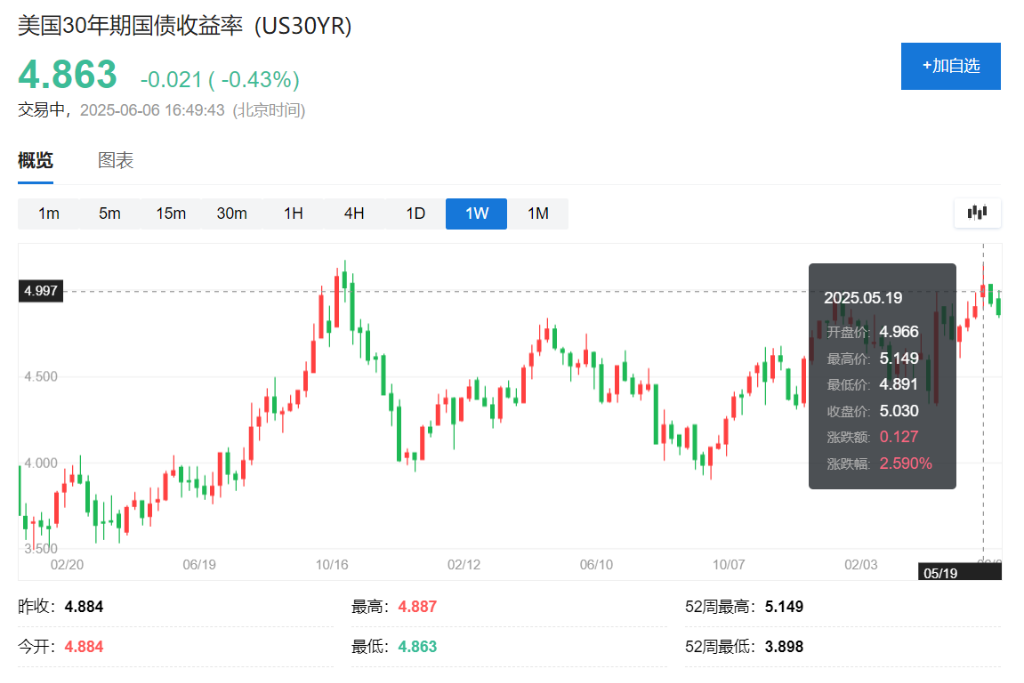
Economic Weakness: Financial Magic of Wall Street - The U.S. boasts a GDP exceeding $29 trillion, yet its manufacturing sector has shrunk to only 11% of the economy, relying on foreign countries like Japan for essential materials [4][6] - The comparison of purchasing power reveals that China accomplishes tasks with $18 trillion GDP that the U.S. requires $29 trillion to achieve [4] - During the pandemic, the U.S. struggled to produce basic medical supplies, highlighting a significant gap in capabilities compared to China [4] Military Illusion: Rusty Aircraft Carriers and Overpriced Supplies - Despite having 11 aircraft carriers, only about 4 are operational, with high failure rates in advanced systems like the Ford-class carrier [6] - The Pentagon faces corruption issues, with exorbitant prices for basic items, indicating inefficiencies in military spending [6] - The U.S. military's performance in conflicts has been poor, exemplified by the 20-year engagement in Afghanistan that ended with a swift Taliban takeover [6] Debt Crisis: $36 Trillion Debt Burden - The U.S. government faces immense pressure from daily interest payments of $2 billion, with total national debt sufficient to purchase the entire European Union [7][8] - A significant portion of the population lacks health insurance, and many middle-class families struggle to survive financially during unemployment [7] - The decline of the dollar's credibility is evident as countries increasingly turn to alternative currencies for trade, with central banks selling U.S. debt and accumulating gold [7]

中美日一季度GDP差距断崖,美国7.32万亿,日本1.02万亿,中国呢
Sou Hu Cai Jing· 2025-06-04 10:05
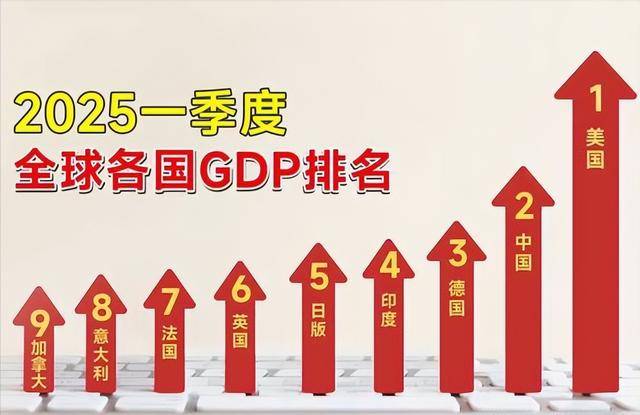
Economic Overview - The GDP data for Q1 2025 shows the United States leading with a GDP of $7.32 trillion, followed by China at $4.44 trillion, Germany at $1.14 trillion, and Japan at $1.02 trillion [4][3][19] - The U.S. economy experienced a quarter-on-quarter contraction of 0.2% to 0.3%, marking the first decline in three years, while China's GDP grew by 5.4% year-on-year, the highest growth rate among major economies [3][19] United States Economic Analysis - The U.S. economy's GDP of $7.32 trillion reflects a significant figure, but it is accompanied by a 0.3% quarter-on-quarter shrinkage [4][3] - A surge in imports by 41% in Q1, driven by previous tariffs, temporarily boosted GDP but resulted in inventory accumulation, which negatively impacted GDP by 4.8 percentage points [7] - The U.S. federal government recorded a deficit of $700 billion in Q1, with total debt reaching $36 trillion, which is approximately 140% of GDP [9][11] Japan Economic Analysis - Japan's GDP for Q1 was approximately $1 trillion, but it faced a quarter-on-quarter decline of 0.2%, marking the first negative growth in four quarters [11][14] - The Japanese economy has been adversely affected by international trade issues, particularly the U.S.-China trade war, leading to increased export costs and reduced profits for about 10% of companies [14][16] - Rising prices, such as a 60% increase in rice prices, have not translated into increased consumer spending, resulting in a decline in exports and a drop in GDP [16][18] China Economic Analysis - China's GDP growth of 5.4% in Q1 is attributed to the robust development of green energy, with renewable energy installations accounting for 90% of new capacity [21][19] - The digital economy also saw a significant increase, with a 9.4% year-on-year revenue growth, driven by emerging technologies like live-streaming and AI [21][23] - Despite a 4.6% increase in retail sales, there are concerns about real estate risks and income disparity, which may hinder domestic consumption [23][25] - China is transitioning from labor-intensive industries to technology-driven sectors, achieving notable progress in areas like new energy vehicles and semiconductors [25][29]
G7债务水平飙升,市场开始紧张了!
Hua Er Jie Jian Wen· 2025-06-03 07:13
报道称,飙升的政府债务水平正成为G7国家的一个压力点,债券投资者将目光投向了那些在改善财政 状况方面做得不够的国家。IMF数据显示,预计未来五年,七国集团中有四个经济体的债务与gdp之比 将上升。 当穆迪评级5月剥夺了美国"最后一个AAA评级",再加上日本国债拍卖遭遇16年来最冷遇时,全球债券 投资者的目光聚焦美国和日本的国债市场。 从市场表现来看,美国和日本国债市场的担忧居前,而英国、法国等其他G7国家的国债市场同样令投 资者担忧。 6月3日,据路透社报道,G7国家庞大的债务负担正成为市场新的压力点。虽然债务危机可能不是最基 本的情况,但警钟已开始敲响。 美国:从避风港到风暴眼 早在4月所谓"对等关税"之后,美国多次遭遇股债汇三杀,那时美债市场的剧烈抛售已经敲响警钟。除 了关税之外,特朗普的"大漂亮"法案更是令债务问题雪上加霜: 据无党派智库负责任联邦预算委员会(Committee for a Responsible Federal Budget)估算, 该法案到2034年可能使债务增加约3.3万亿美元。 5月穆迪的降级决定又给了美债一重击,而摩根大通CEO戴蒙(Jamie Dimon)日前警告债券市场出 ...
美国的债务危机,导火索已经在日本被点燃
Sou Hu Cai Jing· 2025-05-27 08:26
Group 1 - The Japanese bond market's sudden turmoil has raised alarms in the global financial community, with Japan's central bank unexpectedly raising interest rates, leading to a lack of buyers for its debt [1][3] - Japan's economic strength has diminished, with its manufacturing and technology sectors losing competitiveness, resulting in increasing fiscal deficits that rely on borrowing [3][5] - Japan's debt has surpassed 2.5 times its GDP, and with interest rates rising to nearly 3%, the sustainability of this debt is in question [3][5] Group 2 - Japan holds over $1 trillion in U.S. Treasury bonds, which it may need to sell to stabilize its economy, but this could trigger a loss of confidence in the U.S. debt market [5][9] - The U.S. currently has over $36 trillion in debt, with annual interest payments between $800 billion and $1 trillion, and projected fiscal deficits could reach $2 trillion to $3 trillion by 2025 [5][9] - Japan's automotive industry, its last remaining competitive sector, is under pressure from China's electric vehicle market, threatening its fiscal revenue and increasing the risk of default [7][9] Group 3 - The global financial landscape is changing, with capital no longer blindly pursuing U.S. Treasuries, indicating potential risks in the bond market [9] - Japan's financial struggles may signal broader issues within the U.S. fiscal system, suggesting that the next financial crisis could be ignited by these underlying tensions [9]