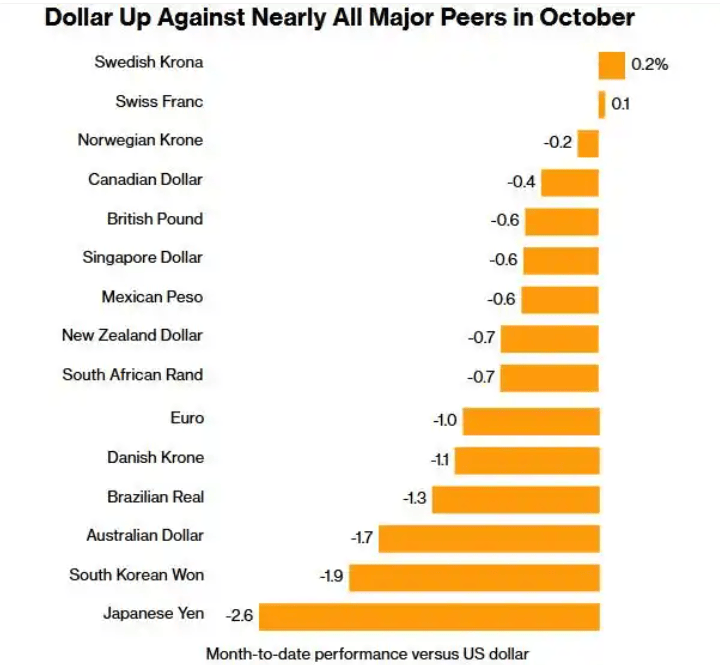
美元走势

Search documents
“新债王”Jeffrey Gundlach:金价还有进一步回调空间
Sou Hu Cai Jing· 2025-10-31 15:04
Core Viewpoint - Jeffrey Gundlach, CEO of DoubleLine Capital, warns that the current gold market is "overheated" and anticipates a potential downward adjustment in gold prices despite previous significant increases [1][4][18] Group 1: Gundlach's Investor Status - Gundlach is recognized as the "Bond King" and has a substantial influence in the fixed income sector, managing a large asset management firm, DoubleLine Capital [6] - His insights on macroeconomic factors, interest rates, inflation, and the dollar are often seen as forward-looking indicators in the market [6] Group 2: Recent Gold Market Trends - Gold prices have experienced a strong increase since 2025, attributed to inflation, geopolitical risks, and a weakening dollar [6] - Gundlach has reduced his gold allocation in his portfolio from approximately 25% to about 10%, indicating a shift in his perspective on gold's attractiveness [6][4] Group 3: Key Aspects of Gundlach's Perspective - Gundlach's adjustment in gold allocation reflects his belief that the recent price surge has already factored in macroeconomic concerns, leading to increased risk [4][18] - He emphasizes the need for investors to avoid blindly chasing gold prices and to consider a broader asset allocation strategy to mitigate risks [8][13] Group 4: Inflation and Interest Rate Outlook - Gundlach projects that U.S. inflation will remain around 3% or higher, which typically exerts upward pressure on nominal interest rates [7] - He suggests that the yield curve may steepen as high inflation and rising nominal rates could pressure asset valuations [7] Group 5: Potential Triggers for Gold Price Correction - Possible factors that could trigger a decline in gold prices include lower-than-expected U.S. inflation, faster-than-anticipated interest rate cuts, and a rebound in the dollar or U.S. Treasury yields [16] - Gundlach acknowledges that while he sees risks in the gold market, ongoing inflation, further dollar depreciation, or geopolitical tensions could still support gold prices [16][17] Group 6: Recommendations for Investors - Investors are advised to reassess their gold holdings, especially if they exceed 10-20%, as Gundlach's reduction serves as a cautionary signal [9][10] - Maintaining a diversified asset allocation that includes non-U.S. stocks, emerging markets, and commodities is recommended to balance risk exposure [13][14]
贵金属市场周报-20251031
Rui Da Qi Huo· 2025-10-31 08:58
Report Summary 1. Report Industry Investment Rating No relevant content provided. 2. Core Viewpoints of the Report - The precious metals market continued to fluctuate widely this week due to the ongoing major macro - events. The gold price was affected by factors such as the easing of tariff tensions, the US government shutdown, and the strong US dollar. The Fed cut interest rates by 25 basis points as expected, but there were internal differences on future policies. Looking ahead, the precious metals market may continue to fluctuate widely. It is recommended to use an interval - band trading strategy. For the Shanghai Gold 2512 contract, the recommended interval is 880 - 950 yuan/gram; for the Shanghai Silver 2512 contract, it is 11000 - 11600 yuan/kilogram [7]. 3. Summary by Directory 3.1 Weekly Highlights - **Market Review**: The precious metals market fluctuated widely. The London gold price was affected by Sino - US trade talks, Fed interest rate cuts, and other factors. The Fed cut interest rates by 25 basis points, and there were differences within the Fed on future policies [7]. - **Market Outlook**: The precious metals market may continue to fluctuate widely. The tariff policy, US government shutdown, and central bank gold - buying expectations support the gold price, but the strong US dollar suppresses it. It is recommended to use an interval - band trading strategy [7]. 3.2 Futures and Spot Markets - **Price Movement**: As of October 31, 2025, COMEX silver rose 0.55% to $48.69 per ounce, and the Shanghai Silver 2512 contract rose 0.96%. COMEX gold fell 2.50% to $4022 per ounce, and the Shanghai Gold 2512 contract fell 1.72% [10]. - **ETF Holdings**: This week, the net positions of foreign - exchange gold and silver ETFs showed a net outflow [11]. - **COMEX Positions**: Due to the US government shutdown, COMEX position data was suspended. As of September 23, 2025, COMEX gold and silver positions increased [20]. - **Basis**: The basis of Shanghai gold and silver weakened this week [21]. - **Inventory**: The inventories of New York COMEX and SHFE silver decreased significantly. COMEX gold inventory decreased by 1.84%, and SHFE gold inventory increased by 2.85%. COMEX silver inventory decreased by 3.1%, and SHFE silver inventory decreased by 27.7% [30]. 3.3 Industrial Supply and Demand - **Silver Industry**: As of September 2025, China's silver imports increased by 19.17% month - on - month, while silver ore imports decreased by 13.19% month - on - month. Due to the growth of silver demand in semiconductors, the growth rate of integrated circuit production continued to rise [36][41]. - **Silver Supply and Demand**: The silver market was in a tight - balance pattern. As of the end of 2024, the industrial demand for silver increased by 4% year - on - year, and the total demand decreased by 3% year - on - year. The supply - demand gap was narrowing [47][51]. - **Gold Industry**: As of October 30, 2025, the gold recycling price and gold jewelry prices continued to fall [56]. - **Gold Supply and Demand**: In Q3 2025, the investment demand for gold ETFs increased significantly. Central banks net - bought about 220 tons of gold in Q3, with a cumulative purchase of 634 tons in the first nine months of the year [58]. 3.4 Macroeconomic and Options - **Macroeconomic Data**: This week, the US dollar index fluctuated higher, and the 10 - year US Treasury yield also rose. The 10Y - 2Y US Treasury yield spread narrowed, the CBOE gold volatility continued to decline, and the SP500/COMEX gold price ratio rebounded. The 10 - year inflation - balanced interest rate was basically flat compared with last week. In October 2025, the People's Bank of China continued to increase its gold reserves [63][67][70][74].
天风证券:美国12月降息25bp、明年继续降息3次左右或仍是基准情形
Sou Hu Cai Jing· 2025-10-31 00:05
Core Viewpoint - The expectation is that the Federal Reserve will lower interest rates by 25 basis points in December and continue to do so approximately three more times next year, despite recent hawkish comments from Powell [1] Group 1: Economic Indicators - Non-farm payrolls have shown weak performance over the last four months, with potential marginal improvement expected after the government reopens, but strong growth is unlikely [1] - Inflation is likely to remain moderate [1] Group 2: Market Implications - The impact of Powell's hawkish remarks is expected to be temporary, with a return to a rate-cutting cycle anticipated [1] - U.S. Treasury yields are expected to continue in a downward trend, and the U.S. dollar is likely to weaken [1] - Gold prices are expected to recover after a pullback, benefiting from the advancing rate-cutting cycle, which is favorable for both emerging market equities and bonds [1] Group 3: Alternative Scenarios - In a low-probability scenario where the Federal Reserve pauses rate cuts in December and struggles to implement cuts by 2026, U.S. Treasury yields and the dollar may remain elevated, putting pressure on gold prices and U.S. equities, as well as increasing stress on emerging market assets [1]

Metals Focus:预计2026年黄金价格将继续上涨
智通财经网· 2025-10-29 22:45
Group 1 - The core viewpoint of the articles indicates a strong upward trend in precious metal prices, particularly gold, driven by multiple factors including geopolitical uncertainties, concerns over U.S. debt sustainability, and central bank purchases [1][3][4] - As of mid-October 2025, gold prices have increased by 66% year-to-date, reaching a peak of over $4,380 per ounce, with expectations for further increases in 2026 [1][3] - The average gold price for 2026 is projected to be around $4,560 per ounce, representing a 33% increase compared to the previous year [3] Group 2 - Silver prices are expected to be influenced by similar factors as gold, including policy uncertainties and rising demand for safe-haven assets, with short-term supply remaining tight [4][6] - The average silver price for 2026 is anticipated to reach $57 per ounce, with potential to exceed $60 per ounce in the latter half of the year [6] - Platinum prices have risen over 80% year-to-date, with expectations of continued upward momentum due to supply constraints and increased demand [6][9] Group 3 - Palladium has also seen a price increase of over 70% this year, driven by tariff risks and supply adjustments, with a projected average price of $1,340 per ounce for 2026 [9][10] - The supply-demand dynamics for other platinum group metals, such as rhodium and ruthenium, are expected to improve by 2026, with rhodium prices potentially spiking again due to low ground stocks [10][12] - Overall, the precious metals market is characterized by strong investment interest and ongoing central bank purchases, which are expected to support prices in the coming years [3][4][6]


金价狂泻12年最大跌幅!抄底还是割肉?三大博弈揭示黄金真相!
Sou Hu Cai Jing· 2025-10-27 10:05
Core Viewpoint - The recent sharp decline in gold prices is attributed to a combination of global geopolitical developments and economic policies, leading to fluctuating market sentiments and investment behaviors [3][14]. Group 1: Market Reactions - The sudden drop in gold prices has caused mixed reactions among investors, with some feeling trapped after recent purchases, while others see it as a buying opportunity [1][14]. - The market sentiment has shifted rapidly due to diplomatic developments, such as ceasefire announcements in conflict zones, which have led to reduced demand for gold as a safe haven [3][14]. Group 2: Economic Influences - The strength of the US dollar plays a crucial role in gold price movements, with increasing skepticism about the dollar's stability prompting countries to diversify their reserves by accumulating gold [5][12]. - The current high-interest rates in the US are influencing investment decisions, as many investors are waiting for potential rate cuts, which could lead to a resurgence in gold prices [7][14]. Group 3: Central Bank Behavior - Central banks worldwide are showing unprecedented appetite for gold, significantly increasing their reserves to hedge against potential dollar instability [12]. - The growing reliance on gold as a risk diversification tool among nations is solidifying its position in global asset allocation strategies [5][10]. Group 4: Investment Strategies - Different investors have varying motivations for purchasing gold, ranging from personal needs to speculative trading, reflecting a diverse market landscape [9][14]. - The current environment suggests that buying gold during price dips may provide a sense of security for those with genuine demand, while speculative investors should remain vigilant for market fluctuations [10][14].
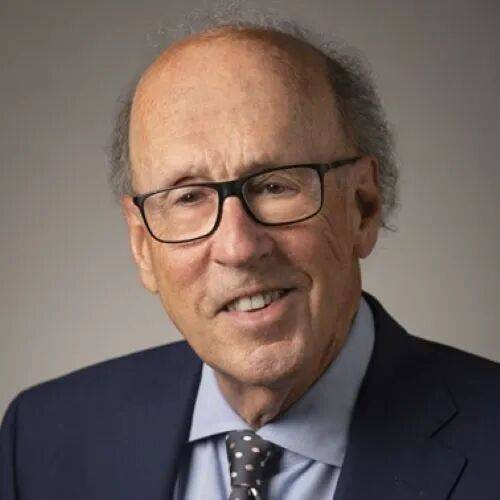
摩根士丹利亚洲区前主席斯蒂芬·罗奇:警惕AI泡沫与美元疲软|2025外滩年会
Sou Hu Cai Jing· 2025-10-24 04:12
Core Insights - The 2025 Bund Conference, held from October 23 to 25 in Shanghai, focuses on the theme "Embracing Change: New Order, New Technology," gathering global leaders to discuss the reshaping of the global economic and financial landscape and the profound impact of technological innovation [1] Group 1: AI and Market Dynamics - AI has significant potential for economic transformation, but current market enthusiasm appears excessively high [3] - The S&P 500 index's rise is heavily concentrated in seven major tech stocks, which now account for one-third of the index's market value, a concentration level exceeding that seen before the 2000 internet bubble [3] - Historical asset bubbles demonstrate that speculative cycles are inevitable, characterized by soaring valuations, high concentration, and capital inflows driven by irrational expectations [3] Group 2: Regulatory and Economic Considerations - Financial regulators should closely monitor the feedback mechanisms between asset prices, the real economy, and monetary policy to prevent systemic risks from excessive monetary easing [3] - The focus of global competition is shifting from "General Artificial Intelligence (AGI)" to "application layer innovation," with the U.S. being more aggressive in AGI research while China excels in practical applications [4] Group 3: U.S. Dollar and Macroeconomic Policy - The current weakness of the U.S. dollar is attributed to structural factors rather than a fundamental shift in its reserve currency status [5] - The U.S. government shutdown has reduced the transparency of key economic statistics, increasing uncertainty in Federal Reserve policy decisions [5] - If market expectations for interest rate cuts are unmet, the U.S. stock market may experience significant volatility [5] Group 4: Outlook for China - Confidence in China's medium to long-term growth prospects remains strong, with expectations of achieving around 5% growth this year [5]
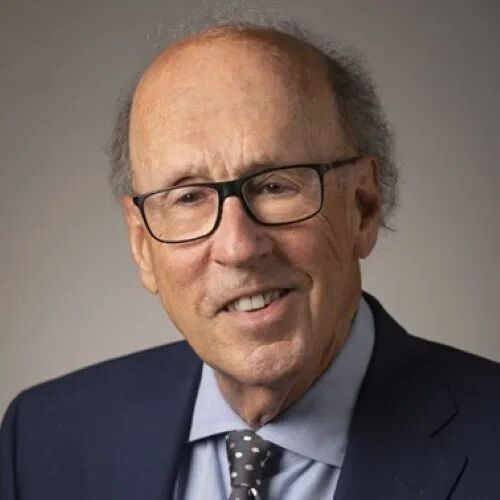
摩根士丹利亚洲区前主席斯蒂芬·罗奇:警惕AI泡沫与美元疲软
Guo Ji Jin Rong Bao· 2025-10-24 04:00
Group 1: AI and Market Dynamics - The current market enthusiasm for AI is perceived as excessively high, with a warning that the S&P 500's rise is overly concentrated in seven major tech stocks, which now account for one-third of its market value, compared to just 6% for the internet sector before the 2000 bubble burst [3][4] - Historical asset bubbles share common traits such as steep valuation increases, high concentration, and capital inflows driven by irrational expectations, indicating a potential risk in the current market [3][4] - The focus of global competition is shifting from "General Artificial Intelligence (AGI)" to "application layer innovation," with the U.S. leading in AGI research while China excels in practical applications [4] Group 2: Economic Indicators and Dollar Dynamics - The current weakness of the U.S. dollar is attributed to structural factors rather than a fundamental shift in its reserve currency status, with technical corrections occurring due to fiscal deficits and declining savings rates [5] - The lack of transparency in key economic statistics due to government shutdowns increases the uncertainty surrounding Federal Reserve policy decisions, raising the risk of policy misjudgments [5] - Confidence in China's medium to long-term growth prospects remains strong, with expectations of achieving around 5% growth this year [5]
分析师:美国CPI若高于预期可能削弱降息预期
Sou Hu Cai Jing· 2025-10-24 02:06
Core Viewpoint - The upcoming release of the US September CPI data is anticipated to influence currency markets, particularly the USD, with expectations of interest rate cuts by the Federal Reserve [1] Group 1: Market Expectations - Currency markets are currently in a consolidation phase against the USD ahead of the CPI data release [1] - Analysts from StoneX indicate a 99% probability of a 25 basis point rate cut by the Federal Reserve next week, followed by another 25 basis point cut in December with a 93% probability [1] Group 2: Potential Impact of CPI Data - If the CPI data exceeds expectations, it could challenge the current market predictions and lead to a strengthening of the USD [1]
炒黄金注意了!美联储这个动作一出现金价必崩,2011年教训血淋淋
Sou Hu Cai Jing· 2025-10-23 11:54
Core Viewpoint - The recent sharp decline in international gold prices, which fell over 6% to below $4100 per ounce, marks the largest single-day drop in 12 years, surprising many investors who had recently entered the market [1] Price Fluctuations and Historical Context - Gold prices had previously reached a historical peak of $4390 per ounce on October 17, with expectations of breaking the $4400 mark shortly thereafter [1] - Over the past 20 years, gold prices have experienced four significant declines, with drops of 22%, 20%, 45%, and 33% [1] - In 2022, gold prices fluctuated significantly, with a peak near $2078 per ounce before falling to $1618 per ounce, a decline of 22%, primarily due to the Federal Reserve's tightening monetary policy and a strengthening dollar [3][5] - The decline in 2020 was attributed to the Federal Reserve's actions during the COVID-19 pandemic, where initial rate cuts and quantitative easing led to a peak in gold prices, followed by a 20% drop as expectations of further easing diminished [5] - The most prolonged decline occurred from 2011 to 2015, where gold prices fell from a peak of $1920.30 to around $1000, a 45% drop, driven by reduced fiscal deficits and the cessation of quantitative easing [7] Recent Market Dynamics - On October 15, gold prices briefly surpassed $4180 per ounce before experiencing a sharp decline of nearly $90, indicating profit-taking among investors [9] - Domestic gold jewelry prices also saw significant reductions, with notable drops in prices per gram across various brands [9] - Year-to-date, international gold prices have increased by over 30%, a notable rise that is not commonly seen historically [9] - Market expectations regarding the Federal Reserve's future monetary policy are shifting, with potential adjustments if U.S. economic data remains strong [9][11] Investment Considerations - Historical trends suggest that gold prices are influenced by several key factors, including prior price increases, liquidity conditions, fiscal policy changes, and Federal Reserve interest rate decisions [7][11] - While gold is viewed as a valuable asset for diversification, investors are advised to remain cautious, especially after significant price increases, to avoid being trapped at market peaks [11]
KVB PRIME:美国9月CPI数据即将公布,或成美元四季度走势关键
Sou Hu Cai Jing· 2025-10-23 02:59
Group 1 - The US dollar has shown a strong start in the foreign exchange market, supported by risk aversion due to the government shutdown and heightened attention on the upcoming September CPI data [1][2] - The government shutdown has led to a "data vacuum," increasing the appeal of the US dollar as a traditional global safe-haven asset, resulting in sustained buying support [2][6] - The September CPI data, set to be released soon, is crucial as it is one of the first significant data points post-shutdown and provides insight into the true inflation situation [4] Group 2 - Economists predict a year-on-year increase of 3.1% in the September CPI, which would be the highest level since May 2024, potentially impacting the Federal Reserve's policy path in 2026 [4][6] - There is an asymmetry in the market's response to the CPI data; if the data meets or falls below expectations, the dollar may only see minor fluctuations, but a higher-than-expected figure could drive the dollar significantly higher [6][8] - Recent Canadian inflation data exceeding expectations has raised caution among traders, suggesting that US inflation may also remain resilient [6] Group 3 - Despite a cumulative decline of about 7% in the Bloomberg Dollar Spot Index for 2025, most of the losses occurred in the first half of the year, with the dollar showing resilience in the latter half [7] - The options market indicates optimism, with traders favoring the purchase of bullish dollar options, reflecting a belief that the dollar will continue to strengthen in the next three months [7] - There is a growing perspective that the market may be underestimating the dollar's rebound potential, as the relative strength of the US economy could limit the Fed's rate-cutting capacity [8]