药食同源

Search documents
便利店冷柜变身“中药铺”,“中式养生水”为啥这么火?
Zhong Guo Xin Wen Wang· 2025-06-24 07:26
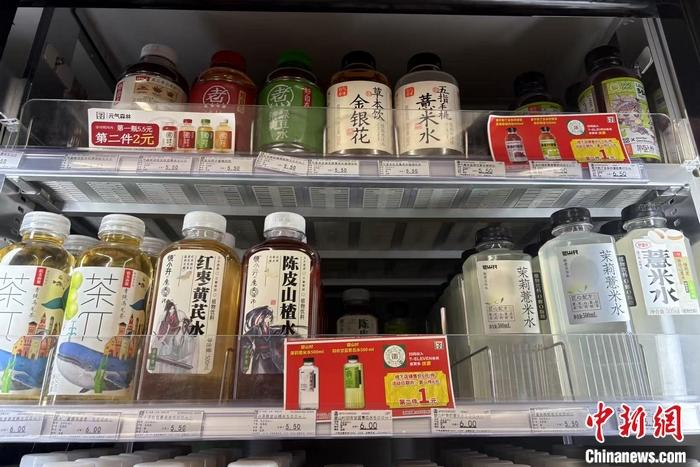
Core Insights - The rise of "Chinese herbal health drinks" has become a significant trend among young consumers, who are increasingly seeking convenient and healthy beverage options [4][5][6] - The market for "Chinese herbal health drinks" has seen substantial growth, with a reported market size of 450 million yuan in 2023, reflecting a year-on-year increase of over 350%, and is expected to exceed 10 billion yuan by 2028 [8] Group 1: Product Characteristics - "Chinese herbal health drinks" are made from ingredients like red beans, coix seeds, red dates, longan, and goji berries, utilizing cooking and extraction methods to create ready-to-drink plant beverages [3][5] - These drinks emphasize the concept of "food and medicine sharing the same source" and are marketed as convenient, easy-to-consume options for health-conscious consumers [3][5] Group 2: Consumer Trends - Young consumers, particularly the "Z generation," are driving the demand for these health drinks, preferring portable and simple products over traditional supplements [3][5] - The popularity of these drinks is partly due to the increasing consumer awareness of health and wellness, as well as the influence of social media and online recommendations [5][6] Group 3: Market Dynamics - Various food and beverage companies, including Yuanqi Forest and Hema, are innovating in the health drink sector, while pharmacies are also entering the market with herbal beverage offerings [6] - Promotions and discounts have become common strategies to attract consumers, with pricing tactics such as "second item for 2 yuan" being frequently observed [8] Group 4: Health Claims and Efficacy - While these drinks may offer mild health benefits when ingredients are properly combined, their therapeutic value is limited due to uncertain herbal ingredient concentrations [9][10] - Experts suggest that while these drinks can be a better alternative to sugary beverages, excessive consumption may lead to health risks, particularly for individuals with pre-existing conditions [10]

养生潮催生百亿赛道!中式养生水成年轻人“情绪刚需”
Nan Fang Du Shi Bao· 2025-06-24 00:12
Core Insights - The rise of emotional consumption is creating a new growth area in the economy, particularly among the younger generation who are increasingly focused on health and wellness products [1][2][3] - The market for traditional Chinese herbal drinks, particularly health-focused beverages, is experiencing explosive growth, with projections indicating a market size of 30 billion yuan in 2024, up from 4.5 billion yuan in 2023, representing a growth rate of 566% [2][8][9] Industry Trends - The health crisis among young people is driving a wave of self-care and wellness practices, with many adopting new routines to combat health issues exacerbated by work stress and lifestyle choices [3][5][6] - The health and wellness market in China has surpassed 1.2 trillion yuan in 2024, with the 18-35 age group accounting for 62% of this market [6][7] - The demand for convenient, ready-to-drink herbal beverages is reshaping consumer preferences, with a significant portion of young consumers favoring products that are easy to consume and align with their health-conscious lifestyles [8][9] Consumer Behavior - The primary consumers of herbal drinks are aged 18 to 36, contributing nearly 70% of sales, with a notable focus on products that address specific health concerns such as fatigue and sleep issues [13][15] - Young consumers are increasingly viewing herbal drinks as a "health tax," opting for these beverages over traditional sugary drinks to align with their health goals [9][10][15] - There is a notable difference in purchasing preferences based on gender and lifestyle, with women often choosing drinks that promote blood health and men leaning towards those that enhance energy [16][17] Market Dynamics - Major beverage companies are rapidly entering the herbal drink market, leveraging supply chain advantages to capture market share, with brands like Yuanqi Forest achieving a market share of 58.6% in this segment [17][18] - The market is characterized by a proliferation of products, but challenges such as product homogeneity and consumer acceptance of flavors remain significant hurdles [18] - The industry is witnessing a "battle of beverages," with both traditional brands and new entrants competing for consumer attention in the herbal drink space [17][18]
贵州天麻 从土特产到金疙瘩
Jing Ji Ri Bao· 2025-06-23 22:09
Core Insights - The article highlights the significant development and potential of the Tianma industry in Guizhou Province, emphasizing its role in economic growth and rural revitalization [1][4][9] Industry Development - Guizhou has established itself as the leading region for Tianma cultivation in China, with a history of artificial planting dating back to the 1970s, resulting in a comprehensive industrial chain [2][3] - The province has set a target to develop a 10 billion yuan Tianma industry cluster by 2030, focusing on quality improvement, brand cultivation, and standardized planting [1][4] Technological Innovation - Guizhou University plays a crucial role in advancing Tianma cultivation through research and development, having established a provincial expert team and developed new varieties [5][6] - The province has implemented innovative agricultural techniques to enhance yield and quality, achieving a target of 27 kg of Tianma per square meter [3][6] Economic Impact - The Tianma industry is projected to generate a comprehensive output value of 6.4 billion yuan by 2024, with over 60 counties in Guizhou engaged in Tianma cultivation [4][9] - The industry has created new business entities and improved market competitiveness, benefiting thousands of local farmers [7][8] Brand and Market Expansion - Guizhou is leveraging its unique resources to create a strong brand identity for Tianma, with products tailored to various consumer markets, including ready-to-eat items [8][9] - The establishment of a traceability system from breeding to sales enhances product quality and consumer trust [8][9]
中式养生水爆火:从百亿市场愿景到同质化困局的现实博弈
Xin Lang Zheng Quan· 2025-06-20 02:43
Core Insights - The rise of traditional Chinese herbal drinks, particularly red bean and coix seed water, is rapidly transforming the beverage market, appealing to younger consumers and reflecting a blend of traditional health concepts with modern consumption trends [1][2][8] - The market for these health drinks has seen explosive growth, with the market size increasing from 0.1 million yuan in 2018 to 4.5 billion yuan in 2023, representing a year-on-year growth of over 350%, and projected to exceed 10.8 billion yuan by 2028 [2][8] Market Dynamics - The health drink sector is characterized by a clear division among participants, with new consumer brands like Yuanqi Forest and Koyang leading the charge, while traditional beverage giants are entering the fray, reshaping industry resources [3][4] - New brands are leveraging emotional connections and traditional cooking methods to create unique selling propositions, while established companies are introducing innovative products targeting premium markets [3][4] Challenges - Despite the market's enthusiasm, the health drink industry faces significant challenges, particularly product homogenization, where many brands offer similar formulations and marketing strategies [4][5] - The balance between health benefits and taste remains a critical issue, as some products struggle to appeal to mainstream consumer preferences [4][5] Pricing and Consumer Perception - The pricing of health drinks, typically 4-6 yuan for a 500ml bottle, is significantly higher than regular bottled water, leading to consumer concerns about value for money [5] - Some consumers have noted that the cost of purchasing ready-made health drinks could exceed the cost of preparing similar drinks at home, raising questions about the sustainability of consumption patterns [5] Innovation and Differentiation - To combat homogenization, some brands are exploring unique ingredients and innovative production techniques, such as Koyang's patented extraction technology and Yili's five-fold extraction method for ginseng [6][7] - The integration of health drinks into specific consumption scenarios, such as gyms and wellness centers, is becoming a strategic focus for brands aiming to create a holistic consumer experience [7][8] Future Outlook - The evolution of health drinks from mere trend to value-driven competition will test the product and innovation capabilities of all market participants [8] - The ability of these drinks to balance cultural recognition, scientific efficacy, and consumer experience will be crucial for their long-term success in the beverage market [8]
御燕承以汉方智慧与科技革新引领大健康产业新风潮
Zhong Guo Chan Ye Jing Ji Xin Xi Wang· 2025-06-17 08:56
Core Insights - The health awareness among the public is driving unprecedented growth opportunities in the health industry, with consumers shifting their demands from functional needs to cultural recognition, scientific basis, and personalized experiences [1] - Yuyan Cheng is reshaping the high-end nourishment market with its innovative concept of "Chinese medicine as the soul, technology as the wings," injecting new vitality into the industry [1] Company Overview - Yuyan Cheng focuses on traditional nourishment, embedding Chinese medicine culture as its core brand identity, and utilizes ancient texts to develop its product philosophy based on "food and medicine sharing the same source" and "seasonal nourishment" [1][2] - The brand employs a unique AI pre-disease diagnosis system that provides personalized nourishment plans within five minutes, utilizing technologies such as bioelectrical impedance analysis and tongue diagnosis [2] - Yuyan Cheng has established direct sourcing partnerships in Malaysia's core production areas and operates two GMP-certified processing bases in China, ensuring a comprehensive supply network [2] Product Innovation - The company has launched over a hundred "stylish bird's nest" products that combine seasonal health concepts, molecular cuisine, and Eastern aesthetics, appealing to urban consumers and redefining the perception of bird's nest from a luxury gift to a daily nourishment choice [3] - The introduction of "digital cell repair technology" allows for non-invasive activation of self-healing capabilities, marking a significant advancement in the health management value of traditional nourishment products [2] Cultural and Educational Initiatives - Yuyan Cheng has invested in the "Yuyan Qianxun Museum," the first state-owned cultural base for bird's nest education in Northern China, which enhances brand credibility and sets a new benchmark for cultural empowerment in the industry [3] - The museum employs immersive experiences and AI interactions to educate visitors about the history of bird's nest harvesting and traditional Chinese medicine, attracting over 50,000 visitors annually [3] Industry Trends - As preventive medicine becomes a global health trend, Yuyan Cheng is redefining high-end nourishment through a three-dimensional integration of "Chinese wisdom, hard technology, and human warmth," contributing to the narrative of China's innovative health industry [3]
挤走碳酸饮料?中式养生水站稳购物车C位 食品消费风向变了
Nan Fang Du Shi Bao· 2025-06-16 06:20
Group 1: Industry Trends - The "health and wellness" industry is projected to reach a total revenue of 9 trillion yuan in 2024 and is expected to expand to 29.1 trillion yuan by 2030 [1] - The new trend of "new Chinese health preservation" is gaining traction, with 90% of post-90s individuals recognizing the importance of health preservation, and over half taking action [2] - The market for "sugar-free" and "fat-free" products is growing, with the market share of sugar-free ready-to-drink tea increasing from 17.62% to 31.65% [3] Group 2: Consumer Behavior - Young consumers prefer "ready-to-eat" snacks, aligning with the expanding "lazy economy," which is expected to exceed 5 trillion USD globally by 2025 [11] - Emotional value is becoming a significant factor in consumer choices, with 86% of respondents in first-tier cities using snacks to comfort themselves [13] - The demand for "health-oriented" snacks is rising, with brands like Three Squirrels and Liuyin Pupu launching products targeting health-conscious consumers [11][12] Group 3: Market Opportunities - The "medicinal food homologation" concept is being emphasized, with the market for medicinal food homologation snacks reaching 68 billion yuan, growing at over 45% annually [7] - The market for bird's nest products is also expanding, with the market size expected to grow from 55.9 billion yuan in 2023 to 86 billion yuan by 2028 [9] - The health food market for women is projected to reach 2.778 trillion yuan in 2024, with significant growth expected in the "she economy" segment [9][10]
198!幸福带回家!广东三宝上新“八角礼盒”
Nan Fang Nong Cun Bao· 2025-06-13 01:37
Core Viewpoint - Guangdong Sanbao has launched the "Octagonal Gift Box," which combines three traditional Lingnan treasures: Xinhui Chenpi, Huaju Hong, and Chunsan Ren, emphasizing health and cultural significance in gifting [4][5][6]. Group 1 - The Octagonal Gift Box features a unique three-layer design inspired by palace architecture, symbolizing good fortune and prosperity from all directions [4][5]. - The product is positioned as a "health guardian gift," particularly suitable for Father's Day, promoting health through traditional teas and soups [6][7][8]. - The ingredients are sourced from specific regions known for their unique natural conditions, enhancing the quality and authenticity of the products [11][20][24]. Group 2 - Xinhui Chenpi is cultivated in a favorable climate, contributing to its high quality and is known for its health benefits [13][15][19]. - Huaju Hong, recognized as a "Chinese treasure," has historical significance as a tribute item and has been included in the "food and medicine homologous" directory [20][21][22]. - Chunsan Ren, with over 1300 years of cultivation history, is celebrated for its medicinal properties and is a key ingredient in traditional Chinese medicine [28][30][31]. Group 3 - Each product in the Octagonal Gift Box undergoes strict quality control, ensuring they meet high standards for health benefits and culinary use [41][42]. - The packaging is designed to maintain freshness and quality, featuring an elegant octagonal shape that reflects Lingnan culture [44][45]. - The product specifications include Xinhui Chenpi (85g), Chunsan Ren (45g), and Huaju Hong (8g), sourced from their respective regions [47][48][49].

2025年第23周:食品饮料行业周度市场观察
艾瑞咨询· 2025-06-12 09:32
Group 1 - The Chinese herbal health water market is rapidly growing, with brands like Laoshang Baihua Shecao Water and Yuanqi Forest leading the way, expected to exceed 10 billion yuan by 2028. However, issues such as poor taste, severe homogenization, and inadequate channel distribution are prominent [2][9][32] - The beer and beverage industries are increasingly overlapping, with beer companies like Chongqing Beer and Yanjing Beer entering the non-alcoholic beverage market, while beverage companies are attempting to enter the alcoholic sector, indicating a competitive landscape that requires precise consumer and scenario positioning [3][18] - The compound seasoning industry in China is experiencing rapid growth, with a market size reaching 203.2 billion yuan in 2023, accounting for 34% of the total seasoning market, driven by the rise of restaurant chains and the popularity of takeout culture [5] Group 2 - The trend of "Chinese medicine + dining" is gaining traction among young consumers, but issues such as illegal additives and exaggerated efficacy are prevalent, highlighting the need for improved regulations and quality control in the industry [7] - The beverage market is seeing a rise in functional drinks favored by young consumers, with platforms like Xiaohongshu driving trends and product popularity, particularly in the juice category [8][26] - The launch of "Wahaha's" new sugar-free tea brand "Wah Xiaozong" aims to capture the young consumer market, with a focus on product differentiation and brand transformation [13] Group 3 - The energy drink market is dominated by Dongpeng Beverage, which reported a revenue of 15.84 billion yuan and a net profit of 3.33 billion yuan in 2024, but faces uncertainties regarding future growth due to reliance on its flagship product [21] - The non-alcoholic beverage market is becoming increasingly competitive, with Yanjing Beer launching a new soda product to adapt to market trends and consumer preferences [18] - The rapid growth of the "no-sugar tea" market is evident, with brands like "Guozi Shule" achieving significant sales increases through innovative product design and marketing strategies [34]

估值超万亿,药食同源大戏开场
和讯· 2025-06-11 09:50
Core Viewpoint - The "medicine-food homology" industry in China is experiencing explosive growth, driven by increasing health awareness and favorable policies, with the market size surpassing 370 billion yuan and expected to exceed 400 billion yuan in 2024 [3][6]. Market Overview - The market for "medicine-food homology" has reached 376.3 billion yuan in 2023, with a growing number of registered enterprises, totaling over 2,900, and 400 new registrations in the first eleven months of the previous year [6][7]. - The industry is viewed as a vast blue ocean with significant development potential, as it combines the properties of food and traditional Chinese medicine, offering convenience in management compared to strictly regulated health products [7]. Consumer Trends - The younger generation, particularly Generation Z, is becoming the main consumer force in health and wellness, driving innovation in "medicine-food homology" products across various sectors such as snacks, dairy, and beverages [4][16]. - The demand for health products is expanding beyond the elderly demographic, with a notable increase in the consumption of health supplements among middle-aged and young consumers [8][10]. Product Innovation - Innovative products are emerging, such as traditional Chinese medicine-infused snacks and beverages, which are transforming the perception of these ingredients from "disease assistance" to "daily consumption" [15][17]. - Major companies are collaborating to develop health-oriented products, such as dairy products and condiments infused with traditional Chinese medicinal ingredients [17]. Regulatory Environment - The Chinese government is actively promoting the "medicine-food homology" sector through policies that simplify recognition processes and expand the list of approved substances, with 106 items currently included [10][11]. - However, the industry faces challenges due to a lack of standardized regulations, leading to market confusion and potential consumer deception regarding product claims [11][12]. Quality Control and Challenges - Quality control remains a significant issue, with concerns about the authenticity and consistency of medicinal ingredients, necessitating advanced technologies for traceability and verification [18]. - The industry is also grappling with homogenization, where many manufacturers replicate successful products, leading to a crowded market where price becomes a primary competitive factor [18]. Future Directions - The industry is moving towards standardization, technological advancement, and innovation, with a focus on research-backed product development to differentiate genuine innovations from mere marketing gimmicks [18].
中式养生水爆了,《本草纲目》不够用了
首席商业评论· 2025-06-11 03:56
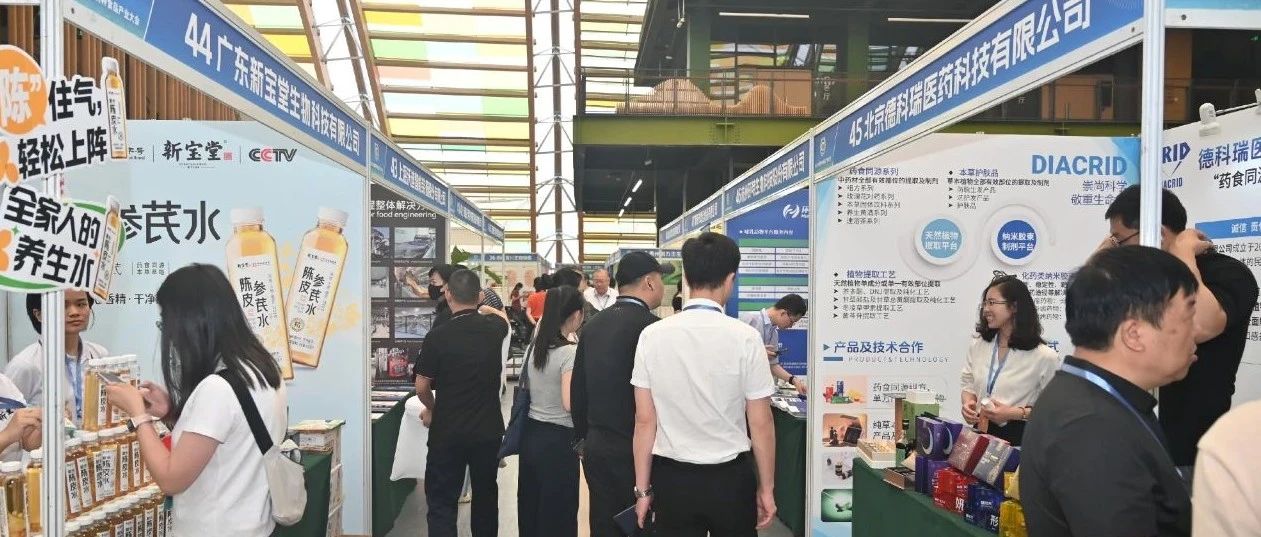
Core Viewpoint - The article discusses the explosive growth of the Chinese herbal health drink market, particularly focusing on the rise of "Chinese health water" products, which have become popular among young consumers, especially working individuals seeking convenient health solutions [3][8][19]. Market Overview - In the past year, 23 brands have launched 59 new herbal health water products, indicating a more aggressive market entry compared to the previous "sugar-free tea" trend [3][10]. - The market for Chinese health water has seen a growth rate exceeding 350% in 2023, reaching a market size of 450 million yuan, with projections estimating a compound annual growth rate of approximately 88.9% from 2024 to 2028, potentially reaching around 10.8 billion yuan by 2028 [8][19]. Consumer Behavior - Young working individuals are increasingly consuming herbal health water as a convenient option for health maintenance, often referred to as "life-sustaining water" [3][4]. - The primary consumer demographic consists of women, accounting for approximately 65.2% of the market, with 77.7% of consumers being under 36 years old [8][19]. - Many consumers express a mix of enthusiasm and skepticism regarding the health benefits of these products, with some viewing them as effective for wellness while others consider them primarily a marketing success [4][19]. Product Characteristics - The products typically emphasize "zero" concepts in their ingredients, appealing to health-conscious consumers. Common ingredients include red beans, barley, and various herbs, marketed under the "food and medicine are of the same origin" concept [7][14]. - The price range for these drinks is generally between 4 to 5 yuan for a 500ml bottle, similar to sugar-free tea drinks, but with a focus on health benefits [15][19]. Competitive Landscape - Major beverage companies are increasingly entering the herbal health water market, with brands like Yuanqi Forest and Kweichow Moutai launching their own products [11][19]. - The competitive environment is intensifying, with numerous brands vying for market share, leading to a proliferation of new flavors and product lines [10][11]. Marketing Strategies - Brands are leveraging celebrity endorsements to enhance their market presence, with notable figures promoting various herbal health water products [19]. - The marketing narrative often revolves around the convenience of consuming these drinks during busy work schedules, aligning with the lifestyle of modern consumers [19].