
新能源转型

Search documents
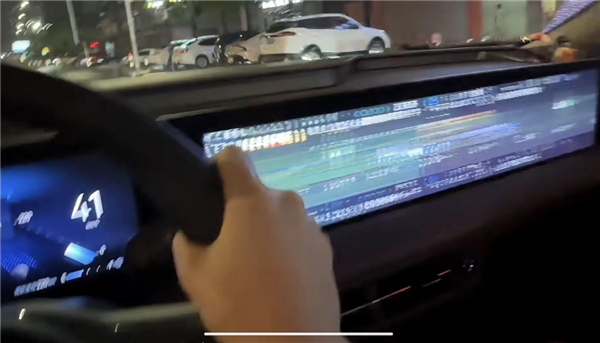
车机变“砖头”! 福特中国遭数百老车主控诉
Xin Lang Ke Ji· 2025-12-04 03:37
Core Viewpoint - Ford's recent launch of the 2026 Mondeo has sparked significant backlash from existing owners of the 2022-2025 models, who are dissatisfied with the performance of their vehicle's infotainment system, which they claim has become unusable and poses safety risks [1][2][3] Group 1: Mondeo Launch and Customer Complaints - The 2026 Mondeo has been officially launched with a price range of 149,800 to 199,800 yuan, featuring upgrades in power, intelligence, and design [2] - Existing Mondeo owners report severe issues with their vehicle's infotainment system, citing frequent crashes and a lack of essential connectivity features, which contradicts the manufacturer's promises [2][3] - Over 360 Mondeo owners have filed collective complaints, demanding software upgrades for their current systems and the option to pay for new hardware that supports better performance [3] Group 2: New Model Criticism - Ford's new electric model, the Ford Zhiqu Lema, has also faced criticism regarding its design and configuration, with some industry experts questioning its authenticity and market appeal [4][5] - The Zhiqu Lema is marketed as a versatile SUV with a starting price of 229,800 to 272,800 yuan, but features such as the roof-lifting function and bed conversion require additional payments, leading to consumer dissatisfaction [4][5] Group 3: Financial Performance and Strategic Challenges - Ford's electric vehicle segment has reported significant losses, with a projected loss of $5.1 billion in 2024, prompting a reevaluation of its electric strategy [5][6] - Sales figures for Ford's electric models in China have been disappointing, with monthly sales often in single digits, indicating a failure in the company's transition to electric vehicles [5][6] - Ford China has established a new sales service company to unify its operations and address internal competition between its joint ventures, but the lack of a successful electric vehicle model raises concerns about the effectiveness of this strategy [8]
凯迪拉克销量下滑 二线豪华品牌“突围战”何时休?
Xi Niu Cai Jing· 2025-12-04 02:37
Core Viewpoint - Cadillac is facing significant sales decline, with 2024 sales dropping to 113,800 units, nearly halving from the peak of 233,000 units in 2021, and the trend continues into 2025 with a year-to-date sales of 82,853 units, down from 90,101 units in the same period last year [2] Group 1: Sales Performance - Cadillac's main models, CT5 and XT5, experienced over 20% sales decline, while niche models struggle to sell more than 1,000 units monthly [2] - In the electric vehicle sector, Cadillac's performance is disappointing, with total sales of the IQ models reaching only 3,483 units, significantly lagging behind competitors [2] Group 2: Market Challenges - The brand faces intense competition from traditional luxury brands like BBA, which dominate the luxury car market and have historically squeezed Cadillac's market share [2] - Cadillac's slow product updates and high pricing diminish its competitiveness, failing to meet consumer demands for diverse and personalized electric vehicles [2] - The increasing consumer demand for smart features in vehicles has not been adequately addressed by Cadillac, leading to reduced product appeal [2] Group 3: Pricing Strategy - In response to sales challenges, Cadillac adopted a "price for volume" strategy, significantly reducing prices on models like CT5 and XT5, with discounts exceeding 80,000 yuan and 130,000 yuan respectively [3] - This pricing strategy risks eroding brand equity and consumer perception of luxury, as frequent price cuts can lead to concerns about resale value, with Cadillac's resale rate reported at 45.4%, lower than some domestic brands [3] Group 4: Marketing and Management Issues - Cadillac's marketing strategies have faced criticism, such as the controversial "Coconut Tree Wind" campaign that backfired due to its negative portrayal of competitors and unappealing style [3] - Internal management issues are evident, with three changes in the China region president over three years, indicating instability and inconsistent strategic direction [3] Group 5: Future Recommendations - To overcome current challenges, Cadillac needs to increase investment in electric vehicle transformation, enhance smart technology, and launch products that align with market demands [4] - Optimizing marketing strategies and improving internal management are crucial for Cadillac to avoid further marginalization in the automotive market [4]



车机变“砖头”,福特中国遭数百老车主控诉
Xin Lang Ke Ji· 2025-12-04 02:05
Core Points - Ford China is facing significant backlash from hundreds of owners of older Mondeo models due to complaints about their vehicle's infotainment systems becoming non-functional, which raises safety concerns [1][2][3] - The launch of the 2026 Mondeo has highlighted the disparity in technology between new and old models, with the new model featuring advanced capabilities that older models lack [2][3] - Ford's new electric vehicle, the Ford Zhiqu Lema, is also receiving criticism for its design and configuration, indicating broader issues within Ford's product offerings in China [4][5] Summary by Sections Mondeo Complaints - Hundreds of Mondeo owners have collectively complained about their vehicles' infotainment systems, describing them as outdated and non-functional, which poses safety risks [1][2] - The older Mondeo models are equipped with the Qualcomm 820A chip, leading to frequent system crashes and failures in navigation and voice control [2][3] - Owners are demanding software upgrades to support mainstream smartphone connectivity and are willing to pay for hardware upgrades to newer systems [3] New Model Launch - The 2026 Mondeo has been launched with a price range of 149,800 to 199,800 yuan, featuring significant upgrades in power, intelligence, and design [2] - The disparity in technology between the new and old models has caused dissatisfaction among existing customers, who feel misled by the manufacturer's promises [2] Electric Vehicle Challenges - The Ford Zhiqu Lema, a new electric SUV, has faced criticism for its design and the necessity of paid options for key features, which has led to negative perceptions among potential buyers [4][5] - Ford's electric vehicle strategy in China has been under scrutiny, with the company reporting significant losses in its electric vehicle segment [5][6] Company Performance and Strategy - Ford China has been struggling with declining sales and profitability, with a significant drop in vehicle sales from a peak of 1.27 million units in 2016 to an expected 442,000 units in 2024 [6][7] - The establishment of the Ford Sales Service Company aims to unify the operations of its joint ventures, Changan Ford and Jiangling Ford, to improve market performance [8][9] - Despite these efforts, the lack of a successful electric vehicle model raises concerns about the effectiveness of the company's restructuring strategy [9]
车机变“砖头”!数百老车主控诉福特中国
Xin Lang Ke Ji· 2025-12-04 01:48
Core Points - Ford's 2026 Mondeo has been launched, but existing owners of the 2022-2025 models are expressing dissatisfaction due to issues with the vehicle's infotainment system, which they claim has become non-functional and poses safety risks [1][2][4] - The company has not responded to the complaints from Mondeo owners, stating that the hardware differences between old and new models prevent upgrades to the infotainment system [6][12] - Ford's new electric model, the Ford Intelligent Mustang, is also facing criticism regarding its design and configuration, reflecting broader challenges in the company's sales and financial performance in China [7][9] Infotainment System Issues - Owners of the 2022-2025 Mondeo models report frequent system crashes and performance issues due to outdated hardware, specifically the Qualcomm 820A chip, leading to significant operational delays and safety concerns [4][5] - Complaints include the lack of promised features such as mainstream smartphone connectivity options, with owners feeling that the actual product does not match the marketing claims [5][6] Sales and Financial Performance - Ford's sales in China have significantly declined, with 2024 projections estimating only 442,000 units sold, a drop to one-third of peak sales in 2016 [14][15] - Both joint ventures, Changan Ford and Jiangling Ford, are struggling, with Changan Ford's sales down 7.56% and Jiangling Ford's down 33.8% in the first three quarters of the year [15][16] - The company has reported substantial financial losses in its electric vehicle segment, with losses projected to reach $51 billion in 2024, prompting a reevaluation of its electric strategy [10][11] Strategic Restructuring - In response to ongoing challenges, Ford China has established a new sales service company to unify the operations of its joint ventures and improve market performance [12][16] - The appointment of a new president for the sales service company aims to address internal competition and streamline operations, although the success of this restructuring remains uncertain without a strong electric vehicle offering [16][17]
爱克股份22亿豪赌东莞硅翔,新能源转型“背水一战”|并购一线
Sou Hu Cai Jing· 2025-12-03 13:49
Core Viewpoint - Aike Co., Ltd. plans to acquire 100% of Dongguan Silicon Xiang Insulation Materials Co., Ltd. for 2.2 billion yuan, aiming to enhance its position in the new energy sector and achieve profitability through this acquisition [2][3][10]. Group 1: Acquisition Details - The acquisition will be executed through a combination of issuing shares and cash payments, with the share price set at 19.90 yuan per share [3]. - Dongguan Silicon Xiang has committed to achieving a cumulative net profit of no less than 560 million yuan from 2025 to 2027, which is 4.48 times its projected 2024 net profit of 125 million yuan [3][5]. - The acquisition is part of Aike's strategy to build a complete industrial chain in the new energy sector, following previous acquisitions in related fields [2][10]. Group 2: Financial Performance - Dongguan Silicon Xiang's revenue is projected to grow from 1.482 billion yuan in 2023 to 1.924 billion yuan in 2024, with net profit increasing from 80.42 million yuan to 125 million yuan [5][6]. - In the first half of the year, Dongguan Silicon Xiang reported revenue and net profit of 1.244 billion yuan and 97.31 million yuan, respectively, reflecting a year-on-year growth rate of 73% [6]. - As of the latest data, Dongguan Silicon Xiang's total assets are 2.923 billion yuan, with total liabilities of 2.025 billion yuan, resulting in a high asset-liability ratio of 69.29% [9]. Group 3: Strategic Transformation - Aike has undergone a significant business transformation from outdoor smart lighting to becoming a provider of new energy system solutions since its listing in 2020 [10][11]. - The company has made several strategic acquisitions to enhance its capabilities in the new energy sector, with expectations that revenue from new energy-related businesses will exceed 50% by 2025 [10][11]. - Despite a clear strategic direction, Aike faces financial pressure, having reported a net loss of 107 million yuan in 2024, marking its first annual loss since going public [11][13].
月产突破3万台!北汽动力以全链协同与技术创新书写增长新篇
Zhong Guo Qi Che Bao Wang· 2025-12-03 10:17
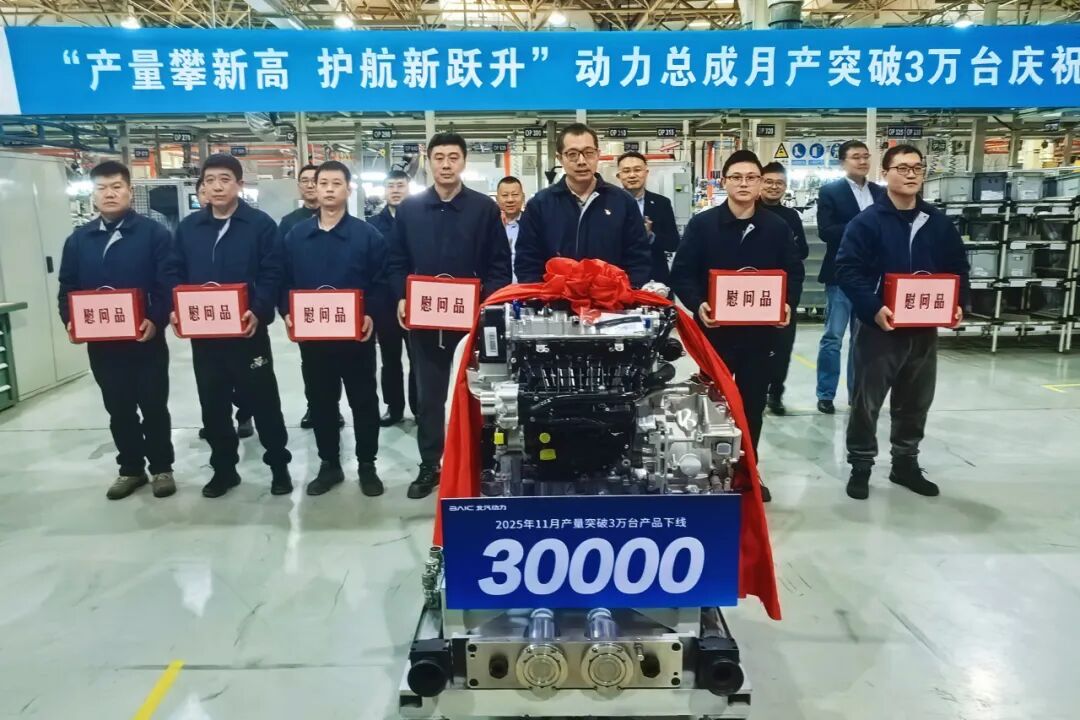
Core Insights - North Motor's production volume officially surpassed 30,000 units in November, reaching 30,132 units, marking a significant milestone for the company [1] - The company achieved a month-on-month production increase of 44.7% and a cumulative growth of 78.7% over the first eleven months, reflecting its robust capabilities and new development outcomes [1] Group 1: Production Achievements - North Motor's production increased from 22,000 units to 30,000 units in just two months, showcasing the efficiency of the entire production chain [2] - The rapid production increase was attributed to effective collaboration across various segments, including production line upgrades, supply chain coordination, and continuous process optimization [2] Group 2: Technological Advancements - Technological innovation is identified as the core driver of North Motor's sustained growth, with the successful launch of the A156T2 engine aiding in the debut of the T1400 cargo drone, expanding into the "low-altitude economy" sector [3] - The company focuses on hybrid and extended-range technologies, aiming to meet market demands for low fuel consumption and high power through integrated and cost-effective innovations [3] Group 3: Future Directions - North Motor has outlined three key development directions: embracing industry transformation through modular and platform-based R&D, strengthening partnerships with leading automotive companies, and exploring AI technology integration for operational excellence [5] - The recent production achievement serves as a prologue for the company's future, as it aims to support the rise of independent brands within the North Group and transition towards a technology-driven enterprise [5]
宇通客车(600066):11月生产节奏加快 年末有望迎来内外交付双峰
Xin Lang Cai Jing· 2025-12-03 08:28
Core Viewpoint - The company reported strong growth in bus sales and production for November 2025, indicating a positive trend in the market and an increase in export orders, particularly in the European new energy sector [1][2]. Sales and Production Performance - In November 2025, the company achieved bus sales of 4,058 units, representing a year-on-year increase of 8.6% and a month-on-month increase of 33.5% [1]. - The bus production for the same month reached 5,188 units, showing a year-on-year growth of 11.2% and a month-on-month growth of 60.7% [1]. - Cumulatively, from January to November 2025, the company sold 41,000 buses, up 6.1% year-on-year, and produced 42,000 buses, up 5.3% year-on-year [1]. Market Dynamics - The company’s sales performance in November indicates a recovery trend, with a significant increase in production to meet year-end delivery demands [1]. - The share of large and medium buses in total sales rose to 85.0%, reflecting a strategic focus on higher-capacity vehicles [1]. Export Growth - The company has seen a robust increase in exports of new energy buses to Europe, with a 40.9% year-on-year growth in exports from Henan province, where the company is located [1]. - The average export price for these buses has risen to 2.96 million yuan, indicating improved market acceptance in Europe [1]. Market Share and Future Outlook - In the UK, the company’s bus registration volume increased by 220.1% year-on-year to 701 units, raising its market share to 9.2% [2]. - The company is positioned to capitalize on the ongoing transition to new energy vehicles in overseas markets, with a significant share in Europe exceeding 20% [2]. - Revenue projections for 2025-2027 are optimistic, with expected revenues of 43.04 billion, 52.74 billion, and 61.94 billion yuan, and net profits of 4.90 billion, 6.23 billion, and 7.63 billion yuan respectively [2].

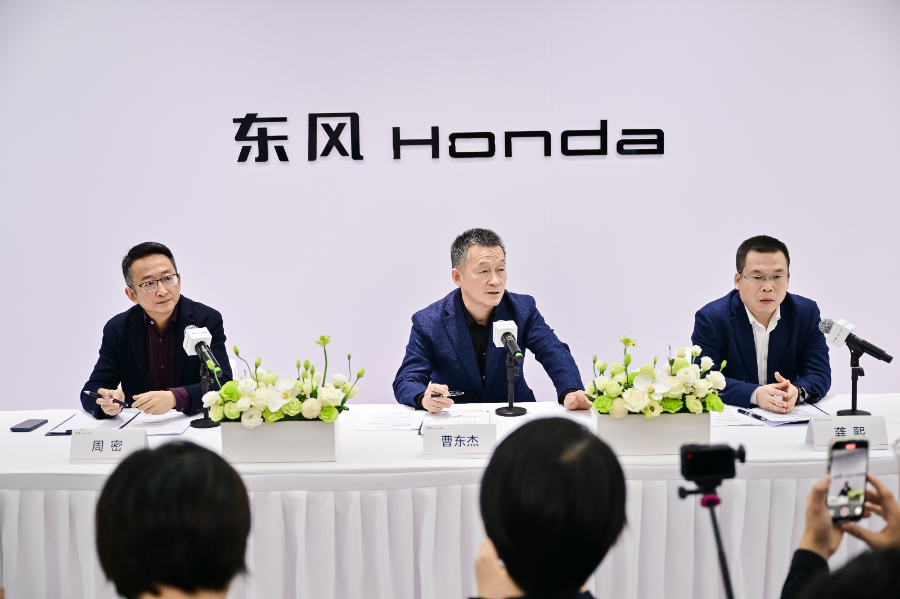
东风本田曹东杰回归:研发团队将翻倍,绝不放弃燃油车
2 1 Shi Ji Jing Ji Bao Dao· 2025-12-02 14:19
Core Viewpoint - Dongfeng Honda is committed to transformation despite challenges in the shrinking fuel vehicle market, emphasizing a strategy of "belief, breakthrough, and far-reaching vision" [3] Group 1: Market Strategy - The company acknowledges the need to address the declining fuel vehicle market but aims to maintain a significant market share, targeting nearly 10 million units even if fuel vehicles only hold 30% of the market [3] - Dongfeng Honda plans to leverage both Honda and Dongfeng's strengths to enhance localization and innovation in their product offerings [4] Group 2: R&D and Supply Chain - The current localization development team consists of fewer than 1,000 people, with plans to double this number to strengthen the R&D framework [4] - The company intends to actively incorporate local suppliers into its supply chain, exemplified by a strategic partnership with Tencent for smart mobility [4] Group 3: Marketing and Customer Engagement - Dongfeng Honda recognizes the need for a shift in marketing strategy from a one-way communication model to a more interactive dialogue with customers [4] - A new customer experience department has been established to facilitate direct communication with customers, enhancing engagement through personalized outreach [5] Group 4: Transformation Challenges - The unique nature of the joint venture requires careful consideration of both shareholders' interests, making the implementation of new processes more complex [6] - The company aims to balance the legacy strengths of Honda in safety and reliability with Dongfeng's advancements in electrification and intelligence to create a new generation of vehicles [6]
车市消失的“翘尾”
Hua Er Jie Jian Wen· 2025-12-02 12:03
Core Insights - The Chinese automotive market is experiencing a "folding sensation," with significant disparities in sales performance among major players, indicating a shift towards a more competitive environment [1][2][4] Group 1: Market Performance - In November, BYD achieved sales exceeding 480,000 units, with overseas sales surpassing 130,000 units, alleviating concerns about domestic sales pressure [2] - Geely's sales reached 310,000 units in November, with a 53% year-on-year increase in new energy vehicle sales, indicating a successful transition to new energy [2] - Leap Motor reported a 75% year-on-year increase in sales, aiming for one million units next year, while Hongmeng Zhixing sold 81,864 units, marking a record high for monthly deliveries [1][2] Group 2: Market Dynamics - The overall retail data for the passenger car market showed a decline in sales year-on-year and month-on-month from November 1 to 23, indicating a cooling market despite strong performances from leading companies [1][4] - The disappearance of the year-end sales surge is a concerning signal, as traditional strategies like price cuts and promotions failed to boost sales [4] - The shift in consumer psychology is evident, with a decrease in demand for hybrid models and diminishing effects of price wars, leading to a more challenging environment for lower-end models [4][6] Group 3: Future Outlook - The automotive market is expected to face intensified competition by 2026, with the reintroduction of a 5% purchase tax on new energy vehicles, increasing consumer costs [6][7] - UBS predicts that the overall growth rate for passenger car wholesale will slow to 3% by 2026, while electric vehicle growth will decelerate to 15%, indicating a shift in market dynamics [6][7] - Companies are urged to consolidate resources to withstand the upcoming challenges, as the era of rapid growth is over, and survival will depend on efficiency and market positioning [7][8]
奇瑞汽车(09973.HK):海外优势续航 加速电动智能转型
Ge Long Hui· 2025-12-02 10:06
Investment Highlights - Company is rated as outperforming the industry with a target price of HKD 42.00, based on a comparable valuation method with a 2026 P/E of 10x [1] - Company is a leading independent automaker in China, with accelerated development in exports and new energy transformation [1] Market Position - Company ranks among the top independent automakers in China, with total sales expected to be among the industry leaders in 2024 [1] - Company maintains a multi-powertrain strategy, with a recent increase in fuel vehicle market share, solidifying its profit base [1] - The company has established five brand series to meet differentiated market demands, including Chery for the mass market and Jetour for the off-road segment [1] Export and Competitive Advantage - Company has the highest overseas sales among independent automakers, leveraging over 20 years of export experience [1] - The company has maintained the top position in export volume for independent passenger car brands in China for 22 consecutive years [1] - A rich channel network, global collaborative R&D system, and comprehensive global production capacity form a competitive moat for the company [1] New Energy Transition - Company has a robust self-research capability and is accelerating its electric and intelligent transformation [2] - A multi-tiered, comprehensive R&D system has been established, creating a wide-reaching and highly applicable automotive platform [2] - The company is expected to launch several new models in 2026, indicating strong growth potential in new energy vehicle sales [2] Financial Projections - Earnings per share (EPS) are projected to be CNY 3.32 and CNY 3.88 for 2025 and 2026, respectively, with a CAGR of 22% from 2024 to 2026 [2] - Current stock price reflects a 2026 P/E of 7x, with a target price of HKD 42 corresponding to a 2026 P/E of 10x, indicating a 35% upside potential [2]