美联储政策

Search documents
美联储或“暂缓行动” 沪银奠定上涨基调
Jin Tou Wang· 2025-12-22 06:51
Group 1 - Silver futures are currently trading above 16028, with an opening price of 15374 and a current price of 16109, reflecting a 5.40% increase. The highest price reached was 16282, while the lowest was 15340, indicating a short-term oscillating trend in silver futures [1] - The Cleveland Fed President Harker stated that the current monetary policy is appropriately positioned, suggesting a need to assess the impact of the previously accumulated 75 basis points rate cut on the economy in the first quarter. This statement is interpreted by the market as limiting short-term policy adjustment space, which helps stabilize the dollar [2] - The solar energy industry is identified as the largest driver of industrial silver demand, with global solar installed capacity increasing over tenfold in the past decade. The International Energy Agency predicts this trend will continue at an average annual rate of 17% until 2030 [2] Group 2 - The Shanghai silver market maintains a strong trend, confirming an upward trajectory with prices rising over 5%. The Bollinger Bands are opening upwards, indicating positive signals. Key support is noted around 15300, while resistance is projected at approximately 16500 [2]
史诗级共振!全球股、油、金、铜为何同步暴涨?
Xin Lang Cai Jing· 2025-12-22 02:50
Group 1 - Global markets experienced a rare synchronized rebound driven by the Federal Reserve's policy shift and liquidity changes, with significant movements in the dollar, US stocks, oil prices, and base metals [1] - The rebound is characterized as not just a technical recovery but a revaluation of assets under a new macro narrative, with risk appetite returning as funds flow out of safe-haven assets [1] - Key upcoming events include the Federal Reserve's Beige Book, which will reveal the economic impact of rate cuts, and the OPEC+ meeting, which will influence oil price risk premiums [1] Group 2 - The market is entering a verification period with a focus on data, policy, and industry dynamics, including the release of the US core PCE and China's industrial profits [2] - The macro sentiment supporting price increases includes expectations of Federal Reserve rate cuts, a weaker dollar, and domestic growth policies [3] - Key metals like copper and tin are in a tight supply-demand balance, while aluminum and lithium face high supply expectations, necessitating caution [4] Group 3 - The overall market strategy emphasizes leveraging pullbacks to invest in strong macro and supply-demand driven commodities like copper and gold, while remaining cautious on weaker fundamental commodities like nickel [5]


铂钯交易热情高涨,连创上市以来新高
Yin He Qi Huo· 2025-12-22 01:30
1. Report Industry Investment Rating - No relevant information provided 2. Core Views of the Report - The overall macro - environment is still relatively loose, with a mild slowdown in the employment market and no obvious signs of strong inflation, which is favorable for precious metal pricing [4]. - Platinum and palladium are in a tight - balance pattern. The demand gap for platinum will remain, while the demand gap for palladium is gradually improving [4]. - The news that the EU is preparing to relax the rules on banning internal combustion engine vehicles has boosted the future demand prospects of platinum and palladium, releasing price elasticity [5]. - Platinum and palladium may operate in the context of a tight fundamental situation and a loose macro - environment. It is not recommended to chase high prices, and the strategy of buying on dips along the MA5 daily line is suggested. Also, consider the opportunity to go long on platinum and short on palladium, and keep an eye on options [5]. 3. Summary by Directory 3.1 Comprehensive Analysis and Trading Strategies - **Macro - aspect**: This week, multiple important economic data were released, showing a continuous game between economic data and the Fed's policy. The US November non - farm payrolls slightly rebounded, but the unemployment rate rose to 4.6%, reaching a four - year high. Weak PMI data on Wednesday strengthened the expectation of economic slowdown, boosting interest - rate cut trading. The unexpectedly slow CPI data on Thursday only brought a short - term market rally, and then officials questioned the data's authenticity due to the government shutdown. Fed "third - in - command" Williams' hawkish speech on Friday reversed the optimistic sentiment brought by the CPI data, pushing up the US dollar index. The uncertainty of the Fed chairperson's selection also affects the market. Overall, the employment market is cooling moderately, inflation shows no obvious signs of strengthening, and the macro - environment is still loose, which is beneficial for precious metal pricing [4]. - **Fundamental - aspect**: There is limited high - frequency fundamental data for platinum and palladium in the market. From a quarterly and annual perspective, platinum and palladium are in a tight - balance pattern. The demand gap for platinum will remain, while that for palladium is gradually improving [4]. - **News - aspect**: Bloomberg reported that the EU is preparing to relax the rules on banning internal combustion engine vehicles starting from 2035, which boosts the future demand prospects of platinum and palladium and releases price elasticity [5]. - **Futures market**: Due to the impact of news and capital allocation, the prices of non - ferrous metals in the overseas market fell on the evening of December 12, while the price of platinum soared. Affected by this, the domestic platinum price opened high and went higher on the 15th, and finally reached the first daily limit. Subsequently, the trading atmosphere in the market continued to heat up, and the trading volume increased significantly. It reached the daily limit again on the 17th, and the highest price on the 18th was close to the daily limit [5]. - **Trading strategies**: - **Single - side trading**: Platinum and palladium may operate in the context of a tight fundamental situation and a loose macro - environment. It is not recommended to chase high prices. The strategy of buying on dips along the MA5 daily line is suggested. Due to the large price fluctuations and high contract leverage, and the lack of night trading in the domestic market, there is a risk of gap - opening when the domestic market opens. It is recommended to manage positions well [5]. - **Arbitrage**: Consider the opportunity to go long on platinum and short on palladium [5]. - **Options**: Keep an eye on options [5]. 3.2 Trading and Arbitrage Data Tracking - **Weekly trading data of the Guangzhou Futures Exchange**: As of the close on Friday (December 19), the total positions of the PT contracts on the Guangzhou Futures Exchange were 33,474 lots, a net increase of 22,304 lots compared with the previous week, and the weekly trading volume was approximately 273.94 billion yuan. The total positions of the PD contracts were 14,011 lots, a net increase of 10,548 lots compared with the previous week, and the weekly trading volume was approximately 143.09 billion yuan [24]. - **Spot arbitrage**: - **Platinum**: There are conditions for arbitrage by buying Shanghai Gold Exchange platinum spot and selling long - term Guangzhou Futures Exchange contracts for delivery, with a theoretical profit of 10.76 yuan/gram (compared with - 0.77 yuan/gram last week). There are also conditions for arbitrage by buying London platinum spot and selling long - term Guangzhou Futures Exchange contracts for delivery, with a theoretical profit of 45.98 yuan/gram (compared with 5.09 yuan/gram last week) [27]. - **Palladium**: There are conditions for arbitrage by buying domestic palladium spot and selling long - term Guangzhou Futures Exchange contracts for delivery, with a theoretical profit of 47.93 yuan/gram (compared with 0.97 yuan/gram last week). There are also conditions for arbitrage by buying London palladium spot and selling long - term Guangzhou Futures Exchange contracts for delivery, with a theoretical profit of 58.72 yuan/gram (compared with 0.87 yuan/gram last week) [26][27]. 3.3 Fundamental Data Tracking - **Platinum supply and demand**: - **Supply**: It is expected that in 2025, both supply and demand for platinum will decline. However, due to the different bases and decline rates in 2024, there will still be a supply - demand gap of 26 tons in the platinum market, causing the above - ground inventory to continue to decline for the third year to 93 tons, equivalent to about 4.5 months of demand [30][32]. - **Demand**: The demand structure of platinum is relatively healthy. Although the demand for platinum has increased rapidly in some areas, the demand in the main areas such as the automotive, chemical, and jewelry industries remains relatively stable. In the future, platinum prices may break through further if there is a more severe structural shortage of spot or further digestion of the current above - ground inventory, and market investors believe that platinum will experience continuous high - speed growth in specific areas [32][33]. - **Palladium supply and demand**: - **Supply and demand situation**: It is expected that in 2025, both the supply and demand of palladium will decline. The decline in the demand side is greater than that in the supply side, and there will be a supply - demand gap of 0.5 tons, resulting in a tight - balance state. The demand tension is relatively better than that of platinum [35][36]. - **Inventory situation**: According to WPIC, the above - ground inventory of palladium is estimated to be about 350 tons by 2024, which is the lowest level in more than half a century but still equivalent to 14 months of demand. From the perspective of supply - demand balance, although the palladium price is near the cost line and at the bottom of the cycle, the fundamental factors may provide limited support for the palladium price in the short term. In the future, the palladium price may fluctuate significantly due to factors such as the macro - environment, the linkage with platinum prices, market sentiment, and structural spot shortages [36]. - **CFTC positions**: - **Platinum**: As of December 9, the long positions of platinum asset management institutions in CFTC were 37,401 lots, the short positions were 22,507 lots, and the net long positions were 14,894 lots (a net increase of 4,528 lots compared with the previous period). The long positions of platinum commercial institutions were 16,228 lots, the short positions were 41,547 lots, and the net short positions were 25,319 lots (a net increase of 2,033 lots compared with the previous period) [38][39]. - **Palladium**: As of December 9, the long positions of palladium asset management institutions in CFTC were 7,832 lots, the short positions were 7,851 lots, and the net long positions were - 19 lots (a net increase of 695 lots compared with the previous period). The long positions of palladium commercial institutions were 5,818 lots, the short positions were 7,538 lots, and the net short positions were 1,720 lots (a net increase of 229 lots compared with the previous period) [41][47]. - **Inventory situation**: - **Platinum**: As of December 19, 2025, the total CME platinum inventory was 624,733.09 troy ounces, an increase of 10,171.75 troy ounces compared with December 12. The registered inventory remained unchanged, and the unregistered inventory increased by 10,171.746 troy ounces [48]. - **Palladium**: As of December 19, 2025, the total CME palladium inventory was 189,090.40 troy ounces, a decrease of 139.30 troy ounces compared with December 12. The registered inventory increased by 2,676.286 troy ounces, and the unregistered inventory decreased by 2,815.59 troy ounces [52]. - **Lease rates**: - **Platinum**: The report provides the annualized lease rates for one - month, three - month, six - month, and one - year platinum leases [56][57]. - **Palladium**: The report provides the annualized lease rates for one - month, three - month, six - month, and one - year palladium leases [59][60].
张津镭:圣诞假期即将来临 下周黄金操作思路
Xin Lang Cai Jing· 2025-12-20 13:13
新浪合作大平台期货开户 安全快捷有保障 12月20日,本周,现货黄金在触及历史高位后,动能有所放缓,整体呈现高位强势震荡格局。周初,金 价在突破前期高点后,并未能延续凌厉涨势,而是在获利了结和技术性卖压的双重作用下,进入 了"4335-4310美元"的核心震荡区间。昨日(周五)行情尤为典型:亚盘开盘后即出现一波技术性回 落,但随后全天基本维持在该区间内窄幅运行。尾盘虽有一波冲高至4355美元的试探,但迅速回落,最 终日线收于4337美元,形成一根高位小阳十字星。 当前全球多个地缘风险点处于高度敏感状态。周末需重点关注俄乌局势的任何新动向、中东地区(特别 是红海航运、以色列-哈马斯冲突)的潜在升级,以及美国对委内瑞拉等国的制裁动态。任何一个点在 周末出现意外升级或重大声明,都可能在周一开盘直接引发避险资金涌入,导致金价跳空高开。反之, 若出现缓和信号,则可能带来抛压。 另外,虽然处于美联储政策会议前的静默期,但若有任何美联储官员关于通胀、就业或未来降息路径的 意外评论(无论是鹰派还是鸽派)通过媒体流出,都可能迅速改变市场对2026年降息节奏的押注,从而 对美元和黄金产生即时冲击。 下周即将进入欧美圣诞假期,大部 ...
纽约联储主席:现在没有采取进一步行动的紧迫感
Sou Hu Cai Jing· 2025-12-19 13:44
【纽约联储主席:现在没有采取进一步行动的紧迫感】智通财经12月19日电,纽约联储主席威廉姆斯表 示,美联储的政策处于很有利的位置,现在没有采取进一步行动的紧迫感。美联储适度或温和的限制性 政策是有益的。 ...
美联储威廉姆斯:美联储政策“略具限制性”,有一定空间回归中性水平。
Sou Hu Cai Jing· 2025-12-19 13:38
Core Viewpoint - The Federal Reserve's policy is described as "slightly restrictive," indicating that there is some room to return to a neutral level [1] Group 1 - The Federal Reserve's current stance suggests a cautious approach to monetary policy, reflecting ongoing economic conditions [1] - There is an acknowledgment of the potential for adjustments in policy to align with neutral levels, which may impact future economic growth [1]
CA Markets:美国CPI“惊喜”漏洞百出 美联储政策迷雾何时消散?
Sou Hu Cai Jing· 2025-12-19 10:04
CA Markets据悉,昨天公布的美国消费者物价指数(CPI)数据,11月份整体通胀率从3.0%降至2.7%,而市场普遍预期会升至3.1%。核心CPI也大幅下降, 从3.0%降至2.6%,而预期是会维持在3.0%左右。这真是个巨大的惊喜——或许好得有点不真实。 事实上,幕后的情况比漂亮的表面数据所显示的要复杂得多。由于几个组成部分缺少10月份的定价数据,安永帕特农(EY-Parthenon)将这份CPI报告称 为"瑞士奶酪"报告——漏洞百出。 关键在于,缺失的数据中包括通胀最重要的驱动因素之一:住房成本,它约占美国CPI篮子的三分之一。毫不意外,如果剔除住房通胀,生活成本看起来会 突然便宜很多。 另一个关键细节是:缺失的数据被视为价格没有增长:这是一种令人难以置信的统计操作失误。 再加上周四的就业报告——该报告显示劳动力市场有所放缓但并未崩溃——CPI数据未能为通胀前景提供明确的指导。总而言之:我们对美联储下一步应该 怎么做仍然一无所知。 一些人认为,住房通胀确实呈下降趋势,并在未来几个月会产生通缩压力——但可能不会像市场希望的那么快。能源成本也很重要。虽然美国汽油价格同比 仅小幅上涨,但燃油价格飙升11. ...

特朗普借CPI爆冷高调邀功,小心一个月后被打脸!
Jin Shi Shu Ju· 2025-12-19 09:38
周四,低于预期的11月通胀数据公布后,美国总统特朗普倍感"沉冤昭雪"。这一数据强化了他在抑制物 价方面取得进展的说法——物价问题曾是他最棘手的政治包袱。 10月消费者价格指数(CPI)报告被完全取消。周四公布的11月数据,依赖于当月下旬收集的信息—— 而这段时间恰逢"黑色星期五"促销,物价被人为压低。因此,此次发布的数据中存在不完整条目和估算 数据。 11月份,主要CPI报告中因数据不足而无法发布的系列数量从9月份的17个跃升至45个。 这一事件进一步加剧了美国主要经济机构核心层面的动荡感:美联储内部分歧严重、一系列官方报告中 断、进口关税大幅波动,以及特朗普对"已解决国家可负担性危机"提出毫无根据的主张。 笼罩在这个全球最大经济体上空的阴霾,正影响着从商业、投资到政府政策的方方面面决策。 今年8月,在一份平淡的就业报告发布后,特朗普解雇了麦肯塔弗,导致这家编制核心通胀和劳动力数 据的机构陷入临时负责人主导的状态。 该机构还长期受资金短缺困扰,导致人员流失严重,并被迫缩减CPI数据收集工作——而CPI数据支撑 着价值数万亿美元的金融工具以及对美国老年人的社会保障支付。 但华尔街对美国劳工统计局(BLS)公布的 ...
12.19黄金急涨70美金 跳水再守4300
Sou Hu Cai Jing· 2025-12-19 07:48
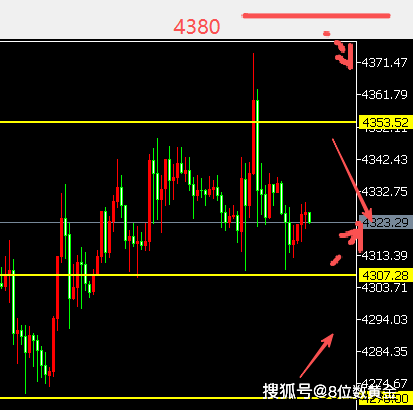
Core Viewpoint - Gold has experienced significant volatility, breaking through resistance levels and then quickly retracing, indicating a need for short-term adjustments while maintaining an overall bullish trend. Market Performance - Gold surged by $70 after breaking through the 4350 resistance area but quickly fell back, testing the 4300 support level [1][4][9] - The market is currently observing a range between 4300 and 4307, with potential for further upward movement towards 4353 and 4380 [5][6][7][8] Economic Factors - The recent decisions by the European and UK central banks, including a 25 basis point rate cut by the Bank of England, have signaled a tightening monetary policy, contributing to gold's recent pullback [11] - Unexpectedly low inflation data from the US, particularly a drop in the November CPI, has opened up policy space for the Federal Reserve, leading to a depreciation of the dollar and supporting gold prices [11] Investment Strategy - The current market conditions suggest a focus on buying opportunities around the 4300-4307 range and potential short positions at 4353 and 4380 [9] - Emphasis is placed on the importance of entry and exit points for gold investments, with a recommendation to follow experienced traders for better accuracy and risk management [12] Broader Market Trends - Industrial metals, including silver, copper, and aluminum, are gaining popularity, indicating a potential shift in capital allocation [13] - The depreciation of the dollar and the decline of Bitcoin suggest a strengthening position for gold amidst tightening monetary conditions [15]
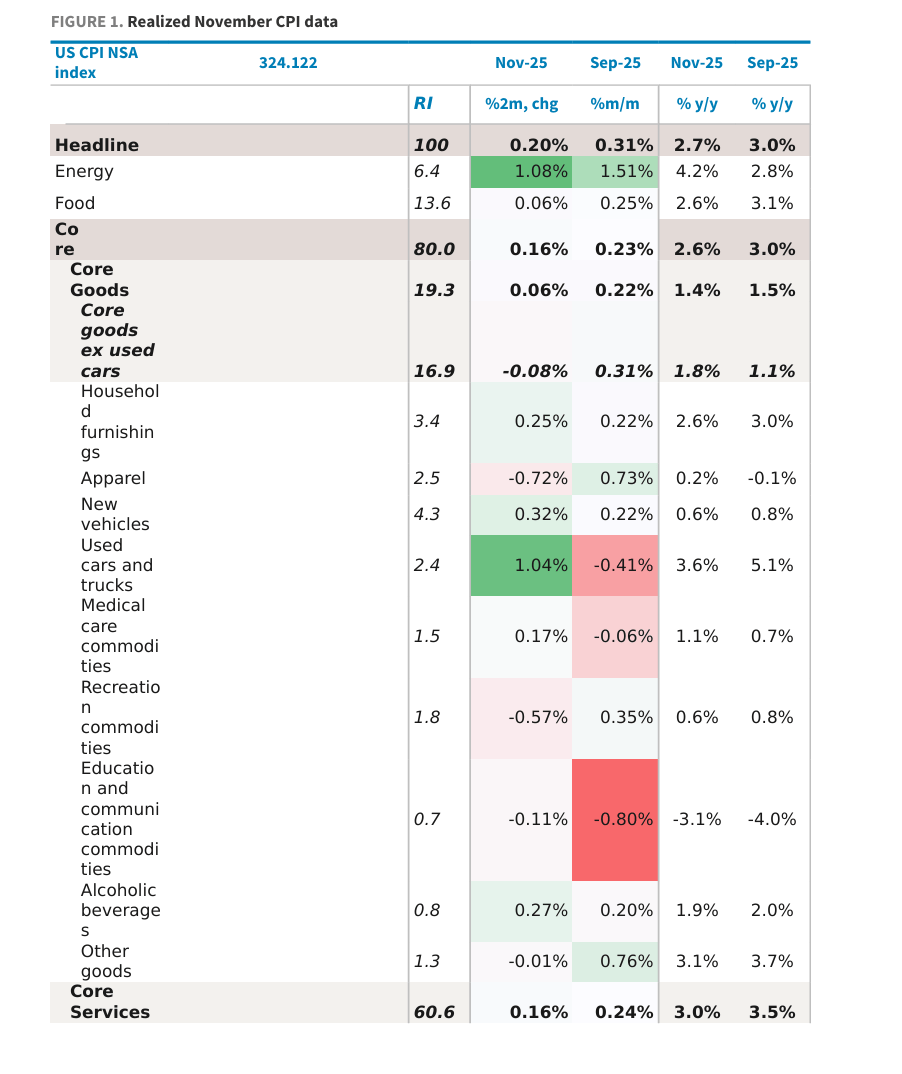
华尔街点评11月CPI:数据偏差明显,美联储不大可能因此政策转向
Sou Hu Cai Jing· 2025-12-19 07:37
Core Insights - The November CPI data indicates a further cooling of inflation, but major Wall Street banks warn that the data is significantly affected by technical distortions and statistical biases, making it difficult to accurately reflect price trends [1][3] - Institutions like Barclays and Morgan Stanley believe that this "noisy" report is insufficient to prompt the Federal Reserve to change its policy stance in the short term [1][3] CPI Data Summary - The November core CPI recorded a growth of only 0.16% (based on the two-month change from September to November), with a year-on-year growth rate dropping to 2.6%, significantly below the market expectation of 3.0% [1][2] - The average monthly increase in core CPI for October and November was only 0.08%, far lower than the previously expected 0.28% [1][2] Data Collection Issues - The report's biggest controversy lies in the technical interference during data collection and processing, with Morgan Stanley describing it as a "noisy" dataset [4] - Barclays identified two core factors leading to the downward bias: the timing of price collection during the "Black Friday" promotional period and the handling of missing rental data [4][5] - Price collection was limited to the latter half of November, which typically sees lower prices for imported goods due to promotions, potentially leading to an underestimation of core CPI by 10-15 basis points [4][5] Housing and Services Inflation Concerns - The significant drop in housing and service sector inflation is seen as a key factor in lowering overall data, but the authenticity of this trend is questioned [6][8] - Barclays reported that rental prices only increased by 0.13% and Owner's Equivalent Rent (OER) by 0.27% over the two months, suggesting an average monthly rental increase of just 6 basis points, which analysts find highly suspicious [8] Policy Implications - Despite the inflation data appearing to provide a rationale for rate cuts, Wall Street analysts caution against overinterpretation [9] - Barclays maintains that the threshold for the Federal Open Market Committee (FOMC) to change policy remains high, with decision-makers focusing on upcoming December employment and inflation data for clearer economic signals [3][9] - Barclays continues to predict two rate cuts in March and June 2026, with rates expected to remain stable until the end of 2027 [9]