反内卷

Search documents
机构论后市丨节后春季行情有望延续;传媒有望承接AI应用新红利
Di Yi Cai Jing· 2026-02-23 09:48
Group 1 - A-shares experienced a rise before the holiday, with the Shanghai Composite Index up 0.41%, the Shenzhen Component Index up 1.39%, and the ChiNext Index up 1.22% [1] - After the Spring Festival, the A-share market is expected to trend upwards due to policy expectations, liquidity support, and industry trends, with a focus on policy-driven opportunities [1] - Key sectors to watch include non-competitive concepts benefiting from improved supply-demand dynamics, such as precious metals, oil and petrochemicals, and basic chemicals [1] - The AI and robotics sectors are anticipated to show structural highlights post-holiday, driven by increased attention during the Spring Festival [1] Group 2 - The Spring market is expected to continue, with price increases being a core focus for the first quarter, as AI technology leads to a significant expansion in code generation [2] - Industries are categorized based on physical dependency and regulatory barriers, indicating a widening gap in returns between beneficiaries of physical scarcity and those affected by code expansion [2] - The A-share market is less impacted by AI disruptions compared to US and Hong Kong markets, maintaining a positive sentiment for continued investment [2] Group 3 - The media sector is poised to benefit from new AI applications, with 2026 being a pivotal year for AI integration in media, enhancing digital marketing and content generation [3] - The Spring Festival showcased AI's potential, leading to increased public awareness and interest in technology applications within the media sector [3] Group 4 - A "red envelope market" is anticipated post-holiday, driven by external uncertainties and a favorable exchange rate for the Chinese yuan, which may enhance long-term investment in Chinese assets [4] - The technology sector is expected to see a boost from various catalysts released during the Spring Festival, raising expectations for a tech-driven market [4] Group 5 - The market is currently in a strong oscillation phase, with mixed signals from overseas markets, indicating a cautious approach to trading [5] - The A-share market is expected to experience a trendless opening post-holiday, with a focus on sectors like AI applications and robotics that have shown potential [6] - A "systematic slow bull" opportunity is still favored, with recommendations to hold positions in relatively undervalued sectors such as securities, building materials, and banks [6]
银河证券:节后A股市场震荡上行概率较大
Xin Lang Cai Jing· 2026-02-23 08:27
银河证券研报认为,春节后,在政策预期、流动性加持与产业趋势催化下,市场震荡上行概率较大,同 时需密切关注海外不确定性对于市场情绪的短期扰动。两会前后,A股市场或将以政策催化为核心驱动 力,资金围绕政策导向的产业主线与主题机会博弈,呈现"政策热点轮动、风格快速切换"的特征。3月 市场逻辑将从"政策预期"逐步转向"业绩兑现",上市公司2025年年报与随后的2026年一季报披露将成为 行情锚点,业绩超预期标的或获得资金聚焦。在配置机会上,重点关注:主线一,供需格局改善与行业 盈利修复带动的"反内卷"概念,以及估值具备安全边际的红利资产,配置逻辑依然清晰,建议关注受益 于价格上涨的有色金属(贵金属)、石油石化行业,以及基础化工、钢铁、水泥、建筑材料、金融等板 块。主线二,春节假期期间,机器人、AI大模型等热点受到广泛关注,节后或将呈现结构性亮点。随 着全球百年未遇之大变局加速演进,国内经济底层逻辑转向新质生产力,半导体、人工智能、新能源、 军工、航空航天等"十五五"重点领域值得关注。 ...
中银证券:金融属性及产业趋势支持有色金属板块 有望迎来盈利与估值双升
智通财经网· 2026-02-23 03:26
Core Viewpoint - The report from Zhongyin Securities indicates that as the market enters the second phase of a bull market driven by profits by 2026, the narrative of domestic re-inflation will strengthen, highlighting the strong cyclical attributes of non-ferrous metals and presenting revaluation opportunities for the industry [1] Group 1: Investment Strategy - The company recommends focusing on industrial metals and strategic minor metals as offensive investments, while using precious metals as a defensive strategy [1] - In the context of industrial metals, copper prices are expected to receive solid support due to a tight mid-term supply-demand balance and a weak dollar cycle that may enhance industry trends [1] - The investment theme for strategic minor metals is shifting from event-driven speculative trading to systematic revaluation based on long-term strategic value [1] Group 2: Specific Metal Insights - For rare earths, the report notes that rigid supply-side policies and recovering demand from exports, along with long-term growth momentum, have created a strong resonance, suggesting that the upward price trend for rare earths is not yet over [1] - Compared to the price increases from 2020 to 2022, the current rise in rare earth prices is relatively moderate, indicating that leading companies still have further profit release potential [1] Group 3: Precious Metals Outlook - The long-term price of gold is expected to remain high, with short-term volatility providing opportunities for positioning [1] - The strong performance certainty of leading companies this year will aid in the valuation recovery of the sector, with expectations for both profit and valuation increases in 2026 [1]

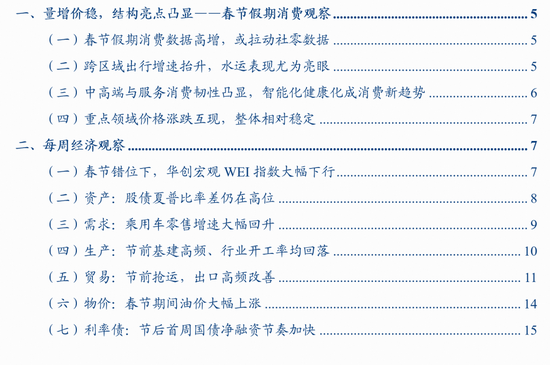
张瑜:量增价稳,结构亮点凸显——春节假期消费观察
Xin Lang Cai Jing· 2026-02-23 02:54
Group 1 - The core viewpoint of the article highlights a significant increase in retail and catering data during the Spring Festival holiday, with a year-on-year growth of 8.6% in the first four days, which is expected to boost the social retail data for the first two months of the year [1][2][52] - The increase in cross-regional travel during the holiday period saw an 8.7% rise compared to the previous year, with water transport showing remarkable growth of 28.5%, influenced by tourism demand and the reopening of Hainan [3][12][54] - Price stability was observed in key sectors, with high-end liquor and hotel prices in popular small cities increasing, while prices in first-tier cities and movie ticket prices saw declines [4][16][55] Group 2 - Structural highlights in consumption include a strong performance in mid-to-high-end products like gold and duty-free items, with gold consumption remaining robust and duty-free sales in Hainan increasing by 20.9% [5][14][56] - Domestic and cross-border travel maintained momentum, with hotel accommodation transaction values rising by 32.7% and a predicted double-digit growth in daily inbound and outbound travelers at national ports [5][14][57] - The trend towards smart and health-oriented consumption was evident, with significant sales growth in smart wearable devices and organic foods during the holiday period [5][14][57] Group 3 - Weekly economic observations indicate a rebound in durable goods consumption, with passenger car retail sales increasing by 54% year-on-year in early February, contrasting with a decline of 13.9% in January [6][24] - Real estate sales showed improvement, with a 5% year-on-year increase in residential sales area in 27 cities as of mid-February, compared to a decline of 16% in January [6][25] - Export activities showed signs of recovery, with a 32.3% increase in the number of outbound port calls compared to the previous year, indicating a positive trend in trade [6][30]

今年经济工作的“新”部署——政策周观察第68期
一瑜中的· 2026-02-23 02:49
文 : 华创证券首席经济学家 张瑜(执业证号:S0360518090001) 联系人: 袁玲玲(微信 Yuen43) 报告摘要 近两周横贯春节假期,政策出台不多,重点关注总书记、韩文秀在求是的重要署名文章,两篇文章均 是对今年经济工作的部署。 1 、政策基调 : 2 月 16 日,中财办分管日常工作的副主任、中央农办主任韩文秀在求是发表署名文 章坚持稳中求进、提质增效 努力实现"十五五"良好开局,"宏观政策重在逆周期调节、短期内稳定经 济大盘,但 如果缺乏改革举措支撑,政策效应会逐步递减,甚至导致经济发展形成'政策依赖症' "。 2 、投资 : 2 月 16 日,总书记在求是发表署名文章《当前经济工作的重点任务》, 该文章是总书 记在去年中央经济工作会议上讲话的一部分。 文章披露的重要提法包括"优化实施'两重'项目,提高中 央投资补助标准。优化地方政府专项债券用途管理, 提高用于项目建设比重并单列 ……探索编制全 口径政府投资计划,提高民生类投资比重"。韩文秀署名文章也提到,"投资于物不能走过去'大干快 上'的老路,而要聚焦实体经济和科技创新……投资于人要聚焦民生改善和人力资源开发,加大对全人 群、全生命周期 ...

量增价稳,结构亮点凸显——春节假期消费观察
一瑜中的· 2026-02-23 02:49
Group 1 - The core viewpoint of the article highlights a significant increase in retail and catering data during the Spring Festival holiday, with a year-on-year growth of 8.6% in the first four days, which is expected to positively impact the social retail data for the first two months of the year [2][3][15] - The increase in travel volume is notable, with cross-regional travel rising by 8.7% compared to the same period last year, particularly driven by improvements in civil aviation and rail travel, as well as a remarkable 28.5% increase in water transport [4][16] - Price stability is observed in key sectors, with high-end liquor and hotel prices in popular small cities showing increases, while prices in first-tier cities for hotels and movie tickets have decreased [5][22][23] Group 2 - Structural highlights in consumption include a strong performance in mid-to-high-end products such as gold and duty-free items, with gold consumption remaining robust and duty-free sales in Hainan increasing by 20.9% [6][19][21] - Domestic and cross-border travel continue to thrive, with hotel accommodation transaction values increasing by 32.7% and domestic flight bookings rising by approximately 9% [19][20] - The trend towards smart and health-oriented consumption is evident, with significant sales growth in smart wearable devices and organic foods, indicating a shift in consumer behavior towards immediate purchasing [20][21] Group 3 - Weekly economic observations indicate a rebound in durable goods consumption, with passenger car retail sales increasing by 54% year-on-year, contrasting with a decline of 13.9% in January [29] - Real estate sales show improvement, with a 5% year-on-year increase in residential sales area as of mid-February, compared to a decline of 16% in January [29] - Export activities have shown signs of recovery, with a 32.3% increase in the number of outbound port calls compared to the previous year, indicating a positive trend in trade [37][38]
摩根大通刘鸣镝:A股进入“慢牛” 外资回流可期
Xin Lang Cai Jing· 2026-02-21 00:47
Core Viewpoint - The A-share market has entered a "slow bull" phase, characterized by moderate and sustained performance, supporting steady index growth [1] Group 1: Market Outlook - The current market cycle is categorized into four stages: recovery (spring), expansion (summer), deceleration (autumn), and contraction (winter), with the Chinese market currently in the "summer" phase [1] - The overall trend for 2025 is expected to be better than anticipated, driven by global economic growth exceeding initial forecasts and supportive fiscal and monetary policies [2] - The MSCI World Stock Index returned 19.5% in USD terms, with the best-performing sectors being communication services (31%) and financials (26%) [2] Group 2: Key Highlights of Chinese Assets - Three main characteristics of Chinese assets in 2025 are identified: innovation in AI, IT, healthcare, and new consumption; "anti-involution" driving growth in raw materials and certain industrial sectors; and stable income and performance in sectors like telecommunications and insurance [2] - The decline of the US dollar from 108.5 to 98.3 (a 9.4% drop) has historically correlated with a 25% increase in the MSCI China Index [2] Group 3: Foreign Capital Flow - Foreign investors are expected to become more optimistic about Chinese assets post-September 2024, as central bank measures restore market confidence [3] - The potential for profit margin improvements in listed companies may attract foreign investment, particularly if mid-term profit margins can rise significantly [3] Group 4: Investment Preferences - Global and Asia-focused funds currently have the lowest allocation to mainland stocks, while funds excluding the US recognize the competitive capabilities of Chinese companies [4] - Internet and consumer sectors are anticipated to benefit first from increased foreign allocations, along with leading companies in sectors like energy storage [4] Group 5: Future Expectations - The A-share market is expected to continue its "slow bull" trend into 2026, with a focus on fiscal stimulus and corporate capital expenditure confidence [6] - Growth and performance-oriented stocks are favored, particularly in themes related to AI infrastructure, "anti-involution," exports, and real estate recovery [7] - The differentiation within industries is high, making stock selection increasingly important in the ongoing "slow bull" market [7]

慢下脚步,等等年
Xin Lang Cai Jing· 2026-02-20 16:32
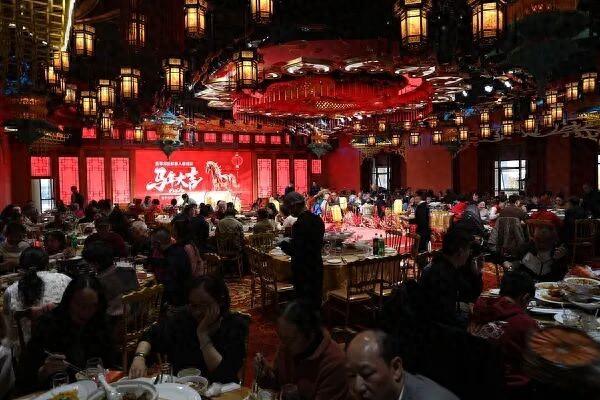
Core Insights - The article emphasizes the importance of recognizing the value of rest, family, and cultural heritage during the Spring Festival, suggesting that these aspects should be integrated into the discourse on high-quality development and human investment [1][5][12] Group 1: Social Reproduction and Labor Rights - The concept of social reproduction highlights the tension between market labor and the need for rest, particularly evident during the Spring Festival, where trends like "no holiday" and "overtime work" challenge workers' rights to rest [4][8] - The state plays a crucial role in establishing public holidays to protect workers' rights to mandatory rest, reflecting a commitment to the physical and mental well-being of laborers [5][14] Group 2: Cultural Transmission and Community - The Spring Festival serves as a vital period for cultural transmission and social bonding, with traditional activities reinforcing community ties and cultural identity [9][11] - The holiday is not only a labor protection tool but also a means of safeguarding cultural rights and fostering national spirit, contributing to social cohesion and cultural continuity [11][12] Group 3: Anti-Overwork and Quality of Life - The phenomenon of "involution," characterized by excessive competition and low efficiency, is prevalent in various sectors, necessitating a societal consensus to respect workers' rights to holiday and leisure [8][9] - The call to "slow down" during the Spring Festival is framed as a return to valuing human beings as ends in themselves, rather than mere means to economic growth [12][14]
申万宏源证券首席经济学家赵伟:2026年,聚焦“顺周期”新叙事与资金“再平衡”
赵伟宏观探索· 2026-02-20 16:02
Core Viewpoint - The year 2026 marks the beginning of the "15th Five-Year Plan" and is a critical juncture for economic transformation and institutional reform, with a non-typical "recovery" state expected, leading to improved corporate profitability and significant structural differentiation across industries and companies [3] Group 1: Economic Recovery and Policy Measures - The policy focus on "anti-involution" aims to curb low-price competition, restore damaged profit margins, and promote a positive Producer Price Index (PPI) and profit recovery [3] - The emphasis on "investing in people" through social security reforms and service industry openness is expected to continuously unlock growth in service consumption [3] - Fiscal policies will play a crucial role in enhancing domestic demand, with increased debt relief efforts to mitigate the "crowding out effect" on investment funds, ensuring steady recovery in fixed asset investments, particularly in equipment upgrades, digital infrastructure, and energy transition [3] Group 2: Capital Market Dynamics - In the short term, the A-share market is expected to experience a continuation of capital "rebalancing" under a "pro-cyclical" narrative, with funds likely flowing from low-yield, high-volatility bond markets to equity markets, driving asset price revaluation [4] - Despite uncertainties in external trade, the domestic policy toolbox remains robust, and the continuous optimization of export structures indicates resilience in economic development [4] - The capital market is anticipated to reflect not only quantitative economic growth but also qualitative improvements in pricing and profitability, with A-shares expected to gradually elevate their central tendency amidst volatility [4] Group 3: Long-term Structural Changes - Over the long term, the "transformation" of industries and the "dividends" from reforms during the "15th Five-Year Plan" will be central to high-quality development [4] - Key areas of focus include the construction of a unified national market, financial and tax system reforms, and breaking down institutional barriers to stimulate the vitality of business entities [4] - The cultivation of "new productive forces" alongside deep reforms will provide a solid rationale for the long-term revaluation of Chinese assets [4] Group 4: Key Areas of Attention for 2026 - The construction of a unified market will encompass foundational market systems, infrastructure, resource markets, government behavior standards, and market regulation enforcement, with an acceleration of institutional openness expected [5] - The green transition will be a significant policy focus, emphasizing energy-saving and carbon-reduction transformations in traditional high-energy-consuming industries through technological innovation and capacity replacement [5] - The combination of green transformation and industrial upgrading aims to enhance the core competitiveness of traditional industries, achieving a dual win of "carbon reduction" and "quality improvement" [5]

申万宏源证券首席经济学家赵伟:2026年,聚焦“顺周期”新叙事与资金“再平衡”
申万宏源宏观· 2026-02-19 16:02
Core Viewpoint - The year 2026 marks the beginning of the "15th Five-Year Plan" and is a critical juncture for economic transformation and institutional reform, with a non-typical "recovery" state expected, leading to improved corporate profitability and significant structural differentiation across industries and companies [3] Group 1: Economic Recovery and Policy Measures - The policy focus on "anti-involution" aims to curb low-price competition, restore damaged profit margins, and promote a positive Producer Price Index (PPI) and profit recovery [3] - The emphasis on "investing in people" through social security reforms and service industry openness is expected to continuously unlock growth in service consumption [3] - Fiscal policies will play a crucial role in enhancing domestic demand, with increased efforts to alleviate the "crowding out effect" on investment funds, ensuring steady recovery in fixed asset investments, particularly in equipment upgrades, digital infrastructure, and energy transition [3] Group 2: Capital Market Outlook - In the short term, the A-share market is expected to experience a continuation of capital "rebalancing" under a new "pro-cyclical" narrative, with funds likely flowing from low-yield, high-volatility bond markets to equity markets, driving asset price revaluation [4] - Despite uncertainties in external trade, the domestic policy toolbox remains robust, and the continuous optimization of export structures indicates resilience in economic development [4] - The capital market is anticipated to reflect not only quantitative economic growth but also qualitative improvements in pricing and profitability, with A-shares expected to gradually elevate their central tendency amidst volatility [4] Group 3: Long-term Structural Changes - During the "15th Five-Year Plan," industrial "transformation" and reform "dividends" will be key engines for high-quality development, focusing on breaking institutional bottlenecks and stimulating the vitality of business entities [4] - Key areas for attention in 2026 include the construction of a unified national market, high-level opening-up, accelerated green transformation, social security, and financial system reforms [4] Group 4: Unified Market and Green Transformation - The construction of a unified market involves establishing basic market systems, infrastructure, resource markets, government behavior standards, and market regulation, alongside expanding both domestic and international openness [5] - The acceleration of green transformation will focus on energy-saving and carbon-reduction modifications in traditional high-energy-consuming industries, promoting low-carbon and efficient transitions through technological innovation and capacity replacement [5] - The combination of green transformation and industrial upgrading is expected to enhance the core competitiveness of traditional industries, achieving a dual win of "carbon reduction" and "quality improvement" [5]