贸易战

Search documents
美国专家感叹“中国彻底赢了”,一万亿美元让他们心服口服
Sou Hu Cai Jing· 2025-12-12 23:13
Core Insights - China's trade surplus reached an unprecedented $1.08 trillion from January to November, indicating a significant shift in global economic dynamics, challenging U.S. hardline policies [1][3] - The U.S. strategy of imposing tariffs to weaken China's economy has backfired, as China has successfully diversified its export markets and supply chains [3][5] Trade Dynamics - The structure of China's exports has changed, with the U.S. share dropping from nearly 20% to below 15% by 2025, while exports to the EU and ASEAN have surged to $508 billion and $599 billion respectively [5][7] - Latin America has also shown strong demand, compensating for any losses in the U.S. market, demonstrating China's ability to adapt and expand its trade relationships [7] Strategic Moves - In December 2024, China announced zero-tariff treatment for all least developed countries, a strategic move to secure resource supply chains and enhance mutual trade [8][10] - This approach not only stabilizes China's raw material supply but also strengthens economic ties with resource-rich nations lacking infrastructure [10] Resource Management - China's advancements in critical materials have diminished U.S. leverage, as U.S. agricultural exports are losing competitiveness against alternatives from countries like Argentina and Australia [12][14] - The competition for the Chinese market has intensified among these countries, while the U.S. struggles to find substitutes for Chinese industrial goods [14] U.S. Economic Strategy - The U.S. faces a dilemma: continue escalating tariffs or opt for a soft landing by reducing tariffs to stabilize its economy and address inflation [19][21] - The ongoing trade war has not destabilized China but has instead prompted it to seek new partnerships and enhance its industrial layout, while the U.S. risks losing its influence [21][23]


50%关税压垮巴西咖啡,美关税恶果外溢多国经济受创
Zhong Guo Xin Wen Wang· 2025-12-12 07:48
Group 1 - The U.S. has initiated a chaotic trade war since January, leading to the highest average import tariffs since the 1930s, which is causing rising prices in the U.S. and negatively impacting global economies [1] - Switzerland's economy experienced its largest contraction since the COVID-19 pandemic, attributed to significant declines in the chemical and pharmaceutical sectors, linked to the volatility in foreign trade due to U.S. tariff policies [1] - Japan's economy also contracted in the third quarter, primarily due to declining exports and reduced private residential investment [1] Group 2 - Canada has seen a reduction of 36,500 jobs in the manufacturing sector since the beginning of the year, marking the lowest labor force level since September 2021, with manufacturing being one of the hardest-hit industries by U.S. tariff policies [2] - From August to mid-November, Brazilian coffee exports to the U.S. faced a 50% tariff, making it nearly impossible for Brazilian exporters to access the U.S. market, resulting in over a 50% decrease in coffee imports from Brazil compared to the previous year [2] - The coffee industry contributes up to 1.8% to Brazil's GDP, with approximately 3% of the national labor force employed in coffee cultivation, including seasonal and indirect jobs [2]
押上整个美国,让中国倒退25年?中国一组数据却让特朗普认清现实
Sou Hu Cai Jing· 2025-12-11 14:54
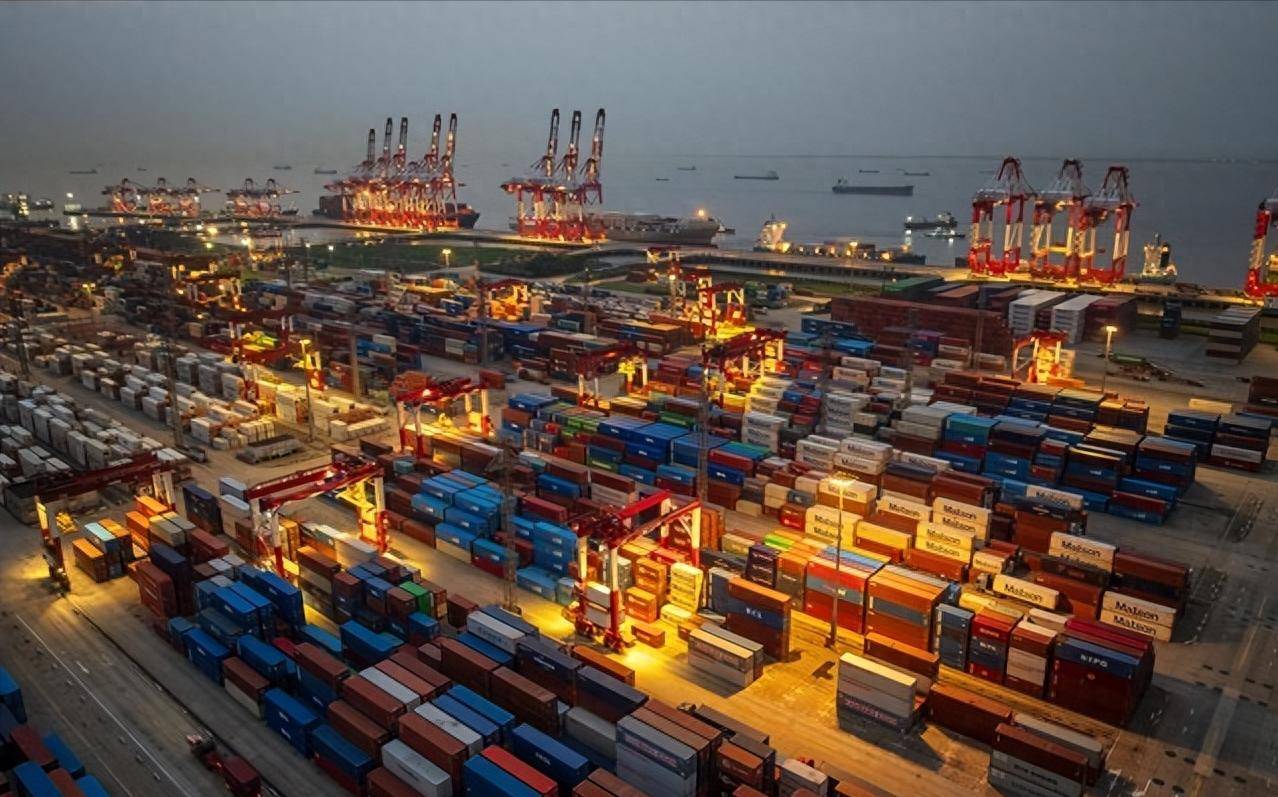
Group 1 - In the first eleven months of 2025, China's goods trade surplus exceeded $1 trillion for the first time, despite a significant decline in exports to the United States [1][3] - The total value of China's imports and exports reached 41.21 trillion yuan, a year-on-year increase of 3.6%, with exports at 24.46 trillion yuan (up 6.2%) and imports at 16.75 trillion yuan (up 0.2%) [3] - In November alone, the growth rate of imports and exports surged to 4.1%, marking the tenth consecutive month of growth [5] Group 2 - China's trade surplus with the United States dropped to $233.4 billion in the first ten months of 2025, falling to second place behind Hong Kong's surplus of $243.2 billion [7] - During Trump's first term, Chinese goods accounted for 21% of total U.S. imports, but this figure has now decreased to 9%, reverting to levels seen when China joined the WTO [9] - U.S. manufacturing has lost 54,000 jobs since the end of last year, with construction spending by manufacturers declining after peaking last year [11] Group 3 - The trade war initiated by Trump has reverted U.S.-China trade dynamics to a 25-year-old pattern, yet the anticipated regression of China has not occurred; instead, the U.S. faces challenges [12][38] - A factory in Shenzhen that produced battery casings for a U.S. automaker lost its contract due to tariff issues, leading the automaker to seek production in Mexico, which ultimately proved less efficient [13][15] - Nearly 30% of the components in goods exported from Mexico to the U.S. originate from China, indicating a deep supply chain interdependence that cannot be easily severed [19] Group 4 - In the first ten months, China recorded a surplus of $965.5 billion with India and $619.2 billion with the Netherlands, with the top ten surplus sources covering over 200 countries and regions, accounting for more than 90% of the total surplus [28] - A Zhejiang small appliance company, which previously relied on the U.S. for 40% of its exports, has diversified its markets through RCEP, resulting in a 25% increase in total exports and a reduction of U.S. export share to 18% [28] - The U.S. manufacturing sector is struggling with high labor costs and recruitment challenges, exacerbated by tariffs on raw materials, which have weakened its competitive edge [32] Group 5 - The opening of a new railway has reduced cross-border logistics costs by 30%, enhancing the supply chain connectivity between China and Southeast Asia [34] - A company in Yunnan has seen a 42% increase in exports to Southeast Asia due to improved logistics through the China-Laos railway, demonstrating the benefits of market diversification [36] - The global supply chain is deeply interconnected, and China's trade surplus exceeding $1 trillion is supported by a diverse range of trade partners rather than reliance on a single market [38][40]
山金期货贵金属策略报告-20251211
Shan Jin Qi Huo· 2025-12-11 11:16
Report Industry Investment Rating - Not provided in the given content Core Viewpoints - Today, precious metals showed high-level differentiation. Shanghai Gold's main contract closed up 0.21%, Shanghai Silver's main contract closed up 3.07%, Platinum's main contract closed down 0.48%, and Palladium's main contract closed down 0.68% [1] - In the short - term, trade - war related hedging has subsided, but geopolitical risks remain. The US employment is weakening and inflation is moderate, leading to a slowdown in interest - rate cut expectations [1] - The Fed cut the interest rate with internal differences, hinting at a pause in action and possibly only one rate cut next year. The current market expects the probability of no rate cut in January 2026 to remain around 80%, and the next possible rate cut may be in April [1] - Precious metals are expected to be weakly volatile in the short - term, highly volatile in the medium - term, and to rise step - by - step in the long - term [1] - The price trend of gold is the anchor for the price of silver. In terms of capital, CFTC silver net long positions and iShare silver ETF have slightly increased their positions. In terms of inventory, the recent visible inventory of silver has slightly increased [5] Summary by Directory 1. Gold - **Price Performance**: Comex gold's main contract closed at $4258.30 per ounce, up 0.51% from the previous day and 0.55% from last week. London gold was at $4200.15 per ounce, up 0.05% from the previous day and down 0.24% from last week. Shanghai Gold's main contract closed at 957.90 yuan per gram, up 0.16% from the previous day and 0.47% from last week [2] - **Position and Inventory**: Comex gold's position was 459,997 lots (100 ounces per lot), Shanghai Gold's main contract position decreased by 0.25% from the previous day and 2.76% from last week. LBMA gold inventory was 8598 tons with no change, Comex gold inventory decreased by 1.08% from last week [2] - **Investment Strategy**: For gold, conservative investors are advised to wait and see, while aggressive investors can buy low and sell high. Good position management and strict stop - loss and take - profit are recommended [2] 2. Silver - **Price Performance**: Comex silver's main contract closed at $62.20 per ounce, up 1.70% from the previous day and 5.55% from last week. London silver was at $61.04 per ounce, up 4.10% from the previous day and 4.57% from last week. Shanghai Silver's main contract closed at 14,488 yuan per kilogram, up 0.80% from the previous day and 7.93% from last week [6] - **Position and Inventory**: LBMA silver inventory increased by 10.60% from last week, Comex silver inventory decreased by 0.07% from last week, and Shanghai Silver's inventory increased by 19.34% from last week [6] - **Investment Strategy**: Similar to gold, conservative investors are advised to wait and see, while aggressive investors can buy low and sell high. Good position management and strict stop - loss and take - profit are recommended [6] 3. Fundamental Key Data - **Fed - related Data**: The upper limit of the federal funds target rate is 3.75%, the discount rate is 4.00%, and the reserve balance interest rate (IORB) is 3.65%, all decreased by 0.25% compared to before. The Fed's total assets are $6586.185 billion, down $164.12 billion from before [8] - **Inflation Data**: The year - on - year CPI is 3.00%, the month - on - month CPI is 0.30%, the year - on - year core CPI is 3.00%, and the month - on - month core CPI is 0.30% [10] - **Economic Growth Data**: The annualized year - on - year GDP is 2.00%, and the annualized quarter - on - quarter GDP is 3.80% [10] - **Employment Data**: The unemployment rate is 4.40%, and the monthly change in non - farm payrolls is 11.90 million [10] - **Other Data**: The geopolitical risk index is 123.60, down 22.89% from before; the VIX index is 15.77, down 6.85% from the previous day and 1.93% from last week; the CRB commodity index is 301.38, up 0.58% from the previous day and down 0.84% from last week [11] 4. Fed's Latest Interest Rate Expectations - The probability of the Fed keeping the interest rate in the 350 - 375 range in January 2026 is 77.9%. The probability distribution of interest - rate ranges changes over different meeting dates from 2026 to 2027 [12]
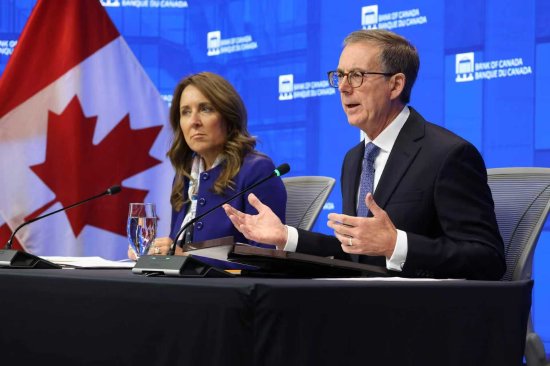
加拿大央行维持利率在2.25%不变 称经济面对关税表现出韧性
Xin Lang Cai Jing· 2025-12-10 15:34
Core Viewpoint - The Bank of Canada has decided to maintain its interest rate at 2.25%, indicating that the current borrowing costs are appropriate to mitigate the impacts of trade wars, despite stronger-than-expected economic performance [1][4]. Economic Performance - Recent data shows that the Canadian economy has demonstrated resilience, with the job market adding 181,000 positions over the past three months [4][6]. - The annualized real GDP growth for the third quarter unexpectedly increased by 2.6% [4][6]. Monetary Policy - The Bank of Canada believes that the current policy rate is "roughly appropriate" if its October forecasts hold true, and it considers maintaining borrowing costs at the lower end of the neutral range to be suitable [1][4]. - The central bank is prepared to respond if there are changes in the economic outlook [3][4].
特朗普用三个字,让莫迪清楚意识到:印度与中国的差距
Sou Hu Cai Jing· 2025-12-10 06:10
Core Viewpoint - The recent U.S. meeting highlighted India's vulnerability in trade relations, particularly regarding rice exports, as President Trump expressed concerns over India's alleged dumping practices that harm American farmers [1][3]. Group 1: U.S.-India Trade Relations - Trump questioned the fairness of India's rice exports and suggested that they should be subject to tariffs, indicating a shift in U.S. trade policy focus towards India [3]. - The U.S. administration's stance reflects a broader strategy to address perceived trade imbalances, with India being pressured for greater market access and concessions [5]. - India's previous attempts to foster a special relationship with the U.S. through tariff reductions and military procurement have not yielded the expected benefits, exposing its weaknesses in negotiations [5]. Group 2: India's Strategic Response - In response to U.S. pressure, India has sought to diversify its partnerships, notably with Russia, to signal its strategic autonomy and reduce reliance on the U.S. [7]. - Despite India's efforts to balance its relations with Russia, the U.S. has intensified its demands, indicating that India's strategy may not effectively counter U.S. pressure [7][9]. - The contrasting responses of China and India to U.S. trade actions highlight India's limitations in leveraging its position, as China has employed robust countermeasures while India remains cautious [9]. Group 3: International Trade Dynamics - The situation underscores the reality that having ambitions as a major power is insufficient without the corresponding capabilities to assert those ambitions effectively [9]. - The dynamics of power politics reveal that not all nations can adopt a confrontational stance against superpowers like the U.S. without facing significant repercussions [9].

印度再成 “眼中钉”,大米地位保不住
Sou Hu Cai Jing· 2025-12-10 04:43
Core Viewpoint - The article discusses President Trump's aggressive stance towards India's rice exports and the implications for U.S. farmers, highlighting the intersection of domestic political pressures and international trade dynamics [1][3][6]. Group 1: U.S. Rice Industry - U.S. rice prices are declining, putting pressure on Southern rice farmers, prompting industry leaders to seek intervention from the government [3]. - Trump's accusations of "dumping" against India, Thailand, and China reflect a broader strategy to protect U.S. agricultural interests amid rising inflation and consumer prices [3][6]. - The stock prices of Indian rice exporters fell sharply following Trump's remarks, indicating immediate market reactions to his statements [3][9]. Group 2: Trade Relations and Policies - The ongoing trade tensions between the U.S. and India have been marked by previous negotiations and disputes over tariffs, with Trump's recent comments potentially jeopardizing years of diplomatic efforts [4][6]. - Trump's approach to trade, characterized by threats of tariffs and public accusations, raises questions about the fairness and stability of international trade rules [4][6][7]. - The potential for retaliatory measures from affected countries could lead to increased costs for U.S. consumers, complicating the narrative of protecting domestic farmers [6][9]. Group 3: Political Implications - Trump's actions serve to bolster his image as a strong leader among his voter base, particularly farmers, while simultaneously creating pressure on international competitors [7][9]. - The immediate financial impacts of Trump's statements highlight his focus on short-term political gains over long-term economic sustainability [9]. - The article suggests that Trump's style of governance, which combines economic and political strategies, may lead to increased tensions in global trade relations [7][9].

关税回旋镖,美国拨付120亿美元救农业
Huan Qiu Shi Bao· 2025-12-09 22:43
Core Viewpoint - The U.S. government is launching a $11 billion agricultural relief fund to support farmers facing financial difficulties due to tariffs, low crop prices, and rising production costs [1][3]. Group 1: Relief Fund Details - The relief fund will be allocated to crop growers including corn, cotton, sorghum, soybeans, rice, and wheat, with payments expected to be completed by the end of February next year [3]. - An additional $1 billion will be reserved for future allocation to fruit and vegetable growers based on needs [3]. Group 2: Current Challenges for Farmers - U.S. farmers are experiencing a surge in bankruptcy rates, with approximately 181 farmers filing for bankruptcy protection in the first half of this year, marking a 60% increase compared to the same period last year and the highest level since 2020 [3]. - The trade war with China has severely impacted U.S. soybean exports, which previously relied on China as their largest overseas buyer, accounting for half of U.S. soybean exports [3]. Group 3: Economic Impact and Future Needs - Estimates suggest that the $12 billion relief plan may only cover about one-third of the actual losses faced by farmers, with projected losses for this fall ranging from $35 billion to $43 billion [4]. - Farmers are facing ongoing challenges with production costs, including equipment and fertilizer, which have been rising for years, compounded by high production loan interest rates and global trade tensions [4]. - Agricultural groups are calling for more comprehensive measures and long-term structural reforms to address the ongoing pressures in the agricultural sector [4].

山金期货贵金属策略报告-20251209
Shan Jin Qi Huo· 2025-12-09 11:20
1. Report Industry Investment Rating - Not provided in the report 2. Core View of the Report - The short - term outlook for precious metals is weak with fluctuations, the medium - term outlook is high - level oscillation, and the long - term outlook is a step - by - step upward trend. The price trend of gold is the anchor for the price of silver. [1][6] 3. Summary by Relevant Catalogs Gold - **Market Performance**: Today, precious metals showed high - level differentiation. The main contract of Shanghai gold closed down 0.92%, Shanghai silver down 0.68%, platinum down 1.30%, and palladium up 0.47%. [1] - **Core Logic** - **Short - term Risk Aversion**: The risk aversion caused by the trade war has subsided, but geopolitical risks still exist. The US employment is weakening, inflation is moderate, and the expectation of interest rate cuts remains. [1] - **Hedging Attribute**: Putin met with Trump's special envoy and Kushner to discuss possible ways to end the Ukraine war. The results and consensus of China - US economic and trade consultations were announced. Geopolitical risks in the Middle East and other regions still exist. [1] - **Monetary Attribute**: Speeches by Federal Reserve Governor Waller and New York Fed President Williams increased the possibility of a Fed interest rate cut. The Fed's Beige Book showed that US economic activity changed little, but the government shutdown suppressed demand in many places. US consumer spending in September increased moderately, and inflation reached the fastest growth rate in nearly a year and a half. The number of initial jobless claims in the US last week unexpectedly decreased by 27,000 to 191,000, the lowest level since September 2022. The US government ended the shutdown, and the market is waiting for more economic data. Currently, the market expects the probability of a 25 - basis - point interest rate cut by the Fed in December to soar by nearly 90%. The US dollar index and US Treasury yields fluctuated strongly. [1] - **Commodity Attribute**: The CRB commodity index fluctuated weakly, and the appreciation of the RMB was negative for domestic prices. On the demand side, the hydrogen energy industry is listed as a strategic emerging industry, which forms a long - term strong expectation for the demand for platinum - based catalysts. Palladium faces long - term structural pressure in the fuel - vehicle market. [1] - **Strategy**: Conservative investors should wait and see, while aggressive investors can buy low and sell high. It is recommended to manage positions well and set strict stop - loss and take - profit levels. [3] Silver - **Price Anchor**: The price trend of gold is the anchor for the price of silver. [6] - **Fund and Inventory**: CFTC silver net long positions and iShare silver ETF had a slight increase in positions. The recent explicit inventory of silver increased slightly. [6] - **Strategy**: Conservative investors should wait and see, while aggressive investors can buy low and sell high. It is recommended to manage positions well and set strict stop - loss and take - profit levels. [7] Fundamental Key Data - **Federal Reserve Indicators**: The upper limit of the federal funds target rate is 4.00%, the discount rate is 4.00%, the reserve balance interest rate (IORB) is 3.90%, and the Fed's total assets are 658.6185 billion US dollars. M2 increased by 4.65% year - on - year. The 10 - year US Treasury real yield is 2.51, the US dollar index is 99.11. [9] - **Other Key Indicators**: There are various data on US inflation, economic growth, labor market, real estate market, consumption, industry, trade, and economic surveys, as well as data on central bank gold reserves, IMF foreign exchange reserve ratios, and other aspects. [11][12] - **Fed Interest Rate Expectations**: According to the CME FedWatch tool, the market has different expectations for the Fed's interest rate at different meeting dates from December 2025 to October 2027. [13]
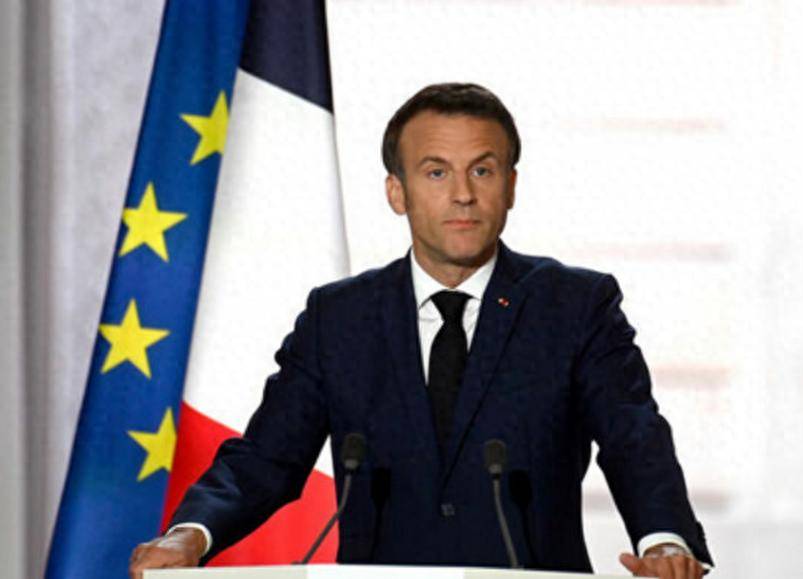
刚回国,马克龙就喊话中国伸援手救欧洲,警告贸易继续失衡将加税
Sou Hu Cai Jing· 2025-12-09 05:32
Core Viewpoint - Macron's recent statements reflect a call for Chinese investment and technological assistance to address Europe's industrial survival crisis, while simultaneously warning of potential tariff actions against China if trade imbalances are not resolved [1][4]. Group 1: Trade Imbalance and Economic Concerns - Macron emphasizes the urgent need for Chinese investment and technology to save European industries facing challenges such as energy crises, industrial outflow, and lack of innovation [1]. - The narrative of trade imbalance is highlighted, with Macron and other European leaders focusing on the trade deficit with China while downplaying the EU's service trade surplus and profits earned by European companies in China [3]. - The argument that China is undermining European customers is criticized as a misrepresentation of market dynamics, suggesting that European industries must adapt to remain competitive [3]. Group 2: Tariff Threats and Internal Challenges - The effectiveness of tariff threats against China is questioned, as imposing tariffs may primarily harm European consumers rather than achieving desired outcomes [4]. - Macron's warnings are seen as a strategy to seek cooperation through mutual benefits, particularly hoping for Chinese investments to align with European expectations [4]. - The internal divisions within Europe regarding industrial policy and market rules complicate a unified external stance against China, highlighting the need for internal reform and integration [4]. Group 3: Global Economic Power Dynamics - Macron's statements reflect Western discomfort with shifting global economic power structures, where traditional definitions of fair trade and reasonable deficits are becoming outdated [5]. - The outcome of the current trade dynamics is likely to lead to a more competitive Europe and a China with greater influence in global rule-making, rather than a simple trade war [5]. - The ongoing negotiations and potential friction indicate that both Europe and China must navigate their respective challenges without resorting to decoupling, which would be detrimental to both parties [5].