贸易逆差

Search documents
美国预算赤字和贸易逆差:收益率曲线陡峭化和信用评级下调的催化剂
Refinitiv路孚特· 2025-08-29 06:04
Core Viewpoint - The article highlights the increasing pressure on the US economy due to expanding trade and budget deficits, which are leading to a steeper yield curve and weakening credit conditions [1][4]. Economic Indicators - The US GDP is projected to contract by 0.3% in Q1 2025, driven by increased imports and reduced government spending, although this is partially offset by rising consumer spending and exports [1][2]. - In the first quarter of 2025, imports surged by 41.3% before tariffs were fully implemented, with March imports reaching $346 billion and the trade deficit widening to $163 billion [1][3]. Employment and Consumer Confidence - The consumer confidence index fell by 9% from March to April 2025, yet job creation exceeded expectations and the unemployment rate remained stable at 4.2% [2]. - Despite the resilience of the job market, the implementation of tariffs is expected to negatively impact employment conditions [2]. Trade Deficit Dynamics - The overall trade deficit has increased since the implementation of tariffs, despite a reduction in the trade deficit with China during Trump's first term [2][4]. - Countries like Vietnam and Thailand have benefited from supply chain shifts, increasing their trade surplus with the US [2]. Credit and Fiscal Concerns - Moody's downgraded the US credit rating from Aaa to Aa1 due to rising fiscal deficits and increasing federal debt, with the five-year credit default swap (CDS) spread widening by 20 basis points [3][4]. - The yield curve has steepened, with the 30-year Treasury yield reaching a 19-month high amid concerns over fiscal sustainability and trade tensions [3][5]. Future Projections - The tax reform bill passed by the House is expected to add $3.1 trillion to the national debt over the next decade, potentially pushing the budget deficit close to 7% of GDP in the coming years [5]. - The debt-to-GDP ratio is projected to increase by 8% to 10% over the four-year term, with long-term bond yields expected to rise significantly, potentially exceeding 6% in the coming years [6].

【日经BP书籍】日元贬值的背后:虚假的贸易顺差国
日经中文网· 2025-08-29 02:48
Core Viewpoint - The long-term depreciation of the Japanese yen, which began in 2022 and continues into 2025, is primarily driven by underlying issues in Japan's trade balance rather than just interest rate differentials between the US dollar and the yen [6]. Group 1: Trade Balance Analysis - Japan's trade balance statistics reveal a disconnect from actual cash flows, indicating that Japan has entered a trade deficit when considering the "digital deficit" issue [6]. - The reliance on US IT giants, high costs of overseas insurance and pension services, and stagnation in domestic R&D capabilities are significant economic problems affecting Japan's international trade [6]. Group 2: Currency and Cash Flow Dynamics - The fluctuations in exchange rates reflect the movement of cash flows, which helps to understand the complex dynamics of global trade and the competition between nations [6].

泰国对华贸易逆差扩大 进口商品前十榜单公布
Shang Wu Bu Wang Zhan· 2025-08-28 15:33
Core Insights - Thailand's total exports to China reached $20.92 billion, an increase of 18.8% [1] - Imports from China amounted to $49.51 billion, growing by 31.8% [1] - The trade deficit with China expanded to $28.53 billion [1] Trade Composition - Major imported goods include capital goods, raw materials, semi-capital goods, machinery, steel, and electronic circuit boards, which are expected to positively impact Thailand's economy [1] - The volume of household appliances imported remains high [1] Top Imported Goods from China - Electrical machinery and parts: $8.677 billion [1] - Machinery and parts: $5.002 billion [1] - Household appliances: $3.269 billion [1] - Chemical products: $2.972 billion [1] - Computers and equipment: $2.806 billion [1] - Steel and related products: $2.313 billion [1] - Other metal raw materials, scrap metal, and their products: $1.956 billion [1] - Circuit boards: $1.871 billion [1] - Jewelry and precious metals (silver bars and gold): $1.736 billion [1] - Metal products: $1.626 billion [1]
波黑肉类贸易逆差严峻,进出口覆盖率为12%
Shang Wu Bu Wang Zhan· 2025-08-27 15:39
Core Insights - Bosnia and Herzegovina's meat products have shown a significant trade deficit in the first half of the year, becoming the largest source of deficit in the agricultural and food sector [1] - The total agricultural trade deficit reached 2 billion marks, accounting for 32% of the country's overall trade deficit, with meat exports covering only 12% of imports [1] Trade Data Summary - In the first seven months of the year, Bosnia's meat imports exceeded 381 million marks, while exports were only 30.6 million marks [1] - Major sources of meat imports include the Netherlands, Italy, Poland, Belgium, and Serbia [1] Economic Implications - Economists warn that the current import structure exacerbates trade balance pressures, highlighting the urgent need to strengthen domestic production and support local farmers [1] - Despite the significant potential for livestock development in Bosnia, domestic producers struggle to compete with foreign products in terms of scale and pricing [1] Market Challenges - The competitive landscape has led to numerous farm closures, with many farmers forced out of the market due to a lack of competitiveness [1] - There are growing health concerns regarding imported frozen meat, which often contains preservatives, raising consumer worries about food safety [1]
特朗普对印度50%关税威胁生效,为美国对所有国家关税的最高水平!旨在惩罚印度进口俄罗斯石油并为俄罗斯提供资金
Ge Long Hui· 2025-08-27 09:49
Group 1 - The threat of increasing tariffs on Indian imports to 50% by the Trump administration has become a reality, potentially jeopardizing US-India relations and raising consumer prices [2] - The tariffs are part of a strategy to penalize India for importing Russian oil and funding Russia, amidst ongoing negotiations to resolve the conflict in Ukraine [3] - The US trade deficit with India has significantly widened over the past decade, with total imports from India reaching $87 billion last year, while exports were approximately $42 billion [6] Group 2 - Major imports from India include pharmaceuticals, smartphones, and clothing, with smartphones exempt from the new tariffs, while steel and aluminum products will face the full 50% tariff [6] - The sectors most vulnerable to retaliatory tariffs from India include oil and gas products, chemicals, and aerospace components, which are the top exports from the US to India [6] - India has accused the Trump administration of unfairly targeting it with tariffs, noting that other countries importing Russian oil do not face similar penalties [5]

香港7月进出口货值均录得同比双位数增长
Zhong Guo Xin Wen Wang· 2025-08-27 01:03
Core Insights - In July 2025, Hong Kong's overall export and import values recorded year-on-year increases of 14.3% and 16.5%, respectively [1][3]. Trade Performance - The total export value for July 2025 was HKD 446.3 billion, reflecting a 14.3% increase compared to the previous year [3]. - The total import value for the same month was HKD 480.4 billion, showing a 16.5% year-on-year growth [3]. - A tangible trade deficit of HKD 34.1 billion was recorded in July, equivalent to 7.1% of the import value [3]. Year-to-Date Trends - For the first seven months of 2025, the overall export value increased by 12.7%, while the import value rose by 13.2% [3]. - A cumulative tangible trade deficit of HKD 218.6 billion was noted, representing 7% of the total import value during this period [3]. Market Dynamics - The spokesperson for the Hong Kong Special Administrative Region government indicated that July's export performance was robust, with significant growth in exports to mainland China and most other Asian markets [3]. - However, exports to the United States and the European Union experienced a decline [3]. - Future prospects for Hong Kong's trade performance are supported by steady economic growth in Asia, particularly in mainland China, and increasingly close economic ties with various markets [3].
6月份欧盟和欧元区贸易顺差下降
Shang Wu Bu Wang Zhan· 2025-08-26 17:42
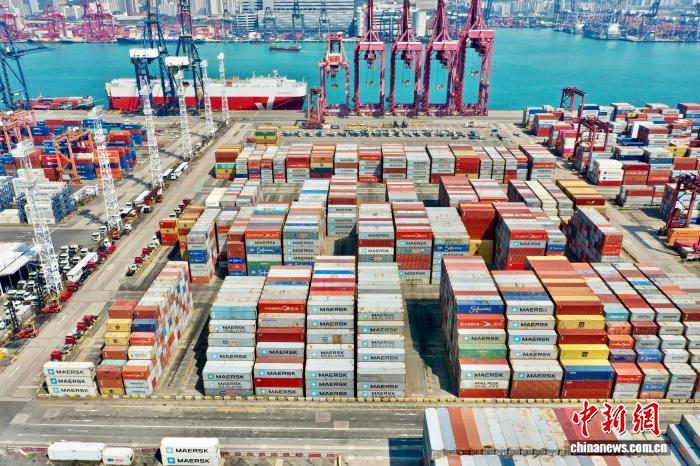
Core Insights - The trade surplus of the Eurozone and the EU significantly decreased in June, particularly due to weak performance in the chemical industry [1] Trade Surplus Analysis - Eurozone trade surplus fell from €16.5 billion in May to €7 billion in June, primarily due to a decline in exports of chemicals and related products [1] - The EU's trade surplus decreased from €13 billion in May to €8 billion in June [1] Export and Import Dynamics - Exports from the EU to the US decreased by 10.3% year-on-year to €40.2 billion in June, while imports from the US increased by 16.4% to €30.6 billion [1] - The EU's imports from China reached €46.4 billion, a year-on-year increase of 16.7%, while exports to China fell by 12.7% to €16.9 billion [1] - The trade deficit with China expanded by 44.6% year-on-year, totaling €29.5 billion [1]
特朗普关税击中黄瓜、海鲜,美国食品业疾呼:豁免!
Di Yi Cai Jing· 2025-08-25 10:57
Group 1 - The average American household is projected to face an increase in spending of $2,400 due to tariffs, which are at their highest effective rate since 1933 at 18.6% [1][2] - The U.S. food industry is seeking exemptions from tariffs, particularly for fresh produce, as the industry warns that menu prices will rise if tariffs are imposed on seasonal ingredients [2][4] - The seafood industry is heavily reliant on imports, with 85% of seafood consumption in the U.S. coming from foreign sources, and 90% of shrimp supply being imported, primarily from India [4][6][7] Group 2 - The U.S. seafood trade deficit reached $24 billion in 2022, highlighting the significant reliance on imported seafood [5] - The American Food Industry Association has indicated that without tariff exemptions, prices for various food products will rise significantly, affecting major retailers like Walmart [9] - Walmart's CEO noted that costs are increasing weekly due to tariffs, with a same-store inflation rate of 1.1% reported, which is more than double the previous quarter [10] Group 3 - Target has experienced a sales slowdown and acknowledges the challenges posed by tariffs, indicating a reluctance to raise prices but recognizing the difficulties in managing costs [10] - Economic analysts predict that overall inflation in the U.S. will rise from 2.5% in the second quarter to around 3.5% by the end of the year, driven by increasing prices of imported goods [11]



从水果到水产全都缺,美国食品行业团体竞相呼吁豁免关税……
Feng Huang Wang· 2025-08-25 03:08
Core Viewpoint - Multiple U.S. food industry groups are seeking exemptions from high tariffs imposed by President Trump, citing the vulnerability of the food sector to these tariffs due to reliance on imports for various agricultural products [1][2] Group 1: Tariff Impact on Food Industry - The U.S. food industry is particularly affected by Trump's tariffs, as many agricultural products are difficult to grow domestically at affordable costs [1] - Approximately 20% of food consumed in the U.S. is imported, with 85% of seafood consumption relying on imports [1] - The U.S. seafood trade deficit reached $24 billion in 2022, highlighting the significant reliance on foreign sources [1] Group 2: Specific Product Concerns - Shrimp imports account for about 90% of the U.S. supply, with India providing over one-third of this supply [2] - The annual import value of fresh fruits and vegetables in the U.S. is $36 billion, with Mexico being the largest supplier [2] Group 3: Exemption Process and Challenges - The process for obtaining tariff exemptions in the food sector may be complex due to the lack of a defined application procedure [3] - Some food products may be exempt from tariffs based on existing trade agreements, such as those with Indonesia and the EU [3] - The U.S. has proposed exemptions for certain natural resources not produced domestically, including coffee and tropical fruits [3] Group 4: Price Implications - Without additional tariff exemptions, food prices in the U.S. could rise significantly, particularly for seasonal fresh ingredients [4] - The National Restaurant Association has warned that tariffs on seasonal produce could lead to substantial menu price increases [4] Group 5: Domestic Production Challenges - The import share of cucumbers in the U.S. has increased from 35% in 1990 to nearly 90%, indicating a shift towards reliance on imports [5] - Growing 90% of cucumbers domestically would require extensive greenhouse cultivation, significantly raising costs [5] - The food industry is advocating for targeted approaches to tariffs to support domestic production and job retention [5]
因为美国,这个国家宣布进入“灾难状态”
Sou Hu Cai Jing· 2025-08-24 06:52
Core Points - The article highlights the severe consequences of U.S. tariff policies on African countries, particularly Lesotho, which has historically maintained a strong trade relationship with the U.S. [1] - Lesotho has declared a "disaster state" due to rising export prices of clothing and textiles resulting from U.S. tariffs, leading to factory closures and job losses [1][5] - The U.S. tariffs, including a 15% tariff on Lesotho and a 30% tariff on South Africa, are expected to have a ripple effect on nearly 20 African countries [1][5] Group 1: Trade Relations and Economic Impact - The U.S. and African trade relationship has been viewed as a solution to poverty in Africa, with the African Growth and Opportunity Act (AGOA) allowing eligible countries to export goods to the U.S. duty-free [3] - AGOA has stimulated local manufacturing and created job opportunities, helping African countries move away from reliance on raw material exports [3][9] - Despite AGOA's successes, only 32 African countries benefit from duty-free treatment, leaving many poorer nations without access to these advantages [3][9] Group 2: Tariff Policy and Future Uncertainty - The comprehensive tariff policies of the Trump administration pose a threat to the AGOA program, which is set to expire unless renewed by Congress [5] - The expiration of AGOA could lead to increased economic influence from other countries in Africa and higher prices for U.S. consumers on goods like jeans [5][9] - The trade deficit between the U.S. and several African nations, including a $234 million deficit with Lesotho, is seen as a sign of successful cooperation, facilitating economic development in Africa [3][9]